Women are animals with long hair and short ideas. A phrase as brutal as it is cutting like broken glass across the mind today. It's rightly despised, seen as the epitome of philosophical misogyny.
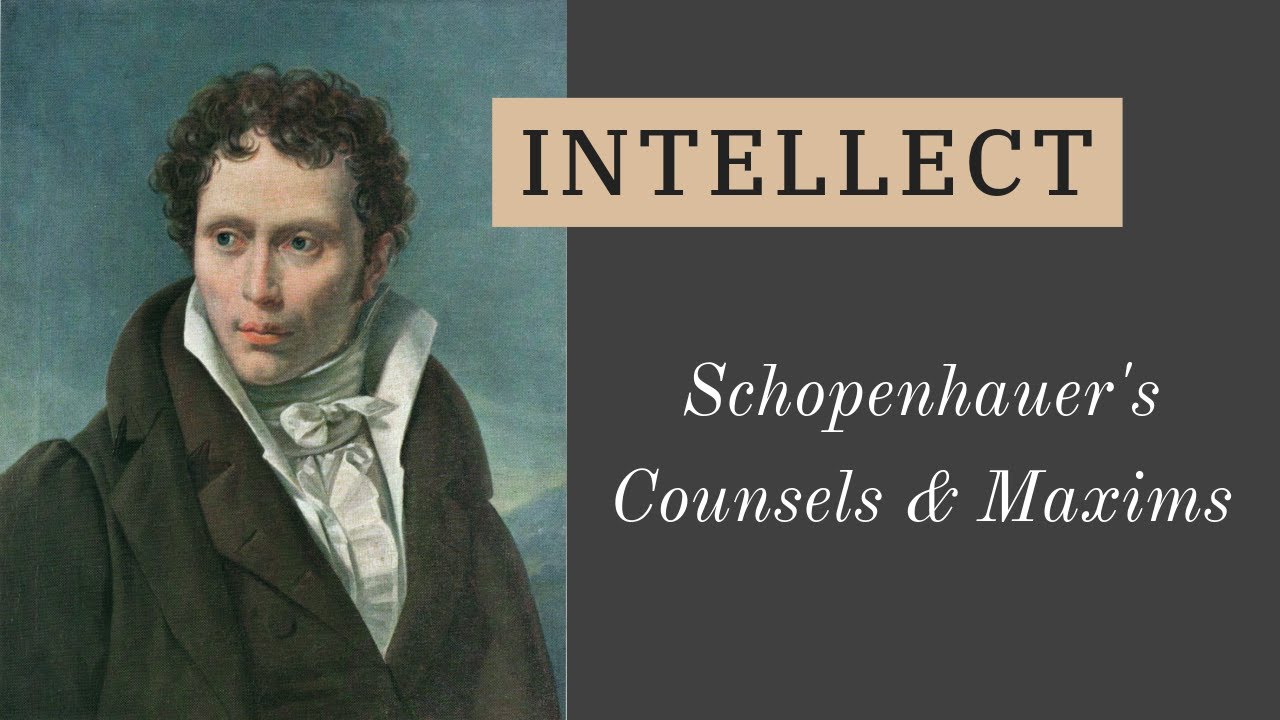
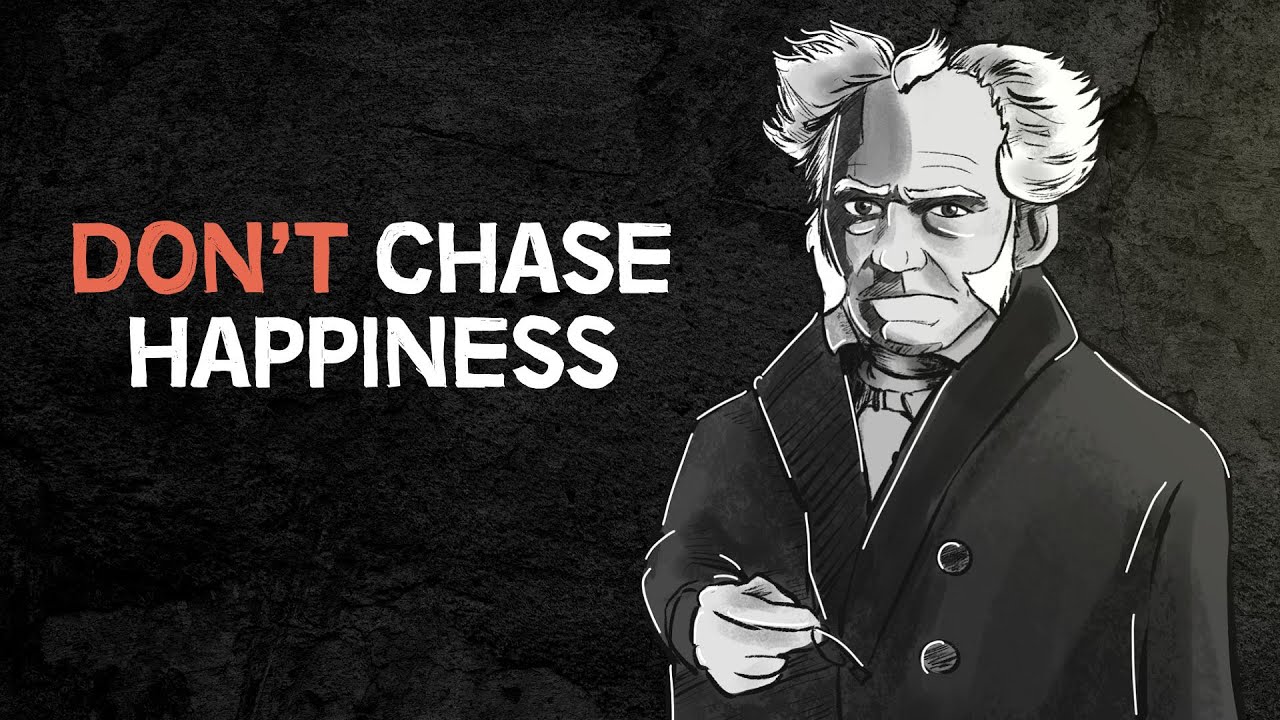
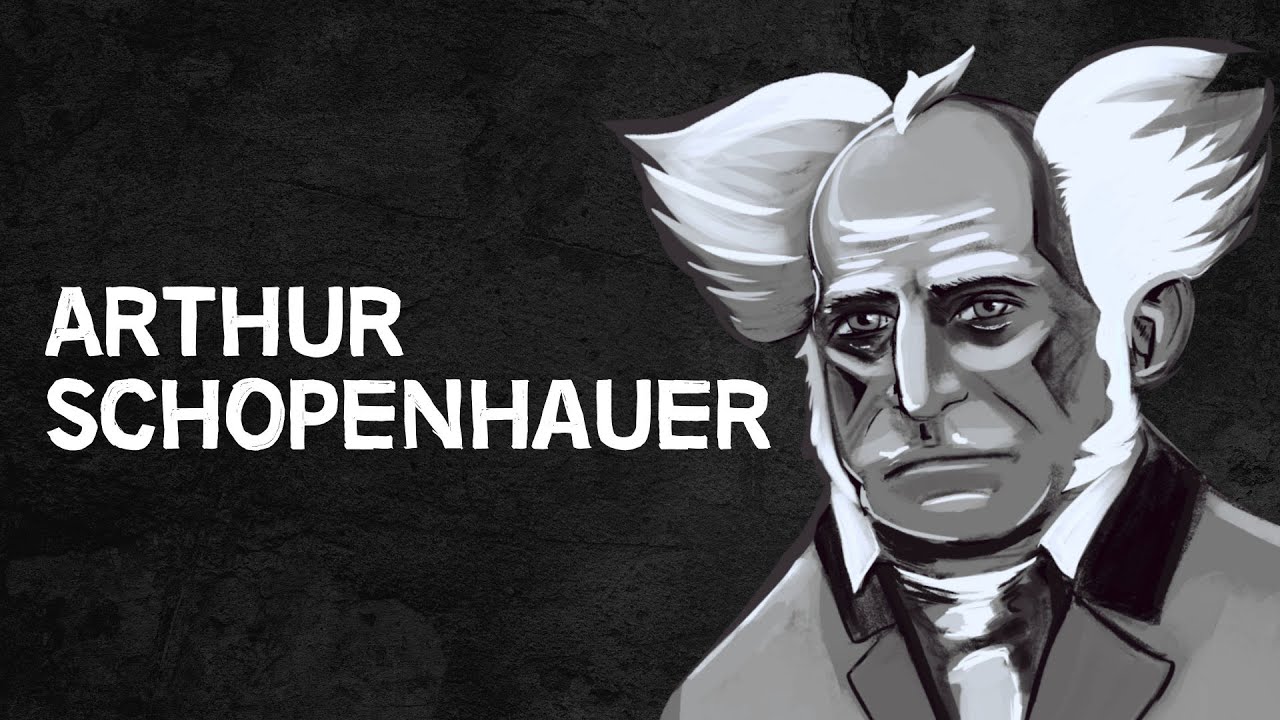
But it came from Arthur Schopenhau, the dark genius of German philosophy. A man whose view of life was as bleak as his intellect was brilliant. And before dismissing him as a bitter, resentful misogynist, which in part he was, let's pause, because behind the cheap insult, beneath the harsh generalization, lies something more unsettling, a truth that quietly echoes in the hidden corners of male experience.
Schopenhau, some argue, didn't hate women, per se. He hated the mechanics of desire. He despised the way romantic love or what he saw as its illusion made him feel powerless, replaceable, secondary, and behind his bitterness, behind the near pathological cynicism toward the feminine pulses.
A question that many men throughout history have barely dared to ask aloud for fear of sounding weak, possessive, or worse, resentful. Why does she always seem to want more? Why, even when it seemed like love, connection, commitment were real, can she walk away one day for someone else?
And why does that someone else so often embody very specific traits? Taller, more successful, more confident, more dominant, more of something you feel you lacked. Today, we're going to dive into those turbulent waters.
We're going to talk about hypergamy, that controversial concept about the silent power within female choice. And above all, we'll speak of the masculine resentment that so often shadows these dynamics. A resentment that poisons the soul when left unspoken and unresolved.
To understand Schopenhau vision of love and women, he must first understand the heart of his entire philosophy, the will to live. David Sum Laben. For him, the ultimate reality wasn't reason or God or even matter.
It was an irrational, blind, insatiable force. A cosmic impulse that drives everything from rocks and plants to animals and humans to cling to existence, to keep reproducing, to survive. This will is the source of all desire and therefore all suffering because to desire is to lack and the will is never satisfied.
And in this grim framework, romantic love is not a spiritual union. It's a biological trap, a trick, a bait laid out by the will to perpetuate itself. To Schopenhau, what we call love is nothing but a beautiful disguise for a primitive force that doesn't care about your happiness.
It cares about your genetic utility. You think you fall in love because of emotional connection because you found someone who understands your soul. But he says otherwise.
The will this blind biological force chooses for you. You're just the instrument. Love is a lure.
A carefully engineered illusion meant to trick you into submission. And even more disturbing, when a woman chooses a man according to this world view, she doesn't do so because of the depth of his heart or the poetry of his soul. Her instinct is calculating, sharpened by millions of years of evolution.
She's not consciously weighing your kindness or romantic gestures. On a deeper level, her biology is asking, "Can this man protect me and our potential children? Can he provide security, resources, stability?
Does he possess the genetic traits, strength, intelligence, status that will benefit my offspring? To Schopenhau, this is the cruel engine behind female attraction. It's not sentiment.
It's strategy. A survival algorithm masked by affection, admiration, or compatibility. And that algorithm has a name.
Hypergamy. Let's define it without flinching. Hypergamy is the observable tendency through history and across cultures for women to seek partners with equal or higher social, financial, or physical status.
It's not a moral flaw. It's not inherently shallow. It's not even always conscious.
It's evolutionary programming, a deeprooted survival instinct. But what evolution calls logic, the modern man often experiences as betrayal. Because it's not just that she left, it's that she left for someone perceived as better, more confident, more dominant, more successful, more something that you weren't.
That's when the resentment is born. Not because you weren't loved, but because you were out competed. Because everything you gave, your loyalty, your care, your presence wasn't enough.
Because somewhere silently you lost a game you didn't even know you were playing. So you ask yourself, was it a personal betrayal? Was it selfishness?
Or was it something more ancient, more impersonal, like natural selection in action? And Schopenhau, perched at top his tower of pessimism, would offer a devastating answer. It wasn't her.
It was the will. Using her as a vehicle, using you as bait. That feeling of being discarded doesn't often come with tears.
It doesn't get expressed out loud. Male resentment is quieter. It wears masks.
It hides behind sarcasm, detachment, or phrases like, "All women are the same. " Or, "Love is a scam. " But under that armor, there's something raw and painful, a wound that never quite healed.
And it's here beneath this silence where Schopenhau let his philosophy rot. His contempt for women so evident in his writings doesn't seem to come from dispassionate reasoning. It comes from experience from a fractured relationship with a powerful and emotionally distant mother.
From failed romances where he was not the chosen one. Schopenhau wasn't just speaking as a philosopher. He was speaking as a man who felt invisible, unwanted.
And that's what makes his philosophy dangerous. It's not just theory. It's trauma intellectualized.
But rather than judge, we might ask, how many men today carry that same wound? How many have loved deeply, given everything, and still weren't enough? How many have played the role of the protector, the provider, the loyal partner, only to be seen as a placeholder, not a passion?
Because the harsh truth is this. Men don't just want companionship. They want to be chosen, to be desired, not just accepted to be the one who makes her eyes light up.
Not just the one who pays the bills. And when they're not, when they're replaced, the pain doesn't get processed. It gets buried.
And in a culture that still punishes male vulnerability, that pain mutates. It turns into ideology, into cynicism, into echo chambers of anger, into entire online subcultures where pain is reinforced and blame becomes a lifestyle. But if you peel back the layers of bitterness, what you often find isn't hate, it's heartbreak.
It's the voice of a man who gave everything and still wasn't enough. And this is where Schopenhau ideas become particularly corrosive when they're used not as a mirror for reflection, but as ammunition for resentment. When his personal bitterness is mistaken for universal truth?
When the philosophical becomes a shield for the emotional wound we refuse to face? Does this mean women are inherently selfish? that they only care about money, power, and status, not necessarily that's a shallow reading of a deep instinct.
A more nuanced perspective recognizes that hypergamy, this upward seeking tendency is not a moral failing. Its evolutionary programming in prehistoric times, choosing a mate, wasn't a matter of romance. It was survival.
A woman who chose a weak man, one who couldn't protect her or provide, didn't just risk disappointment. She risked death for herself, for her children. So nature refined her instinct.
It's like a blade. She developed a radar for strength, for competence, for security. And even though we no longer live in caves, that radar still hums beneath the surface today.
It doesn't scan for the strongest warrior or the best hunter. It looks for purpose, direction, confidence. It seeks the man who's moving forward, who radiates capability, vision, momentum, and that's where the heartbreak enters.
Because being a good man isn't always enough. You can be kind, loyal, supportive. You can show up every day, do the right thing, love with everything you have, and still not be desired.
You may be loved, respected, appreciated, but not wanted in that visceral, magnetic way because desire plays by different rules. And if you don't understand those rules, you end up confused, bitter, lost. You ask, "What did I do wrong?
Why wasn't it enough? " That's when the mind starts to harden. You begin to believe love is a lie, that kindness is weakness, that women are cruel.
But the real problem is that you're reacting from a place of misunderstanding. You were never told that desire doesn't reward goodness. It rewards growth, energy, power.
And when you don't project that energy, that mission, that spark, she might not even see you. So many men get stuck here doing everything right, following the script, and still losing, still being replaced. Not because they're bad men, but because they haven't realize that the game has different rules than the ones they were taught.
So what now do you give up? Turn bitter? Join the chorus of rage online?
Or is there a way to reclaim your value? Not by chasing her approval, but by rebuilding your foundation. Understanding hypergamy doesn't mean becoming a slave to it.
It doesn't mean contorting yourself to fit some artificial mold of high status or becoming someone you're not to win approval. It means learning the rules of attraction, then deciding to rise on your own terms, not for her, for you. The solution isn't out competing every other man for a woman's validation.
That's a race you'll lose or lose yourself in. The real answer is to compete against your past self. To wake up every day asking, "Where can I grow?
Where am I falling short? Where have I been passive when I should have acted? " Because when you focus on becoming the most grounded, capable, purposedriven version of yourself, not to impress, but to evolve, you stop needing approval.
You stop begging for love. You start radiating power, calm, confidence. And here's the paradox.
That's when you become attractive. Not because you chased it, but because you no longer need it. And here's the paradox.
That's when you become attractive. Not because you chased it, but because you no longer need it. You don't become invincible to rejection, but rejection no longer breaks you.
You have something deeper, a core, a kingdom within. And if someone leaves, if someone doesn't choose you, you don't collapse. You regroup, you rebuild, you rise.
This is where we turn to Nietze, the philosopher who admired and criticized Schopenhau. His idea of the uber mench or the overman wasn't about dominating others. It was about dominating the self, mastering your impulses, overcoming your bitterness, transforming your wound into wisdom, your pain into purpose.
So yes, maybe she wanted something more. Maybe she left. Maybe she compared you to someone else and found you lacking.
That hurts. It cuts deep. But you don't have to stay in that place.
You don't have to let that wound define you. You can turn it into fuel. You don't grow by resenting what you can't control.
You grow by building what you can, your strength, your clarity, your mission. Don't beg for love. Don't cling out of fear.
Don't hate what you can't possess. Build yourself. Forge your own power path.
Know your worth. Not because someone else says you have it, but because you've earned it. And if she leaves, let her.
Because when you know who you are, when your value is rooted inside, abandonment is no longer your greatest fear. It's just another step in the path to mastery.