Stop walking and listen very carefully. As a physical therapist with more than 25 years of experience working with older adults, I'm about to reveal the one exercise I trust the most. Because over the years, it has delivered results that surprised even my patients.
You may think walking is all you need after 60. And yes, walking is good. But what if I told you there may be something even better for your legs, your heart, and even your confidence as you get older?
A simple movement you can do right in your own living room with no gym, no equipment, and no special shoes. So if walking leaves you tired, unsteady, or if your knees ache after just a few blocks, this exercise could be your secret weapon to feeling 10 years younger. And trust me, once you start doing it, you may wonder why no one told you about it sooner.
In this video, I'll show you exactly how to do it the right way. Watch carefully and stay with me until the end. Because if you do it wrong, you may waste your effort and never get the results you expected.
This movement may look simple, but the results are anything but simple. It targets your hips and thighs in a way regular walking and even a treadmill never will. And best of all, it is gentle on your joints.
Before we begin, I'd love to know something. How old are you and where are you watching from today? Leave your age and location in the comments.
I always enjoy seeing how many strong people over 60 are here with us from across America and around the world. Do you know what's more frightening than an injury at 70? It's the fear of moving again.
Robert, a retired postal worker, fell into that trap after what seemed like a minor knee injury. He stopped walking, his muscles slowly weakened, and he came dangerously close to losing the ability to stand confidently on his own. When Robert came into my physical therapy clinic, he wasn't given complicated routines or exhausting workouts.
Instead, I gave him one small secret, a simple movement he could do right at home while watching television. Just a few minutes a day completely changed the direction he was heading. His leg strength came back.
His balance became steadier than it had been in years. And little by little, he regained the confidence to move again. And right now, I'm going to show you the exact exercise that helped Robert get his leg strength back.
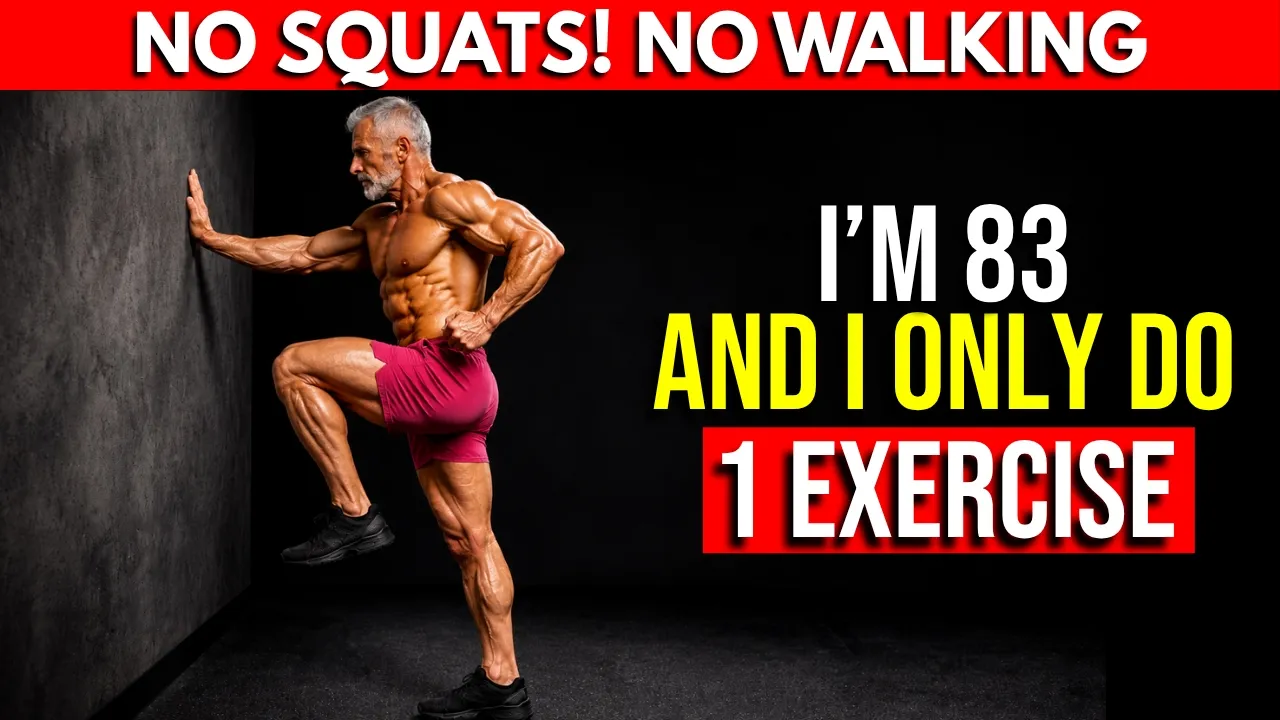
Now, let's get to the exercise that changed everything for Robert. It's called marching in place. This exercise has two variations, and we're going to begin with the standing version because for many older adults, this is where the biggest improvements in leg strength and everyday movement begin.
First, choose a safe place in your living room. Stand behind a sturdy chair or next to a wall so you have support if needed. Make sure there are no rugs, cords, pets, or anything that could catch your foot.
Place your feet about hip-width apart and let your arms relax naturally at your sides. Before moving, check your posture carefully. Stand tall, but do not lock your knees.
Gently pull your shoulders back and down. Keep your chest open and your eyes looking straight ahead instead of at the floor. Lightly tighten your stomach as if you were preparing for someone to tap your abdomen.
Your body should feel stable and supported, not stiff. Now, begin the movement. Slowly lift your right knee toward your waist, but only as high as feels comfortable.
Do not force height. For some people, lifting just a few inches is enough at first. Keep your upper body upright and avoid leaning backward or swinging your hips.
Pause briefly at the top, then lower your foot back down slowly and quietly. Now, repeat with your left leg. Lift with control.
Lower with control. That completes one cycle. Keep the movement smooth and steady.
Your goal is not to move fast. Your goal is to make each repetition clean and controlled. >> [snorts] >> Imagine you are marching with purpose, not rushing to catch a bus.
As you continue, pay attention to where you feel the work. You should notice your hips and the front of your thighs becoming active. You may also feel the muscles around your standing leg working to keep you stable.
That is normal and that is exactly what we want. Breathe naturally throughout the movement. Inhale as one knee rises and exhale as it lowers.
Avoid holding your breath because that often creates unnecessary tension. If balance feels uncertain, lightly rest one hand on the chair. Do not grip tightly unless you truly need support.
The goal is to let your legs do the work. For beginners, start with 30 seconds, rest, then repeat two more rounds. If that feels manageable after several days, progress to three rounds of 1 minute with about 30 seconds of rest between rounds.
If you already feel comfortable and stable, continue for up to 5 minutes at a steady pace. Do not chase speed. Focus on good posture, smooth control, and consistent movement.
That is where the real results begin. Now, let's move to the second variation of marching in place. This is the seated version and for many older adults, this variation can be a great starting point if standing feels uncomfortable or if balance is still a concern.
Do not underestimate this version. When done correctly, it still challenges the hips and thighs and helps rebuild confidence in movement. Choose a sturdy chair with a firm seat.
Avoid soft couches or recliners because they make the movement harder to control. Sit near the front edge of the chair and place both feet flat on the floor about hip width apart. Before moving, check your posture.
Sit tall and imagine a string gently pulling the top of your head upward. Relax your shoulders and keep your chest open. Keep your eyes looking forward instead of down at your legs.
Lightly tighten your stomach muscles and keep your lower back in a comfortable neutral position. Avoid leaning backward into the chair. Now begin the movement.
Slowly lift your right knee toward your chest only as high as feels comfortable. Do not lean back to help the movement and do not swing your leg. Pause briefly at the top, then lower your foot back down with control until it touches the floor.
Now repeat with your left leg. Lift with control. Lower with control.
That completes one cycle. Keep a smooth and steady pace. This is not about speed and it is not about how high you can lift.
The goal is to teach your hips and thighs to work again while keeping your body stable. As you continue, notice what you feel. You should feel the muscles at the front of your thighs and around your hips becoming active.
You may also notice your stomach muscles working to keep you upright. Breathe naturally throughout the movement. Inhale as one knee lifts and exhale as it lowers.
Avoid holding your breath because it can make the exercise feel harder than it needs to be. If lifting one leg at a time feels too easy after several days, try slowing down the lowering phase or lifting slightly higher while maintaining good posture. For beginners, start with 30 seconds, rest, then repeat two more rounds.
If that feels comfortable, progress to three rounds of 1 minute with about 30 seconds of rest between rounds. If you already feel confident and controlled, continue for up to 5 minutes at a steady pace. Remember, your goal is not to finish quickly.
Your goal is to rebuild strength one controlled repetition at a time. Now here's what I want you to do next. Do not overthink this and do not tell yourself you need 30 minutes, special equipment, or perfect motivation.
The people who get results are usually the ones who make it easy to stay consistent. Break the time into small sessions if you need to. Do one round in the morning, another while watching television, and another later in the day.
Some of my patients even do it during commercial breaks. The goal is not to do more. The goal is to keep showing up.
And here's what most people notice first, not dramatic changes overnight. Usually, the first signs are smaller than that. Your legs begin to feel a little more awake.
Standing up feels smoother. You may notice yourself standing longer without needing to sit down right away. Some people tell me they feel more confident walking across a parking lot or moving around the house.
Those early changes matter because confidence creates movement, and movement creates strength. So, here's my challenge for you. Do this exercise every day for the next 7 days.
Just 7 days. No excuses and no waiting for the perfect moment. Then come back and tell us how you feel.
And if you're committing today, go down to the comments right now and write, "I'm in for 7 days. " Before we finish, I want you to remember something important. This is not about becoming a different person.
This is not about chasing youth or trying to move like you did 30 years ago. This is about protecting something much more valuable. Your ability to stand up without thinking about it.
Your ability to walk into another room with confidence. Your ability to stay independent and keep doing the things that make life feel like yours. Because the truth is, most people do not lose independence all at once.
It happens quietly. A little less movement, a little more hesitation, a little less confidence. And over time, the world starts getting smaller.
That's why a simple movement like this matters more than people realize. One small habit each day can become stronger legs. Stronger legs can become more confidence, and confidence can become freedom.
You do not need perfection. You do not need to train for hours. You just need to keep moving and give your body a reason to stay strong.
So, if starting today, I want you to make it real. Go to the comments and write, "I'm in for 7 days. " And while you're there, tell me your age and where you're watching from because I truly enjoy seeing our community grow across America and around the world.
If this video helped you, give it a like, subscribe to the channel, and share it with someone who needs a little hope and stronger legs. Let's keep getting stronger together. I'll see you in the next video.