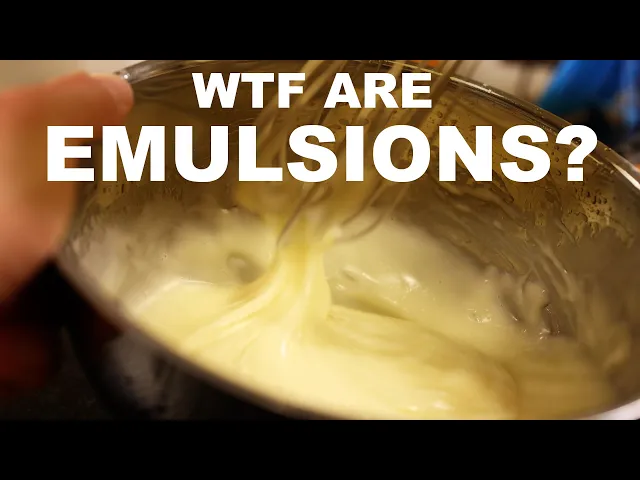
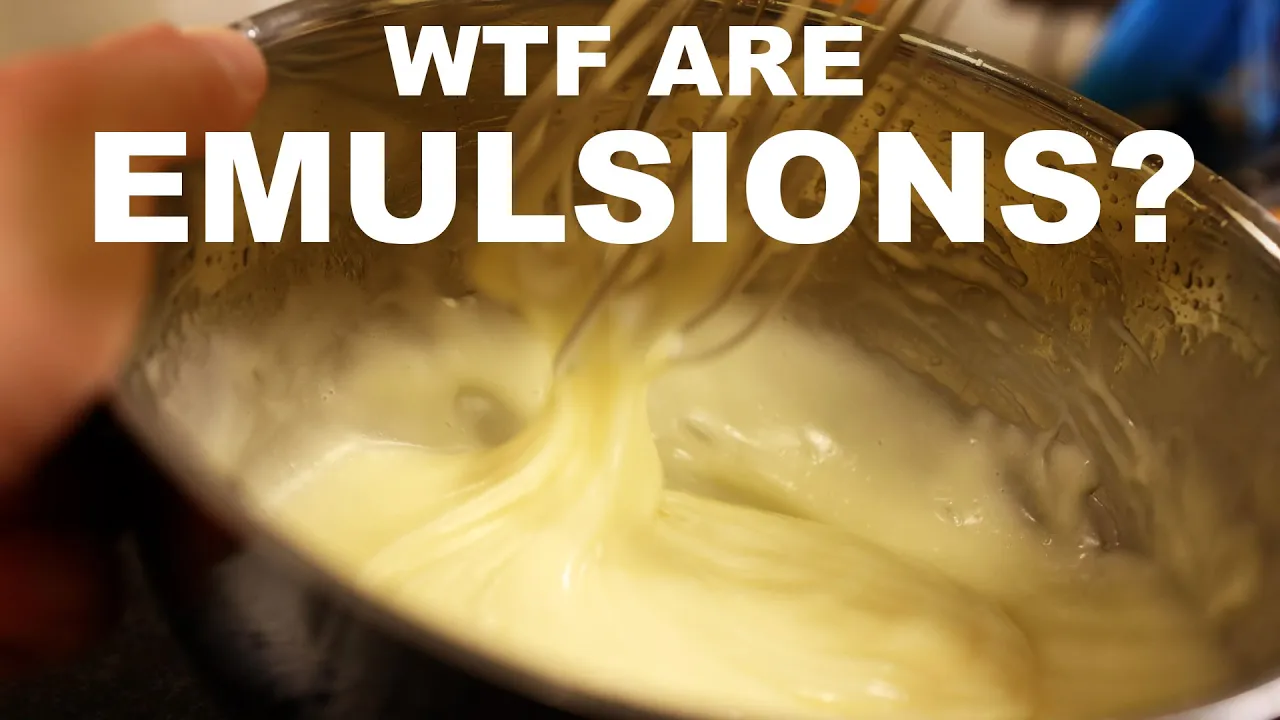
What even is an emulsion? That's a scientific word that gets thrown around here in the kitchen quite a lot. Sauces and stews and such are often emulsions.
Salad dressings are emulsions. Milk is an emulsion, or actually, maybe it's not. "Emulsion" tends to be used somewhat inconsistently, and that's not entirely because people like me may be misinformed.
There are some legit edge cases in the kitchen — things that may or may not be emulsions or emulsifiers, depending on subtle and legitimately debatable distinctions of definition. Now I'll admit that a lot of that is kind of pointless nerdery, but I'm not above pointless nerdery. And since you're watching this, I don't think that you are either.
However, we really can become better cooks and make tastier food if we really understand how emulsions work, so here we go. Under a pretty strict definition, to have an emulsion. .
. ". .
. you need to have at least at least two immiscible liquids. " That is Dr John Coupland, a food scientist at my alma mater, Penn State, and emulsions are one of his particular areas of study.
And that word he used there, "immiscible," is basically a scientific word for not mixable. An example of miscible liquids would be the water and alcohol in this tequila. You can't tell where the booze ends and the water begins.
They are mutually soluble. Miscible. And — barring some microscopic, subtle weird stuff — on the large scale, there's really only one combination of immiscible liquids into an emulsion that we ever actually eat.
"In the context of foods, those two liquids are going to be something like water — or something that can dissolve in water — and oil. So you need to combine those two things in order to make an emulsion. " Oils are just fats that are liquid at room temperature, and they are both insoluble and immiscible in water.
Some oils are soluble in alcohol under certain conditions, but that's a conversation for another day. Oil and water obviously don't mix, and when they fail to dissolve each other, the oil floats to the top, because it's a lot less dense than water. It's lighter, so it's buoyant.
We can see the same thing in a combination of water and honey. The water is less dense than the honey, so it's buoyant in there. It's floating on the top and the two are not mixing.
However, if I mix them up, the water and the honey stay mixed together, and I understand that. Honey is great, and it's the sponsor of today's video. So I'll now briefly thank the folks at Join Honey.
Honey is a browser extension that you just download and install for free. And it simply rides with you as your buddy on the internet. It helps you save money as you shop online.
Anytime you check out anywhere, Honey will pop up and say, Hey, you want me to check and see if there are any promo codes that'll work on this? You just say, Yeah, sure, try some. It takes no work, and it often finds some promo codes that save you a bunch.
This works at Amazon and nearly every other online vendor you could think of — not just stores, but take-out food, GrubHub, all that stuff. You also earn Honey Gold as you shop — reward points for money that you spend at participating vendors, which are legion. This is where I buy my camera stuff.
You rack up enough Honey Gold and you get a gift card. Honey does not sell your personal data. The vendors that you're buying from pay Honey a little commission for helping to land your business.
Do us both a favor and download honey for free at joinhoney. com/ragusea. That's joinhoney.
com/ragusea. Link is in the description, you'll be doing us both a favor. Thank you, Honey.
And indeed, if I mix honey and water together, they will stay mixed. Even if the honey is heavier, they are infinitely, mutually soluble. They are miscible.
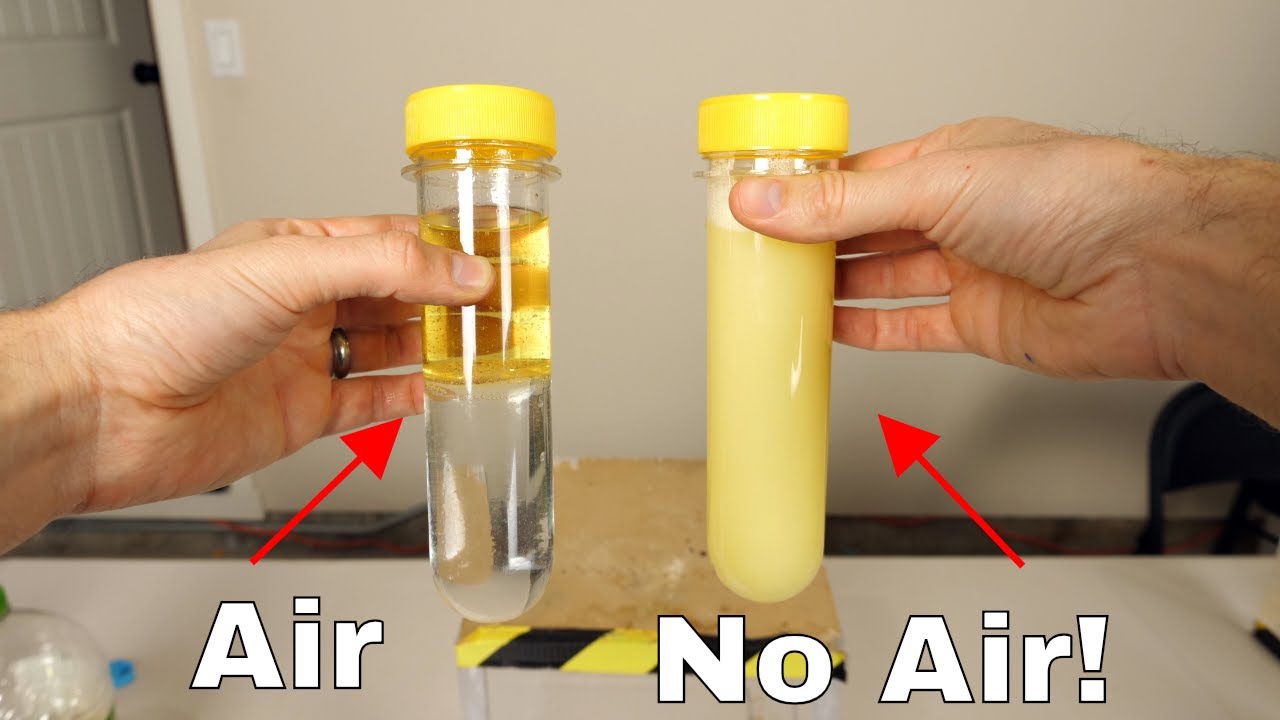
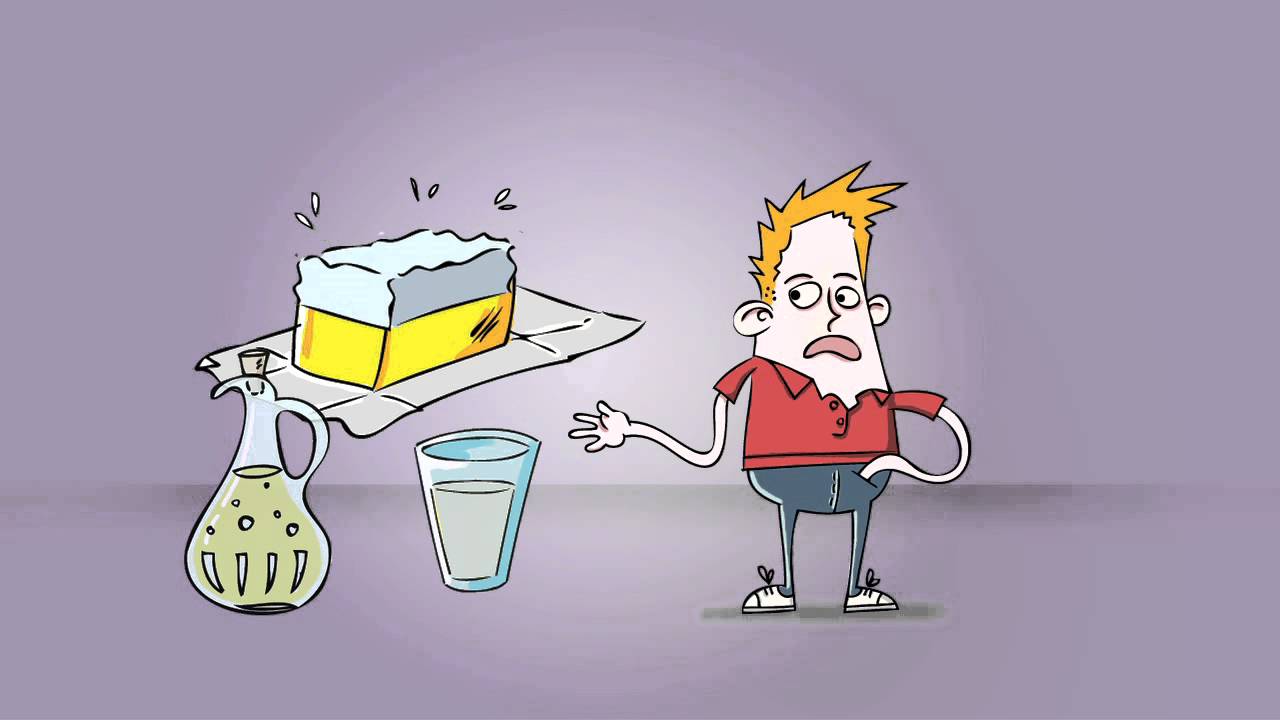
If I take oil and water and mix them up, the oil floats right back to the top again. And why is that? Well, if the white one is water and the yellow one is oil, a lot of people including myself will tell you that water and oil kind of reject each other.
They push each other away, repel each other. That's a good way to think about it on a practical level, but technically that's actually not quite right. Water and oil do not literally push each other away.
They just don't really link up when you put them together. In contrast, oil and water molecules do link up when they run up against each other. "Water has very good, strong hydrogen bonding with other water molecules.
So being close to other water molecules, lots of good bonds, I'm happy. If you try and put it next to the oil, they can't form those good hydrogen bonds anymore. " And since the water molecules don't really hold onto the oil molecule, there's nothing stopping the oil molecule from just floating up to the top again, because it's lighter.
The oil molecules then join up and form a little raft up there. If I take a fork or a whisk, I can physically break that raft up into little droplets and disperse them through the water. For one fleeting moment, this is an emulsion.
But like ships passing in the night, the oil and water go back to their separate lives because there's nothing holding them together. The emulsion is unstable. And one way to stabilize it is to simply thicken it.
"If you make the liquid you're floating through more viscous, that's going to give more drag on the particles. It's going to start to slow it down. Like starch, or frequently xanthan gum — tiny amounts of these things makes water just a little bit thicker.
If the water is more viscous, then the droplet floats more slowly and you don't see that separation. " It's a simple matter of drag or friction between the particles and droplets and stuff in there, restricting the movement of everything. Stuff is floating around less, which means like-molecules aren't coming into contact with each other as often and linking up.
And the oil droplets are being held down by that thick, viscous liquid. Just like you. If you fell out of an airplane into the ocean, it'd be pretty easy for you to swim and float your way back up to the top.
If you fell out of that plane into a thick, steamy swampy bog, and got really deep down in there into the sludge, it would be a lot harder for you to float to the top, right? With a relatively thin gravy, the effect is kind of subtle. That fat will still surface pretty quickly, though it can stay submerged long enough for you to eat.
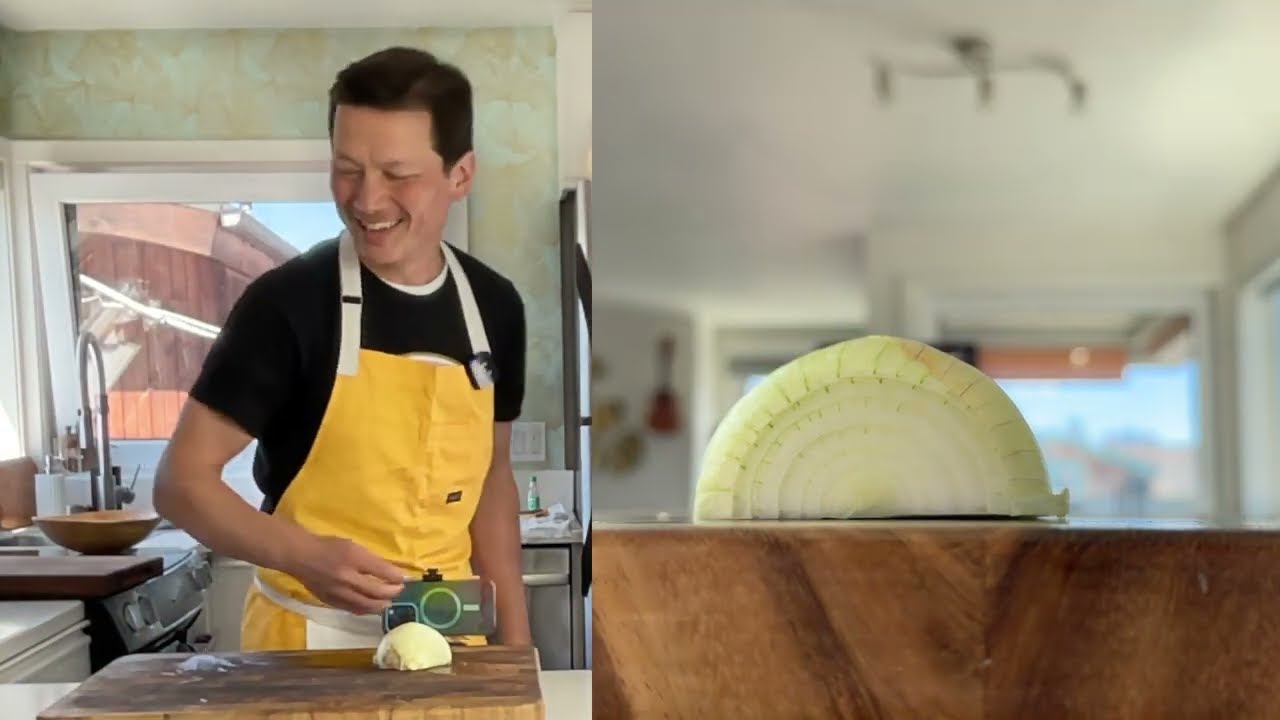
With a really thick gravy, you can stir in the oil and it'll stay buried in there for a while. In the case of this pot roast, my gravy is not thickened with starch, but with vegetables. Tomatoes and onions that have cooked down into a thick paste.
That's the thickener. So a thickener absolutely can stabilize your emulsion. That said, some people would argue that the thickening agent is not technically an emulsifier.
That title they would reserve for a substance that can kind of get in between the water and oil molecules and actually bond them together on a chemical level. The big example of this being protein. "Proteins have got bits of the structure which love water, bits of structure that hate water.
So if you've got oil and water, the protein kind of lines up in that gap between them so that the water-loving parts of the protein are in water, the water-hating parts are in the oil, and it kind of serves as a bridge. " And we see this in milk. Milk has four main components when it comes out of the cow: water, sugar, protein, and fat.
The sugar, lactose, is just dissolved in the water. Some protein is dissolved in there too — casein and whey, just floating around in the water. But some of the protein is also coating little droplets of fat in what is called a milk fat globule membrane.
It's a total Marvel of natural engineering that is made inside the mammary glands. This keeps the fat emulsified in the milk, assuring that a nice fatty whole milk will come out to nourish a growing calf. The problem, from a human perspective, is that the fat globules are huge, so they're still going to float up to the surface with the speed and force of a pool noodle.
If it sits around long enough, cream will form at the top of the milk. This is from a TikTok that I did about non-homogenized milk. That's cream there.
The homogenizer at the dairy takes the milk and squeezes it through a very, very tiny pinhole opening at very high pressure. And as they go through there, those really big globules of fat get broken up into smaller blobs. "What you've got to be thinking about here is when you've broken up the droplets, you've smashed up that surface.
And these tiny droplets have got exposed surface. It's just oil in contact with water, which is the worst thing you could possibly have. Thankfully in milk, there's so much other protein sitting around, just floating around in the milk, that that very quickly sticks onto the surface of the droplets.
We'd say it has adabsorbed onto the surface of those droplets, and that provides the protective layer. " And thus the milk becomes an emulsion again, and a more stable one. Not all proteins are as good at this as milk proteins.
Casein specifically is an amazing emulsifier, and milk is the perfect emotion — or is it? Some people will tell you that milk is not an emulsion — that it's actually a colloid. All emulsions are colloids, but not all colloids are emulsions.
A emulsion is a dispersal of two immiscible liquids, right? One broken up into little bits inside the other. A colloid is like that, but they don't necessarily have to be liquids.
An example would be whipped cream. Can you figure out what non-liquid immiscible substance is dispersed through the liquid in tiny little bits? It's not anything naturally present in the milk.
I'll give you a second to think about it. It's not a liquid. It's air.
Whipped cream is a colloidal suspension of little bits of air inside cream. It's not an emotion because air is not a liquid. But now you're thinking, you're thinking, Wait, there's also water emulsified with fat in cream — whipped or not whipped.
So it is an emulsion in addition to being a colloidal suspension of air, right? The thing is milk fat might not technically be a liquid. Animal fats are generally solid at room temperature and butter is no exception.
Even clarified butter is solid at cool room temperature. So that's the reason some people say milk doesn't count as an emulsion. It gets even stickier when you consider that there's some scientific controversy about what exactly counts as a solid versus a liquid.
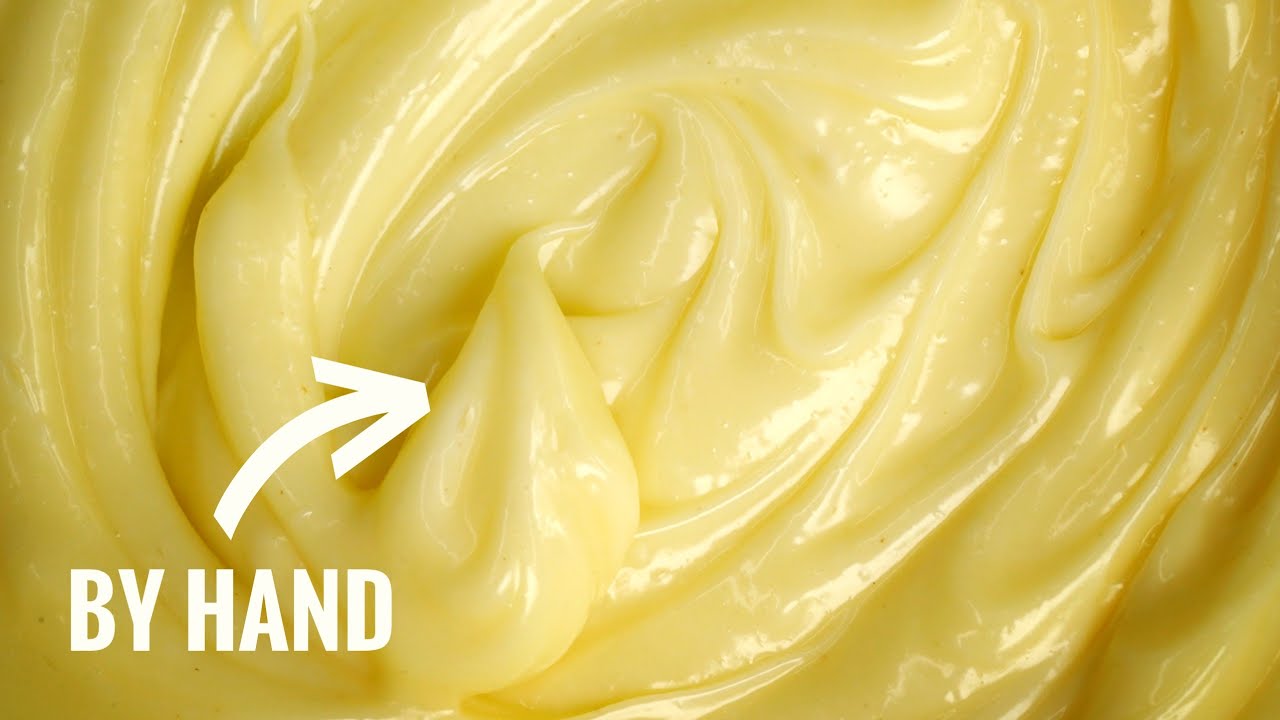
You want to go down a rabbit hole, learn about whether or not glass actually counts as a solid. But here's something that definitely is an emulsion. It's vinegar — which is mostly water — and oil, joined together with egg yolk, otherwise known as mayonnaise.
The emulsifier here is lecithin — a very small phospholipid in the egg yolk that hooks up with the oil molecules and forms another sticky casing around droplets of oil. You just have to create those droplets and bring them into contact with the lecithin by bashing it all up with a whisk. That lecithin coating then bonds with the water in the vinegar.
You have to drizzle in the oil slowly, otherwise you won't be able to break it up into little droplets fast enough. And all the other stuff in here will simply disperse into the oil. You'll have oil with some stuff floating around inside it.
That's a broken emulsion. If I go slowly, I'm able to chop the oil up into droplets and get them coated in lecithin before the droplets can come back into contact with each other. And the amazing thing here is that the more of this thin liquid oil I drizzle in there, the thicker and thicker this mayonnaise gets.
Chemical emulsions like these are themselves thickeners. They thicken themselves. Why?
"You've got to think about the objects which have to flow. If you stuck a spoon into some oil, or in some water, you can move it backwards and forwards because the molecules are so tiny. They can diffuse out of the way and move past one another.
" In the mayonnaise, we're creating these huge complexes of oil droplets surrounded in emulsifier, and that emulsifier then grabs onto the water and the complex gets even bigger. And then they all get kind of tangled up and they smash into each other and they just drag on each other a lot. That's what's resisting my whisk as I cut it through here.
It's like trying to run your hand through a big pile of rocks, as opposed to a pile of extremely small rocks, AKA sand. So that's the magic of emulsions. They not only blend delicious fat into your water-based food, or vice versa, they also thicken it, making it smooth and luscious and luxurious.
And there's all kinds of other emulsifiers. Whole grain mustard has a lot of this stuff called mucilage that bonds with both oil and water. That's why mustard is amazing in salad dressing.
All kinds of other substances like pectins found in fruits and vegetables, or wheat protein, gluten, that can also be an emulsifier. It depends on things like temperature and pH, but all pretty cool possibilities. There's tons more stuff to learn about emulsions that we'll maybe address in the 201 class.
Dismissed.