Japan an archipelago steeped in history has remarkable megalithic structures from a Time long lost to our history books these Monumental sites often crafted with an astonishing level of precision and alignment with astronomical phenomena suggests sophisticated knowledge and capabilities that could redefine conventional historical narratives there are gigantic 800 ton Granite blocks carved with extreme Precision that were left in the middle of the forest together with enormous tombs surrounded by water Moes that have never been excavated there are colossal quaries covered with machine marks and cut with laser-like Precision there are massive stone walls resembling those found
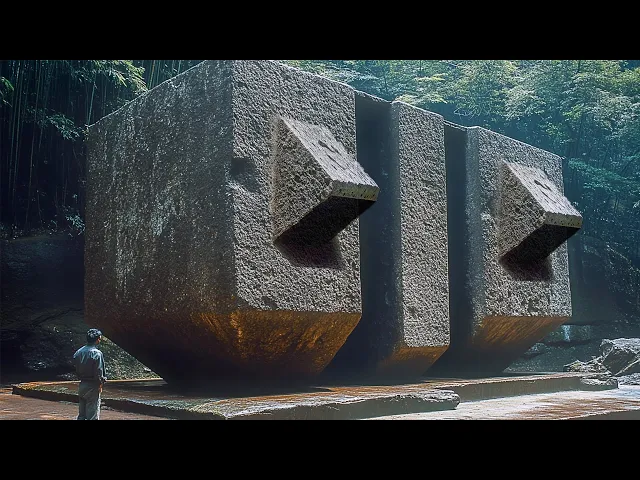
in Peru and Egypt the blocks of which couldn't be moved even today with our modern technology join us in this documentary where we will explore the prehistoric marvels of an unknown civilization that inhabited not only the land of what is now Japan but also the surrounding seabed which was once the home of an advanced ancient civilization before the end of the last ice age if we visit the town of takasago in hyogo prefecture we can find another incredible megalith this is ishino hodin also known as the floating Stone this unusual and strange creation was carved
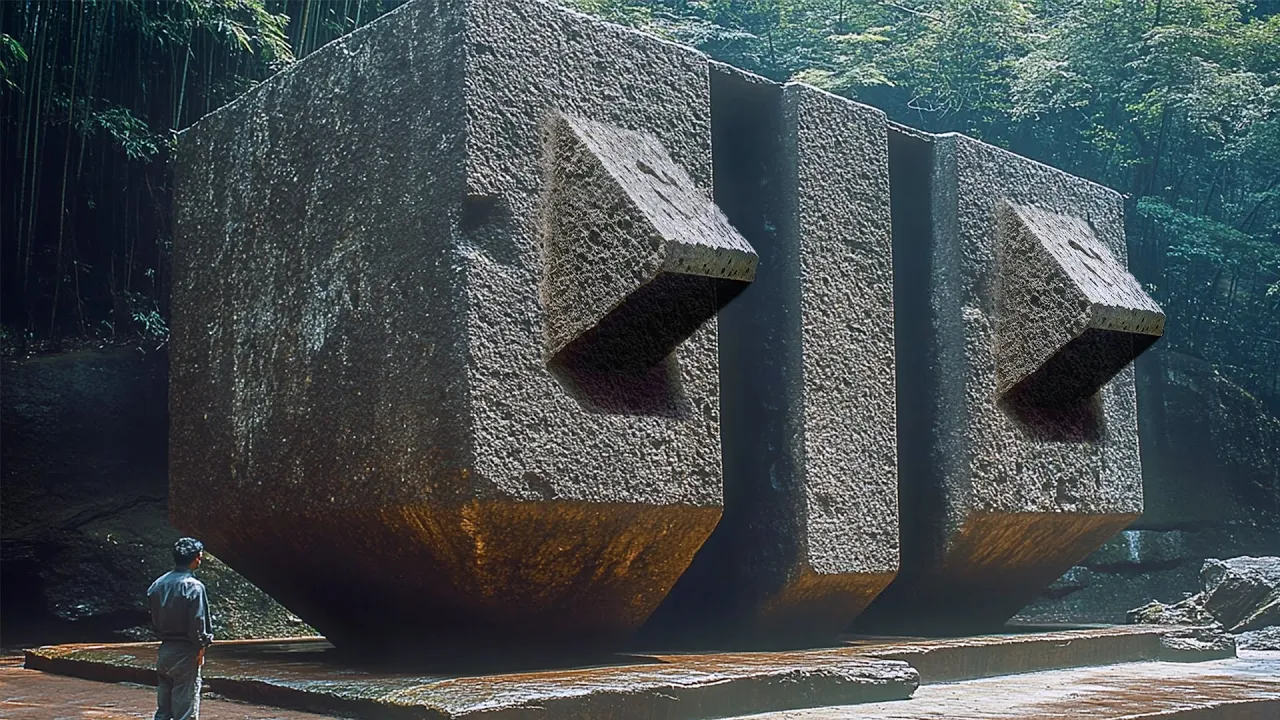
from a single piece of stone block made from tough tough stone is a type of rock formed from volcanic ash ejected during explosive volcanic eruptions this gigantic megalith weighs around 500 tons and it's about 15 ft high and 15 ft deep which is around 5 m this makes this Stone larger than any of the stones used in the construction of the Great Pyramid of Giza the largest of which weighed 80 tons to this day the origins and purposes of this ancient Relic are a complete mystery as there are no inscriptions or markings on it estimates
Place its construction in the prehistoric jom period which dates back to around 14,000 to 300 BCE a Shinto Shrine was later constructed around the stone by the Japanese and the megalith became traditionally known as the floating Stone due to its unique placement the design of this stone is highly unusual it resembles a component of a vast machine almost like a cube with a tapered end on one side the stone is precisely cut with sharp clean angles and smooth surfaces that testify to the advanced Stone working techniques of its Builders it is formed into two vertically
oriented flat rectangular parallel pipe heads one side features a protrusion that resembles the peak of a pyramid but how is it possible for a prehistoric hunter gatherer Society to be able to carve extract and transport a 500 ton stone block the origins and methods used to craft such an Exquisite piece of Stone Art remain a mystery the water continuously flow flows from beneath the Earth under the stone the link of this extraordinary megalith to groundwater makes some theorize that the site could be some kind of energy generator that interacts with the water beneath it locals
also associate the monolith with the healing of ailments and illnesses in many cultures including Japanese water is often seen as a purifying element and is commonly associated with spiritual renewal and life the presence of flowing water under the isi noodin May contribute to its sanctity and the reverence with which it is regarded it is possible that the original placers of the stone chose its location specifically because of this natural water feature seeing the spring as a symbol of endless life or a direct connection to the spiritual world but there's also the possibility that the constant
flow of water that emerges from the ground is is not a natural phenomenon but some kind of advanced hydrological system in our 2-hour documentary about prehistoric Advanced Mega structures in Egypt we talked about the oseran a massive complex that is still not fully excavated just like isi no hodin there is a constant flow of water beneath the structure with the oseran it's been well documented and known that the water flow is not natural and that there's a vast Subterranean hydrological system of channels additionally locals state that the water beneath ishi no hodin never runs dry
even in times of severe drought we know that most ancient megalithic sites are aligned to star constellations in celestial events curiously on the winter solstice of 8,600 BC the sun rises precisely facing ing the pyramid tip of the stone the mysterious megalith which creates the illusion of floating above the water fascinates people thousands of years after its creation another fascinating Discovery in the same region of Asuka was the massive Granite coffins found within the uyama kofun tumulus the construction of these coffins looks very similar to the megalithic stone isi No hodin in fact the strange
knobs on the granite boxes and the massive knob on ishino hodin all bear a striking resemblance to the various knobs found on other Mega structures all across the world we already mentioned the gigantic stone block found in China at the Yang Shan Quarry which also Bears gigantic knobs there are also the various knobs found on the megalithic stone walls in Peru together with those found in Egypt and other places around the World stone walls aside the two horizontal Granite chambers that lay side by side were nearly identical to other Granite boxes found in Egypt like
the granite boxes in Egypt those in Japan also showed perfect 90° angles in their Corners smooth surfaces and extreme Precision in their makeup how is it possible for ancient people with primitive tools to be able to shape pink Granite which is one of the hard hardest materials on earth into such precise and smooth shapes there is also a large piece of granite with meticulous carvings and channels which are too precise and smooth to be made with primitive tools the purpose of these is unknown in fact the entire site is restricted and visiting it is impossible
there are many more mysterious stone structures in Japan the origin of which is mostly unknown for example there's the Saka fune isi a mysterious artifact also located in Asuka this massive Stone structure carved from a single piece of granite measures approximately 3 m in length which is approximately 10 ft and is shaped somewhat like a boat or trough the stone is hollowed out creating a baslik form with a flat base which has led to much speculation about its use and meaning Granite is extremely hard to work with this makes the circular oval shapes and perfectly
smooth channels on the surface of the structure quite impressive without any indications of its true purpose historians speculate that it was used for ritual purposes or for the production or storage of the traditional Japanese rice wine which is integral to Shinto rituals and celebrations however the giant Granite Peak which weighs around 10 tons sits in an area rich with other ancient artifacts and ruins suggesting it was once part of a larger piece or construction a Japanese researcher by the name of hirosi Hayashi made an interesting Discovery by examining the lines of the stone he believed
sakafa isi was actually an ancient map centered from the North Pole he measured the exact degrees and angles of of the lines and believes the Rock shows the directions to important ancient megalithic sites like Stonehenge the Pyramids of Giza and others as the degrees of the lines fit perfectly with the longitudes of these sites the center of the stone actually represents the center of the earth which is incredible considering latitudes were forly established in 1884 in England and the oldest ones were established in 14 1994 the precise craftsmanship and the effort required to Quarry transport
and shape such a massive Stone indicate that it held considerable significance the site's proximity to other key archaeological finds also suggest that there was a massive complex in the area and what we find today are merely the remnants that have withstood the passage of time if you walk just a few minutes away from Saka isi you can find another incredible Stone known as kamishi which means the turtle Stone this gigantic stone is named that way because it has a clearly defined shell head and limbs the precise reasons for its creation and the meanings attached to
it remain subjects of debate among historians some suggest that it might have had astronomical significance and and was used as a marker for celestial events or Seasons While others believe it could have marked a burial site or a significant place within the Asuka region according to Legend the turtl stone in Asuka Japan possesses a mysterious and somewhat ominous quality it is said that when the stone faces West a great flood will strike the land ever actually turns all the way and faces West then Japan will sink into the ocean and disappear the idea of course
this being a barometer of the fortunes of the country presently turtlestone is oriented to the Southwest sparking both curiosity and concern among those who know the legend this enigmatic behavior of the turtle Stone has led to various speculations about its nature and Origins one intriguing Theory suggests that the stone might be magnetic and interact with Earth's magnetic field this interaction could potten ually allow the stone to detect or measure magnetic anomalies which might be linked to cataclysmic geological events such as earthquakes or floods such properties would make the turtlestone not only a cultural and historical
artifact but also a natural geophysical marker or warning system the pole shift hypothesis which postulates that the Earth's polles have historically shifted causing massive Global changes and cataclysms could could potentially explain the Stone's reputed Behavior if the turtle stone is indeed magnetic it might be influenced by shifts or instabilities in Earth's magnetic field caused by movements of the planet's core or tectonic plates these changes could align with the legends of the stone shifting its orientation prior to environmental upheavals in the same area we can find more megalithic structures like on no secen which literally translates
to the Demon's washing stone or ogre's washing Stone this megalith is located near the Asuka River and is famous for its peculiar shape and the legend surrounding it according to local folklore an Oni which is a giant demon used this Stone to wash its face each morning the stone is relatively flat and large suitable for the mythical purposes it is said to have served the stone is also thought to have been part of ancient rituals or practices given its prominent placement and distinctive form some theories suggest that it might have been used as a sort
of altar or ceremonial platform possibly related to water rights given its proximity to the river the physical characteristics of the stone including some grooves that could be interpreted as wear from repetitive use add to the mystery and the legend so we're just here another stone called The Devil's toilet and it's hard to get back far enough to see it clearly it's got these uh geometric Cuts in it which are really quite unusual next to it is on no man which translates to the Demon's cutting board Legend has it that this Stone was used by a
giant on to chop up human victims or prepare food this gruesome imagery contributes to the Stone's Eerie Allure and its cultural significance as a sight of Supernatural lore physically on no Mana is impressive due to its size and the flatness of its surface also in Asuka there's the ishi butai kofun which is one of the most famous and visually striking tombs sites in Japan ishi butai kofun is remarkable not only for its historical significance but also for the engineering Feats involved in its construction the tomb is constructed from massive stone slabs with the largest Stones
forming what is today an exposed Stone chamber after centuries of erosion Stripped Away the Earth and Mound that once covered it the stones used In ishibu tha are enormous the largest slab which forms the ceiling of the tomb's chamber weighs around 140 tons other significant stones in the construction include the upright slabs that weigh approximately 60 tons each it's a mystery how an ancient civilization was able to pile such gigantic stones in such a way all over Japan there are thousands of kofun burial mounds and mainstream historians traditionally date them back to around 250 ad
despite the established chronology there is a subset of historians and researchers who believe that many kofo may actually be much older predating the traditionally recognized timeline of Japanese civilization these claims are often based on the advanced technological skills that would have been requireed re ired to construct such massive structures the Precision in the carving of the stones the engineering required to transport and lift huge stone slabs and the meticulous placement in specific configurations suggests a level of technological sophistication that some argue could not have been achieved at the time without more advanced knowledge or equipment
these theories often draw parallels with other ancient megalith iic sites around the world where similar arguments are made about the use of advanced technology long before it was supposedly invented the precise nature of the stone fittings similar to those seen in the architecture of other ancient civilizations and the enormity of the Stones Some weighing several tons pose questions about the conventional understanding of the technological capabilities of the era proponents of these theories suggests that these structures could be remnants of a yet to be understood phase of civilization possibly linked to other ancient cultures through lost
technological knowledge or through a shared but not yet identified Heritage if you dig deep into research you may stumble on these incredible statues from okanawa Japan which are incredibly similar to the statues found in Mexico there's also a giant head which closely res resembles the MCH heads which are also in Mexico unfortunately when we dug deeper we found out these statues were not ancient but were the ruins of a park that was abandoned in the 1990s but does that mean there aren't any legitimate links between these ancient civilizations perhaps the most famous prehistoric megalithic structure
is the Masuda no iaun which translates to the Rock ship of Masuda suda this incredible megalith weights 800 tons and is carved from a single piece of granite strangely it doesn't resemble any other architecture in Japan many believe it is some kind of representation of the celestial vegal of the Gods but to this day no one knows who carved or placed it there on the other three sides trellis shaped chisel marks can be seen close to the ground because Granite is known to be difficult to carve even with modern tools this sculpture fascinates Specialists and
scientists who consider it a technical Wonder on the north side of the structure there is a square scalelike pattern the most popular theory about the Stone's construction is that it was used as an astronomical observation Point its orientation alignment with the slope suggests that the monolith may be linked with the Japanese lunar calendar and to the first AST astronomical observations however some experts disagree with this with no conclusive information regarding the significance of this enigmatic Stone structure the wise and wherefores of its existence remain a mystery to this day but if there was an advanced
ancient civilization tens of thousands of years ago would the first and oldest known civilization in Japan knows something about them the Jan culture which dates back to to around 14,000 BC are considered the first people to inhabit what is now Japan the jman people were predominantly hunter gatherers though they also engaged in early forms of Agriculture and considering the era in which they existed we can agree they were very primitive they didn't have clothes and instead used animal skin for this reason the various dogu figurines created by them are quite unusual these figures are depicted
wearing sophisticated costumes and garments that resemble armor how could such an intricate costume or armor have been imagined in a culture where clothing wasn't made from anything but hides the strange thing is that similar figures were found all across Japan given the sparse population estimated at only about a quarter of a million at its peak and The Limited modes of transportation primarily water it is intriguing how such a specific image became commonly accepted among people who were barely in any contact with each other this widespread acceptance might indicate that the staring doggu might have been
based on something all of these ancient people actually saw but considering these beings look like extraterrestrials with their bulging eyes and exaggerated proportions together with their costume which looks like a space suit it makes you wonder how is this possible but there are other strange figures like the so-called reptilian statues which date back to the Asuka period around 6th Century ad they look very similar to the 7,000 ye- old ubide statues from Mesopotamia there is no definitive explanation for why these statues have reptilian features but we know well that reptilian humanoid figures are depicted all
across the world if these figurines represent a long lost ancient civilization this means that this civilization existed more than 15,000 years ago in a prehistoric era before the Ice Age this was a time so ancient that the sea level and the waters surrounding Japan weren't even there but does that mean there may be more megalithic structures on the sea bed near Japan in 1986 a local diver named kihachiro aratake was scouting for a good spot to observe hammerhead sharks as aratake explored the waters he encountered massive underwater rock formations with sharp precise angles and fine
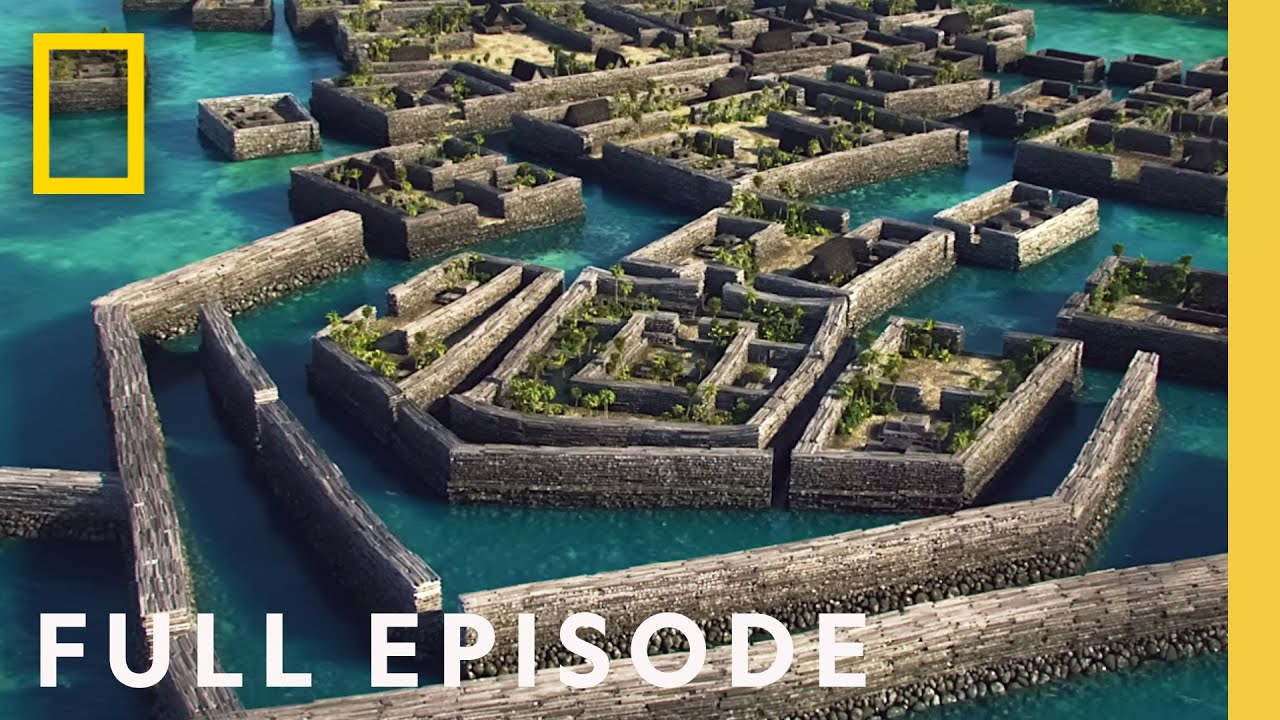
edges that struck him as too unusual for a natural formation intrigued by the geometric nature of the Rocks he noticed that they resembled architectural structures complete with Terraces steps and flat surfaces that mimicked the appearance of Step pyramids and other ancient man-made constructions the site became known as the yonaguni monument named after the southernmost of the ryuku islands in Japan where it was discovered the site's largest and most famous structure which resembles a stepped pyramid extends some 90 M at its base and Rises to a height of about 25 M realizing the potential significance of
his find aratake alerted marine scientists including Professor masaki Kimura of the University of the ryuku Kimura along with other researchers began a detailed investigation of the site which led to further discoveries of The Monument's features including columns roads and what appeared to be cross-shaped formations all suggesting the possibility of an ancient submerged man-made site Dr kamimura argues that the monument could be the remains of a 10,000-year-old city submerged at the end of the last ice age due to rising sea levels according to his research the formations on yonaguni show evidence of human modification such as
the deliberate carving of the Rocks consistent spacing and dimensions of structural features and the presence of what he interprets as roads ceremonial centers and perhaps even large scale Water Management Systems Dr kamora's hypothesis is supported by comparisons to known ancient constructions particularly those involving large stone blocks or megalithic architecture such as those found in ancient Mesopotamia Egypt and Central America these comparisons are used to argue that the skills and Technologies required to create a site like yonaguni might have been available to a prehistoric civilization with Advanced engineering knowledge nevertheless the established archaeological institutions deem the
site a natural formation made entirely by nature but how is this possible considering there are straight lines steps and sharp edges all with exact 90° angles the region around yonaguni has a rich history and mythology that includes Legends of lost continents and great floods similar to flood myths found in many cultures around the world these stories passed down through generations sometimes speak of ancient cities and civilizations that were swallowed by the Sea lending a mythical Allure to the idea that yonaguni could be a remnant of such a lost world one such story is the the
Lost ancient Kingdom of yamatai it is believed to have been a vast and Powerful nation that disappeared from history as rising sea levels submerged its cities beneath the ocean yamatai was reportedly governed by a mysterious sorceress named himiko its exact location has never been identified nor have the causes of its Vanishing been understood interestingly the existence of yamatai has been confirmed by historical documents from 300 ad records even mention their Queen himiko dispatching an Envoy to the Chinese emperor it's theorized that tectonic movements in the region may have led to yamatai being engulfed by the
Sea despite the fascinating theories of a man-made origin the yonaguni monument is the subject of ongoing debate among scientists some geologists and archaeologists argue that The Monument's features can be explained by natural geological processes such as tectonic activity which is common in this seismically active region they point out that Sandstone which makes up the monument is prone to fracturing and erosion in patterns that can mimic man-made structures however the theory that the yonaguni monument might be man made is not without its merits and continues to be a subject of intense research and exploration the precise
angles and the seeming organization of the structure suggests that further investigations are needed to fully understand the origins and nature of this underwater Enigma there are many more unexplained structures and Mysteries we found during our research both above and below the sea these structures suggest a sophisticated knowledge of engine engineering astronomy and geology indicating that the people who built them had capabilities that far exceed the traditional view of prehistoric societies as we close this exploration the revelations we've encountered compel us to reconsider not just the history of Japan but the very Narrative of human civilization