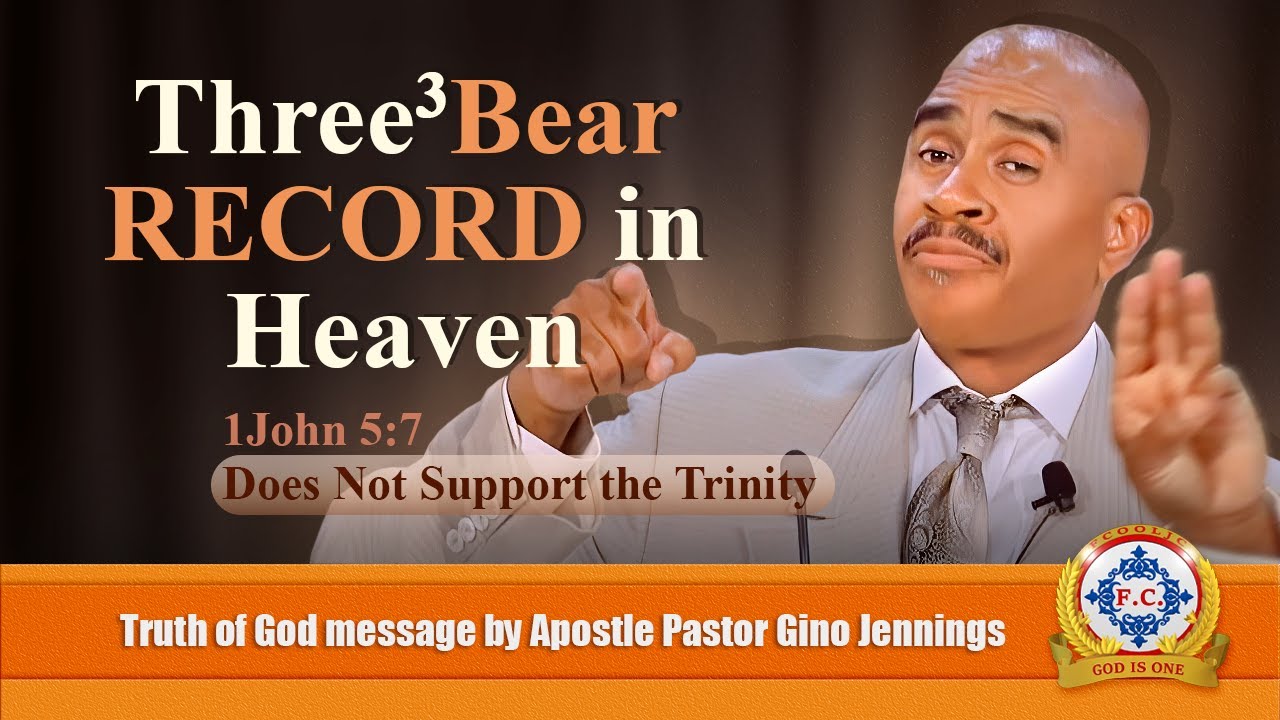
1 John 5:7 states there are three that bear record in heaven the Father the word and the Holy Ghost and these three are one some have cited this verse as evidence for a Triune God while many modern Bible translations render this passage differently than the King James version what should we make of this keep listening for Dr David K Bernard's response welcome to apost IC life in the 21st century a podcast dedicated to helping modern-day Believers live out the teachings of the first century church this podcast is part of the Teaching Ministry of Dr David
K Bernard Dr Bernard has dedicated his life to studying the Bible and helping Believers apply its message to their daily lives in Apostolic life in the 21st century Dr Bernard answers your questions about what the Bible teaches and how those teachings apply to every everyday life if you enjoy this podcast we encourage you to check out Dr David K Bernard's books Dr Bernard has written more than 30 books on biblical Theology and Christian Living and Leadership visit Pentecostal publishing.com and search David Bernard for a list of available titles enter promo code dk10 at checkout to
save 10% on your order that's Pentecostal publishing.com promo code d kb10 to save 10% at checkout thank you for joining us 1 John 5:7 States for there are three that bear record in heaven the Father the word and the Holy Ghost and these three are one now some people have pointed to this verse as proof that John is describing a plurality of persons in the godhead and to make matters even more confusing if you read this verse in some Modern translations it leaves out of the words father word or any reference to Father word and
holy spirit what's going on with this particular verse is it it referring to a trinitarian God and what about all these variations between translations especially modern translations versus the King James version let me answer the question in two parts so first of all I'll address the King James version and then I'll address the other versions so uh by the way for further study my book The Oneness of God discusses this passage in detail also when it comes to looking at the other translations that gets into textual criticism which mean simply means a study of the
underlying Greek text what was the original text and for that study my book God's infallible word uh talks about um the study of the text and particularly the history of this particular passage so let's take the passage on its own terms in the King James version of the Bible notice it says there are three that bear record in heaven the Father the word and the holy ghost or Holy Holy Spirit Well these to paraphrase these will be three different ways that we can know God uh but it says these three are one so that doesn't
indicate three persons or three Gods it indicates one God who is known in three ways or three-fold manifestation by contrast verse 8 says 1 John 58 the very next verse and there are three that bear witness on Earth the spirit the water and the blood and these three agree in one and without going to great detail the spirit water and blood work together for our Salvation so you can think of how are we saved the blood of Jesus Christ we're baptized in water we're baptized in the spirit uh you can say there's the witness Jesus
was baptized in water to inaugurate his ministry the Holy Spirit descended upon him then at the cross water and blood came out of his side so you can say these are three elements that bear witness to our Salvation and are in involved in our salvation but I point this out because it says these three agree in one so it doesn't say these three are one so the distinct impression is these are three different elements that work together but so if if John The Inspired writer wanted to say the Father the word and the spirit are
three persons that are united that agree together that work together he could have used the very same language that he used verse 8 but he didn't he said these three are one so significantly this is the only verse of the entire Bible only in the new in the King James and related translations that use the word three for God and it ends up saying these three are one not just United not just agree are identical are one and of course as we know there's no place in the the whole Bible in any translation that uses
the word Trinity for God or or three persons so I think the idea that you would jump to say these are three different persons of the Trinity is really not supported by scripture at all but let's go back to it if these are three different ways of knowing the one God father is a term of relationship so I've got three kids before my first child was born I was not a father suddenly when my son was born I became a father I didn't become a different person I didn't split into two persons I entered a
new relationship so we say our father we're talking about God in relationship to human beings when we say the word that's God in self-revelation God revealing himself God uttering himself and we say the spirit the holy ghost or the Holy Spirit that's God in spiritual presence and action these are three different ways of knowing one God let me give you an analogy I'm one person uh you can know me in a relationship so my children know me as father uh you can know me by my word even if you've never met me you can read
my books you can listen to this podcast and you can know a lot about me you can get some idea of what I believe and who I am and what my personality is like through my word and then you can know me by my spirit so if we sit down and have lunch together or if we pray together you can feel my spirit you get a better understanding of who I really am by that personal interaction but I'm not three persons you can know me in relationship like Father you can know me by my word
you can know me by my spirit but at the end of the day you only know one person and if you want to Encompass all of my personality all who I am in all Dimensions if you say David Bernard that one name encompasses it all now this is how the Bible speaks about God so God is our father because he created us and gave us life Malachi 2:10 God has revealed himself through his word the word actually is God himself in Revelation John 1:1 the word became flesh uh God revealed himself uttered himself disclosed himself
in flesh John 1:14 and then we know God's spirit in 1 Corinthians chapter 2 even talks about this that um you know the the spirit of a man uh how do we really know a man the spirit that's in the man in the person um actually reveals himself so the spirit of a man is not a different person from the man and so 1 Corinthians 2 talks about the spirit of a man and the man and it talks about the spirit of God and God so again the implication is not two persons but the inner
being of God revealed or knowing the mind of God just like you you would know the mind of a person uh likewise the Old Testament book of Psalms or Isaiah 5 talks about God's word going forth from him and it doesn't return void God's word Goes Forth and heals people not a second person but God's revelation so from that perspective we see the Father the word and the spirit are three manifestations are three ways of knowing to one God and significantly the doctor of the Trinity says the three Divine persons their official names are father
Son and Holy Spirit well this passage does not even use the term son why would that be because the sun is God's manifestation on Earth but in heaven God's Eternal manifestation was not in a physical form as the Sun but God's Eternal manifestation was his word so notice how precisely this passage fits the doctrine of the Oneness of God now that's explaining it as it's stated but what's really interesting as you point out the modern translations do not even have the phrase the Father the word in the holy spirit it's not even there that's why
um in the modern trinitarian debates when you talk to trinitarian Scholars they will never use this verse to support the TR Trinity because actually they don't think it's original uh and that is not recent that even goes back if you study the controversies over the doctrine of Trinity when it's first preached in the 3 century and fourth Century the people on either side didn't quote this verse because apparently they didn't have it so we don't know for sure but the most ancient Greek manuscripts do not have this verse um it's only in four very late
manuscripts of all the thousands of Greek manuscripts so here's what happened arasmus was a um scholar in Europe and he compiled in 1516 he compiled the Greek New Testament so we didn't have just a complete Greek New Testament that was used in the west we we had the Latin Vulgate which was the Roman Catholic translation used for a thousand years so when arasmus decided to go back and try to reconstruct the original Greek text because the New Testament was originally written in Greek and he wanted to compile that well none of the Greek manuscripts of
all the ones he consulted none of them had this phrase in there so he just excluded it well the Roman Catholic Church got very angry with him because it was in their translation the Latin Vulgate which they regarded as the official Bible and so since rasimus was part of the Catholic Church the leaders of the Catholic Church got very angry with him and said we're going to discipline you if you don't include it so he finally said if you can find one Greek manuscript that has this phrase in it I'll add it back well they
came a few years later and they brought one manuscript so when he published his third edition of the Greek New Testament he added it back because he had promised but he put a note saying basically I suspect they created this manuscript for my benefit nevertheless you know I made the promise they have required me so I'm going to add it and sure enough that manuscript was from the 16th century and it even looks like um you know it was added um and then over time we found three other manuscripts that are about the same time
one of them even actually has it added in a different hand uh so uh now so that means that's why Scholars universally say this particular phrase is not original but how did it get into King James well when the the uh King James translators in the 1600s decided to translate the Bible they used arasmus Greek text but they used his third edition so this phrase had been forced to be in there by the Catholic Authority and so that was the text the King James translators used now when you go back as I said it's not
in any ancient Greek manuscript really it's only in four late manuscripts uh from from about the 14th 15th or 16th centuries you do find in the Latin Vulgate uh as early as about 800 and then the very earliest mention uh of this phrase is from a Spanish theologian uh in about uh probably the fourth Century or maybe fifth century named pryan he's deemed uh by the Catholic Church as a heretic so I actually went back and found it and he quoted from John but this shocked me he said basically and there are three that bear
witness on Earth the there are three that bear witness in heaven the Father the word and the Holy Spirit and these three are one in Christ Jesus so the very first mention of this phrase actually has a very strong Oneness implication and basically tracks Colossians 2:9 for in him dwells all the fullness of the godhead bodily so my point would be simply this if we regard this phrase as originally part of the Bible then I've explained it in a way that's perfectly consistent with the rest of scripture which is what we'd expect because God has
his hand of preservation on the word that doesn't mean any particular translation or text is perfect but I do believe that any widespread text that's used by God's people God's hand of preservation will be on it so there' be no false doct but if you're willing to study textual criticism and try to discern the ancient manuscripts and see what was the original text you could either say it wasn't in there or if it was it was seen as a very definite Oneness text from the earliest times so actually a careful study of 1 John 5:7
uh not only doesn't lead to the Trinity it actually reinforces the doctrine of the Oneness of God thank you for listening to this episode of apostolic life in the 21st century if you enjoy this podcast please take a moment to give us a review on Apple podcasts Spotify or your favorite podcast app we also appreciate it when you share Apostolic life in the 21st century with a friend or family member and make plans to join us again next time as we look at how the Bible applies to Everyday Life