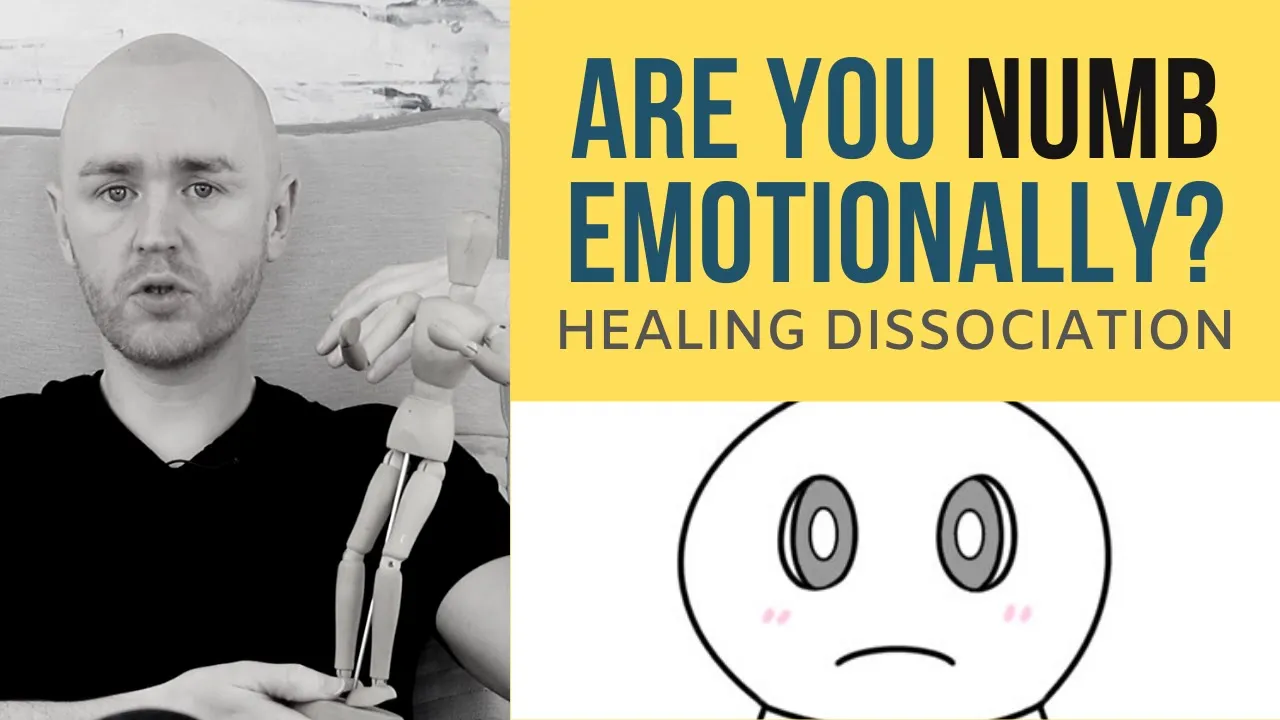
hey everybody it's david here again thanks for joining me i'm gonna talk about an emotional numbness which is a big problem for many many people nowadays what it is what it looks like how it happens and how to start feeling emotions again safely because that's a key word here safely [Music] so I'm gonna talk about emotional numbness sometimes referred to as dissociation there's a question I got its it says I'm coming to terms with the fact that almost all the time I feel numbness and that scares me I feel that it's not normal also I
feel that I won't be able to continue to heal if I'm not in touch with my feelings any advice on this so I wanted to focus on this issue of numbness because as I said it's such a widespread issue not feeling anything you know it's that question sometimes people ask you know how do you feel well what if the answer is well I don't feel anything and I had maybe I haven't felt anything for quite a long time so that's what we're talking about here it's a modern-day issue I put it that way it's a
lot of people have this and a lot of the people that will calm initially for a counseling or therapy they might come with an issue of depression or anxiety maybe grief counseling or something like that people don't normally go to get help for dissociation or just feeling of nothingness until it shows up in other areas of life in problems and I'll talk about what those problems are in a few moments but it's not typically the reason people come to counseling and maybe it should be because at the root cause of a lot of these issues
are depression and anxiety for instance people who stay in therapy long enough they begin to realize hot there is a dissociation going on here I'm actually not really in touch with my feelings I'm having been so if this is an issue for you stay tuned with me here I just want you to invest a few minutes in this in this in time here and on this topic because it's very very treatable okay it doesn't have to be a condition you live with very put up with with for the rest of your life it's very very
possible to address this these problems come later on okay there are different degrees in this the personalization the realization identity confusion and these issues you know their degrees of severity this in terms of how good off you feel from your emotions a lot of it is to do with the fact that well adverse childhood experiences for instance is one but I get into that more detail but I'm talking here about the common everyday issue that I see a lot of people facing okay it's not always as obvious as these more extreme forms of it there's
a common everyday phenomena people just being completely out of touch with their feelings and their emotions and we're going to talk about that and how to address it so the solution that is actually quite simple it's not that it's easy because getting in touch with your feelings is never really easy if it was easy this dissociation never would have happened in the first place but it's quite straightforward and we'll get to that in a moment but I'm going to give you here to start off with I'm going to give you a few ideas of well
how how would I begin to realize or know whether or not I have dissociation or I'm not feeling I'm completely out of touch with my feelings completely out of touch with them I'm going to give you 11 little signs here of what it might look like and to make it more everyday more applicable to you so the first one is not being emotionally moved by beauty I responds to beauty it should be involuntary right it shouldn't be something that we have to work on to be moved by something beautiful so we're talking here about many
people would say things like I'm out in nature I'm on a hike or something I'm with my friends and they're all mooing and eyeing at the beauty of nature meanwhile I'm not feeling anything okay so what could be nature for instance it could be music it could be art it could be friends of yours talking about how cute this little child is newborn child and you don't feel anything inside there's no real movement of emotion there so things that you would maybe normally find or other people find moving or beautiful you don't really have any
reaction to that's one indication I'm going to spend a little bit of time on this if that's okay because it's it's useful to know what it looks like before we can talk about anything else we're going to talk about where it comes from what causes it and to treat it properly the second thing that'll look into what what it appears to be what it looks like remembering very few significant moments so say from the past week the past month or the past year remembering very little not being able to point to any highlights okay so
think back to the last week anything jumping out at you immediately last month last year a psychologist Elizabeth Loftus I think her name was she did a lot of work in terms of memory and emotion and how the two of those things are so so acutely tied in together okay so emotion has a huge impact on what we retain in our memory and if you begin to notice nothing stands out for me nothing from the past period of time in my life really left any impact that's an indication that emotionally I'm not engaged emotion needs
to be there to form strong memories so that's something to look out for okay watch out for any forgetfulness it can be another more it can be an issue in more severe forms of dissociation but very simply not been able to identify yet identify any standout moments the third one I'll talk about here is more about feelings so it's a feeling of people will say it's a feeling of emptiness I feel empty feels like you're missing out what other people have or you feel like an outsider in life sometimes an outsider looking at your own
life but an outsider looking in is what is the feeling okay so an emptiness is always there the fourth molar talked about here there's no real sense of excitement around your goals in life maybe you had that excitement before but it's been a long time since you felt any excitement and again we're going to talk about why that might be there the fifth one is interactions with others are only done due to a sense of obligation so there's no real desire or motivation authentically to go out and meet people and that could be close family
members loved ones or new people or friends in terms of the next I'll talk about is a physical sensation so in terms of physical session there's if you occasionally get the feeling of emptiness that I mentioned in your belly it could be in your chest or it could be in your throat those are very common when we're talking about a dissociation or numbness okay and instead emptiness it's not a bad feeling it's not a good feeling it's a feeling it's very hard to describe which is why so few people talk about this issue of emotional
numbness but they're usually the places that it shows up and think about that you know what like when you want to cry sometimes oftentimes you get a feeling in your throat well if we're repressing feelings it's no wonder then that the part of it is the throat where this is showing off this sensation it's very closely related to this area here the seventh sign we'll look at here you frequently find yourself questioning the meaning or purpose of your life if there is no emotional charge buying the things we're doing or the things we're pursuing it
will begin to feel like why am I doing this okay there's no real payoff for this so that's a big sign they speak frequently questioning the meaning or purpose of life another one is number eight you are occasionally a thrill seeker so what do we mean by that we're talking about reckless behavior or talking about maybe binging or another one we're talking about is provocation which is actually defense mechanism but provocation is I don't feel anything so I'm going to maybe be confrontational what people are trying to bring up some kind of a negative feeling
because many people with this dissociative conditions will say things like I just want to feel something this numbness is the thing that's driving me you know it's really upsetting me and I don't want that I I prefer to feel something rather than nothing so any of those things thrill-seeking trying to go to extremes in order to feel something number nine is you tend to find yourself using phrases like I don't know or something like well I'm not sure or I don't care that's the kind of terminology of this because there's no emotional charge it sounds
like apathy almost an apathy is a lack of emotion the tenth one you can irritate it being around people who get excited or people who are playful or happy why where's the irritation coming from when you're around people who have that energy well really it's it's because of the fear of having to pretend that's where it comes from we don't like being in those situations because we feel we're going to have to put the mask on again we're gonna have to put on the fake smile again even though inside I don't feel actually anything here
so that's one and the last one we'll talk about here before we talk on to move on to talking about where it comes from etcetera etcetera is the last one you show a few external emotional cues so you're looking at for things like when I'm watching a comedy or I'm with friends the way I ever laugh out loud it's almost a thing where your brain is telling you that's funny but you're not laughing okay or it could be something like you've got to know this you don't smile that often you're not really utilizing the the
range of facial expressions that you're capable of you tend to have the same facial expression all the time there's not really much variety in that so those are some of the signs to look out for and I wanted to make that a little bit more down-to-earth every day so that you can begin to realize what we're talking about here emotional numbness you can easily start to identify it and think maybe this is an issue for me if you know what it looks like so that's what emotional numbness is like and there are more extreme versions
of it but that's kind of a taste of what it what it looks like so I haven't described it then now we can begin to move on to okay well if it is an issue in my life why would I get interested in it and try to address it why would I try to fix this issue now I'm using the word fix there it's not a good word to use and I'll explain why later but the reason to become aware of this issue and to start to work on it is because inevitably with numbness or
dissociation problems will start to show up in our lives okay it's really important that we address it because you're our emotions are like a guidance system okay and if that guidance system stops working we go of course we were not going to end up it where we want to now I'm going to give you three examples of problems which will show how numbness and dissociation could potentially lead to variety different problems so here's the first example your mother is emotionally abusive and manipulative imagine this scenario for a person change in this relationship needs to take
place however you start to numb out feelings and are now putting up with her negative behavior you actually are beginning to enable her behavior and maybe are even reinforcing her behavior you begin to feel like a Meritor and over time because you're shooting them these feelings you begin to feel resentful and eventually you begin to feel nothing at all okay so the numbness is it's blocking of important feelings of something has to change it's a way in which change is kind of delayed and that's one example of it the second one might be something like
okay in this person your parent or is feeling upset and disconnected and you feel that this should matter to you and that you would like things to change you'd like to improve and address this but the real motivation to change isn't there because of the Association you're not in touch with your feelings intellectually you might know it's a good idea to change but you're emotionally not engaged with it so you avoid difficult conversations and emotional intimacy due to lack of having any feelings at all what we need for any change really whether it be in
a relationship something else is emotion because emotion and as we've seen memory emotion and motivation are hugely interconnected you can almost say the drama synonymous really so without the emotional impact or the emotional drive change in a relationship is going to be hard to find the last example of what it might look like a problem that might come about from this you've disliked your job for years frustration and prolonged hopelessness have led to numbing or dissociation so if you're really bad about it for years feeling forced obligated and the dose dissociation is come in the
innate talent you have never gets to come forward as numbness is allowing you to tolerate the life that caused these negative feelings to begin with so we're seeing here a picture of actually these negative feelings okay they're difficult to handle but they actually have a purpose and if I'm not feeling them I'm going to really what we're seeing there is stagnate we're going to stagnate in life we're not going to actually move forward things aren't going to change as they should maybe not as quickly as they should so what we've talked about so far what
it looks like and some potential issues what problems might stem from this really stagnation in life slowing down of development is what we're looking at with this issue so let's focus a little bit here on the next part which is how does this happen or why does this happen to explain why dissociation happens or numbness happens I want to talk about physical pain because we all know we know more about physical pain than we do about emotional pain emotional pain is this mysterious thing physical pain is it's pretty obvious right but think about this you
may have heard stories about you know a mom lifts a car when her children are trapped in the car or something like that superhuman strength or a story like a person maybe they were assaulted they were attacked and they had to run away from the danger and they got to the hospital and realized when they got to the hospital and after the adrenaline had left the doctor said that's amazing than how you got here your ankle is broken so they were able to run for however long it was maybe a mile with a broken ankle
now if you tried to ruin on a broken ankle on a normal situation in normal conditions your remote your your pain sensors your your nervous system would kick in and say stop immediately but when there's danger or threat your nervous system says he can deal with this later for now we're gonna repress that pain I'm gonna put it out of his awareness his or her awareness and then that person can get to safety so already we're beginning at sea for physical pain the nervous system is involved and it gets short-circuited when safety is an issue
so we can also shut down emotional pain this is the thing we need to realize it's just shutting down of the system so what happens typically probably the more than theity the most common cause if you like of dissociation numbness is childhood trauma particularly not even specific negative events but prolonged negative events in childhood complex childhood trauma another word for that is childhood emotional neglect so often it's to deal with a person's point of view preferences emotional needs were ignored in childhood and the nervous system which is deeply emotional basically decides that's enough okay we
felt too much pain here and we're going to shut down the feelings so it can also happen in later life it's not always related to childhood for instance if a person goes through a prolonged difficult experience in life order feeling helplessness whole business no sense that this is going to end this emotional pain I mean it can happen there as well let's put it's more particularly the more severe forms of dissociation are related to childhood but it can happen to anybody and other areas that show up in if you're in toxic relationship for a long
period of time repeated negative relationships the nervous system starts to get guarded and shuts down the emotional feelings something else of course that happens is with well one of the most painful things in life is grief when that happens it can be so overwhelming again that the the short short circuits the emotional nervous system and pain is kept it down so what do I mean by pain being kept down well it's very well understood in fact less well understood than physical pain but it is well understood and talked about and written about by people put
if you wanted to talk about how that happens defense mechanisms one way is if I'm in emotional pain I'm going to go into denial about this I'm by denial I be obviously mean to willfully ignore it to distract ourselves to avoid ourselves from the feelings I'm people do that people will actually even remember consciously deciding because they're in so much emotional pain I'm not going to feel anything anymore and it's almost like and that's when they've the feeling and the throw comes in and another feelings but it can be it can people remember making those
choices sometimes most of the time when it's denial the other ones are repression suppression various coping mechanisms coping strategies as well such as busyness sublimation reaction formation or refining and I could talk about those maybe again but people sometimes remember making the conscious decision but more often than not it's completely unconscious it just happens the body takes over if you like and says that's enough I'm not feeling this anymore repression is basically it's just pulled out of awareness it just kept it down not allowed to feel that suppression is more like a feeling of anger
for instance when you know why anger is coming up but you're fighting it off okay those are the mechanisms and if they are used often and often dissociation is finally the result of this coping mechanisms coping strategies we busy ourselves we use sublimation we use all sorts of things sublimation is more healthy outlets to mask an emotional problem all to do with not feeling the feelings and if they're ignored for long enough that can lead to this dissociation just not feeling anything so I want you to we're talking about this we're talking about the system
is overwhelmed and I don't want you to think that this is a bad thing necessarily because for a person to go into dissociative condition like this to just not feel anything well it had to happen it was it's like when when you hurt your foot it has to be in pain right and if it's overwhelming pain you pass out because that happens okay that's a very natural thing to happen so this too is a very natural thing that but no it's not something that should be lived with you know it's not something that everybody has
but it's something that you can very I'm gonna move on to that now actually how do we start to deal with this issue because it is so possible okay it's very very possible but it happens for a reason it's not just something that happens randomly it's due to emotional pain and suffering and prolonged emotional pain and suffering usually so we're gonna talk here a little bit about now that were we know what it is we know what it looks like we know why it's happened what do we start to do about this this emotional numbness
that's there well let me just say a quick word about what doesn't work okay it's not just cheer up okay just just pull yourself up by the bootstraps or whatever people say you know just be happy it's not as simple as that because what is really going on here you know if anyone does tell that you tell you that just ignore them and realize you know it's coming from a good place I'm sure they're trying to help but it's not helpful it's not helpful to just say that it's something that you should just ignore really
because this all comes down to ten ten is a to safety that's the word the system shut down because it didn't feel it was safe to feel those feelings so in order for us to start feeling feelings again we're going to have to you begin to soothe the nervous system the emotional nervous system to make it feel that it's safe enough to start feeling these feelings again and all sorts of feelings okay that it's safe to feel those feelings and it's not going to be overwhelmed anymore that's what we're gonna have to do so one
thing that can be helpful is to acknowledge the anomalous itself as not an emotion because it feels like an a lack of emotion but we need to acknowledge it and one way to acknowledge it is to say that it's an experience okay so that what obviously does it stops kind of minimizing the xpd they don't know the anomalous or the emptiness and it kind of validates that experience it's basically saying this is something okay this is not nothing this is a thing that I'm experiencing and I can be with okay so to call it an
experience is just one a little step that will help us say okay I'm going to be with this I can give this thing time it's not something that I have to wait to pass over until something happens that numbness that you're feeling is something it's happening right now okay if you're going through and you're experiencing that numbness so it's to realize okay this is an experience and let me see what will be like if I can become more present with this there's numbness in this emptiness remember I want you to always realize this does not
mean that you're broken as a person normally does not mean broke it's actually a sign that your nervous system is very sensitive and very very you know working properly in terms of keeping you safe because all sorts of things can happen to people when they're emotionally overpowered or overwhelmed and if this happens it's for a good reason and it's actually shown that your nervous system is operating properly a time in the past more than likely emotionally it was overwhelmed so what we need to start doing now is realize we need to say to the nervous
system which is catching up maybe with your your conscious mind it's safe again we need to convince the nervous system that is safe again but it's not broken you know it's just guarded it's in a defensive posture and it needs to be told okay thank you that worked that was helpful for that period in my life that time in my life but now I can start to gradually begin to soothe the nervous system not fight it because we fight it all the time this is actually part of the problem we fight against David negative emotions
and then the numbness itself would fight against it on this so you're not broken it's just about safety here's a huge piece in this when you're experiencing numbness and even you you might begin to realize this is an issue don't try to feel anything okay so let's say you're out on that walk with your friends on the hike and you think god I should be I should be reacting to this I should be having an inner feeling something don't try to force yourself to feel anything all feelings particularly beautiful feelings pleasurable joyful feelings should be
involuntary and if there's not an involuntary response it means that there's no malice there and that numbness is trying to tell you something sowhat's don't try to feel okay don't feel like even in social situations if you can at all if you can manage to not put on the fake smile if you don't want to you don't have to do that okay that can be more challenging but this isn't about making yourself feel something that's not what this is about in fact that's part of the problem because we try then to feel feelings and it
we just ruin it frustration because the nervous system is still guarded and it just feels big and then we it's reinforced in this thing that there's something wrong with me or I'm broke broken so what we're going to do instead of that instead of trying to feel something is to make it a space in your life maybe for some practice with this to be with that numbness I'm basically what I mean by being written ominous is to go into and feel that numbness without an agenda to start to say okay I'm going to just feel
the numbness I'm going to be with the anomalous I'm not gonna fix it I'm not gonna get rid of it I'm not gonna try and feel happy you're sad or anything I'm just gonna be with it and I'm going to meet it like I would any other emotion I'm trying to process in a healthy way for instance if sadness comes up well what we try to do with sadness sadness comes up and basically it's saying is there any room for me here so one of the things is that we're going to try and do is
not try to feel anything we can't force ourselves to feel feelings that's one of the things and that's difficult because we're so used to using our will to make things happen in our day-to-day lives when it comes to feelings nothing authentic can be forced nothing can be rushed we're trying to calm the nervous system one of the things I say it's people just who usually ask yourself the question talk to the feeling or the numbness you're talking to their nervous system really you're trying to get it to drop its defensive posture we ask things like
thank you what is it that you're trying to protect me from because that question itself automatically assumes that the the nervous system is actually trying to keep you safe so you're acknowledging the job it's doing for you while you're also kind of trying to get it to calm itself down so we're not gonna try and feel anything we can't force them all reactions responses to beauty to joyful things in life should be involuntary it should happen automatically without any force coming into the picture at all so two more things I'm going to talk about here
one of them is safety first if the whole issue is about the emotional blockers come in because the nervous system has said it's not safe to feel these feelings anymore it's hopeless it's too painful what we need to do is in any way we can in life start to find out what will help me feel safe now if it's to talk about emotional problems it could be to find help to talk with someone put it be whoever it is you talk to you whether it's a professional therapist or a friend a close friend a family
member someone you trust and someone that you know is going to be to make you feel safe and reassured to talk about whatever the feelings are for you also in your day to day life if you can start to do things that make you feel more and more safe whatever that could be and that could be really prioritizing what are it what's important to you what's less important to you maybe not being so overwhelmed about things reducing stress as much as you can in your life to begin to start to really to help the nervous
systems realize okay it's safe now there's no danger here we're not as overwhelmed we're not as threatened as we used to be and to find a safe environment in which you can talk about your feelings and share your feelings now with all of this said the last thing I'm going to say is I'll talk a little bit about my own experience with this because actually we're talking about this thing here and this is the body okay and for a long long long time I was very resistant and reluctant to do anything when it came to
body work in psychotherapy certainly personally for me I always had this kind of thing where I could do cognitive stuff all the time and the cognitive training is huge is that something I tell people will always be a part of solution but bodywork is to really just get in touch with the sensations the physical sensations in your body again build this into your practice whenever your practice is start to become aware of touch you know to become more aware of how things feel how things taste what sounds do I hear what am I seeing start
to notice things more but the biggest thing of all in terms of body work is to start to bring your attention from the external serve focus so much which is fine has to happen in life it's a big big part of the most of our life is externally focused but in our practice we bring in attention into the internal world and we do that through two ways really the main one is first of all primarily is true the breathing so you begin to become aware of the breath because we're never aware of that in the
day now years ago I would hear people talk about this and I was so reluctant to do it but when I started to do this personally it was a huge huge help begin to start doing some breathing work learning some breathing techniques also it can be just to become aware of the physical certain sensations so something like a body scan exercise to just bring awareness to what's going on in my body now okay to start to do that body work in this in terms of healing a nervous system that is in the defensive posture first
of all to begin to realize okay what's going on what's going on in here in terms of the physical sensations and through that practice you'll begin to even just get in touch with you may even begin to realize that there's a problem normally this going on because sometimes this is really interesting actually a lot of people when they're doing meditation they become frustrated with meditation because they're all trying to achieve this thing of inner peace or stillness or something and really even if they think they have it really what that stillness is during mistaken it
for a feeling of numbness its numbness that they recommend aware of so they take a frustrated with that I don't think well this is no big deal but if they can start to begin to be okay with that numbness that numbness starts to shift and it does become more of a peace ægean authentically peaceful situation so I hope this video has been helpful the biggest takeaway message I want you to take from this is to just be with that feeling of numbness without an agenda you're allowed to feel No and if you can start it
just welcome that and not to judge yourself for it not to think that there's something wrong with you or I need to fix this or I need to feel a certain way completely can unconditionally start is just okay look there's a feeling of numbness here until actually start even welcome that feeling you will begin to see that it shifts it starts to change it starts to loosen its hold okay that defensive posture that's causing that numbness will start to ease off and feeling will starting to come back again that is one of the biggest secrets
to all of this it's much the same as processing negative emotions they have be felt first and met with unconditional acceptance okay because that's the thing that we don't want there's the norm this comes up and then it's like the resistance to feeling that numbness and now there's a conflict inside me so what if we just allowed ourselves to feel numbness for a while don't fight and what you just become aware of the fact that I'm fighting it Talon itself is big bringing awareness to with the conflict watch the conflict and allow yourself to just
watch that and if you have a sense that you would like to do addition work with this I would implore you to go and speak to somebody about it because as I said before this can lead to other issues you know it tends to be an underlying cause behind things like anxiety and depression so go and find someone to talk to you can reach me and my website my information is there if you'd like to talk to me about it but go and talk to somebody about this because it's not something that has to impact
your decisions in your life or lead to problems later on it's completely unnecessary and a lot of people have this so you're certainly not alone thank you so much for watching this if you've watched it to the end with me here I really appreciate it and come back again thanks very much you [Music] you