Hi I'm Geoff Lawton and we're going to take you through an introduction to permaculture [Music] [Laughter] [Music] [Music] permaculture design system conceived by Bill Mollison in the 1970s it's a system for sustainable living on earth that benefits all creatures and supplies all The needs of humanity [Music] present systems are failing as miserably resource depletion water storage degrading landscape food shortage climate change [Music] all these things are negative and we don't need to focus on them completely but we need to look at how we can positively design our way out of this problem how we can
come up with Solutions that will supply all our needs and benefit the environment and create absolute abundance that's what we're going to take you through a design system that gives you a positive view on the future something that you can engage in and feel meaningful and that's what we hope you'll enjoy get in the sense of while you're watching this DVD it's a matter of freedom in them so we can just let you go into self managing [Music] Permaculture is a design system but it starts off with ethics it's a movement of people that start
with ethics the ethics would derive from many traditional ethics that people have used to govern the way they behave all around the world the ethics have been condensed they're concise and they come just the three first care care of the earth and all its living and nonliving systems central to this is a life ethic all living things Have an intrinsic worth people care the care of people in permaculture people are central to the way we design so that we can supply our needs in a sustainable way sustainable design central to permaculture to be sustainable if
it's not caring for people if it's making work life hard for people or its enslaving people or it's creating hardship it can't possibly be permaculture permaculture is also people Care as well as earth care the third ethic return of surplus a fair share the return of surplus energy needs and time information anything this in surplus should be returned to the first to ethics there's nothing more worthwhile for surplus to be applied back to earth care and people care in this way we end up in an abundant world so this is a very important beginning and
we must realize that ethics are at the beginning of our culture this creates a new Landscape a new society of people and land-use and resource use it's not just a little bit green it's not just a little bit different it's not people living in a slightly different way it's it's people living way beyond subsistence it's abundance where does permaculture lead to it leads to absolute abundance what is it about it's about science and ethics permaculture is sustainable it's about sustainability sustainable Needs to be defined clearly a sustainable system produces more energy than it consumes enough
in surplus to maintain and replace its components and the system itself over its lifetime therefore if you're looking for a sustainable system as an example living systems natural systems systems fueled by the energy of the Sun the source of all life energy on earth the Sun is the most sustainable system and there we can find models there we can look for Examples there we can define true resources living resources that are renewable endlessly renewable as long as the Sun continues to shine we don't have to worry about there were new ability of our resources because
the depletion of energy the spent energy the entropy energy that's been contained that is spent is actually enhanced by living systems when we design to trap the energy of the Sun we're very much about resources defined in a natural way Yields as in yield of a system so that we can plan very long term yields and very fast yield from a system we are designers of systems that mimic nature systems that run on the same patterns as nature and when you look at natural systems they're extremely diverse diversity in nature links to stability stability creates
fertility and fertility gives us that design productivity diversity is not just a collection Though diversity is about interaction interactivity the interaction between the diverse elements uses that ecosystemic that life web type stability our themes in design very much focus on those models so that our system our teacher is the natural system [Music] stacking diversity into systems stores and creates an energy surplus for us in design but we don't just stack in the physical sense we actually look at Stacking in time time stacking systems through succession looking at succession in natural systems there were parroted mechanisms
the mechanics of nature if you like those systems can be replicated but they can actually be improved and improving on nature is something that is fine if we're actually in a positive mode and we're benefiting nature's reparative functions we can stack in space and in time and that's a really exciting Concept I know it's full of fungi if I just pull out a branch here there's all kinds of fun hi everything's going back down to soil it's just wrong six months ago it was a tree we purposely put it back down to the soil it's
jobs done time stacked out produce mulch for six years in cut and mulched and dropped and produced and then it's decided it's finished job done and before it's even hit the ground the fungi is breaking it down so I'd say if I gave that a bit of a kick it'll go down right now so I'm just going to do that and we're just gonna put it on the ground so permaculture systems are very much about poly cultural systems systems that include many different elements and many different elements stacked together that don't just function at one
time but extend their functions over time so these systems we have to learn how to design we have to look at those concepts And say that's how nature works how do we then improve on those functions and that's very much permaculture [Music] yield through diversity is not about trophy hunter mentality about what's the biggest crop we get over the species that we choose it's not about monoculture where we have one crop one field one yield at one time permaculture design is about energy efficiency so it's very much about how Much Energy's you put in or
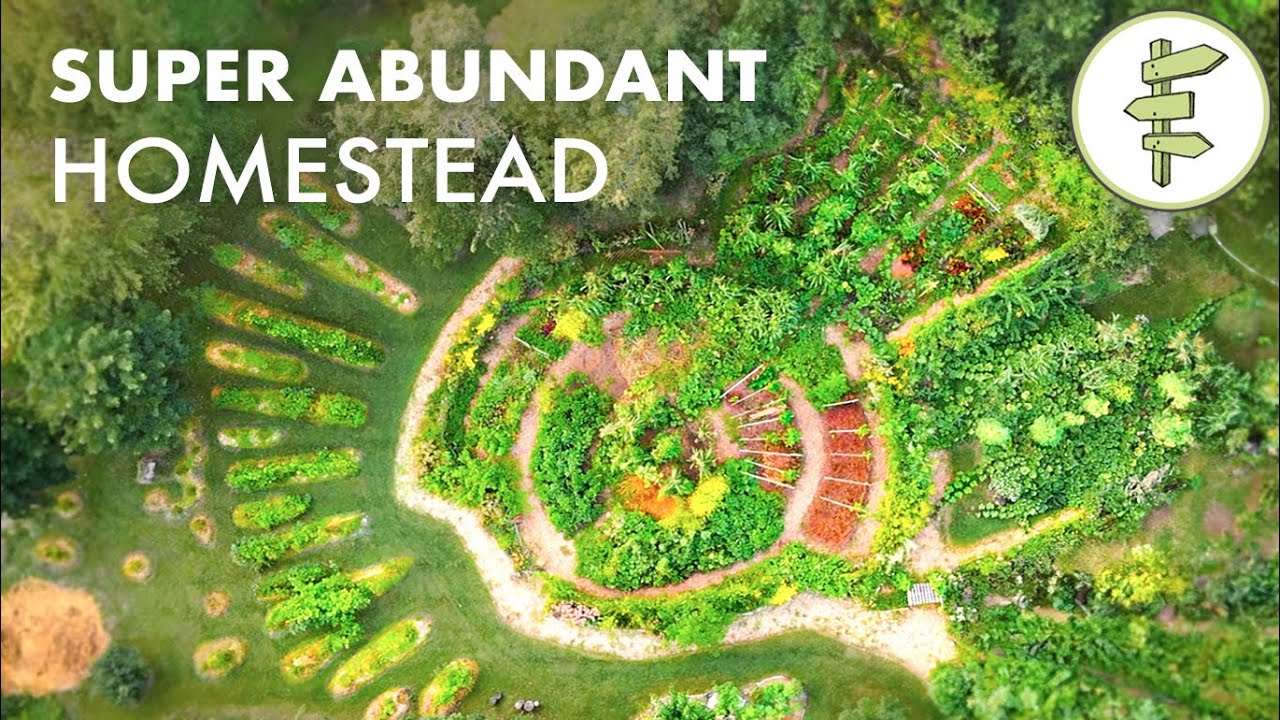
how much energy to get out so how much effort do you put into creating a yield through all the interactions between the diverse elements through all the stacking of time of yield over an area we end up with a very efficient system we have multiple yield over multiple time with very low inputs an extremely efficient output so here we are next to a water system which is also next to a food forest which is also next to a Productive dam at bamboo system we're in a poly culturally designed farm where there are multiple yields in
almost every moment of the day every day of the year the efficiency of yield over the area in relation to the energy input is extremely high because it benefits nature because it benefits the landscape exactly the way that natural systems do this is how you come up with good design it's not about the yield per element it's about the yield over the area in Relation to the energy that you've used to create that yield a lot of systems end up producing on their own with the minimum amount of an energy input in fact they will
produce over time quite often without any energy input and no maintenance at all it just takes a very small amount of energy to keep them running and just a very specific understanding so instead of a hundred hours of meaningless work and one hours thinking You're more likely in a permaculture system to be spending a hundred hours of meaningful thinking and one hour of also meaningful work a much more efficient system and a much more pleasurable system to be working amongst than living amongst this is how we will stabilize society this is how we'll stabilize the
world's environments by supplying our needs in a way that creates sustainable world methods of design in natural systems every element performs more than One function in fact many functions and every function is supported by many elements so when we look at the method of design techniques that we use our only how you do something it's a one dimensional element a technique but to take that a little bit further is to include a time element and that means using the strategy [Music] a strategy is how and when you do something so that is two dimensions but
In that design science permaculture is about patterning of design in patterning we use multiple functions multiple elements and we emphasize their connections so it's multi-dimensional that's design and for that we need to analyze elements we need approaches to design so all the elements that we use and important vegetable structural structures plants trees animal systems they're all have to be analyzed so that We know what inputs they need what outputs they produce and their general characteristics their intrinsic characteristics this is an analysis process so we'll then we can patent the assembly of elements and their connections
so we're starting to look at design processes with styling of the design methods if you look at an animal its its breed characteristics if you're looking at structure you're looking at performance And materials and and the energy embodiment of the materials and you're looking at plants you're looking at the way they guild and their functions and the climates they come from and their tolerances this is analysis of element the chicken we can use this as an example of analysis of an element and it is often used so we look at the chickens say what does
the chicken need well a chicken obviously needs food a chicken needs good air and in a humid climate Like this it needs a good airflow in a cold climate it needs a warm air so remove the stress of the bird Hey a chicken needs other chickens to produce more chickens they also need grit because they have a gizzard here in the throat a muscle that grinds up hard shelled seeds it needs dust dust for a dust bath it needs good quality water chickens are very bad muddying and manure in their water and a chicken needs
control if you Don't control your chickens they'll decide what germinates in your garden they'll free-range through systems and scratch through all the areas you don't need no scratch as well as control a chicken also needs protection because they're easily predated on then they also need good roofs they need someone to rooster need someone to lay their eggs so these are the needs of a chicken so then there are other products and behaviors that were chicken They obviously produce eggs they produce meat they produce manure good quality manure they also produce feathers which are high in
protein and become nitrogen in the compost heap and because it's a warm-blooded animal produces yes it produces Heat a lot of chickens together will actually start to heat up a room or a glass house or a growing space their behaviors are that they they scratch they shred up mulch they manure mulch they eat seeds And break down the cycles of weeds and they eat pests larvae then we have the intrinsic characteristics of a chicken this is a band welder a particular breed pretty good egg layer not a bad meat bird it's a multi-purpose bird you
get some birds that are really good meat birds and other birds that are really good egg layers these are the intrinsic factors that breed characteristics of this element this is a classic example of an element analysis now we can go Through all of the elements are designed in this way all of the animals all of the plants all of the structures they all have needs products and intrinsic factors this way we can choose good elements with good connections to other elements if we look at their products they have to be neat they have to be
used by the system anything that is oversupplied in a way that can't be to put put into productive use goes into chaos and as if that's a Product it can often be just interpreters at a pollution so all of their products need to be used by the system and all of their needs should be provided by the system so a system becomes a closed cycle ecosystemic system a system that cycles within itself [Music] so the landscape of humanity the farm the urban area the urban landscape becomes like an organism to itself Supplying its own needs
through good design analysis this is only one way to design we can also look at others so we can use multiple methods of design approach and will like there also examine and explore observation design through observation [Music] observations in nature and the principles that we observe in natural systems leaders to design harmonic and efficient systems we can see all kinds Of examples around us even in cities even in the country we can see all kinds of examples that lead us towards good design good design makes it efficient and that gives us a very efficient productivity
stability in harmony with nature natural systems are our teachers lessons and examples to act by here amongst our okra plants I have one of our local weeds it's a spiky little character but it's amaranth an Emirates weed and it Actually has some grain in the heads this is an indication that amaranth grows well here so that's what we've planted is one of our main grain crops and behind me you can see red amaranth and behind the corner whole row of golden amaranth all grown really well it's the same as our little friend here the weed
is also an amaranth indicating this is good amaranth country an observation and a lesson from nature indicators all we Have to do is keep our eyes open and we can make these assumptions and guesses try them out usually they work we look at landscape in a series of zones and we go from zone one which is an inner zone closest to the center of energy which is usually the house or the main human activity this is an area that has most visits most use and as the most density of elements and here there are special
elements things that are of great value we take Great care of Management zone 2 is the next so now and immediately is larger and zone 2 is actually a broader zone where there are less elements and the maintenance is a little bit more vague so out in zone 2 we have our food forests we have our forage crops where we make grow crops for animals to provide their food broadacre crops where we grow our main carbohydrate foods or our main foods so our main crop gardens not a kitchen garden but the broader Main crop garden
is known to and in some climates colder climates our firewood may be produced there a woodlot when we go out the game we move into zone 3 which is a much broader zone here you have their larger farm type systems of land use Maria of grazing animals we have large windbreak systems the water bodies will be larger here if we have dams or swells the mulch systems out there are very rough so we're dealing with rough mulches within it with large Branches and speakers and logs we've got animals and broader tree systems and some of
our very large main crops on large acreage may also be out in zone 3 and if we have a a great demand for firewood that also might be out in zone 3 and this is the broad area when we move out to zone 4 zone 4 is found forestry whatever type of forestry that may be and there are many types of forestry not just with timber but for poles for our 3/4 ignorant but animal Systems where animals gathered from the fallen products to the forest fungi forest a multiple variation of the forest but it down
for is forestry of some time and that's a simplified choice and a much larger system in potential then we don't the zone 5 zone 5 is the wilderness then 5 is the wild system the natural system and there's very little we do in zone 5 although we can sustainably gather and we can sustainably hunt [Music] there are two other elements that come into this slope and orientation will change the shape and form of the zonation pattern zone 1 zone 2 zone 3 zone 4 they'll all change in relation to how steep the land is and
which way it faces whether it faces the Sun or the shade or the west or the east so appropriate placement in relation to the energy needed to work that zone will change the shape of that zone and the Human element the element that works the land or the element that interacts with the land will also change the size and shape of zones so if we have a steep slope near the house or the center of energy on the property it will jump quickly into one of the outer zones because of the energy needed to work
on a steep slope zones are never exactly repeated in form and size ratios but they are appropriately placed in relation to the land itself and the Human use it's an energy efficient planet from the inside out so when we're planning zones and the placement of element is there elements in terms we actually look for an analysis process where we say how many visits per year are we going to make to that element that'll give us an idea of where it fits in a zone and then which elements fit together so that they interact together and
we can get multi-purpose interactions on the same Stanked job energy pathway we're starting to put elements together in relation to ship to each other within their numbers of energy requirements per year their number of visits so it's a very energy efficient planning system sector analysis is how we observe the energies on the site of any design and we look at the energies that actually flow through a site these can be the winter Sun angles sunrise sunset and midday the Summer Sun angles again Sunrise sunset midday the prevailing winds the good views the bad views the
noise or the dust winds that we might want to block the flood and frost that we might want for purposes or not the cold winter wind all of these things are potential energies which are on any one site these were by design change the zones reduce the stress on the site therefore enhancing the system and the life on the sister of the sister create microclimate can be identified in Many different ways through things like observation of wind shear on trees to get as the prevailing winds but also we'll need to find records and information and
local knowledge it's very simple the choices are yes we want that energy and we invite it into the site and encourage it or no we don't want that energy it's not beneficial to us and we want to block it all of this will be a great advantage to our design process and the result of our design so The sector energy map fits over the top of our zone map and changes the form of the zone map and starts that give us a pattern in design this is what creates the beneficial microclimate creation and stress reduction
of a site it's at integral interaction between the two elements sector energies and the efficiency of zone planet well here we are visiting a classic Zone one garden that's well-established very energy-efficient we're just a few Metres from the house and we've got food production everywhere we've got very functional footpaths are all controlled by beneficial grain covers we've got mulch production in surplus all different types high mineral comfrey that can be added to Gardens those animal systems around us that we can add manure this is really classic zone one into the into the zone one scape
we're literally going through an envelope of passion fruit and food through a trellis In a real home situation we have small footpaths surrounded by food edible Brazilian spinach strawberries papaya turmeric ginger edible edges and clumping plants herbs that can be picked this is a food scape but it's also quite ornamental we go on through zones within the zones there's cardamon right here there's choko above us we're next to a printer oven functional structure as seedlings being grown on a table in here we have small ponds ornamental Plants more passionfruit passionfruit and choke Oh above us
at the framed scene the window that we look out on is this green productive food schedule this is so one it's literally controlled by the density diversity of planets this is the urban habitat of sustainable humanity this we have to understand this is our integration of built structure with living productive sustainable food and functional landscaping this is the Future of our supply lines here we have an SRO Lettieri one of the highest fruits in the world in vitamin C oh it's right here like a vitamin C pill near the house down a footpath surrounded by
herbs next to a natural ionized swimming pool no chlorine involved here we have food plants going right up against the pool I can see a a Kang Kong there I Pamir Aquatica and natural spinach of the tropics we have bell peppers Chili Peppers grapevine lost all its leaves in Winter letting the winter light come through but would be a complete green shade in summer as a functional feature underneath we've got Tahitian spinach right outside the door has a really good sub trouble goldleaf crop so we've got all kinds of foods very close and very convenient
typical zone one planning there are human friendly elements here there are garden seats again more bird baths little ponds so there's a diversity of of habitats predator Habitat frog ponds rockeries for lizards perches for birds bird baths to attract in the birds it's a friendly habitat to people he's a big custard apple is a citrus right behind us with a passion fruit with cardamon's with papayas there's just layers and layers and layers of food here there's root crops clumping crops herbs there's more than I could mention but it's all stability by diversity Occupying the spice
this is a very very secure landscape to live in and it's a landscape that you feel as if you're insured your existence is insured and your health is insured and it's vital and it's still interesting and it's still aesthetic this is not an untidy landscape this is a landscape that it's very beautiful and it's very very healthy for you and other creatures we have to go to war against weeds or a war against pests everything is in balance And the surplus is our supply line our needs we see that we are actually interacting with solar
energy and feeding back to the grid we have solar hot water we have solar electricity we have a natural vent on the top of the house calling it down and we even have a satellite dish we're not exclusive is this technology some kind of enemy were interacting with technology in an appropriate way this is a permaculture design system one that really works So as we transit through Zone one we pass a lime thats hanging over from zone two out of the gate and very quickly we go through into a second zone this is the broader
zone of forest and there's fruit on the floor immediately I've got to step over fruit we've got under stories of coffee in production we've got different types of fruit trees all around us we're in a broad zone with rough mulches and this on the edge of Zone one also joins onto zone three in This case there is a zone three because there's a small amount of pasture and we actually have a small dairy on property so as we walk around this Oh more open forest allowance citrus to grow there's a a great diversity of mixtures
of trees it's not just one species this chocolate pudding fruit black sapote e Chinese raisin long and mulberries nitrogen-fixing trees a whole mixture of forestry it's well established and it's quite open it's an It's an easy system to walk through it's an easy system to pick because this systems almost 13 years old now as we get to the edge we'd come up to a section here where zone 3 meets zone 2 and we've got a small dairy yard so there's this one Jersey cow milked every day produces all the milk and all the cheese and
butter for this family and it's fed from a small pasture that actually gains nutrient from zone 1 and zone 2 drainage and the surplus forage Crops that are also mulch crops double as a support for the cow so there's cut forage surplus in zone 1 and 2 it's fed over to our cow which returns from manure back into zone 1 and zone 2 these are simple cycles they're all cycles that work very well and create a very healthy environment so here's a conventional road hard-surface road coming through the landscape and picking up water now the
drain has been picked up so it comes Into this property and fills these two dams on either side the driveway these two dams then picking up the nutrient of life water plants fish and all the other things that naturally occur in water and are encouraged in this situation they then when an overflow occurrences happen and that's quite quick with that feed of water off that road overflow into the system and soak the nutrient down through zone 2 and that soaks into zone 3 this is a matter of just stacking Natural functions through zones making connections
between elements that most people wouldn't see connections for a road to a dam to a productive diverse forest to a nutrient flow to a small pasture simple connections like all the products are really easier this is the zone planning this is design function this makes life productivity healthy systems easier to achieve design planning here we have a an organic matter swell full of all kinds of Organic matter broken down branches bits of old furniture there's boxes in here that they're going to go back to the soil there's old overalls there's even old bits of furniture
it'll all break down in this humid material because there's a swale under here that's trapping moisture bananas are sucking that moisture and living on it it's banana fruit above me what a great appropriate system there's Nothing fancy about this but it works and that's the main thing here we are walking again through zone one I'll pick up a bit of forage on the way through and our cows are waiting for us there on the edge of Zone three so here zone two is kind of missing at this point but it doesn't matter we're joining zone
one to zone three and they're really they're really happy about that because they can share in the production and they can produce for us Easily harvested fertilizer as in their manure mineral-rich with our nutrient from our zone one good design this is where things become very functionally energy-efficient we've got all kinds of elements around us that make our work easier and production simply a matter of functional interrelationships from zone 3 and are in this case grazing paddock with our dairy cow and calf through into zone 4 and quickly into zone 5 with a sanctuary dam
and a Palm line valley of wilderness the edge of the system zone 5 cares for itself there is a beautiful backdrop of serenity and sanctuary [Music] [Music] Pattin is simply form created by the pressure between two media like the wind over the ocean creates the waves of the ocean and that is how all pattern is formed no matter how chaotic it may seem in natural systems there is order in the Chaos formed by the pattern this is how energy is trapped in biological systems we need to understand that so we can be sustainable by design
by looking for simple patterns dendritic patterns branching patterns are also the patterns of rivers and tiny little patterns on leaves there are spiral patterns there are tessellation patterns there are circles within circles there are just a few pattern forms but there are many many many variations in innumerable set Of imperfections in pattern our job is not to recreate pattern our job as designers is to let patterns evolve and uncover the patterns within our systems and then harmonize with them only use the patterns as a guide something that tells you I'm harmonizing with the natural system
and harmonizing with the natural patterns I know that that means I'm gonna be more efficient application of pattern is an important part of design not just looking at Pretty patterns in nature or designing for patterns sake but actually finding functional patterns that work for you Here I am in the middle of a great big mulch pit this is over a meter and a half deep and a media high almost above the ground and it's full of mulch and surrounded by soil that's come out of the hole and around it is a gilding of plants a
pattern Gill gritty bananas taro is our Akasha a sweet potato there's some mints there's a whole Mixture of plants mainly bananas yeah corn I can see some yacon there sweet route but this is a really functional design because the edge on the inside of the planted circular row is taken up by the malt and outside is taken up by the rampant productive Grande covers like Pinto peanut and other types of plants that are very abundant we're in a phase of abundance and most of its productive great application of pattern works any way you can grow
bananas papayas or palm Trees and can probably be applied to other species in other climates as well pattern has to be functional so that it saves as energy so when we look at patterns in nature we look at ways that pattern works in a functional energy-saving way [Music] a very pattern that we use to put a banana circle together appears in the stem of the banana itself it's a set of circles within a set of circle this is Actually a set of leaf stems together in the banana itself repeated in the banana circle we know
we're on the right track we're playing the game to the rules of the game that's the way we know that we'll get accumulated and surplus energy within our system we're harmonizing with the patterns of nature patterns in landscape water harvests and patterns in the form of swirls creating edges driveway plantings of bamboos creating edges to pasture Edges on contour down through the main crop edges of driveways planted to different systems creating age opportunities all around us route design I'm stood in amongst the cover crop I've I've not shown fixing cowpea this creates an edge to
a car park around us we see a flowing edge curving through the landscape that's contour connected to the spillway of a dam an edge over flow system everywhere we look there are edges and edges that are opportunities For design only on edges our opportunities to harvest freely available surplus the more convenient practical edges that you can put through poly cultural systems the more stable there agriculture the most productive of all systems the most productive plants by weight come from water or the chestnut lotus root the most productive mulch typhus cattails bulrush the most productive by
mass the most productive Leaf crop in the world King Kong I'd premier Aquatica the agriculture protein production 30 times more productive than land-based protein that's our fish productions maybe 50 times more productive in the tropics there are plants there are fish there's organic matter the fastest soil building mechanism on a shallow lakes and ponds may be shallow marine systems just gets in front of it a fraction but shallow lakes and ponds more productive than Forests in Soul creation anaerobic soil on the bottom of the pond great poly cultural interaction the small-scale aquaculture what people have
done for centuries great stuff great interaction creates the most beautiful edges little flows of water mimics nature a wonderful thing to live around very easy to get production from what looks like a big messy swampy load of rampant plant is really but this is one of the tubers of the tropics this is taro and this is the Potato of the subtropics really it's your carbohydrate crop and what we've got here is a needs between water and land an edge system a swamp and this is a swamp plant with the assistance of water anything in water
doesn't have to fight gravity as much as land-based systems all the animals on land are always fighting against gravity most of the elements in water have a gravity-free environment they float around so they're more Productive taro on the edge of water and land here's a water flow coming down from the lotus pond down to the water chestnut pond before it then goes on to the main dam below these are silt traps and productive systems so they're productive and functional little fish in here to make sure there's no mosquitoes just above this there's a level terrace
that holds water separates divides that the flow of the water taking the energy out of the Water and but above that there's another level Terrace dividing the water and above that there's a circular footpath around a palm circle like the banana circle but a productive palm circle will go up and have a look at that - now here's the palm circle full of mulch and the water divides either side of the palm circle comes on down and then spreads on this level terrace then comes down either side the level chest drops into another level Terrace
then drops Into the latest pond then the water chestnut pond and then the dam this pacifies the flow of the water drops the sediment nutrient and silt traps grows all these productive plants and keeps the bottom dam clean for high quality fish production aquaculture by design using the patterns of nature [Music] observation of the patterns that are all around us and the way that energy is harvested through harmonious pattern Assemblies pattern the edge between chaos and harmony the ultimate expression of a natural system is the point where it goes from harmony to chaos that edge
is the ultimate opportunity for creativity and productivity this is the wow factor in permaculture this is the glue that puts it together that sticks it together that we all inherently understand it comes from our ancestral knowledge of survival we all have it And we can all make links to it this is a subject that is not taught in any other system and this is a subject that were probably excluded by most academics and yet all people understand pattern in some form especially children it's so easy to teach to children the elderly and traditional people who
are not drowning in technology who can respect the patterns of nature here is the form here is the classroom here is a teacher this is the system that has survived for Millennia and will continue to survive this is the diversity nature's University [Music] [Music] as designers of systems we have to realize that the landscape profile that we work in is very important are we on flat country or flattish country are we on hill country are we on rounded country are we on steep volcanic country are we on deserts that are Angular and sharp and shaped
by heat and wind and occasional large water flows and evaporation are we or are we on the rounded landscape of the humid landscapes then the other systems that we need to very clearly understand is which climate are we in there's three major climates the temperate zone that has a cold winter a wet winter and a dry summer the tropical zone which has a wet summer and a dry winter an arid zone which has a a climate where evaporation Is much higher than rainfall and then there are sub climates we can be on earth a little
low island a tropical island or or a sand or coral island our specific design requirements or a high island with basalt or granite these are things we need to take into account when we design because their little design specifics that has to be explained in relation to climate in relation to landscape profiles and you can have a climate that's directly Related to the climatic effect what's called the orographic effect the effect on their climate by the landscape orographic so we're really looking at the biogeography the life of the geography the life of the land in
relation to climate and landscape profiles and this is what a good design course a good permaculture design certificate of course will explain to you and along with your design system and your translation of natural patterns And how to use them you'll be able to design anywhere on any climate any landscape zone 4 farm forestry the outer zone where we simply have to choose what sort of forest it is we're going to grow we can manage the forest to be more productive for poles or timber forage panitch with crops products fall to the ground animals eat
fungi forests be forage craft forest wilderness forest native Forest regrowth forest or all together we can include bamboo native and non-native or just native whatever you'd like this is known for what kind of forest is it that's your choice we have hoop pines and Cary Pines and Queensland white Beach all kinds of high quality timber mixed up with other trees some of them actually understory fruit trees it doesn't really matter this is a vague outer system we're pruning some trees like the gravel you robusta silky oak Here to be to grow straighter so we'll get
a good straight pole out and these timbers or replace all the timber in the infrastructure in the buildings with better timber than the buildings are built with right now this will be high class replacement and it will go on forever they'll never be a shortage of timber on this property or any property that we want to design with good zone for sustainable timber or forest products in general all the forest Products can be in surplus and community forestry can produce forests forever for the community and there's no reason why we can't all have free materials
to build our own houses it's just a matter of community cooperation on community forest land around our human settlements easy design great design sustainable forever no problem 20 of them white breech an endemic tree of this particular area high quality timber no splinters very fine grain used As a boat building timber handrails on some of the old traditional houses beautiful ivory white color phases of abundance extending good elements for a system working go into a phase of abundance so easily we know that ecosystems major in trees and trees are one of the elements that stabilize
our climate transpiration soil cycles buffering of wind creating microclimate condensation the condensation dripping is never candid Much in the precipitation figures crucially important in dry lands where the condensation drip candle n't to 80% of the desert rainfall but without the trees without the ecosystem that mazes in trees you don't get the condensate in surface any of us can harvest appropriate seed for systems any of us can put together nurseries that create phases of abundance that go on forever there's more trees here than we can plant and there always is and there Probably always will be
we live in a happier and a more abundant situation when our human habitat is supported by living systems ecosystems which major in diverse productive stable habitat from wildlife sort creative ecosystems it's all about those extended permanent patents which givers permanent yield and permanent stability or moderate the flows of our rivers will have less floods will have less droughts or moderate our climate All these things are possible it's just a matter accepting that and getting on with the job and it's a good job it's a great job it's the only game in town really it's the
only it's the only optimistic future everything else just looks like a a dead end literally a dead end the energy of flow patterns in water just a gorgeous thing changing endlessly but repeating in form little over vex going through the system what we have to Do is we have to look at pattern and find a functional relationship so that we can say okay this is a useful tool this is one of the most useful tools so we have to look at the boundary patterns the boundary and edges only in natural systems ah the lessons that
we need to know about harvesting surplus only on edges and eco tones do we get accumulated surplus in nature that's an absolute constant so when we replicate that in our designs when we extend edges When we work the boundaries when we work the interactions then we get harvestable surplus and we get productive systems that also benefit the natural system itself we build soil when we build soil and get production where sustainable and that's what we want to be and that's what we need to be soyal an imperative of permaculture that soil creation is something that
is created by good design if we're to be sustainable we must create soil we must Increase the quality of soil and the quantity of soil by the processes which we work if we're not creating soil we can't be sustainable we can fertilize by imitating the forest floor by creating compost biologically active compost stimulates the soil life we can create compost worm farms we can create our own natural fertilizer this is what we have to do to create good biological stimulants they'll actually keep the soil alive Increasing in quality in quantity as long as we're good
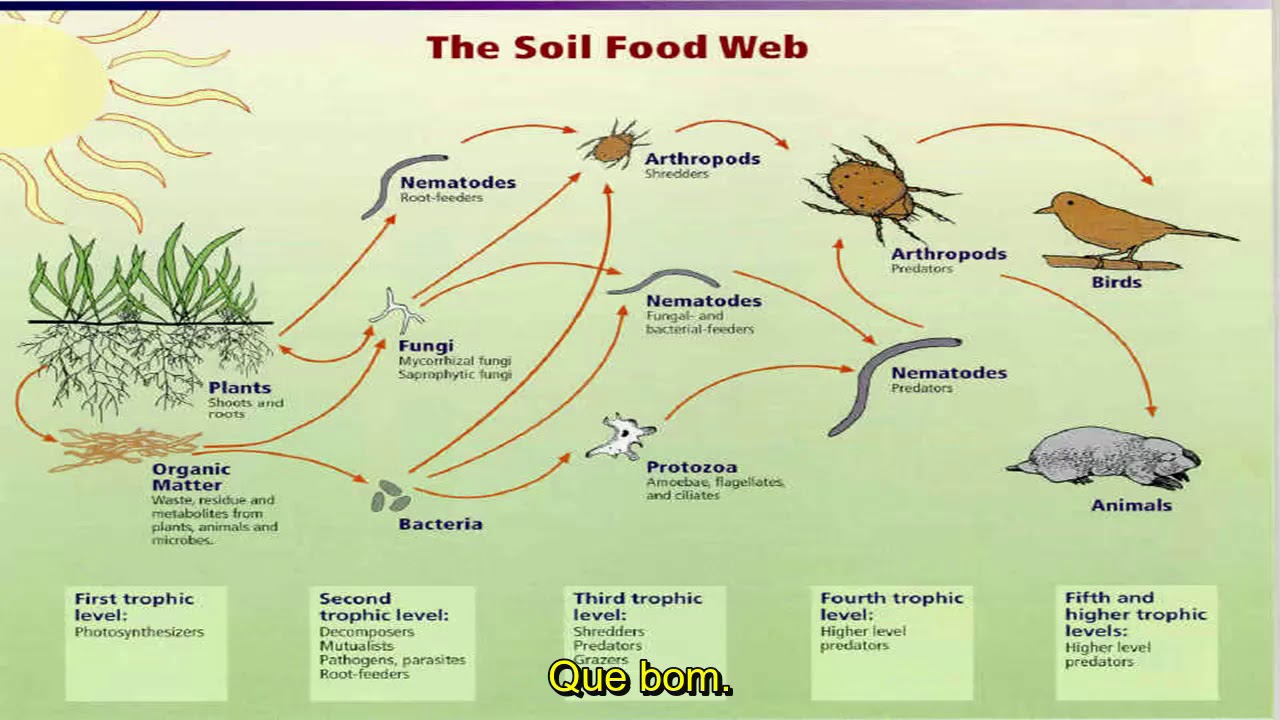
stewards of the landscape so creating our own fertilizer is a matter of using the processes of decomposition create compost underneath areas of windrow of compost [Music] and it's warm it's nearly at the end of its process it's weren't really a way of creating good soil biology so there's lots of Little organisms in here those bacteria and fungi by the billions so it's really stimulating the ecosystem of the soil that's the most important part the soil creation and that's what we do with these these systems we actually imitate the decomposition under the forest floor so that
we can create an extension of the soil biology and it's never that you are feeding the plants you're feeding the soil and the soil organisms are then feeding the Plants is their interaction it's their combinations of action the cooperation between the plants and the soil organisms so in an organic sense you're only ever feeding the soil and we have our compost worms hundreds and hundreds of compost worms eating manure in in vegetable scraps creating high quality fertilizer this is a material they they produce it's a tomato growing out of it that's the high quality castings
that are the end result Of a good quality worm farm it's a simple system it's mostly manure with vegetable scraps on top you can add as much as you like worms elite their own weight every day they create this liquid this worm juice which is full of bacteria beneficial bacteria and you can water it down 20 to 1 as a liquid fertilizer or you can just put it on straight onto the garden that doesn't burn it's just a life enhancing system full of soil biology so It's quite safe to put it on straight and we'll
just stimulate the soil organisms so with this and compost we get all our fertilizer with a little bit of backup from chop and drop leg um trees add in organic matter to the soil every day there's juice every three months there's a whole bath full of high quality worm castings here's some finished compost and that's already broken right down that's pretty high quality stuff worm in There baby worm compost worm there that's a good sign and this is our other fertilizer high quality compost not a little worm there so that's that's a little bit fluffier
than the worm castings which is stickier well because there's a lot of wood and a relationship between the fungi in the wood is beneficial more beneficial fungi in here than there is in the worm farm castings the worm castings are mainly bacteria very little fungi and this has A lot of beneficial fungi as well so two great solid materials and this is just made out of out of manure and plant material green and brown high carbon and high nitrogen materials mixed together and created in the compost now that with a combination of the right planning
guilds will create good soil and it's the soil biology that does the worm [Music] underneath the grande covers here you'll Find that the soil will be full of crumbs it'll be a crumb soil there's a lot of organic matter down here because we chop and drop a lot of it there's a lot of sticks and things but here I can spell mint I'll just pull my weights remember as a bit of the Pinto cleaner underneath there Pinto cleaner under here getting ready there this getting ready to take over as the next succession and the weeds
are being smothered but they're like a soft Surface that almost looks like the compost that's the soil biology converting the organic matter there's something that's a very close to the compost it's a high organic matter soil it started off as a Grace and and it's still a sandy soil but now it's a lot darker and there's a really good texture it's all creation by stimulating biology that's all you need to know about and here are layers and layers layers organic matter and I've just been Chopped down in a very rough way and smothered by this
ground color with its high humidity under here as a great rot in all climates here's a piece of bamboo quite a strong piece of material normally just moist and breaking down in the humidity it doesn't matter a bit of fungus hanging on the side of it they're breaking it down and with a floppy fungus it you're stimulating all these actions in the soil to imitate the forest and doesn't matter which climate You're in if you issue enhance the soil biology in the desert she's just a matter of doing using principles that actually this place the
action of evaporation and evaporation strategies in the desert high humidity breakdown in the tropics extending of the of the wet rot in winter in temperate anything that's the breaks down organic matter anything they extend this the breakdown of organic matter that's going to look at the Natural system let's go into this forested gully here and see what's happening in the natural system because it'll be exactly the same so we're going through a set of zone for forestry trees and we're going in it's a few native trees here we've planted and we're going into a natural
regrowth system in here there is a lot of organic matter naturally so here we've gone through the edge of our planning into the natural forest so here We are when we look down at the ground what are we safe mulch tons of mulch and it's kind of gone through the weedy stage to the weeds being almost insignificant and here we have lots of fungus and the souls probably took the souls that same sandy soil right at the surface little crumbs actually our soil under the sweet potato looks a little bit better than this we're actually
doing a better job than The natural forest it looks like as that soars not quite as deep as as we've gone through into a different color quicker so we've speeded up the processes in nature by imitating nature itself we've looked at the system and said okay that's how it works let's do it and let's rev it up let's get it going faster let's enhance their biological actions let's get into good sustainable production [Music] They're actually inside the teacher this is where you've got to be permaculture earthworks and s resources in action in the landscape here
we are building the dam which we're going to link to water catchment systems and soil so good systems this is the way we rehydrate the landscape this is the way by design we work with bulldozer drivers and earth movers who are really geo surgeons what this is is reconstructive earth surgery we're actually putting back Harmonic patterns to the landscape that will create abundant life-forms malloon Creek Heroes presently two kilometers have large swell and we're putting in an extension of small swells out through this large property we could go to many kilometers as well in the
end so that we can come back from that the landscape which is presently been damaged over a few years of grazing we can bring this landscape back into a treed landscape which has the productivity that will go On indefinitely true sustainability by rehabilitation of landscape earthworks that lead to tree systems and stability of the landscape [Music] this is a miniature earthworks and we're at the end of a spillway Swale here connected to a little dam there it's a tiny little key point down the highest point in the valley that you can hold water in a
stable system and the water will come down the valley and it will Also come down the landscape when there's full saturation of the landscape when there's a watershed moment when the soils that field capacity and this swell will fill and back fled to the dam and the dam when it's full well then back flood up these two swells the Swale on that end is actually just a dead ends well that'll soak the landscape the Swale at this end is also a dead end swell but in the middle of it there's a level sill spillway that
will displace The water very passively across this level surface now the plastic bag here is indicating either very firm ground that's not been disturbed and still well vegetated below or some hardware like concrete or rock as a as a nice solid surface that allows the water displaced very evenly over the level sill can cause no erosion on the lower side here the water would come down like that and it'll go into the silt trap and then the silt clap would overflow into them then The dam would start to fill down both ways up the Swale
you see the moisture creeping into the swell bank [Music] now here goes the level silk [Music] and a passive overflow it just soaks into the landscape then when the rain stopped ice well soaked in there it goes look at it go it's actually soaking right in there in front of our eyes Wolf's gone and their dams fall and the Landscape is hydrated then we have it in miniature the whole process of rehydration of landscape through design and we're stabilizing landscape so that we're introducing more and more diversity and the major element are tree lines on
contour which are also rehydration lines as so good swells linked to water impoundment dams [Music] this works in miniature and it works in the large landscape as well from the Micro to the macro this is a winning system strategies for an alternative global nation the invisible structures the people systems this is where we have to work with the formal and informal economies well we need to set up an ethical basis of an alternative global notion this is where village development and land access become important how do we access land how do we set up bio
regional organizations so people can extend trade between each other Set up the personalities and identify the personalities of bioregions what is the fingerprint of your local systems and your systems where you know that careers and the products and their and their professions that identify We the People the extended families these systems leaders to alternatives to political systems this is where ethics are the way we invest in natural cabin or we can set up local energy trading systems let systems even local currency Systems where we trade on our own value our own value of product within
systems this is where we can create a new United Nations we're Nations can be defined necklace by their political boundaries or their national boundaries nations can be defined by language groups by cultures but they can also be defined by a nation of people who think the same way [Music] permaculture is a nation of people and International global nation of people who think the same way that a positive safe peaceful abundant future is possible by design [Music] [Music] [Music]