Hi everyone welcome my name is Wendy hunter Barker and the assistant dean here at the school of global policy and strategy and it's my pleasure to welcome you to today's webinar on global impacts of koban 19 how nations respond we're very pleased you're able to join us for the second installment of our new series and just to take a moment for those of you not familiar with our school GPS was founded in the mid-1980s it's a Professional school focused on the Pacific although the fulcrum or international relations had been considered to be rooted around the
Atlantic so at the intersection of the US and Europe our founding dean and faculty knew that the relationship between the US and the Americas was where the field was heading and they were right GPS is now a world-renowned public policy school offering a variety of degrees our three Most popular are master's in international affairs a Masters of Public Policy and one-year executive degree we have over 10 active research programs and centers and our faculty come from a number of different disciplines predominantly political science economics and management but we also have faculty from physics engineering and
neurobiology doesn't name a few today we're delighted to have with us two of gps's esteemed faculty Professors Stefan Haggard and Ulrich Ishida and a good friend of the school's ambassador rich Verma without further ado I will turn this over to Professor Haggard thanks very much for getting is going Wendy my name is Stefan Haggard I directed a Korean Pacific program at GPS I spent the last 10 years looking at North Korea pretty closely but I've written on the political economy of East Asia and we're really pleased to be Joined today by to one of additional
faculty member as Wendy said and also rich Burma rich had a career in the State Department served as assistant secretary but most important for us served as US ambassador to India from 2014 2017 Orica shada is a professor of Japanese business here at GPS she has the forthcoming book entitled the business reinvention of Japan and why for the region and she is going to talk to us about Japan and then I'm going to Wrap up by looking at some developments in the countries outside of China Korea Taiwan and Southeast Asia those of you are interested
in our views of China on this question might want to look at the recording from last week in which we had Deb SELEX and Susan shirk and Viktor should talk about the implications of covin for the us-china relationship rich would you like to get us going yeah sure Steph thank you I want to make sure you Guys can hear me okay and let me just share the screen here so we can get started hopefully hopefully everyone can see that okay great so Steph I'm gonna talk about India as you said and really I'm gonna try
to do three things here I'd like to talk about India and but I want to start with just taking a step back and talking about Asia just from not only as being the epicenter of the current epidemic but also a place that We actually think could be the epicenter of the recovery as well and I think it's it's an important juxtaposition and it's happened very quickly and then finally I want to talk about some key takeaways as well and I assured staff I would do all of this in 10 minutes or less and so we're
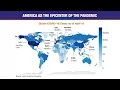
gonna we're gonna plow through this very quickly so let me just go to the the first slide and I'm gonna go back here because I think it's important just to remember how quickly things have Moved over the last three months and this is a this is a map taken from January 30th when we really were talking about Asia as the epicenter of the pandemic we had six cases in the United States China had almost 10,000 cases and we were really looking at this from the US perspective as something over there that was happening in Asia
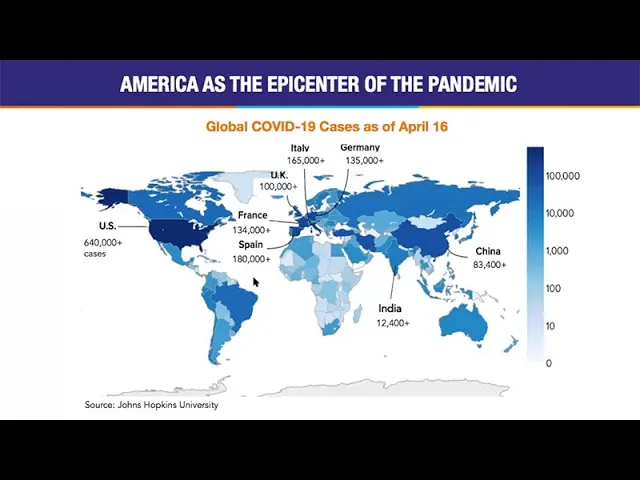
this was an Asia problem this was a Wuhan district and province issue and of course we know by now if I go to This next slide and we really fast forward to the current how dramatically things change so we went to Asia being the epicenter of the pandemic to Asia leveling out and the United States in America being the epicenter of the pandemic in just a very very short period of time we're now at six hundred forty thousand cases of course Europe has been overrun with cases but there is a really interesting country here that
you'll see that has about twelve Thousand four hundred cases and that's that's India and I think before we make the judgment that that Asia has kind of beaten this we really have to see how the story in India plays out because the scale of what could happen in India is so dramatic but I just thought it was important to see this shifting now why do we talk about Asia as a possible center of recovery and stuff I think you'll get to some of this but this is just when we talk about flattening the Curve or
containing the number of cases we see what's happened in Taiwan and Singapore in Indonesia we see South Korea doing good job and we even see China has leveled out under a hundred thousand around eighty five thousand cases now obviously some questions about the accuracy of the information that we're getting but again the numbers have been under control and so we start to look at Asia now can they come out of this bring our Global economy back beat this public health crisis what lessons can we learn so so very very important and valuable lessons coming out
of Asia when we look at India in particular you know it it's there has been such a such a decisive steps taken and I'll certainly cover that but again only about 12,000 cases or so thus far now there is a significant debate in the public health can be about whether they've actually tested Enough people and you see in our column there that we left tested blank because the tested data had been so hard to come by just just today we were able to come up with about 220,000 people in India have been tested that's about
a hundred and seventy-seven people per million right so not very many people tested there are some in the public health community who think that these numbers are actually much bigger that there is a much bigger Problem but it I think it remains to be seen what happens in the next couple weeks but clearly the economic impact has been huge forecasted GDP is now at about two percent that's down from five percent which was already down from eight percent so big a big toll taken unemployment upwards of twenty three percent essentially because the country's in lockdown
the stock market down 25 percent the manufacturing and services index another economic Indicator down about 14 percent so pretty severe economic impact but the public health impact thus far has not mirrored Iran or Italy or Spain the UK or the United States or or China so it is helpful just to look at the steps that they've taken and again they've taken most of these steps in the month of March the first case wasn't until January 30th then there was the first death in March started suspending visas declaration of a national disaster in Middle of March
closing of schools but it wasn't until March 24th that the Prime Minister implemented a national lockdown and we have not seen a national lockdown in any country let alone the size of India and so it's been very very dramatic very very strong one of ministers the other day called it kind of a ruthless containment strategy and and you know again if you look at the numbers you could argue well maybe that is exactly what needed to happen and Then the Prime Minister just addressed the the country on Tuesday and extended the lockdown for another two
weeks now there are some exceptions there are some discussion about a phased reopening but right now 21 days has you know three weeks has gone to five weeks so it's been very very comprehensive response as I said Minister called it a ruthless containment measure that's by far the most comprehensive steps taken by any Government these next two weeks as they roll out more testing or gonna be really critical because India as the tinderbox is what people worry about there has been a severe impact on migrant workers and those in the informal economy a lot of
the migrant workers were caught without being able to get to their homes we saw the pictures and videos of these people trying to travel hundreds of miles and again unlike the United States that India has a federal system but they Have exercised very strong direction from New Delhi no state can do any less than the central government mandate they can do more but they can't do less and that's certainly been something we should we should perhaps watch and potentially learn from a lot of debates about what's essential and what's not essential you know it was
easy 21 days ago to say if you work in the medical sector or that was essential but think about all the different lines into The medicals to sector food service IT service clothing everything that supports the medical sector then you then have to make exceptions for that so that's going to be ongoing when we think about what's essential and not essential on the darker side you know problems with misinformation problems with communalism some targeting of certain religious groups some privacy concerns about contact tracing and using your digital footprint About who you've been in contact with
and I think those those problems are certainly not going to go away anytime soon but overall strong marks for decisive risky and certainly yes ruthless measures so the the issues to watch in the and the key takeaways as we started you know the could this be an Asian led recovery and and these these takeaways are about India but a bit broader as well I think that really depends on whether they can prevent the Second wave and we've seen some problems in Japan in Singapore potentially in in China and again India will be key if India
gets it under control that I think you can you can make that argument about Asia being the potential the the potential place in the world for recovery accurate information is going to be essential as well another takeaway supply chain diversification away from China will continue it had already been continued it had already started right It started because of the trade war it had started because Chinese wages were up it had started because consumers are more discerning it had started because companies wanted to take a little less risk well it's gonna continue even more given this
current crisis and there's going to be even more demand to bring production back home similarly you've got hundreds of American companies that manufacture in India in the medical device space in the Pharmaceutical space and I think once we get through this crisis here I think once we have a chance to do a kind of 9/11 style Commission report I think people are gonna say are we ever gonna be short of ventilators again in the future are we ever gonna be short of personal protective gear in the future I think the answer to that is no
and that means supply chains and inventories that are really focused around the four corners of the United States which may Mean pulling some of that manufacturing out of India obviously nationalism and protectionism on the rise we see that here we see that around the world bigger debates about global immigration and we've seen some countries look exploit this situation to gain greater control look at what Hungary did look at what's happened in the Philippines and in other places where they have used the crisis to consolidate power final two things I Would say no one as much
as we can print Asik ate no one really knows the shape or length of the economic recovery but I think everyone is expecting a very tough second quarter a difficult course of the end of the through the end of the year and twenty one twenty Twenty twenty one could actually see a big rebound and the and the final point you know we covered a lot of negative information the final point and maybe this is just the hopeful side of me maybe we will actually see That we can't solve these problems by ourselves and that you
know whether it's building a wall or keeping people out that's not the solution to these issues and that it really requires international cooperation increased understanding humanity towards others the fact that the g20 or g7 really have been on the sidelines for this crisis is staggering to me that we have no international framework to govern export controls or pharmaceutical supplies let Alone the humanitarian crisis that this is should India want to play a leader in global health security and international institutions it certainly has an open pathway to do that but it that remains to be seen
and Stephen I think I'm a minute over and I will stop there and look forward to the discussions I was really great and is that you'll see a number of these themes are going to come out and in my presentation I'm sure and all workers as well thanks for teeing This up rich Orrico do you want to take us to Japan here thinking so let me share just a few powerpoints on my end as well so I was in in Tokyo as a visiting researcher at a government Research Institute the first three months of this
year so I was actually in Japan and one of the things to figure out okay so I came back with Strong's you know I was reminded of Tolstoy that each and every country that we're talking About here it's really unhappy in its own way about this and countries are taking measures that are very different and I think one of the things one of the points that I would like to to make in my 10 minutes here is that you probably need to withhold judgment on what is the right or wrong thing to do for a
long while until we actually know why countries do what they're doing and and still yet we have some frameworks that allow us to study these differences Across countries and I would like to briefly introduce tide Lewis theory which allows us to get a little bit of a sort of a conceptualized understanding of why countries may differ in their responses to this crisis and then we'll end up on some notes on what the Japan specific situation is right now okay so tight loose theory is a looks at the social norms of behaviors across countries and measures
the consensus of what is the right thing to do in a Certain situation and the tolerance toward deviant behavior and this is research that is done during has been done very carefully out of the University of Maryland and what it shows is that there are persistent differences across countries in how people behave in a given situation and there are some reasons why there are these differences and it would be truly long to get into this but the takeaway is that this these differences result in particularly Different societal preferences of what we should do in time
of crisis and what I've given you here is a distribution of a number of countries that Michelle a girlfriend and her team at the University of Maryland have tested on this and so what you see is that the Asian countries are for reasons that are interesting and we can also discuss that the tight end of the of this distribution and where's the United States and the anglo-saxon Countries are loser what that means is that when we have a situation where somebody might say the right thing right now is to behave in ways that allow social
distancing then people in Japan in particular will actually do this because nobody wants to be the dude that didn't do what was asked to do and nobody wants to stick out and everybody wants to be considerate so I'll come back to what that means for the Japanese situation in Japan we actually have had An interesting test case which was the princess diamond cruise ship which up to this day gives us the best data yet of what we might be dealing with this cruise ship you may remember docked in Yokohama on February 4th 2020 and all
3711 people on that ship were tested ok and there were 27 hundred passengers and the other were crew the crew a little younger the passengers a little older what they found is that out of these the entire you know number of people on the Ship 20% were infected and 0.4% died which might have been a little bit on the low side however the median age of these people that passed away was fairly high and there were no children on board and so so the Japanese took away from there's a senseless okay so 20% would get
this and maybe 1% will die now whether that will turn out to be true for the entire world remains to be seen but that was the mindset with with the Japanese government went into the Crisis because it's happened very early right and out of this resulted a Japanese response to the crisis that is referred to as the cluster Buster response and what that meant is the Japanese government decided not to test broadly for I think very good reasons but that they would be would engage in very super detailed tracing and quite for Coney and quarantine
measures for those that were actually found to have been in contact with Somebody so they went into these clusters and close down clusters but left the rest of the country pretty much do what is called self-restraint so why did they not roll out and more you know widespread testing that is that in the Japanese setting if you were to announce people should get tested literally everybody would rush to the hospital and that was not seem to be a good thing to do at least in early february one of the reasons by the way is that
japanese Houses tend to be too small for isolation so that it wasn't even clear what a countermeasure would have been if somebody would have been found to be positive which is send them back home you can't do that to keep them in the hospital it would overload the hospitals now Japan is using in hotel chains for quarantine purposes so we will see how that's all right so as I mentioned I was in Japan this is the Japanese experience curve here let me just run you through This very briefly so the first case in Japan was
a Tokyo cab driver no less on January 31st and this led to this first cluster Buster approach of going in and looking who this cab driver had been in contact with and then also very early on there was a band of travelers from Hubei Province because this was he may recall at the time of the Chinese New Year celebrations and a lot of tourists were expected by mid February or late February about hundred people were found To be infected in Japan the Emperor's birthday was canceled that was a huge step because it was the would
have been the Emperor's 60th birthday and so forth so there was a cancellation of public events self-restraint became the new motto stay home if he can use a mask sanitized and on February 27th all schools were shut down this was you know really early very important step because it brought home to people That we were getting serious about this we're not going to tell you to stay home but do it if you can and by the way your children are home so by mid-may the laws were amended to allow the government to announced special emergencies
but then there were less than 500 cases so there was a beautiful weekend on the 20th of March and the cherry blossoms were peaking and the Sun was out and the winter was over and so everybody went out to you the cherry blossoms I was one Of them and so and that was was not a good thing to have happened the Tokyo mayor on the 21st warned of an explosion and said we'll do a stay on weekend there's an interesting thing between the governor and the prime minister and as you might know then a few
days a week ago emergency was declared this morning the Prime Minister declared the national emergency there are challenges there are that there are no penalties and there's still some Nightclubs and restaurants open so so Japan is right now I'm not in a good spot here some interesting data what I think are interesting data and that is that you've seen these larger numbers before so what we have here is the confirmed cases and the deceased and then their case fatality rate and percent and then the death per people and Japan's death rate is happy Lee so
far still very low which has led to a lot of you know head scratching you know What is this is there something we can learn from Japan or its Japan just lucky or what might be explanations of why this is and so I'm looking at this 1.5 number and so explanation range from the effectiveness of this cluster Buster approach which may be reaching its limits another data point that's interesting is in Japan the largest incidence is currently still with younger people this is similar to Germany where the skiers got infected First because they caught this
and some ski resort in Japan it's returning students from Europe it's young people that think they're immune and they go to the car ok bar there is a theory also that obligatory BCG vaccinations are helpful in this there is no medical substantiation of this but it's a theory that is going around and the luck element combined it was a social distancing the allergy season 7 or early this year in February and so masks were Everywhere sanitizers we're everywhere and maybe the social distancing was helpful and there are those that think that the the Japan being
a tight culture as it is that people are doing what they asked to do and there are staying at home and they are prepared and there have their fridges filled and so so at least that was the story until recently but now of course we have gross setting on in Japan as well and I think that the two challenges that Japan has right now And I'll end on that is that the Japanese mindset of disasters revolves around earthquakes Japan has 1,500 earthquakes a year and everything that has to do with disasters to set up around
community response to earthquakes this is now the opposite and the opposite Japan is actually not prepared for hospitals are very narrow they have multi multi-use rooms which is at the time an earthquake would be a right thing to have but let me also give You this data point that I think we need to appreciate the Tokyo metropolitan area thirty-eight million people which is the population of the state of California and it is the size of the city of Los Angeles so imagine all of California residents are in Los Angeles and that results in a population
density that ambassador you might say India can challenge that but it is it is up there and so having everybody at home is a Great thing to do but the houses are tiny and and the system is not set up for that and so I'll end on the somber note that Japan is actually right now really putting on a fight to contain this and whether they can do that thanks very much orga well as you'll see I'm going to pick up on a number of the themes here that have already been raised by by rich
and and alright good I just want to check that you can now see the screen can someone confirm Yeah good okay so what I want to do is I want to talk about some of the country cases in East and Southeast Asia and just focus in on some lessons but I do want to say or underline something that already has already said that I think a judgment on the way to do this we're still away from understanding what works and I think one of the things I'm going to say is there are many ways to
get this right just like there are many ways to get it wrong so first let me give a Shout out to two of our great graduate students cory rogers inuyasha on who have helped me track this and this is data we put together which shows the days since the hundred confirmed cases were reported and as you can see as some of riches data had this is a your logarithmic scale where each of these is a multiple of the the previous level and i want to start with south korea and notice that south korea and and
china in the united states all had this very Steep ramp up of cases but south korea has been targeted as one of the the good places are places done relatively well because this is the classic flattening of the curve where you see this turn down in the number of new cases on and it's interesting to contrast this actually with Japan because Japan has ended up with roughly the same number of cases but the the path as as Orica described is more gradual and steady going up and that curve hasn't yet Dropped down but they've ended
in the same place so the first case in South Korea appeared at the end of January there was a particularly virulent cluster in a millenarian religious group in the city of tagu that really contributed to this early ramp up and the that the Korean strategy was in some sense like that of Japan's and really trying to focus on isolating these clusters and breaking them to things strike me about the South Korea Strategist particularly interesting one is very early the government formed a group or led a group of private sector firms in the pharmaceutical industry to
get testing ramped up so very rapid response to try to get the private sector involved in the testing generating tests and I'll show you data on how they tested fairly aggressively but then the other thing was that the mayor's outbreak which had hit South Korea particularly hard had led to some Changes in Korean law which allowed the government to access not only metadata from phones but also credit card data and so one of the interesting discussions around the Korean response has been what the tolerance for that kind of data sharing but what this allowed the
government to do was essentially identify not just areas where there were clusters but down to the individual level and inform the public in a very targeted way about Where there were cases and once people were quarantined they're required to download an app which actually tracked their physical location so a tremendous use of information technology - down to the individual level but also with of course mind debate about whether that you know that violated privacy or it was appropriate thing to do in a crisis like this so I think this is going to be an issue
that will come up repeatedly about how technology can help but also whether There are limits on what we would deem acceptable I mean imagine the United States having the government have access to not just metadata on us but but down at the individual level the big success case I think I think this is now viewed as unambiguous as Taiwan only 395 cases here and Taiwan I think in Hong Kong as well are probably on a path now to what we would call complete suppression which would mean getting new case levels down to literally zero per
day and here The external travel ban played a very important role in Taiwan as well as Locke the fact that there are several hundred thousand Taiwanese working on the mainland on any given day made the authorities particularly conscious of what was going on in Wuhan and so you saw very quick movement not to ban travel back to Taiwan but just to make sure that people were tested and screened coming in and here again you know very Interesting lessons from big data after its democratic transition in the mid 80s Taiwan moved to develop a national healthcare
system a big departure from the previous period and very quickly they were able to integrate national health records with immigration and customs records to be able to track every individual that was coming in the travel histories against against health and again what this permitted in both South Korea and Taiwan I think is a much More targeted approach to closings than we've seen elsewhere so the advantage of testing contact contact tracing and quarantine is partly that you avoid the necessity of these very large scale measures the national lock downs which have been such a head-to overall
economic activity and again just to to make a point that I think Oregon is made and really underlined it if you look at Japan the tests permit per per million are extraordinarily low compared to South Korea but look at Taiwan as well you know very much lower testing and I think the lesson here is it's not how much testing you do it's what you do with the testing to make it effective I think this is just a you know an obvious point that that that emerges from this case Japan is no worse off than South
Korea in terms of total deaths with a fraction of the testing so I think we have to get smarter it's not just testing its what you do with it Now let me turn briefly to Southeast Asia there are a couple story lines here this scale is a little different because you can see the days since the first 100 confirmed cases we're really in this 30 or 40 day range and let me point out here Singapore has a trajectory which is actually quite similar to Japan's on the previous slide that is a lower slope here indicating
lower growth rate but also not completely turning it and those have you been following the crisis note In the last three or four days week Singapore has gone to a national lockdown they call it a circuit breaker action tremendous concentration of cases in worker dormitories in Singapore Malaysian workers and this you know indicates to me something I think we all know is that this virus definitely has a class dimension to it these workers are very vulnerable there in these dormitories where they're sleeping 10 to 12 a room the lockdown had this perverse Effect of actually
expanding the the reach of the virus in Singapore and so you even though this is a tremendous high quality Health System semi-authoritarian government high capacity to act it's still possible to get things wrong and you know Singapore has really been struggling but let me focus on the Southeast Asian cases because the one that worries me the most is Indonesia and here I really want to pick up on an important point that rich Made about poverty and informality because remember up until this point the crisis has been overwhelmingly in China which for all practical purposes has
to be viewed as an advanced industrial stage in terms of its capacity to respond the United States and Europe but we really haven't yet seen what's gonna happen in countries where that are basically just poor you know Indonesia is a middle-income country to be sure but the health care system is very much Weaker than those in the Japan or Singapore or Hong and here in Indonesia we've seen the epicenter in Jakarta but Jakarta City of over 10 million population probably has two million informal sector workers and sectors like construction and in past financial crises like
the one I looked at in 1997-98 when the crisis hit informal workers in the cities went back to the countryside and that served as a kind of social buffer a Social Insurance Scheme that protected them against the the financial hit but now in this crisis that travel back to the countryside can be catastrophic because basically you have the epicenter just seeding the rest of the region and one of the reasons Indonesia has been struggling is because Ramadan is coming at the end of the month and the clerics I think just were grappling with this whole
issue about whether to let people go back for Ramadan to their villages or whether to Stay in place and what they would do if they stayed in place so this question of internal movement and particularly people who are in the informal sector and how the poor are affected by this crisis I think there's something we haven't really fully grappled with yet and I think Prime Minister Modi was completely right given the nature of this country to move towards quite drastic action because if you have people moving it around in a country Like that well you've
got shanty towns in the large cities the possibility for catastrophic spread is really high let me just shift gears in my last couple minutes here to some of the economic issues because obviously this is a crisis which has both medical and economic dimensions and just pick up an amplify a point made by rich about the recovery notice that this is the these are projections that the IMF World Economic Outlook came out with just a Week ago and notice that what we're seeing is the countries of East Asia maintaining at least potentially near positive growth and
China again being a kind of key player here in not just the recovery from the virus though from the world economic recovery that's going to be needed I mean this is obviously a big hit to total output in China but it's still positive and you compare that to these projections that the IMF is now making about Japan minus Five percent Taiwan also obviously adversely affected for reasons we can talk about and this was interesting I was looking at the IMF projections for the Aussie and five a week ago they said minus 0.6 yesterday they already
downgraded that to minus one point three so this is a rapidly changing game notice that they're anticipating a rapid recovery here but look at the differences with the United States in the euro area you know Japan the US and Euro area we're gonna see very large declines in total output and China you know again differentiating itself from the United States effectively distancing itself from the United States if it can main maintain growth rates that are in this range so a lot is going to hinge on on I think East Asia and how quickly it revives
now let me close by just saying a few things about trade because if there's one feature of the Asia Pacific which is most distinctive it's this Incredible growth of inter-regional trade and these very tightly calibrated global production networks that Orica has written about in her you know really interesting new book how Japan is positioned itself within these networks other countries have positioned themselves in these networks a country like Malaysia 80 percent of its exports 80 percent of its exports are in parts and components and assembly you know these are countries which are very Heavily dependent
on on trade in in these global supply chains and if we look at the way this crisis is unfolded you know it started on the economic front is partly a supply shop because what we don't you know I don't think adequately appreciated is that Wuhan and who may more generally were one of many you know parts of the Chinese economy or locations in Chinese economy that were had these dense international production networks for Example Korean automobile manufacturers relied on what was going on in Wuhan the electronics sector did and earlier in the week we got
this very positive news that first quarter trying to trade only fell by about six percent the markets were anticipating a much sharper fall-off but even if asian supply chains rebound now the question is where is demand where is demand and obviously demand and North America and Europe is just collapsing very rapidly as we see From the unemployment numbers so my closing plea on this is that given the fact that we've got these other headwinds coming from the pandemic itself it's going to be very important for the u.s. to think about the value of continued trade
restrictions you know do we want to continue the trade restrictions that are part of the trade war those weren't rolled back as a result of the first agreement between the first phase agreement between China United States those strike me at this juncture is being headwinds particularly when you've got a service sector which is not gonna hold up as it did in 2008 nine services have been hammered Airlines tourism and I think this raises this larger question that rich raised that we should discuss which is this does the köppen 19 virus pretend a greater decoupling of
the United States from these East Asian production networks either because of continued Trade conflict or because of just risk mitigation that firms and the government are going to say look we have to be careful about our dependence on these supply chains given given the risks so let me stop there Wendy and let's see if we can go to some questions let me pop this open okay um so Nina Gibbs asks it'd be great to hear more about what is meant by testing since this is such a pivotal piece of the puzzle I believe we're all
Assuming that the Koba 19 virus testing is a standard process that is black and white results however is that the case how our test result reporting to whom how can we find out more specifics I rich do you want to take a stab at that I know you've been following this closely yeah I mean I think you I think you touched on it though both of you touched on it with your examples about Japan as well not doing that much testing India has done very little Testing and in fact they're quite sensitive to the critique
about I'm not doing that much testing but they also then point to the numbers and say look the other steps we have taken have worked and in fact we are gonna concentrate on these hot zones we are we have the data we have the surveillance about where we have six or greater cases in a neighborhood or in a district and we can go in there and really concentrate our effort in a country like India it's not practical to test hundreds of millions of people and I think that's true so I think we're gonna end look
I've heard in the United States people say until every single American is tested we're not gonna get our arms wrapped around this I don't think that's practical either and I'm not you know I'm no public health expert so I think we've got to look at I think these lessons that both of you have talked about in East Asia in particular are Really fascinating and we'll see if India gets this right because may there may be a much smarter way to do to do the testing we simply can't test every single person so let's see let's
see if these countries have the mix right right great I'll come back to you on this Oracle but I want to take another question in here Deb saligan Seligson a PhD here from GPS says why are we focusing more on Vietnam and if I can and if you'll indulge me for a second Let me just go back because I didn't talk about Vietnam much but I think it raises interesting issues so let me just show you quickly the data on Vietnam because look at this look at this you know very rapid response in Vietnam partly
again because it had been hit by earlier rounds both SARS and age when h5n1 but there's also this question which I think we're going to be debating going forward about the pros and cons of what stage socialist economies have done I mean in this case yes you know it's very clear the Vietnam responded extremely aggressively they're now on national lock down I believe they were early quarantine the whole part of the country where there'd been very land outbreak but then the question is always do we trust the data you know and I think that's going
to be a case you know question that we posed everywhere but with some of the state socialist economies I think that debate is gonna Be a really central one do we believe the Chinese numbers and I know Deb you've you've spoken on this yourself that you know they're probably under estimating the the cases but I think we do have to look at Vietnam right now as being successful let me go to the next question I just wanted to add something on Vietnam the one the one issue I think we also have to watch out for
is what happens in the information space so you Mentioned the accuracy of the information coming from the government but there's also I think in some of the nations a tendency to go after those in civil society in the press on social media you know I think it is it may perhaps in the eye of the observer as to what his misinformation and what is a critique of the government and so that has that has created a whole set of challenges about can you critique a current you know a sitting government's Approach and so we'd be
interesting to see how that plays out yeah yeah if I have a chance to come back to this on another question the whole question of whether governments my authoritarian governments are taking advantage of Cova to expand their powers is also the peace of this in countries that are not openly authoritarian next question is to Orica it's natural assume that the new Japan firms are better prepared for realities of the pandemic Like teleworking than the old Japan firms do you think this is a correct assumption is it consistent with what you observe yeah so let me
just explain the terminology in there which comes out of my previous book actually so the new and old doesn't refer to age but to mindset I am so as my student said to kind of go through the pages of that we made a differentiation between the old mindset of Japanese companies that are like we knew them in the 1980s and the New Japan companies are more aware of the need to be more global quicker more nimble and agile in their so the question is a fantastic question because that's exactly what we see in the Japanese
companies have long had the system of lifetime employment where we have these images of the saturdayman and the subway they slept to work in the morning and exhausted home late in the evening and suddenly everybody has to telework so you go to Tokyo electronics Store there's a whole corner telework equipment and so everybody's kind of setting this up and and companies are changing their mindset and the new Japan companies are indeed much quicker at this and better equipped to do this because I have already changed some of their processes and made room for work from
home the old Japan places have a much harder time and interestingly in Japan that always includes the government because the government people Still have to go to the office because it is it's considered their duty and obligation as government officials that they have to be there personally so that's actually that mindset is still one of the challenges but definitely we see a lot of very interesting changes and I'm actually working on with a co-author at some of these questions on how this this moment will actually affect the way Japan thinks to work definitely and and
We - by the way here right and how we think about teaching and communication and you know the universities for those of you who are not in the university directly of course we've been spending a tremendous amount of time trying to figure out these issues and a GPS as well making sure that whilst we're still providing quality education in this context let me turn to the next question try to get through as many as we can why is Taiwan projected to experience such a Heart sharp hit to economic growth I confess I was a little
surprised by that as well to see that the IMF projections had Taiwan as seeing a larger hip and then then Korea I think it may have to do in part with the relationship with China because this is overlaid at this juncture with a pretty tense moment and cross-strait relations sighing wang was reelected she's from the DPP which is you know the party which has a more approach I want or not Taiwan independence but leaning more in the direction of greater independence from the mainland ironically than the KMT and relations across the strait have been tense
even prior to the travel shutdowns China had attempted to control tourism in a way that looked very much like a sanction and so it's possible that the headwinds that the Taiwanese economy are going to face are not only from the shutdown and demand and these global production networks for example Taiwan is very specialized in the production of semiconductors for example in other parts of the global supply chains but also from the fact that there look like there might be some strains and cross-strait relations and the two economies are very integrated you know in any given
day I think we're three or four hundred thousand Taiwanese there on the mainland and those cross-strait relations are very important for not only the Manufacturing sector but for the service sector and so on good you want to add in add my two cents here I'm not sure those data those prognosis will hold and there is a more optimistic view here that could be had and that is that there is this whole a very complicated supply chain now going on in Northeast Asia where if you look at the trade the trade triangle there China and Japan
are roughly equal but South Korea and Taiwan actually have a trade deficit with Japan And China has a trade deficit with South Korea and Taiwan what's happening there is that Japanese companies are making very advanced chemicals films that go into computer screens and parts that go into parts that then become go to assembly in China so what's happening there this is a very interconnected and it is quite possible that once we get sort of into a new normal and consumption picks back up that the entire Asian especially the supply chain Will will start you know
ready to rumble will get going again in lockstep actually so I found these differentials very difficult to understand because I think that these these economies are much more tight to each other I don't I don't see how Japan could tank like that and and Korea could not I just don't see how that would happen that certainly underlines the broader or uncertainty in all this data and the IMF in the WTO I've been very clear that These projections are surrounded by these very large confidence intervals let me try to get two more questions into rich because
we're coming down so rich I'm going to ask both of these at the same time they're very divergent questions but maybe you can speak to each the first is what sort of exposure will the Asian economies face when the pandemic spreads throughout Africa and I think I'd like to kind of repose that which is what can Africa learn from India in a way because you obviously have pockets of poverty in India that are similar to those seen on the continent so it's not just the knock-on from the crisis hitting Africa it's also how Africa can
and will respond once once Kovan hits them why don't it mind you take that and then I'll come back to one more question about supply chains yeah well I think that's a good question I mean I think we've seen over the years Asia become more intertwined with Africa From a trade perspective security perspective people to people a lot of workers going back and forth but I don't know that it's significant enough that it'll have an economic kind of impact on on Asia to be fair I just think there's not enough two-way trade or investment between
Africa and in parts of Asia now that's obviously different as you shift across into the Gulf and into the kind of Gulf region but you know if I guess if I'm in Africa and I'm thinking about The conditions in India where you do have very densely populated cities you have a lot of people living in tough conditions economic edge but you also have these incredibly tough containment steps that the government has taken I think I think that's the direction you would have to go is as you look at what has worked at least thus far
and I say thus far things could change we could be here a week from now and the numbers can be totally different with additional Testing but thus far those very strong centralized measures have worked and I think that's one of the key lessons right okay I'm gonna pose the last question from our own Peter gergich the founding dean of GPS and he raises a question which I'll just paraphrase quickly which is we've talked about the supply chain question but we haven't talked about the supply chain question with respect to critical medical supply in particular and
I was just looking at Some data today that the been an increase in export controls in a number of countries both advanced industrial states and China a Korea for that matter on personal protective equipment masks and so on and that's related to the question of stockpiling and risk mitigation looking forward which why don't you finish off by reflecting on that set of issues because I think this is even though this is a small share of world output it could be A broader trend towards looking at these global supply chains as involving more risk than countries
may want to take on yeah and thank you and very much a real-life example with regard to India President Trump had to call Prime Minister Modi asked for Prime Minister Modi's kind of approval to lift the export restrictions on the anti malaria drug that President Trump has been so enthused about it turns out the Prime Minister agreed with that largely Because candy doesn't have a significant number of cases and of course the results on the drug yet to be proven but that's that's a real-life example of where significant important pharmaceutical product is made in India
we relied on India for it and it and if India maintained those export controls we would be and we would be in trouble that's why when when earlier when I were referred to kind of what is a strategic good I think that discussion is going to Change now remember we we had a Strategic Petroleum Reserve we still do we treated steel as a strategic asset of the United States our obviously our defense industry as a strategic asset we protect it we did we mandate that it is made and produced in the United States in most
cases I think you're gonna see ventilators personal protective gear testing kits certain key pharmaceutical elements I I suspect there are gonna be mandates not Only if you if not to make it in the United States to have adequate volumes in the United States I think that's where that's I think that's where this debate is headed great well listen I do have one more question Wendy I know you want to wrap us up but I have a former student who's asking question about North Korea so let me just say something briefly on that if any of
you are interested I've written a post on this for the Korean economic Institute looking at this the main issue with North Korea at this juncture in my view is not just on the internal fund it's this broader question of sanctions relief and the question of getting adequate and and timely exemptions for the import of needed medical equipment and so the United States quietly actually has been allowing those exemptions to go through the sanctions exemptions process the UN Security Council I think that's very positive Despite some of the bombastic language just quietly allowing things in but
I think the big debate about North Korea going forward is going to be number one we don't know anything and number two you know can they get what they need you know is this a country which despite the missile test and so on is seen as a place which does need international assistance with that Wendy I think I'll turn it over to you and you can wrap up for us great thank you so much stuff on Behalf of everyone on the line please allow me to extend my deepest thanks for you all taking time to
be here today your insights are very interesting and helpful as we try to to make sense of everything that's happening in this crazy time so thank you so much