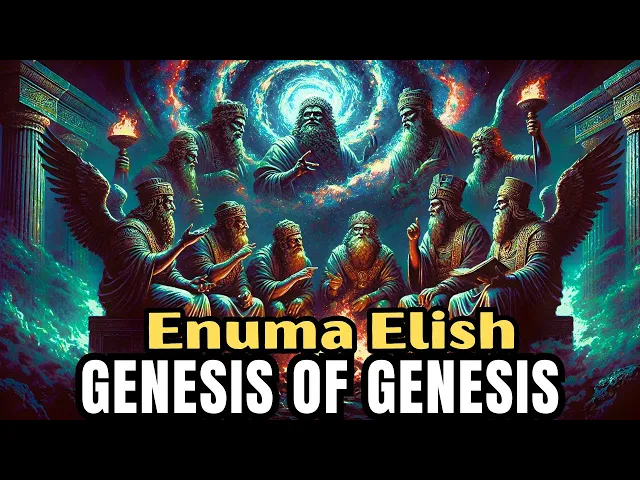
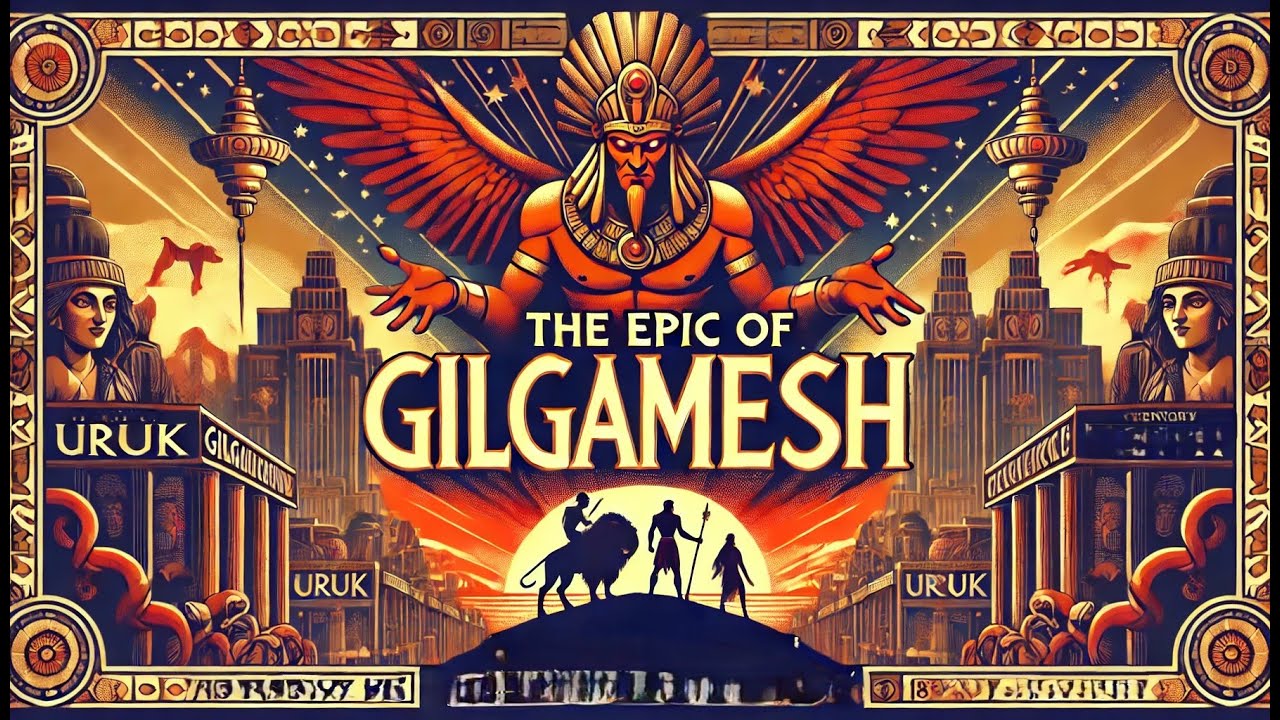
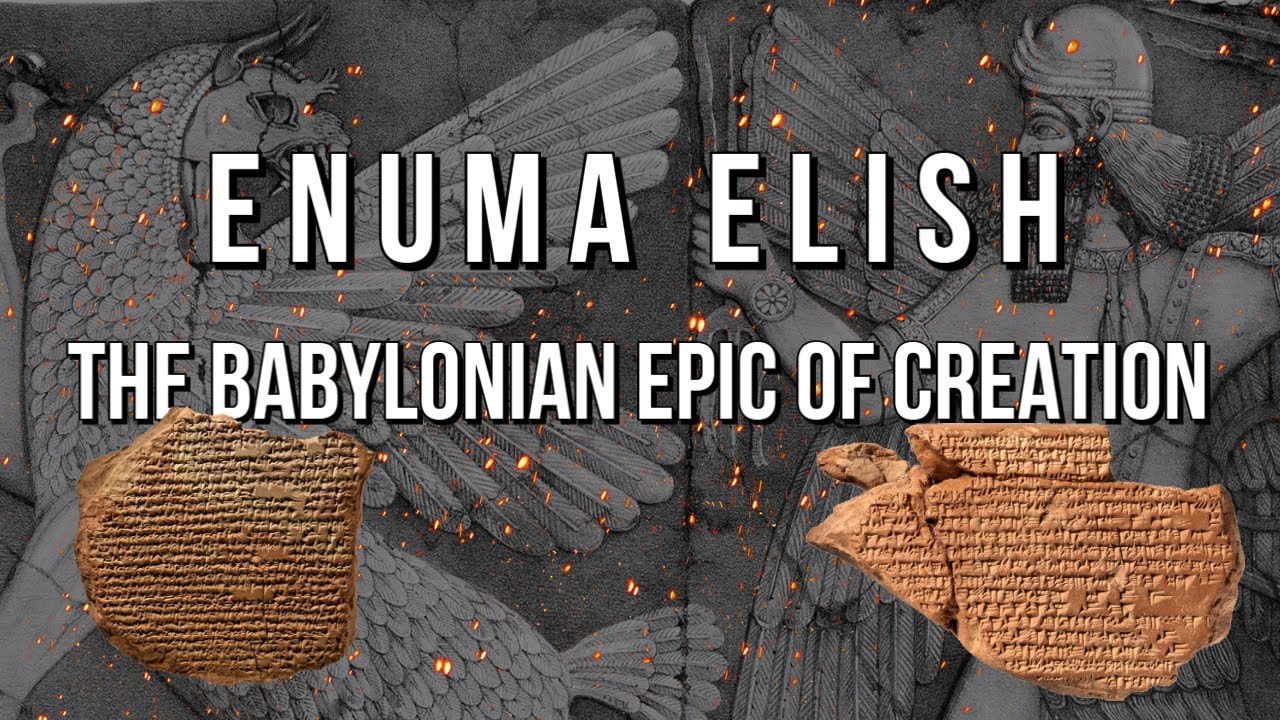
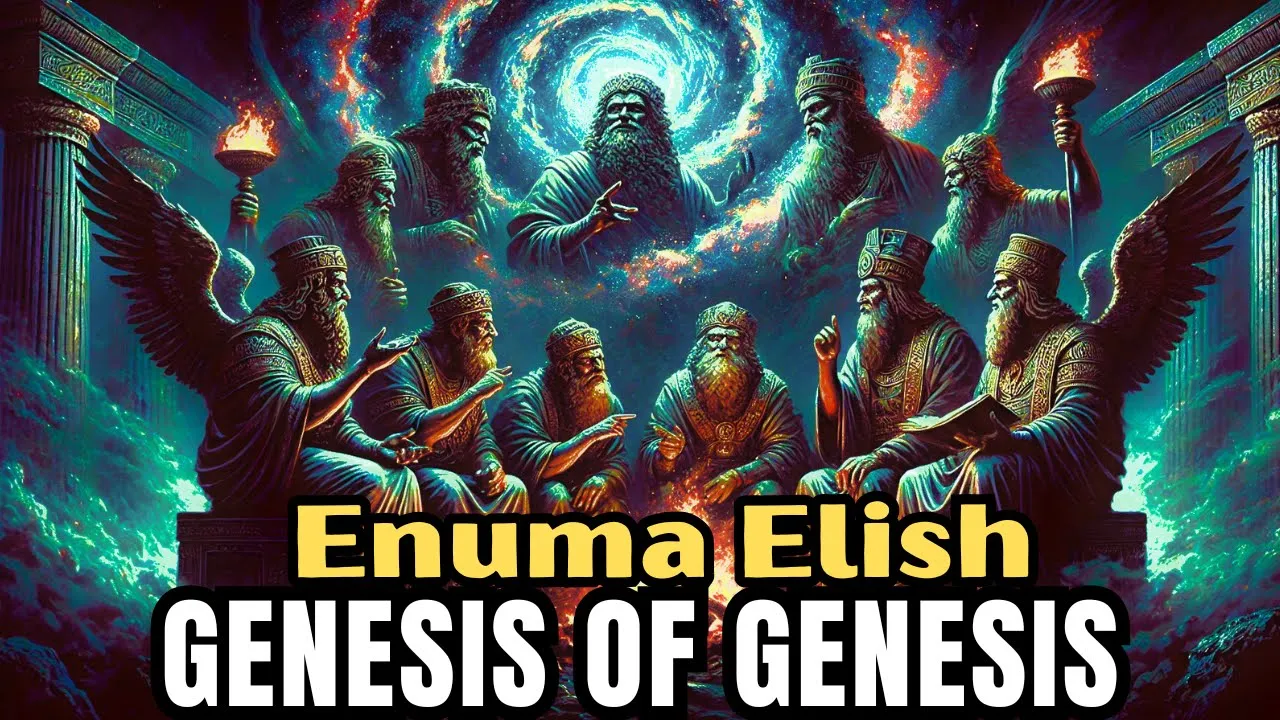
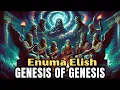
hey we've all heard the story of Creation in the Bible God spoke and the universe came into being simple right but what if I told you that Genesis isn't the original creation story that's right the biblical story of creation is actually not the first of its kind far from it there's an older more ancient myth that predates it by centuries and it comes from none other than Babylon around the 18th century B.C there was a myth circulating in the ancient city of Babylon called inuma Elish this isn't just some obscure bedtime story inuma Elish was
the backbone of Babylonian religious thought shaping their worldview for centuries it tells the tale of how the universe came to be starting with a dark watery chaos the primordial state of existence sound familiar already the stars of this epic aren't the familiar figures from Genesis instead we've got Gods like Tiamat a dragon-like figure representing the chaotic Waters and Marduk the hero of the story who Rises to battle this primordial chaos and here's the kicker after slaying Tiamat Marduk takes her body and carves the world from it creation from chaos from the dismembered body of a
God now pause for a second Genesis 1:2 talks about the spirit of God hovering over the waters there's no mention of a cosmic battle but the image of god- shaping order from chaos sound a bit too close to Babylonian myths for Comfort we're starting to see the parallels and it gets even more intriguing but why does this matter because in numer Elish is older Babylon was thriving long before the biblical texts were written by the time the Israelites found themselves exiled in Babylon they were surrounded by this myth and during this Exile their own creation
stories were being written down and compiled Genesis included coincidence maybe or maybe not we're talking about a story Genesis that shape billions of lives possibly borrowing ideas from an even older story that almost no one talks about today did the authors of Genesis rework Babylonian myth to fit their vision of God it's not just possible it's likely and that turns everything we thought we knew upside down the Waters of chaos The Ordering of the cosmos The Act of Creation itself these aren't just themes exclusive to the Bible they're shared across cultures across time and the
fact that Genesis Echoes In numer Elish suggest something bigger the Bible isn't as isolated or out of nowhere as many people assume it's part of a much older much more complicated story and when you peel back those layers you start to wonder if Genesis wasn't the first creation story what does that say about the text what does that say about How It Was Written and why all right we're not just talking about some casual similarity here this isn't just a shared chaos to order theme between Genesis and enumer Alish the real question is did the
Bible actually plagiarize Babylonian mythology in inum Elish creation doesn't come from nothing it begins with chaos Tiamat the mother of all gods who embodies this chaotic Oceanic Abyss Marduk doesn't just snap his fingers to bring order he dismembers her creating the heavens and the Earth from her body parts this isn't some poetic metaphor it's brutal Cosmic violence that births Creation The Divine and the material are literally fused together in Babylonian thought so when the biblical writers describe God hovering over the Deep that's a concept loaded with ancient mythological baggage it's not a neutral phrase now
Genesis presents this image of a formless empty Earth covered by water a shadow of the chaotic Abyss in in numer Elish Genesis removes the violence there's no Marduk no Tiamat no Divine blood instead we see a God who simply speaks and Order emerges this shift isn't just theological it's political it reflects an intentional rewriting of the mythological template that dominated the ancient near East the Bible is sanitizing and rebranding ancient ideas to fit a new new monotheistic worldview and this is where things get uncomfortable we know inuma Elish was part of Babylonian religious practice for
centuries before Genesis was written the Israelites were exiled in Babylon living among these stories hearing them and absorbing their cultural influence it's during this Exile that many scholars believe the Genesis account was either written or significantly edited so what are we looking at here a case of creative reinterpretation or straight up cultural theft why would the Hebrew writers want to reframe a myth that wasn't their own it comes down to control both theological and cultural by stripping away the polytheism and violence from the creation myth the biblical authors present a God who is not only
all powerful but unchallenged Genesis isn't just telling us how the world began it's telling us how to understand Authority order and the relationship between humanity and the Divine in the Babylonian version the gods fight amongst themselves and humans are created to be slaves in Genesis God is calm calculated and humans are made in the image of God with a unique status in creation this reinterpretation didn't happen in a vacuum Genesis is doing something bigger it's redefining what creation even means the ancient world saw creation as this raw often violent struggle to impose order on chaos
Genesis takes that chaos neutralizes it and says no Our God doesn't need to fight it's a theological power move asserting the supremacy of one God over all others rejecting the messiness of divine conflict in favor of divine sovereignty in doing so Genesis presents not just a different creation story but a challenge to the surrounding myths that existed for Millennia so what does this mean for the Integrity of the biblical text this isn't just a question of cultural borrowing it's about ideological dominance Genesis reshapes the myth in a way that fits the political and religious needs
of a people trying to distinguish themselves from their Babylonian captors but in doing so it leaves us with a complex question is Genesis truly unique or is it a refined copy designed to overwrite older inconvenient truths across the ancient near East creation wasn't just about bringing order from chaos it was about battling chaos and while Genesis might soften that narrative enumer Elish leans into it hard we're talking about Gods literally at War tearing each other apart to build the universe in the Babylonian version the hero God Marduk goes toe-to-toe with Tiamat the Monstrous embodiment of
the chaotic seas and this isn't just some polite disagreement Marduk splits her body in two like a cosmic butcher fashioning the heavens and the Earth from her remains in Babylonian myth the world doesn't come about by Divine Whispering it's born out of Blood and Guts that's creation Babylonian style brutal violent and undeniably epic now compare that to the Bible's take God doesn't fight anyone he just is chaos it's there in Genesis but instead of slaying it God speaks it into submission let there be light and boom chaos is tamed no fight no struggle just power
and control but here's where it gets juicy while the Bible downplays the violence there are still Echoes of this ancient Cosmic battle in the Book of Psalms and Isaiah you'll find these cryptic references to Yahweh doing battle with sea monsters like Leviathan or RAB symbolic figures of chaos these are holdovers from an older tradition where God doesn't just hover over the waters he conquers them it's a snapshot of a world where chaos isn't just abstract it's an actual opponent something to be defeated the Genesis account might erase the fight but traces of that struggle survive
in these scattered verses hinting that there's more to the story than a peaceful God shaping the universe with words alone here's the kicker these battles aren't just ancient mythology their power plays in Babylon marduk's victory over Tiamat wasn't just a cool story it was propaganda reinforcing marduk's supreme position over the other gods and justifying babylon's dominance Genesis on the other hand flips the script no need for a battle because yahweh's power is uncontested the biblical authors are making a clear statement here our God doesn't need to fight for control he already has it but let's
not miss the tension lurking beneath this if Yahweh is so all powerful why do the Psalms in Isaiah refer to these ancient battles with chaos monsters why does the imagery of a cosmic fights still slip through the cracks some Scholars suggest it's because the Hebrew Bible is preserved serving fragments of an older more chaotic tradition where God had to prove his might just like Marduk these remnants suggest a shared origin an older story where creation wasn't so peaceful after all the Bible's rewriting of the creation story feels deliberate an attempt to strip away the violence
and Chaos that defined earlier myths but the fact that these chaotic elements still surface in other parts of scripture points to something deeper the ancient Israelites were surrounded by cultures that told stories of God's battling for control over the universe and those stories left their Mark Genesis might present a cleaned up version of events but it's impossible to ignore the chaotic undercurrents here's something most people don't realize Creation in the Bible wasn't a solo project Genesis 1:26 has God saying let us make man in our image wait who's us who's God talking to is this
a slip up or is there something more going on here now if you've been raised on the idea of one God doing it all this should raise some serious eyebrows but here's the thing this whole idea of a Divine Council isn't unique to the Bible in fact it's a Common Thread running through the ancient world and in numo Elish is a prime example of this in the Babylonian myth Marduk doesn't just declare himself ruler of the cosmos out of nowhere he earns his position after being appointed by a council of Gods his victory over Tiamat
is approved sanctioned and then rewarded with the ultimate Authority the gods gather debate and decide who's in charge creation is a team effort with Divine politics at play now take that back to Genesis we've been taught that there's only one God in the Hebrew Bible right but here we've got God talking in the plural let us make man in our image and this isn't the only place in the Bible where the concept of a Divine Council shows up Psalm 82 for example talks about God standing in the Assembly of gods passing judgment on them it's
clear that at least in some parts of the Bible there's this idea of multiple Divine beings involved in the process of creation and ruling the world this isn't just monotheism as we understand it today so what's really going on here one theory is that these remnants of a Divine Council are leftovers from earlier polytheistic Traditions before the Israelites fully embraced monotheism they like their Babylonian neighbors likely believed in a host of divine beings over time the biblical texts evolved the gods were downplayed and Yahweh took Center Stage but Echoes of that older worldview remain slipping
through in verses like genesis 1:26 where God seems to be conferring with other Divine figures the Bible presents itself as monotheistic but there are traces little finger Prince if you will of a more complex Divine hierarchy the US in Genesis could be a nod to a time when the ancient Israelites hadn't yet strip their religion of its polytheistic past and here's another layer to this why does it even matter that the Bible retains these hints of a Divine Council because it means Genesis isn't just unique Revelation it's a product of its time and place a
reflection of the surrounding cultures that influenced it Babylon had its Divine Council so did Egypt so did Canaan and so apparently did early Israel Over time the theology shifted but the storytelling structure creation as a Divine collaboration stuck around in small fascinating ways so here's something that doesn't get talked about enough the role of humanity in these ancient creation stories in both Genesis and in numer Elish humans get created near the end but the purpose behind their creation that's where things take a sharp turn and what it reveals about how the ancient SRA place in
the universe might not be what you expect in inum Elish Humanity was created for one reason to serve the gods that's right after Marduk defeats Tiamat and establishes Cosmic order the gods realize they still need to eat drink and live their Divine lives without lifting a finger so what's the solution humans they make people out of the blood of a defeated God kingu and assign them the task of doing all the hard labor the purpose of human existence according to the Babylonian myth is to take the workload off the God's hands humans are nothing but
Cosmic servants created to be slaves for divine beings who can't be bothered to take care of themselves now let's flip the script to Genesis in Genesis 2 humans are also created from the earth just dirt and breath nothing too flashy but instead of being slaves to a Pantheon of lazy Gods humans are given a different role they're placed in the Garden of Eden to work it and take care of it they are not servants in the same sense but there's still a clear division of labor Adam and Eve aren't Kings of the garden they're more
like stewards expected to tend the land on God's behalf so while the Genesis account puts a nicer spin on it humans still have a job to do genesis gives Humanity something inuma Elish doesn't dignity in Genesis 1:26 humans are said to be created in the image of God that's a bold statement it means we're not just here to work the land we're reflections of the Divine this is a huge theological shift from Babylonian thinking instead of being slaves created to serve the God's needs humans in Genesis have a unique elevated status they're meant to represent
God on Earth to rule over the animals to shape Creation in partnership with the Divine but before you get too comfortable with the Genesis version let's ask the uncomfortable question is this really Freedom sure we're not mixing drinks for Marduk and his buddies but we're still Bound by Divine expectation we might be created in the image of God but that comes with responsibilities and consequences the minute Adam and Eve step out of line they're kicked out of Eden destined to Toil and struggle for the rest of their lives is that so different from being a
servant Babylonian culture was deeply hierarchical Gods at the top Kings as their representatives and everyone else below toiling away so it makes sense that their myth portrays Humanity as servants the biblical version while more egalitarian on the surface still reinforces a Divine human hierarchy even though humans are made in God's image they're still expected to serve obey and follow the rules or suffer the consequences what if both these stories are just two sides of the same coin whether we're seen as Divine labor or stewards of creation both myths make it clear humanity is not in
charge we are subject to forces beyond our control whether they're represented by gods or a singular God and maybe that's the point both Babylonian and Israelite societies use these myths to remind people of their place in the grand scheme of things you're here for a reason but don't get too comfortable you're still under wers now we're getting into the real Crux of the difference between Babylonian mythology and the Bible how the Divine operate in the Act of Creation in Babylon the gods are constantly in competition chaos conflict and compromise Marduk doesn't rise to the top
without a fight he's got to prove himself battle Tiamat get the approval of other gods and finally after all the drama he can start creating the world it's a Divine struggle for control and creation is a byproduct of that chaos but when you shift to Genesis the story takes on an entirely different tone there's no council of gods no violent overthrow of cosmic forces in the Bible creation is the work of one God and not just any God a God who doesn't need to negotiate with anyone there's no Struggle No approval needed Genesis presents a
god whose word is law he speaks and it happens let there be light and suddenly there's light creation unfolds not from conflict but from Authority that's the genius of the Genesis account it completely strips away the drama of divine politics there's no Cosmic War Yahweh doesn't need to fight for dominance there's no tmat to slay no Divine counsel to please in Genesis God operates solo exercis ing absolute sovereignty it's monotheism in its purest form one God total control no competition but this raises an intriguing question why such a stark difference why is the Babylonian Pantheon
full of competing Gods while Genesis insists on a single uncontested deity well look at the cultural context the Babylonian Empire was a massive multi-g good society and their creation story reflected the political realities of their world power was always in flux always up for grabs their gods mirrored that with Marduk needing to fight to secure his place babylon's creation myth was an allegory for power struggles both Divine and Earthly Israel however was crafting a radically different worldview the Israelites were surrounded by nations with multiple gods and they needed to distinguish themselves not just religiously but
politically their story wasn't just about explaining the origins of the universe it was a declaration of monotheistic Supremacy Genesis was a theological Rebellion against the polytheistic Empires around them the message was simple but powerful Our God doesn't compete Our God doesn't need to fight our God is the only God even though Genesis pushes this monotheistic agenda you can still find traces of an older more complex view of the Divine in the Bible in some ancient Hebrew Traditions God wasn't always portrayed as the sole deity in charge the idea of Yahweh as one God among many
was part of early Israelite religion before it evolved into full-blown monotheism Genesis represents the final version the cleaned up authoritative narrative but underneath it there are remnants of that older messia belief system so when you read Genesis you are not just reading a creation story you're reading a shift in religious thought a shift from a world of many gods to one in which Yahweh Reigns Supreme it's the moment where Israel makes its boldest claim our God is the only God and he doesn't need to battle for control he already has it what's more this transition
wasn't just theological it was also political the Israelites were carving out their own identity in a world dominated by superpowers like Egypt and Babylon Genesis wasn't just about how the world was made it was about who had the right to Define it it was about power or Authority and asserting a monotheistic Vision in a world full of rival Gods so while the Babylonians told stories of gods battling for dominance Genesis gives us a God who is beyond competition a god whose very speech creates reality it's an audacious claim and one that shaped the foundation of
Western religious thought for Millennia let's wrap this up by pulling back the curtain on the Bible itself we've been diving deep into the enumeral Genesis and their similarities but the big question is what does this all mean for the Bible we know today if Genesis isn't as original as we thought does that change how we view it the Bible has always been seen by millions as a unique divinely inspired text standing apart from anything else in human history but here's the reality the Bible particularly Genesis didn't appear in a vacuum it was born in a
world full of competing myths Legends and theologies and these stories like inuma Elish left their Mark whether through cultural contact shared storytelling Traditions or the direct influence of Babylonian myth on the Israelites during their Exile the connections are undeniable Genesis and the Bible at large don't try to erase the past they incorporate it transform it and reframe it to fit a new theological Vision in a sense the Bible is a remix it takes the raw material of ancient near Eastern myth and Spins it into a narrative that supports a revolutionary claim that there is only
one God that this God controls all things and that Humanity was created not as slaves but as reflections of the Divine the Bible isn't just a religious text it's a record of human history human culture and human thought it carries within it layers of ancient beliefs some of which are hidden in plain sight as we've explored today the Genesis creation story for all its power and influence is just one chapter in the larger story of Humanity's quest to understand the universe now what does that mean for your faith for your understanding of scripture that's up
to you but what's clear is that the Bible is more complex more connected to the world around it than most people realize it's a living document shaped by centuries of cultural interaction theological Evolution and yes even the myths of Empires long gone this isn't about undermining the B far from it it's about recognizing the richness the depth and the human story behind it the Bible is a product of the ancient world influenced by the very myths we've been discussing it's not a standalone book it's part of the grand tapestry of human history and that makes
it even more fascinating and in that sense the Bible is as much a historical artifact as it is a spiritual guide thank you so much for watching this video and sticking with us through these deep thought-provoking ideas we'd love to hear your thoughts in the comments what do you think about these connections between the Bible and Babylonian myth like the video subscribe to the channel if you haven't already and hit the notification Bell to stay updated on our latest content God bless you all and see you next time [Music]