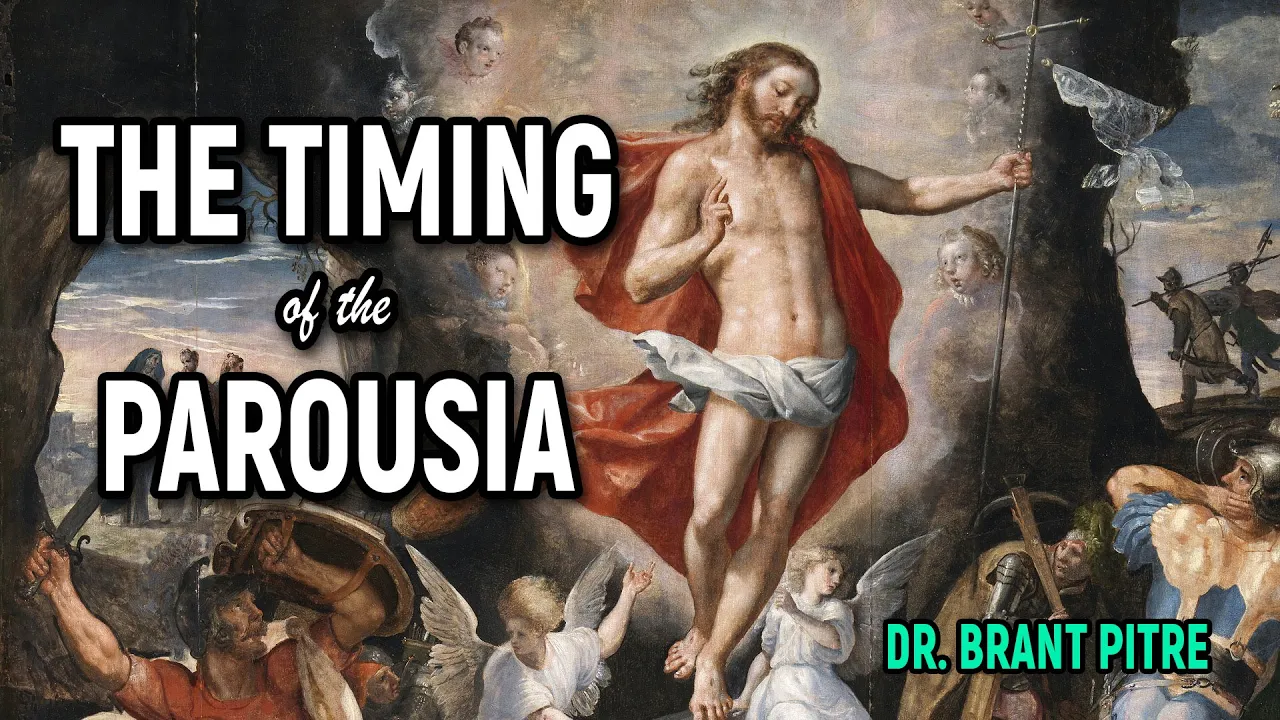
foreign [Music] points the the what you would I would suggest is the heart of the reading for today and really the heart of the letter to the second this uh to the Thessalonians is the issue of the parisia the issue of the coming of Christ so here Paul says concerning the piracy of our Lord Jesus Christ and our assembling to meet him that's interesting it's not just about Jesus coming back it's about the Gathering of the Saints to meet Jesus to meet the Risen Christ this is an allusion to something he talks about in first
Thessalonians so in another video we look at first Thessalonians 4 where Paul talks about being caught up together in the clouds and going out to meet Christ along with those who come with him so the idea here is that the second coming isn't just a return of Jesus it's also an ecclesiological event it's a gathering of all of the Holy ones both those who are asleep in Christ right who've already died as well as those who are alive at the time of the parisia to meet the Lord so here Paul is in a sense picking
up the thread of a topic that he's already addressed in the first letter to Thessalonians about the perusia and the in gathering of the Believers in Christ at the second coming he's picking up on that same thread that same topic but begging the Thessalonians not to be upset shaken in line or get too excited either by Spirit or by a word or by a letter according to be from Paul to the effect that the day of the Lord has already come what's Paul describing here Paul's here for just a second and notice that um the
RSV when we're reading that verse has to the effect that the day of the Lord Has Come but the Greek word there is ambiguous and some translations will say to the effect that the day of the Lord is at hand right so the the word is ambiguous you could take it either to mean that some people in thessalonica are saying that the end time has already taken place right or some people saying that the end time is at hand meaning it's imminent it's happening tomorrow it's happening next week or next month I inclined to the
former view in part because elsewhere in the Pauline letters like in second Thessalonians not second Thessalonians II Timothy Chapter 2 18 Paul says that in an unambiguous and explicit way for example if you look at second Timothy 2 he talks about um the errors of two figures named hymenaeus and philatus and this is the problem in verse 18 He says they have swerved from the truth by holding that the resurrection is passed already or is already passed in other words that it's already happened so I'm gonna I'm going to take that second view because I
find it a little more persuasive and I'm talking that way about it but you should be aware that there's two competing interpretations of exactly how to understand Paul's words either way whether he's saying that the people in error are saying that the the day of the Lord has already happened or that it's gonna happen tomorrow it's at hand either way Paul's trying to correct the error by pointing out that no actually there are some eschatological events that have to happen first before that will take place reading Paul's letters can kind of be like listening to
one side of a telephone call right you you have to infer from the words that you hear what the conversation is about and try to figure out what the situation he's describing is and so the most plausible reading of this and what most people think is that apparently in the wake of Paul writing first Thessalonians where he talked about the parasia and the second coming and the resurrection of the dead at the end of time um somebody has gotten in and either given a prophecy by that's what he means by Spirit or by word someone
has gotten up and spoken a prophecy or they've received a forged letter somebody's written a letter in the name of Paul claiming in effect that the perusia of Christ's Second Coming that he discussed in first Thessalonians has already happened it's already happened and so Paul is correcting what Scholars have referred to as an sorry for the technical language but that's what you get uh an overly realized eschatology what does that mean well remember eschatology is the doctrine of the end or the last things and sometimes Scholars will talk about future eschatology in other words that's
focused on end times events that are yet to happen they're going to happen in the future realized eschatology emphasizes the fact that certain in-time events have already happened they've already been realized the you know the exhibit a the best example of this is the resurrection of Christ himself right so in Jewish eschatology beliefs about the End of Time the bodily resurrection of the Dead is something that was supposed to happen to everyone at the end of time like in the Book of Daniel chapter 12 when all the holy ones the righteous ones are raised up
in their bodies in the age to go but what happened to Christ is different in the sense that the bodily resurrection that Jews were expecting to happen to everyone at the End of Time happened to one person in the middle of time naming Jesus Christ so there is a sense in which the end of time has already begun in the person of Jesus in the body of Jesus right like Paul will say elsewhere in First Corinthians he's the first fruits of the Resurrection right so he's the first little blossom he's the first blueberry on the
blueberry bush the first orange on the orange tree that has borne fruit and they're going to be more but they're going to come later okay so some people are apparently saying that because Christ has already been raised the end has already come and by implication you he doesn't say this but you could infer from that maybe some people were saying there's not going to be any second coming right you don't have to wait for that anymore it's already happened and what's fascinating about this line here too is that apparently there were already people beginning to
or at least entertain the possibility of to forging letters in the names of Apostles so we know that this happens in the second century in the third Century in the fourth Century with a number of documents that commonly known as the Apocrypha or the hidden books they're more properly titled the pseudopigrapha false writings because they are books like the gospel Thomas or The Apocalypse of Peter or the acts of John that are assigned to or associated with Apostles but weren't actually published by them or written by them because they were published 100 years 200 years
300 years after the apostles were already dead right and as hard as made this joke before but as hard as it is to write when you're alive it's even harder to write books when you're dead so the very fact that they didn't emerge until much later than the apostolic period proves that they were false writings pseudopigrapha or um um what we would call a forged document so apparently Paul is already entertaining the possibility it may have already happened that someone composed the document either claiming his authority or in his name a letter saying that the
Pharisee had already happened and Paul said if someone told you that and if someone wrote a letter in my name or if someone just spoke a prophecy through the spirit know that either in either case they're false and you're not to be quickly shaken in mind or to be alarmed to the effect that the day of the Lord has already come because I say to you and that's why the next verses I read them to you beginning that that day meaning the final day the day of judgment the day of the second coming is not
going to happen until some preliminary events take place first and the two main preliminary events that Paul refers to are the outbreak of the Rebellion or the apostasia the apostasy a great falling away from belief and then the coming of the Antichrist is what John calls it or the man of lawlessness the son of perdition um is what Paul calls them this this figure who not only opposes God during this tribulation but also claims to be God where does Paul get these crazy ideas I mean that might be what you're wondering right where does he
get these bizarre ideas about the tribulation about the the uh the Son of Perdition which by the way the gospel John that's the name Jesus gives to Judas he calls him he says none of them were lost except the son of perdition um so the Antichrist figure in later tradition will become known as a Jude kind of a Judas figure a person who is inside the church but who betrays Christ and the church all right so where does Paul get these ideas and get some from Jesus of course so if you go back to the
famous eschatological discourse of Jesus sometimes called the Olivet discourse because he gives it on the Mount of Olives in Matthew 24 and Mark 13 in particular you'll see that Jesus himself warns the disciples about the fact that there is going to be tribulation before the final coming of the son of man on the clouds to judge the living and the dead and that they're going to be false Christ or false Messiahs who will rise up and make claims about themselves but those claims are going to be false um they're not going to actually be the
Messiah so I'll just read quick passage to you just so you understand the context of what Paul's getting at here because Jesus had to warn the disciples about the same thing once you see wars and rumors of wars and tribulation and suffering breaking out the end is not yet because other things have to happen first foreign [Music]