hello everyone welcome to business school 101 big firms often use mergers and Acquisitions to better expand their businesses and compete with their competitors for example T-Mobile and Sprint completed their merger in 2020 creating a new wireless carrier with a customer base of over 100 million subscribers in 2014 Italian automaker Fiat completed its acquisition of American automaker Chrysler creating Fiat Chrysler automobiles the world's seventh largest automaker at the time Amazon acquired Whole Foods in 2017 to gain access to Whole Foods customer base and physical stores Google acquired YouTube in 2006 to expand its reach in the
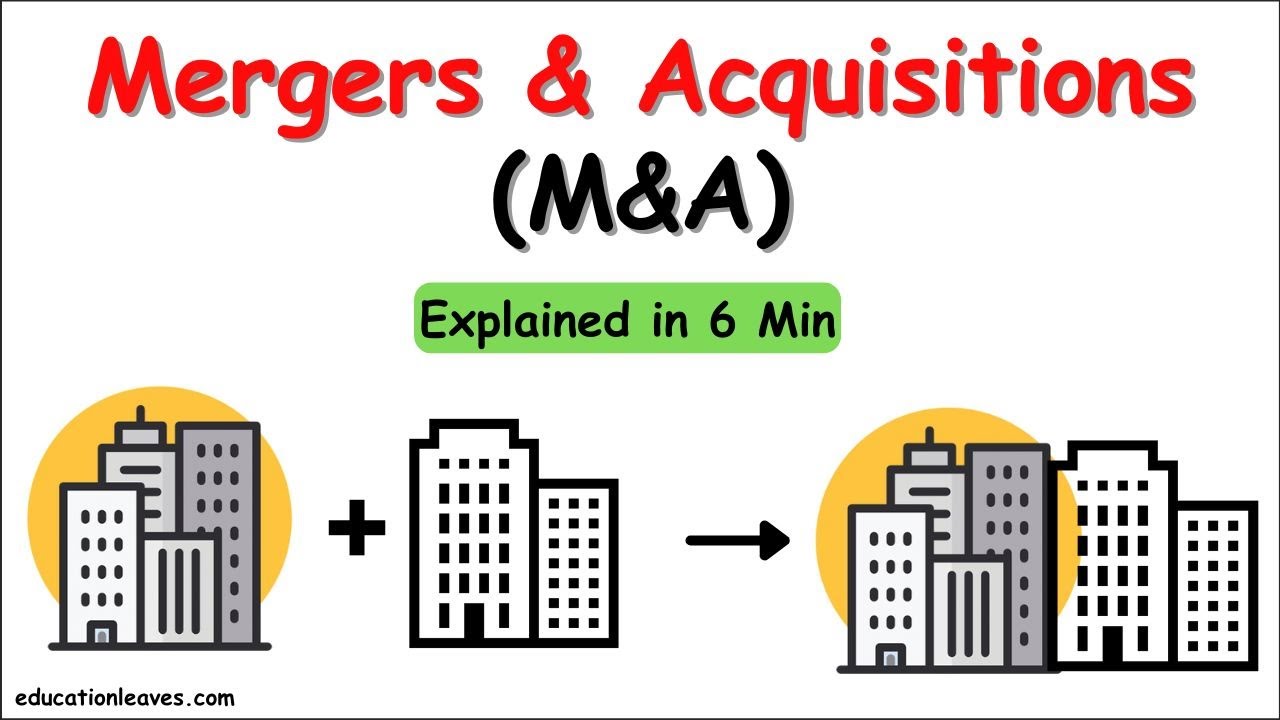
online video market and gain access to YouTube's large user base and Content Library so what are mergers and Acquisitions why do firms do that are there some successful and failed real business examples and useful strategies in this video I will discuss these questions with you Section 1 definition mergers and Acquisitions or Amman day refer to the process of combining two or more companies into a single entity or acquiring one company by another M and A deals can take various forms such as a merger where two companies combine to form a new entity or an acquisition
where one company buys another the key difference between a merger and an acquisition is the level of equality between the two companies involved and a merger the two companies are typically of roughly equal size and scale and come together to form a new entity in an acquisition one company purchases another and the target company becomes part of the acquiring company here are two examples to illustrate the differences between the merger and acquisition in 2016 Dell and EMC Corporation completed a merger in which Dell acquired EMC for 67 billion dollars the new company Dell Technologies was
formed in this case both companies were roughly the same size and had complementary businesses making it a good fit for a merger in 2014 Facebook acquired WhatsApp for 19 billion the acquisition was not a merger of equals as Facebook was much larger than WhatsApp in this case Facebook was interested in whatsapp's messaging technology and its large user base which aligned with Facebook's strategic goals section 2 benefits here are the major benefits of merger and acquisition number one Market expansion one of the main reasons firms pursue M and A deals is to expand their market share
and access new markets by acquiring or merging with another company a firm can gain access to new customers products and services that it may not have had before number two synergies and cost savings M and A deals can create synergies between the two companies involved allowing them to combine their resources and capabilities to achieve greater efficiency and cost savings number three diversification M and A deals can help firms diversify their operations and reduce their dependence on a single product or Market by acquiring or merging with a company in a different industry or Market a firm
can spread its risk and gain exposure to New Opportunities number four acquire new technologies or capabilities M and A deals can provide a firm with access to new technologies or capabilities that it may not have developed on its own for example a company May acquire a startup that has developed a new technology or product number five Financial benefits mnday deals can provide a firm with financial benefits such as access to new sources of capital improved credit ratings or increased Cash Flow by acquiring or merging with another company a firm can improve its financial position and
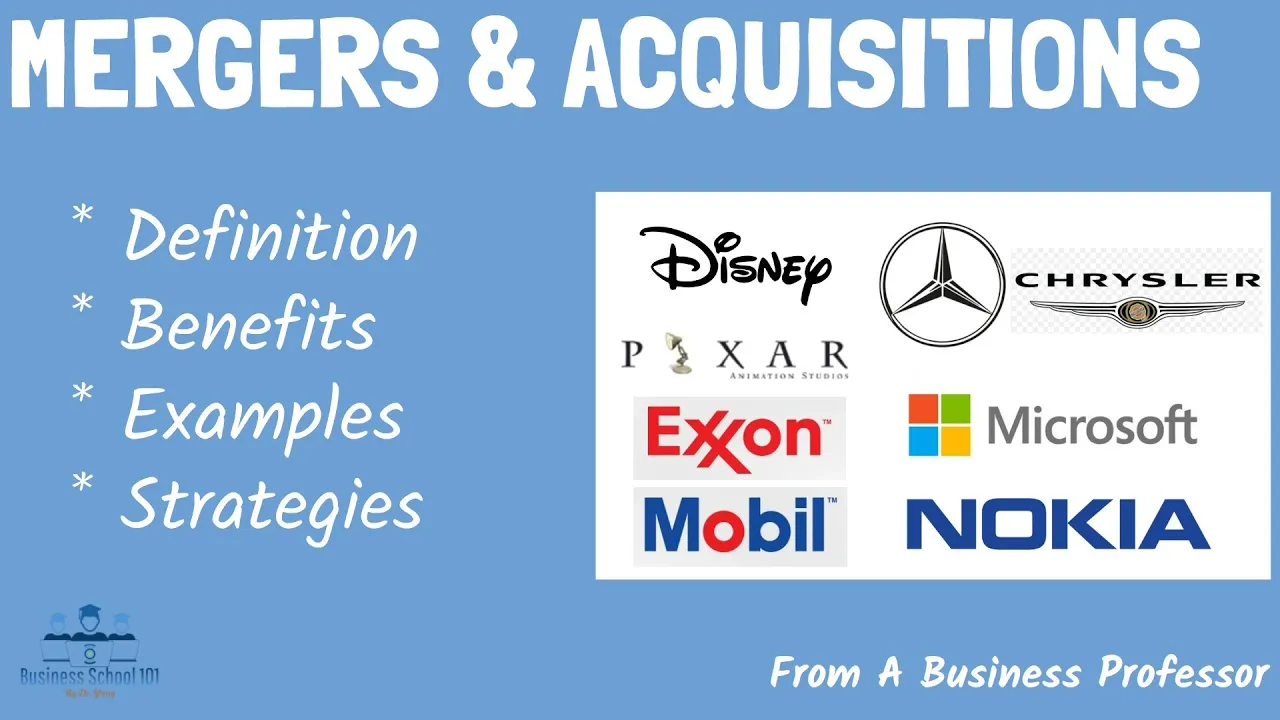
gain access to new sources of funding that it may not have had before Section 3 examples here are a few successful and failed examples of mergers and Acquisitions first the Walt Disney Company and Pikes are Animation Studios in 2006 the Walt Disney company acquired Pikes or Animation Studios for 7.4 billion the merger brought together two of the most successful Animation Studios in the world allowing Disney to expand its animation capabilities and access pixer's Cutting Edge technology the merger was successful in terms of financial performance as the combined company's revenue and profits increased significantly in the
Years following the deal it also produced some of the highest grossing animated movies of all time including Toy Story 3 and Finding Dory second Exxon and Mobile in 1999 Exxon and mobile two of the world's largest oil companies merged to form X on mobile the merger created the world's largest publicly traded oil company with a market capitalization of over 400 billion dollars the merger was successful in terms of operational performance as it allowed ExxonMobil to streamline its operations reduce costs and increase efficiency the combined company also benefited from improved access to new oil reserves which
helped to boost profits in addition the merger allowed ExxonMobil to weather the volatility of the oil Market in the Years following the deal third Daimler Benz and Chrysler in 1998 Daimler Ben's acquired Chrysler in a deal value to 36 billion creating Daimler Chrysler the merger was intended to create a Global Automotive Powerhouse that could compete with Rivals such as Toyota and General Motors however the two companies struggled to integrate their operations and cultures and the merger ultimately failed Daimler Chrysler suffered from a lack of clear leadership cultural clashes and a failure to capitalize on synergies
the company's profits declined and in 2007 Daimler sold Chrysler to a private Equity Firm for a fraction of its original purchase price fourth Microsoft and Nokia in 2014 Microsoft acquired Nokia's handset business for 7.2 billion dollars with the goal of expanding its presence in the mobile market however the acquisition turned out to be a failure as Microsoft struggled to integrate Nokia's Hardware business with its software and services Microsoft's mobile business continued to decline and in 2016 the company announced that it would sell its feature phone business to a subsidiary of Foxconn section 4 failed reasons
according to a study by the Harvard Business Review up to 70 of mnday deals fail to deliver the intended value or benefits here are several reasons why mergers and Acquisitions can fail number one cultural Clash companies that have different cultures and ways of doing business May struggle to integrate their operations and work effectively together number two poor due diligence a lack of thorough due diligence can result in unexpected problems and hidden liabilities that can damage the success of an m and a deal number three overpayment paying too much for an acquisition can result in a
failure to generate a positive return on investment and put the company in a precarious financial position number four integration challenges the process of integrating two companies can be complex and difficult leading to delays confusion and loss of key Talent number five strategic misalignment companies may fail to align their strategic goals and objectives resulting in conflicting priorities and difficulty in achieving synergies number six regulatory issues mnday deals may require regulatory approval and failure to obtain necessary approvals can prevent the deal from going through or result in significant delays number seven failure to communicate failure to communicate
effectively with stakeholders employees and customers can lead to uncertainty and resistance to change making it difficult to achieve post-merger integration and success Section 5 strategies to avoid making the above mistakes here are some key steps to prepare for an m and a deal first develop a clear strategy before pursuing an m and a deal companies need to develop a clear strategy that aligns with their long-term goals and objectives this strategy should consider factors such as the target companies industry financial position and potential for synergies second conduct due diligence conducting thorough due diligence is crucial to
identifying potential risks and opportunities associated with an m and a deal this includes analyzing financial statements legal documents and other key information about the target company third secure financing mnday deals often require significant amounts of capital so it's important to secure financing in advance of the deal this may involve working with banks investors or other sources of funding fourth plan for integration successful mnday deals require careful planning for post merger integration this includes developing a plan for integrating the target company's operations employees and culture with the acquiring companies fifth communicate effectively mnday deals can be
unsettling for employees customers and other stakeholders so it's important to communicate effectively throughout the process this includes keeping employees and other stakeholders informed of the deal's progress and addressing any concerns or questions they may have 6. seek legal and financial advice mnday deals are complex and involve many legal and financial considerations so it's important to seek advice from experienced professionals this includes working with lawyers accountants and other advisors who can provide guidance on the Legal Financial and tax implications of the deal section 6 summary mergers and Acquisitions refer to the process of combining two or
more companies into a single entity or acquiring one company by another M and A deals can be complex and involve many Legal Financial and Regulatory considerations they typically involve extensive due diligence to assess the risks and benefits of the deal negotiation of terms and conditions and obtaining regulatory approvals the success of an mnday deal depends on various factors such as strategic fit cultural compatibility and effective integration of the two companies all right that's all for today's topic if you have any questions regarding this video please leave your thoughts in a comment below I hope you
guys have enjoyed this video and if you did make sure you give it a thumbs up and subscribe to my channel thanks for watching and I will see you next time









![How to Ensure Merger & Acquisition Integration Success [M&A Restructuring Best Practices]](https://img.youtube.com/vi/SDImUr1jxqU/maxresdefault.jpg)