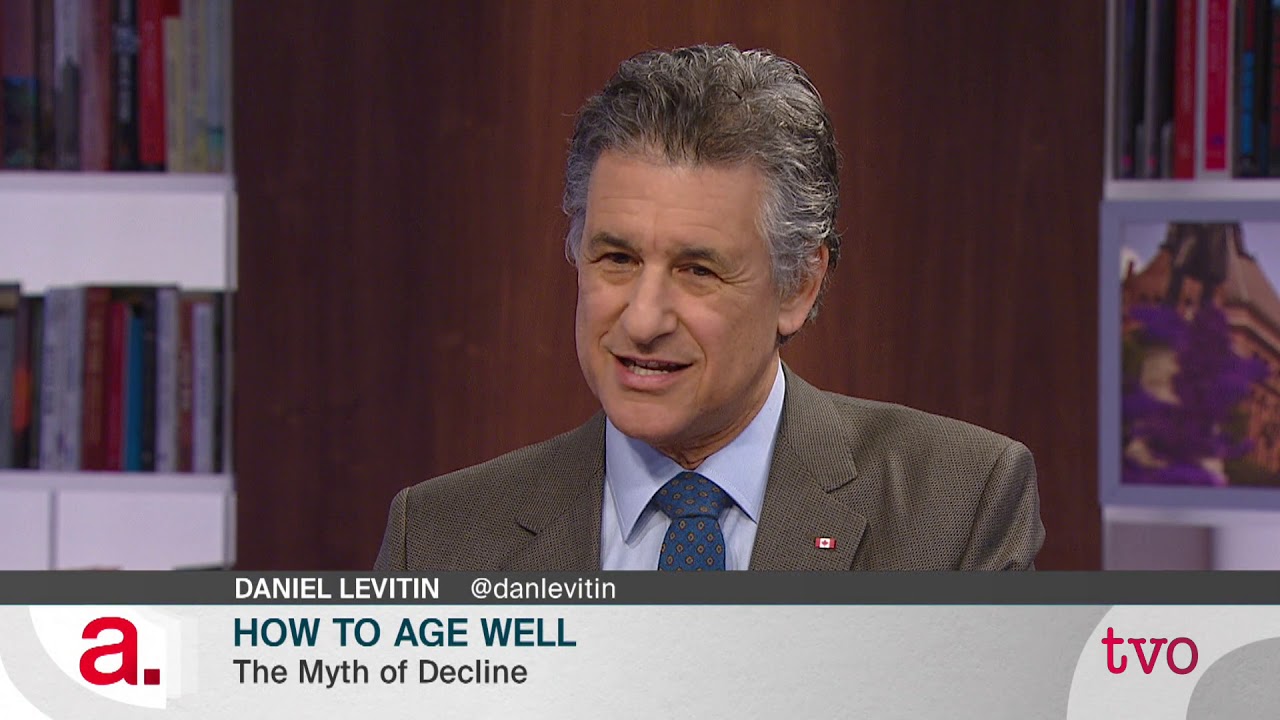
we have created more information in the past few years than in all of human history overstressed sleep deprived and time starved we are living in an age of information overload and our brains were not designed to keep up Daniel Levon author of The organized mind is here now to tell us how we can manage the overload it's great to have you back in the studio thanks for having me back Steve it's a pleasure I know that last time you were here we talk we love to talk music yeah we love to talk about the brain
we love to talk sports no we don't Daniel you don't know you know nothing about sports which is such a disappointment to me but we are going to talk about the organized mind here and I wonder what uh given that music is really your thing uh why this direction well I realized that neuroscientists had learned quite a lot in the last five years about why the brain pays attention to some things and forgets other things how we make decisions uh I learned about how we organize our wake and sleep cycles and it this is information
that was being held in the Neuroscience community and hadn't really trickled down to the average reader and I thought that was a shame because I thought it's information that all of us could use to improve the quality of Our Lives the information you share is actually quite frightening do you want to lay some of the numbers on us right now well let's talk about information overload just as a place to start I mean is there evidence that this is a time of information overload last year we took in five times as much information every day
as we did in 1986 equivalent of reading 75 newspapers from cover to cover in our leisure time alone we processed 34 gabt of information every day the average Canadian watches five hours of Television every day but there are hundreds and hundreds of hours of Television being created for every hour that we watch YouTube videos maybe you think if you can't keep up with anything else at least you can keep up with what's going on on YouTube so you get home after a long day you watch YouTube for an hour but what you should know is
that for every hour that goes by there's 6,000 hours of YouTube videos being uploaded new videos so you're already 5,999 hours behind never going to catch up and what about the grocery store I was just going to ask you about that because none of that frankly phases me too much I actually do not badly keeping up with that the grocery store frightens me why 1976 a supermarket on average had 9,000 Unique Products today that same Market has 40,000 unique products and because the average Canadian gets most of their shopping needs met in about 150 items
it means that you have to ignore 38,000 39,800 items just in order to fill your cart and you you're not really ignoring them that's not the way the brain works right you're looking for honeynut Cheerios and you got to go grape nuts no uh Sugar Smacks no Froot Loops no uh regular Cheerios multigrain Cheerios each thing that you ignore uses up neural resources and depletes those neurobiological iCal resources so that by the time you find the thing you were looking for you're already tired and what's happening in our brains when our brains are in a
state of information overload well we get stressed the brain releases cortisol the stress hormone that causes your heart rate to rise adrenaline to be released and it causes cloudy thinking and your thinking could be so cloudy that you don't realize that you've got cloudy thinking here's a quote from the book the brain is more like a big old house with peace meal renov done on every floor and less like new constructions explain so we tend to think of uh the brain is this complicated thing that must have been designed in order to do what it
did but of course it wasn't it evolved and evolution doesn't really have a plan or a script to follow it just does whatever works at the moment in fact it doesn't even do that what happens is random mutations create different abilities or inabilities and Rand you know the natural SEL ction works on those and things that turned out to be adaptive get promoted so um we've got a bunch of different special purpose modules in the brain that were designed to do particular things uh an example of this is that we've got a a stress response
that was designed to get us out of a jam in a fight or flight situation but it's not very good at logical thinking one of the things that cortisol does stress hormone is that it shuts down everything that's not necessary for fighting or fleeing it shuts down your reproductive system your digestive system uh why your immune system because face to face with a tiger you don't it doesn't matter if you can fight off an infection or you know reproduce you've got to deal with the tiger because if you're its lunch those other things become irrelevant
and logical thinking shuts down because you know you can't work out math problems like the angle of incidence of a right cross to a snout or trying to figure out how you're going to communicate there's a taste to your Gazette 500 met behind him you've got to just act and that impulsive Act is very good for those kinds of situations it's terrible for making important decisions financial decisions medical decisions I thought Norman Doge though people like him have told us that the BL the brain is plastic the the brain adapts to different circumstances and maybe
I'm inferring too much here but I would have thought then presumably as the information overload happens our brains adapt to it and are just able to be like sponges Tak in more and more and more not true uh there Norman's right about brain plasticity it's much greater than we ever thought before and in many of the cases he writes about so eloquently he's talking about recovery from injury uh or learning new things information overload is a different kind of thing uh it's it's more like uh having too much of a drug or getting a gambling
addiction and I'll I'll tell you why uh there's this dopamine addiction Loop that sets in DOP dopamine evolved as a chemical in our brains to give us a little feel-good shot when we learn something new because ancient humans uh you know our predecessors uh there wasn't a whole lot new going on in their lives in the world right but if they could attend to something new in the environment like the location of a new well a discovery where there's a new uh stand of fruit trees things like that if they were rewarded with learning and
remembering that it would have been adapt for them it would have conferred a survival Advantage now we're surrounded by newness in unprecedented proportions every new email every new Facebook post Twitter post Tumblr Vine Instagram and all the rest they cause a little release of dopamine because they're new but um it becomes an addiction you you may remember uh a study done by my colleague Peter Milner at McGill back in the 1950s rats were hooked up to a a device that gave a tiny electric shock to their lyic system if they pressed a bar in the
cage do you remember this okay yeah heard of it and um what Peter found by the way he's in his 90s he still comes to work uh great guy uh so in his younger days rats can press a bar get dopamine in the brain he thought that this was part of the brain's reward circuit what do you suppose the rats did they pressed the bar over and over again to the exclusion of everything else they stopped eating they stopped sleeping they do died of exhaustion from pressing the bar to get the dopamine and if that
compulsive pressing of the bar reminds you of somebody compulsively checking their email or their Twitter feed it's no coincidence it's the same dopamine Loop is that to suggest that we are incapable of doing what everybody tells us we need to do nowadays which is multitasking turns out multitasking is a myth and this has been shown by Earl Miller at MIT and others brain just doesn't work that way so instead of juggling for five different things at once uh we're really paying attention to one thing and then another and then another couple of seconds at a
time and then we come back around to the first and we partition our attention and our brain into little bitty buckets and never really fully immerse ourselves in anything among other things this causes us not to have you without the immersion in one idea it's hard to really make a lot of progress in it but also there's a biological cost of switching from one thing to the next it depletes neural resources that you need in order to stay focused which is why after a little bit of multitasking checking email and checking the phone and carrying
on a conversation and doing this and this and this uh you feel like you can't hold your concentration it's because you've depleted the chemicals you need to do that so we don't imagine that that actually is a physical consequence of doing this and then this and then this and and you know flitting all over the place absolutely now there are some jobs that require multitasking and you're in one of them yeah broadcast journalism you or any kind of reporter right you you have to be paying attention to a whole bunch of things at once and
the thing that I think that is most like is a job that has very stringent requirements against uh working in that mode for too long and it's air traffic controller like a journalist an air traffic controller is monitoring a whole bunch of things all at once and there's no air traffic controller in the world that's allowed to work longer than an hour and a half or two hours at a time without taking a real break 15 to 30 minutes cuz they know that if they don't what they're not capable of following all of these different
things right to the same degree yeah huh and then lives are at stake yeah it's a slightly bigger deal than if I miss an assignment around here right well I don't know I mean the the wrong story in the newspaper these days can cause an international incident well I hear you that's a good point A lot of people do yoga now a lot of people into this uh mindfulness meditation that kind of thing it's very popular do you see a connection between overload and these attempts to sort of quiet the Mind absolutely so there was
an important discovery about 15 years ago by Marcus Rael who discovered a whole mode of brain processing that we didn't know about he called it the task negative Network I prefer to call it the daydreaming mode it's you know what it is it's when you're staring out the window your thoughts are Loosely connected to one another you're not really in control of them maybe you're having a margarita on the beach uh maybe you're listening to music you're just you're sort of somewhere else turns out that that mode is the antidote for this over caffeinated attention
mode that we're in when we're engaged at work and it exerts a natural pull on our Consciousness our brain knows that it needs that antidote that it needs the reset button this hits the reset button in your brain if you allow yourself to do this yoga um meditation mindfulness exercises help to pull us in that direction the problem is I think you've probably had this experience that I have you're sitting at your computer you're working you're on a deadline you feel your attention flagging so you reach for another cup of coffee really what you should
do is let your attention flag for a good 10 or 15 minutes let your brain just wander and then you come back to the task refreshed because if you if you allow your brain to wander what better for your health better for your mental health because you're replenishing some of the neurochemicals that were spent in particular glucose also it's important for problem solving uh if you can't solve the problem by thinking about it deliberately it may be that it requires the kind of solution that only comes from making connections between things that you hadn't seen
as connected before and that's what the Mind wandering mode excels at I think you go further though do you not also say that that a good 10 15 minute nap if you can do it during the course of your day is as good as an hour and a half of sleep or something like that that's exactly right and it it can increase your effective IQ by 10 points if you're the kind of person who can take out uh I I am although never during interviews you'll be glad to know that's not what happened last time
no you're absolutely wrong never during your interviews especially um how can information overload affect what some people call the Flow State maybe you should tell us what that is too so the flow state was uh described most eloquently by the psychologist chichim Mii mihi Chichi mihi uh and it's this state that uh people in so many different professions want to get in you see it with basketball players who suddenly have a streak the hot hand where everything's working and you see it in uh Jazz musicians who were soloing they're just uh the flow state is
when everything is really working you're at your best and your interior dialogue is that you're not even thinking about it something has just taken you taking hold of you you know like a a chairlift and you're just being taken along for the ride and computer programmers have it uh I'm sure you've had it uh everybody has it and it's a desirable state to get to but you can't get there unless you develop some expertise in your field right to be able to not think about what you're doing you have to have put in the homework
and some say it's 10,000 hours you know I've talked about this before so the problem with the information overload State now is that so many of us are distracted by things that um keep us from perfecting our craft or from excelling at the things that most interest us whether they're at work or in Hobbies they distract us from spending time with loved ones you know you go to dinner people are texting with people who aren't there and uh I think that you know so many people now complain they feel they have less time than they
had 20 years ago less time for for sports for hobbies for music for work for family and I think that part of it is that we're never any place fully anymore when we're at work we're thinking about home when we're home we're thinking about what we didn't get done at work and I think you know the old zen adage of be here now being in the moment is a desirable State and that's what flow is and if we can organize our lives just a little bit better I'm I'm not talking about dramatic changes the the
book talks about very low Tech solutions that anybody can pull together in an afternoon without buying anything new just a little bit of self-discipline a little bit more thoughtfulness about how we structure our day and I think we can gain back that sense of immersion in our activities and and regain a sense of serendipity of of curiosity and creativity throughout the day I don't know if you've seen this but I I do at restaurants for example particularly if there's young people there but certainly not exclusively the young people five six seven people at a table
three or four of them will be in conversation the remainder will be on their devices and then but there's a flow to it then the people on their devices will re-engage in the conversation and the original people who were talking will get on their devices and this seems to be the new normal is that good for our health that's hard to say I I I think it's not good for our creativity and for our peace of mind and for our interactions with one another whether it's bad for our health it depends if you become addicted
to the dopamine Loop of constant stimulation it's only a matter of time before cortisol gets uh released in your brain and cortisol is toxic uh it it causes you know heartburn and ulcers and all kinds of bad things and as we were talking about earlier it shuts down your immune system so in that way I would say yes it's bad for your health your fellow montrealer Susan Pinker was in that chair not too long ago talking about the village effect which was the name of her book and basically she says in this very funny world
where everybody's friends with everybody virtually on Facebook uh we actually have less interpersonal contact than ever and and she would go so far as to say it's uh you know it is bad for your health it's not good not to have the kind of real personto person face-to-face contact uh what can information overload the likes of which you've described due to our social lives well I think that I think social networking is great uh at least in my own life and the lives of the people I'm in touch with it's made it easier for us
to stay in touch with with each other in a in a very quick sweep I can see the photos of the kids of my friend who's on the other side of the country and I can see who's doing what and it gives me a sense of community and a sense of belonging and people that I really want to know about I can be more efficient about staying up to date with them I think the problem is that many of us use that as a substitute for face-to-face interaction and it's not it should facilitate it it
shouldn't replace it and uh I think again the the desire to be constantly connected and uh not allow a single tweet to go by without you knowing it can interfere with a real relationship so if we learn to better organize our minds it can actually improve our relationships with the real people in our life that we ought to be closer with is that right yeah because I think part of what pulls us to doing all these things at once is that we feel we're not getting enough done but here's a Here's a thought experiment what
if you could get more done in a day by actually doing fewer things at once get more done do fewer things yeah it sounds contradictory but a number of workplace and laboratory studies show this is true people who unit task who really immerse themselves in one project or one thing at a time get more done at the end of the day than people who were multitasking and their work is judged as of being higher quality and more creative and people who say come on can't be can't be the case they're wrong well there's about a
thousand citations at the end of the book I know there are you've done a lot of research on this there's no doubt how did writing nearly 500 pages of this book here help you organize your mind oh it enormously because I went into the book wanting to Simply share the secrets uh of Neuroscience that were in the literature and yet not known to the average reader but I also had the opportunity to spend time with some super productive people in government uh people in the Obama White House who sort his mail CEOs of some of
large corporations and Nobel Prize winners and I I wanted to learn how they managed to function at such a high level in contemporary society and one of the thing I learned a whole bunch of things and it's all in the book uh but one of the things I learned that I put into practice that really made a big difference in my own life was I used the calendar much more actively now how so well say I go to the doctor and he says I want you to come back in a year get a blood test
first right so well that's that becomes not just one calendar entry for the doctor but I call the laboratory and I find out how long they're going to need to process the test once they get it so I can back date to when I need to go to the lab and I find out how far in advance I can call them before getting an appointment with them so I now have three calendar entries that pop up at the right time and tell me what to do I have a Grant application due to the social sciences
and Humanities research Council next week a month ago something popped up and said start working on this Grant and a month before that something popped up and said start reading this literature and collecting these papers and talking to collaborators so you're much more organized as a result of all that yeah and and a lot less stressed because as long as the calendar Works your cues are there yeah you're going to be fine uh just almost appropo of nothing you were talking about President Obama I do remember reading something where he said I've only got so
many decisions in my head during the course of any given day and I can't waste them on for example picking out what I'm going to wear yeah so he's got a closet full of 14 brown suits and um you know 14 white shirts and X number of ties and it all just right it all Steve Jobs with the black turtleneck right so or or Tom Wolf with the white suit right right so um there is it sounds a little bit eccentric I suppose Oliver Sachs my dear colleague who pass away a few weeks ago he
used to make no decisions about food he had the same thing for lunch and for dinner every day which freed him up freees a lot of brain space for other more important things well and it does so the Neuroscience of this has to do with what we call decision fatigue every time you make a decision whether it's a trivial one or an important one it uses up just about the same amount of nutrients the cells doing the work use up the same amount of metabolic activity so uh it's true if you've got important decisions make
them early in the morning when your gumption is at its greatest and try to avoid making meaningless trivial decisions if you can the good decision we made today was to have you on this program number one National bestseller the organized mind thinking straight in the age of information overload Daniel J Levon always great to have you here on TVO thanks so much thanks for having me back help TVO create a better world through the power of learning visit support tvo.org and make a tax deductible donation today