foreign [Music] so we've been through the process of the text gal right everyone is across what we're trying to get through we've gone through and looked at what we're trying to go for for look for time of day for style all of those boxes have been ticked now comes the important step of scheduling out how it's going to get done right you've probably talked about it on the tech Scout there was probably a rough schedule going into it and you're having conversations all along the day during the tech Scout maybe you're back and forth even
before that with the first ID with the director if there's very specific things that have to get done with either Talent OR locations if you're moving around a lot for us day exterior commercial the schedule could not be more important right this will dictate the look of the entire commercial so as a cinematographer you got to be really switched on in this period of pre-production to make sure that you're in constant communication with the first ad and the director and the producer making sure that everyone has the right goals aligned with each other and they're
all going for the same thing right and as the cinematographer you're there to just double check to make sure that the look is being put at the front and is getting as much attention as necessary so the normal process will be after the tech Scout the first ad will put out a rough schedule and that'll be sent to mostly the heads of department just asking for any feedback and that is the crucial period right there's really really there's two things that we're looking for any major uh disasters right any major like you talked about one
thing in the first idea you just completely forgot that is a high possibility right it happens not every job but more often than not it will happen where you mention it you talk to the first ad maybe they go away and talk to another department and the schedules get flipped and flopped so you just got to be make sure that whatever you mentioned on the tech Scout or whatever you had in conversation with the first ad that gets actually drawn up in those four Sports so that's something I would be looking for right immediate red
flags the other thing will be not properly allocating enough time to bump in because every cinematographer is going to work differently how they like to light how they like to cover a scene the way that I like to do it which is basically lighting from if you're inside lighting from outside using big bounces using the sun wrap rather than the sun sandwich normally what will happen is the first setup takes the longest right you got to unload all the trucks you got to get everything into place we'll shoot the wide first and then as we
go in things start to accelerate right it's like a snowball effect as you go in things get quicker the changes get quicker so that should be reflected in the schedule if that doesn't happen what ends up biting you is that if every single setup has the exact same allocated amount of time you will go way over on the first one you'll fall way behind and everyone will Panic for no reason other than you didn't communicate with the first ad what the typical process is going to be for the schedule how fast you're going to move
once you get going so it'll be a really awkward first two three hours of the day because you're going to be so far behind which could have been completely avoided if you just spoke with the first ad spoke with the director and the producer and said Hey listen this is how I like to do it we're going to take a big chunk early on let's get a pre-call for everybody get there early so that when we show up we can just roll straight into it right we've got complete Command of the crew they know what
they're doing they know what to set up you're obviously going to go there early anyway to make sure that everything is going to plan but just so that everyone is at ease you're going to go in and say listen we're going to really front load the schedule with lighting and building and rigging and then once we get into it uh things will will move much quicker not only does that get everyone on the same page as to how the day is going to work and how you like to operate but also allows the director to
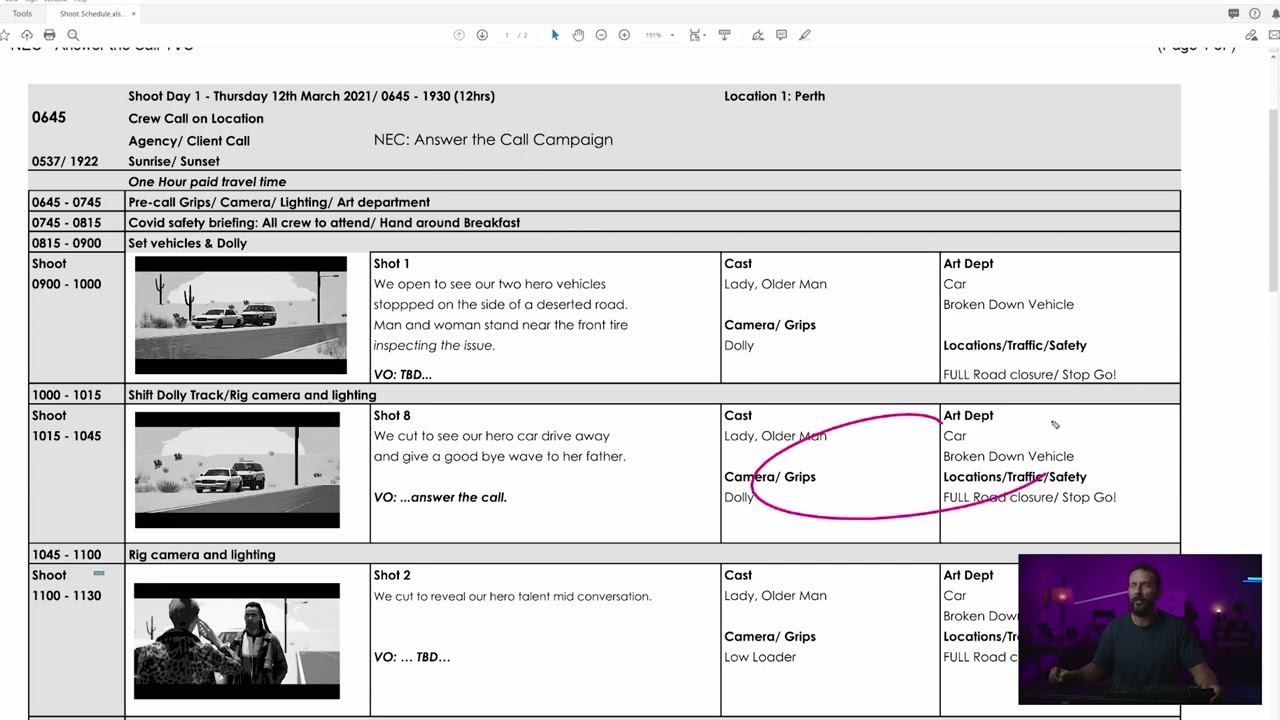
get in much more of a rhythm if you're not breaking every time you change a setup for 45 minutes they're able to keep in the flow same as the talent on the day they're able to keep in that same flow in that same headspace the quicker you can move so I like to do 15 minutes per entry in is generally the what I'm looking for but really overall when you first see the schedule it's really red flags and any directional flops as well so like I said I like to front load especially on something like
this where we're going to have big wides at the start day exteriors right there's not a whole lot of lighting going on here so we don't have to pre-load too much for lighting but it's imperative that we are there at the exact right time because there's no way to get that look back as soon as we miss our backlit window it's gone so I'm going to be looking for that the next thing is going to be directional flops so this is again where you're going to have to take time and make sure that that has
been looked after in the schedule what I mean by directional flops is if we're looking one way shooting out this entire Direction when we turn around it's going to be significantly more time to change the lighting setup the rigging setup the grip setup whatever it is it's going to take more time so I'm looking at those two things big directional changes and also for exterior outside like this we're going to need to really nail our wide shots so that's what I'm going to be looking at in the schedule then after you go through and you
make your little Corrections and you pass it on and you get all that communication out of the way the first city will finally then put together the final draft of the schedule and that'll be put out to the rest of the crew and that's really when you're locked in you are locked in because all the other departments will see in that schedule and you'll have to keep that flow so if you have any hesitation about the schedule out what time you want to be somewhere if you've got more homework that you want to do on
the Sun path or what the look is actually going to be now is the time to do it before that final draft of the schedule goes out because as soon as it does it's very very difficult to walk back if you see something so that is the schedule process let's jump into the first draft that the first ad has sent through and we will walk through this entire process for the job