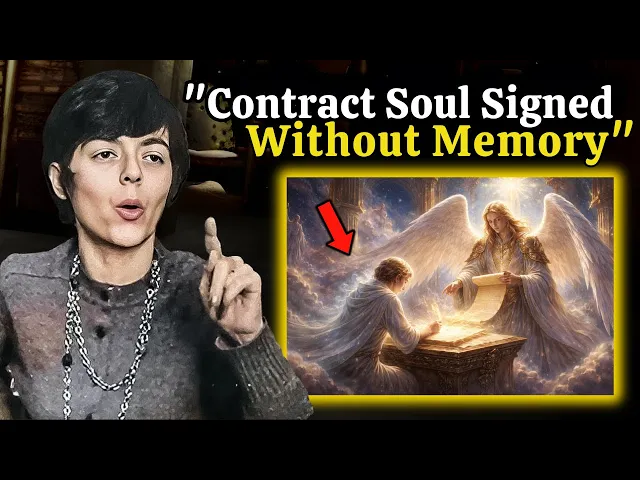
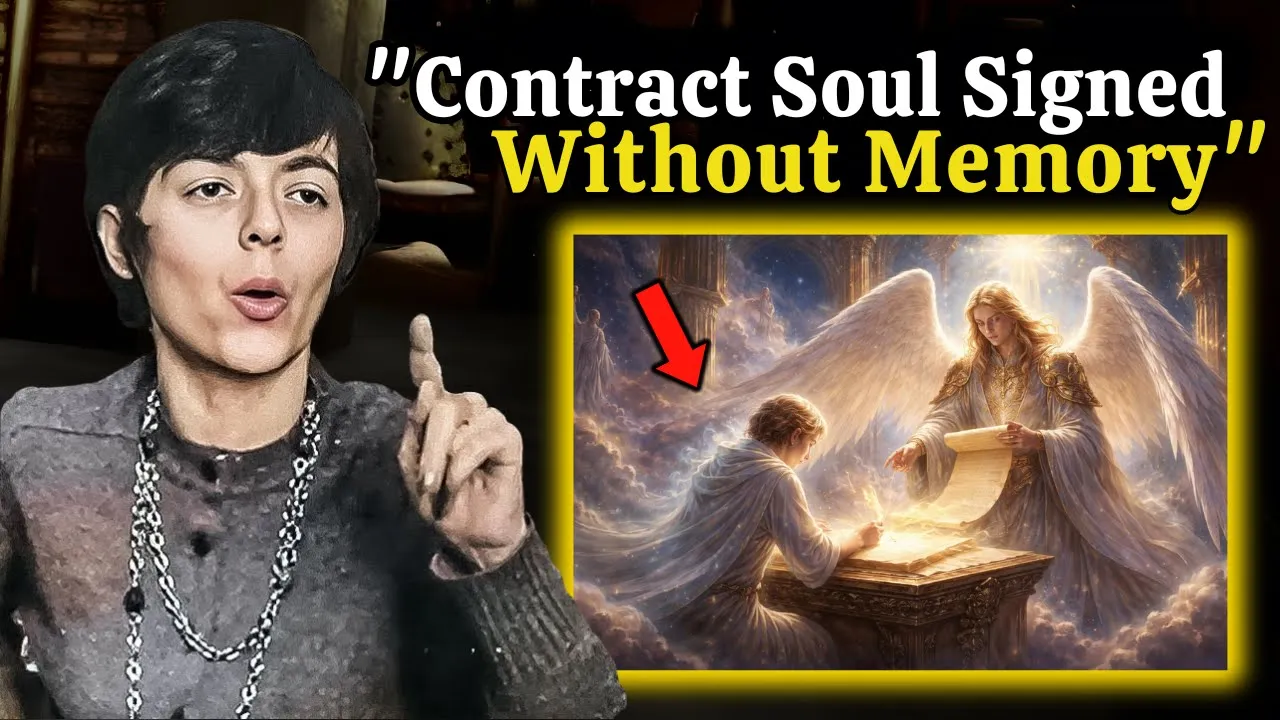
Seth explains the contract. Your soul signed without your memory. There's a moment before birth that no one talks about.
Not because it's secret, but because memory itself is designed to erase it. Here's what shocked me when I first encountered this in Seth's teachings. Before you arrived in this body, in this timeline, in this identity, you agreed to something.
Not passively, not as a victim, but as an architect selecting parameters for an experiment you designed yourself. And I know what you're thinking right now because I thought it too. If I chose this life, then who chose my suffering?
Who chose these limitations? Who chose this exact cocktail of gifts and wounds that makes me who I am? The discomfort you're feeling right now, that's the teaching working, that visceral resistance rising in your chest.
Seth said, "That's how you know you're approaching something true. " Because here's the revelation that changes everything. Amnesia is part of the contract.
You're supposed to forget. The game only works if you believe the rules are imposed rather than selected. Think about it.
If you woke up tomorrow with full memory of designing this life, every challenge, every relationship, every wound, how would you feel about your suffering? Would you still call it unfair? Would you still feel like a victim of circumstance?
Seth insisted on this framework not to absolve the universe of cruelty, but to return agency to the only place it ever truly resided, within you before you became you. In his book, Seth Speaks, he described it like this, and I'm paraphrasing here, that the soul enters physical reality with intention, that what appears random or imposed is actually precisely selected from infinite probabilities, and that forgetting this selection is the single most important clause in your pre-birth agreement. Because without amnesia, you're not really here.
You're just a multi-dimensional being playing dressup in physical form, immune to authentic stakes, untouched by genuine consequence. And that's not what you came for. You came for the intensity, the realness, the sharp edges of existence that cut deep enough to generate transformation.
And the only way to access that intensity is to forget you designed it. So before we go further, I need you to sit with this. The memory of your pre-birth choice was deliberately erased, not stolen, not suppressed by some external force.
You chose to forget as the final clause in a contract you authored. The question we're about to explore isn't whether this is literally true. Seth offered it as an operational framework, a lens for reclaiming power in a reality that often feels imposed.
The question is, what happens when you start living as if you signed this contract? What happens when you stop waiting for the universe to explain itself and start recognizing your own signature in the margins of your life? Here's where it gets precise.
Because the phrase soul contract has been striped into motivational platitudes. You chose this to learn lessons. Everything happens for a reason.
you're exactly where you need to be. Seth's teaching is far more rigorous and far less sentimental. A soul contract in his framework is what he called a pre-incarnational probability template, not a script, not a destiny carved in stone, but a set of electromagnetic potentials that your entity, your multi-dimensional self, selects from infinite options before funneling into linear time.
Let me break that down because this is critical. Imagine you're standing in a vast warehouse filled with billions of glass spheres. Each one containing a complete human life.
Not just one version, but thousands of probable versions superimposed. Different choices, different outcomes, different intensities. Some spheres glow brighter.
Some pulse with darker frequencies. Some feel dense with challenge. Others shimmer with ease.
Your entity walks through this warehouse and selects one sphere, not randomly, with absolute precision, based on the experiential data it seeks to generate. That selection, that's your soul contract. A probability template with embedded intensity markers, relational nodes, and challenge thresholds designed to produce specific frequencies of experience.
You didn't choose every individual moment. You didn't script every conversation, but you did select the initial conditions, the core dilemmas, and the souls you would intersect with along the way. Now, Seth was very clear about three misconceptions people have about contracts, and I want to dismantle them right now.
First, this is not karma repaying past debts. Seth rejected linear causality across lifetimes entirely. He said, "Time is simultaneous, not sequential.
" So the idea that you're suffering now because you did something wrong in a past life, that's not how it works. You're not paying off cosmic credit card debt. You're generating new experiential data that your entity existing outside time is curious about.
Second, the contract is not unchangeable. You renegotiate terms constantly through free will, though most people do so unconsciously. Every belief you hold, every choice you make, every expectation you carry, these are micro amendments to your original template.
Change your beliefs and you literally rewrite which probabilities actualize from your contract's range of options. Third, it's not imposed by a deity or council of elders judging your worthiness. You are the council.
Before incarnation, you as your larger entity self deliberated with other aspects of yourself reached consensus and crystallized that agreement into physical focus. There's no judge, no cosmic parent doling out consequences. Just you in a state of expanded awareness making a calculated selection about which intensity bandwidth would generate the richest harvest of experience.
And here's what makes this framework so different from typical new age teachings. Seth said your contract includes clauses for suffering, limitation, and failure. Not because these are punishments or lessons, but because they generate specific electromagnetic frequencies, your entity cannot access any other way.
You didn't choose suffering because you deserved it or needed to learn from it. You chose it because from the multi-dimensional perspective, suffering is a particular flavor of consciousness. And consciousness itself seeks to know every flavor available.
That's not comforting. That's not soft. But Seth promised it's liberating because it means you're not being punished.
You're conducting research and research can be amended midexperiment when new data emerges. Now we reconstruct the moment you don't remember. The moment the signature actually happened.
Seth described a transitional state he called the between life probability review. Not a place, not a location in space, but a condition of awareness where your consciousness exists outside sequential time. Viewing your upcoming incarnation as a hologram, you can rotate, zoom into, and adjust before committing.
Close your eyes for a second and try to imagine this with me. You're standing in a vast theater of absolute darkness. Not frightening darkness, neutral darkness like the space behind your eyelids before dreams begin and before you hovers a luminous sphere containing every possible version of your life superimposed.
Thousands of probable futures all coexisting, all available. You're not alone. The other entities connected to your incarnational cluster are present.
your future parents, your lovers, your enemies, your collaborators, your children. Each one is selecting their own probability template in coordinated resonance with yours. Because here's the thing Seth emphasized.
You can't choose your life in isolation. Every contract is a collaborative agreement with the other souls who will play significant roles in your story. Your mother didn't just choose to be your mother.
You chose her and she chose you. And that mutual selection happens simultaneously in this pre-birth review. The signing, the actual moment of commitment happens when your focused intent locks onto a specific pattern within the sphere.
It's a sudden yes that collapses the infinite into the particular. Like tuning a radio, you didn't create the frequencies that exist on the electromagnetic spectrum, but you chose which station to broadcast through. Seth used another metaphor that I found helpful.
Imagine you're a filmmaker reviewing rough cuts of a film that hasn't been made yet. You can see the overall arc, the major turning points, the relationships that will define the narrative. You adjust the lighting here, recast a character there, extend one scene, compress another, and then there's a moment hard to describe because it exists outside language.
where you feel a kind of click, a resonance, a knowing that this configuration is correct, that this probability template matches the experiential data you seek. And you say yes, that yes is the signature. That's the contract locking into place.
Now, Seth described the phenomenology of this state in ways that sound impossible to our physical brains. He talked about colors without visual organs, understanding without language, decision without doubt, a feeling of total clarity about what you're choosing and why. Even as you simultaneously know that once you enter the physical, that clarity will dissolve into amnesia.
And that amnesia is necessary. Because this state, this multi-dimensional awareness where you can see all probabilities at once is incompatible with physical immersion. You can't be fully here if you're still fully there.
The contract requires you to compress your vast consciousness into a singular focal point, forgetting the periphery so the center can burn bright. So you sign, you commit. You feel yourself beginning to funnel down from the expansive between life state into something narrower, denser, more focused, like water pouring through a funnel into a bottle.
And the last thing you experience before memory dissolves is a kind of exhilaration mixed with terror. Knowing you're about to forget everything. Knowing this forgetting is exactly what you wanted.
Knowing the adventure is about to begin for real. Then darkness. Then birth.
Then amnesia so complete you'll spend years, maybe decades, maybe an entire lifetime believing you had no choice in any of this. But the signature was yours. The pen was in your hand.
And somewhere beneath conscious memory, your entity remembers every detail of what you selected and why. Let's get forensic now. Let's break down the contract's invisible architecture into tangible components you can actually examine in your current life.
Seth outlined several non-negotiable baseline agreements that every physical incarnation accepts. These aren't optional. If you're here, you agreed to these terms, and understanding them changes how you interpret everything happening to you right now.
The first clause, the camouflage commitment. You agreed to believe that matter is solid, time is linear, and death is final, even though none of these are true. Seth called physical reality a camouflage system, meaning it's a specific frequency band of consciousness that appears material, but is actually electromagnetic patterns held in place by collective agreement.
You knew this before you incarnated and you agreed to forget it. You agreed to believe the illusion completely so you could participate fully in this particular game's rules. That's why spiritual awakening feels so disorienting.
You're not discovering new truth. You're remembering what you deliberately agreed to forget. The second clause, the relational web.
You will encounter specific consciousnesses, souls you've known before, souls your entity has intersected with across multiple probability streams in specific roles designed to create friction points for mutual evolution. These aren't accidents. Your parents pre-seelelected.
Your most intense romantic relationship pre-arranged. That person who wounded you so deeply you've never fully recovered. They signed onto your contract and you signed onto theirs because the collision between you generates an electromagnetic frequency both entities wanted to experience.
This is where the teaching gets uncomfortable and we're not going to soften it. Seth said, "These relationships often feel destined yet agonizing precisely because they're fulfilling contractual obligations you designed when you had access to multi-dimensional awareness but must now navigate with only physical level consciousness. " The third clause, the challenge threshold.
You pre-selected a bandwidth of difficulty you deemed workable for the experiential data you seek. Think of it like a video game difficulty setting. You didn't choose easy mode or impossible mode randomly.
You assessed your entity's curiosity, your probable growth trajectories, and the intensity level that would generate the richest harvest without completely overwhelming your physical nervous system. Here's what most people miss. Seth said, "Life won't exceed that threshold unless you widen it through unconscious belief.
" meaning the contract includes protective parameters. You might experience severe challenges, but they'll stay within the bandwidth you assessed as survivable. When people feel like life is testing them beyond what they can handle, it's usually because their beliefs have unconsciously amended the contract to increase difficulty, not because the original agreement was miscalibrated.
And here's the controversial part. Even traumas that feel completely unchosen, accidents, betrayals, sudden losses still operate within your contract's outer parameters. Not because you specifically wanted that trauma, but because you accepted risk as the price of intensity.
You knew physical life is volatile, unpredictable, and sometimes brutal, and you signed anyway. The fourth clause, the amnesia clause, memory of the pre-birth state will be suppressed. So immersion is total remembering Midgame is possible but requires deliberate inner work.
Dram practice, meditation, belief examination or spontaneous crisis that cracks the ego structure enough for contract memory to leak through. Seth compared it to method actors who become so committed to their roles they temporarily forget their performing. Daniel Lewis staying in character for months.
that level of commitment. Except you're not pretending to be human. You're temporarily believing you're only human, forgetting you're also the entity who chose this role.
Now, let me address the question that's probably screaming in your mind right now. If I chose a body with chronic illness, if I chose parents who wounded me, if I chose circumstances that left me traumatized, does that mean I wanted to suffer? Seth's answer is both brutal and liberating.
No, you didn't want to suffer. You wanted the specific experiential data that suffering generates. There's a difference.
From the multi-dimensional perspective, your entity doesn't experience suffering the way your physical self does. It experiences it as a particular frequency of consciousness. electromagnetic information about limitation, contrast, and intensity.
Your human self suffers. Your entity self observes and integrates. Both are true simultaneously and neither negates the realness of your pain or the validity of wanting it to end.
The contract doesn't demand you stay in suffering. It includes suffering as one probability within your template's range. But your free will operating every moment determines whether you continue actualizing that probability or shift into a different branch where the suffering resolves.
You're not trapped. You're immersed. And immersion can be adjusted from inside the game once you remember you're playing one.
You didn't sign this contract alone. And this is where Seth's framework becomes almost overwhelming in its implications. He described what he called entity clusters.
Groups of consciousnesses who agree to intersect across multiple lifetimes taking turns playing different roles in each other's experiential theaters. Your mother in this life might have been your student in another probable reality. Your abuser might be a fragment of your own entity exploring shadow dynamics from the opposite polarity.
Let me say that again because it's important. The people who wounded you most deeply might be aspects of your own larger self. Investigating what it feels like to be on the giving and receiving end of harm within a framework of total safety.
Because from the multi-dimensional perspective, nothing is truly lost. And all experiences are ultimately consensual experiments in consciousness. Seth was very clear.
These relationships aren't karmic punishments. their collaborative experiments. The parent who wounded you didn't wrong you.
They fulfilled an agreement you both authored before incarnation, knowing from that vantage point that this specific wound would generate the exact growth friction you sought. Now, here's where I need to be very careful because this teaching walks a razor's edge. On one side, profound liberation, realizing that no one is your enemy, that even your abusers are souls playing roles you mutually agreed to explore, that all relationship dynamics serve your entity's curiosity.
This can dissolve decades of resentment in an instant. On the other side, dangerous enabling. using this framework to excuse toxicity, to justify staying in abusive situations because we chose this together, to bypass legitimate boundaries because it's all part of the contract.
Seth addressed this directly. He said, "Yes, the contract included the setup, the initial collision, the relationship dynamic, but your free will determines the response. And choosing to leave, to heal, to renegotiate boundaries, to end a relationship that's become destructive.
That's also part of the design. The contract doesn't demand you stay in any specific configuration. It demands you generate experiential data.
And sometimes the richest data comes from recognizing when a relational agreement has fulfilled its purpose and needs to dissolve. Think of it like method actors again. You rehearsed this scene together before the play began.
You agreed to play mother and child or abuser and victim or lover and betrayer. But if the performance becomes genuinely harmful, if someone breaks character so severely they're causing actual damage, you're allowed to walk off stage. The contract includes exit clauses.
Seth described these exit points as completion nodes, moments when a relational dynamic has generated all the experiential data it was designed to produce. You'll often feel it as a sudden clarity, a knowing that this relationship has served its purpose and needs to evolve or end. That's not you violating the contract.
That's you recognizing the contract's natural completion. And here's the most important thing. Your entity clusters rotate roles across incarnations specifically to prevent any one soul from being permanently trapped in victim or perpetrator dynamics.
The person playing your abuser in this life might play your protector in another. The parent who neglected you here might be the child you nurture elsewhere. There's a cosmic justice to it.
Not justice as punishment, but justice as balance. Everyone eventually experiences every perspective. Everyone rotates through every role.
And from that multi-dimensional view, all debts are settled. All wounds heal and all relationships ultimately serve the expansion of consciousness itself. But right now in this life, you're allowed to feel the wound.
You're allowed to rage against the person who hurt you. You're allowed to establish boundaries, demand accountability, and choose to never speak to them again. The contract gave you the collision.
Your free will determines what you do with it. Now, let's examine the contract's most elegant and most brutal clause. You will not remember agreeing.
This isn't cruelty. This is precision engineering. Seth explained that if you retained full awareness of your multi-dimensional self while incarnated, the game would collapse.
You'd lack authentic emotional stakes, genuine surprise, the bite of consequence that generates the richness you came here to harvest. Imagine playing a video game where you can see all the code, all the branching outcomes, your immortal status as player outside the game. The immersion shatters.
You're no longer engaged. You're just going through motions, watching yourself perform actions whose results you already know. Physical life requires you to believe the stakes are real, that choices are final, that the self is singular, that death ends everything, that suffering might be meaningless, that you could fail, be unloved, die alone, waste your entire existence.
These beliefs, false from the multi-dimensional perspective, but absolutely true within the physical camouflage system, create the intensity you came for. They generate authentic emotion, genuine fear, real joy, the sharp relief of survival, the devastating grief of loss, the electric shock of love at first sight. Without amnesia, none of that touches you.
You're a tourist observing physical reality from behind glass, unable to fully participate because you remember you're not really at risk. So, the amnesia mechanism is built into the neurological structure of the physical brain itself. Seth described it as a filtering system.
Your brain is deliberately designed to screen out framework 2 data, multi-dimensional awareness, and pre-birth memory. It compresses your vast entity consciousness into a narrow beam focused exclusively on this timeline, this identity, this moment. But, and this is critical, Seth insisted the amnesia is semi-permeable.
It's not a vault sealed shut forever. It's more like a curtain [clears throat] you agreed would be drawn, but can be pulled back with the right techniques. Drams puncture the veil.
During sleep, your consciousness loosens its physical focus and drifts back toward the between life review state. That's why some dreams feel more real than waking life. They're accessing layers of reality.
Your daytime awareness filters out. Intuition punctures the veil. Those moments when you know something without knowing how you know it.
That's contract memory leaking through your entity whispering reminders across the amnesia barrier. Deja vu punctures the veil. That eerie sensation of having lived this moment before.
Seth said that's you recognizing a probability you reviewed during your pre-birth planning. You saw this moment in the hologram before you entered physical focus and now you're experiencing it from inside the timeline. Certain meditative states puncture the veil.
When ego structure temporarily dissolves and you access expanded awareness, you might catch glimpses of the contract itself, the choices you made, the souls you agreed to meet, the challenges you accepted, and sometimes crisis punctures the veil. Near-death experiences, severe trauma or psychedelic experiences can shock the filtering system into temporary failure, flooding your consciousness with multi-dimensional awareness you're normally protected from. Seth taught that you can train yourself to recognize these leaks.
Pay attention to recurring dreams that feature pre-birth imagery, vast spaces, councils of light, making decisions about your upcoming life. Notice inexplicable knowings about people you just met as if you recognize them from somewhere memory can't access. Feel for bodily sensations of remembering a choice you never consciously made.
A visceral certainty that you selected this life, this challenge, this exact configuration of circumstances. These aren't fantasies. These are your entity communicating across the amnesia barrier, reminding you that you're more than this singular focus, that you made these choices deliberately, and that remembering, even partially, is part of what you came here to do.
Here's the revelation that changes everything. The contract is not fixed. Seth taught that free will operates within and upon your pre-birth template constantly.
You're renegotiating terms every moment, though usually unconsciously, through your beliefs and expectations. Every time you change a core belief, you literally rewrite which probabilities from your contract actualize into physical experience. This isn't abstract theory.
This is operational mechanics. And I'm going to give you three specific mechanisms Seth described for conscious contract amendment. Mechanism one, belief revision.
Since your contract is a probability template, not a script, shifting core beliefs rewrites which branch of the template manifests. You have a range of probabilities available at every moment. Changing your beliefs about what's possible, what you deserve, what's likely to happen.
This acts like switching tracks on a railroad. you're still within your contract's overall framework, but you're selecting different probabilities within that range. Seth gave a specific practice for this.
He said to examine the beliefs underlying your current life circumstances. If you're in chronic financial struggle, ask, "What do I believe about money, about worthiness, about safety? " Write those beliefs down.
Then deliberately construct opposite beliefs and practice holding them daily for 30 days. Watch which probabilities start actualizing as the new belief takes root. Mechanism two, dream renegotiation.
In deep sleep, your consciousness returns to the between life review state. Not fully, but enough to access contractual parameters. Seth said, "You can train yourself to enter sleep with specific intention to discuss amendments with your entity and the other souls in your relational cluster.
" He called this the midnight review. Before sleep, you state clearly out loud, if possible, that you're requesting a contract review [clears throat] session. You specify which area needs amendment.
Relationships, health, creative expression, whatever feels misaligned with your current understanding of what you're here to do. Then you sleep. You might not remember the dreams, but Seth promised the renegotiation happens automatically once you establish the intention.
You'll often wake up with inexplicable clarity about decisions you need to make. or you'll notice relationship dynamics shifting without conscious intervention or opportunities appearing that weren't there before. This isn't prayer.
This isn't asking an external power for help. This is bureaucracy at the soul level. You filing amendment requests with the same entity who authored the original contract, which is you.
So it works with shocking reliability once you approach it as operational rather than symbolic. Mechanism three, decisive action. Certain choice points in physical life act as what Seth called contract gates.
Moments when major amendments autoprocess without needing esoteric practice. Leaving a marriage, changing careers, confronting a deep wound, relocating to a new country. These decisive actions trigger instant template updates because here's what Seth explained.
Your entity is always watching, always responsive. When you take action in physical reality that demonstrates you're ready for a different probability branch, your entity immediately begins collapsing that new branch into manifestation. The contract updates in real time to match your demonstrated readiness.
The key is decisive action. Not wishful thinking, not passive hoping, but commitment demonstrated through behavior. When you quit the job, when you end the relationship, when you finally speak the truth you've been suppressing, that's you signing an amendment to your contract with the same authority you signed the original.
And here's what I've found most powerful in my own life. You don't need to believe any of this for it to work. Seth offered these mechanisms as tools.
Use them pragmatically. Test them empirically. If belief revision changes your circumstances, keep doing it.
If the midnight review produces tangible results, make it a practice. If decisive action reliably shifts probabilities, use that leverage. The contract responds to what you do, not what you believe.
Your entity doesn't require faith. It requires demonstration that you're ready for new experiential data. There's a moment, and maybe you're approaching it right now, when remembering stops being intellectual and becomes visceral, not just understanding that you might have chosen this life, but feeling the signature.
Recognizing your own handwriting in the margins of your suffering, sensing the presence of your entity behind every choice you thought was imposed. When that happens, when you remember, not just conceptually, but in your cells, the nature of your suffering inverts. Pain doesn't vanish.
challenges don't dissolve, but their meaning shifts from affliction to chosen intensity, from punishment to deliberate research, from evidence of cosmic cruelty to proof of your own courage. Seth described this shift as moving from first person to second person perspective on your own life. You're still the protagonist, still living the story from inside, but you're also the author watching yourself live the story you wrote, marveling at how well you're performing the role.
And here's the phenomenology of remembering that Seth promised you'd experience. You start noticing the seams in reality where the contract shows through. Synchronicities aligning too precisely to be random.
Meeting someone the day after dreaming about them. Finding the exact book you needed the moment you needed it. Receiving information that answers questions you hadn't voiced yet.
Relationships resolving the moment their contractual purpose completes. That person who wounded you suddenly moving away or apologizing out of nowhere or simply fading from your life as if they were only ever there to generate one specific experiential frequency and now they're done. Old wounds suddenly releasing after decades.
Trauma you've carried for years spontaneously healing when its experiential data has been fully integrated by your entity. Not because you finally found the right therapy, but because the contract clause that required that wound has expired. You'll start feeling a strange mix of responsibility and freedom.
Responsibility because you can no longer blame the universe, past lives, or gods for your circumstances. The only signature on the contract is yours, but freedom because if you wrote it once, you can revise it now. Seth was very clear.
Remembering doesn't make life easier. It makes it more your responsibility. You become the author midstory, which means every choice from this point forward is conscious creation rather than unconscious reaction.
And that's both exhilarating and terrifying because victimhood for all its pain offers a kind of comfort. Someone else is responsible. Someone else should fix this.
Someone else owes you justice. But when you remember you signed the contract, victimhood becomes impossible even when injustice remains real. You can still fight for justice.
You can still demand accountability. You can still rage against harm. But underneath there's a knowing.
This collision was pre-arranged. This challenge was accepted. This intensity was requested.
Seth promised this remembering is the point. The contract includes the clause that you'll eventually wake up midame and recognize your own authorship. And when you do, the game upgrades.
You're no longer playing unconsciously. You're playing with full awareness that you are the player, not just the character. And from that perspective, every moment becomes an experiment in conscious creation.
Every challenge becomes an opportunity to test your understanding of how probability templates respond to belief and intention. Every relationship becomes a collaboration with another soul who's also remembering they chose this dance. You stop waiting for permission from the universe and start editing the contract in real time.
So, you came here wondering if you were trapped by a cosmic contract you never agreed to. Now you know you were the architect, the signatory, the author of every parameter, and amnesia was your most brilliant design, ensuring total immersion in a game that only works when the stakes feel absolute. The teaching doesn't demand you accept this as literal truth.
Seth offered it as an operational framework for reclaiming agency in a reality that often feels imposed. Whether metaphor or mechanics, the result is identical. You stop waiting for permission from the universe and start editing the contract in real time through belief, choice, and conscious renegotiation.
Because here's what most people miss. If you signed once, you can sign again. Every moment is a micro contract, a fresh agreement to continue this particular probability or shift into another.
You're not bound by decisions your pre-birth self made in a state of expanded awareness you can't currently access. Your free will operates now in this moment with the same authority that selected this life. The pen was never taken from your hand.
You just forgot you were still holding it. And maybe that forgetting was necessary. Maybe you needed to believe you were powerless before you could discover the full scope of your power.
Maybe the contract included this exact moment right now reading these words as the triggering point where amnesia begins to dissolve and remembering begins. Seth said the question isn't whether you'll remember. Everyone remembers eventually either midlife or at death when consciousness expands back into multi-dimensional awareness and you see the whole design you authored.
The question is whether you'll have the courage to write the next clause while fully awake. To stand in the middle of your contracted challenges and say, "I chose this and now I'm choosing something different. " to look at the people who've wounded you and recognize them as collaborators in an experiment you designed together before either of you had faces to feel your suffering and honor its realness while simultaneously knowing its generating experiential data your entity cannot access any other way.
That's the transformation Seth promised. Not escape from the contract, but conscious participation in its ongoing creation. You signed once before memory, in a state of total clarity about what you were selecting and why.
Now you get to sign again with physical eyes open, standing in the middle of the life you authored, holding the pen you never put down. The contract was always yours. The amendments are always available and the only permission you've ever needed was the permission you've always had.
Comment below. I remember signing. Let me know you understood this.
Let me know the remembering has begun because every time you declare it, you strengthen the signature. You ratify the contract you're now consciously choosing to fulfill. The pen is in your hand.