sugar has been part of the human diet since olden times it was introduced to the Western World by the Arabs who brought both the plant and the knowledge for its cultivation to Sicily in Spain in the 8th and 9th centuries however sugar remained an expensive spice up until the 1800s mainly due to the hassle involved in its production but the Industrial Revolution changed all that and now the industry is worth 67 billion dollars so how is it made in the U.S an estimated 55 to 60 percent of all the sugar produced comes from beets while
the remaining comes from sugar canes interestingly both these sources require different climatic conditions to cultivate sugar cane is primarily grown in tropical and subtropical regions while sugar beets are cultivated in temperate climates the process begins with the selection of suitable land for cultivation the land should have good drainage access to water and fertile soil in the case of sugar cane it is primarily propagated through stem cuttings called scent while sugar beets are grown from seeds on average it takes the sugarcane plant 12 to 16 months to reach maturation once it does it's time for harvesting
season in the U.S the harvesting of sugarcane is done through specialized Machinery once the sugar cane is harvested it is fed into the base of a conveyor that drops it onto a transport bin that follows alongside this sugar cane is then loaded onto trucks that deliver it to the mill once at a mill trucks empty their load onto a receiving table along with the soil and rock but if it's to be ready for the next stage it must be as clean as possible for this purpose the cane is fed into a belt conveyor that takes
the cane through strong Jets of water and combing drums to remove large amounts of rock trash and leaves then the Cane's hard structure is broken down inside a Crusher where rotating hammers break the cane into smaller pieces the crushed cane is loaded into a Milling tandem that's designed to extract the sweet juice from it inside the Milling tandem the crushed cane passes through a series of five or more Mills large cylinders compress the cane fiber removing as much juice as possible the juice is then diverted into a channel away from the big ass the dried
pulp Left Behind after the juice has been extracted the leftover pulp or big ass is not wasted and instead can be burnt as fuel the process is supervised at each of the Mills to ensure quality control finally a vat collects the juice that flows from the top and bottom of the Mills now that the juice has been successfully extracted from the sugar cane it's time to process it but before this can be done the sugar cane juice goes through a series of tests at the sugar Mills laboratory in these tests the juice is purified and
then fed to a polarimeter the most important parameter being checked for in these tests is the sugar concentration of the juice this is done for a variety of purposes it not only ensures consistent quality but helps optimize processing determines sugar yield sets fair prices meets regulations and AIDS in scientific research and development the sugar cane juice then falls through a 10 meter high tower as sulfur dioxide Vapors rise through it this process is known as sulfitation this preserves The Juice by inhibiting the growth of microorganisms and also balances the slightly acidic aspect of it in
a separate vat workers add powdered lime to water preparing a solution to which they will then add the juice an agitator mixes the cane and lime juice for about six hours to complete the process called alkalization this helps further regulate the Juice's pH level and clarify it in reaction to the lime the juice color changes from brown to Yellow next the juice goes into clarification tanks to remove any leftover impurities it takes over two hours for the juice to settle and for the impurities to fall to the bottom of the tank however the residue isn't
simply thrown away just yet workers filter the residue also known as mud to extract any remaining sugar after the sugar has been extracted the leftover mud is used to fertilize the cane Fields the purified juice collected from the clarification tanks is then boiled in a series of evaporators each succeeding evaporator has a higher pressure which means that the sugar boils at a lower temperature the evaporation process removes about two-thirds of the water content of the juice this brings the concentration of sugar in the juice from 15 to a whopping 60 then the juice collects in
15 ton tanks to clarify even more any impurities left in the juice float to the top of the tank which is then skimmed to the edges of the tank with the help of a rotating paddle the final tank produces a type of syrup with 65 solids and 35 percent water crystallization is the next step in the manufacture of sugar crystallization takes place in a single Stage Vacuum Pan the syrup is evaporated until saturated with sugar as soon as the saturation Point has been exceeded workers add sucrose crystals suspended in alcohol into the serum the suspended
sucrose crystals can act as seed crystals that provide a surface for new sugar crystals to form by introducing these seed crystals into the syrup they can serve as nuclei for the crystallization process initiating the growth of new crystals more rapidly and uniformly the growth of the crystals continue until the pan is full when sucrose concentration reaches the desired level the dense mixture of syrup and sugar crystals called masaquite is discharged into large containers known as crystallizers crystallization continues in the crystallizers as the masaquite is slowly stirred and cooled the syrup then goes into a high-speed
centrifugal machine which removes the sugar crystals from the uncrystallized syrup inside the sugar spins at 1200 RPM the mother liquor or molasses is separated from the sugar crystals which remain inside the perforated centrifugal basket while the Molasses passes through the crystals are then sprayed with a fine jet of water to remove most of the syrup coating and produce raw sugar of eye Purity raw sugar from the centrifuges contains 97 to 99 percent damp sugar crystals are dried by being tumbled through heated air in a granulator this brings the humidity level of the sugar down to
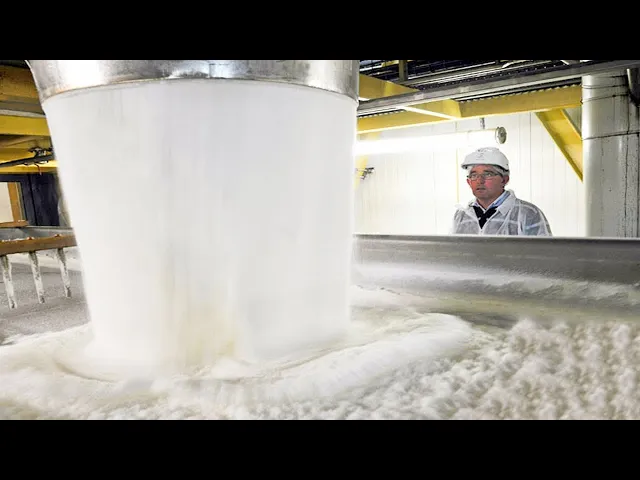
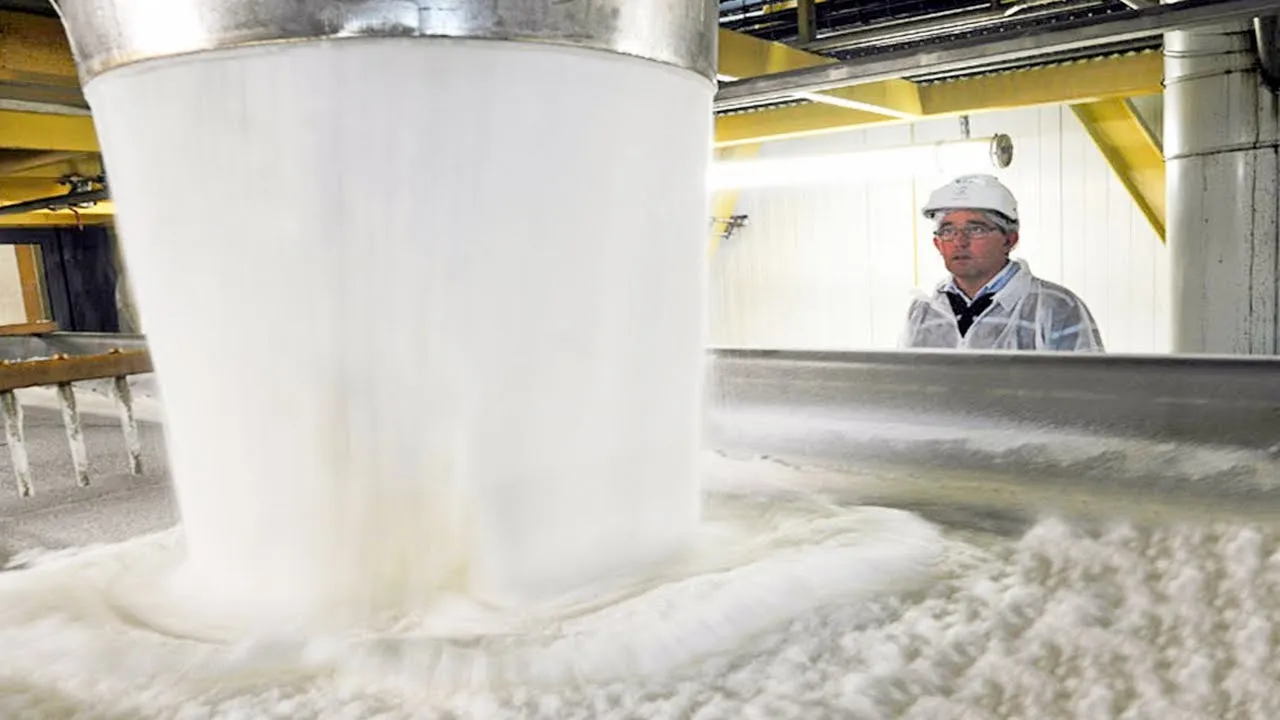
about 0.02 percent the standard for table sugar the dry sugar crystals are then poured out of the dryer and into a bag that can store 1 000 kilos a hoist then carries the bags to a packing facility the Hoist can carry three bags at a time which equates to 3 000 kilos talk about a heavy load it lowers each bag into a shoot that leads to the Factory's main floor workers carefully open each bag in turn and pour out the sugar into the Chute the Chute feeds into an automated packaging machine that fills a series
of two kilos of plastic bags maintaining Mill sanitization is a critical aspect of quality control measures scientific Studies have demonstrated that even a small amount of sour baguettes fiber residue from sugarcane can contaminate the entire flow of warm juice passing over it to to address this modern Mills employ self-cleaning troughs designed with an appropriate slope that prevents bad gas from accumulating and ensures its flow out with the juice stream stringent measures are implemented to control insects and pests within the mill premises efficient Transportation methods of quick delivery of sugar cane to the Mills are essential
due to the rapid spoilage of cane automation has been introduced to streamline Transportation processes and minimize delays ensuring that the cane reaches the Mills promptly preserving the high quality of the end product necessitates careful storage of brown and yellow refined sugars which typically contain two percent to five percent moisture these sugars are stored in a cool and relatively humid environment to maintain their moisture content and prevent them from hardening if you got a sweet tooth watching this video why don't you head over to our how chocolate is made video right here