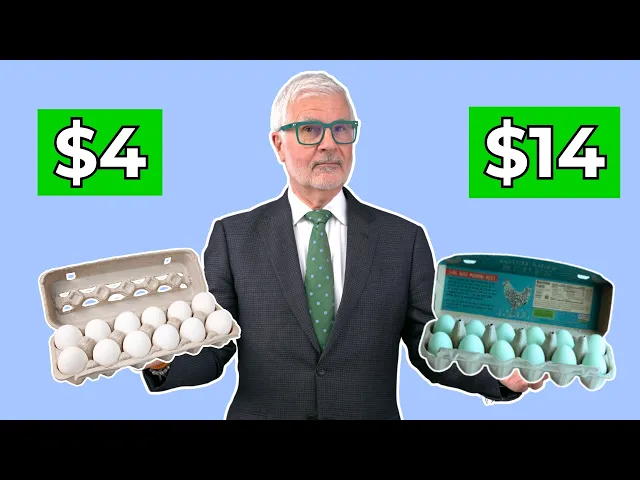
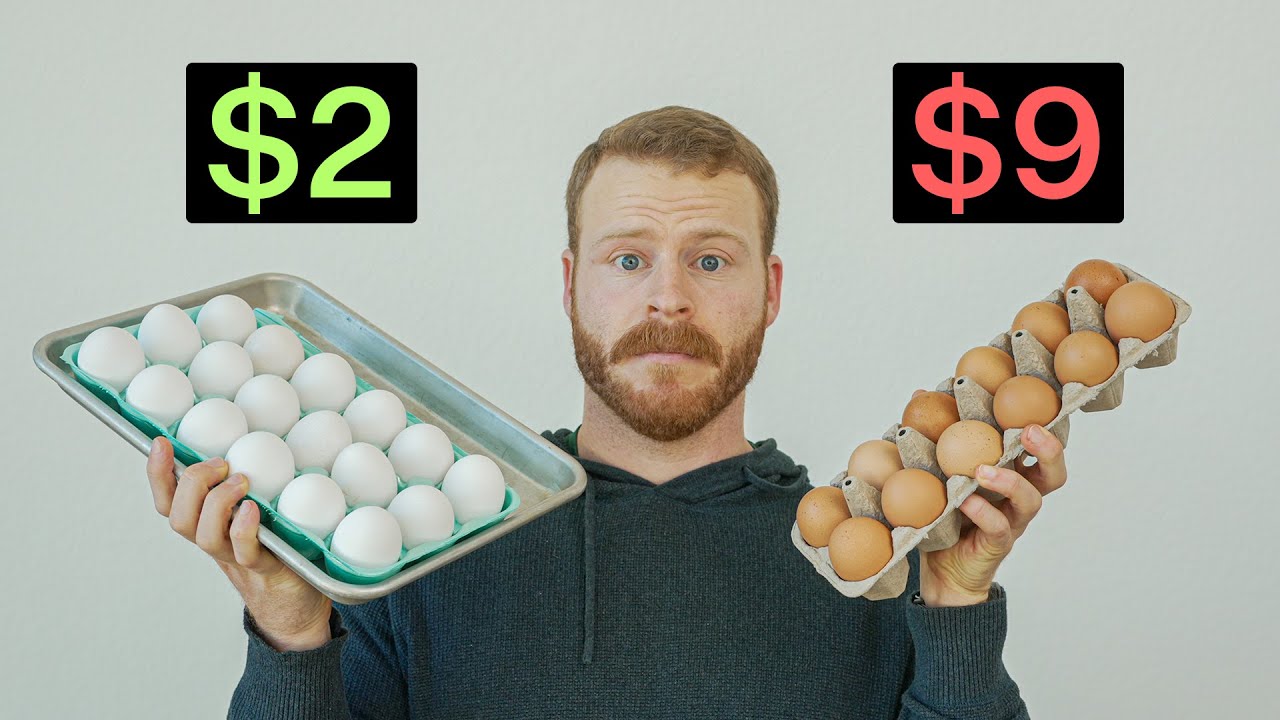
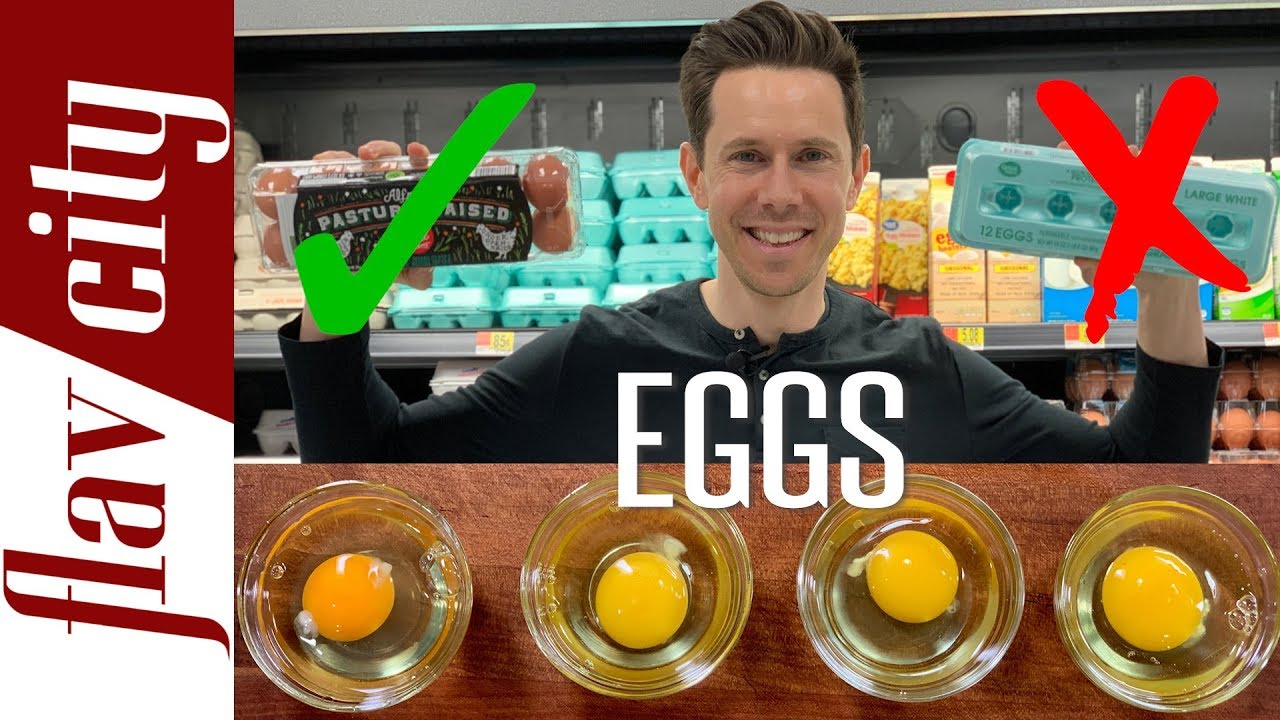
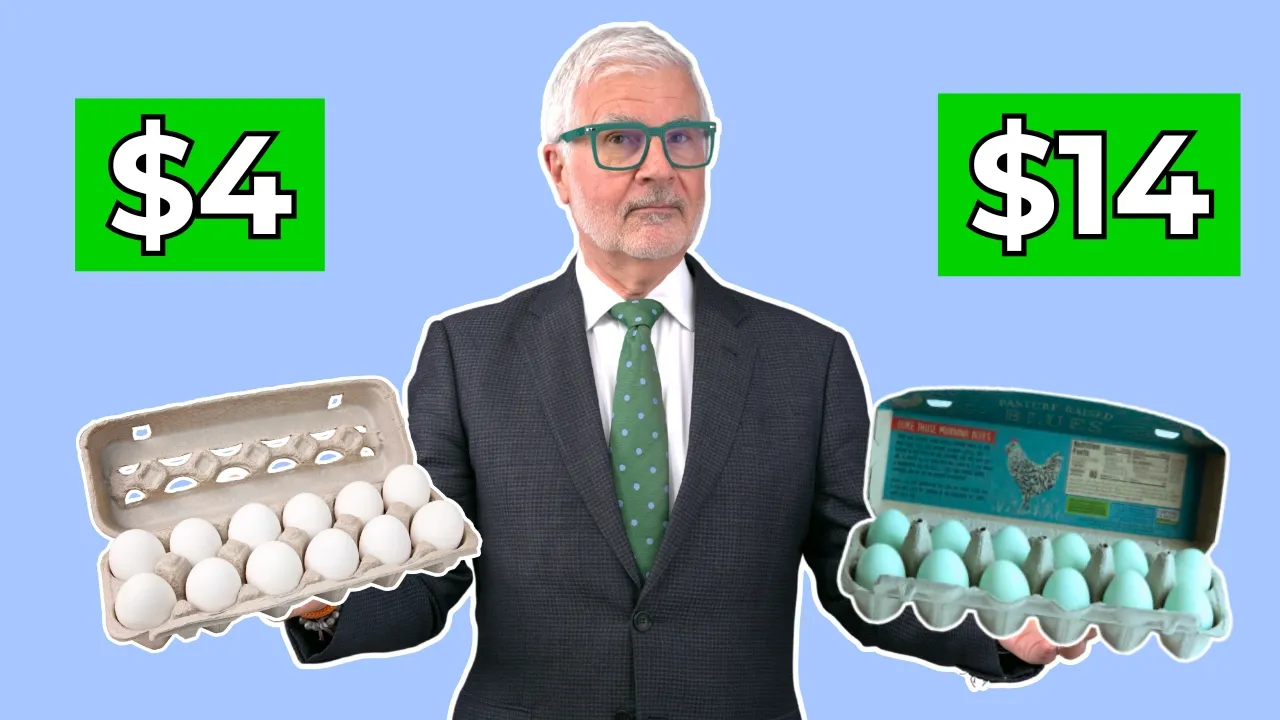
with the surge of expensive eggs flooding the market many of us are left wondering are these pricey options really worth it so let's get cracking now number one we have to look at is the chicken space when we look at a carton of eggs we typically see the terms cagefree free range and pasture Ray but what is that really mean well it's referring to the amount of space the chicken has to live in chickens and cages don't even get a full square foot of space this setup leads to high levels of stess and cortisol in
the chicken the impact on eggs means higher cortisol means poor egg quality nutritionally and in flavor how about cagefree chickens that sounds good don't be fooled by the label while cagefree might sound promising it's only marginally better these chickens typically only also get one square foot per bird Believe it or not I have a good friend who used to be a big chicken farmer they have a 100,000 chickens in a warehouse there aren't any cages but they're packed together so close they might as well be so their stress levels are still high and the nutritional
quality of the egg remains compromised okay well how about free range chicken a step up but still limited they get about 2x two ft of space face but the free range chickens can be kept in the warehouse their entire lives as long as a door to the outside is open for 5 minutes every 24 hours and the chicken has the potential to visit outside no chicken in their right mind would stick their head out thinking a hawk is about to eat them okay how about pasturas chicken so pasture AG chicken get about 10 by 10
ft per bird allowing them to forage Peck and move freely hence lower stress equals a healthier higher quality egg but wait almost all pastured chickens are given additional feed because they can't actually get enough feed from pecking around in the grass anymore and bad news most of the time grass is not growing 365 days a year so the farmers actually have to give their chickens supplemental food so you got to know not only where your eggs came from you got to know the farmer one of the best ways is to go to a farmer's market
find out how they raise their chickens but equally as important find out what they're feeding their chickens so for instance even though this says pasture rays and small Family Farms there's nothing on here to describe what they're actually giving their chickens to eat we have a lady at Santa Barbara's farmers market that I went up to a couple years ago and I said what do you feed your chickens and she looked at me and she said I don't feed them anything they work for me and I said what does that mean she said they're farm
animals they work for me she said you should come back in October and November when I turn them loose in our pmen tree farm they have the most intense orange egg yolk you will ever see speaking of which believe it or not it's perfectly acceptable to feed chickens colorful things like for instance turmeric or marigolds to give their egg yolk a darker orange color now there's nothing illegal about that and quite frankly marigolds are really good for you and I like to sprinkle maragold flowers on my salads also egg labels ignore natural and grade levels
they need nothing in terms of quality ignore the color of the egg a white egg a brown egg a green egg a blue egg they really don't mean anything but look for pasture Rays here's several now organic organic doesn't mean that the chicken was eating organically except for a few important issues if it says organic that means the grower was controlling the feed and it usually means they're feeding them organic corn or organic soybeans or organic other grains so just because it says organic don't be fooled all right so let's do a little color test
first of all I have no commercial interest with any of these folks I have a really heartfelt interest in one of these that we'll talk about but here's Eggland's Best you see that advertised on TV all the time it's usually got a cute little EB on the end of it and one of the things they do with these chickens is they feed them flax seed and or algae to up their level of omega-3 now they don't make longchain omega-3 they make short chain omega-3 and you'll notice that's a pretty nice looking Yol this is one
of the better options particularly for my patients where money is an object and quite frankly money is usually an object so interestingly there is another company I don't have here today that feed feeds their chickens algae and seaweed and the problem is they have to balance the amount of algae and seaweed or their shell becomes so thin that they crack all the time interestingly enough I have a new patient from Nebraska who has their own farm and they've been desperately trying to get their chickens to lay eggs by giving them algae and other crucifer vegetables
and darn it they won't lay eggs and I told them this experience and they said well that explains it all right so how about a pastured egg and just remember this didn't tell us what they were actually feeding their egg now one thing I noticed right away these eggs have a much tougher shell and this is now coming up to Mid November and you'll notice that this yolk looks spectacularly orange but there's very few pastures ready for eating for chickens out in pastures where there are any bugs so more than likely this color egg at
this time of year they've added something in their diet to make this yolk really orange now in general when I'm over in particularly Italy this is not even as intense as what I see in Italy and I can guarantee you they're not feeding their chickens anything out in Tuscany they're working for a living finally here's pastured steps now this is from farmer Dan at LEC andlight chicken.com farmer Dan is happy to tell you that it's soyf free and corn-free and in fact it is lectin light farmer Dan is so committed to lectin light chicken that
he actually designed his own feed so that even though these chickens are completely pasture raay when they have to eat something oh I broke the o oh well they are fed lectin free food so he goes above and beyond now he does not supplement these chickens diet and he's disappointed that in the winter his yolk is not as orangey as it is in the summer but he's controlling every part of what these chickens eat and he's actually got a waiting list of I think what 6 months to get eggs so color of the egg yes
in general the darker the yolk the better the feet but in the winter be cautious that this phenomenal color isn't necessarily from the bugs and things they're eating but look for the ingredients please at the very least look for soyf free and corn free and you'll typically get a much better egg so in the end if you can find omega-3 eggs for close to the price of regular eggs please buy them if not try to look for soy free or corn free please don't be fooled by cage free and free range and if you're going
to spend the money for past your raise go to the website of the person you're buying from and find out what the feed they're using and I have a number of my patients that bug these producers haha no pun nendo about send me your ingredient list and they're often shocked to find out what there's actually being fed to their pastured chicken more amazing episodes just like this one watch now you really want to go past the fresh goat cheese logs which are not fermented and instead look for goat cheeses feta cheeses that actually say the
ingredient is goat what