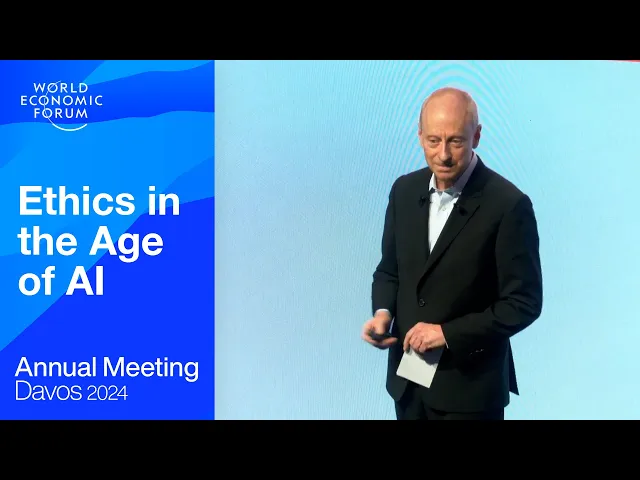
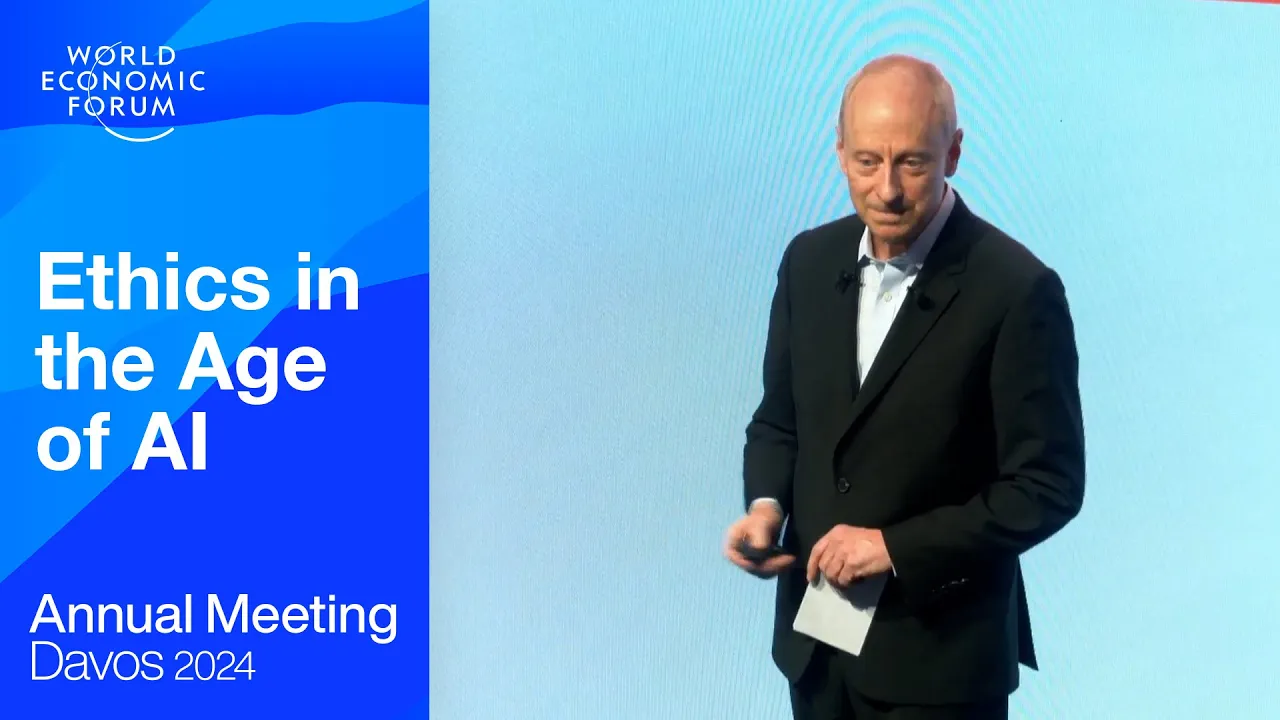
ethics in the age of AI when we worry about the ethical implications of new technology in our familiar debates we worry about there there are four main worries first are robots coming for our jobs second will algorithmic prediction and decision making in hiring and lending and criminal job Justice frees in place unfairness embedded in past practices third will surveillance capitalism essentially mean that privacy is over and fourth will misinformation and deep fakes and the polarizing effect of social media undermine the democracy so jobs fairness privacy and democracy these are consequential considerations what I would like
to explore with you today however is an even deeper worry a more fundamental question about the ethics of AI and new technologies and the question is this will technology change what it means to be human to begin to think about this question let's start with AI in the movies Harrison Ford he's 81 years old but in the recent remake of the Indiana Jones series they needed him for part of the movie to be younger 40 years younger now they couldn't do it very effectively with makeup so they used AI enabled digital daging let's just see
what people think about digital daging Harrison Ford appearing for part of the film thanks to the AI technology as 40 rather than 81 as a movie goer how many find this troubling and how many think it's fine just like the use of makeup in times past raise your hand if you find it objectionable or troubling digital dhing a handful of people do how many don't how many think it's it's just like makeup you think you may need it maybe it should should be applied beyond the movies now digital daging is only the beginning of the
question posed by AI in movie making and in the Arts because the same technologies that enable the the filmmakers to Dage Harrison Ford could be used in a more ambitious way Harrison Ford is still with us but what about great actors of the past great Stars whom we would love to see in a new role wouldn't you like to see Humphrey Bogart for example not in a rerun of Casablanca but in a new movie bringing him back so to speak for a virtual comeback performance now let's take a vote on this one how many would
find that Prospect cool appealing attractive and how many would find it troubling or objectionable let's let's see what people think about that how many are okay with it how many think it might be cool even to bring back actors from the de to playing a new role only a handful you're not you're not big humpry Bogart fans you don't want to all right how many how many um object most people object but why why would you object who will we have microphones who will Who will tell us what's objectionable yes well I would find it
well wait wait till the microphone gets to you yeah go ahead so I would actually believe it's that he did not have agency to decide his role yeah so he he wouldn't have given his consent he's long passed and and what but what if what if he had signed a waiver before he passed then then would that remove your objection then it would be okay go ahead he had created the parameters of which where his image could be used yes so so long as he agreed as long as he has agency specific though around the
parameters his agency you're not a lawyer by any chance I I am not you're not okay now let's all right let's push forward with that question now suppose he had given a waiver maybe actors that as part of their Wills just as we have living wills could if they chose agree to be re to to star in a new role in a virtual comeback performance in that case is there still anyone who objects is there a remaining objection number of people do still object and who will Who will tell us why what would be troubling
go ahead Reta let's get you a microphone I think the question is for the rest of us did we consent to them coming back do we know that we're watching an AI generated image of past and if we lost something about human dignity in the process of taking humans post death recreating them based on their Essence and their identity and projecting them forward in time in some digitally recreated way so uh you want truth in advertising you want there to be a disclaimer that might be easy enough but the second point that you've raised is
about dignity the the Dignity of the actor even an actor who has agreed in advance we're seeing a performance that well is it his or her performance or is it something else and it's human dignity somehow implicated I put this question about the virtual comeback performance to a young uh actor and director Michael B Jordan Rising Hollywood star he starred in the Creed boxing Series this he's the successor to Rocky and uh a number of other films just Mercy among them here's what he had to say about the virtual comeback performance let me ask an
extreme version of this is that technology gets even better MH Suppose there were an actor okay from the past okay a long ago actor whom you admire tied Y and though they're no longer living you say to yourself GE it would be my dream to be able to cast them in this movie I mean two come to mind is Sydney portier and and um and Heath Ledger can you even imagine what it would be like as a director but also in human terms let's say to be able to cast Sydney P today in one of
your movies and to have that virtual actor act the new role with the same look and stance and gesture and tone of voice and bearing as he brought to his earlier role yeah I will be a fool not to entertain it but there's something unsettling about it yeah from where I stand today and and all right that's what I want to get at what's unsettled about it m is what exactly that's not his Free Will that's not the Man's Free Will I'm making that decision for him so it's unsettling because Sydney P did not consent
in advance I get that and that's an important moral consideration but suppose he had he'd written you a letter saying I'm willing trust you I trust you yeah yeah then it would still be unsettling I'll bet I think yeah I think so yes okay so there must be another reason Beyond his consent what would that other reason be and I I see where you're getting at and I I love it and I'm trying to articulate it it's it's just a feeling of authenticity that's just not there I can't explain it authenticity and you spoken about
presence human presence and even the best virtual comeback yeah can't capture human authenticity or human presence I don't think so there's certain people that they walk in a room and you feel them I've been in room certain people walk in and you feel them in there I can't describe it I don't I don't think it AI uh digitally created thing can have that as Michael B Jordan thinks it through in a very reflective way in some ways replicating the discussion we had about this question he began as we began with consent and agency but then
as the discussion unfolded he identified a value Beyond consent that seemed to be at stake and in our discussion Rita mentioned human dignity Michael B Jordan described it as authenticity and human presence it's as he pointed out it's not easy to explain exactly what that means but there is something it seems a deep human value at stake here Beyond consent Beyond Choice beyond the waiver form signed in advance now let's continue to explore what's at stake in human terms for our use of new technologies by shifting from the movies from art film making to matchmaking
a growing number of young people meet their mates their life Partners online through the use of dating apps suppose those apps could get good enough accurate enough drawing on a big enough pool of data so that they could generate a list of the three best life partners for you or for your son or daughter here's the question if that were possible would you rely I'd like especially to hear from from those who are still of dating age or you can answer on behalf that's right you never know or you can answer on behalf of your
kids whom would you trust more to generate that short list the app or thinking now of young people your mom now the mom's in the room you may have a stake in this a special stake but you can vote out of your conviction so how many would rely more on the app to come up with the short list only a handful of people how many would rely more on your mom in this group in this group mom beats the app now I put this question I put this question to a discussion with a group of
young people in their 20s and 30s from various European countries and uh some from North America who we we gathered for a Socratic St discussion for a Dutch television program in an ancient Amphitheater in Greece to discuss some of the fundamental ethical questions of our time including AI matchmaking and the marriage prediction you say you go with the app why is that because he knows every character uh uh perspective of yourself he knows you well as you are so I think he can search for a better match than my parents who would see me at
home or when I'm visiting them even though they raised me up there was a time that I left home and created my own life there's a life at home and a life outside of home so I don't think they are totally capable of searching somebody who fits me in both situations but but the app doesn't have that that gut feeling uh and I want to connect uh with a woman on a on a spiritual level and the app can't feel that so your parents do trust me my mama my mama my mama trust me my
mama knows this type of things she knows me from the inside out so uh if I come home with a girl she would she would notice in like two seconds no no no no this it's not good for you but I think the question is and being a mama boy as well uh I think the question is is there any space for a mistake even in in choosing a partner to marry is there any space for uh imperfection because this thing works very well it's not the algorithms that we have now it finds the exact
perfect match but don't we want to leave something out of that Perfection for something as big as marriage well I don't know if you've ever been in a relationship but if you have a perfect match then the mistakes start happening right so I mean so so there's plenty of room for mistakes if you if you have a good connection and that's what I'm saying like I I I am married and I don't know if a perfect robot would have found exactly my wife she would have landed top three but I think if you if it
helps you find uh uh this is going to sound very clinical but a list of potential partners that have a good match it helps it because it takes away a lot of the Clutter of of of of finding somebody who you have good connection with is that actual clutter or that's part of what we call love dating what about the sexual part how will the machine know if that's a click I mean how will your parents know and that too can grow that too will no but what I mean is is you there's got to
be a personal connection I guess or some kind of thing because the machine will never know but I think Sergio's question underlies if you take away all the forging and the surging you take away a lot of Human Experience because you miss all the clam mistakes and wrong dates and the wrong things so I might have actually switched back to but there's something Sergio said I don't know whether this app would would have my partner in that top three so it makes me doubting right now whe I would go for that machine you're changing your
mind I don't know I'm really because of his argument because I'm I'm thinking I'm married would that machine pick this guy that I'm married to I don't [Music] know now Socrates never had it so good in in those amphitheaters or in the Ecclesia but what are what do people think of the arguments you heard back and forth about whether an app even with big data even with machine learning as sophisticated as it will become whether a machine a smart machine can outthink in the domain of matchmaking and love human judgment what's your sense of it
now on that philosophical question how many think that in Principle as machine learning becomes more sophisticated that in principle it can do better than it will be able to supplant even in matchmaking human judgment how many think so raise your hand a handful of people do and how many don't think so now the majority do not think so why not why are you why are you skeptical yes people change let's let's get to microphone so yeah people are not a fixed moment that a machine can test you people get older they change things happen and
the feeling that the young gentleman expressed um can predict better than a machine that's my opinion because the people change you say and the Machine can never even in princip keep up with the way we evolve as human beings and that of course makes a difference on who the best match will be those who think in principle a machine a smart app will be able to do better than your mom or your friend or perhaps you yourself in identifying the best match what would be your answer to the arguments you heard from the young people
and from the argument just now that we change who has a reply who has faith in the app and has a reply yes I think it's not about the change because the app could adapt and evolve I think it's more about the memory and the emotion that you won't get and I'm surrounded by young people they are using all this app and I'm playing with it because I'm too too late for me and uh but they're coming back from this app because they are missing this memory the creation of all the moment to create the
the love ending moment so I think this is about that where the app cannot cannnot make it so you think the app cannot make it no cannot do better than human Evol it can bring the the the change of a person but it cannot create the memory and the emotion the memory and the emotion and what did you think about the uh participants in the discussion who spoke about the clammy hands the clumsiness the missteps the false starts the imperfection the vulnerability that are constitutive as he saw it of what learning to love is about
do you agree with that yes totally I think this is the moment needed that the app does not bring the key moments for me I I don't know if if this is my opinion I think it's key moment to to bridge the the love and bring bring this emotion the app you are you are skipping so many steps I mean so many you're you're killing so many steps killing so many steps even if those steps seem inconvenient but keep the microphone there even if those steps seem inconvenient and difficult and on the face of it
steps or experiences to be overcome but it's exactly what I think syia was saying it's like it's a way to know it's a learning curve so the app is killing this learning curve you're skipping them and perhaps you're going too fast so um I feel you have to have this moment and again I'm I have young kids and they talking about the moment where we were seducing in a bar in the dance floor I mean they they're missing that part and they said you you were at a good period of time in the 80s '90s
I don't know some people can relate here right right so it's easier to swipe into scroll than it is to have these encounters and missteps the contrary I think it's better to have this encounter moment that's yes better than than than scrolling so here let's get these I know a lot of marriages that I would say or relationships that I would say opposites attraction yeah my daughter's very intense she found a guy who's totally laidback if they had both been that intense right can the app do that I mean it's um but I know a
lot of marriages where you say boy those people are opposites ATT track and also in any good marriage people grow together uh in the app actually predict that these are two people who can grow together right the Opposites Attract point I was going to ask whether in principle you could program the app to take account of that but the second point about the way in which people grow together in companionship and love that seems hard for an to imagine an app being able to capture well now thank you for for deepening this discussion which turns
out is not really about the technology as much as it is about what it means to seek friendship and companionship and love I'd like to turn to another Human Experience where technology is offering to make really a possibly fateful change in the way we live and in the way we die there are even now companies that will enable you to create a digital Avatar of yourself based on all of your social media posts your emails your personal data and when you die you will be able to Beque access to that data to that Avatar to
whomever you want to your loved ones to your friends or for that matter to the public and enabling them to engage in ongoing conversations with you so that let's say your great great grandchild could introduce you to his or her perspective mate and ask you what you would think this would not be simply a digital Avatar that would enable you as a kind of chatbot to reminisce about your past but also to give your characteristic reactions to novel events whether in the news whether in the world or whether in your family virtual immortality virtual immortality
uh let's see what people think about virtual immortality how many would be tempted by it to use that facility a digital Avatar this a couple how many would not most people would not I asked Michael B Jordan what he thought and here's what he said your grandmother suppose it were possible for her to have her to have done that so that you could spend more time with spend more time with her now sounds like you well how would you feel about that oh man self selfishly you know the need reaction is yeah of course I
do anything you know to see her and feel her and you know be around her again it's something that's so foreign that my mind can't completely wrap my brain like I can't wrap it around the experience of what that would be and if I could tell in the slightest that it's not that I would reject I I I would what nothing to do with it because the tech mediated connection M you feel might obstruct or corrupt the spiritual connection 1,00% and how she smelled how she touched the way she looked at me you know there's
no algorithm to there's no emails or not text or phone calls not enough information to for me to look Beyond her eyes and how she used to look at me and talk to me there's nothing that there there's not enough you you have a conviction listening to you Michael that we're not data all the way down MH and if you're right about that than even the best AI chatbot couldn't capture and might even abstruct the spiritual dimension of life and it may trick you for a while you know it can it can think your own
projections of sadness and the want of those things would make you you know hear what you want to hear and see what you want to see you know we do that all the time with the relationships that we have now yeah with jobs and Rel friend ships relationships and experiences you somehow contort reality and so you can be okay and cope and deal with it and so to go back to the question with which we began will technology change what it is to be human your answer is for some yes but for me no so
here is the most fundamental question posed by the age of AI and chatbots and Big Data Beyond worries about jobs and fairness about privacy and even democracy is the deeper question about whether human authenticity dignity human presence are fundamentally at stake will new technologies lead us are they already leading us and our children to confuse virtual community and human connection for the real thing because if they do then we may here's what I think we learned from this discussion then we may lose something precious about what it means to be human thank you very [Applause]
much