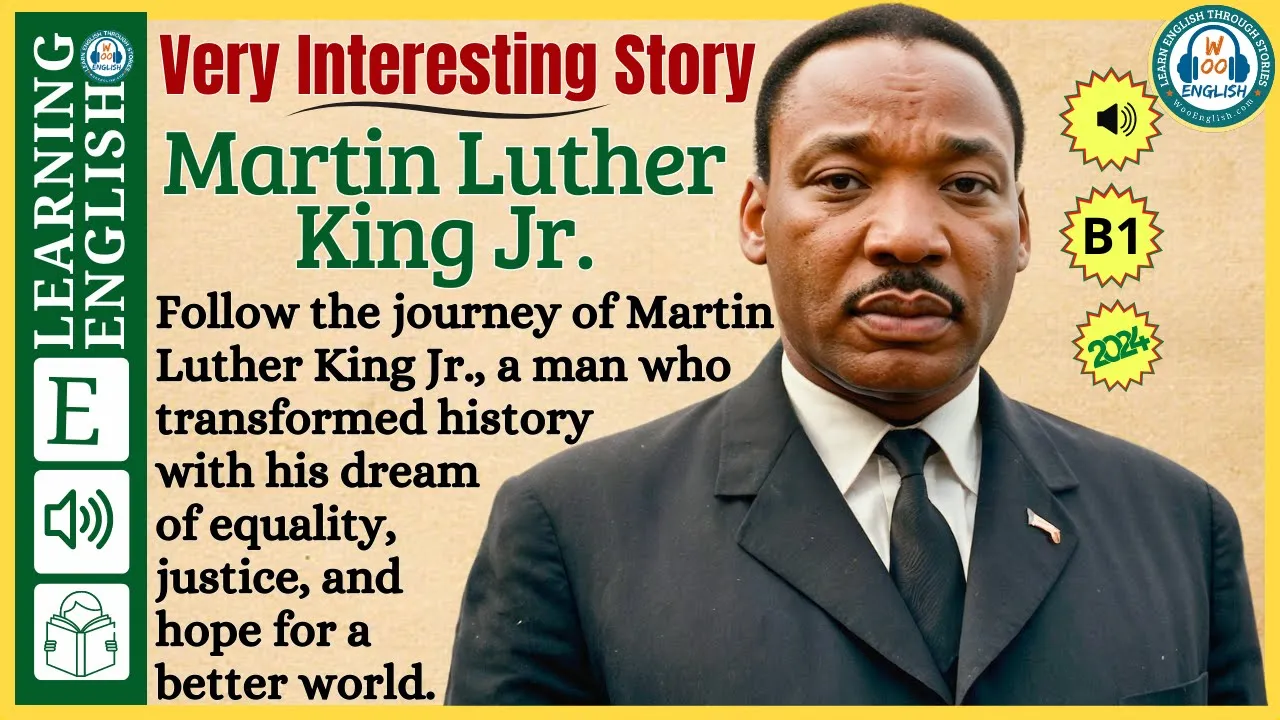
Chapter 1 - The Birth of a Dream. In the heart of the South, in Atlanta, Georgia, on a cold January day in 1929, a child was born. His name was Martin Luther King Jr., a name that would one day be spoken with reverence across the world. But on that day, he was just a baby. A baby born into a world where the color of your skin determined your place. Where some doors were closed simply because of who you were. The King family, though, they were different. They were a beacon of hope in a world filled
with darkness. His father, Reverend Martin Luther King Sr., was a man of strong faith and even stronger conviction. He preached to the people of his church, teaching them that God created all people equal. His booming voice filled the sanctuary every Sunday, urging his congregation to rise above hatred, to believe in something greater. And little Martin, he listened. His mother, Alberta, was a gentle soul, but she had fire in her heart too. She was educated, strong, and she never let Martin forget that he was somebody, that his life mattered. She filled their home with music and
books, teaching her children about the world beyond the segregated streets of Atlanta. And though their home was filled with love, Martin couldn't escape the world outside. At six years old, something happened that young Martin would never forget. He had two best friends, white boys from a family that lived just down the street. They played together every day, running through the neighborhood without a care in the world. But one day, everything changed. The boys' parents told them they couldn't play with Martin anymore because of his skin color. Why, Martin asked, confused, his heart heavy with a
new kind of pain. What did I do? It wasn't what he had done. It was who he was. And in that moment, Martin felt the sting of injustice. It was sharp. It was cruel. And it planted a seed inside him that would grow into something much larger than even he could imagine. His parents tried to comfort him, Telling him that the world wasn't fair, but that didn't mean it couldn't change. His mother reminded him of the words of the Bible. You are as good as anyone else. His father spoke with anger in his voice, but
also with hope. He told Martin that it was wrong, this system, this segregation, and that one day it would have to fall. But Martin was just a child. How could a child understand the weight of such words? How could a child carry the burden of centuries of oppression on his small shoulders? Yet, he did. Even then, something deep inside him began to steer. As Martin grew, so did his awareness of the world around him. The signs were everywhere. Whites only, coloreds only. He saw the lines, the divisions. He felt the cold stares when he entered
a store. He heard the whispers of hatred that followed him when he walked through the wrong part of town. Still, he wasn't alone. He had the strength of his family to guide him. His father was his hero, a man who fought against injustice from the pulpit and in the streets. He led protests. He spoke out against the laws that kept black people in chains. And Martin watched, listened, learned. The church became Martin's second home. It was a place of refuge, a place where the weight of the world lifted for a while. Every Sunday, he would
sit in the front row, his eyes wide as he listened to his father speak. The power of his father's words moved him, shook him to his core. God is on the side of justice, his father would say. And with God, all things are possible. But it wasn't just his father's sermons that shaped him. Martin began to find inspiration in the teachings of great thinkers. He read the words of Mahatma Gandhi, of Henry David Thoreau, and he began to understand the power of nonviolent resistance. He learned that real change, lasting change, came not through violence, but
through love, through peace, through the refusal to be silent in the face of oppression. Yet even with all these lessons, Martin was still just a boy, growing up in a world that didn't see him for who he truly was. But with every injustice he faced, with every cruel word or unfair law, The fire inside him burned brighter. There was one moment, one conversation that changed him forever. He was sitting with his father one evening, talking about the world and all its problems. His father looked him in the eyes, his voice serious, but full of love.
Martin, he said softly, you must never hate. No matter what they do to you, no matter how hard life becomes, you must love. Love is the only force strong enough to defeat hate. Those words stayed with him, always. They echoed in his heart, in his mind, every time he faced hatred in the years to come. The world outside was dark, the future uncertain. But within the King home, there was light, there was faith, and there was hope. And in that environment, The seeds of Martin Luther King Jr.'s dream began to grow. He wasn't just a
boy anymore. He was a young man with a purpose. The path ahead would be hard. There would be pain. There would be sacrifice. There would be moments when the dream seemed impossible. But even then, in the quiet moments of his youth, the dream had taken root. A dream that one day, the world would be different. A dream that one day, little black boys and black girls could join hands with little white boys and white girls as brothers and sisters. A dream that one day, a man would not be judged by the color of his skin,
but by the content of his character. And so, Martin Luther King Jr. grew up, not just as a boy in a divided world, but as the bearer of a dream that would change it forever. Chapter 2. The Power of Words. From the moment Martin could understand, words fascinated him. They had power. The power to uplift. The power to heal. The power to change minds. And Martin Luther King Jr. was surrounded by them. In church, he would sit on the wooden pews, his small hands resting on his lap, and listen. His father's voice, it was something
else. It echoed through the sanctuary, filling every corner, every heart. When Reverend King spoke, people listened. He didn't just say words, he lived them. His sermons were more than just speeches. They were calls to action. Calls for justice. Calls for love in the face of hatred. And young Martin, he was listening. Always listening. One Sunday, as his father preached about the power of God's love, Martin watched the congregation. They leaned forward, hanging on every word. Some had tears in their eyes, others nodded in agreement, and some lifted their hands in silent prayer. It was like
magic, Martin thought. His father's voice could move people, could make them feel something deep inside. It was then that Martin first realized, words could do more than just talk about the world. They could change it. At home, it was his mother who nurtured his love of learning. Alberta King, with her gentle voice and sharp mind, knew the power of books. She was a school teacher, and she made sure that her children grew up with their noses buried in books as much as possible. Read, Martin, she would say, handing him another book. The world is bigger
than what you see around you. Open a book, and you'll see. And so, Martin read. He devoured stories about great men who had changed the course of history. Abraham Lincoln, Frederick Douglass, and of course, the words of Jesus in the Bible. The Bible became a guide for him, a source of wisdom. Its verses filled him with a sense of purpose, of hope. When he read passages about loving your enemies, about turning the other cheek, something inside him stirred. He began to believe that maybe these words weren't just ancient texts. Maybe they were the key to
a new kind of future. Martin's love for words grew as he entered school. He was a bright student, quick to learn, and his teachers noticed. But it wasn't just about the lessons in the textbooks. Martin was drawn to something deeper, something bigger. He loved debates, where he could use his words to defend what he believed. He loved speeches, where he could captivate an audience, even if it was just his classmates. Words gave him strength. Words gave him power. One day, his teacher asked him to recite a passage from a book in front of the class.
His heart raced as he stood up, the room suddenly feeling much larger. But as he opened his mouth, the nerves faded away. The words flowed smoothly, like a river, and he could feel the attention of the room shift toward him. His classmates were silent, listening. By the time he finished, Martin knew this is what he was meant to do. He was meant to speak. His father noticed it too. One evening, after dinner, Reverend King called Martin over. Son, he said, his voice firm but kind. You have a gift. You can move people with your words.
Use it wisely. Martin nodded, but deep inside, he was excited. He knew his father was right. He could feel it every time he spoke in class, every time he stood in front of a crowd. There was power in his voice, just as there was power in his father's voice. And he was determined to use it. But Martin didn't want to just speak any words. He wanted his words to mean something, to stand for something bigger than himself. As he continued to read and learn, he discovered the writings of people like Mahatma Gandhi. Gandhi spoke of
nonviolence, of resisting hatred with love. The idea gripped Martin's heart. Here was a man who used words, not weapons, to fight for justice. Gandhi's philosophy of peaceful resistance struck a cord deep within Martin, and he began to see how he could use his own voice in the same way. The more Martin learned, the more he realized that words weren't just sounds. They were tools, tools to fight against the injustice he saw in the world, the segregation, the racism, the violence. It all seemed so overwhelming. But words, they could be the first step. They could be
the beginning of change. As he entered college, Martin's speeches became more powerful, his voice, stronger. He began to dream of a different kind of America, an America where every person, no matter the color of their skin, could walk freely, where doors were open to everyone, where voices were heard. In one of his early sermons, Martin stood before a small congregation. The room was quiet, but you could feel the tension in the air. He spoke softly at first, his words gentle but clear. We must love one another, he said, his voice rising. We must stand together,
in peace, in hope, and in love. Because love, love is the only way. The room was still for a moment. Then, slowly, the people began to nod. One by one, they stood up, clapping, shouting, amen. His words had moved them. They weren't just empty phrases. They were real, alive. They carried the weight of hope, the promise of a better tomorrow. That day, Martin realized something. Words could not just move people. They could change people. They could open hearts and minds. They could turn enemies into allies. His speeches, his sermons, Were not just about making people
feel good. They were about making people think. About justice. About equality. About what kind of world they wanted to live in. As Martin Luther King, Jr. continued to grow into the man who would lead a nation, he never forgot the lessons he learned as a boy. That words, simple, powerful words, had the ability to change everything. And so, with every sermon, with every speech, with every conversation, he used his voice like a painter uses a brush. Crafting a vision of a future where love would conquer hate, and justice would flow like a mighty river. The
power of words, the power that young Martin discovered in church, in school, and in the pages of books, would one day help him lead a movement. A movement that would forever change the course of history. Chapter 3, The Road to Montgomery. The road to Montgomery was not just a journey of miles. It was a journey of purpose, of destiny. Martin Luther King, Jr., now a young man, stood at a crossroads. He had spent years studying, learning, preparing. But the question still lingered in his mind. What path would he take? His father's voice echoed in his
ears, urging him to follow the path of the ministry, to stand behind the pulpit, to lead with the power of faith and love. But Martin, he was torn. Was there more? Was there something greater waiting for him? He had seen the injustices of the world, felt them in his bones. He had heard the cries for freedom, for dignity. Could he, too, Answer that call? As he wrestled with these questions, life, as it often does, offered a new chapter. In 1954, Martin and Coretta Scott's paths crossed. She was brilliant, beautiful, with a spirit as fierce as
his own. Coretta was a musician, an artist with a heart for justice. She had studied at the New England Conservatory of Music. And like Martin, she dreamed of a better world. Their connection was immediate, almost as if they had been waiting for each other all along. Coretta, Martin whispered, his voice soft but filled with certainty. I believe we are meant to do something. Something great. Together. Coretta smiled, her eyes meeting his. I believe that too, Martin, she replied, her words as steady as her conviction. But greatness comes with sacrifice. And how right she was. Together,
They would face struggles neither could have imagined. But in that moment, their love and their shared commitment to justice gave them the strength to move forward. Soon after their marriage, Martin received an offer. A chance to become the pastor of Dexter Avenue Baptist Church in Montgomery, Alabama. It wasn't a glamorous position. Montgomery was a small southern town steeped in racial tension. Segregation ruled every aspect of life. Separate schools, separate buses, separate everything. The weight of the Jim Crow laws hung heavily in the air, choking out hope. But Montgomery was also a city on the brink
of something, something big. There were murmurs of change, whispers in the streets, restlessness in the hearts of its black citizens. And Martin could feel it. This was where he needed to be. When he arrived in Montgomery, He saw the reality of segregation up close. Black citizens were treated as second class, their voices ignored, their lives undervalued. The streets were filled with tension. People moved about their daily lives, but beneath the surface, there was anger, frustration, a sense that the time for change was near. One of the first people Martin met was a man named E.D.
Nixon, a local leader of the NAACP. Nixon was a firebrand, a man who had fought for justice for years. He had organized, he had protested, he had dreamed of the day when black men and women would rise up and demand their rights. You're the man we've been waiting for, Nixon said one afternoon, his eyes burning with passion as he spoke to Martin. This city, it's ready, the people are ready, but we need a voice, we need a leader. Martin paused, Feeling the weight of Nixon's words. Was he that leader? Could he really take on such
a monumental task? The fear gripped him for a moment, but then he remembered, remembered his father's voice, remembered Coretta's faith, remembered the lessons he had learned about the power of love and nonviolence. I'm not sure I'm the man, Martin replied quietly, but I'm willing to try. And so Martin settled into his role at Dexter Avenue Baptist Church. His sermons filled with hope, with the promise of a better future. But it wasn't just his congregation that was listening, the whole city was paying attention. People began to look to him, to the young pastor with the calm
voice in the steady hands. Then, something happened that would change everything. On December 1st, 1955, A woman named Rosa Parks refused to give up her seat on a segregated bus. It was a small act of defiance, but it sent shockwaves through Montgomery. The news spread quickly, and soon, the community was buzzing with excitement and anger. Rosa Parks was arrested, but her stand had lit a fire that could not be extinguished. The people of Montgomery had had enough. They were ready to fight back, not with violence, but with action. And they needed someone to lead them.
All eyes turned to Martin. The decision was made to organize a boycott of the city buses, a peaceful protest to demand equal treatment for black citizens. The word spread like wildfire, and soon, the boycott was in full swing. Black men, women, and children refused to ride the buses. Instead, They walked for miles, in the heat, in the rain, with heads held high. Martin found himself at the center of the movement. His speeches rallied the people, gave them hope. His calm but powerful words encouraged them to stand firm, to resist hatred with love. But the road
was not easy. The threats came quickly. Late night phone calls, letters filled with hate, even a bomb was thrown at his house. But Martin, he stood strong. He knew the stakes were high, but so was the cause. One evening, sitting at his kitchen table, Martin received yet another threatening phone call. He hung up, his hands shaking, his heart heavy with fear. For a moment, he felt like giving up. But then, he prayed. He prayed for strength, For courage. And in that moment, he felt a peace come over him. He knew without a doubt that he
was doing the right thing, that he was on the road to justice. The Montgomery bus boycott lasted for over a year, and it was not easy. People grew tired, and the threats became more dangerous. But they didn't stop. They kept walking. They kept believing. And in the end, they won. In 1956, the Supreme Court ruled that segregation on public buses was unconstitutional. The boycott had worked. Montgomery, that small southern city, had become the stage for a revolution. And Martin Luther King Jr., the young pastor who had once doubted his path, had become its leader. The
road to Montgomery was only the beginning. Chapter 4, A Boycott for Freedom. The year was 1955, and the streets of Montgomery were simmering with tension. It was a normal day, or so it seemed, until one woman refused to bow to the rules of segregation. Rosa Parks, a quiet, unassuming seamstress, sat on a bus like she had many times before. But this time, something was different. When the bus driver ordered her to give up her seat to a white passenger, Rosa Parks said simply, no. That single word sent shockwaves through the city. It was more than
an act of defiance. It was a spark. And in that moment, the fuse was lit. The African American community had been living under the weight of segregation for far too long. Separate schools, separate water fountains, Separate waiting rooms, buses, everything divided by race. It wasn't just unfair. It was humiliating. And now, with Rosa Parks' arrest, the people of Montgomery were ready to say, enough. Word spread quickly through the community. Leaders like E.D. Nixon and others saw an opportunity. This wasn't just about one woman's seat on a bus. It was about justice. About dignity. About freedom.
The decision was made. A boycott. The people of Montgomery would stop riding the buses until the city changed its laws. But who would lead them? Who could stand at the front of this movement, guide them through the struggle ahead? All eyes turned to Martin Luther King Jr., the young pastor of Dexter Avenue Baptist Church. He had the voice, The presence, and the belief in nonviolence that the movement needed. At first, Martin wasn't sure. This was a huge responsibility. Lives were at stacky. But deep down, he knew he couldn't stand aside. The call for justice was
too loud to ignore. We must act, Martin said, his voice firm, his heart racing. We must act, but with peace, not violence. And so, the Montgomery bus boycott began. For over a year, black men, women, and children refused to ride the city buses. They walked. They carpooled. They found any way to get to work, to school, to church, without stepping foot on those segregated buses. It wasn't easy. The heat of the Alabama sun beat down on them as they walked mile after mile. But still, they walked. The city officials, they didn't like this. Not one
bit. They fought back hard. The mayor, the bus company, the white business owners, They all wanted to crush the boycott. But Martin, standing tall at the front of the movement, had a different vision. We will not give in to fear, he told the crowds. We will not be driven by hate. Love will win this fight. Tension filled the air. Threats started pouring in. The phone at Martin's house rang day and night, filled with voices of anger and violence. People warned him to stop, to back down. But Martin, he refused to let fear guide him. Even
when the police started arresting boycotters, even when his house was bombed, Martin held firm. One night, after yet another threatening call, Martin sat alone at his kitchen table. The fear, the doubt, it was all overwhelming. He bowed his head and prayed, Asking for strength. And in that moment, he felt something, a sense of calm, of peace. He knew then, he was on the right path. The boycott gained momentum, and soon, the eyes of the nation were fixed on Montgomery. Newspapers covered the story, and people from all over the country began to offer their support. But
as the months dragged on, the struggle grew more difficult. People were tired, worn down. It seemed like the city was determined to outlast them. But Martin, he didn't give up. With every speech, every sermon, he reminded the people of Montgomery why they were fighting. We are not walking for ourselves, he said, his voice ringing with passion. We are walking for our children, for our grandchildren, For a future where all people will be free. And the people listened. They held their heads high as they marched through the streets, refusing to give in. The boycott was more
than a protest. It became a symbol of hope, of resistance against an unjust system. There were moments of doubt, moments of fear. But in those moments, the community came together, stronger than ever. Churches became meeting places where the people gathered to hear updates and to plan their next steps. It wasn't just about buses anymore. It was about freedom, about the right to live with dignity and respect. The Buce Company, feeling the impact of the boycott, tried to push back. They raised fares. They threatened layoffs. They did everything they could to break the will of the
boycotters. But nothing worked. The people of Montgomery stood firm, their resolve unshakable. After months of struggle, after countless miles walked, after threats, arrests, and bombings, victory finally came. In November 1956, the United States Supreme Court ruled that segregation on public buses was unconstitutional. The law, that oppressive, cruel law, was struck down. Montgomery erupted in celebration. The people had won. Martin had won. But more importantly, justice had won. On that first day after the ruling, Martin, along with Rosa Parks and other leaders, boarded a city bus and sat together at the front. The very front. It
was more than a ride. It was a triumph. It was the beginning of a new chapter in the fight for civil rights. But Martin knew. This victory was just the beginning. The road ahead was long, filled with more battles, more struggles. Yet, for the first time in a long time, there was hope. The Montgomery bus boycott had proven that when people stand together, when they rise up in peace, they could change the world. And Martin Luther King Jr.? He was no longer just a young pastor in a small town. He was now a leader, a
beacon of hope. The voice of a movement that would shake the very foundations of America. The struggle was far from over. But as Martin looked out at the people, standing shoulder to shoulder, united in their belief in freedom, he knew one thing for certain. The fight had only just begun. Chapter 5. The Dream Takes Shape. The victory of the Montgomery bus boycott sent ripples through the nation. A small city in Alabama had shown the world the power of nonviolence. But for Martin Luther King Jr., this was just the beginning. The dream that had been planted
deep in his heart, long before the buses, long before the marches, was starting to grow. It was no longer just his dream. It was becoming the dream of a generation. With the success in Montgomery, Martin's voice began to rise. Louder and clearer. He traveled across the country, speaking in churches, at universities, in halls filled with people hungry for change. His message was always the same. Nonviolence. Love in the face of hate. His words, spoken with calm confidence, carried a fire that could not be ignored. One of his early speeches took place in a small church
up north. The room was packed, filled with people, black and white, sitting together, waiting to hear the young preacher who had taken on the South. As Martin stepped to the podium, the crowd hushed. Silence fell. He stood for a moment, looking out at the sea of faces, and then he spoke. I believe, he began, his voice steady but filled with conviction, that unarmed truth and unconditional love will have the final word in reality. That is why right, temporarily defeated, is stronger than evil triumphant. The room erupted into applause, cheers echoing off the walls. But Martin,
he wasn't finished. His speeches didn't just stir hope, they challenged people to take action, to stand up against injustice, not with fists, but with open hands. We must love our enemies, he said, His voice growing stronger. We must refuse to hate. Hate only scars the soul, love heals it. The message was radical, to love those who oppressed you, to forgive those who spat on you, beat you, denied you your rights. It went against every natural instinct. But Martin knew that this was the only way. Nonviolence wasn't just a strategy, it was a way of life.
And as he spoke, people began to understand. His dream wasn't just about freedom, it was about changing hearts. The word spread. Martin's speeches were printed in newspapers, his sermons broadcast on the radio. Everywhere he went, crowds gathered. Some came for hope, others came out of curiosity. But not everyone was happy. There were those who felt threatened, angry. Who does this young preacher think he is, they muttered. What does he know about changing the world? But Martin knew something they didn't. He knew that words, when spoken with truth and love, could do more than change minds.
They could change souls. At rallies, people stood shoulder to shoulder, listening to Martin talk about a future where segregation was a thing of the past. A future where little black children and little white children could play together in peace. I have a dream, he said in one of his most famous speeches, his voice filled with hope and fire, that one day this nation will rise up and live out the true meaning of its creed. We hold these truths to be self-evident, that all men are created equal. Those words, they echoed through the hearts of the
people. Some cried with joy, Others clenched their fists in anger, but no one could ignore him. Martin was no longer just a local pastor, he was becoming the face of a movement. A movement that was growing bigger every day. But with the growing attention came growing dangers, the threats became more serious. Some people in power, they wanted to silence Martin. They wanted him to stop speaking, stop stirring up the people. But Martin's dream, it was bigger than their threats. He wouldn't be silenced, not by fear, not by violence. As he traveled, he met with other
leaders of the civil rights movement. People like Ralph Abernathy, Bayard Rustin, and Ella Baker. Together, They formed the Southern Christian Leadership Conference, SCLC, a group committed to nonviolent resistance. They organized marches, protests, sit-ins, each act a step toward the dream. But the more Martin spoke, the more the movement grew, and with it, the tension. Some in the black community were tired of waiting. They wanted action, now. They wanted to fight back against the oppression that had held them down for so long. They questioned Martin's message of nonviolence. How can you tell us to love our
enemies, they asked. How can you ask us to wait, when we've waited for so long? Martin understood their pain, he felt it too. But he knew that the fight for justice wasn't just about changing laws. It was about changing hearts. Violence may bring temporary victory, he said, His voice soft but resolute. But it never brings permanent peace. We must fight with love, not with hate. His words stirred deep emotions. Some people felt empowered, others felt frustrated. But Martin stayed true to his path. He knew that the dream, his dream, would take time to achieve. But
he also knew that it was worth fighting for. As the months passed, Martin's influence grew. His speeches were delivered in packed churches and grand halls. His words, filled with hope, love, and defiance, echoed across the nation. The dream that had once lived only in his heart was now spreading into the hearts of thousands. But the journey wasn't over, far from it. With every speech, Martin was planting seeds. Seeds of a future that could be. A future where, as he once said, Justice rolls down like waters and righteousness like a mighty stream. The people were beginning
to believe in this future. They were beginning to dream, just as Martin had dreamed. As Martin stood before yet another crowd, his voice clear and strong, he knew one thing for certain. The dream was no longer just his. It belonged to the people. It belonged to the nation. And one day, one day soon, it would become a reality. The dream was taking shape. Chapter 6. Birmingham's Fire The year was 1963, and Birmingham, Alabama, was ready to explode. The city was known as the most segregated place in America. For years, black citizens had been denied their
rights, pushed out to the back of buses, refused service at restaurants, denied jobs and opportunities, And the time for waiting was over. The Southern Christian Leadership Conference, SCLC, led by Martin Luther King Jr., made Birmingham the next battleground for civil rights. It was a city filled with fear, with hatred, but also with people ready to fight for their freedom. Martin knew that this fight wouldn't be easy. Birmingham's government was harsh. Its police force, led by the infamous Bull Connor, was brutal. But there was no turning back. As Martin stood before the people in a small
Birmingham church, his voice calm but full of determination, he spoke the truth. The time is always right. To do what is right. We cannot wait any longer. Injustice anywhere is a threat to justice everywhere. His words rang out, filling the room with hope, and the people listened. They were tired. Tired of being treated like second-class citizens. Tired of being told to wait. To stay silent. To endure. The SCLC planned a series of peaceful protests, marches, sit-ins, boycotts. They knew that nonviolence was the key. Even in the face of violence. But the city of Birmingham was
ready to fight back. And it wasn't long before the tension turned into fire. The protests began. Peaceful, but powerful. Black men, women, and even children took to the streets, holding signs that demanded justice. Their footsteps echoed down the roads of Birmingham. The tension in the air was thick, and the fear. It was real. The city's police forces were waiting, their eyes filled with anger, their weapons ready. On one terrible day, the peaceful marchers were met with unimaginable force. Police officers unleashed their dogs, snapping and snarling at the protesters. The sound of barking filled the air.
Terrifying. But even worse were the fire hoses. The police turned them on the marchers, shooting powerful blasts of water at men, women, and children. The water hit with such force that it knocked people off their feet, sending them crashing into the pavement. The images of that day shocked the nation. Children, no older than eight or nine, standing against walls of water, their faces filled with fear, but also courage. They were fighting for their future, for their lives. Martin watched from the sidelines, his heart heavy with sorrow. But also with pride. The children of Birmingham were
showing the world that the fight for justice could not be stopped, even by violence. As the protests grew, so did the arrests. And it wasn't long before Martin Luther King Jr. himself was thrown into a Birmingham jail. The cell was cold, dark, and small. But it could not hold back his spirit. While in that cell, Martin received a letter from local white clergymen telling him to stop, to wait, to give the city more time. They called his actions unwise and untimely. But Martin, he could not accept that. The fire burning in Birmingham wasn't just about
one city. It was about centuries of injustice, about the fight for equality. And so, from that small, cold cell, Martin wrote back. His reply would become one of the most famous documents of the civil rights movement. The letter from Birmingham jail was more than just words on a page. It was a cry for justice, a declaration that the time for waiting was over. Martin's pen moved across the paper, his heart pouring into every line. Injustice anywhere is a threat to justice everywhere, he wrote. His voice calm, but filled with urgency. We are caught in an
inescapable network of mutuality, tied in a single garment of destiny. Whatever affects one directly affects all indirectly. He challenged the idea that his actions were too soon. He reminded the clergymen that African Americans had already been waiting for hundreds of years. Justice too long delayed, he wrote, is justice denied. His words were sharp, like a blade cutting through the silence of those who had stood by, watching but doing nothing. But Martin didn't just speak of the need for justice. He spoke of love. Even in the face of hate, he believed that love would win. We
must love those who hate us, he wrote. For hate multiplies hate. And love is the only force capable of transforming an enemy into a friend. As the days passed, the letter traveled far beyond the walls of that jail. It was printed in newspapers, passed from hand to hand. People across the nation read Martin's words and felt the weight of their truth. His message was clear. Freedom could not wait. The time for justice was now. Outside the jail, the protests continued. The fire in Birmingham grew stronger, but so did the resolve of the people. And finally,
after weeks of marches, arrests, and violence, Birmingham's leaders had no choice but to give in. The city's segregation laws began to crumble, and victory, though hard won, was within reach. But this victory came with scars. The images of children being attacked by dogs and water hoses were burned into the nation's memory. The sight of Martin Luther King Jr. in jail shook the conscience of America. And though the fire in Birmingham had been put out, the flames of the civil rights movement were spreading. As Martin stepped out of his jail cell, a free man, He knew
that Birmingham was just one battle. The road ahead was still long, but the fire that had burned in Birmingham, it had ignited something powerful. It had shown the world that the fight for freedom would not be stopped. No matter how many hoses, no matter how many dogs, no matter how many jails. And from that fire, from the struggle, the pain, the fear, a movement was rising, stronger than ever. Martin walked out of Birmingham, but he carried with him the unshakable belief that justice could not be denied. Not now, not ever. Chapter 7, The March on
Washington. It was August 28th, 1963, a day that would be remembered forever. The sun rose over Washington, DC, casting a golden light on the city. But something was different that morning. Something powerful was in the air. Across the country, buses were arriving, trains were pulling in, and people, so many people, were coming to the nation's capital. They were black, white, young, old, rich, poor, all united by one cause, justice. Over 250,000 people gathered in front of the Lincoln Memorial. They came from cities and towns, from the north and the south. They came to march, to
speak, to demand change. And at the heart of this great gathering was Martin Luther King Jr., a man whose voice had already begun to change the course of history. The March on Washington wasn't just about speeches or signs. It was about hope. It was about people standing together, shoulder to shoulder, demanding a better future. As they marched, they carried banners that read, Jobs and Freedom. Their voices blended together in a chorus, Calling for an end to segregation, for equal rights, for dignity. The scene was breathtaking. A sea of faces stretched out as far as the
eye could see, all looking up toward the steps of the Lincoln Memorial. The towering statue of Abraham Lincoln watched over them, a symbol of the promise America had yet to fulfill. But on that day, hope was alive. Martin Luther King Jr. stood there, surrounded by fellow leaders of the Civil Rights Movement, preparing to deliver a speech. But this wouldn't be just any speech. This would be the moment when a dream, long held in his heart, would be spoken out loud for the world to hear. The crowd fell silent as he stepped to the podium. His
eyes sweeping over the thousands of people before him. He paused, letting the weight of the moment sink in. And then, he began to speak. I am happy to join with you today, he said, his voice steady and clear, in what will go down in history as the greatest demonstration for freedom in the history of our nation. His words rolled out like thunder, slow and deliberate, touching every person in the crowd. He spoke of injustice, of the chains of segregation that still bound black Americans. He spoke of the broken promises made by the nation, promises of
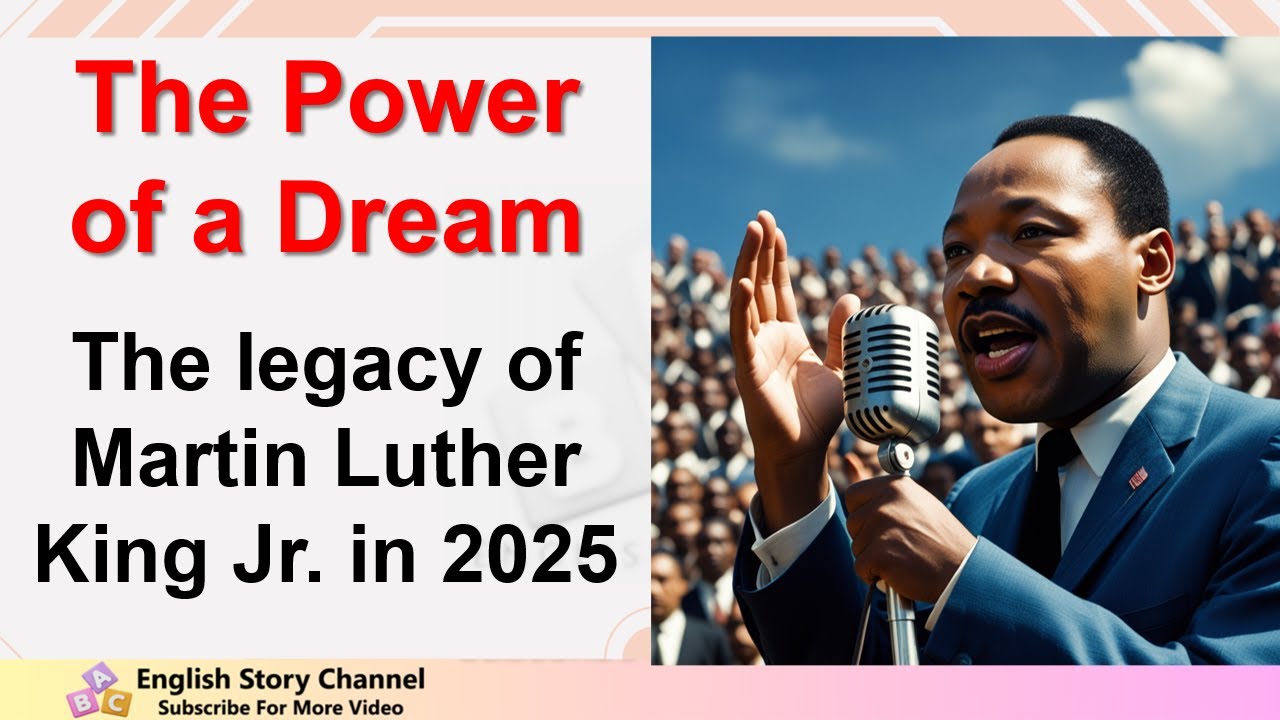
equality and justice that had yet to be fulfilled. We have come to our nation's capital to cash a check, he declared. A check that will give us upon demand the riches of freedom and the security Of justice. The crowd nodded, cheered, their spirits lifted by his words. But Martin wasn't just there to talk about what was wrong. He was there to inspire, to show people that a better future was possible. And then, it happened. The moment that would forever be etched in history. Martin paused, took a deep breath, and said the words that would echo
across time. I have a dream. The crowd leaned in, hanging on every word. I have a dream, Martin continued, his voice rising with passion. That one day this nation will rise up and live out the true meaning of its creed. We hold these truths to be self-evident, that all men are created equal. The dream. Martin's dream was no longer just his. It was becoming the dream of everyone who stood there that day, And of millions more who would hear those words in the days and years to come. I have a dream, he said again, that
one day on the red hills of Georgia, the sons of former slaves and the sons of former slave owners will be able to sit down together at the table of brotherhood. His voice filled the air, lifting hearts, stirring souls. People began to cheer, some raised their hands to the sky, others wiped away tears. Martin's words were painting a picture of a world where love triumphed over hate. Where justice was for all. I have a dream, he said, that my four little children will one day live in a nation where they will not be judged by
the color of their skin, but by the content of their character. That line, those words, struck deep. The crowd roared in approval, the sound echoing across the National Mall. Martin's dream wasn't just a vision of equality, it was a vision of humanity. A world where people could be free to live, love, and be themselves without fear or oppression. With each sentence, the dream grew more vivid. Martin spoke of a day when little black boys and black girls will be able to join hands with little white boys and white girls as sisters and brothers. His voice
carried the hope of generations past and the hope for generations to come. And then, he reached the climax of his speech. His voice boomed, filled with fire and passion. Let freedom ring, he shouted. Let freedom ring from the mighty mountains of New York. Let freedom ring from the snow-capped Rockies of Colorado. Let freedom ring from the curvaceous slopes of California. But not only that. Let freedom ring from Stone Mountain of Georgia. Let freedom ring from Lookout Mountain of Tennessee. Let freedom ring from every hill and molehill of Mississippi, from every mountainside. Let freedom ring. The
crowd erupted. Cheers, shouts, joy. And as Martin's voice reached its final note, he spoke the words that would forever be remembered. Free at last, free at last. Thank God Almighty, we are free at last. In that moment, the dream had become a movement. The marchers who had gathered that day didn't just walk away with hope. They walked away with purpose. Martin's dream was now their dream. And the March on Washington had shown the world that the fight for civil rights was not just about one city, one state, or even one race. It was about the
soul of America. As the crowds began to leave, the words of that speech lingered in the air, carried on the wind. And though the road ahead was still long, filled with challenges, the world would never be the same. On August 28th, 1963, in front of the Lincoln Memorial, the world had heard Martin's dream. And it would never forget. Chapter 8, The Nobel Peace Prize. It was 1964, and the world took notice. Across the globe, people were talking about one man, a man whose voice had risen above the noise of hatred and division, a man who
had led a movement with love and nonviolence. That man was Martin Luther King Jr. And in that year, he received one of the greatest honors in the world, the Nobel Peace Prize. At just 35 years old, Martin became the youngest person ever to receive the prestigious award. It was a recognition of his tireless work, his courage, and his unshakeable belief that nonviolence was the path to justice. But even in this moment of triumph, his thoughts were not on himself. As Martin stood in Oslo, Norway, receiving the prize before kings, dignitaries, and the world's eyes, he
knew this was not just his honor. It belonged to the people he marched with, the men and women who had risked their lives, their livelihoods, for the dream of equality. It belonged to the children who had faced water hoses and snarling dogs in Birmingham, To the families who had walked for miles during the bus boycott in Montgomery, to all those who had stood for justice even when the cost was high. But even more than that, Martin knew that the fight was far from over. As he gave his acceptance speech, standing in that grand hall, he
spoke with the same calm, powerful voice that had moved millions. But there was a seriousness, a weight to his words. I accept this award, he began, on behalf of all those who have faced the struggle for civil rights and who continue to fight for justice. He paused, his eyes scanning the room, letting the silence speak. The world had given him this prize for peace, but back home in the streets of America, there was still violence. There was still injustice. There was still hatred. Nonviolence, Martin continued, is not the absence of conflict. It is the way
we fight injustice without becoming what we oppose. The audience listened, some nodding in agreement, others deep in thought. Martin knew that the path of nonviolence was difficult. It wasn't easy to love your enemies, to stand firm in peace when faced with violence. But he believed in it with all his heart. And he believed that it could change the world. The applause came, loud, echoing through the hall. But even as the world cheered for him, Martin couldn't shake the weight of responsibility. He knew that the Nobel Prize was more than just a medal, More than just
recognition. It was a call, a reminder that the work was not done. The night of the ceremony, after the speeches, the banquets, and the celebrations, Martin sat alone in his hotel room. The weight of the moment rested heavily on his shoulders. The Nobel Peace Prize was a great honor, but it was also a reminder of the great struggle that still lay ahead. In the South, segregation was still alive. Black Americans were still denied the right to vote. The hatred, the racism, it had not disappeared. And Martin knew that the road ahead would be long and
dangerous. He thought about his family, his wife, Coretta, his children, And the life they had sacrificed for the movement. He thought about the marches still to come, the protests, the danger. He knew that his life was at risk. The threats had been constant. But he also knew that the cause was bigger than one man, bigger than him. As Martin reflected on the journey, he remembered the faces of those who had suffered for the cause. He thought of the brave men and women who had stood beside him, some who had lost their lives. He knew that
this prize was for them as much as it was for him. The Nobel Prize did not mark the end of the struggle. It marked a new beginning. In the weeks that followed, the world buzzed with excitement. Martin Luther King Jr. was hailed as a hero, a symbol of peace. But for Martin, The fight for justice was still the focus. He returned to the streets, to the people, to the movement. He knew that the work of nonviolence was never finished. It was a way of life, a commitment to love in the face of hate. In his
speeches after receiving the prize, Martin spoke of the challenges ahead. We have won some victories, he said, his voice steady but firm. But there is still much to be done. We must continue to march, continue to speak out, until justice rolls down like waters and righteousness like a mighty stream. And so, Martin pressed on. The Nobel Prize was a triumph, yes, but it was also a reminder of the work that remained. The prize was a symbol, a symbol that peace was possible. But it was up to him and to all who believed in the dream
to make that peace a reality. As Martin reflected on his journey, he knew that the sacrifices would continue. He knew that there would be more marches, more struggles, more sleepless nights. But he also knew that there was hope, hope that one day his dream would be realized. The Nobel Peace Prize had brought the world's attention to his cause. But Martin understood that true peace, true justice, would only come when the dream was no longer just a dream but a reality. And so, even in the midst of celebration, his heart remained focused on the road ahead.
The world had given him this prize. But Martin had given the world something even greater, The belief that nonviolence, that love, that justice could and would win. As he looked toward the future, he carried with him the unshakable belief that no matter how long the road, no matter how heavy the burden, the dream would not die. The dream would live on. Chapter 9. Selma's Bloody Sunday. The road to freedom was long and filled with obstacles. But one of the darkest moments, one of the bloodiest battles, came on a bridge in Selma, Alabama. It was 1965,
and the fight for voting rights had reached a breaking point. Black Americans across the South were being denied their most basic right, The right to vote. They were blocked by unfair laws, intimidation, and violence. And in Selma, the people were ready to stand up, to demand their voices be heard. Martin Luther King Jr. arrived in Selma with a clear purpose. We must march, he said, his voice steady, but his heart heavy with the weight of what was coming. He knew this march would not be easy. The forces of hate and fear were waiting. But Martin
also knew that this was a moment that could not be avoided. The time had come to take a stand. The march was planned for Sunday, March 7, 1965. The goal was simple, to walk from Selma to Montgomery, the capital of Alabama, in a peaceful protest for voting rights. But the people of Selma, they knew the danger. State troopers had been sent to stop them, armed with clubs, whips, and tear gas. The marchers were determined, but they were also scared. The tension, the fear, it was thick in the air. On that fateful Sunday, about 600 people
gathered at the steps of Brown Chapel AME Church. Men, women, and even children stood side by side, holding hands, praying, preparing for the journey ahead. They sang songs of freedom, their voices rising into the sky. Martin was not there that day. He had stayed behind to plan the next steps. But the marchers were led by his close allies, including John Lewis, a young leader full of courage and faith. They began to walk. The first steps were calm, peaceful. The sound of shoes on the pavement echoed in the stillness of the day. Ahead of them lay
the Edmund Pettus Bridge, stretching across the Alabama River. And beyond that bridge, the unknown. But as they walked, their spirits remained high. They believed in the cause. They believed in justice. And they believed that their march would bring change. But as the marchers approached the bridge, a wall of state troopers blocked their path. They stood there, helmets on, batons in hand, their faces filled with hatred. The leader of the troopers barked an order. Turn around. Go back home. The marchers, they didn't turn back. They couldn't. This was their moment. They had come too far to
give up now. So they kept walking, slowly but surely, toward the line of troopers. And then, chaos erupted. Without warning, the state troopers charged. They attacked with full force, swinging their clubs, Hitting anyone in their path. The sound of batons striking flesh filled the air. People screamed, stumbling as they tried to run. But there was nowhere to go. Tear gas was thrown into the crowd, filling the air with smoke. The marchers, choking and gasping for breath, were beaten down by the police, by the very people meant to protect them. It was a massacre. John Lewis,
the young leader at the front, was struck so hard on the head that his skull was fractured. He fell to the ground, bleeding. But even then, he tried to crawl forward, determined to finish the march. Others lay on the pavement, bruised and broken, some crying, some praying. And yet, through the chaos, through the violence, they did not fight back. They did not strike in return. They held to the belief that peace, even in the face of such brutality, Was the only way forward. The world watched in horror. Cameras caught every moment, broadcasting the violence of
Selma's Bloody Sunday across the nation. The images of peaceful marchers being beaten by state troopers shocked the conscience of America. People everywhere, black and white, were outraged. And for Martin Luther King Jr., the brutal attack only strengthened his resolve. When Martin saw the images, his heart ached. But he also knew, this moment, as terrible as it was, could be the turning point. We cannot let this go unanswered, he said, his voice firm but sorrowful. We must march again. We must show the world that hate will not have the last word. And so, just days after
Bloody Sunday, Martin called for a second march. Thousands of people from all over the country traveled to Selma to join him. They were ministers, students, activists, and ordinary citizens who had seen the injustice on their television screens and could no longer stay silent. This time, Martin led the march himself. As they approached the Edmund Pettus Bridge once more, the tension was unbearable. The memory of the violence was fresh in everyone's mind. But as Martin and the marchers walked, something remarkable happened. The state troopers, those same officers who had attacked the marchers days before, stepped aside.
The marchers crossed the bridge, in peace. From the darkness of Bloody Sunday came light. The world had seen the brutality of racism and segregation, and it could no longer be ignored. Just months after the march, President Lyndon B. Johnson signed the Voting Rights Act of 1965, a law that finally protected the right to vote for black Americans. Selma had become a symbol, a symbol of the power of peaceful protest, the strength of the human spirit, and the price of freedom. And though the road ahead was still long, Martin knew that this victory was a step
closer to the dream he had spoken about so many times before. As he stood on the steps of the Alabama Capitol at the end of the march, his voice rang out with hope and determination. How long? Not long, because the arc of the moral universe is long, but it bends toward justice. The March from Selma to Montgomery. It was more than a march. It was a movement, a movement that showed the world that even in the face of hatred and violence, justice could and would prevail. Selma was bloody, but Selma was also a turning point.
And Martin Luther King Jr., with his unwavering belief in nonviolence, had led the way. Chapter 10, A Nation Divided. The civil rights movement was gaining momentum. The winds of change were sweeping across America. But with every step forward, there was resistance. The nation was divided, torn between those who believed in equality and those who clung to the old ways of segregation and racism. And at the center of this storm stood Martin Luther King Jr., a man who was not only fighting for civil rights, But also for the soul of a country. But as the movement
grew, so did the pressures. Martin felt it, both from the outside and from within. His supporters looked to him for leadership, for guidance, for hope. But his critics? They were growing louder, stronger, and they came from all sides. Some believed that change was happening too slowly. We've waited long enough, they shouted, demanding faster action, more radical measures. Others believed that Martin's message of nonviolence was no longer enough. Why should we love those who hate us, they asked? Why should we turn the other cheek? The weight of these questions rested heavily on Martin's shoulders. He understood
the frustration. He shared it. But he also knew that the path of nonviolence was the only way forward. Hate cannot drive out hate, he often said, his voice filled with calm determination. Only love can do that. But the challenges kept growing. America, by the mid-1960s, was a nation divided not just by race, but by war. The Vietnam War was tearing the country apart, with young men being sent overseas to fight in a conflict that many didn't believe in. And as Martin watched this unfold, he couldn't stay silent. His heart ached, not just for the black
Americans fighting for their rights at home, but for the young soldiers, black and white, being sent to die in a foreign land. In 1967, Martin made a bold decision, One that would cost him dearly. He publicly spoke out against the Vietnam War. In a speech at Riverside Church in New York, his voice echoed through the hall, powerful and full of conviction. I come to this magnificent house of worship tonight, because my conscience leaves me no other choice. The time has come for America to hear the truth about this tragic war. The room was silent, listening.
Martin continued, his words clear and firm. We are taking the black young men who have been crippled by our society and sending them 8,000 miles away to guarantee liberties in Southeast Asia, which they have not found in Southwest Georgia and East Harlem. His message was clear. How could America fight for freedom abroad when it had not even achieved freedom for all its citizens at home? The backlash was immediate. Critics lashed out. Newspapers condemned him. Even some of his allies in the civil rights movement felt he had overstepped. Stick to civil rights, they told him. This
war, it's too complicated. But Martin couldn't turn away. He saw the fight for civil rights, the fight for workers' rights, the fight for peace as part of the same struggle. Injustice anywhere is a threat to justice everywhere, he had always said, and he believed it deeply. To him, speaking out against the war wasn't a distraction. It was a necessity. But the criticism hurt. Martin, a man who had always believed in the power of love and unity, Found himself more and more isolated. The pressure weighed on him. His friends could see it in his eyes, in
the way his shoulders slumped at the end of a long day. The man who had lifted the spirits of millions was carrying a heavy burden. But he didn't stop. In addition to his opposition to the war, Martin expanded his vision. He began to focus on poverty, on the economic injustices that were keeping millions of Americans, both black and white, trapped in a cycle of hopelessness. What good is it, he asked, to sit at a lunch counter if you can't afford a meal? He saw the connection between civil rights and economic justice, and he began to
speak out for workers, for the poor, for those whose voices had been silenced by poverty. He called for a poor people's campaign, a movement that would bring together people of all races to demand economic justice. It was a bold idea, but not everyone understood it. Some felt that Martin was straying too far from the original goals of the civil rights movement. Others thought he was becoming too radical. The nation was divided, and even the movement that Martin had built was beginning to fracture. The criticism, the isolation, it all took a toll. Martin, who had always
been a symbol of hope and strength, began to feel the weight of the world pressing down on him. He knew that his message of nonviolence was more important than ever, but it was becoming harder and harder to convince others to follow that path. And yet, he never gave up. He continued to march, to speak, to dream. In one of his last speeches, Martin stood before a crowd of striking sanitation workers in Memphis, Tennessee. His voice, though weary, was still filled with passion. We've got to give ourselves to this struggle until the end, he said. Nothing
would be more tragic than to stop at this point. As he spoke, there was a sense that Martin knew. He knew that his time might be running out, but still, he pressed on. I may not get there with you, he said, his voice trembling slightly, but I want you to know tonight that we, as a people, will get to the promised land. The nation was divided. The movement was divided. But Martin's belief in justice, in nonviolence, in the power of love, never wavered. Even as the pressures mounted, Even as the criticism grew louder, he remained
a beacon of hope in a dark and divided time. And though the road ahead was still long, Martin knew that the dream was worth fighting for. Chapter 11, Memphis and the Last Stand. It was 1968, and the battle for justice had brought Martin Luther King Jr. to Memphis, Tennessee. The fight here wasn't about voting rights or desegregation, it was about dignity, about fair wages for the city's sanitation workers. These men, who worked long hours in dangerous conditions, were paid so little they could barely feed their families. And now, they were on strike. The struggle in
Memphis was different. It was a fight not just for civil rights, but for economic justice. Martin had seen this as the next step in the movement. The battle for equality couldn't end with civil rights alone. What good is the right to sit at a lunch counter, he asked, if you can't afford to buy a hamburger? But Martin was tired, weary from the long years of struggle. The weight of the movement had taken its toll. He had faced threats, criticism, and growing pressure from all sides. Yet, even in his exhaustion, there was still hope. Hope that
this fight, this strike in Memphis, could bring real change. The sanitation workers had taken to the streets, holding signs that simply said, I am a man. Their demand was clear. They wanted to be treated with respect, like human beings. Martin saw their fight as a continuation of his dream. A dream that called for justice, not just for some, but for all. As the days passed, the tension in Memphis grew. The workers were determined, but the city's leaders refused to budge. The air was thick with fear, with the threat of violence. Martin had already faced death
threats, more now than ever. He knew the risks. But still, he came to Memphis, determined to stand with the workers, to give them his voice, his strength, his hope. On April 3rd, 1968, the night before his last march, Martin delivered what would become his most haunting speech. It was storming outside, the rain beating down on the city. But inside the church, the crowd was packed. Martin stood before them, looking tired but resolute. His voice, though softer than usual, carried a power that filled the room. He spoke of the long journey, Of the struggles they had
faced. We've got some difficult days ahead, he said, his voice steady but filled with emotion. But it really doesn't matter with me now, because I've been to the mountaintop. The crowd listened in silence, hanging on his every word. Martin's tone shifted. And for a moment, it seemed as though he knew something the rest of them didn't. And I don't mind, he continued. His voice growing stronger. Like anybody, I would like to live a long life. Longevity has its place. But I'm not concerned about that now. I just wanna do God's will. His words carried a
sense of finality, as if he knew that the end was near. But still, there was hope. He's allowed me to go up to the mountain, Martin said, his eyes bright with vision. And I've looked over, And I've seen the promised land. I may not get there with you. But I want you to know tonight that we as a people will get to the promised land. The room erupted in cheers, the energy electric. But beneath the applause, there was a heaviness, a sense that something profound had just been spoken. Martin seemed to be saying goodbye. The
next day, April 4th, 1968, Martin woke up at the Lorraine Motel, his mind likely filled with the plans for the next march. He stepped out onto the balcony, dressed in his usual dark suit. It was a quiet moment, a pause in the whirlwind of a life spent in struggle. He spoke with friends, laughing, relaxed for a brief moment. But then, everything changed in an instant. A shot rang out. A single bullet, fired from across the street, struck Martin, and he collapsed. The man who had spent his life standing for peace, for love, for justice, was
gone. Panic filled the air. His friends rushed to his side, shouting his name. But it was too late. Martin Luther King Jr., the voice of the civil rights movement, the man who had led millions with his dream, had been silenced by the hate he had fought against for so long. The news of Martin's assassination spread like wildfire across the country. Shock, grief, anger. In cities across America, people poured into the streets, some in peaceful mourning, others in violent rage. It was as if the world had been plunged into darkness. How could this happen? How could
a man who preached nothing but love be taken by such violence? But even in that moment of despair, Martin's dream lived on. The bullet that struck him may have ended his life, but it could not end the movement he had built. His words, his message, his dream had already taken root in the hearts of millions. And though his voice was silenced, the call for justice grew louder. In the days that followed, people gathered to remember him, to honor his legacy. They marched, they sang, they cried. But through their tears, there was also determination. Martin's death
would not be the end of the fight. It would be the beginning of a new chapter. And so, even in the darkness of that fateful April day, there was light. Martin had seen the mountaintop. He had glimpsed the promised land. And though he would not live to see it, he had led his people to the brink of freedom. The bullet of hate had tried to silence the voice of love. But love, as Martin had always said, is stronger than hate. And in the hearts of those who believed in his dream, his voice would echo forever.
Chapter 12, A Legacy of Hope. Martin Luther King, Jr. is gone, but his dream lives on. His voice, though silenced by violence, still echoes across the world, stirring hearts, calling us to action. His legacy, a legacy of love, justice, and hope, lives in the hearts of millions. And now, as we reach the end of his story, we are left with one question. How will we carry his dream forward? Martin's dream was never just about the past. It wasn't just about the marches in Selma, the boycott in Montgomery, Or the speech on the steps of the
Lincoln Memorial. His dream was about the future. It was about a world that could be a world where the color of your skin doesn't determine the content of your character. A world where justice flows like a mighty river, and righteousness like a never-ending stream. Even today, we can hear the echoes of his dream. We see it in the marches for racial justice, in the calls for equality that still fill our streets. We hear it in the voices of those who stand up against hate, against oppression, against fear. And we feel it in the movements that
continue to grow, movements that are inspired by the vision Martin shared so many years ago. But the struggle is far from over. Martin knew that. He knew that the road to freedom would be long, difficult, filled with obstacles. He once said, the arc of the moral universe is long, but it bends toward justice. And yet, that arc doesn't bend on its own. It bends because people, people like Martin, like those who marched with him, and like those who continue the fight today, are willing to stand up, to speak out, to push it toward justice. When
we look at the world today, we see progress, yes. But we also see the same challenges that Martin faced. Racism, inequality, and injustice still exist. But if Martin's life teaches us anything, it's that we cannot give up. We cannot be silent. We must continue to dream, to hope, to fight for the world we believe in. His dream wasn't just for one generation. It wasn't just for the people who stood with him in the 1960s. It was for all of us. It was for the generations that would come after him. It was for you, for me,
for every person who believes that a better world is possible. And so, we must ask ourselves, what will we do with Martin's dream? How will we carry it forward? Will we be content to let it fade into history? Or will we take up the torch and continue the work he started? In his final days, Martin knew that the fight for justice was never easy. He knew that it required sacrifice. He knew that it would take time, patience, courage. And he gave everything he had to that fight. He gave his voice, his body, and ultimately, his
life. His ultimate sacrifice reminds us that the cost of freedom is high, But it is always worth it. But Martin never lost hope. Even in the darkest moments, he believed in the power of love. He believed that love could transform enemies into friends. That nonviolence could overcome hate. That justice would one day prevail. Today, his legacy is more than a memory. It is a call to action. It is a reminder that no matter how hard the road, we must keep walking. No matter how great the obstacles, we must keep pushing. And no matter how divided
the world may seem, we must keep believing in the dream of a better future. Martin once said, faith is taking the first step, even when you don't see the whole staircase. He lived by those words. He took the first step, and the next, and the next. And now, it is our turn. As we close the chapter on Martin Luther King Jr.'s life, we are left with a choice. Will we continue his fight? Will we stand for justice, for equality, for love? Will we dare to dream as he dreamed, and work to make that dream a
reality? The answer lies in each of us. His legacy lives on in the choices we make every day, in the way we treat others, in the way we stand up for what is right, in the way we love our neighbors, even when it's hard. Martin's life was a testament to the power of faith, of courage, of hope. And as we move forward, let us carry his dream with us, not as a distant memory, but as a living force that drives us to build a better world. The road ahead may be long, the struggle may be
difficult, But we can take heart in knowing that we are not walking alone. Martin's footsteps are with us, guiding us, reminding us that the dream is alive. And so, as we bring this story to a close, let us remember, the fight for justice is never over. The dream lives on in you, in me, in all of us. The question is, what will you do with it?