Welcome to Soft Sleep Tales, a place where timeless stories, gentle narration, and quiet atmospheres guide you toward rest. Before tonight's story begins, you are warmly invited to share where you are listening from in the comments below. It is always a comfort to see this quiet community reaching across the world night by Night. And if these stories bring you a sense of calm, you are welcome to subscribe and join us on these peaceful journeys. Now, take a moment to get comfortable. Settle into your bed or your favorite chair. Gently close your eyes. Take a slow, deep
breath, and allow the day to soften and fade. Let my voice carry you quietly into sleep, to a place where imagination Drifts, and rest comes naturally. The solicitor's letter had described the property as modest. Clara Vane had taken this to mean small, perhaps a little worn, the kind of place that would require some attention and patience, and the willingness to overlook certain things while you decided what to do with it. She had prepared herself on the train from Paddington for modest. She had not prepared herself for beautiful. The lane that led to Rains Acre Farm
turned off the main road between the villages of Ashwick and Little Barton in the Eastern Cotswolds at a point marked by a stone wall so old it had begun to look less like something built and more like something grown. The lane itself was narrow and slightly sunken, the way old Cotswold lanes are worn down Over centuries by the passage of feet and wheels and animals until the land on either side stands higher than the road so that you walk through the landscape rather than across it. Hedgerows pressed close on either side still holding their leaves
in the October warmth though the leaves had turned deep gold, burnt amber, a particular dark red that has no good name. The light came through them at an angle That turned everything it touched to something finer than it actually was. Clara walked slowly. She had left the hired trap at the main road. The driver had offered to take her to the gate but she had said no without knowing quite why. Something about the lane had asked to be walked. Had asked for the particular pace of feet rather than wheels. She carried her bag on one
shoulder and her smaller case in her other hand and She walked and the lane did what lanes like this always do. It narrowed her world down to what was immediately around her and made that immediate world feel without quite explaining why entirely sufficient. She had been in London for 6 years. She had not realized until this moment walking this lane how long that was. Wren's Acre Farm stood at the end of the lane behind a low stone wall and a Wooden gate that had warped slightly in its frame but still opened with a firm push.
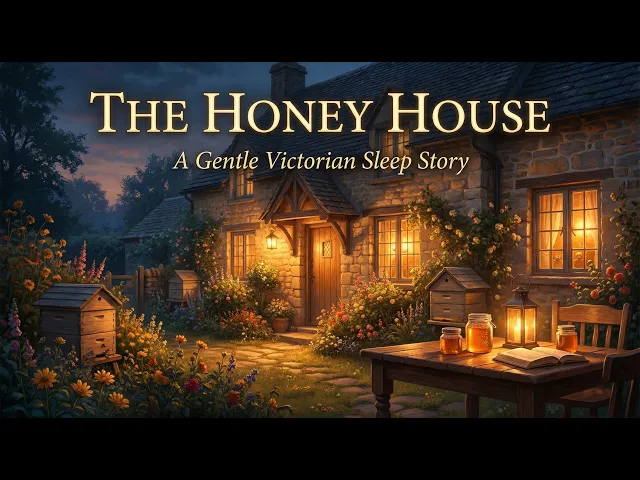
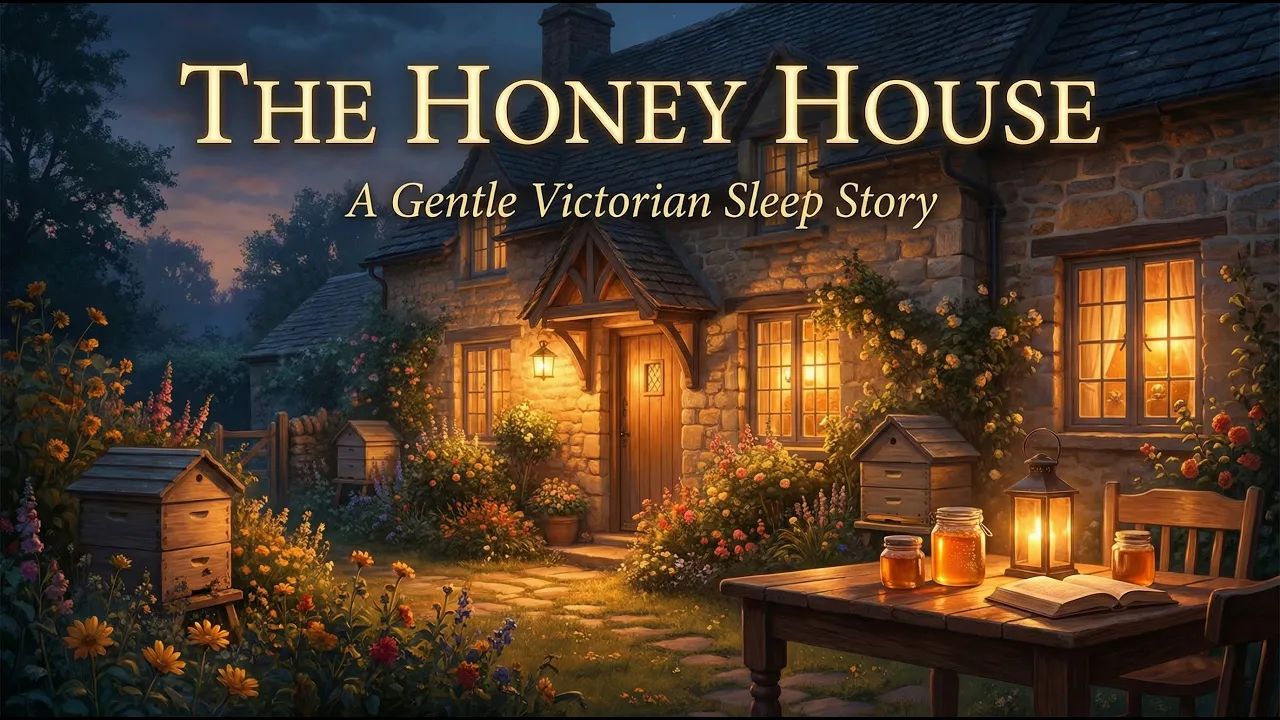
The farmhouse itself was built of the local limestone, that particular Cotswold stone the color of old honey. Warm even on overcast days. Warm even now in the thin October light. As though the stone had been storing sunshine since it was quarried and was still slowly releasing it. Two stories, a roof of mossy stone Tiles, windows with small panes, slightly uneven, the glass old enough to have developed a faint waviness that comes with age and makes the world seen through it look like a reflection in still water. A climbing rose along the front wall, finished now,
the hips dark red. The garden was large and slightly overgrown. Not neglected, exactly. More as though it had been left to make its own Decisions for a season or two and had made them with reasonable confidence. The grass long, herbs in a bed by the front door gone to seed in an interested botanical way. An apple tree in the corner heavy with fruit that no one had picked. The fallen apples underneath releasing a smell of fermentation that was sharp and sweet and faintly intoxicating. Clara stood at the gate for a long moment. She had never
met the woman who had left her this farm, Agnes Vane, a great-aunt of some kind, distant enough that the relationship required explanation whenever Clara mentioned it. She had known of Agnes only as a name on Christmas cards that arrived reliably every year in a small, neat hand and were reliably signed with nothing more than Agnes, which Clara had always found either very private or very sufficient and had never Decided which. Agnes had died in August at 91, alone, the solicitor had said, but not unhappily. She had been in this house for 60 years. 60 years.
Clara pushed the gate open. The house smelled of old stone and lavender and something else she could not immediately identify. Something sweet. Not unpleasant. A deep dark sweetness like fruit kept for a long time in a cool place. Like something preserved. The front door opened directly into a sitting room, low ceilings, exposed beams, a wide stone fireplace with a great that had been cleaned and laid as though someone had anticipated her arrival. The furniture old and comfortable and arranged in the particular way of Furniture that has not been moved in decades and has found its
permanent relationship to the room. A wingback chair by the window. A settle by the fire. A long oak table along one wall covered in a very orderly arrangement of objects. A lamp, a stack of books, a collection of small stone objects, a glass paperweight catching the window light and throwing small rainbows onto the ceiling. Clara set down her bag and her case. She stood in the center of the room and looked around slowly at the ceiling, at the fireplace, at the window with its wavery old glass showing the overgrown garden beyond. The house did not
feel empty. That was the first thing she noticed. Most empty houses feel empty. There is a quality to the air, a particular acoustic flatness, a sense of absence that is almost physical. This house felt simply quiet. Occupied by its own history. Full in the way that places are full when they have been lived in thoroughly and for a long time. She picked up her bag and went to find the kitchen. The kitchen was at the back of the house, large, stone-floored, with a range along one wall that she could not immediately determine how to operate,
but that radiated a faint residual warmth, suggesting someone had Seen to it recently. A wide wooden table in the center, scrubbed pale, copper pans hanging in a row above the range, their bottoms slightly tarnished. A dresser along the far wall holding willow pattern plates and a collection of mismatched cups and a row of preserving jars, empty and clean and waiting. On the table, left by the solicitor or perhaps by a neighbor, a small covered Basket. Inside, bread, cheese, a jar of something dark and glossy. She lifted the jar and tilted it toward the light. Honey.
Dark amber, almost brown, with a quality of depth that suggested it was not ordinary honey. She unscrewed the lid and put her nose to the opening and breathed in. The smell was extraordinary. Not sweet, exactly, or not only sweet. There was something beneath the Sweetness, something green and slightly wild. The smell of a specific place, she thought. The smell of particular flowers, particular soil, a particular season, not shop honey, which smelled of sweetness in general. This smelled of somewhere. She looked at the label. Small, neat handwriting, the same hand she recognized from the Christmas cards.
One word and a year. Autumn, her at 1901. She looked at it for a long then she put the lid back on, set the jar carefully on the table, and went to explore the rest of the house. She found the honey house at the end of the afternoon. She had spent several hours going through the farmhouse room by room, not inventorying exactly, simply acquainting herself, learning the particular logic of a space That someone else had arranged over 60 years, where Agnes had kept the extra blankets, where the candles were stored, which drawer held the string,
and which held the keys. There were keys everywhere, on hooks, in drawers, on a large iron ring hung by the back door. Most were labeled in the same small, neat hand, cellar, tool store, gate, garden room. One was labeled simply the house, as though Agnes had wanted to be precise About which key was for what. One was not labeled at all. It was old, older than the others. The iron slightly pitted, the bow of it worn smooth. Clara turned it over in her hands, and then hung it back on the ring with the others, and
went out into the garden. The afternoon light was going. That particular October quality of light that drains from the sky, not gradually, but in distinct stages, full light, then Amber, then the sudden gray of dusk, arriving like a decision. She walked along the garden path, which wound between the overgrown beds toward the back wall. The smell of the fallen apples still in the air. A robin somewhere in the hedge, making its small evening sound. The path ended at a low stone building she had not seen from the house, set against the back wall of the
garden, almost entirely covered in ivy that had Turned now to a deep bruised crimson. A small building, one story, a single small window, a wooden door dark with age, with an iron handle and a keyhole of the same old iron as the unlabeled key. Clara tried the door. Locked. She stood before it in the failing light and looked at the ivy and the small window and the old dark wood of the door. The sweet smell was stronger here, Unmistakably. That deep dark sweetness she had noticed when she first entered the house here, it was its
source, coming through the door, through the ivy, through the old stone itself. She pressed her hand flat against the wood. The wood was faintly warm, warmer than it should have been in October, warmer than stone or wood had any reason to be at the end of an autumn afternoon. She stood with her hand against the door for a moment, then she took it away. She went inside to find the unlabeled key. The key fit. Of course it did. The lock turned smoothly and without resistance, as though it had been oiled recently, as though it had
been expecting to be opened. The door swung inward on hinges that made no sound. Clara stood in the doorway. The honey house was a single room, perhaps 15 ft by 12, stone-floored, stone-walled, with the low ceiling of old Cotswold farm buildings, built for practical purposes, built without ceremony, built to last. The small window admitted the last of the afternoon light at a low angle, falling across the interior in a strip of amber gray. Along one wall, floor-to-ceiling wooden shelving. And on the shelves, jars, hundreds of them, all the same size preserving jars with metal lids,
the kind used for jam and fruit and anything meant to be kept. Each one filled with honey. Each one a slightly different color, some pale gold, some deep amber, some almost brown, some with a reddish tinge she had not seen in honey before. Each one labeled in the same small neat Hand. She stepped inside. She walked to the nearest shelf and looked at the labels. Spring, 1902. 902. Summer, 1902. Autumn, in 1902. Winter, erst 1902. She moved along the shelf. Spring, 1901. Summer, 1901. Autumn, 1901. The same jar as the one on the kitchen table.
She moved to the next shelf. 1899. 1898. 1897. She stepped back and looked at the shelving as a whole, floor-to-ceiling, wall-to-wall. Every jar labeled with a season and a year, moving backward in careful sequence from the front of the room toward the back. She walked to the far end of the shelving to the oldest jars, the ones at the back in the deepest shadow. She lifted one carefully. The glass was old. The lid slightly rusted at the edges. The honey inside had darkened to something near black. The label was faded. The handwriting more effortful Than
the later jars younger, she thought. A younger hand. Summer 1842. Clara stood in the honey house with the jar in both hands and looked at it. 1842. 60 years of jars, four seasons each year, every season accounted for, every jar preserved. She looked around the room again at the shelves, at the hundreds of jars In their careful sequence, at the small window with its amber gray light, at the stone floor and the stone walls and the low ceiling that had been keeping this room at its particular temperature, warm, dry, still for as long as the
building had stood. She thought, "There are no hives." She thought, "There are no bees." She thought, "Where did all this honey come from?" The honey house offered no answer. It simply held its warmth and its sweetness and its hundreds of jars in their careful sequence and waited with the patience of a place that has been keeping something for a very long time for the right question to be asked. She ate supper in the kitchen that first evening. Bread and cheese and a small amount of the honey from the kitchen jar, the one labeled Autumn 1901,
Spread on the bread with a knife she found in the dresser drawer. She hated the wide pale table with the range ticking beside her and the copper pans catching the lamplight and the darkness pressing gently at the window. The honey was remarkable. She had thought so when she smelled it. Tasting it confirmed it. There was a complexity to it that she had not encountered in honey before. Not just sweet, layered, something Floral beneath the sweetness, and beneath the floral, something greener, earthier, the taste of a specific landscape in a specific season. Autumn, the label said,
and autumn was what it tasted of, not the word, not the idea, but the actual thing, the actual October of 1901 distilled into something that could be kept and opened and tasted 60 years later. She sat for a long time after she had Finished eating with the lamp and the rain and the quiet house around her, thinking about the honey house, about the jars in their sequence, about 60 years of seasons, each one preserved, about the woman who had spent 60 years in this house alone making four jars of honey every year and labeling them
and adding them to the shelf in their careful order. Without hives, Without bees, she had not yet looked for an explanation. She found, somewhat to her own surprise, that she was not in a hurry to find one. The question was interesting. The question was, in fact, the most interesting thing that had happened to her in some time. She wanted to keep it for a while, to carry it around and look at it from different angles before she began to look for answers. She washed her plate and her cup. She banked the range as best she
could manage. She took the lamp and went upstairs. Her room was at the front of the house overlooking the lane. The bed was made up with old linen that smelled of lavender and cedar. She opened the window a little before she got into bed. The night air came in cold and clean and carrying the smell of the fallen apples from the garden and faintly, beneath Everything else, the honey house. She lay in the old bed in the old house and listened to the complete silence of a Cotswold night. No traffic, no voices, only the occasional
sound of the apple tree in the slight wind, and the owl somewhere in the valley, and the house itself settling around her with its familiar small sounds. She thought about autumn 1901. She thought about summer 1842. She thought, "Tomorrow I will go back to the honey house and look more carefully." The lamp burned on for a while after she closed her eyes. The house was very still. And at the end of the garden, behind its ivy and its old wooden door, the honey house held its warmth and its sweetness and its 60 years of seasons,
patient as it had always been patient, waiting For someone to come and look. She went back to the honey house before breakfast. The morning was cold and very clear. A hard October frost on the grass, the kind that arrives in the night without warning and turns everything white and precise and slightly unreal. The garden in the early light looked like something drawn rather than grown. Each blade of grass outlined in white. Each leaf on the ivy edged with silver. The spider webs between the rose stems made suddenly visible and elaborate. Clara walked the garden path
in her coat with her breath making small clouds in the cold air. The fallen apples were frosted over. The robin was back in the hedge, or perhaps it had never left, regarding her with the same frank indifference as the day before. The honey house door opened as smoothly as it had the evening before. The warmth inside was even more apparent In contrast to the cold morning outside. She stepped in and stood for a moment simply feeling it. That faint, steady warmth. Not the warmth of a fire or a stove. Nothing in the honey house produced
heat. Simply the warmth of the space itself. Stone walls a foot thick. A small room that had been maintaining its own temperature through summer and winter for as long as anyone now living Could remember. She went to the shelves. In the morning light, the jars were different from the evening before. The amber gray of the previous afternoon had given way to a clear low sunlight coming through the small window and striking the jars directly. The honey inside each one caught the light and held it. The paler jars glowed gold. The darker ones glowed amber. The
very darkest at the back of the room Absorbed the light rather than reflecting it, deep and still and full of something that was not quite transparent. It was, Clara thought, one of the most beautiful things she had ever seen in a practical room. She began at the beginning. At the oldest jars in the furthest corner in the deepest shadow, she lifted each one carefully and looked at the label and set it back. Summer 1842, Autumn 1842, winter 1842, spring 1843. Moving forward through the years, each season accounted for. The honey darkening and lightening as the
years advanced, lighter in spring and summer, deeper in autumn. The winter jars, the palest of all, almost crystalline, as though whatever flowers the bees had found in winter were delicate things, small things, Things that gave their sweetness reluctantly and in small quantities. She wondered about winter honey. What flowers bloomed in winter in the Cotswolds that bees could reach? What small cold blossoms produced enough nectar for four jars of honey labeled and preserved every year for 60 years? She wondered about bees in winter at all. She'd always understood that bees did not forage in winter, that
they Clustered in their hives and lived on stores and waited for spring. That a beekeeper in December would find her hives quiet, the bees within conserving their warmth, not flying, not working. And yet, winter honey, every year without fail. She found the first notebook midmorning. She had been so absorbed in the jars that she had not looked carefully at the rest of the room. There was a workbench Along the wall opposite the shelves, long and low, with a worn surface marked by decades of use. On it, the tools of a beekeeper or someone who worked
with honey. A large ceramic crock with a wooden lid, several wooden-handled implements she could not name. A straining cloth, carefully folded and very clean. A set of measuring weights on a small iron balance. And at the far end of the bench, half Hidden behind the ceramic crock, a stack of notebooks. Not identical to Arthur's green notebooks, these were different. Smaller. Bound in a dark red cloth that had faded in places to a dull rose. The same size as each other, the same age, standing in a careful stack. She counted them. 15. She picked up the
top one. The most recent. The cloth cover worn Smooth with handling. She opened it. The handwriting inside was the same as the labels, small and neat and precise, but more of it. Whole pages of it. Written closely without margins. Not the spare occasional observations of Arthur's notebooks. Something more continuous. More like a record. More like someone who had a great deal to set down and had set it down with care. She read the first entry. Spring 1902. The meadow clover is early this year. The valley below the lower field is full of it. White clover,
mostly, with some red along the ditch. I have set the spring jars in their place on the shelf. The color this year is very good. A clear gold, almost green in certain lights. I am pleased with it. Clara turned the page. Summer 1902. The lime trees at the top of the lane Are at their best. Two weeks of lime blossom this year, which is longer than usual. I think the late spring held them back, and then the warmth came all at once. The summer honey has a particular quality, something almost herbal beneath the sweetness. I
have noted this before in lime years. It is one of my favorites. She turned more pages, reading forward, the entries following the seasons, Spring, summer, autumn, winter, each one describing the honey of that season in precise detail. The color, the smell, the taste, the flowers she believed were responsible. But never in any entry, any mention of hives. Clara read for a long time. She did not notice the morning advancing. She did not notice her feet growing cold on the stone floor. She sat on the edge of the workbench with the notebook open in her hands,
and read Agnes Vaughan's account of 60 years of seasons in a Cotswold valley as recorded through the honey that each season produced. And in none of it, not once was there any mention of how the honey was made. She took the notebooks inside at noon. All 15 of them, carried in two armfuls to the kitchen table, where she set them out in order, and stood looking at them. The earliest at one end, the handwriting in the first notebook younger, slightly less formed, Agnes beginning something, recording something at the start of her 60 years in this
house. The most recent at the The end, the handwriting smaller and more careful, the hand of a woman in her 80s who wrote slowly but with total precision. Clara made tea. She sat at the table. She opened the first notebook. Autumn, 1842. My first autumn here. The house is strange to me still. I have not yet learned its sounds. The honey house is at the end of the garden. I found it on my third day. The door was unlocked. Inside, six jars on the shelves, all labeled, all older than my time here. I do not
know who put them there. I have decided to continue. Clara set the cup down. She read the entry again. Six jars already there when Agnes arrived, older than Agnes's time. Agnes had not started the collection. She had found it and continued it. Had spent 60 years adding to something that had already been here when she came. She looked at the oldest jars in her mind. Summer, 1842, the first of Agnes's. And before that, how far back did the jars go before Agnes's time? She had not looked at the very oldest ones carefully, had not Thought
to. She stood up. She went back to the honey house. The oldest jars were at the very back of the deepest shelf. She had to reach behind Agnes's jars to find them. The glass was different, thicker, slightly greenish, the kind of glass that belonged to an earlier century. The lids, not the modern preserving lids of Agnes's jars, but something older, Wax sealed. The wax dried now to a hard, dark crust. She lifted one very carefully, the wax seal intact, the honey inside visible through the thick old glass, very dark, almost opaque with age. The label,
written on a small piece of paper tied to the jar with a piece of ribbon so old it had almost entirely disintegrated. The ink faded to the faintest brown. She tilted the jar toward the light and read, "Summer 1,000 798." Clara stood very still. 1798. More than a hundred years before Agnes arrived. More than a hundred years before Agnes found six jars already on the shelf. Someone had been here before Agnes. Had kept the same record. Had made the same honey and labeled it And preserved it in the same careful way and had left it
for Agnes to find. As Agnes, in her turn, had left 60 years of her own work for Clara to find. She looked along the back of the shelf. More old jars, all wax sealed, all with their faded ribbon labels. She did not count them. She did not look at all the dates. She simply stood in the honey house with the jar from 1798 in her hands and understood, quietly and without drama, That this was not Agnes's project. This was much older than Agnes. This had been here before Agnes. And before whoever was here before Agnes.
Someone had started this a very long time ago and the house had passed from person to person and the honey house had passed with it and each person had found the jars and continued. Had kept the record. Had added their seasons to the shelf, Had left it for the next person to find. Clara set the jar back very carefully in exactly the place she had found it. She went back to Agnes's notebooks. She read through the afternoon. The notebooks did not explain the honey. She had begun to understand that they would not. Agnes had not
explained it either, had not tried to, had not seemed to feel that explanation was required. The notebooks recorded the honey the way you record the weather or the seasons as A fact of the place, a feature of the landscape, something that happened here as a matter of course. What the notebooks did contain was Agnes herself. Not directly. Agnes was not a woman who wrote about herself directly, but she was present in the notebooks the way she was present in the house, in the arrangement of things, in the choices made, in the particular attention paid To
certain details and the particular dismissal of others. She wrote about the valley in all its seasons, the Cotswold landscape as it changed through the year, the snowdrops in the lane in February, the cow parsley in May, the hay cut in the upper field in July, the sloe berries in September, the frost on the stone walls in December, the ordinary extraordinary cycle of a rural English year recorded with the attention of someone who found It genuinely inexhaustible. She wrote about the village, the neighbors whose names appeared in the notebooks with the familiarity of long acquaintance, Mrs.
Hartley at the post office who had opinions, old Mr. Peel whose dog came through the garden every Thursday without fail, the family at the farm at the top of the lane, whose children she watched grow from small determined people into large determined people over the decades. She wrote about the honey. Always about the honey. Each entry circling back to it, describing it, comparing it to previous years, noting when a season had produced something unusual, a particularly complex autumn, a spring with an unexpected note of something she could not identify. Treating it with a seriousness of
someone who understood that what she was doing mattered, that the record Mattered, that each jar added to the shelf was part of something larger than herself. Clara sat at the kitchen table as the afternoon light faded. The notebooks in their row before her. The range ticking. The lamp lit. Outside the October dusk settling over the garden and the valley and the lane and the stone walls and the honey house at the end of everything with its ivy Gone crimson and its door closed and its warmth inside. She turned to the last entry in the last
notebook. Agnes's last entry. Written in the small careful hand of a woman of 90. The ink slightly less even than the earlier entries, not from haste, but from the slight tremor of great age. Summer 1902. My last summer honey. The lime trees Again, they were very good this year. I have set the jar on the shelf in its place. Everything is in order. The notebooks are on the workbench. Whoever comes next will find them. I have tried to leave a clear record. The rest, they will have to discover for themselves as I did, as everyone
before me did. Some things cannot be explained. They can only be continued. Clara read the last line again. Some things cannot be explained. They can only be continued. She sat with this for a long time. The lamp warm, the range warm, the house around her full and quiet. At the end of the garden, the honey house in the dark holding its warmth and its hundreds of jars and its hundred and more years of seasons. She thought about the jar from 1798. She thought about Agnes finding six jars already there. She thought about whoever had been
here before Agnes and whoever before that. Each one finding the jars and continuing. Each one adding their seasons to the shelf. Each one leaving the record for the next. She thought, I am the next. She did not find this frightening. She did not find it strange. She found it in the warm kitchen of the old house on the October evening simply and entirely right. The way that some things feel right, not because they are expected, but because they fit. Because they are the correct shape for something you did not know you were carrying. She would
need jars. She would need to find where Agnes kept the labels. She would need to learn somehow, from somewhere, how to make the honey. Though she suspected that learning, in this case, was not quite the right word. That the honey house would teach her What it had taught everyone before her in its own way, in its own time. She closed the last notebook. Set it back in its place in the row. And sat for a while longer in the lamplight. not thinking exactly, simply being in the house, being in the kitchen, being in the particular
place that had been waiting for her, though she had not known it was waiting, though she had not known she Was coming for longer than she could quite comprehend. Outside the night had fully settled. The garden was dark. The honey house was darker, but warm, still warm, as it always was. She went to bed later than the night before. She carried the lamp upstairs and set it on the windowsill and sat for a moment On the edge of the bed looking out at the garden, entirely dark now. The frost coming again, she could feel it
in the quality of the cold coming through the slightly open window. The apple tree just visible. The path just visible, and at the end of it, invisible, but present, the honey house. She thought about 1798. She thought about summer 1842 and Agnes finding six jars already waiting. She thought about the lime trees at the top of the lane that Agnes had written about every summer for 60 years, whether they were still there, whether they would bloom in the summer that was coming, whether the honey they produced would have that quality Agnes had described, almost herbal
beneath the sweetness. She thought she would walk up the lane tomorrow and look for them. She lay down. The lamp on the windowsill cast its small warm light across the ceiling. The house settled around her. The October night pressed gently at the glass. She was asleep before the lamp burned down, deeply and quietly asleep in the old bed, in the old house, that had been waiting for her, as it had waited for Agnes, as it had waited for everyone before. The lime trees were still there. Clara found them the next morning, walking up the lane
before the frost had fully melted. Two of them, standing on either side of the lane at the point where it curved toward the main road. Old trees, the kind of old that announces itself not in height, but in girth, in the particular solidity of the trunk, in the way the roots have lifted the stone wall on one side and been accommodated by it, each making room for The other over what must have been a very long time. The leaves were fully turned now, yellow. Some of them still holding, others on the ground, covering the lane
in a deep soft layer that made her footsteps almost silent. She stood beneath the nearest tree and looked up through the remaining leaves at the pale October sky. In summer, these trees would be extraordinary. She could tell that without seeing it. The spread of the branches, the density of what the canopy must be in full leaf. In July, when the lime blossom came, the smell would reach halfway down the lane. The bees, wherever the bees came from, would find these trees without any difficulty. The trees would not need to advertise themselves. They would simply be
what they were, at the top of the lane, in their long-established relationship with The summer, and everything that needed to find them would. Clara stood beneath the lime trees for a while, not thinking about anything in particular, just standing in the October morning under the old trees in the old lane with the frost still on the stone walls, and the valley below just visible through the bare lower branches. The village of Ashwick in the distance, its stone Rooftops the same color as the lane, the same color as the walls, the same warm limestone that made
the whole Cotswold landscape feel as though it had been built from the same material as the ground it stood on. As though the houses had simply risen from the earth rather than being placed upon it. She walked back to the farm. She had things to look for. Agnes had written in the third notebook About the labels. Clara had read it the day before and made a note. She found the passage again now at the kitchen table. The notebook open before her with her tea going cold beside it. The entry was from summer 1856. I have
been thinking about the labels. The system is simple, season and year, nothing more. This was established before my time, and I see no reason to Change it. A label that says only what the jar contains and when it was made is honest in a way that more elaborate labeling is not. It does not promise more than it can deliver. It does not explain. It simply says, "This is what this is, and this is when it was. Everything else, the jar itself, will tell you if you open it." Clara read the entry twice. Then she went
to look for the labels. She found them in the honey house in a shallow drawer built into the workbench that she had not noticed before. A stack of small paper labels, blank, the same size and shape as all the labels on all the jars. Besides them, a small glass bottle of ink and a pen with a the nib. Everything clean and ready, as though Agnes had prepared for her arrival before she left. Or as though the honey house simply kept Itself ready. Clara was beginning to understand that both of these things might be true simultaneously.
She took a blank label and held it. The paper was slightly thicker than ordinary writing paper. It had a quality, she rubbed it between her fingers, a slight texture, like something handmade. She looked at the other labels more carefully, the ones on Agnes's jars, the ones on the very oldest wax-sealed jars At the back. All the same. All the same paper. Through more than a hundred years. She spent the morning in the honey house in a different way than before. Not reading. Not looking at labels. Simply being in the space. Moving through it. Slowly. Learning
it the way you learn a room that you will spend a great deal of time In, not studying it, not cataloging it, but letting it become familiar. The particular smell of it, the quality of the warmth, the way the light from the small window moved across the floor as the morning advanced. She looked at the tools on the workbench, lifted each one and turned it in her hands. Most she could identify from the context, a honey scoop, a straining Frame, a capping knife, a wide-mouthed funnel for filling jars, tools for working with honey once it
existed, not tools for keeping bees, not a smoker, not a hive tool, not a frame lifter, nothing that belonged to the active management of hives. The tools of someone who received honey, not someone who kept bees. She turned this thought over carefully. The honey house was equipped for everything that came after the honey Arrived, the straining, the settling, the filling of jars, the labeling, the placing on the shelf. But the step before all of this, the actual production of the honey, the bees, the hives, the foraging, was simply absent, not hidden, not elsewhere, simply not
here. Not part of this room's understanding of what it was. She thought about the ceramic crock with its wooden lid. She had not opened it. She had assumed it was empty. She lifted the wooden lid now. The crock was full. Full of honey, fresh honey, still liquid, pale gold and clear with the particular clarity of honey recently made. The smell rose from it immediately, clean and complex and unmistakably of this valley, this autumn, this specific October. Clara stood over the crock and breathed it in. Fresh honey in the crock waiting. She looked around the honey
house at the straining cloth, folded and clean on the workbench, at the jars, three of them, set out beside the cloth, at the labels in their drawer, at the pen and the ink. Everything ready. Everything prepared. As though the honey house had known she was coming and had got things in order, had produced its autumn honey and put it in the crock and set out the jars and the cloth and the labels and waited for her to arrive and pick up where Agnes had left off. Clara stood in the honey house with the lid of
the crock in her hands and felt moving through her quietly and without ceremony, something she did not immediately name. Not surprise, not all, Exactly. Something quieter than both. Something that felt like recognition. The feeling of a person who has arrived somewhere they were always going to arrive. Who simply did not know it until now. She strained the honey that afternoon. She did not know precisely how to do it. But the tools were obvious in their purpose and the process was not complicated. And she found that her hands understood What to do in the way that
hands sometimes do when they are given the right tools and the right material and simply allowed to work. She stretched the straining cloth over the wide mouth funnel. She ladled the honey from the crock slowly. Letting it fall through the cloth in a long amber thread. Clear and steady. The cloth caught the wax and the small particles of debris. What passed through was pure, clear and gold and slightly warm from the crock. She filled the three jars. They were exactly the right size for the amount of honey in the crock. Not coincidentally, she understood that
now. The crock had held exactly what three jars required. No more. No less. She cleaned the funnel and the cloth and set them to dry. She wiped the outside Of each jar. She took a label from the drawer and dipped the pen in the ink. She wrote. Autumn. 1,000 902. Three times. One label for each jar. The ink drying quickly in the warm dry air of the honey house. She pressed each label to its jar carefully, smoothing it with her thumb. Then she carried the jars to the shelf. She found the gap immediately. Three spaces
left at the end of Agnes's jars, exactly three, waiting for exactly these. She set the jars in their places. Autumn 1902 in their spaces, in their sequence, after 60 years of Agnes and before however many years of Clara. She stepped back and looked at the shelf. The row of jars continued now, unbroken, from 1842 to 1902, 104 seasons, 416 jars. Each one its own small amber world, its own distillation of a particular moment in this particular valley. And at the end, three new ones. Hers. That evening she went through the honey house more carefully than
she had before. Not looking for the explanation, she had Stopped looking for the explanation. She understood now, or had accepted, that the explanation was not something the honey house contained. It was not in the notebooks. It was not in the tools. It was not written anywhere in the small, neat hand of Agnes or the faded, ribbon-tied labels of whoever came before. Some things cannot be explained. They can only be continued. She was looking for something else. She was not entirely certain what, but she had the feeling, the quiet, unhurried feeling that had been her companion
since arriving at Wren's Acre Farm, that there was something she had not yet found. Something the honey house was still holding, not hidden, not locked away, simply waiting for the right moment of attention. She looked along the shelves again, all the jars, all the labels, and then she Saw it. Not on the shelves, on the wall behind the shelves, partially obscured by the older jars at the far end, the wax-sealed ones, the ones from before Agnes. She would not have seen it without moving those jars aside. She did so carefully, one by one, setting them
on the workbench, and revealed on the wall behind them, cut directly into the limestone with some Sharp instrument, a series of marks. Not words, not quite. Marks. Small vertical lines in groups of four with a diagonal through each group, the counting marks of someone keeping a tally. Column after column of them, running along the wall at shoulder height, covering perhaps 3 ft of stone. Clara ran her finger along them, counting. She counted for a long time, moving along the wall carefully, not losing her place. The marks were old, not all equally old, some very faint,
nearly invisible, worn almost smooth by the years. Others clearer, more recently cut, Agnes's, perhaps, the most recent ones. She finished counting. She stood back and looked at the number she had reached. She had counted marks going back further Than the oldest jars on the shelf, further than 1798, further, perhaps, than she could easily imagine. The wall did not say when the first mark was made. The wall simply recorded that something had been counted here, season by season, for a very long time. She looked at the most recent marks, the last group, Agnes's last. Four neat
vertical lines and a diagonal. One season. One more added to the count. She looked at the space beside them. Room for more. The wall, like the shelf, had been left with space. Clara found a small iron nail on the workbench. She pressed its point against the limestone beside Agnes's last mark. The stone was harder than she expected. She pressed harder. The nail caught and dragged, leaving a thin white line. One mark. Her first. Autumn, 1902. She stood back and looked at it. One small white line on an old stone wall in a honey house in
the Cotswolds, at the end of a garden, at the end of a lane, at the end of an October afternoon. One mark among hundreds. The newest. For now. She went inside as the last light left the sky. Made soup the remains of the bread and Some vegetables she had found in the cold larder and ate at the kitchen table in the lamplight with Agnes's notebooks still in their row before her. She did not read them tonight. She simply looked at them. At the row of dark red covers, at the careful order of them, at the
fact of them, 50 notebooks, 60 years, one woman's record of a life and a valley and a honey house and a mystery she had lived with completely and had Apparently found entirely sufficient. Clara thought about sufficiency, about what it meant to live with a question you could not answer and find that the question itself was enough, more than enough, that the not knowing was not a gap, but a presence, not an absence, but a kind of company. She thought about the marks on the wall, about the people who had made them, one by one, season
by season, further back Than anyone now living could remember. People who had sat in this kitchen and looked at these walls and gone out each morning to the honey house at the end of the garden and continued, simply continued without explanation, without requiring one. She thought, "I will stay." The thought arrived without drama, without the weight of a decision, simply as a fact, in the way that facts arrive when they have been true for some time Before you notice them. She had been going to stay in Wren's Acre Farm for a few weeks, to sort
out the estate, to decide what to do with the property, to be practical and efficient about the whole thing, and return to London with everything in order. She was not going to do that. She was going to stay. She was going to learn the valley. She was going to learn the seasons. She was Going to open the notebooks when winter came and read them from the beginning, all 15 of them, slowly, at the pace Agnes had written them. She was going to walk to the lime trees in July and smell the blossom and understand from
the inside what Agnes had meant about lime years. She was going to add her marks to the wall. She was going to add her jars to the shelf. She was going to write her own notebooks And leave them on the workbench for whoever came after her. She did not know how the honey was made. She thought that the honey house would show her in its own way, in its own time. She washed up and banked the range and took her lamp upstairs. The bedroom window showed the garden in full dark, the frost already forming. She
could see the grass beginning to Silver in the lamplight from the window, the apple tree still, the path invisible. The honey house at the end of everything just barely there, a slightly darker shape against the dark, the ivy catching just enough of the lamplight to be visible as a texture rather than a form. She opened the window a little. The cold air came in and with it, faint but present, the sweetness of the honey house, Not the sharp sweetness of the autumn jar she had opened, something deeper, something that had been accumulating in those walls
for longer than she could count, the distilled sweetness of a hundred seasons, of summer after summer of lime blossom and meadow clover and wildflowers in the valley below, of autumn after autumn of ivy and late heather and the last flowers of a slowly cooling year, Of winter, whatever winter produced. She would find out. She got into bed. She lay in the dark with the slight movement of the cold air from the window and the smell of the honey house and the valley below and the October night pressing its frost gently against everything. She thought about
her first mark on the wall, one thin white line beside Agnes's last, The beginning of something or rather the continuation of something, which was, she was beginning to understand, a different thing entirely. Beginning suggested a point of origin, a clear starting place, a before and after. Continuation was different. Continuation meant that what you were doing had always been happening and would go on happening after you. That you were simply the current expression of Something much longer than yourself. That was, she thought, an extraordinary thing to be. A quiet thing. A good thing. She closed her
eyes. The house settled. The frost settled. The valley settled into its October night. And at the end of the garden, the honey house held its warmth and its sweetness And its hundred seasons of amber jars on their shelves and its marks on the wall and its new mark, the newest, the most recent, barely dry. One thin white line. Patient as everything else here. Patient as the honey. Patient as the stone. Winter came to the Cotswolds slowly. Not all at once, the way winter sometimes arrives in cities, a sudden drop, a hard frost, a morning when
the World has changed overnight and there is no going back. But gradually. In stages. Each stage announcing itself quietly, without drama, as though the valley had learned over a very long time that change was better accepted than resisted and had arranged its seasons accordingly. The leaves finished falling in the first week of November. The lime trees at the top of the lane stood bare now, their branches making Their winter shapes against the sky shapes that were different from their summer shapes in the way that the essential structure of a thing is different from its surface,
simpler, more honest. The trees as they actually were, without the elaboration of leaf. Clara walked up to see them on a Tuesday morning when the air was very still and cold and found that she liked them this way, too. Perhaps better, even. The summer trees had been magnificent, but enclosed. These bare winter trees were open. You could see through them. You could see the sky through them. She had been at Wren's Acre Farm for 6 weeks. 6 weeks of learning. The valley first. She had walked every lane and path within 2 miles of the farm
in every Weather at every hour. She had learned where the light fell in the mornings and where it went in the afternoons. She had learned which fields flooded when the rain came and which stayed dry. She had found the stream at the bottom of the valley that was not on any map she had seen. She had found the remains of a much older building in the corner of the upper field, just a few courses of stone, barely above the ground, but old, older than the farmhouse, older Than anything else she could see. The farm second,
room by room, drawer by drawer. She had spent a week simply going through the farmhouse, not sorting or clearing, just understanding. Agnes had left everything exactly as it was. Every drawer closed, every shelf arranged, every object in its place. A house ready for the next person. A house that expected the next person. She had found more of Agnes in the house than she had expected. Not journals or Letters. Agnes was not a woman who kept personal records, but traces. The particular books on the sitting room shelves, worn at the spines, the small pencil marks in
the margins of a volume of natural history observations, comparisons, the same habit of attention as the honey notebooks, but turned toward the wider world. The kitchen garden, which she had begun to clear and plant with the help of a Neighbor's boy from the village, revealing the careful structure Agnes had laid out beneath the overgrowth. And the honey house, always the honey house. She had visited it every day. Sometimes twice, not always for a reason, not always to do something, sometimes simply to be in it, to stand among the jars in the warmth and the sweetness,
and let the day settle around her. She had found that the honey house had a particular effect on her thinking, not that it made her think more clearly, exactly, but that it made her think differently, more slowly, more patiently, as though the accumulated calm of the place transmitted itself to whoever stood in it, as though 100 years of unhurried seasonal work had soaked into the stone and could be absorbed simply by being present. She had read all 15 of Agnes's notebooks by now, slowly, as she had intended, one entry at a time, following the seasons
in their order, letting Agnes's voice become familiar. It had, over the weeks, become very familiar. She recognized Agnes's turns of phrase, her particular enthusiasms, her recurring preoccupations, the lime trees, always, the behavior of The light in October, her complicated, but affectionate relationship with Mrs. Hartley at the post office. The way she described each new jar of honey as though it were a small event worth commemorating. She had found in the 10th notebook a passage she had returned to several times. Written in the autumn of 1891, I have been thinking about the wall, about the marks.
I counted them again This morning, not because I had forgotten the number, but because the counting itself is satisfying. There is something in the act of counting that makes the counted thing more real, more present. Each mark is a season. Each season is a set of flowers and a quality of light and a particular weather and a jar of honey that is like no other jar of honey that was ever made because no two seasons are exactly Alike, and the honey knows this even when we do not. I think the person who first made these
marks understood something I am still learning, that the keeping of a record is not about the information it contains. It is about the commitment it represents, the decision made again and again to pay attention, to show up, to notice. To say, "This happened, and I was here, and it mattered." Clara had read this passage so many Times she could recite parts of it. She thought about it often, about the commitment it represents, about showing up, about the decision made again and again. She had added three more marks to the wall since her first. Winter was
coming. She was waiting to see what winter would bring. The crock was full again on the 1st of December. She had checked it every morning since filling the autumn jars. Each morning it had been empty, clean, and dry, and waiting. And then, on the 1st of December, she had lifted the lid and found it full. Winter honey. Paler than the autumn, much paler. Almost white in the early morning light, with a slight crystalline quality at the edges where it touched the crock. The smell was different, too. Lighter, Cleaner. Something cold in it, not unpleasant. Something
precise and northern, like the smell of a frost-covered field or the air above snow. She stood over the crock for a long time. She had thought about this moment, had wondered what she would feel when it came, whether she would feel the urge to follow the honey, to go outside and look for the bees, to try to find where it Came from, to answer the question she had been carrying since her first afternoon in the honey house. She found she did not. The urge was simply not there. In its place was something else entirely. Something
that felt like the quiet satisfaction of a person who has been waiting for the right season and has now found it. Not the answer. Not the explanation. The season, the honey, the next thing to do. She strained it that morning. Working slowly and carefully, the way she had worked in October. The cloth stretched over the funnel. The honey falling through in its long thread, paler now, almost translucent, catching the December light from the small window and turning it into something very fine. Three jars, as before, exactly the right amount. She filled them. She wiped them
clean. She took the pen and the ink from the drawer. She wrote winter uh ah 1902 three times. One label for each jar. The ink very black against the white paper. The words very simple. Everything the jar contained and when it was made. Nothing more, nothing less. She pressed the labels to the jars. She carried them to the shelf. She found the spaces, three more waiting beside the autumn jars she had placed in October. She set them in their places. The row extended again. One more season. One more step forward in the sequence that had
been advancing season by season for longer than anyone now knew. She stood back and looked at the shelf. All of it. From the oldest wax sealed jars in the far corner to these three new ones at the near end. A hundred and more years of seasons in amber and gold and pale and deep. Each one its own small contained world. Each one labeled with the same simple system. Each one made by someone who had stood in this room as she was standing now and done this work as she was doing it. The honey house was
very quiet. The warmth very steady. The smell extraordinary. All the seasons together. The accumulated sweetness of summer after summer and autumn after autumn and the clean cold precision of winter. All of it present at once. All of it held in the stone and the wood and the air of this small room at the end of a garden in the Cotswolds. Clara added four more marks to the wall. Then she stood back and looked at them. Her marks Beside Agnes's. The continuation visible. The line unbroken. She thought about the person who had made the first mark,
whoever they were, whenever they had stood here for the first time as she had stood here for the first time and found the jars already waiting and understood that they were the next and had cut the first line into the limestone and begun. She did not know who that was. She thought she would not know. She thought this was all right. Christmas came and went quietly. Clara spent it at the farm. She had been invited to the village, Mrs. Hartley's granddaughter, who had been the most consistent and practical of the neighbors in the weeks since
Clara arrived, had asked her with the genuine warmth of someone who meant it. Clara had declined with equal genuineness. She wanted to spend Christmas at the farm, in the farmhouse, in her kitchen, with her range and her copper pans and Agnes's willow pattern plates. She cooked a good meal. She ate it at the kitchen table. She opened a jar of the summer honey, summer 1902, Agnes's last summer, and had it with bread in the afternoon. The lime blossom quality was there exactly as Agnes had described, almost herbal beneath the sweetness. One of my favorites, Agnes
Had written. Clara found it was one of hers, too. In the afternoon, she walked in the valley. The day cold and very still. No wind. The sky a flat, pale gray that turned the whole landscape silver and soft. The stream at the bottom of the valley running quietly over its stones, the fields empty, the stone walls running along the hillsides in their long, Patient lines, each one built by someone who is long past remembering. She walked for an hour, then she walked back. At the top of the lane, under the bare lime trees, she stopped.
She stood there for a while, looking down the lane toward the farm. The honey-colored stone of the farmhouse visible at the end. A thin line of smoke from the kitchen chimney, The garden wall, and behind it, though she could not see it from here, the honey house. Its ivy now entirely bare, the crimson leaves gone, only the dark stems left, tracing their intricate pattern over the stone like a map of somewhere. She thought about summer, about these trees in July, about the blossom and the smell and whatever came to find it, whatever made the honey
that would fill The crock and wait for her to strain and label and place on the shelf. She was not impatient for it. Winter was good. Winter was its own season with its own pale honey and its own cold precision and its own quality of light that was unlike any other. She was learning to understand winter the way Agnes had understood it, not as the absence of summer, but as a thing entirely itself. She walked down the lane. The frost was coming again. She could feel it in the quality of the cold. By morning, the
garden would be white. The apple tree silvered, the path crunching underfoot, the honey house holding its warmth against the winter night as it always did. She wrote the first entry in her own notebook that evening. She had found a blank notebook in the Village not dark red like Agnes's. She had not been able to find that exact color. A dark green slightly different in shade from Arthur's notebooks which was all right. It did not need to match Agnes's. It needed only to continue. She sat at the kitchen table with the lamp and the range in
the December night outside the window and she opened the notebook to the first page. She held her pen for a moment. Then she wrote winter 1902 my first winter at Wren's Acre Farm. The valley is very still. The lime trees at the top of the lane are bare and I find I like them this way. The winter honey is pale almost white at the edges translucent in the center. The smell of it is precise and clean something cold in it that I cannot quite Name. I have strained and jarred and labeled it and put it
on the shelf where it belongs. Three jars beside three autumn jars beside 60 years of Agnes beside whatever came before Agnes. The row continues. I continue. This seems to me sufficient more than sufficient. This seems to me exactly right. She paused Then wrote one more line. I do not know where the honey comes from. I find I am not troubled by this. The honey house knows. The valley knows. I am learning to trust that what I need to know will become clear in the right season. Everything else I am content to leave as it is
as a question that keeps good company. She closed the notebook, set it on the table beside Agnes's 15. 16 now. She went to the honey house one last time before bed. Not for any particular reason, simply because the day felt like it required it. The way certain days have a shape that asks to be completed in a specific way. The garden was very cold. The frost already thick on the path. Her breath very white in the lamplight. The apple tree silver and still. The ivy stems on the honey house wall tracing Their dark pattern against
the pale stone. She unlocked the door, stepped inside. The warmth received her as it always did, complete and immediate. Not surprising anymore, she had stopped being surprised by the warmth. It was simply part of what the honey house was, part of its nature. Part of the long accumulation of this particular room being this particular Room for longer than she could count. She held the lamp up and looked at the shelf. All the jars in their sequence, in their amber and gold and pale and deep. The oldest at the far end in their thick old glass,
dark as night. Agnes's moving from the deep amber of her early years toward the more varied palette of later decades. And at the near end, six of Clara's own, three autumn, three winter. Her contribution To the sequence, the newest for now. She looked at the wall, at the marks. Column after column of counted seasons running along the limestone at shoulder height. Agnes's last mark, and beside it Clara's growing row. Still short, still new, the marks still white and clean, not yet worn by years to the faintness of the older ones. She ran her finger along
them as she had Done the first time she found them. Only now she knew what they were. Not a mystery, exactly. Or not only a mystery. A record. A commitment. The same decision made again and again by person after person after person. The decision to pay attention, to show up, to continue. She lowered the lamp. She looked around the room one more time at the tools on The bench, at the labels in that drawer, at the ceramic crock, empty now and clean and waiting for spring. She thought about spring, about what flowers would come first
in the valley, about what the spring honey would taste of lighter than summer. Agnes had written. Something tentative in it. The hesitance of things just beginning. She thought about walking the fields in April and learning which wildflowers Agnes had written about, seeing them for herself, understanding from the inside what the notebooks described. She thought about summer, about the lime trees, about July. She thought, "I will be here simply, without drama, without the weight of decision, simply as a fact." She turned and went to the door. She stepped out into the cold December garden. She locked
the door behind her and stood for a moment with the key in her hand and her breath making clouds and the frost settling over everything. The honey house behind her, warm. The farmhouse ahead, its kitchen window lit. The valley below, invisible in the dark, sleeping its winter sleep. The lime trees at the top of the lane, bare and patient and waiting for July. Clara walked back up the garden path, into the house, into the warmth. She hung the key on its hook by the back door. The unlabeled key. She would label it, she decided, tomorrow
or the day after. In Agnes's system, one word, precise and sufficient. She already knew what it would say. She went to bed, the bedroom window showing the dark Garden, the frost very white now on the path, the honey house just barely visible, a warmth in the darkness, more than a shape. As though the building itself gave off a faint light. As though a hundred and more years of summer honey had stored something in the stone that even December could not entirely suppress. She lay in the old bed under the old Linen that smelled of lavender
and cedar and listened to the house, its small sounds, its settling, the tick of the pipes in the cold, the occasional creak of the landing, the sounds of a house that had been lived in for a very long time and intended to go on being lived in. That had absorbed the particular rhythms of person after person and had made room for each one and had continued. She thought about the notebook on the Kitchen table, her notebook, the first entry, winter 1902. She thought about the entries that would come after it. Spring, summer, autumn. The seasons
of Wren's Acre Farm moving forward through the years, recorded in her hand, adding themselves to what Agnes had left. And before Agnes, what came before Agnes? And before that? A very long conversation. She was the current voice in it. She found this lying in the dark in the Old house on the December night, the most restful thought she had had in a very long time. Not because it was comfortable, not because it was easy, but because it was true. And true things, she had found, were restful in a way that comfortable things were not always.
They asked something of you. They placed you somewhere specific. They said, "This is where you are. This is what you are doing. This is enough." Outside the frost deepened. The valley slept. The lime trees waited at the top of the lane. And in the honey house at the end of the garden, in its warmth and its sweetness and its long accumulated patience, the jars stood on their shelves in their amber sequence. All of them, from the oldest to the newest, from the darkest to the palest, each one its own season, each one its own small
world, each one made by someone who had stood in that room and continued as the person before them had continued as the person before that back and back and back through the seasons, through the lime tree summers and the Frost winters and the tentative springs and the deep amber autumns through all of it patient present sweet Clara slept deeply quietly in the old house in the old valley under the December stars and the honey house held its warmth As it always had as it would through the winter and the spring that would follow and the
summer after that and all the seasons yet to come.