[Music] You think you are in control of your life. You wake up every day, follow your routine, fulfill your obligations, and perhaps even take pride in your discipline, your productivity, your ability to follow rules. But stop for a moment and think honestly.
Have you ever questioned why you do all this? Have you ever wondered who defined what is right or wrong, normal or deviant, acceptable or shameful? The truth is that you have been trained to obey since childhood, since the first bell of school, since the first punishment for bad behavior, since the first time you heard that is not appropriate.
Michelle Fuko in discipline and punish reveals something that few have the courage to admit. Modern power no longer needs chains, shouts, or public burnings. It does not impose itself with explicit violence.
It infiltrates everyday life, institutions, habits, and the most mundane gestures. What was once the brutality of torture, the body being torn apart in public as a form of punishment is now a silent, efficient, and almost invisible control. And the worst part, you call this normal life.
You believe you study because you want to, work because you need to, behave because it is the right thing to do. But is it really? Or have you been conditioned to be functional, productive, adapted?
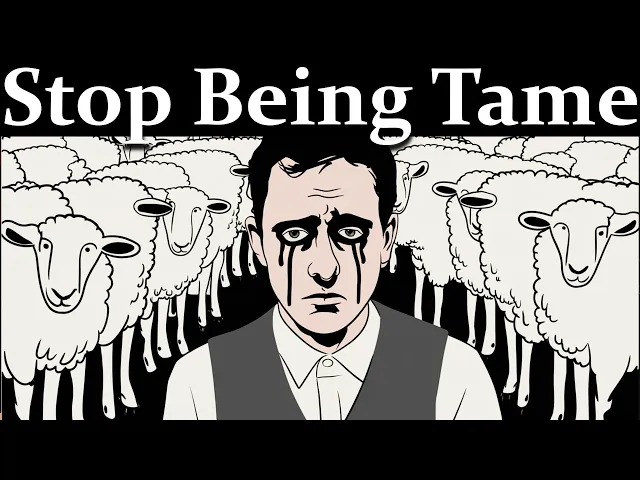
The system does not want you to think. It wants you to repeat. It does not want you to question.
It wants you to conform. School taught you to wait for the signal to move. Work trained you not to step out of line.
The hospital controls your body. The media defines your desire. And in the midst of all this, you think you are free.
Fuko calls this discipline, but not in the positive sense. You learned. Discipline here is domestication.
It is the training of bodies and minds to obey without resistance, to accept control without realizing they are being controlled and more. To begin to monitor themselves. You no longer need a jailer because you have learned to punish yourself, to censor yourself, to police yourself.
You have become your own watcher. This is the logic of the panopticon, a model of power in which everyone feels observed even when no one is looking. And this is how control becomes perfect, invisible, impersonal, automatic.
The fear of being watched makes you conform. Even if the gaze does not exist, you do not behave because it is good. You behave because you were taught to be afraid.
But here is the most important point. This is not your fault. You were born into this structure.
You were shaped by it. But now you can begin to see. This video is a call not to give you ready-made answers, but to provoke a rupture.
A rupture in the way you see yourself, the world around you, and the structures that govern your existence. You do not have to continue obeying. But first, you need to understand how power operates.
And for that, we need to dive into the mind of Michelle Fuko and the hidden workings of modern control. Are you ready for this? Then go ahead.
Because from now on, you will no longer be able to look at the world the same [Music] way. For centuries, power punished with brutality. The body of the condemned was the stage for the spectacle of punishment, torture, mutilations, public decapitations.
Everything was done so that pain could be seen, felt, feared. The intention was clear. to intimidate, provoke horror, instill fear as a tool of control.
Violence was not a flaw in the system. It was the system itself functioning. The crowd gathered to watch.
Power displayed itself, triumphant, eliciting screams from the condemned and silent applause from the terrified audience. But something changed over time. This logic became unsustainable.
Public violence began to generate more revulsion than respect. The figure of the executioner became confused with that of the criminal. The audience, once complicit, began to feel empathy for the punished.
Power realized it needed a new strategy, a more effective, subtler, more lasting way to keep people under control without provoking revolt. And thus was born what Fuko called the disciplinary society. punishment ceased to act on the flesh and began to act on behavior.
The focus was no longer on punishing after the mistake, but on preventing the mistake from happening. The idea was no longer to repay the crime with suffering, but to shape the individual even before they thought of disobeying. Power ceased to be spectacular and became technical, almost scientific.
Public torture was replaced by norms, routines, rules, constant surveillance, and above all by training. It is here that Fuko presents the concept of dosile bodies. The goal of the new institutions, schools, barracks, factories, hospitals, prisons was not just to care, educate or heal.
It was to format. It was to transform the human body into a functional gear to train its movements, its schedules, its productivity, its attention. The body became an object to be controlled, corrected, optimized.
The student must sit in line. The soldier must march in sync. The worker must repeat the gesture mechanically.
It is not just about obeying. It is about embodying obedience. Discipline seeps into the details in the way of dressing, speaking, walking, thinking.
School teaches more than mathematics. It teaches submission to time, to the teacher, to the imposed content. Work, imposes goals, schedules, constant evaluation.
The hospital records your body, calculates your vital signs, defines when you are normal or abnormal. Each institution participates in the same project to produce predictable, adjusted, useful individuals. And the most perverse part, all of this seems natural.
You believe you are being educated, treated, formed. But in reality, you are being shaped. Every gesture, every choice, every step of yours is being monitored not by a tyrant with a whip, but by mechanisms so ingrained in daily life that you no longer even notice them.
You have already been punished by discipline and didn't even notice. Because now punishment presents itself as care, as order, as progress. But control doesn't stop there.
When discipline becomes part of daily life, a new type of surveillance emerges, more efficient, more insidious, a model where you begin to watch yourself believing that this is freedom. And this is exactly what we will explore next. The emergence of the panopticon, the invisible eye that never blinks and that lives within you.
If this content is making sense to you, click the subscribe button and subscribe to the channel. Thank you for your support. Imagine living under the constant gaze of someone who never sleeps, never blinks, never gets distracted.
Now imagine that this gaze does not come from outside. It is within you. This is the true triumph of modern power.
It no longer needs to physically restrain you because it has already colonized your mind. This is what Michelle Fuko called panopticism, a model of total impersonal silent surveillance and for that reason extremely effective. The panopticon was originally conceived by Jeremy Bentham as an ideal prison architecture, a central tower from where a single guard could observe all the cells while the prisoners would never know if they were being watched at that moment.
The secret lies there. It is not necessary for the guard to always be looking. It is enough for the prisoners to believe that he might be watching.
The result, they begin to behave as if they are always under surveillance. They self censor. They self-discipline.
Fuko takes this model and expands it. Panopticism is not restricted to prisons. It is everywhere.
The school is a panopticon. The hospital, the barracks, the factory, the office. All these spaces have been structured to maximize surveillance and control even without the direct presence of a supervisor.
Cameras, reports, performance evaluations, tests, medical records, report cards, goal systems, productivity apps. Everything serves the same purpose. To make behavior visible, quantifiable, comparable.
to make the subject transparent and with that controllable. Have you ever felt that you need to perform all the time that you need to show that you are busy, productive, functional even when you are exhausted? Have you ever felt guilty for resting, for not being productive, for not keeping up with the expected pace?
This guilt did not come by chance. It is the direct effect of the internalized panopticon. You watch yourself.
You compare yourself. You judge yourself. And you do this so often that you don't even realize that the system no longer needs to punish you.
You already do that on your own. The most frightening thing is that this gaze does not always come from a real person. Sometimes it is an algorithm, a system, a form, a number on a spreadsheet.
And yet it has power. You know you are being measured, that you will be classified, that you need to fit in. Surveillance has become automated.
And the more efficient it is, the more invisible it becomes. The panopticon does not need high walls. It only needs conditioned minds.
And you, like all of us, grew up within this logic. Since childhood, you were trained to behave as if you were being observed. This as if has become your second skin.
It is the reason you hesitate before saying what you think. It is the reason you dress a certain way, act a certain way, speak a certain way, not because someone forces you, but because you learned to force yourself. But if the panopticon operates in such a silent, diffuse, ingrained way, where exactly does it begin?
And more importantly, how does it infiltrate the institutions of everyday life? The small routines, the rules you accept without thinking. This is what we will explore in the next part.
How discipline has been normalized in daily life and how institutions shape every aspect of your existence. Because the system does not just watch, it educates. And what seems like education is often pure conditioning.
You do not wake up free. You wake up programmed. Even before opening your eyes, you already know what you need to do.
Meet schedules, goals, obligations. And the most impressive thing you call this routine. You believe you are being responsible, productive, functional.
But what you call responsibility, Fuko calls training. Your day does not start with freedom. It starts with obedience.
This obedience does not arise from nowhere. It has been built, shaped, repeated. And the place where this happens is the institutional space.
School, work, hospital, army, church, even family. Each of these institutions functions as a gear in the great disciplinary system. They all have a common function to format bodies and minds to follow an accepted, predictable, controllable behavior model.
They not only teach you to live in society, they train you to obey. Let's start with school. It is not just a place where you learn math, history or grammar.
It is above all a laboratory of obedience. The bell rings. You stand up, line up, silence, speak only when authorized.
Learn what you are told. You are evaluated, compared, ranked. From an early age, you learn that there is a hierarchy of power between teacher and student, between administration and student body, between those who get high grades and those who fail.
Learning in the disciplinary logic is not an act of freedom. It is a process of normalization. Now, think about your workplace.
reports, goals, quarterly evaluations, rigid schedules, monitored emails, security cameras, badges that record every movement. You are just another number, a data point in the system, a present body that needs to produce. Time is no longer yours.
Attention is no longer yours. Your behavior is continuously measured, compared, judged. You are the very project of a dossile body, efficient, adapted.
And if you do not adapt, you are disposable. Hospitals and clinics are no exception. The body is classified, diagnosed, corrected.
Exams, medical records, prescriptions. You are seen as an object to be adjusted, controlled, kept within a standard. If you are outside this standard, you are considered dysfunctional, abnormal, pathological.
Medicine often stops healing and starts normalizing. Health becomes a new form of discipline. All these institutions have something in common.
They create a sense of normality. They teach you not to question, to go with the flow, to internalize rules. And the scariest part is that you come to believe that this is the right thing.
That this adaptation is maturity. That following the norms is a sign of success. Obedience disguises itself as merit.
Conformity is sold as virtue. And thus control becomes almost absolute because it does not come from outside. It comes from within.
You believe you choose, but in fact you are just repeating what you have been trained to do. Every gesture, every automatic response, every shaped thought, all of this is the product of a system that does not want you to think. It wants you to function.
But where does this standard come from? Who decided what is right, acceptable, normal? And why are we taught to fear everything that deviates from the norm?
This is what we will reveal in the next part. How the idea of normality was constructed as a tool of control and how it traps you without you realizing it. Have you ever stopped to think about what exactly it means to be normal?
Is being normal acting like the majority? Is it following the rules? Is it not causing discomfort?
The truth is that normality is not a natural condition of being human. It is a social construct, a powerful fiction created to shape behaviors and exclude everything that escapes control. And as Fuko shows us, this fiction is one of the central gears of disciplinary power.
From an early age, you learn what is considered appropriate. How to dress, how to speak, how to behave, even what to feel. Everything outside this framework is viewed with suspicion.
Overly restless children are labeled. People who are too sad are medicated. Those who think differently are corrected, punished or isolated.
Normality functions like an invisible fence. It doesn't confine you with walls but with fear. The fear of being seen as wrong.
The fear of being excluded, ridiculed, silenced. And here lies the central point. What is called normal serves a political function.
It serves to keep the system in order to ensure that each individual occupies their place without questioning. Normality is a tool of domestication. It divides the world between those who fit in and those who need to be corrected, between those who are considered exemplary citizens and those who are treated as threats, deviations, problems.
This logic is present in medicine, psychology, pedagogy, media, the job market, and the penal system. The student who does not learn in the right time is labeled as disabled. The worker who does not perform as expected is discarded as unproductive.
The woman who refuses to be submissive is labeled hysterical. The young person who does not want to follow the script of adult life is seen as immature. The person who does not find pleasure in producing all the time is accused of being lazy.
The different is always pathized. Fuko shows that modern power does not impose itself only through coercion. It imposes itself through the production of truths.
Truths that seem objective, scientific, unquestionable, but that are in fact ideological constructions. When a doctor says that your mind is sick because you do not adapt to the rhythm of society, he is not just making a diagnosis. He is applying a moral judgment disguised as science.
He is teaching you that the problem lies within you, not in the system that demands the same performance, the same emotional stability, the same conformity from everyone. The fabrication of normality is the most efficient mechanism of domination because it transforms control into desire. You do not feel forced to obey.
You want to obey. You strive to be accepted, to fit in, to be seen as someone adjusted. And if you fail, you feel guilt, shame, failure.
The system does not need to confine you. You condemn yourself when you cannot be what is expected of you. But here is the breaking point.
Normality is not a mirror of reality. It is a mask placed over it. And like any mask, it can and must be torn off.
But for that, you need to start asking the right questions. It is not enough to reject the norm. You need to understand where it comes from.
Who benefits from your obedience? Who gains when you remain silent? Adjust.
sabotage yourself. This is what we will uncover next. How to break this vicious cycle.
How to awaken critical consciousness and begin to deprogram the conditioning that traps you. Because true freedom only begins when you see what keeps you captive. If what you're hearing resonates with you, you'll find real value in my ebook, Beyond the Shadow.
It breaks down Yung's core ideas and gives you tools to understand yourself more deeply. link is in the pinned comment. If you have made it this far, it is because something inside you has already begun to awaken.
Perhaps it is an old restlessness, a muffled voice that whispered that something is wrong with the way you live, work, and relate. And this voice, which for years was ignored in the name of normality, is now starting to scream. Because once you see the system, you can no longer unsee it.
But seeing is just the first step. True transformation begins when you decide to break the cycle. Breaking this cycle is not an act of reckless rebellion.
It is a deep, courageous, and above all painful process. You are about to question everything you have always believed to be true. your habits, your ambitions, your most intimate beliefs.
You are about to discover that what you thought was your personality may actually be the result of sophisticated conditioning, that many of your desires were implanted, that many of your fears were learned, that your obedience is not a virtue. It is a reflection of a system that shaped you not to resist. Fuko warns us that modern power does not impose itself only from the outside.
It infiltrates you. It permeates your thoughts, defines your desires, organizes your behaviors. Power is no longer located in an authoritative figure.
It is decentralized, diluted in norms, discourses, institutions, gazes. And the most dangerous part, it masquerades as truth, common sense, the natural order of things. That is why resisting requires more than courage.
It requires lucidity. It demands a continuous effort to unmask what has been naturalized and where to start with radical questioning. Ask yourself with brutal honesty.
Why do I act this way? Why do I accept certain routines as inevitable? Why am I afraid to say no?
Why do I pressure myself to be productive, pleasant, functional? Who benefits from my discipline? Who gains when I remain silent, adapt, repress myself?
When you begin to interrogate your own behaviors with this depth, you also start to destabilize the control devices that surround you. You cease to be a passive subject of discipline and begin to become a conscious agent of your own story. This does not mean that you will abandon all norms, but that you will stop obeying them blindly.
You will choose when to follow and more importantly, you will choose when to disobey. Conscious disobedience is the first step toward real freedom. Not a romantic utopian abstract freedom, but a practical concrete freedom that begins with the act of refusing to be just what is expected of you.
When you allow yourself to think differently, act differently, feel differently, you threaten an entire system that depends on your predictability to exist. But beware, the system will not be dismantled overnight. It is resilient.
It will try to pull you back. It will use guilt, fear, isolation. It will label your rebellion as madness, failure, immaturity.
And that is why you need to strengthen your awareness, create new references, seek allies, study, reflect, deconstruct yourself to reconstruct yourself. Fukult does not offer easy solutions. He does not provide a safe path.
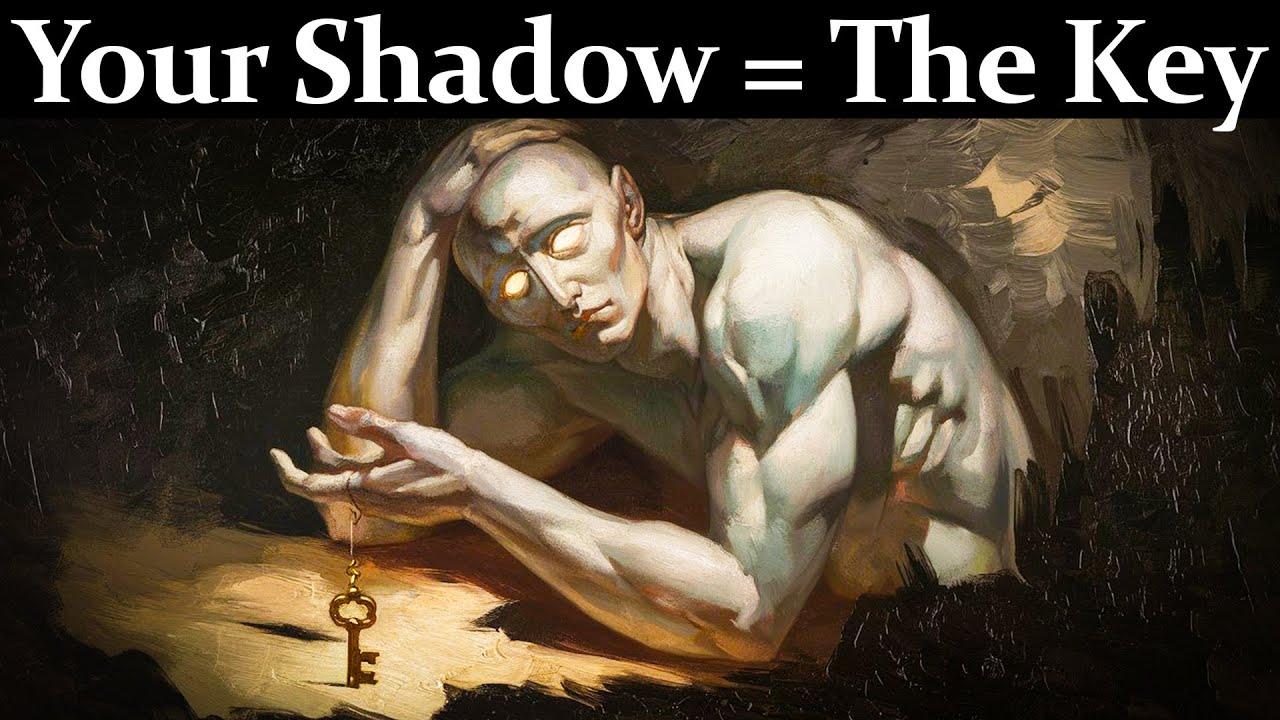
But he offers something more valuable. He gives you the keys to begin to see. And once you have these keys, it is up to you to decide whether you will remain locked inside what you were taught to be or if you will start to open the doors to your own liberation.
But what to do after awakening? What happens when you break with the model and begin to tread a new path? In the next and final part, we will talk about the price and power of freedom and why despite everything, it is worth fighting for it.
Because awakening is just the beginning. Living awake is the true challenge. Breaking away from the system is just the beginning.
The real challenge starts when you try to live outside of it because it's not enough to see the prison. You must relearn to walk without chains. It is at this point that many retreat.
When the structure that once provided security, even if oppressive, begins to crumble, emptiness appears. And that emptiness is frightening. The silence of authority, the absence of orders, the end of certainties.
But it is in this abyss that real freedom begins to emerge. Being free is not comfortable. It is not simple.
It is not romantic. It is lonely, challenging, painful. It is making decisions without guarantees.
It is taking responsibility for every step. It is losing the applause of the obedient to gain the integrity of those who no longer bow. Fuko shows us that power is not only in the visible bars, but in the small automatic gestures, in the way we sit, how we speak, how we act in the presence of others.
Power lives in the details and that is exactly why liberation must also start with them. Freedom requires a constant state of attention. Radical lucidity.
You need to watch yourself. But now for a different reason. No longer to punish or conform, but to avoid falling back into the traps of conditioning.
Because the system is persistent, it reinvents itself, changes its face, takes on new forms, and it tries all the time to make you believe that your rebellion is a mistake, an illusion, a deviation. But it is not. It is an act of courage, of maturity, of consciousness.
When you refuse to obey blindly, you threaten an entire structure that depends on your pacivity to continue existing. Your lucidity is subversive. Your refusal is a sign of life.
And no matter how difficult it seems, you are not alone. Others are awakening too. Questioning, breaking the cycle.
And perhaps that is the greatest impact of Fuko's thought. It did not come to comfort. It came to disturb to show that freedom is not a granted right but a daily conquest a constant choice an internal and external battle.
Now the choice is yours. You can return to the comfort zone where everything is predictable but nothing is yours. Or you can follow this uncomfortable and liberating path of becoming who you really are without the masks that the system taught you to wear.
If this video touched you, if it provoked any doubt, any outrage, any awakening, write in the comments, I choose lucidity. This shows that you are aware and also inspires others who like you are trying to escape the invisible prison. And don't forget, this is just the beginning.
The next video is important. Keep watching because understanding the system is a battle but learning to live outside of it that is revolution.