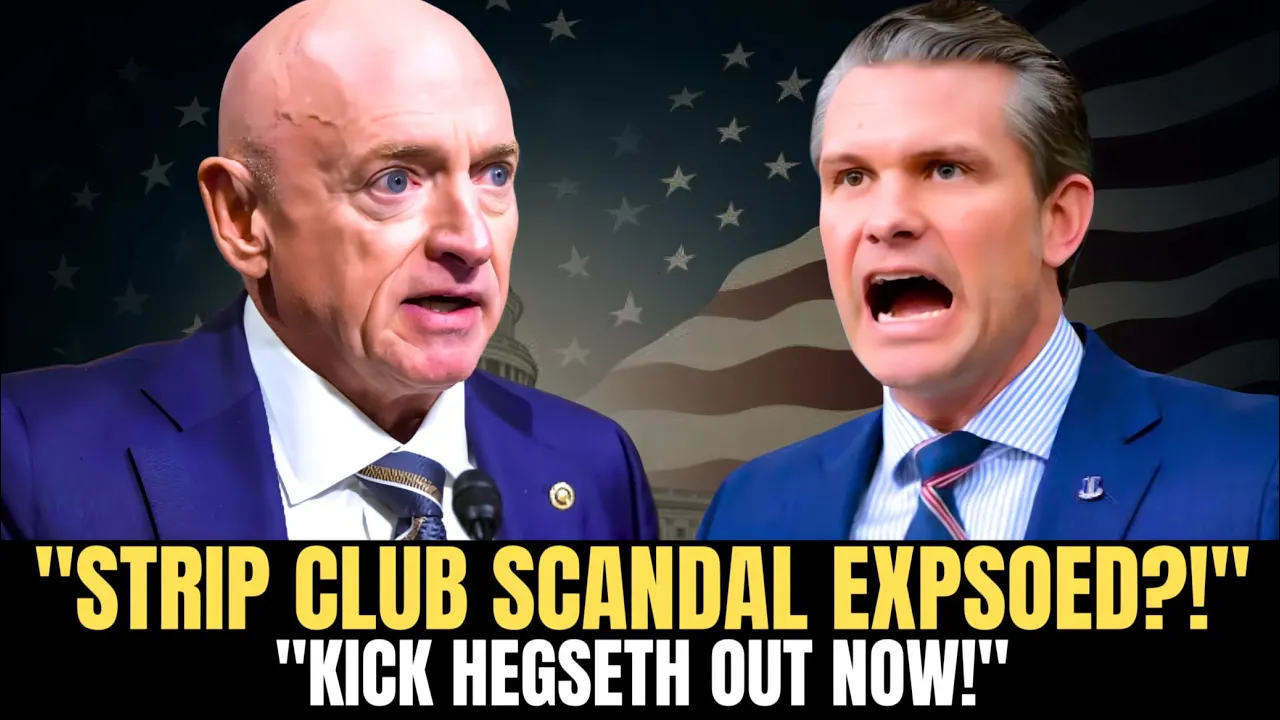
The room went quiet before anyone even realized what was happening. This was supposed to be another confirmation hearing, another polished performance, another round of rehearsed talking points. Another nominee walking into Washington ready to survive a few tough questions and move one step closer to power.
But what unfolded in that Senate chamber was something else entirely. It wasn't loud. It wasn't theatrical.
There were no dramatic interruptions, no shouting matches, no viral outbursts designed for cable news clips. Thank you for being here today. Thank you for your service to this country.
Thank you, Senator. Few nominees come into this room with all the necessary experience to do this job to be Secretary of Defense. We get that.
It's a reflection on just how big of a job this is. What I want to understand is whether or not you bring any of the necessary experience that this job requires. And here's where I'm concerned.
Senator Coleman in introducing you, and this is a quote, he said he has struggled and overcome great personal challenges. " unquote. You walk in here saying that you've had personal and character issues in your past, including heavy drinking, which you wrote about, and you said, and this is a quote from you, that you said, "I sit before you as an open book.
" Yet, you haven't actually said what personal challenges it is that you've overcome when you've been asked about them. So, I'm going to give you an opportunity here to be as forthright as you say you want to be. So, while leading concerned Veterans of America, there were very specific cases cited by individuals about your conduct.
I'm going to go through a few of them, and I just want you to tell me if these are true or false. Very simple. On Memorial Day 2014 at a CVA event in Virginia, you needed to be carried out of the event for being intoxicated.
Senator uh an smears just true or false. Very simple. Summer of 2014 in Cleveland, drunk in public with the CV8 team.
Anonymous smears. I'm just asking for true or false question. True or false answers.
an event in North Carolina drunk in front of three young female staff members after you had instituted a no alcohol policy and then reversed it. True or false? Anonymous smears.
December of 2014 at the CVA Christmas party at the Grand Hyatt at Washington DC. You were noticeably intoxicated and had to be carried up to your room. Is that true or false?
Anonymous smears. Another time a CBA staffer stated that you passed out in the back of a party bus. Is that true or false?
Anonymous smears. In 2014, while in Louisiana on official business for CVA, did you take your staff, including young female staff members, to a strip club? Absolutely not.
Anonymous smears. So, is it accurate that the organization reached a financial settlement with a female staffer who claimed to be at a strip club with you and there was a colleague who attempted to sexually assault her? Was there a financial set settlement?
Senator, I was not involved in that. Uh, I don't know the nature of how that played out, but you understand there was a financial se set settlement for a young female staffer who accused another member of the organization, not you of sexual assault in a strip club. We have multiple statements on the record referring to that.
Um, but you claim you were not there when that occurred. Absolutely not. Now, the behavior I cited, if true, do you think that this behavior of intoxication going into these type of establishments, women on your staff being so uncomfortable that they have to file these sort of harassment claims?
Do you think this is appropriate behavior for a leader? Senator Well, Senator, the overwhelming majority of anyone who's worked for me, including the on thereord statements that have been submitted to this with their name on it on the record, men and women who worked with me every day are the overwhelming prepoundonderance of evidence that testify to my leadership and professionalism in leading Vets for Freedom and Concerned Veterans for America. My leadership has been completely impuged on these veterans organizations that did fantastic work.
Mr I'm not even going to go fighting over. I'm not even going to go into the manage our financial books with integrity across the board. How many people, everybody who runs the campaign, I have limited time.
I'm not going to get into the accusations that come from Fox News. I know you have some of your Fox News colleagues here. There are multiple instances of accusations against you about drinking on the job.
All anonymous, all false, all refuted by my colleagues who have I worked with for 10 years at 6:00 a. m. to 9:00 p.
m. and everything. The challenge here for me, Mr is when there is discussion about personal challenges and you admittedly had issues with heavy drinking.
It's hard to kind of square this to square the circle here. It's it's it's kind of a difficult thing to do. Let me ask you if um I have about a 90 seconds left here.
If if you had to answer these questions about sexual assault against you and your drinking and your personal conduct, would it have been different if this if you were under oath? Senator, all I'm pointing out is the false claims against me. Okay, I take it you do not want to answer that question.
I walked in walked into into this hearing this morning concerned that you haven't demonstrated adequate leadership in your civilian roles and this is a dangerous world we're living in here and America cannot afford a secretary of defense who is unprepared for that mission. I'm going to leave with concerns about your transparency. You say you've had personal issues in your past.
Yet, when asked about those very issues, you blame an anonymous smear campaign, even when many of these claims are not anonymous. Which is it? Have you overcome personal issues or are you the target of a smear campaign?
It can't be both. It's clear to me to me that you're not being honest with us or the American people because you know the truth would disqualify you from getting the job. And just as concerning as each of these specific disqualifying accusations are, what concerns me just as much is the idea of having a Secretary of Defense who is not transparent.
Thank you, Mr Chairman. I yield back my two seconds. Thank you, Senator Kelly.
Instead, there was something far more devastating. Silence, discomfort, and a slow unraveling that played out in real time. And at the center of it all was Pete Hegsth, a man who came into that room insisting he was an open book, only to freeze the moment the questions stopped being easy.
What made this hearing different wasn't just the subject matter, it was who was asking the questions. Mark Kelly is not the kind of senator who wastes time chasing headlines. He doesn't need to raise his voice to make a point.
A former Navy combat pilot and astronaut, Kelly carries himself with the kind of calm that makes every word land harder. So when he leaned into his microphone and began laying out concern after concern, the room immediately understood this was no routine exchange. Kelly wasn't interested in scoring points.
He was testing something much bigger. Judgment, honesty, and whether the man sitting in front of him could truly be trusted with one of the most powerful jobs in the world. That job, of course, is Secretary of Defense.
It's not just another cabinet post. This is the person responsible for military readiness, crisis response, intelligence coordination, and decisions that can impact millions of lives in an instant. The Pentagon is not a place where personal chaos can be brushed aside with good messaging.
It's not a TV studio. It's not a campaign stop. And Kelly made it clear from the start that this was the lens through which he was evaluating heth.
Few people walk into that role fully prepared. Kelly acknowledged, "The job is enormous, but the basic question still matters. Does the nominee have the discipline, judgment, and character to lead under pressure?
" That's when the hearing took its first sharp turn. Kelly didn't begin with vague criticisms or broad attacks. He started with Hegath's own words.
Hegth had publicly acknowledged past struggles with alcohol. He had talked about personal challenges. He had framed himself as someone who had faced adversity and grown stronger because of it.
On paper, that kind of vulnerability can be powerful. Voters and lawmakers often respond well to someone who owns their mistakes and shows growth. But Kelly saw a contradiction.
If he truly wanted to be transparent, then why had he repeatedly avoided details about the very conduct he claimed to have overcome? That was the trap Kelly said, and it was effective because it was simple. He wasn't asking for speculation.
He wasn't making sweeping accusations. He was asking a basic question. If you say you've moved past personal issues, why won't you tell us what those issues were?
Why won't you be direct when it matters most? The tone in the room shifted immediately. Suddenly, this was no longer about resume lines or foreign policy positions.
This was about trust. And in a job built on trust, that matters more than almost anything else. Kelly then began laying out specific incidents tied to Hegathth's time leading veterans organizations.
One by one, he raised allegations that had circulated for years, claims about public intoxication, incidents at work-related events, and repeated concerns about professional conduct. The details were sharp and specific. Memorial Day event in Virginia, summer gathering in Cleveland, a Christmas party in Washington.
Each time, Kelly offered Heg Seth the same opportunity. True or false. That was it.
No speech required. No lengthy explanation needed. Just answer the question.
And every single time Heg Seth gave the same response. Anonymous smears. First, that line may have sounded like a defense.
Politicians often dismiss allegations as politically motivated. Public figures routinely claim unfair attacks. But the problem for Heg Seth was that repetition started working against him.
The more he repeated the phrase, the more it began to sound less like confidence and more like a shield. Kelly wasn't yelling. He wasn't interrupting.
He was simply moving down a list and allowing the silence after each non-answer to do the damage. And that silence said plenty. This is what made the exchange so uncomfortable to watch.
He Seth wasn't being cornered by theatrics. He was being cornered by clarity. Kelly's questions were structured in a way that forced a choice.
Either directly deny the incidents or acknowledge them and explain how you changed. Instead, Hegth chose a third path, deflection. And in a Senate hearing, especially one involving national security, deflection can often look worse than the accusation itself.
But then came the moment that changed everything. Kelly shifted to the most explosive allegation of the hearing, the strip club claim. According to claims discussed during the hearing, there were allegations involving an outing to a strip club while Hegth was leading a veterans organization with female staff reportedly present.
Kelly also referenced a reported financial settlement involving a female staffer who accused another colleague, not Hegth, of sexual misconduct connected to that broader environment. To be clear, these were allegations and claims raised in the hearing, not established findings of fact. But in a confirmation setting, the existence of such claims can still raise serious questions about leadership culture and judgment.
When Kelly brought this up, the atmosphere in the room changed instantly. This was no longer just about drinking or personal behavior. This was about workplace responsibility, power dynamics, and whether staff under Hexath's leadership felt protected or exposed.
Kelly's wording was careful, but the implication was unavoidable. If even part of this was true, what did it say about the kind of leader Hegseth had been? For the first time, Hegth's answer came quickly.
He flatly denied being at a strip club with staff. But even then, the exchange didn't help him as much as it could have. Why?
Because Kelly wasn't only focused on that single denial. He was drawing a broader picture, a pattern, a leadership style, a question of whether the man sitting before the committee had consistently exercised the kind of discipline the role demands. And that's where the hearing became truly damaging.
Not because of one allegation, but because of what Hegsth's overall response suggested. He had walked into the hearing ready to present himself as battle tested, patriotic, and prepared. He projected confidence.
He leaned on his military service, his media presence, and his public image. But confirmation hearings aren't won by image. They're won by credibility.
And credibility is built in moments when the pressure rises, Kelly understood that. That's why he kept returning to the same core issue, transparency. If HGth had indeed overcome serious personal struggles, that could have been a story of growth.
Americans often respect redemption. Lawmakers can forgive mistakes if they believe someone has genuinely changed. But redemption requires ownership.
It requires specifics. It requires a willingness to answer difficult questions directly, especially when the stakes are this high. Instead, Kelly was left with what he clearly saw as a contradiction.
On one hand, Hgse openly admitted to past challenges with heavy drinking. On the other hand, when presented with detailed concerns that seemed to fit those admitted struggles, he refused to engage. To Kelly, and likely to many watching, that created a credibility gap that became impossible to ignore.
What made Kelly's performance so effective was his discipline. He never overplayed his hand. He never turned the hearing into a spectacle.
He didn't need to. His calm made the moment heavier. Every pause felt intentional.
Every follow-up landed harder because it came without drama. This wasn't a senator trying to manufacture a viral clip. This was a senator making the case that leadership under pressure matters and that the hearing itself was a test.
That test matters because of what the Secretary of Defense actually does. This is the official who helps advise on war, troop deployments, military crisis, deterrent strategy, and defense readiness. In moments of global uncertainty, there is no room for hesitation, confusion, or lack of judgment.
The role demands not just intelligence, but steadiness, not just confidence, but honesty, not just strength, but trust. And that's why this exchange resonated so deeply beyond the hearing room. It wasn't just about past behavior.
It was about how someone responds when challenged, how they handle scrutiny, whether they can stay grounded when the spotlight turns harsh. In many ways, Kelly wasn't just asking about old allegations. He was stress testing Heg Seth's temperament in real time.
For viewers watching at home, that's what made the moment feel so consequential. You could feel the stakes rising with every question. Not because of sensational language, but because of what was left unsaid.
Heth had multiple chances to reset the narrative. He could have acknowledged mistakes, explained growth, and shown humility. That path was available.
Instead, he chose resistance. And in that choice, he may have revealed more than any direct answer ever could. There's also a bigger reason moments like this matter in Washington.
Confirmation hearings are one of the few times powerful nominees are forced into unscripted accountability. No polished campaign ad can save you there. No friendly interview can protect you under oath or not.
These hearings show how people perform when challenged in real time. They reveal temperament. They expose blind spots and sometimes they tell the country something essential before power is handed over.
That's what made this hearing feel less like political theater and more like a warning sign. Kelly wasn't saying that every allegation was proven. He wasn't claiming certainty about every detail.
What he was saying was something arguably more important. When legitimate concerns are raised about judgment and conduct, the burden is on the nominee to reassure the country, not dodge, not deflect, reassure. And on this day, Hegsth didn't do that.
Be why the end of Kelly's questioning. The room felt different than it had at the start. The confidence Hegth entered with seemed shaken.
The polished messaging had cracked. The easy talking points were gone. What remained was discomfort and a question hanging over the entire nomination.
If this is how he handles scrutiny in a hearing room, how would he handle pressure in the Pentagon? That question is what made this moment so powerful. Not because anyone shouted, not because someone got humiliated on camera, but because for several minutes, the performance stopped and the real test began.
And in that test, the silence spoke louder than anything else. This hearing will likely be remembered not for one headline or one accusation, but for the contrast it exposed. On one side sat a senator asking direct questions with military precision.
On the other sat a nominee who insisted he was an open book yet seemed unwilling to open the pages that mattered most. That contrast is what people noticed. That contrast is what stuck.
And maybe that's the bigger lesson here. In Washington, power often comes down to perception. But sometimes in the rare moments when the cameras are rolling and the pressure is real, perception gives way to something more revealing.
Instinct, character, reflex, the things no consultant can fully rehearse. For Hegathth, this was supposed to be a step toward one of the most powerful offices in government. Instead, it became a defining test of credibility.
For Kelly, it was a reminder that calm, disciplined questioning can sometimes be more devastating than outrage ever could. And for the rest of the country, it was a glimpse into what accountability can still look like when someone is finally forced to answer. If you thought this hearing was intense, wait until you see what happens next in this nomination fight.
The pressure is only building and the fallout from this moment may be far from over. So, if you want more breakdowns of the biggest political showdowns, behindthe-scenes power plays, and the moments mainstream coverage misses, make sure you subscribe, hit like, and turn on notifications. Because on this channel, we don't just show you the headlines.