[Music] investigations of rejected takeoffs and the go noo decision suggest two areas of concern first Pilots faced with unusual or unique situations May perform high-speed rejects unnecessarily second Pilots may not perform the rejected takeoff procedure properly the airlines manufacturers Regulatory Agencies and other industry groups have been working together to improve takeoff safety we have been conducting a special examination of rejected takeoffs and go noo decisionmaking some of you may have been involved in our takeoff performance study all of you need to know the facts in its own special investigation report the national Transportation safety board
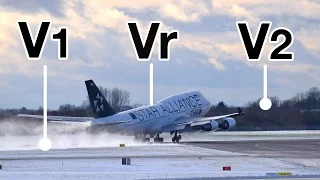
concluded that Runway overruns following high-speed rejected takeoffs have resulted and continue to result in airplane accidents and incidents Boeing's analysis shows that over half the overruns resulted from rejects initiated after V1 Pilots know that V1 is fundamental to making the go noo decision under Runway limit conditions if the reject procedure is initiated at V1 the airplane can be stopped prior to reaching the end of the runway but if you initiate the reject procedure 2 seconds after V1 you'll go off the end of the runway at 50 to 70 knots where do the takeoff speeds that
you use in the flight deck come from first let's look at the FAA regulations on Certification testing then we'll look at the part the test pilot and performance engineer play finally we'll look at the way this information is presented to line pilots from a go noo standpoint during FAA Certification testing we measure takeoff performance over a wide range of thrust to weight ratios and environmental conditions the performance is based on failing an engine at a certain speed and testing for continuing the takeoff and for stopping on the runway when the continued takeoff test is performed
the test pilot needs to maintain directional control of the airplane after the engine has failed and smoothly rotate to a Target body attitude the distance required to climb to 35 ft and the the air speed attained is then measured the accelerate stop testing is a little more demanding following the engine failure the test pilot applies the wheel brakes and retards the throttles simultaneously then he deploys the speed Brakes in Flight testing reverse thrust is not used since reverse thrust is typically available to the line pilot this provides an additional performance margin in certification flight test
the average demonstrated time for the test pilot to apply maximum braking bring the thrust levers to idle and raise the speed brakes is about 1 second the regulations acknowledge that the line pilot does not know when or if a reject will occur so an additional 2sec distance allowance is added this additional distance allowance is provided to give the line pilot adequate distance to get the airplane into the full stopping configuration it is not there to give additional time for the go noo [Music] decision after the testing is complete Engineers analyze the data the final performance
figures from the tests are submitted to the regulatory agencies for certification and included with the FAA flight manual flight operations engineers then use that data to produce easy to use operational charts and tables let's watch an RTO performed in a training situation and see how these tests and data relate to what you do as a pilot 80 knots [Music] checked engine fire [Music] re 60 knots [Music] call the tower tell them we're still on the runway let's look at the reject again in detail 80 knots checked we see that in a Runway limited situation you
must initiate maximum braking by V1 engine fire rej and the throttles to idle then raise the speed brakes and initiate reverse thrust if you use RTO Auto brakes verify that the Auto brakes are working or apply maximum manual braking if you use manual braking keep strong steady pressure on the brakes until you are absolutely certain that the airplane will stop on the runway do not let up or pump the brakes let's now take a closer look at how speed relates to reasons to reject the [Music] takeoff in the lowspeed regime it's reasonable to reject for
system failures an unusual noise or vibration Tire failure or abnormally slow acceleration also reject for an engine failure or fire unsafe takeoff configuration warning or the perception that the airplane is unsafe or unable to fly however in the high-speed regime it's only reasonable to reject for the most critical events remember V1 marks the end of the go noo decision time if you have not applied the brakes by the time you reach V1 you have made the go decision although historically our training has centered on engine failures as the primary reason to reject the statistics show
that wheel and tire problems have caused just about as many accidents and incidents as have engine events other reasons that rejects occurred were for configuration indication or light crew coordination problems bird strikes or ATC undetermined causes make up the rest what's important to note here is that the majority of past RTO accidents were not in engine failure events full takeoff power from all engines was available with normal takeoff power the airplane will easily reach a height of 150 ft over the end of the runway even if an engine fails 1 second or less before V1
in a Runway limited situation the airplane will still reach a height of at least 35 ft over the end of the [Music] runway but what if an engine fails more than 1 second before V1 for example in a two-engine airplane let's consider what would happen with an engine failure 2 seconds before V1 VR will occur further down the runway in this situation the airplane will still reach a height of 15 to 20 ft at the end of the runway now let's consider what would happen in a 4 engine airplane with an engine failure also 2
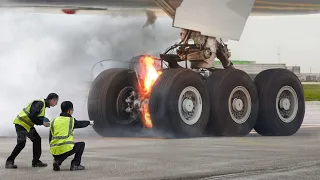
seconds before V1 in this situation the airplane will reach a height of 25 to 30 ft at the end of the runway but as we saw engine failure was not involved in nearly 75% of all rejected takeoff accidents their reaction to wheel or Tire problems has become a concern if you hear a bang or feel a vibration how do you know it's a tire failure you may only have a second or two to analyze the problem and decide the British government has also been investigating Tire failures and reject decisions they reported that Pilots often incorrectly
interpret a tire failure as an event that threatens the safety of flight as a result the pilots do an unnecessary reject when a tire fails at high speed it's possible that pieces of it can be thrown against the AFT body or the flaps but it's usually not going to affect the ability of the airplane to fly in this example of braking after a tire failure the important issue is that a tire failure reduces braking Effectiveness and your ability to stop unless a tire failure in the high-speed regime has produced damage that puts the ability of
the airplane to fly in serious doubt Boeing recommends that the takeoff be continued though each go noo situation has its own complex series of events let's take a look at a summary of one accident report and see the consequences of the decision to reject after V1 the airplane taxied out with the first officer set to do the takeoff the first officer confirmed that in case of a rejected takeoff the captain would make the decision to reject and the first officer would do it 2 and 1/2 seconds after the V1 call out at 156 knots Engine
Number Four fire warning came on in the cockpit the first officer stated that he noticed a movement of the captain's hand towards the throttles and rejected the takeoff the captain did not make any call out to reject the maximum speed attained during the reject was 172 knots the airplane couldn't be stopped on the paved surface and finally came to rest about 1500 ft beyond the end of the runway the aircraft sustained G substantial damage one passenger received minor injury during the process of evacuation there was no engine fire the accident occurred due to the improper
decision of the flying pilot to reject the takeoff at a speed higher than V1 lack of crew coordination was a contributing factor and Mike can we get the before start check list down to the line please hey before start checklist oxygen set left set right passenger signs on the go no-o decision is only one of the many things concerning the crew before takeoff making the right decision begins long before the takeoff roll M we have an Mel item on the auto speed Brakes in operative today I'd like to go over the rejected takeoff procedure okay
I'd like for you to monitor the the instruments during the takeoff and if you see anything abnormal advise me and I'll make the decision whether or not to reject the takeoff communication and teamwork are two key elements in the go noo process the crew should discuss special conditions such as noise abatement Runway surface condition precipitation or meel restrictions when configuring the airplane it's recommended that RTO Auto brakes if available be armed for every takeoff last minute items such as loading changes may make it necessary to change the takeoff data during taxi out and verify that
the runway is adequate for the new weight of course a change in Runway winds or a sudden rain shower can affect your planning when you're given clearance to taxi onto the runway it's important to position the airplane as near the end of the runway as practical the distance used for lineup is Runway you can't use for taking off sometimes Pilots can give away hundreds of feet of Runway initiating the takeoff don't delay setting thrust the sooner you attain full takeoff thrust the more Runway you will have left if you need it for a stop as
the plane approaches V1 it is traveling between 200 and 300 ft per second and accelerating at about 3 to 6 knots per second Boeing recommends that the V1 call out be completed by V1 so that the pilot flying knows precisely when he is committed to go although a reject Beyond V1 may be necessary and is fully within the emergency authority of the captain it should not be attempted unless the ability of the airplane to fly is in serious doubt it's normally best to continue the takeoff and deal with the problem in the air if a
pilot continues a takeoff with a gear problem he has gained several advantages over a reject gross weight is reduced and there is the advantage of using Landing flaps the pilot is better prepared for vibration and directional control problems that may occur and there's more time to analyze the situation during the landing most of the runway is available for stopping so the margin to stop safely is increased high-speed RTO are so rare in line operations that few Pilots are expecting one the simulator gives Pilots the opportunity to build good habits it gives the crews the chance
to experience realistic situations and perform their procedures in real time the more practice with critical or unusual situations that we can have in a simulator the easier they are to handle if they occur in the airplane misconceptions about procedures can also be cleared up over the years a lot of Pilots have thought that at V1 there was still time to make the go noo decision there is no deciding time left at V1 at V1 you should already be initiating the stop in its report the NTSB States that action must be taken by V1 for the
airplane to be able to be stopped within its predetermined accelerate stop distance engine fire re once the decision to stop is made every device brakes speed brakes and reverse thrust must be used to the maximum until you're convinced that the airplane will stop on the remaining Runway making the go no go decision starts long before V1 early detection good crew coordination and quick reaction are the keys to a successful takeoff or stop okay guys let's make another takeoff 80 kns B1 rotate ready