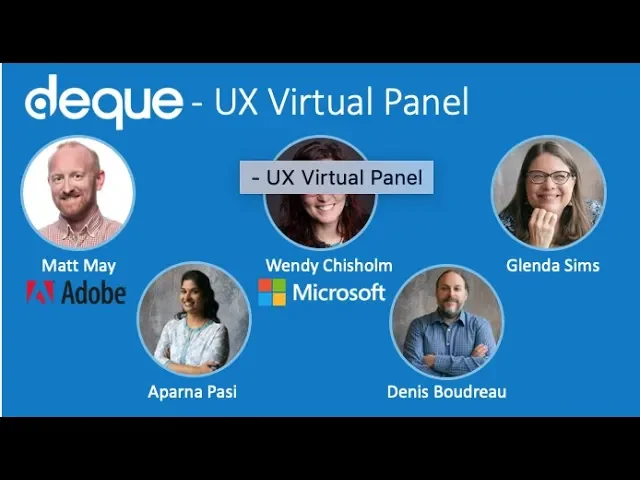
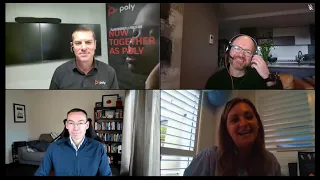
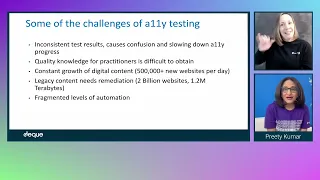
Hi everybody welcome to today's UX virtual panel will be discussing the differences and similarities between the terms accessibility Universal Design and inclusive design my name is Laura Gosselin I am the event manager here at DQ systems I'll be helping run today's webinar a few housekeeping things before I go ahead and dive in and give introductions to our panelists first of all if you do need closed captions you Can access those via the stream text link posted in chat you can also hit the closed caption button in zoom and those captions will pop up right as
an integration feature of zoom which is great secondly we're going to save probably the last 10 to 15 minutes or so of the webinar to focus on your questions we really want to make sure we save time for any of your personal questions and lastly this is being recorded we'll send Out the recording to everyone who's attending or registered after the fact via email so with that I just kind of want to give a brief introduction to our panelists first we have Wendy Chisholm from Microsoft really excited to have Wendy here I'm she's the principal
accessibility architect at Microsoft but also as a strategist for AI and accessibility and she's been working on a grant program that's accelerating innovations in AI especially that are Built with and for people with disabilities so it's really really proud to have Wendy he or she co-wrote a book with Matt Mae who were also very lucky to have on Universal Design for web applications that was edited around the whit Kay guidelines 1.0 and 2.0 um secondly we have Matt Matt Maia's from Adobe he's the head of inclusive design at Adobe he works include inclusive design practices
across all of Adobe's user Experience training and mentoring he mentors the Adobe design team and he's been jet-setting all during this planning process across India and Romania and other different countries doing UX workshops so he's busy out there in the field and we're really lucky to have him here today secondly we are third actually we have Glenda Simms our very own glenda the goodwitch from DQ she's our team accessibility lead she has a wide range And expertise and passion for an open web and focuses on government organization education institutions and companies from all sizes you
know small businesses to enterprise organizations we're super excited to have our very own good witch here today and then fourth we have Denis Boudreau he's our principal web accessibility consultant and training at DQ he actively participates in the w3c as a member of education and outreach working group and he leads the Development of a framework to print on accessibility responsibilities by roles in the development lifecycle and then lastly we've Aparna Aparna is also a team member at DQ you know she is one of our accessibility smees here and has a strong passion for UX and
we're really excited to have her so just kind of to run through things we're gonna start off going through each panelist and having them define their own definitions their own versions of what accessibility means What inclusive design means that what Universal Design means and within these definitions we really want them to kind of focus and cover the history and evolution of these terms and how perhaps they've changed and what that really means so to start we're gonna go with Denis first so Danny I'll have you take it away I want to show you a couple
of slides but I do want to get started by by just sharing some some insight on on Why this came to be we we work on excessive obviously I guess most of you do as well and and recently we had to create training for designers specifically and as Laura was saying I'm also working on this idea of breaking down accessibility by your roles so that we are very specific as to what we teach a different stakeholders and and and make sure that it is always relevant to them so so as I was doing that at
some point I started researching the notions of a new racial design inclusive design I thought at that point they kind of met it the same thing to me and and and the more I read about it the more perplexed I was because I just couldn't accept the fact that they were actually the second thing and it didn't to me they needed to be different things so I started researching that read a couple of articles here and there a couple of books and and grew a very strong feeling That they were actually very different things but
when you research on the web on if you google any of those terms they intersect quite a bit and people are using them interchangeably and most of the time so I wanted to sort of define this more clearly and provide the community all of us with maybe some insights as to what that was so we reached out to to Wendy to the mat and then internally - to some of our our folks and and we came up with this so so I'm going to give you the perspective that I grew that I ended up good
growing over time and and we'll use that as a starting point for everybody else to to sort of their own their own perspective to it and if I'm lucky enough they will actually disagree with me and we'll have some kind of a debate on the whole thing so before you go too far I think folks need help with clicking yeah but the captions aren't working Hi yeah kind of troubleshooting as we go I do see that the inner the integrated closed captioning in zoom is working um but this dream text link we're just trying to
troubleshoot that real quick great thanks for letting me know and I should probably speak a little slower as well that might help so yes so so basically the idea like I said I came to the conclusion that they were not the same thing but the perspective the and on that might be biased by my own my Own values in my own understanding of what the work that we do so let me share my screen for a couple of slides here and then then and then and then this light see here so for you can see
that so I'm gonna I'm get cover a little bit on using retinal design first and then I'm gonna switch to inclusive design and show you where I think there's a difference between video and all of that with the most the utmost respect for for the work that Wendy and Matt did I read That book probably five times over in the last 10 12 years concept he went back to it but what I realized at some point is that the web has changed our job has changed the work has changed since then and and and maybe
it's time to rethink or revisit those terms so so to me the idea that Universal Design comes from this mentality that it's a one-size-fits-all approach we are trying to build this one website that is meant to work for everyone so this idea you're In universality comes from the fact that you are building this one site you're using the work a guidelines and hopefully you create a site that actually works for everyone now any of us who have worked with this for a while understand that the whig requirements are actually the bar is actually pretty low
and you could you could implement a particular checkpoint or service criteria so that it works or it means there is a requirement but still it Would not work for some people I'll give you some examples a bit a little bit on but I've grown to think that the idea of creating this one website that actually works for everyone is one of a utopian anything else so it is limited in a way you can create a site that is fully compliant but it still will not work for some people in some context so so give it
a bet right now on the universal design trend and just move to the inclusive design aspect of things where Instead of thinking of it as a one-size-fits-all mentality I'm looking at it from a one size fits one mentality and this idea one-size-fits-all one-size-fits-all who's been very much involved in pushing inclusive design further and way beyond the web and I'm consciously keeping it to the web for now but in this case what you're doing is basically going beyond what offers so recognizing the Utopia of Universal Design for what is trying to be provocative there and then
just aiming to two accounts for a very wide range a very diverse range of needs expectations from users and that you can only address or take account for if you are involving those users in your process so instead of just saying here's what K we would still work with what CAG in most cases but we would make sure that we go much further than that by involving as many users as possible with different needs Different expectations and then it's just what we have so that we can accommodate their needs on top of what we are
offering to begin with so if the the biggest flaw from from universal design was the idea that the site actually won't work for everyone in every single situation the flaw when it comes to inclusive designers could be resumed I guess or sometimes might get will get broke if you if you agree to this and you start working way beyond With what that requires it's actually going to cost you a lot more in terms of effort than money and everything else and and in the past we've taught plenty about how compliance and accessibility weren't the same
thing hopefully we're still agreeing on these things our research our experience internally shows that 60 70 % of the issues that we find when we assess websites actually could have been addressed at the design phase If only designers knew about these things and and it again it's beyond the idea of if young the idea of simply following week but really accounting for different needs that are that are well beyond what we get covers whether we're talking about what is actually being covered in level 2 in Double A or level triple I for instance as we
know level triple a you have your more likelihood to integrate aspects that will help someone who is dyslexic for instance Someone who's in on the autism spectrum someone who has low vision those things did not make it to level like so so we are we are consciously pushing further that way but also the idea of anything that is currently not covered by what could not be covered because you can't really frame it the way that you need to for it to be recognized as it as a requirement those things just aren't part of the equation
but yet people actually need those Considerations in order to be able to use this sites as well so a couple of examples like I said of those things think about alt text for instance if we if we decide to go with recent technologies we're going we might decide to use Aria label the Aria label attribute instead which would work perfectly fine for most people which would be completely compliant and when it comes to a gag but if you have someone using an older technology Doesn't support Aria for instance that person would not get that alt
text or if you're thinking like Greece well not so recent design patterns that aren't that recent these days but think about like endless or or infinite scrolling for instance you you think of any website where they're they're showcasing a bunch of pictures and then for instance each of the pictures as three or four different elements to it maybe like the author of the picture Itself how many likes that picture had the comments about that picture and you try to make that keyboard accessible you could easily create an accessible website that conforms to 2.11 for keyboard
access but you would still create a knight and expensive it'd be a nightmare for someone who struggles with using the keyboard say because of arthritis or because it's just hard to do that in the first place if every image requires five or six tab stops to Go through every single aspect of that image and you have 500 images in your page before you load another 500 and you can do that for thousands of images there is no way for you to be able to use this in a way that works so again think about Universal
Design where we're applying concepts for keyboard access couldn't work really well theoretically it could still break for some people and then we have a bunch of other examples like that Think think cognitive overload if you have an interface that is really really crowded someone who struggles with ADHD for instance that there isn't much in what gag that will you sort of minimize that these challenges think about a site that would be very heavy on metaphors for instance someone who struggles with with this language someone who doesn't have who's not a native speaker for instance might
completely miss what that Means someone who's on the autism spectrum might not understand what we're talking about again what tech doesn't do much for that or to think text everywhere interfaces so thinking dyslexia again there isn't that much that will help you in what gag especially at level pay or double light a little bit more level believe it again what CAG will not be sufficient to really help those users in all of those cases and dozens of other cases what you Really need to be thinking about is working with how these different users are presenting
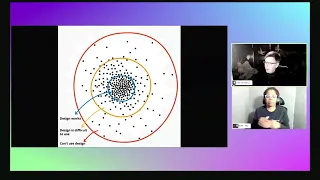
the information so that or interact with the information so that they can they can actually use it and be successful as well so a little bit of a diagram here where I'm looking at so what we're seeing on the screen basically is like a bar chart for different bars the first one on the left corner is not that high just the lowest of the four and it sort of represents What K 2 dot X level double light there's another one next to it is a little higher goes a little higher so goes to Triple A
those I like to think would represent the idea of universal design what we're trying to do as much as we can within the boundaries of requirements but the third bar goes higher than the first two that one is safer and since usability testing involving people with disabilities so this idea of just involving them but Still within the parameters of universal design but then pushing that way further by involving all these users specifically to address very particular needs or expectations that that we've identified or others that we let the users identify for us because we can't
claim to know all of these challenges in the first place and that piece is is where I think if we can really talk about inclusive design and I think that's where I like to draw the line to Create a distinction between what is Universal versus what is inclusive design and and when we think about FUS of design basically I like to think about this idea of designing for the extremes which is not a new concept either but when we are designing for those extreme cases say people that have disabilities people that have severe anxiety for
instance we will be designing our interfaces the interactions very differently we will Take advantage or we will you pay attention rather to to those needs first knowing that people that are in the middle of that bell curve the average user is people that are using mobile devices people that are getting older they will just naturally benefit from from from these considerations just because by designing for those extreme cases we are also accounting for the needs of those who actually don't struggle with the challenges we're Trying to address so that's kind of my high-level take on
it and very quickly to wrap this up no just you the little an analogy with with keyboard actually Auto key cards so which is something that I use in training as well so you have the first key card so if you're not familiar with key cards you use those to open your door to your room so very first one very typical one is a card that has a little arrow pointing forward so that's so you know how to actually Insert it in this slide and then there's a magnetic strip on the other side a card
like this works okay if you know how to use it if you can see that little arrow there's nothing that stands out so if you're blind you can't really know which side you need to use it and unless you try a bunch of different ways so to need that but but this really is still a card that complies with industry standards that card is still okay it works it's universally accessible in That sense but you can go a little further you could use the same kind of card with again with a magnetic strip and the
little arrow pointing in the direction but you had a corner that's that so if you know you can place your finger and know that the bottom left corner is gonna be the one that's cut therefore that's how you insert it and someone who's blind could theoretically have a better chance of using this plan and both the me are universal design They're both conforming the standards are working forming 30 requirements but they're still going to have issue this is going to create issues for you as opposed to this one here which basically nothing on it because
it doesn't really matter we don't really care which way you insert it is the idea that you're going to take that card and tap it next to your next to your door and the door will open for you regardless of the size or the orientation that you use and that To me is again where I draw the line between Universal Design and an inclusive design so with that said I've spoken already quite a bit so I'm gonna stop there and stop sharing my screen great thanks Danny okay so now we're gonna move down the line
and apart I just want to see and hear from you to see what you have to add on to what Jenny was saying um in terms of your own definition yes thank you so much before I thought apologies if I'm sounding Usual I've just keep you to returned from us I'm still jet-lagged and so apologize if I'm sounding low or you know not so motivated so you know I really agree with what Danny just liked about one size fits all or average user visible and accepting or understanding that is the first step towards a better
world right so for me accessibility is never a project it is a process that goes on because you cannot say that I've started The accessibility project many times I get this question from the clients you know that yeah we have started this accessibility project so will he be done in six weeks are we done in six months that is never the case because yes post development we do reassessment we give you the issues but that is not going to resolve the problem of being accessible right so when you plan or when you design your next
project you will still end up in That same bucket because you are not thinking about accessibility right from the beginning so I always say don't see it as a project but think it as a process and you don't you know discontinue doing it you you embraced accessibility like a lifelong process and where we were at the momentum last week one of our GQ events and a very good friend of mine is you know where they were saying that it is you will be done with digital Only when you're done creating or changing the digital content
which really means that creating or changing or updating digital content and accessibility goes hand-in-hand right so with this thought um I believe accessibility can be a new form of design itself because when I think about Universal Design it was basically designed for the physical world those seven principles that Universal Design really talks about is about the physical World or the infrastructural kind of thing but we have you know a customized it we have modified it to suit our needs for the digital world does that mean that because Universal printing design really plays about one design
fits all but we just heard anything about it that it might not be the case correct so we need to accept that that is not the case and then from that point if we see inclusive design for me inclusive design is performing an action in different Ways right for example if we take a submit button a user can click using the mouse move focus using the keyboard can touch or you know using the mouse stick be able to activate it or even with the eye tracker eye gazing the system can be able to take the
input or with a speech input software I should be able to submit it so these are all the different ways of interacting with that particular element and if we don't keep these different ways of interaction Then we are missing out on those extreme cases we are not considering all the users that might be interacting with with our systems so really for me inclusive design is which is a design which includes people in the design process where they are the center and an action or a verb can be taught in different multiple ways of addressing it
and even with that I feel there might be some caps right we may not completely inclusive so accessible Design can be a totally new form that might have all the good things and much more in it and given that complete user experience to uh you know any person is should be the utmost importance so um you know it it ideally in the ideal world equality of use should be the principle or focus of the principles but unfortunately WCAG looks at the minimal compliance right if I'm saying I'm WCAG compliant it doesn't mean that I am
giving a great user experience to my Users but I'm you are able to interact with my product but as a designers or product owners or developers what we really need to aim is to get that hundred percent satisfaction from the users because if that is achieved then I believe they will be our lifelong customers right they they would want the first thing if they think about a product it should be us so that kind of user experience can come when we think about all the extreme cases not leaving Even 1% of the person behind so
in these you know equal use or equality of use brings in be example of date picker because that is something that I really see a lot of company minimal compliance can be a text field where you can enter so I'm not violating the be CAG and still meeting it but am I giving the equal experience to all users because I can visually see I can relate the gates a month I can see lot of other things but as a sighted or non sighted user I May not be able to see that as a keyboard only
operable user I may not be able to interact with it right so it is giving me more information and I'm not giving that information to all users that is definitely not being inclusive the another recent example that I really went through was the kiosk the immigration chaos when I was you know waiting in queue for immigration in the US I saw there's automation machines doing all the manual work for us but When I really saw people they were using wheelchairs and someone else had to come and assist them because their passport wasn't being scanned the
height wasn't being adjusted only when the picture of the person was to be taken the height of the trio's was being adjusted right and if I'm a non sighted user I do not have access to any of those announcements so I basically need to let go of my privacy and ask someone to help me out to give through My documents to them and help me out through this immigration process happy being inclusive here not really so when we think about all these use cases all these uses I believe we will be in a better world
because I'm not saying usability and accessibility go hand-in-hand but they together can make this world a really better place that I rest my case and I really believe in a better digital with or not those were some really Really well defined definitions that I think builds on a lot of what Denis was talking about which is really really great and I and I liked your different examples I kind of want to turn it over to Glenda because I feel I feel like she's itching I can see her sitting there just waiting to dive in so
god I'm gonna turn it over to you I am we've already heard great things from comes in and Aparna and I want to make time for when you Matt so I'm gonna Try to keep this brief so for me accessibility isn't accessibility without the result and I go back to the definition that I learned from my accessibility mom Sharon rush when all people regardless of disabilities can use the same information and functionality that's what accessibility is whether it's digital or whether it's physical when it comes to inclusive design in contrast inclusive design is a verb
it's a process and inclusive design Does not just relate to accessibility within our field digital accessibility inclusive design would mean designing with people with disabilities not just for them and when we say designing with people with disabilities I'm not just talking about calling them in and asking their opinion or running a usability test or having them be tests at the end I'm actually talking about getting involved in the definition of what needs to be done and The research and the prototyping and the testing so one of my great examples of inclusive design in the field
of accessibility is actually happening at the w3c with the accessibility guidelines people with disabilities are actually involved in the creation of those guidelines and thinking about inclusive design outside the digital space there's a known problem when we look in the field of medicine where much of the research that's been done it's Been done by men and so there is actually a gender bias in our medical research in the world and so the principles of inclusive design apply way beyond the digital or the accessibility field and for universal design I understand where that term came from
it really is an older term it came from the built environment the physical environment things I can knock on and it's designing a product a product that can be used by all people to the Greatest extent possible without the need for adaptation or specialized design for me and you guys correct me if you think I'm wrong but Universal Design is applied to the web is such a narrow concept because we can have adaptation and the chaining of digital much easier than we can a physical object taking this to a universal design perspective just an example
on the web I recently saw a great article about the lift color system so I don't know Whether you're an uber person or you're a lyft person but look up the lift a yft color system and what you're gonna see is this organization has chosen to meet the w3c requirements for color contrast so they did something to make it usable by people with low vision or color blindness in addition from the universal design perspective that helps every single one of us trying to read that lift system outside on our mobile phones and bright sunlight so
one thing that Helps multiple people so those are my points that I wanted to add Laura back to you so now we're going to transition a bit to Wendy and I think Wendy has some great examples that kind of go beyond wet the web and beyond compliance and I and I think that it's a great great venue and a great direction to go in so I'm gonna pass it to und thank you yes I'm gonna vehemently defend universal design no no I'm not basically I agree with what they're Saying and I think if you look
at the context that we were in when we wrote the book and Matt can talk more about this it was a very different world it was a very different time and we were building on the progress that the built environment made in making sure that things were more accessible the ad a universal design laid the groundwork literally for us to build on in the digital world at the time I mean we were fighting against text only sites and we Were trying to help people expand what they could do you with a website and we were
reaching out to our allies in internationalization and mobile because some of the first websites that appeared on phones that were working well were also accessible so at that time it helped us reach a broader audience and that's really what was so important ten years ago it's been ten years so now here we are and I think what's most exciting About inclusive design is that it isn't just about accessibility it isn't just about disability and matter of fact to Glenda's point this is the first time where we really start to see nothing about us without us
because the most important piece of this is not just building for but building with and by and that's really where we get exciting things happening like seeing AI right that's an application that was created by an engineer who was blind and from That many other beautiful things have happened so I'm spending a lot of my time right now in AI and unfortunately seeing the same patterns over and over again I've been doing this for 25 years when we first looked at Java it didn't have accessibility built in it took six months from the introduction of
the alt attribute or the image at your element to have the alt attribute and now here we are again in AI and you're seeing that same kind of bias and this lack of Access because people aren't being included from the very beginning the ideas aren't always being inclusive and so this is where inclusive design if it can apply to AI when it applies to AI I think we have an amazing opportunity to get this next wave of technology accessible earlier but it's a much more difficult problem for us in getting that data right it's all
based on data it's much easier to take a picture of a plant or an animal than a person we have Privacy issues we have security issues so getting the data that we need to build inclusive AI is kind of the problem that we're tackling right now and the best way to do that is to hire engineers with a variety of characteristics and that's what's so exciting about inclusive design is because you're looking at the intersectionality of humans we all have so many different characteristics from gender background culture ethnicity Language skin color everything and so we
need all those aspects in our systems and so this is why I think inclusive is design is exciting for the future and why Universal Design was so important for our past done mic drop all right last but not least I really want to turn it over to you Matt I want to see maybe we could talk about the kind of history and evolution of the terms of Rafael because I know you and Wendy wrote that book Together so maybe if you could touch on that that would be great yeah and so I actually I'm going
to really genuinely defend universal design as a concept because the the one thing that the that I found is that there's a terminological issue people get locked up on that term Universal and in and they threw out the baby with the bathwater in in that they ignore though the rest of what was being said there so I I took some notes and how some actual definitions of so British standards institute defined inclusive design based on basically the terminology of universal design and there's one part of this that everybody needs to take to know which is
the the definition is the design of mainstream products and/or services that are accessible to and usable by as many people as reasonably possible without the need for special adaptation or specialized design right that's valuable information that that even Ron mace you Know that the creator of the the term Universal Design was talking about trying to take things that will work for the greatest number of people and build it into concrete like the the idea of like the difference between design and implementation is important the idea of expressing these these ideas before we start actually shoveling
we start building these structures matters because those structures are what hold when even if we think about a website as Kind of building a house as an example or an app the the construction of that means that you are fixed in a certain place and accessibility to me historically has been basically sort of eliding skipping over the entire design process and only focusing on when you're pouring the concrete and so what ends up happening is because it hasn't been thought of up until that point we don't ever actually make meaningful progress toward toward that one
goal and I think One of the biggest cases of this being like being a problem here and now is design systems right the idea with Universal Design is that what he was talking about what Ron mace was talking about advocates of that you're not in in that era is now just called building card right that's that what the height of of a fixture on the on the wall of a switch a door the width of a door how much space to get around that's what he was advocating for you know for Wheelchair users like himself
to get in and navigate within a space that's what a design system is like we are saying this is the way these are the things that we build into all of the components from which we build the rest of the application and this is where inclusive design comes in because now we think about this from the beginning and you know to connect with I think I think everyone kind of reached this at a certain point that the designer this Idea of like design thinking is to say Cynthia Bennett wrote this article I wrote this a
academic paper about this it's that where she says that to talk about design thinking or is to say that basically I the designer and you are the and you are the user and that basically just locks in the idea that disabled people can't be the designer so that equity in the system is something that needs to be addressed so inclusive design doesn't Exist unless you're actively engaging and valuing and giving equity to the people that you're designing for right that so you know and at foreign with you know people can design for themselves but everybody
has the opportunity to be a designer to be to be listened to and in that and that kind of brings us into the definition of the inclusive design Research Center which is the one that we use at Adobe which is design that considers the full range of human Diversity with respect to ability language culture gender age and other forms of human difference so we're not just talking about disability because disability doesn't exist in a vacuum if we start talking about things like age then obviously disability comes into the picture later in life and so we
have to think about not just people as this monoliths of like you have this property and this property and this property therefore we will design for those three Things your your life changes over over years over days over moments the the idea of approaching this from an inclusive lens is to be aware that there is no average user there is no normal user there was just the people that we've already designed for I think the next step is just to sort of break people out of that mindset into you know into realizing that things need
to be adaptable over all of those spheres awesome thanks Matt really great points I saw a lot of head nodding I saw I mean I had to snap at one point just because some good good moving things that you said there which I appreciate so thank you for that now we've talked about our definitions but I really want our audience to kind of you know they have these definitions they know where to go I think we're all kind of on the same page here but I really want to touch on what this actually means in
you know people's Day-to-day just what does it mean as a community as we're moving forward so at this point I'm kind of let I'm gonna let it be a free-for-all panelists if anyone has any anything they want to chime in on either those two questions and go for it so go over the questions again not sure that I got well one is where are we going as a community and two what does it mean in in you know people's everyday jobs in applications like why are these terms so important and why is it Important to
have these solid definitions as people are designing I can I can try to get it started so I think from a community perspective what like words matter like words are important we have to agree on definitions otherwise we're just not getting anywhere so so I think and and I don't I don't know just as successful we are going to be with this one webinar here but trying to define more clearly what each term means and we basically Had very similar but yet quite different definitions of this it's an interesting starting point to try and define
that but as a community I think that we need to become more mindful of what those things mean what would the approach like what is the implicit approach that comes with either one of those those terms so that we are we are basically speaking the same language ultimately and I think that is like one of the things that I like from what Wendy said was this idea That and maybe that's not maybe that's not the one definition we agree on eventually but this idea that Universal Design is looking at things from the perspective of the
past versus the future I kind of like that but at the same time what I was bringing with with compliance first is going beyond compliance in the content of the wind itself like voluntarily keeping it to the digital space works too but what I would I wish that comes Out of this basically and I'm gonna leave it at that is that as we start as we keep writing articles as we keep talking about these things as we keep producing content to trying in advance that that cause the word defending that we're being clear on the
terms that we use whether it's universal design or units of design or whether it's anything else that we talked about in this space that we come to an agreement on the term so that we are reducing the confusion That comes with trying to understand what it is that we're talking about in the world oh yeah I think the more allies that we're pulling together the more powerful we're gonna be in changing the world I mean like I said in AI we don't have compliance right now know what K right there's some really great principles out
there that people are talking about there's no agreement on it yet and to me if inclusive design as a process is what people are using then The outcomes should be more accessible equitable all these things that we're talking about so I think it's absolutely paramount that these principles this process are taught and everybody gets some otherwise we're gonna end up you know six ten years from now and we're gonna be in the same place we were with what Keg way back when you know and it's gonna take us another decade to catch up I don't
want to do that again you know so that's why I think it's critical and I agree if we have that same language that helps us I'll rally around a single point and call us our allies from this intersectionality that's so important right now I would say that the like one reason for us to focus on terminology especially around inclusive design is that there are so many different people that are that are using that term that you need to have some kind of agreement as to what that means because it just doesn't seem it seems Superfluous
like it seems like a good idea but with no practical aspects to it and we're actually working on training materials that have practical exercises our round that specific around how do we do this in the design space we don't like my training for for our designers does not talk about the laws it doesn't talk about what CAG it it talks about the needs of users and how to ask good questions and how to integrate that Feedback into what how we build our products there's been tons of effort on the engineering side to do that so
what egg has the code level examples for for that but designers don't think that way and that's that's where most of our problems have have come so when when so we have a head of inclusive design so meet on the design side and we have Andrew Kirkpatrick who's the head of accessibility and I like to think that basically we're sort of harbormaster's On two sides of the sea right I am pointing people you know I'm pointing people in the right direction that they will end up in the accessible his job is to sort of bring
them into into that space but I think there is a continuum across that process where inclusion has to be outlined all the way through I believe it is important to identify that when we talk about inclusive design yes an agreement on a unique definition and not just focusing on people persons with Disabilities about users right it's about any user because when whenever it thought designers all I hear is color contrasts that's one thing it will with us and nothing more than that right there is no other user for them it's only if I choose the
proper colors and accessible but when we're talking about inclusivity that is not what the first thing that should come people with disabilities are not the only group of users they are one of the many so having That mindset will also help us move in the right direction so once there's one data point on on that google assistant was found to have to be 70 percent more likely for a man's voice than a woman's voice to be understood so when so that's not just gender that's also likely that's also dialect so we have a you know
geographic or you know national component to it it also affects people like or nonverbal People who might have the tick or or a stutter so all of those things are parts of the problem if we just say it's about disability then we make a text interface then music and we're done there's a much bigger problem set to that can I can go back to one thing you said Matt and I think you did that on purpose so you were talking about designing for the needs of users while talking about making things more inclusive did you
on purpose not safety users with Disabilities because I think that would be the point is get get to a stage so to speak where it's no longer about designing for people with disabilities versus designing for other people is just for designing for people yes accounting for all the different needs that they may have and that includes people with disabilities and key Clues people like me or Aparna who have English as a Second Language it includes anyone who just doesn't fit The mold of that average user sure and I think like that right now it's what
we're doing is more of an intervention because disabled users have not been adequately represented in the research that's gone into it so we're working with our design research organization on affirmative ly bringing people in who had been marginalized and everything from the recruitment to the day of event work that needs to happen to integrating that feedback but in that the the the Issue that that we we really have to deal with is to get to the point that everybody is actually listen to and overtime that's I mean we we know a lot about accessibility because
we researched a lot about that we don't know a lot about a whole bunch of other things that other ways in which people are excluded so we can't just stop by saying oh we all pass what keg every time we do it so good job I guess we're done there's so much more that we Can be doing on this panel company of us a business field for more than 15 years or 20 years okay and so it's easy for us to say a sentence like designing for all users and we have that broad variety of
users in mind and we think about the extremes and we know how designing for average is actually a failure point cat homes is the favorite example of the the fighter jet that was literally causing accidents because it was designed for the average jet fighter pilot and worked Not well for a single one that they measured for real and so I think there's a danger in not including the different categories of disabilities and the spectrums and the temporary disabilities because yes we think of it but there are people that aren't regularly exposed to it great so
we have eight minutes left so I really want to make sure that we get a couple of attendee questions in before We wrap things up so thank you everybody for everything so far I wrote down one question which came in that I thought was quite good which is where does and I think we've touched on it but just to kind of hone back in but where does user Center design fit into this take that I mean I think the there's there's a component of that term that I that rubbed me the wrong way because the
the the it does reinforce that like I'm the designer and you're the person and Never the twain shall meet we have that yeah it it's it's a good it's a good idea like sort of at the atomic level to seek that feedback and I think that's kind of the default I think everybody should you should understand that as the as the norm for for design but I think also it it kind of has a terminological issue because it just means I focus on the people that I'm already focused on so we can already start to
see the you know the boundaries Being drawn based on your own kinds of biases about who it is that you're supposed to be designing for right I think it's a really good point defining the user in your mindset awesome so another quick question here is we've the w3c and has produced with egg as an attempt to kind of cover universal design but is there somewhere that people can term for more of a framework around inclusive design any any you know key pieces of resources that you think You should point people to that you've enjoyed I
mean there's the Microsoft inclusive design toolkit which has some interesting exercises and stuff in it that the the Microsoft design team created and then I think everyone's waiting for the the training and the deliverables that Matt's creating to be made like yeah I'll working on it we've done than seven of them internally so everybody an Adobe design is getting this full day inclusive design training Including kind of practical aspects of including things like labels reading order tab order regions alt text into the like into design deliverables so that's a project that we're working on with
Adobe XD called blue line I'm going to be finished doing this worldwide tour I just got back on Saturday from India about hope we did New York Homburg Bucharest Bangalore and and Delhi in one trip so when I'm done in January we're going to wrap that up put a little bow On it and make that publicly available so early next year you you'll be able to see the the materials of that workshop and then we're just moving on to the next the next idea is like the design research stuff same thing we're going to be
open transparent about the about that and content strategy there's another thing that we that we need to be thinking about great thanks another question here Wendy you mentioned science and AI and You've talked about how that relates to inclusive design do you have any other examples or maybe techniques that you could touch on as it relates to AI or even AR and VR anything that's you know a mixed medium yeah yeah as I said I think that we're still trying to figure it out I don't this is not a problem that we've solved I know
one thing that we're doing is we're giving grants just to help get more people working on this and specifically Looking to and entrepreneurs with disabilities because we really want to literally put our money where our mouth is in terms of making sure that these new innovations are designed with or by people with disabilities but I think one of the interesting examples is speech recognition which came up and you know there are many ways that right now speech recognition is showing its bias as as Denny alluded to in terms of Accents we're spending a lot of
time right now looking at in terms of people with non typical speech whether you have ALS or cerebral palsy or you know other ways that your mouth main form words differently and so collecting that data it's an intensive process but how can we crowdsource more of that data there are some really exciting projects like from Mozilla who is collecting a large open data set and so we're really looking to do more of that I think you've seen that With image recognition Jeff Bigham and so the folks at University of Texas have done some good image
challenges to get images of like photos that were taken by people who are blind so that we can help people give more feedback in terms of if you're out there using your app to read a street sign well we need more images of street signs that are taken by people who are blind because it's going to be off-center and blurry and you know a lot of the data right now is not realistic And it and so I think that's a big challenge we have is how do we get that data that is literally from more
perspectives so that we're training the systems to not continue the bias that's right there right now and so I don't think we've solved it I think we know where we want to invest and we know what needs to be done but it's not a way it's not super obvious right now how to do that if I can add to that real quick historically we talked about how visual Impairments mobility impairments hearing impairments at cognitive impairments were the four main categories that we were thinking about for accessibility voice you eyes being the next big thing we
never talked about speech impairments before but it most likely will become the biggest challenge that will face in these next coming years because there's nothing planned so far to help for that except some kind of a file back to a form instead of Actually voicing what you're asking for Matt was talking about how like men like men are more likely to be understood by Google assistant for instance as long as you're not french-speaking in the first place because I fight with mine all the time and it takes it took a huge amount of time for
it to train and recognize how I was saying words and and yeah so so so there's definitely a gap there that we we just become starting to to to Wyatt to identify and notice yeah we're Already behind I mean that's like I said I feel like I'm in 1995 again you know so I hate playing catch-up all right so unfortunately we've come to the end of our time that went really fast if we didn't get to your questions I will share those with the panelists and we can figure out a way to kind of distribute
those up and get your questions answered of course this is being recorded we'll send it out to everybody by email if you if you'd like To view that after the fact join y'all bye