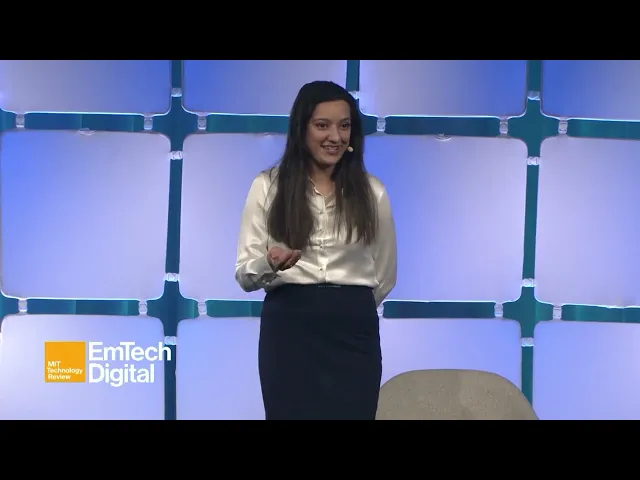
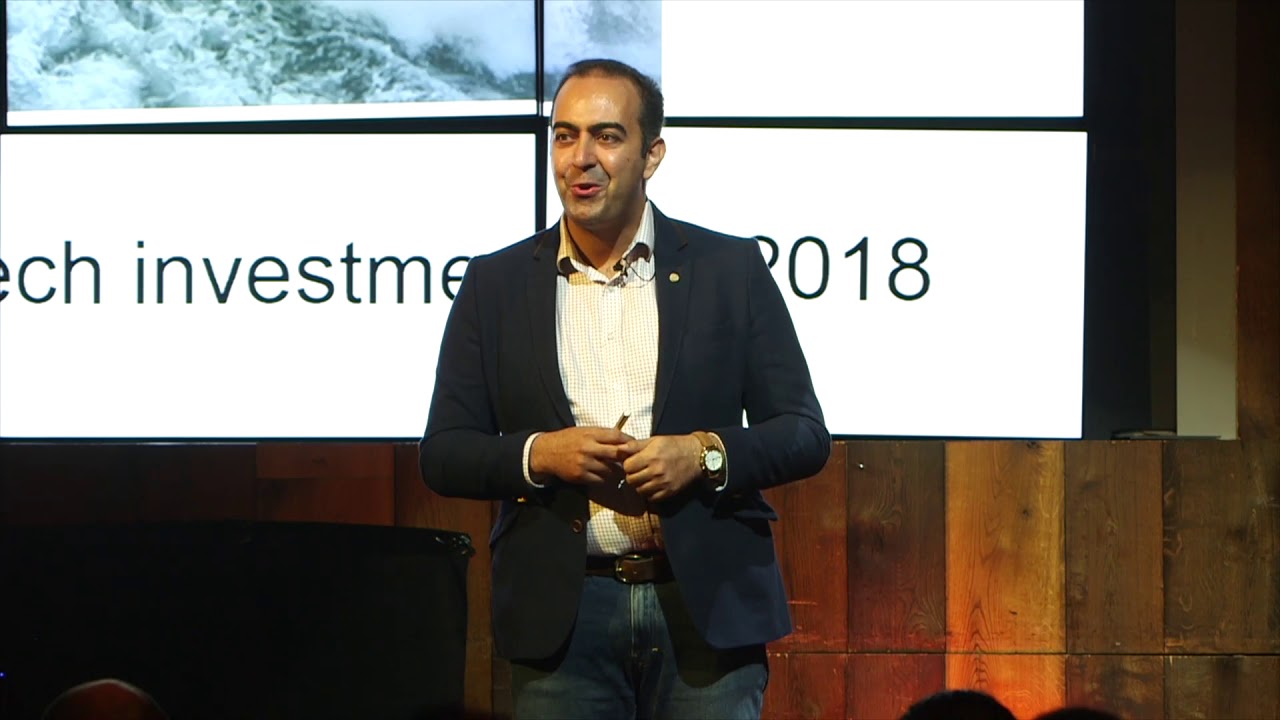
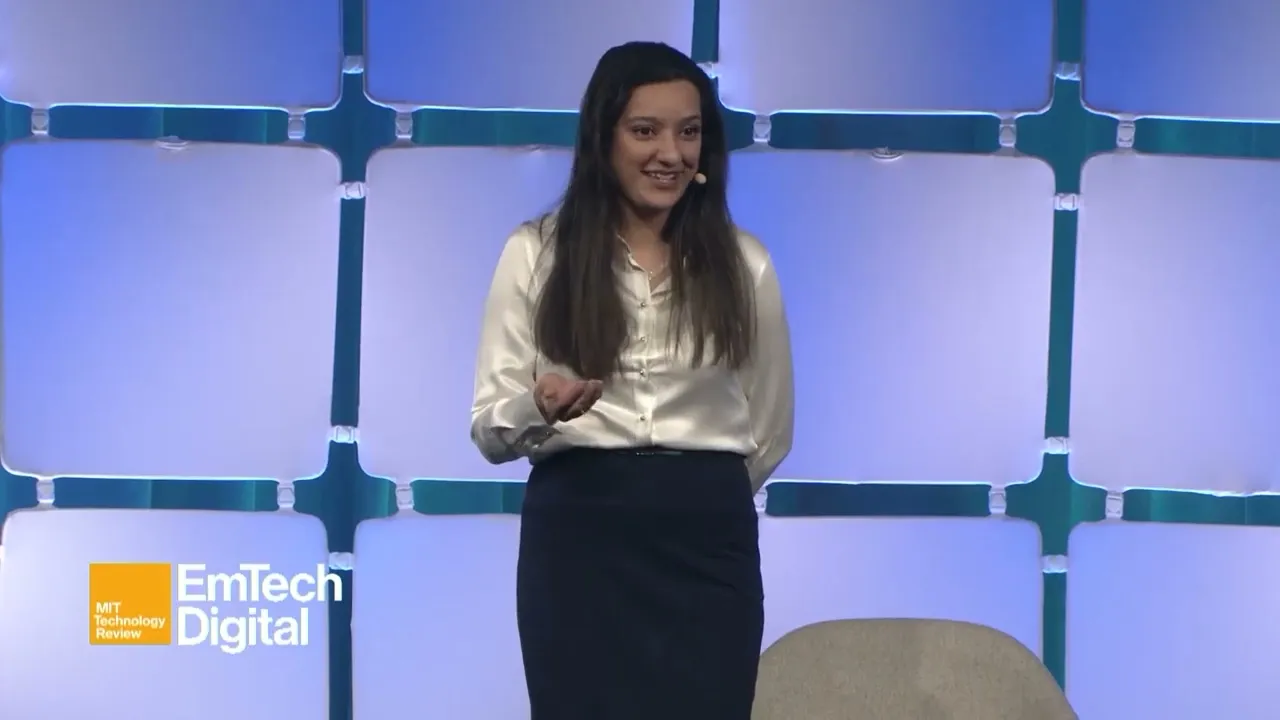
joining us is samina shaw so samina is the managing director of artificial intelligence research in digital and platform services she and her team work across the firm to create ai technologies for business transformation and growth and she is here to talk to us about how ai is powering the future of financial services so it's going to be a rich um she's going to present we're going to have a conversation um anyway it's going to be a rich discussion and i hope you'll all join me in welcoming samina [Music] so this this stage is yours i'll
be back for some questions thank you good afternoon everyone it's pleasure to be here um hasn't this been such a great conference so far i feel i feel so validated because now the focus of ai is shifting from celebrating pure algorithmic success to how it's applied in the industry i feel like my job just got hotter and so that's what i do i create ai research and apply to business transformative settings and then for real business imperatives and constraints so one of the things that you know i always talk about is when you take something
which is a research prototype and you apply it in a business setting if you have developed the algorithm in outside just a pure poc versus you had actually incorporated those constraints right from the beginning you may end up with very different models and often this pure poc would not even make it to an end production system if those business constraints were not incorporated right from the beginning um and one of the other myths that i like to talk about is that sometimes people think that if i incorporate all of these business nuances and constraints from
the beginning i may lose some of these scientific scholarly advancements that may come from pure research advancements but such has not been the case in my in my personal journey and my team's journey the team and i have been building ai research for business settings for more than 15 years and you know we have had several best paper awards several scientific accolades along with transformative test function changes um it's funny um outside i was speaking with somebody and i mentioned you know that i'm as ai scientist and this is what i do and the person
had the best look on their face and they look at me and say but you look so normal i did that as a compliment um so with that um i'll talk a little bit about you know like i joined jb morgan two and a half years back and how the bank has been leveraging ai and how we built a number of different um algorithms that have powered in some of their uh key in business imperative functions so the first one that i want to talk about is uh something some of you may have been very
familiar with uh which was this gamestop and retail focus on certain stocks and meme stocks and all of that that was unraveling in early 2021. so some of our traders had actually noticed that a lot of the retail activity was happening this disproportionate impact on certain stocks for trading and market and they wanted a structured way to be able to monitor those social conversations and for them to be able to predict for example potential short squeeze that you know would be a dangerous position for them to be in and they wanted to mitigate that risk
by proactively putting in some risk mitigation practices before that happened so they came to us and they talked about you know if we could come up with an ai system that would allow them to do that so we thought about it and from a scientific perspective one would think yeah i mean i can create a you know a sentiment algorithm i can read all these reddit forums i can read twitter data i can like figure out what's like positive negative neutral i can compute some scores i can compute some volume around it present that but
then some of the other things that a lot of the speakers have already touched upon is this like gap between industry and scientific innovation and then we you know passed for a second and we thought the finally the business problem the main keyword there is a leading indicator because you could have a 100 accurate algorithm for determining sentiment but if it's in retrospect and it's not leading enough you can't actually put risk mitigation practices in practice and you know the purpose is lost so then we started thinking about the word leading and what would we
need to do to address this leading you know predictor and then the problem morphed so then you think about not all voices are equal then you think about who are the people who have disproportionate virality and who are the people who will then cause those viral movements that could then predict you know short squeeze and like you know all of the other things that could happen um so then the problem changes and then it becomes a problem of finding influencers and then to find influencers your models actually need to change you need a lot more
history you need to understand influence you need to understand how things become viral and the kinds of things you look at into your algorithm are very different so that's what we did and then in the end we could come up with a leading indicator and that helped our traders and figure out like these are the top stocks that could be potential and then they could put risk mitigation methods in practice and then um eventually debbie morgan won a very prestigious risk award because of one of the reasons was this work i'll move on to the
second story which is a story about growth so often people miss about this concept that ai can actually be a big help and a big enabler on in growth for companies so for jp morgan specifically there is this segment that the bankers traditionally didn't cover which was the early stage startups startups that are looking to raise capital but are not yet big enough for uh you know a large m a or you know that type of banking team because it was uh not possible that uh you know given like constraints that one would become providing
coverage and if there was such a solution ai had to be a big part of that solution and the solution had to be completely digital so this is a capital connect a new digital platform that jp morgan is launching and ai is front and center so i'll talk about three algorithms that we built for capital connect so basically if you think about the task the task is how do you teach a machine to perceive decide and act just like a banker would that the market is segmented now different so what we did was first teach
a machine to find good prospects how do you find good prospects in a domain that is fundamentally very opaque and has a lot of variability so what we did was we created an ai machine to continuously look at um you know internet you know firms websites investor websites all these regulatory documents that firms have to file and third party data and triage all of that information into standardized representations that could represent a startup and an investor once we had that representation that was created uh we were then able to figure out things like eligibility because
not all firms would be considered eligible under different criteria once we figured out edible eligibility which you know you could do using various methods then the next question is okay these firms are eligible but who is likely to invest in them who is the partner specific partner at a specific firm that the machine thinks would be looking to invest in the next few months in such a particular firm so we did all of that and the results turned out to be quite good initially when we started showing the results to bankers they were skeptical which
brings us to the other topic which has been talked about in building trust and explainability and then we ended up building an explainable algorithm that then also showed bankers that the machine is recommending this particular match because of these reasons because this particular partner or this particular firm has invested in such startups before or their competitor has and they may now be looking to have such a firm in their portfolio and when we've started providing such explanations it was very interesting that the lift was very significant and the data points many bankers told us that
they had actually not known about that particular context or that particular data point and that's the power of machines like there's like so many different data points that they can try age all that information they can find and propose that it's not humanly possible many times to have all of that you know very scaled context so this i believe would not have been possible had ai not been able to achieve this success level of success uh so this project is going well um now several firms have been onboarded and different like beta versions and it's
well underway but the key point here is that yes ai can enable growth and you should look at ai for enabling gore for your firms the third use case which i want to talk about and um i'm very happy to talk about this particular one because it breaks a lot of myths uh when we think about financial firms we think uh it's mostly about numeric data but actually from an ai perspective it's mostly about textual data and a lot of data i mean the other thing which i think goes underappreciated is that often it's about
discovery of data for many things there are no clean pipelines that are serving you go forward data that you could just leverage off the shelf so effectively what happens is humans engage in this tedious discovery process of finding different documents for different types of data points that they need to try it to do a task effectively let me give an example for example kyc which is a large function in many financial firms now to perform kyc one needs to look at you know sec filings uh articles of incorporation tens of different types of documents so
what humans do is they go to different regulatory bodies they you know basically leverage the best possible tool for this which is google search that's the best possible tool that exists but google search as we all know is very good but it's not task aware effectively what happens is that there are armies of people who take that search result and transform it to the end question or the eventual task that needs to be solved and in some cases the people are very good at google search and they'll get to the right document or the right
data point in a couple of minutes others not so much it could even take them two days to get to that answer and that such variability is never very good so how could you then create machines to take away that variability make the search process much more task aware and the other macro phenomena that's going on in the world is that we are moving away from these passive search results right we're moving away from passive once uh you know like a person then thinks and goes and does something to versus you know these always-on auto-responsive
proactive models right temperature adjusts automatically things are happening automatically around us so that's what we want for our systems we want our systems to be always on always monitoring and alert us when our attention is needed so this is kind of a representative pipeline that we have built which also like talks about like in practice many things are not one algorithm many things are a pipeline of algorithms and components that need to sit on top of each other and structuring pipelines and components on top of each other will allow us to address far more number
of use cases than otherwise possible with point solutions so for example in this case um even like a in a case in which uh like kyc for example the kind of questions that exist they are very high variability like some questions are factoid questions some questions are boolean some are narrative some require getting snippets across different documents and combining them and having a reasoning layer over them so they could actually have like not just one path that goes from one of these components to the end you could have multiple paths that are on for reaching
one particular use case so the work is not done it's obviously complex it obviously requires new components to be built as we discover new use cases but we have been very successful with public data discovery and with solving many many different use cases because of these existing underlying components and the existing underlying structuring of information and finding insights at different levels that then feed other use cases um so with that um i want to just uh conclude with one thought i think for industry what i've always found useful is that we don't fall in love
with specific solutions that we fall in love with problems and with that uh thank you and i'll take you any questions there maybe okay so let's dig in a little bit on this i have um i have many thoughts uh you had you shared some really wonderful use cases in your presentation talk to us about some of the other areas that ai is being applied in financial services industry so that's a great question um i'm glad you asked me because the kinds of use cases are so varied so from ai research perspective we at some
point uh laid down a framework of the kinds of problems that we are seeing in the bank at least and we saw that there are kind of directionally seven different themes that exist so one could look at you know things like um creating safe networks so these could include problems that arise in the space of fraud things that arise in the you know sanctions anti-money laundering these are really like rich deep problems but those require like you know fighting financial crime and things of that nature a second area which we find is this around data
and andrew ling also talked about it that data is a key part of ai uh but data is also a customer of ai so you know like homomorphic encryption uh things around um you know in many use cases actually we don't have data so how do you come up with like proxy data how do you come up with synthetic data how do you you know use data you know you may have data but you may not be allowed to use data for certain specific use cases so all of those problems around data are another like
a key big rich area a third one is the markets area so your trading multi-agent simulations uh things of that nature another fourth area that we believe is around like the client side for example how do you perfect client experience how do you market how do you find clients how do we in find out their intent things of that nature another area which we find is around like empowering employees so all the work around you know augmenting human knowledge workers to be better at their job i mean it's funny like uh people always talk about
like taking away jobs and things like that but some of the work that i did uh you know nobody ever told me like hey don't take away google search from me i'm you know very passionate about it i always want to do it myself so i mean these are like really like tedious things that humans do so empowering them and then um in other areas around like a policy and regulation so a lot of the law is like encoded in language in different you know legalese and how do you you know take that to something
that's executable function that then applies and constantly monitored and applications around that uh and then finally i think it's uh you know underneath all of this ai is of course your you know fairness bias ethics um sustainability and all of those components so i think there's i want to come back to fairness and bias in a minute but first i want to ask you didn't say anything about ai fund management you know i i know that there's not a lot of that going on and there's earlier this month horizon is out of canada i think
yes they announced that they were going to shut down their what they call active ai global equity managed fund because there wasn't enough investor interest i don't know if that's that sounds like a really good thing for the marketing team to say but i wonder if it's also about results um and you know do you think there's a day when one of the things that you'll list to that question that i asked you about what else is ai looking at doing in financial services that you'll also talk about you know an algorithm running mutual funds
it's a great question so uh i think there's like you know the robo advisors are very common and i think that trend is definitely you know on the upside with regards to ai and the especially the actioning part for the active funds right um i think so there could be many reasons why they shut down it could be performance i mean i don't think like they disclosed what the performance was it was mostly like their lack of investor interest right um it could also be like trust it also could be that how much is there
of uplift that ai could give you and also i think people just penalize ai a lot more so unless the uplift is like really substantial people don't uh is it something you're working on uh active fund yeah i personally am not yeah okay you