Hey, Scott is there a way to make a zero-calorie noodle? There is. And today on WTF, we're going to cover konjac gum and how to make these zero-calorie noodles for your dishes.
Hello, and welcome to WTF, where we transform food here in the Modernist Pantry test kitchen. I'm chef Scott Guerin, and I'm Janie Wang, the owner Modernist Pantry. Today, Scott and I are going to be talking about konjac gum.
So it's an ingredient that's fairly popular in Asia and pretty commonplace there, but it's just kind of slowly making its way over here to the states. So we decided we're going to do an entire episode about it, and we're going to have an amazing demo from start to finish on how exactly do you make noodles out of them, and then we're going to plate it and it's going to be delicious. So Scott, let's start with the basics.
What is konjac gum and why do people use it? Konjac gum is basically a gum from the konjac plant. So it's very simple.
It comes right from the plant and it's used as a really powerful thickener, but what a lot of people don't know is that if you add some alkaline to it, it can create a gel. Great. And what exactly do you do with that gel?
What's so special about it? So one of the cool things is that you can make calorie-free noodles out of it. And that's what we did here today.
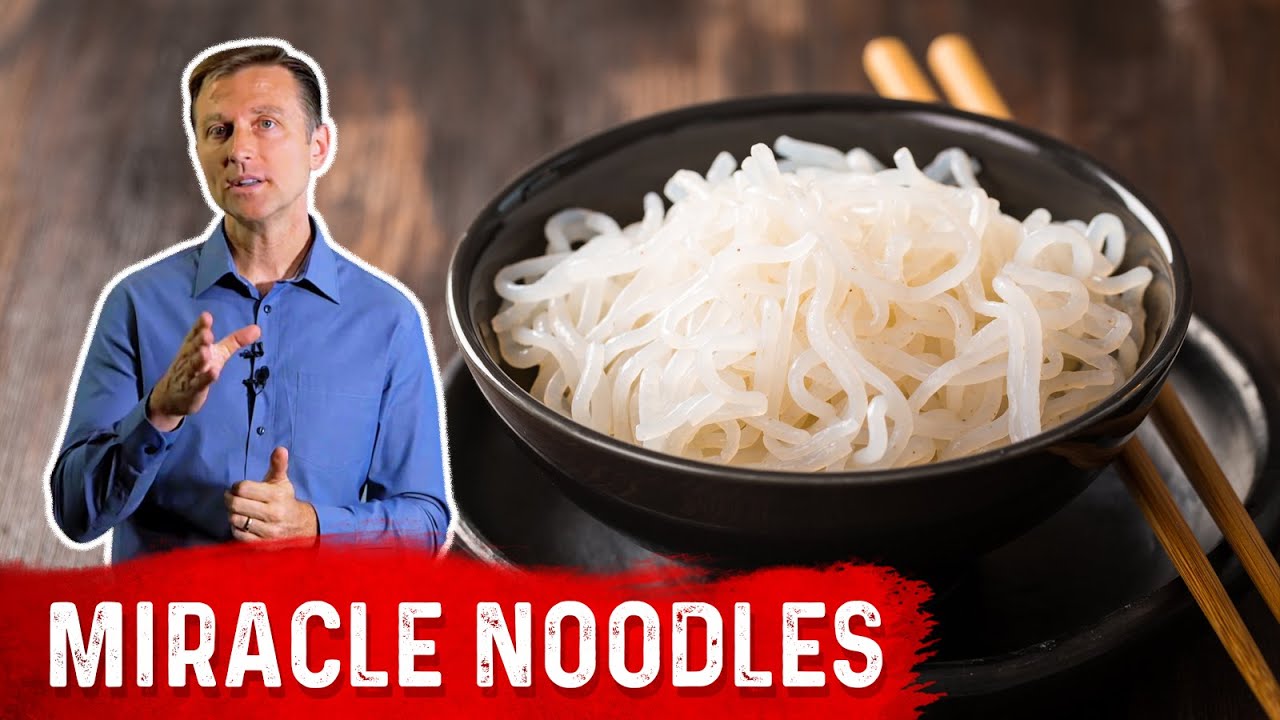
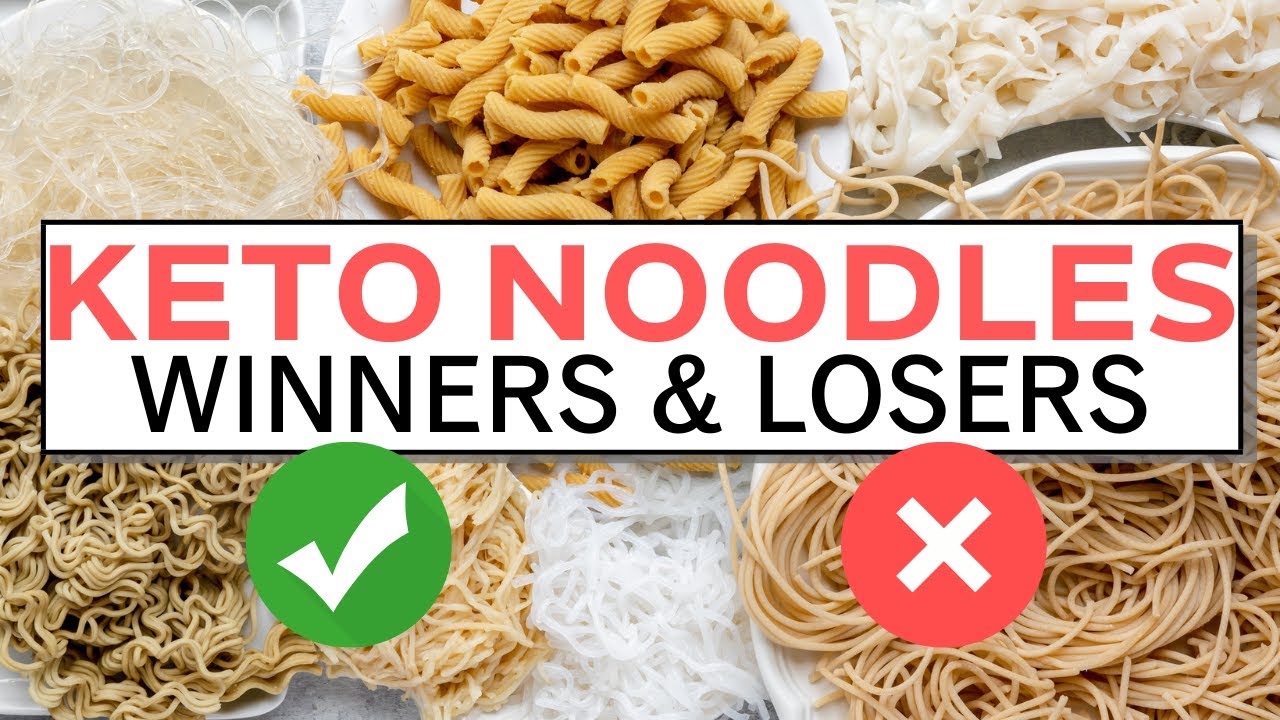
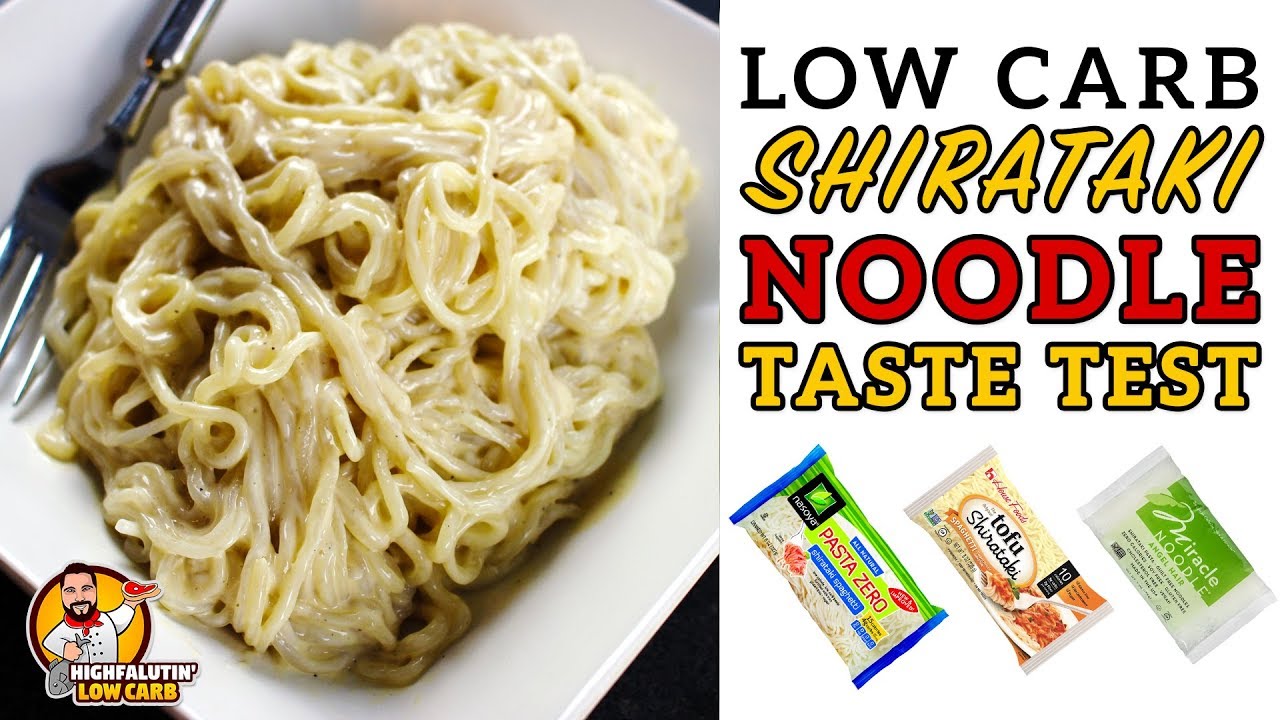
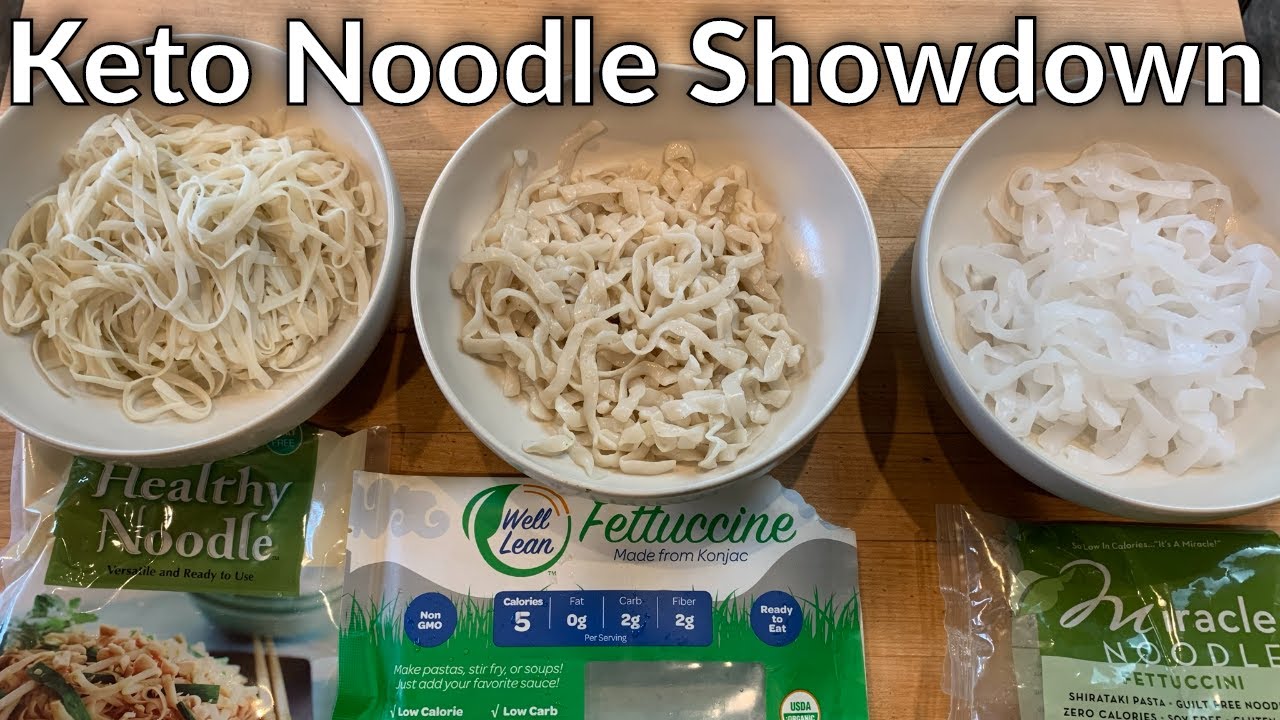
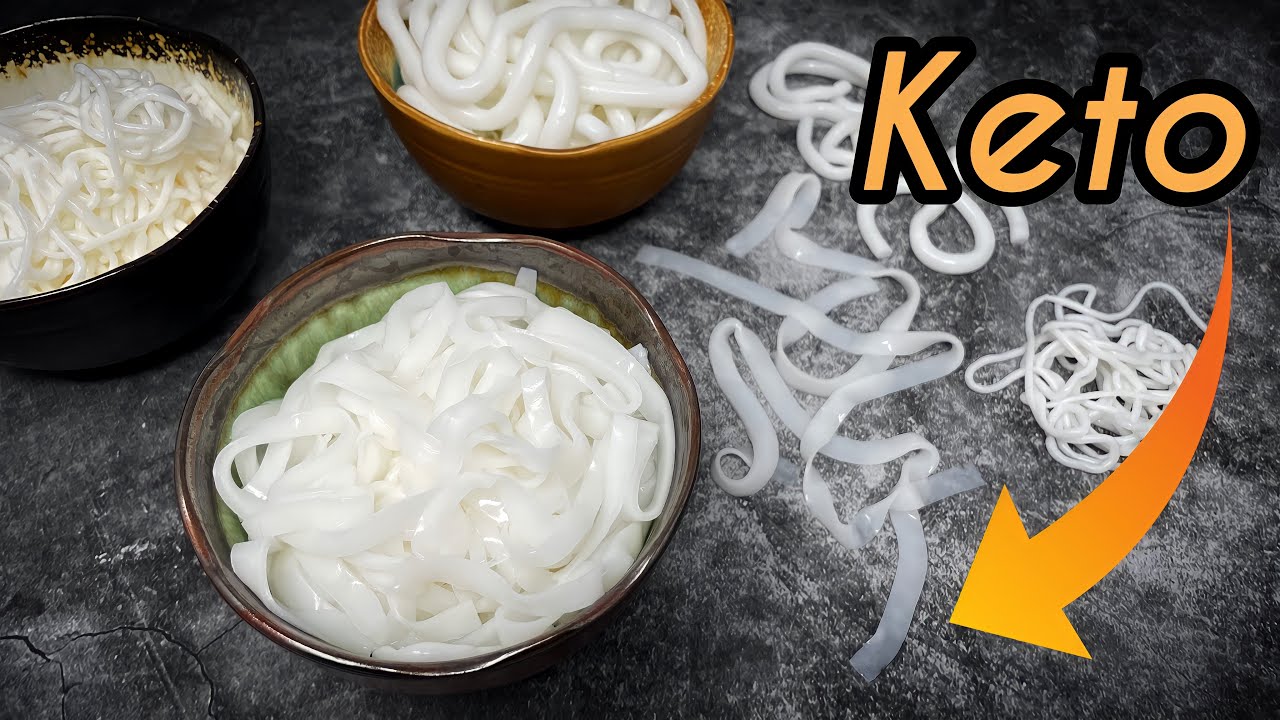
And that those noodles are called shirataki. So you can make a completely zero-calorie noodle and have just konjac, water, and calcium hydroxide. So that's pretty popular with the, with all the keto stuff going on.
Yeah, absolutely. Well, I think it is going to be a pretty demo-heavy episode. So why don't we go into, what are you making here and what's happening?
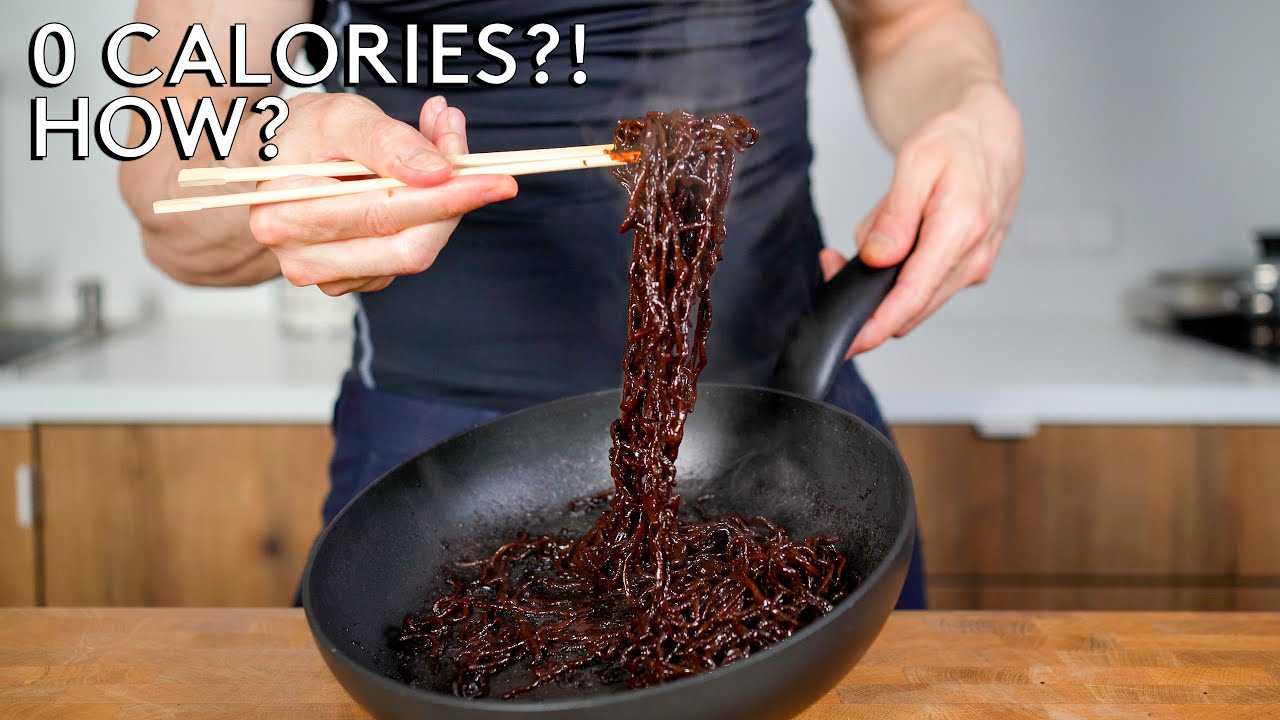
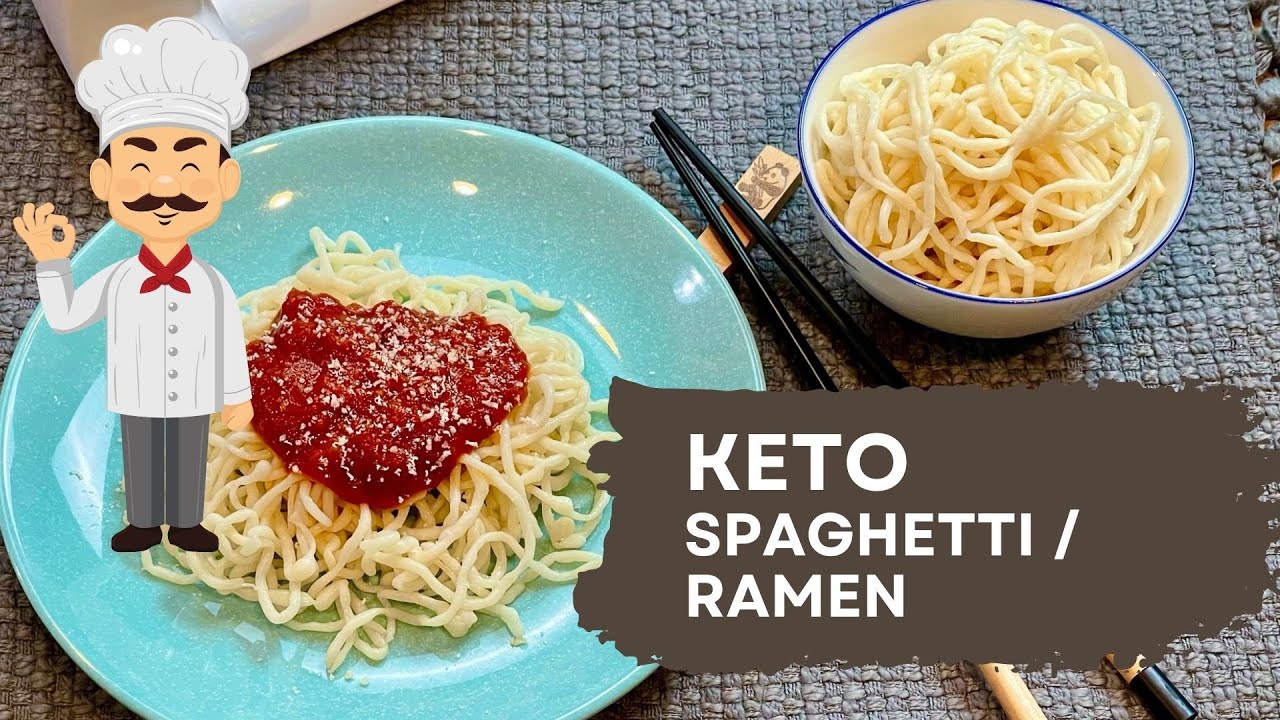
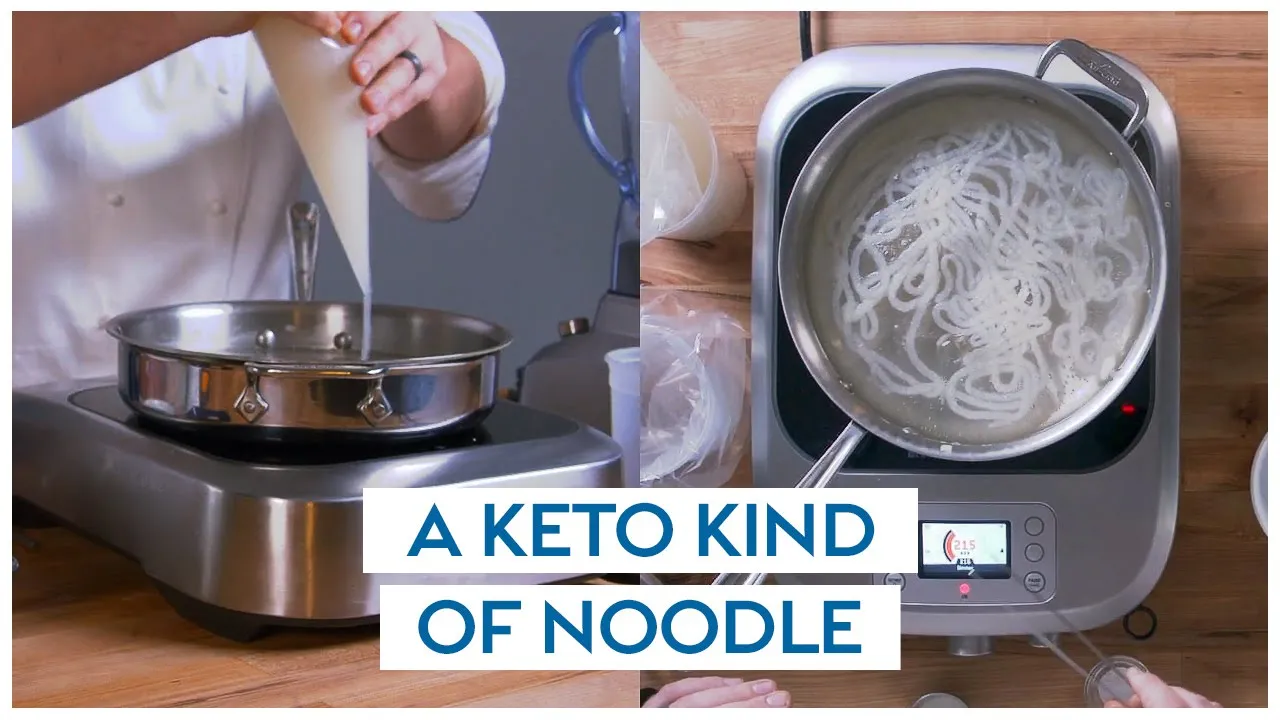
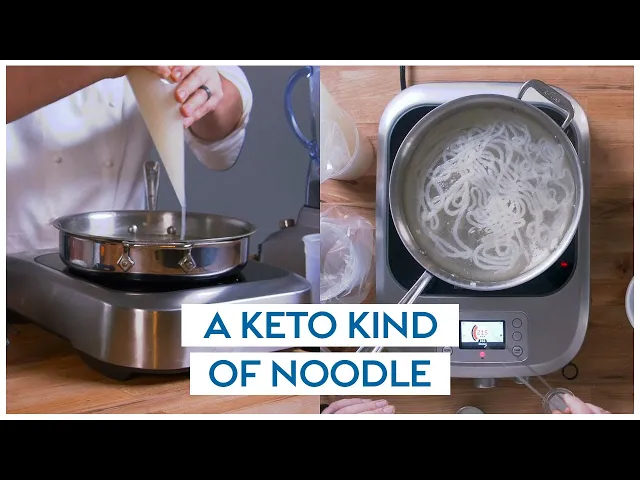
So I have some noodles in here now, and I wanted to get them started beforehand because they generally take about 15 to 20 minutes to be able to, you know, go into the water and then they, they start to firm up. And as you can see, if I start to pull these out, they look like one solid bunch, but as they cool down, they'll soften and then they will separate as well. So I want to get them out of the water because we are going to be making, like a ramen-inspired dish using these shirataki noodles.
And then, as you can see, they all came out perfectly on their first try. So I'm going to let them sit over here and they'll start to separate. But to get to that point, you have to make, what I call batter for it, because I don't think there's really a good term for it, but basically a batter that you're making.
Right. And as I said before, konjac gum is a great thickener. A very small amount can thicken a lot of water.
So we have about 20 grams to one liter of water. It's a few tablespoons to a quart of water if you use the Imperial system. Metric system, whatever it is.
So, so very simply, I'm going to put this right into my water and I'm going to blend it for maybe 30 seconds to a minute and you'll see it immediately thicken up when I get it going. So let me turn on my water. So now that we've thickened our water, what we need to do is we need to add an alkaline solution.
So what that's doing is that's raising the pH of the water to above a 10. And at that point, the konjac gum will react and turn into a gel. Okay.
And it doesn't make the firmest gel until you heat it. And when you heat it, it creates the noodles that we have here. So what I'm going to do is take 200 grams of water, which is about three-fourths of a cup, and then just kind of sprinkle in.
What are we putting in there? Did we say this already? Calcium hydroxide.
Yeah, I did. I did say it a little bit earlier, but yes, calcium hydroxide, which is an alkaline powder that we have. Just gonna mix it up there.
Okay. So without the calcium hydroxide, it will not gel. So you can't just dump it straight into there, correct?
And you definitely want to use calcium hydroxide as opposed to, you know, other alkaline agents. You may be able to get away with using sodium bicarbonate, which is just baking soda, but you have to use a large amount of it. And it's very difficult.
There's a lot of things that go into it. Use calcium hydroxide. It's very simple.
And that's generally what is used when you traditionally make them. So, okay. Let's use this.
Don't use sodium hydroxide. Please just use that for pretzels. Yeah.
So if you're on the website, the calcium hydroxide is in this orange bag and the sodium hydroxide is in a purple bag. So they're not to be confused. Yes.
Not to be confused. Right. So I'm going to turn this back on.
I'm going to put my port hole back on the top. And I started, I'm just going to add this in and let it blend for about another 30 seconds. And then I can pour it and I have to start making noodles within the next few minutes or else it will eventually gel.
And as you can see, the konjac gum is an extreme thickener. So when I pour this out, it will come out as a liquid, but a very thick liquid. It's okay if it's a little goopy like that, that's fine.
It means you're going to make beautiful noodles. And I do have to let this sit for about a minute or so before I start putting it into the water, don't worry about the air bubbles. That's totally fine.
But I do have some that I made just before shooting that we can then put into our water. And like I say, I call this batter, but I don't think that's really the best term. It's just the only one I can think of.
I have some simmering water. It's just plain water and I'm going to just start putting them in. And if you want to, you know, make a certain size noodles, you can stop it.
If you have an extruder and you're apt at using it, you could make elbow macaroni, things like that. All sorts of different shapes. Also, we were able to here in the test kitchen, take it and lay it in between two pieces of parchment paper, flatten it out, and make a sheet.
So you can do almost sheet pastas out of it. I wouldn't suggest raviolis or anything like that, but you can make a pappardelle or fettuccine, whatever you happen to love. Okay.
But once it has formed a gel and it's formed a noodle, it doesn't then kind of retain any of that stickiness? You can't make like a ravioli with it? You can't push it, you know, together and make a tortellini or whatnot.
So yes, it will just be a sheet at that point. I haven't found anything that's going to bind it together, but there may be someone out there who knows. So as we go, all right, so I'm just going to mix up these noodles here.
Just help them separate. These become nice flat noodles, right? So I'm going to push this right over into my bowl.
What's in the bowl? Some of the koji pork belly that you can actually find on our blog. It's referenced in episode 117.
That is the batter bind episode. But it's also used as koji, which we can find in episode 107. It's a really amazing recipe and koji is a really amazing thing.
I could talk all day about it, but this would be a very long episode if we did. So definitely check out those episodes and find out how to make them. Koji pork belly in there.
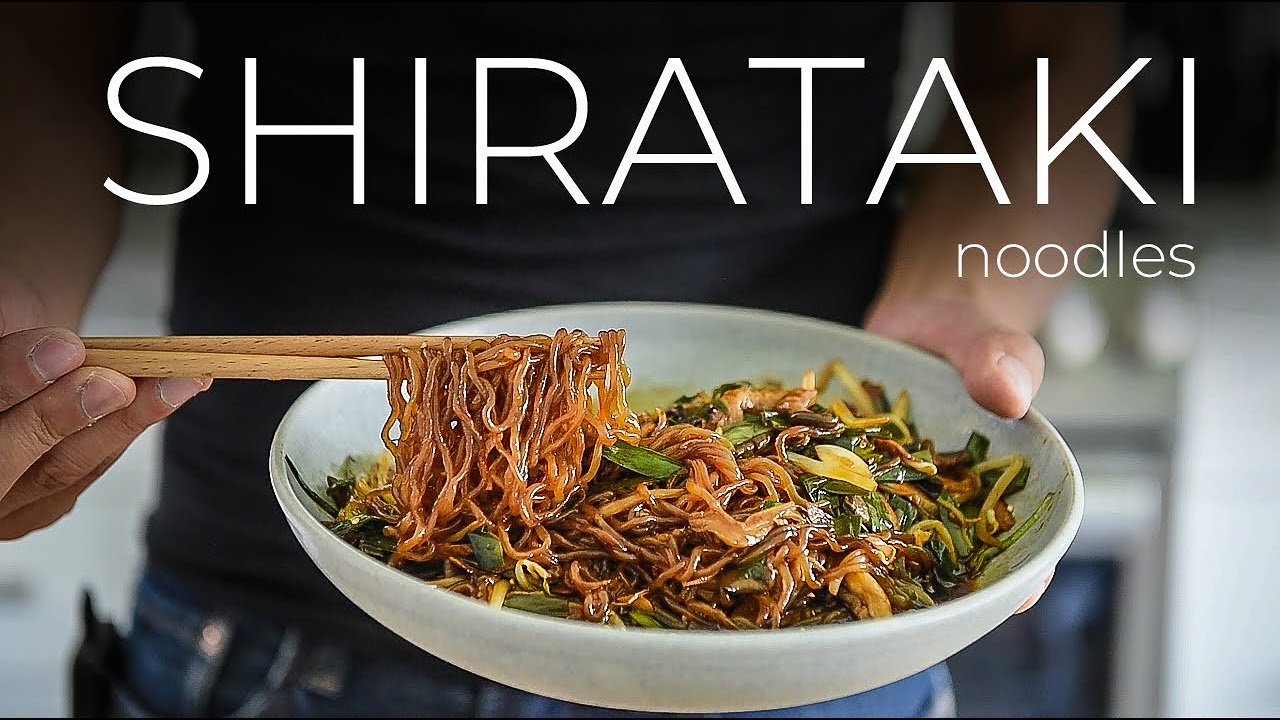
I have our shirataki noodles and then I have our beautiful quick ramen broth that you can pour right over the top. And you need something very strong when you're using these noodles because they're so bland, it's literally water and a thickening agent. Make sure you put it with something powerful so you can get a lot of flavor into the noodle.
Yeah. But like, even though it doesn't have any flavor of its own, the texture and it still has a really light nice texture. So we don't say bland like boring, but I guess bland, like no flavor of its own.
I mean, but pasta is bland anyway, so, so that's totally fine. But yes, it does have a really nice kind of bouncy texture, especially if you're looking for something to replace that gluten or whatever in your, you know, in your noodles, this makes a really great noodle. So one other thing is that some people like to ask, what do we put in this?
Do we put any other liquids or can we flavor it while it's in here? And the answer is yes, but you don't want to put acids. So if you make it too acidic, it's going to neutralize the calcium hydroxide, right.
Which will then make it not gel. And you'll just have noodles that go in here, they break apart and nothing will happen. Okay.
So you definitely want to, if you want to flavor it in there, if you want to add salt, soy sauce, whatever, just make sure it's not acidic. So do you think that potentially we could make like a ramen broth with the konjac and they can ramen noodles out of it. Yeah.
I have to test the acidity of the ramen broth generally. There's, you know, things like ginger and lemongrass, and that could have a bit of acidity in there that would change the final acid of this. But.
Yes, you could potentially do so. Definitely for people to play around. And then you can go beyond what we've made here today and just kind of make it really, make it your own.
Yes. And I would definitely try it out if you have the chance. Try out making that sheet, roll it, fill it, try and do something with it and send us, you know, your pictures on social media.
But one last thing I want to show you is that these ones that I put in there, if we can now see that they're starting to come together. They fall apart a little bit if you pull them out too early, but we do have some nice, beautiful noodles. Okay.
So that's a great tip to know, right? So you don't mess with them. If you're pulling them up and they're still not together, that means they're not ready.
And you can't overcook them to my knowledge, I've left them in there for 20, 25 minutes. They just get really firm like you saw before. At that point, they're completely jelled.
There's no need to boil them any extra, but yeah, if you leave them in the water for too long, it's not the end of the world. Nothing bad is going to happen to them. Actually, the water helps neutralize that alkalinity too.
So you don't have to worry about, you know, the, the caustic warning on the back of the calcium hydroxide. So, yeah, 'cause that's something you and I touched upon and I had asked him, well, why don't you just leave it cold and just make cold noodles? Yeah, yeah, yeah, yeah.
There's I mean, it's calcium hydroxide in there, so yeah. You want to cook it and do something with it too, to firm it up and really make the noodles. The cold aspect of it offers no benefit.
Okay. If you want to make a cold noodle dish at some point, then let it cool. Yes, exactly.
Yeah. So no, this is awesome. Do you, is there anything else we want to leave the folks with?
No, I think just to try out this recipe and definitely try out flavoring it if you want to, but if not, put it with something really flavorful, like our ramen broth and our koji pork belly, and you can have a beautiful dish. Absolutely. So this has been a little primer on konjac gum.
We will look forward to seeing your ideas on how you made them and what you ended up pairing them with. And from here in the Modernist Pantry test kitchen, I'm Janie Wang. And I'm Scott Guerin.
We hope you enjoy today's episode. And if you want these great recipes and these awesome ingredients, first, you're going to have to like, comment, and subscribe. And then you're going to go to blog.
modernistpantry. com, where you can find those awesome recipes, and you can ask a chef. And to get these great ingredients, go to modernistpantry.
com. And until next time, we'll be here in the Modernist Pantry test kitchen, helping you transform food.
![The Best Apple Dessert You’ve Never Had – And It’s Crustless! [WTF Ep 382]](https://img.youtube.com/vi/jAlZR5CbP7g/maxresdefault.jpg)