okay take something you're struggling with anything close your eyes and imagine that it's out in front of you whatever that thing has upet of experiences now imagine that you left your body and you're looking back at yourself sitting there with this thing in front of you which outside of you you can't see and just ask yourself some questions like is this a level person called you that you're looking at is a valid person is a good person and remind yourself as you ask that they have that thing on the on front of them that you
knew and you're inside that body just moments ago and then imagine that you go to the side of the room and look back at yourself so still sitting there and I'm going fast but in slow motion ask yourself the same questions don't try to answer them and figure them out just ask am I a good person am I a lovable person am I valid even with this thing in front of me and then imagine this is a memory and you've evolved in a really wise way and you get a chance to time travel and speak
back to that younger person who was sitting there with something in front of him all those years ago in 2024 and write a note to yourself very short as to how you might want to be with yourself to deal with what's in front of you then come back from the side of the room come back from the future to the present from the side of the room to in front of you spin around go in your body take the thing that's ins out inside that you're struggling with put it in your body and then open
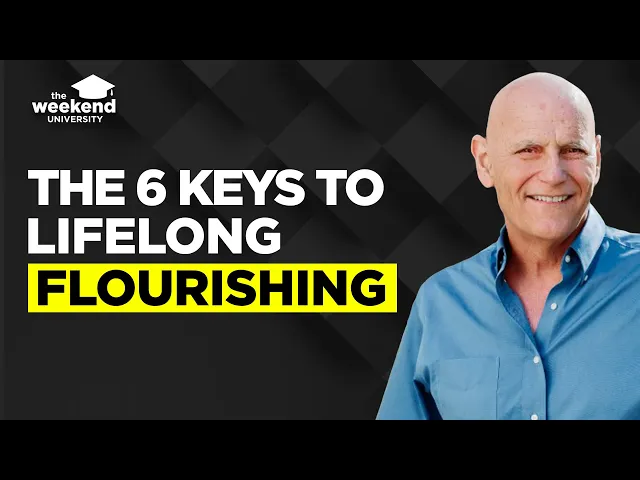
your eyes and read the note [Music] I'm joined here with Professor Steven Hayes um this is our probably our fourth or fifth conversation at this stage Steve is the co-developer of acceptance equipment therapy uh process based therapy relational frame Theory and profess a professor at the University of Nevada as well recently retired so Steve it's great to be speaking with you today and welcome to the show yeah it's good to be here with you again and talking about something pretty interesting for sure for sure so to get started for anybody that hasn't heard of the
term before how would you describe psychological flexibility in in simple language well you could put it into a single sentence it's the set of skills that seem to do the most good in the most areas for the most things just based on a 40-year uh piece of research and summaries where we look at the entire world's literature this short sentence would be learning to be more open to your own experiences more consciously in the present in a way that's flexible fluid and voluntary and able to focus on what brings meaning and purpose into your life
and organizing your behavior around it and then extending that to your relationships and taking care of your body put a period at an end to that and those processes um seem to predict the most positive outcomes in the most areas so if you want to something to look on look at in terms of skills to develop since all of those things are changeable and all of them matter when they are changed and there's a massive amount of data be behind them it's not a bad place to start how many years did you spend developing the
model well we've been at it for 42 years 43 years the first you know protocol and soth in 1981 but you know the model took about 20 years to really fully develop if you look at the very very early one I've been doing this because I'm old enough people want to know about the history and so forth it was there pretty quickly because it was a coming together of things that were sort of in behavioral psychology and sort of in humanist psychology and there frankly in some of the hippie dippy and more deeper clinical traditions
that were there with the the whole mix of Eastern ideas Western ideas and so forth in the uh cultural revolution of the 60s and 70s but stripping out the woo woo and bring it together in a way and then chasing it with careful research that is really uh designed to see is this making a difference and the thing that we brought to the table was different was interested in process but also an interest in outcome when you you targeted it so you get a lot of theories out there that are yada yada yada about process
but then when you're actually going to chase it you know self-esteem is really important okay well how do you get it tell kids they're wonderful no matter what no don't do that you're you're training Psychopaths who are both incompetent and confident that's bad you know that's really bad and by the way violent you know like ah but so you really have to go slow and we did I mean we were almost invisible for 20 years but it took 40 years to develop and you know now it's at the point where it's entering so much into
the mainstream that the World Health Organization or the major science organizations and so forth looking at the now 1100 randomized trials and about five or 6,000 studies say yeah that's pretty good and um so that's kind of fun and different and it means we have to be a little more of a leader than just banging on the door and saying let us in and um that's a a shift for us as a community and um some of the places we're going I like woo that's different and maybe we'll even get in there and some of
the conversations we have because the last three or four years have been a little bit shocking even to me as to what the implications are those years when you were sort of like I suppose as you call it like being in the dark that must have required so much patience just to sort of you know do the work and ensure that it was going to pay off in the long run as opposed to just coming out and Publishing immediately you know so that I really have to command you and that that's a that's a a
serious effort yeah at the time though it was uh nobody was interested but the great thing about the academy and so forth if if you don't care you can just play and you know my chair 10 years in pulled me in and said you're a diletant you'll never amount to anything uh for the in the first 10 years I got a raise I think three three out of the 10 years I just found an evaluation two years before I left with a full professor already in hand but still knew people were making more money than
I was as a full professor and I came to the University of Nevada but I found the evaluation and it's absolutely flat it goes from four that's saying you're horrible four saying you're below average for saying you're average or a little bit above Edge and for saying you're great that was my world is that people looked at me and you know just said what the heck is that and so I basically came in with my motorcycle jacket on and uh riding my my motorcycle and just a wild and crazy guy and learned to not care
well I say learn to not care some of it was just arrogance but um youthful arrogance but it it really helped because it allowed me to with the team I always believe that it's a group that mattered I was a political organizer before I became a psychologist you I was an environmental movement and I had had a really good Mentor from the labor union movement who basically taught me the only thing that matters is groups and so I took care of my babies and we had fun together and you know five became 10 became 20
became 100 and uh you know i' done a rough account I think 100,000 people have been systematically trained in act and there's about 5 to six million copies of act books and print maybe more in about 200 220 original books in different languages so the community takes care of it and that's always been true and it's kind of fun to be at this point where I have very little control over that Community anymore but I can speak with a little bit of uh they give me a little bit of street cred to a pretty large
group and as it was played out it didn't feel like uh oh golly no one's listening to us I felt more like could think no one's looking because I don't know if this is right and they'll it was it was more like that and just just to go back to what you were saying earlier but sort of not that you didn't care but that you were sort of just I think you were very someone that would go with your gut and be willing to take risks and your first paper was on the origins of spirituality
or I don't know that's the exact title but you know that's a that's a risky move in Academia especially back then you know so I wanted to just bring that up but this this conversation Steve it's we're going to be talking about attachment and there was I reread a liberated mind recently there was a sentence in it that jumped out at me because I think it's really relevant to what we're going to be speaking about today particularly with regards to people's sense of internal secure attachment so the sentence is the core hypothesis at the heart
of Act is that changing our relationship to your thoughts and feelings rather than trying to change their content is the key to healing and realizing our true potential so could you maybe expand on the significance of of this hypothesis here yeah we all have p painful parts of our history and some more than others and some unfairly and so you have big differences between uh you know privileged and non-privileged populations or a child who's been neglected or abused and one who isn't and you know and if you just look at it in a normative categorical
way okay you're just tagged with it you have it it's in you it's done you're finished because you're worried you're scanning you're feeling anxious whatever you know and I've told a bit about my own history and I grew up in pretty crazy home with loving parents but who didn't have time for me they were too busy dealing with their own mental uh problems with alcoholism depression OCD Etc and literally I felt as though I may not survive childhood I mean that's not exactly a secure place to be and uh tell the story about the development
of own panic disorder and so forth but you know what life is asking of you regardless of your history is what do you do with that history now and it shows up in the form of what you feel think remember sense it shows up in The Echoes of your past in the present it's occasioned by things that are happening around you that's your source of wisdom because that hard one wisdom from the the years on the planet now shows up in this pre present moment in ways that are really basic to the brain you know
that that's how we survive is to be able to learn from past experience and be able to regulate our environment that's what Consciousness is a big chunk of it human consciousness and other pieces we may get into so our typical thing we do is we look at the things that show up that we don't like and then we want to diminish those and the ones we do like and we want to make more of those which is fine but be careful because you can uh do things where things you need that are painful difficult you
avoid and things that yeah it's great to notice but they dare not be clung to because it's going to uh create additional problems should be allowed to come and go and so you know Joy is not something you get to hang on to because doing that not joyful and conversely if you run from uh difficult and painful thoughts feelings memory as if that's the only way you're ever going to be able to behold and free well you kind of put yourself in a situation where you'll only be hold and free if you can run away
from your own history fast enough good luck with that and what happens is you just get dumb because if you really do a good job of running away from your history you don't know your history well how is that going to help you of course it won't help you because a the wisdom that comes from living comes from your history you didn't leap out of the womb wise you didn't you leapt out innocent and you had some predispositions for social primates and so forth some things that are really are great allies for us basic needs
great allies if you can Channel it right so what that means is your job and it's a lifelong job no matter how long you work on it you have more to do is to learn how to be more full of yourself with your history and be able to direct it voluntarily towards what you're really want to bring in your life in the terms of what your life stands for and be able to extend it to your relationships in your body don't forget that you're not just a psychological being you're a social being and you're a
physical being and if you're not taken care of all three well then you're not taken of any taken care of anyone so yeah that's u a simple statement what you read of or change in direction for most people that actually you know from experiences wise but your mind tells you it's not because it tells you that you know sugar soup is what you want to eat and that Candy Land is What you should aspire to and um you know no problems no pain no no loss no failures uh well excuse me that's nobody something you
said there that really sort of jumped out at me it was quite early on but you said when I ask what life is asking of me and that that strikes me as a significant sentence could you maybe elaborate on what that what that means to you in a really deep way it's asking is it okay to be you with your history in this moment with your aspirations you know and and do you have the capacity to care and to move towards what you care about yeah given your limitations I mean and that includes very unfair
things some people are you know don't have the Privileges that others have people can be have physical disabilities or face extreme poverty or on on that goes is it okay to be you really uh I think life's asking you that and if the answer is no if what you mean by no is I want to get better that's cool if what it means you mean by know is I'm broken and I need to be put back together together before I can get better uh can you explain to me how that's going to happen because you
the next step you'll take would be a broken person taking that step right if you really buy into that why would a broken person do whole and free things they're broken already right so that means you have to be fixed first right well so you basically get into a thing where when I'm Different I can start it's impossible possible I mean yeah you can evolve and be different you can but the only foundation on which you can stand that give you a firm place to look forward and to start is there's a basic okayness about
me as a human person I'm whole I'm not broken I belong here my needs yearnings are valid my history is valid just validating yourself life's asking you to start from here now as a whole person and your mind says no you can't do that you have to earn that well it'll tell you that no matter what no matter what it's going to tell you what was that story the film recently about there was JP Morgan who was asked you know a billionaire what he's going to need to be happy in that movie it's a little
old now but he says go they're billionaires who are thinking of suicide dude I mean come on you can have everything Trophy House trophy spouse I like come on SO conversely you got wise people around you are you know like picking up the garbage you know because they've made that move and you have a lot to learn from them if you just open your eyes there's people around you who will support you and will give you good advice and you know them if if I just said pick a hero pick somebody you look up to
you're gonna pick somebody who knows how to model with you that it's okay to be you they're not going to be judging you all the time that your feelings are o okay they're not going to be say you know all that has to change that you're important they're going to look at you and they're going to your eyes are going to meet they're going to be half looking at you and looking at their watch what you care about they'll care about they're not going to ask you to violate your values and it can be to
together in ways that fit the situation you've had people like that whether it's a coach teacher lover friend sibling mother father somebody how do you know you got them you got somebody you look up to and I bet you what I just said is part of the features well those are the features of psychological flexibility I just said it in a different way so we gravitate towards it in implicitly intuitively we don't have to be taught and uh if we allow the wisdom that's around us socially to enter in we can move towards healthier attachment
styles for example better relationships even if we had a hellacious history you know a history of abuse and neglect for example that very unfairly served you up with a very very big challenge um times out time to start living a life that's whole and free and and dude it's going to be up to you nobody's going to come in and grab you and Port you know teleport you to an alternative Universe if you're going to evolve you're going to evolve from here which you know and if that sounds privileged like no I understand it's it
includes the environment and so forth and we can work on that too turns out first study one the first study ever done on act you Empower Bank workers to show up they start demanding changes at the bank to just show up to themselves their own feelings show up consciously so who knows what we could do in community with support in Alliance we're not alone we're social creatures you don't know but I guarantee you if you're not taking those steps we do know what the outcome is it's more of the same and that reminds me of
something that you mentioned an liberated mind where whenever ACT first became super popular there was a lot of push back saying so are you accepting are you basically suggesting that oppressed people should just accept their conditions and what you're actually saying through this study is that this actually empowers people within the context they find themselves in to to that's an empirical fact and if I had to do it over again although Act is a wonderful acronym I might worry about that word acceptance because although in English it's still there the way we mean it you
got something really really really precious you're going to give to somebody you might find your saying yourself saying here would you accept this you didn't say to your bride to be here would you tolerate and resign yourself to have my grandmother's ring you didn't do that you said would you accept this because you're asking for a willing reception not just a passive well that's what life's asking of you too will you willingly take on your history because you can say no no no no no and you can diminish you can deny you can you can
distort you can eliminate you can avoid you can do all that but dude you still have the history and you've now built it in your life in a way that you can't learn from it how's that in your interest well it's painful to do something that's in your interest okay yeah it is it is painful that's something as life is asking of you but you know everybody has that I mean if you had a Golden Spoon in your mouth and I've spend more time than like you would expect with billionaires and their children usually because
they show up and want something from me sometimes because I'm chasing them and I want something from them but you know there's actually a term they sometimes use called affluenza it's like influenza you know where kids when you've got everything you can't trust whether or not people love you you get lied to all the time cuz people just want things from you that's a horror so even if you had everything it would still be a problem because you're going to have to learn how to take on the parts of your history that are painful and
integrate and FOC Focus forward and and it's painful to be treated as a Golden Spoon or an object very very beautiful people especially women objectified massively you know you you go on to college campus and look at who's not out having fun on Friday night it includes people who are spectacular beautiful just go go the studies because it's hard when you're treated as an object and you sometimes back away from that so you can't really say pain equals bad it's also really spectacular good things can equal CH bad in the sense of a challenge can
be very challenging so nobody gets a pass here that I know of there's no free pass there's a couple things I want to sort of touch on there um firstly after you developed act you probably went from a place of relative obscurity to being quite well known in you know in this world um did you ever have the Sensation that people like we're talking about there didn't were were treating you as an object almost and how do how did you navigate your social relationships if that Dynamic ever emerged I think that's you know worth just
touching on here well I was in lived in obscurity for a long long time so had a lot of time to sort of work on this when get out of your mind into your life hit and became the number 20 bestselling book in the country and beat Harry Potter for a spectacular week because a five-page story in time didn't last that long it's still selling well 2 3,000 on the Amazon list which is spectacular for something that's 20 years old but uh you know I was getting the calls of basically I'll make you a star
kind of calls from people who just wanted to be an agent or things like that and you do and I did start running into things of people who had expectations one way or the other I'm old enough now that I get it for other reasons was I'm just well enough enough well known enough and old enough that you get what I showed to bef Skinner not that I'm a BF Skinner I'm not but when I first talked to him as an early graduate student my heart was going like 180 beats a minute and I could
hardly get a sound out of my mouth you know because he was such a hero you know and occasionally I I'll run into things and I'd say come on I'm just some dude go to s a conversation and which doesn't really necessarily help but if you a kid around a little bit but yeah I think you know all of us will will begin to sense that I'll tell you one that you sense that you don't know this coming everybody gets old if you live long enough and you're going to get it when you're old because
you're going to get that you're old people will get that you're old and they will treat you that you're old and they're going to want to make sure you don't fall down and they're going to open the door for you and they're going to give you a discount and they're going to like what you know open the door you know I work out in the gym I'm probably stronger than you are dude what are you doing but so it is a little disorienting but I think a lot of people let's say people with physical disabilities
that are obvious they're treated as objects or just somebody with spectacularly obvious differences in terms of body shape or mass you walk into 450 lbs man it's about 300 milliseconds before you're judged and how about if you were like the beautiful model with the all the featur same thing same thing so I think our challenge is to not objectify ourselves or take that seriously to not climb into a clown suit we do it not just because the external side but the internal side we try to act like we're confident for example by never sharing our
doubts yeah but confident means with Fidelity that's the root fedas means faith in Latin or is that acting with faith in yourself no it's not guess what you're going to feel when you do that you're going to feel like it's if they knew what you were really thinking and feeling they wouldn't want you how is that confidence producing it's not so those kind of challenges are the paradox to the human mind that our formulation about how to live and progress doesn't fit our experience of how to live and progress for sure for sure okay well
I sort of feel like we're now ready to start talking about you know the six core processes and their the relationship with with secure attachment um so something you know I think we should touch on first is act is built on is it the the functional contextualist philosophy I haven't visit this in a while but the one of the ideas inherent in that is that you can't separate any action any person's action from a historical and a situational context and whenever we were speaking before this conversation um whenever we're talking about attachment the thing you
mentioned is that in order to to you know create uh secure attachment you need to create the context for it first um and you say that if these psychological flexibility processes could be socially scaled that's one of the the best ways to go about this so before we go into each process one thing I was curious to ask is you know what might that look like if these processes were socially skilled like how how would you even start with that well it's being done to you when you're young because you don't know how to socially
scale it but as you acquire agency become older and then an adult tag you now are in charge of what you're doing to others including your kids or or your your uh your significant others and then workers and so on and so it's social from the beginning it's social at the end you know we're social primates but we're also psychological and the psychological level is just that whole organism acting in a context historically and situationally as you say but like a VIN diagram including all the subp parts your bio bi ology and Physiology and the
larger things you're part of your relationships organizations culture and Community well when you extend the psychological out will go that way because I'm a psychologist and it's usually the way where we start um you take something like being more emotionally open well that would include you know being more compassionate towards others having more empathy towards others being more open to their emotions and the things that come back to you in your history that made you emotionally closed are very often from adults who basically are saying I don't like feeling what I feel so you don't
feel what you feel so I don't have to feel what I feel and the kids aren't smart enough to say hey wait a minute if you if that's true why don't you do it you're the adult you know stop crying I'll give you something to cry about why don't you say stop being bothered or I'll give you something to be bothered about they all just starting this thing but it's dumping on the kid because adults can't do it and of course what the kids learn to do is to shut up but that's not doing that's
not stop crying really in the sense of stop being sad or stop being distressed or stop being in pain or stuff no no it just means shut up well and then you're alone and you know that's not a good place to start if attachment is really important which it is for social creatures like us we're 100 times times more social than the chimps and that's our closest genetic relative so there's an example emotional openness scale it to empathy and compassion towards others how about cognitive openness being able to notice you have lots of thoughts some
of which are contradictory why because you have complicated history you even four-year-olds understand Goofy with horns in one shoulder and Goofy with Halo on the other shoulder and they're arguing you know that shows up when you begin to notice you're programming and step back and look around age three or four which is a really important moment that infantile Amnesia shows up you now are have Consciousness in a different sense you can look at your Consciousness maybe we'll get into that but if that's important to be able to take on the complexity of your own history
in the form of the echoes in your thoughts in your relationships that means genuine conversations understanding taking the person's point of view and being able to say okay I think I can understand what you're saying and I see where you're coming from even if I disagree with it and being able to have a genuine conversation which each side can change their opinions cognitively that's critical you know of as a child of having your opinions respected at least understood it doesn't mean complied with doesn't mean you're the boss at age four it does not mean that
and parents who think that they're going to get you know children who have secure attachments just by U teaching them as treating them as the prince and princess in the household that's not what's going to happen you're going to train narcissists who are shocked when other people don't comply with the artificial World you've created how about attention you know we know we need to allocate our attention a flexible fluid and voluntary way in order to live in a world that's constantly pulling us one way or the other or a mind telling us to go to
the past or future well join attention what are we attending to as a couple as a family as a clinic as an organization as a neighborhood as a community as a world what are we attending to what are we looking for really important to the evolution of groups and to healthy connections between groups you know example wait a minute where's George or you're sitting outside the group would you there's room could you move in you just these little things of inclusion there's exclusion it's you know and we are trying to wake up to it inside
the diversity inclusion conversation but it's really an Pro an a joint attention process can we as a group be responsible for what we as a group are intending to then there's this sense of Consciousness the deeper sense of self I think there's a we that shows up you know there's a kind of and it shows up in cultural sensitivities uh and there you really get close to what we mean by attachment if you look at the eyes of somebody who is safe caring loving the kind of guide I was talking about you've probably had moments
where you really feel connected to another human being maybe so thoroughly that even the me starts falling away and you end up with a we but it's not unhealthy loss of boundaries it's just there's a we here well you know that started long ago when Mama looked in your eyes and you dumped endorphins like ah and Mama did too she was dumping natural opiates in her brain too or maybe dad and the only other creature does it a lot is your dog and they've been hanging around with us for a long time but it turns
out you're gaze in the eyes of a dog kindly kindly not the stare of a wolf you know they're dumping endorphins well and then the final one of what do you really want to be about and can you put it in Behavior that's shared values and cooperation and Joint commitments what do we care about is a group or as a couple as a family and how are we going to produce that you know maybe we have to have family dinner day once a once a week I've noticed we're just not hanging out together and hearing
our story stories let's put that in let's create a ritual let's do it that's going to change your family and it's going to change the experience of your children as to whether or not they're included and attended to and viewed as an important part Etc these things that set up healthy attachment I've just spun around the six psychological flexibility processes and socially extended them and it's not hard to do and if you look at what really lifts up groups they Echoes of what really Li lifts up you as the social primate that you are and
then the only thing you have to add is take care of your body and it turns out if you do the things I'm talking about your body starts taking care of you your Tel mirrors aren't getting sniffed off as fast your you know 12% of your genome is being up or down regulated so you don't need have useless stress hormones floating around you know watching for danger your default mode network is no longer there you know looking constantly you can kind of settle into you know just being here so your body is waiting for what
I just said and when you take care of your body like not feeding it junk and you know expecting you can run on three hours of sleep every night or whatever uh you know working on your diet sleep exercise uh that empowers the whole system so your one whole being and I think attachment is a good way way into the interconnection and thanks for letting me do a long rant there but that's a it's a big question with a big answer wow okay so I think the penny kind of dropped for me there on on
the significance of this so we're sort of almost saying that these six core processes that if you are aware of these and you get these right secure attachment patterns will happen as a byproduct in grips just because you you you're getting this this this is that fair enough yeah and you're much more likely to get them if that happens so it's a two headed Arrow it's a system and you know your kids are following you and if you're able to step into this space you will model instigate and support the space in your children and
the connection between you the betweenness will begin to have these qualities that we call secure attachment and that's not just theoretical la la la Fantasy Land there's about 20 studies you sent me one just a a few days ago and and there's even I believe a metaanalysis on this that this level of attachment healthy attachment Echoes down in psychological flexibility and vice versa and one of the big messages from psychological flexibility that you sometimes lose with the attachment literature because it almost sounds well sometimes people say it's a personality style don't drink that Kool-Aid quite
so quickly the word personality comes from a Greek word that means a clay mask that they wore in the Greek Theater and you're not a clay mask and if you follow your life over time all of these personality styles are part of you they show up in different circumstances you're not just an extra the whole idea of Personality doesn't fit when you look within the person over time and that's something we have to bring in the ACT World especially more recently as we've really focused on it into the larger psychology and social world that no
there are elements right now there's context right now when you're more like this and less like that and why that matters you have a finger hold on a a mountain you're climbing you're not doomed by your history to be in this box or that box there's features right now that you can build on and that's true start with your psychological flexibility skills if it's a good place mind good place to start with it but extend it socially and start it right here right now okay so you got a very avoidant and anxious style ask your
spouse how she's doing you sense that she's upset about take a deep breath and ask her what's going on I'm saying her because I'm a guy that's and this is hard for me you know given my you know history some of which I was already talked about and don't run away when it's hard use your skills that you've been working on to show up own up be present and sit with it and if you have nothing good to say other than thanks for sharing that then say that but there's that finger hold can include these
micro moments that are all around you constantly as you cross the street and decide whether or not to look at the person in the crosswalk versus down and away which your mind tells you you have to do as you walk into your workplace or as you uh sit in an Uber or you know the in micro moments You're Building skills that will serve you and creating a a kind of a social extension of who you want to be that will support you or not support you for sure for sure now something that's coming up for
me here now as well is if we're talking about attachment right there's in act there is this um the the second or the second pillar of psychological flexibility is the self and the perspective taking self and it's this idea about disentangling from this story we've created and getting in touch with that that self that transcends time almost you know and this to me is hyper relevant for we're talking about secure attachment can you be expand on that a bit and why this why this moders yeah well this narrative sense of self that comes from a
cognitive symbolic system that we evolved it's what special about us what we're doing right now the bird outside the window is doing please don't send me an email about your dog or cat I know that your dog or cat are smart but you know 40 Years of trying to find clear evidence even in the so-called language train panz no we're you're your 16-month-old is doing something where they learn a name for an object and without training it's a two-way street that then's put in networks that change how they resp respond to the world and so
uh there is a a sense of of self that's available to you when you begin to diminish The Narrative sense of self the storied self which is so powerful and we see this now in celic assisted therapy that it will literally block off the sensory motor information that's available to you for example you have a story about how you're not lovable and you're really bought into that you could be in God's gift to a relationship with the most loving person on the planet and man the information to tell you that will be filtered out before
it even gets to your full brain it's literally filter aled out there' be these gatekeeper functions that are actively fitting it's almost like a parasite cuz it's your brain is a thousand times older than some of these cognitive processes that are doing it information that doesn't fit the story you live inside a story well if you can soften the story you live in a broader world and it's more possible to see that you are connected in Consciousness to everybody I mentioned walking across the crosswalk just slow it down and look at the eyes of the
person you're passing and you're going to see human beings who are conscious and they have a busy day or they're you know feeling some pain because they're old or they have a heavy bag or they're wondering if you're safe or open your eyes and look and you'll start seeing you're in a social world and you're connected to it if you start doing jumping Jacks across that sidewalk everybody's going to scatter what the heck is right you're important I play with it sometimes in the airport you know where you got a 100 people 200 people coming
towards you and I just start walking diagonally with my bag and 200 yards away people are going you it's like a river flowing and you know you're a big rock in this stream now my point being I mean don't do this just to tease people or give them a hard day do it just to notice how important you are in your social world and when you break the rules but that means also that there's an agreement kind of that you have to not be connected or to not be known or to not see and you
can break these agreements in ways that are not threatening you can stop and ask the person I you look upset today who's sitting by this I know we're told we shouldn't and yeah you might get into somebody who's going to beg for money or maybe is drunk or something but my goodness back to this issue of self my point being that there is a witnessing noticing more conscious sense of self that showed up when you became more fully human at around four years old and our religious Traditions start saying things like uh you can now
make decisions and you can commit sins and you can you know they pick it because there's a pace in there where you can step outside like that Harry Potter moment and look back at yourself and there's a break in the evolution of Consciousness which has been going on for you know billion years which is simply learning how to coordinate with the environment and your own insides and the consistency between them as we develop sensory systems and eyes and perceptual systems that's an evolution of Consciousness but there's a break when you can stand back and look
back well you have that capacity right now of witnessing and noticing and don't make it spooky and fill it with woo woo it's it's it's so easy can I give you an example now that's okay take something you're struggling with any close your eyes and imagine that it's out in front of you whatever that thing as a set of experiences now imagine that you left your body and you're looking back at yourself sitting there with this thing in front of you which outside of you you can't see and just ask yourself some questions like is
this a level person called you that you're looking at is a valid person is a good person and remind yourself as you ask that they have that thing on the on front of them that you knew and you're inside that body just moment ago and then imagine that you go to the side of the room and look back at yourself still still sitting there and I'm going fast but in slow motion ask yourself the same questions don't try to answer them and figure them out just ask am I a good person am I a lovable
person am I valid even with this thing in front of me and then imagine this is a memory and you've evolved in a really wise way and you get a chance to time travel and speak back Act of that younger person who was sitting there with something in front of him all those years ago in 2024 and write a note to yourself very short as to how you might want to be with yourself to deal with what's in front of you then come back from the side of the room come back from the future to
the present from the side of the room to in front of you spin around go in your body take the thing that's ins outside that you're struggling with put it in your body and then open your eyes and read the note I went really fast but if do it a little slower sorry for the dinging turned it off um I went pretty fast but do that slow I bet you from a distant future you said something to yourself that's helpful and wise i' bet a 100 bucks on it did you actually have anything show up
is it fair to me that ask you I mean I was going light speed you were light speed um I'm going to do this later and actually like take my time with it um for me whenever I was seeing myself from that sort of outside point of view it was really just like sort of like pressure was off a bit I could see myself with a lot more compassion a lot more empathy and the sort of the same way I would look at like maybe like a young kid or whatever just like you're like you're
fundamentally good and you're fundamentally okay so don't don't worry so much you know there you go well there's a message from the future from the side of the room from outside of you from inside of you there's a message because the person who said that is just you the same person who started sitting with something that you're challenged with so being an okay person is right inside the theme you're whole invalid you're okay you're okay even with this that kind of self-compassion were it given to you as a child attachment secure attachment would be natural
for you it may not be natural for you the people who are listening but this is not Beyond you I've done that exercise slow motion mind you you know with people who are in drug and alcohol programs Who and the first day that they're in there and they've ruined their lives and their kids lives and their body and they just trashed them you know with drugs and alcohol and what comes out of their mind and then their mouths is so incredibly wise with just a few minutes and what this means is you have wisdom within
but this narrative sense of self is literally blocking off your even access to the information that you have it and it's telling you that there's something wrong with you you're broken you need to fix you need to be changed which you don't know how to do I don't know how to do it but you do know how to show up and if you simply show up in this way as so I'm suggesting something pretty radical which is the skills you need for healthy attachment and psychological flexibility are built into Consciousness itself but they're overwhelmed by
the narrative story of who you are that's judgmental and avoidant very easily and that tells you you have to earn your right to be a human being on the planet when in fact that is a Birthright you earned that by being born and so you're this is a radical statement and it's a great place to wrap up wrap up on but before I know you've got to get away in a couple of minutes um please tell us about the psych Flex app and how this can help with everything we're talking about here as well well
if you're interested in helping others absolutely psych flex.com this is my effort to try to build these skills into people who are working with folks to change their behavior coaches teachers you know Physicians therapists by giving them bumps and nudges but also by measuring over time what lifts people up or down so I'm head of a charitable organization with an app called mind graer that that does that that is plugged into pych flex and one other app that I have no involvement with but is important called ACT guide It's only available in DCH but what
I've been doing over my last several years is try to figure out how we can measure these processes within a person over time so that you can catch what lifts you up and what pushes you down which you all know that's why you could pick a guide or hero that reflects these properties you know it but the Mind overwhelms it so I'm trying to get it into our measurement systems instead of Simply you know you're this type or that type that really sounds like a really hard job how do I want jump from one bucket
to another bucket you never were in a bucket you're evolving and there's features of you in certain circumstances that you can build on and so what I'm trying to do is to instead of having these categorical things that things people have you know DSM disorders and personality types and levels of intelligence and all of that all of which don't really tell you what to do next instead let's look at what lifts us up what pushes us down within our own skin over time and do more of what lifts us up and we have a lot
of reasons to believe that's very very different than anything that's been on the planet before with much more of a chance to be helpful so yeah if you're interested in that check it out and if you just want to follow me go to Stephens sees.com just my name I don't spam people it's one click op out and thanks for the opportunity to share some of these views with your audience now much appreciated it's been an absolute pleasure Steve as always um I would Point people towards an article you've written um about how your son became
a black belt and it's just it's about really about this whole idea of that we're not averages we're individuals you know so so important so i' Point people there as could sort of starting point to you you can find it on my website I just gave or in Psychology today and yeah boy what a telling story my son was told he would never be strong because he was one percentile he unmeasurably weak and I bought into it and I believe the story I was told why because he was on a bell curve at a tip
so I didn't teach him how to catch a ball I didn't teach him how to play sports I was told that was the kind thing to do he's now one qualifying examed way from his second black Bel he is the lead one of the lead teachers in his dojo and he just is frighteningly strong and yeah he had to work harder but he had somebody who didn't believe the nonsense and who really believed that you can evolve from here no matter where you are on a b bell curve and um boy that has taught me
such a lesson and so I'm not here saying what I'm saying out of arrogance I've made a big mistake even with my own kids thank y his his martial arts teacher and a worldclass strength and conditioning coach had faith in him it took 11 years the other kids's got a black belt at six okay but he's uh it's changed him completely socially he's no longer afraid and running away and shy he goes up and shakes your hand looks you in the eye he does that with kids he comes down and shows kindness when they're afraid
and they cuz he's been there and there's an example if you are listening to me and you've had a hard path and you have that avoidant or anxious attachment style for example and it was honestly earned you know it was given to you by the harsh conditions okay on the other side of your Evolution into a person who is willing to be with themselves you will carry the wisdom from that earlier history and you may be the one to bend down and look in the eye of a crying child and have something to say because
it's so closely touches your history and that's part of the gift that's the precious gift doesn't look precious but it is it's called wisdom that accepting not in this tolerance or resignation sense but in this actively willing sense to take on your history and be a whole person and move forward in the way you care about that's the gift you've been given and um you're not a victim you are alive even if you've survived things that are illegal and wrong inde definitely that doesn't mean you have to be about that in a way that uh
keeps them on the hook for the crime they did at the cost of your life of your freedom so uh yeah I hope that's heard as a validating man message because I think it is and all hands on deck let's figure out a way to step up to the challenges that are out there and be fairer and be more just but also Empower people to be whole and free uh with their history we'll get wiser creatures that way and they'll get people who be much wiser than I was my kid and maybe will bend a
knee to that next crying child and be there for them for sure well thank you so much and best of luck with your next interview it's about to start so I'm going to let you go but it's been such a pleasure and uh we'll talk again soon all right take care sure bye thank you ciao


![[30/10/2024] CIMNE Seminar: “Towards Quantum Computational Mechanics” by Prof. Michael Ortiz](https://img.youtube.com/vi/RS1rsw8iqtk/maxresdefault.jpg)