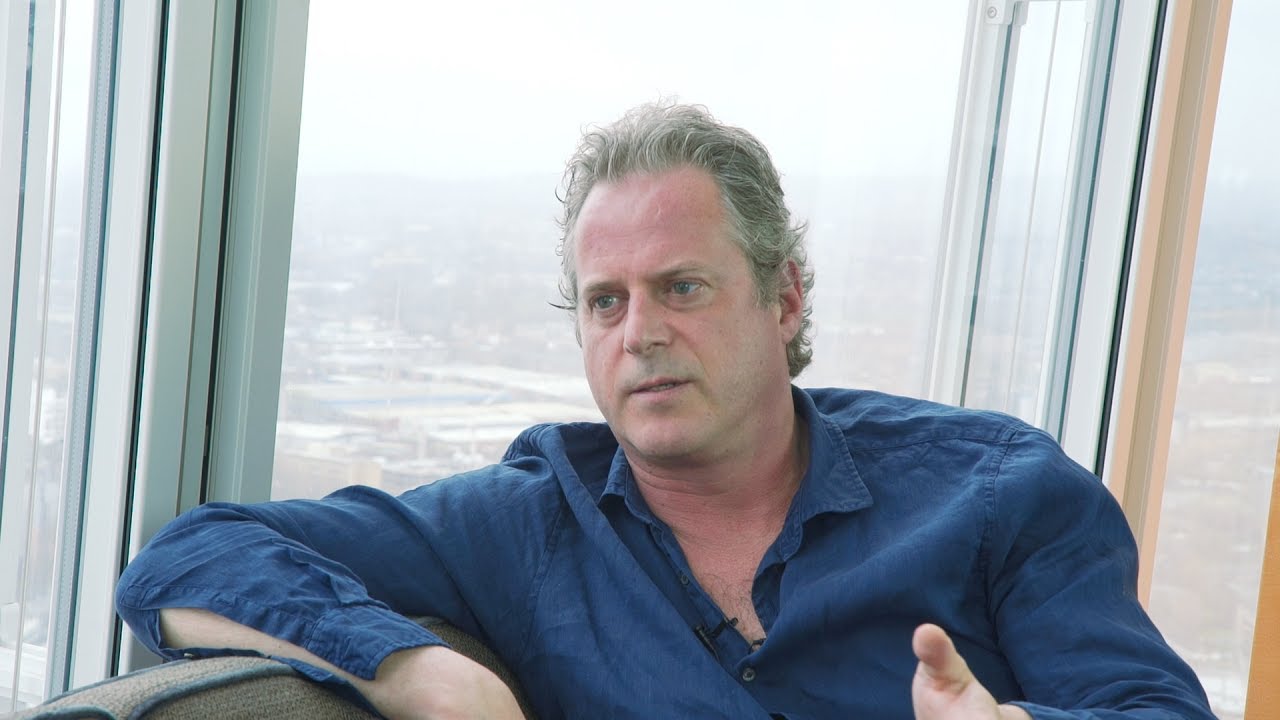
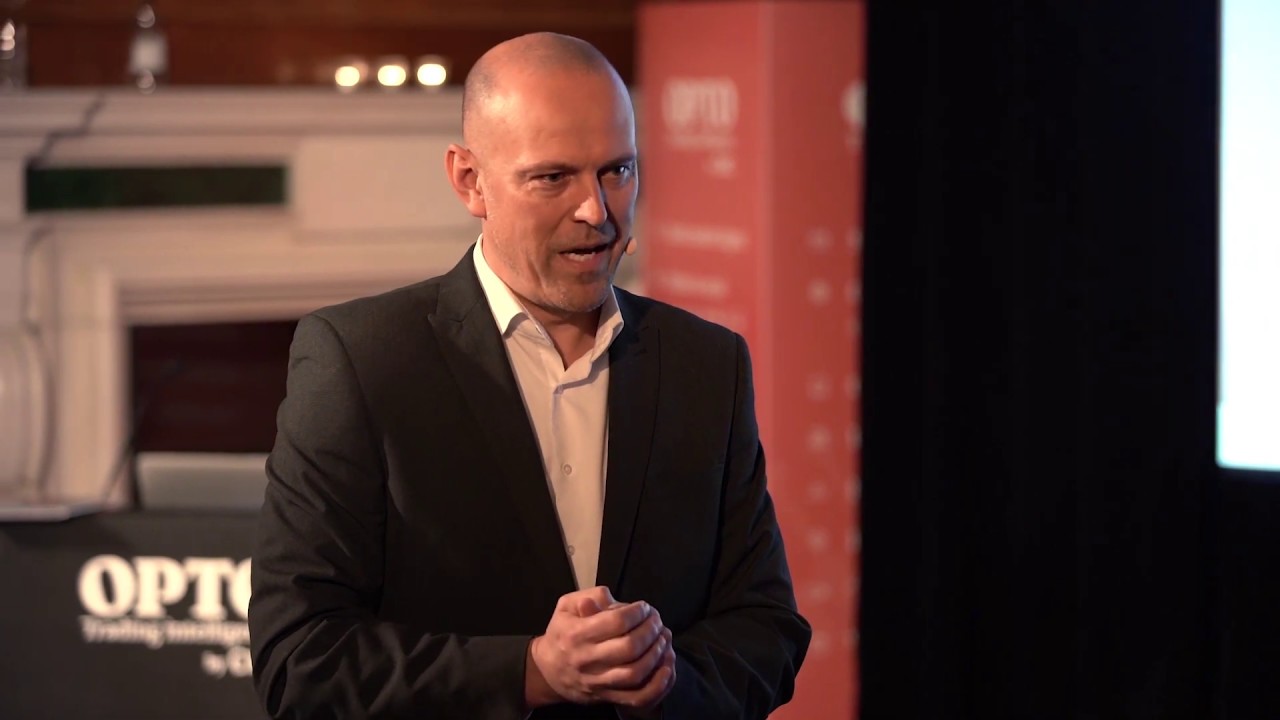
The trader I'm about to interview is literally one of the best and most competent Traders I have ever met in my entire life he is kind of working in the shadows he don't likes visibility too much he never sold mentorships or anything but I'm From Italy and in the Italian space he is like this underground trading Legend he's one of my mentors in learning orderflow he was a former book map educator as well and In this video he's going to share some amazing insights on his approach to trading this is I think the fourth or
fifth episode of this series of podcasts that I'm posting on this channel where I take legit highly experienced trading professional to share their insights with you and hopefully give you some different perspective and different insights to help you with your trading Journey so if you want to see more subscribe now to the channel and click The Bell to be notified when a new episode comes out now without further Ado enjoy the interview with Italian trading Legend Enrico stuki I'm not sure if you're familiar with Pokemon but in Pokemon there are common cards and then there
are legendary cards ultra rare ones legendary beasts etc for me you're an ultra rare and legendary beast in the world of trading for obvious reasons those who follow the new school perhaps the younger ones know but the Old Guard Let's say my audience doesn't know you or at least many don't and it's an honor to have you here on the channel so thank you for being here on the podcast with us thank you so much Andrea for inviting me and of course you're a rare beast in quotation marks like in Pokemon and you want to
remain that way by the way right yes exactly I'm I'm not seeking visibility because fundamentally in the the world of trading I make a living from Trading I don't seek visibility Because I don't want to well I'm not interested in providing education or selling signals or anything like that uh not that I have anything against those who do on the contrary I'm convinced that let's say you don't realize the cost of Education Until you realize the cost of ignorance so it's definitely a very important value but from my point of view I prefer not to
appear so I ask you then if you're interested if you haven't already Changed the channel now if you haven't switched to another Channel not to contact me because I don't offer uh courses coaching or anything like that that's it for the Future Okay fantastic so I urge you guys don't contact okay don't bother Mr stooki um I wanted to start right away by asking you a bit about let's say making a small digression about your background both professionally and then what led you to trading and how you Approached it at the beginning so if you
want to give us a little overview of your story yes so uh uh my background I have a degree in chemistry so I have nothing to do with finance and frankly I absolutely knew nothing until I had the need to invest that is I eventually came to trading and the world of investment Finance out of necessity because in 2000 I was 33 years old already a manager earning quite well working in an Industry a telecommunications company so uh telecommunications uh Mobile teleph in particular was what would represent artificial intelligence today so it was let's say
the sector uh along with e-commerce that was riding high so I was earning very well I was spending little also because I was working 12 hours a day and then I've always been a bit Frugal anyway I had accumulated some nice savings and I had to at this point I realized that I had to invest them so I started investing my savings through manage savings so financial advisors Etc manage savings products and I subscribed to all those things that now if someone asked me for information I would say get the behind me Satan insurance policies
index linked unit linked that manage savings garbage now I'd get sued anyway things that I would never recommend now and that I nevertheless subscribed to at the time and then I started to become interested in finance because I was Watching what my portfolio was doing I was watching it perhaps in the wrong way because as an investor you shouldn't if you have a long-term Horizon you shouldn't look at the Market's daily oscillation but I did and from there I said wow this stuff is cool Finance is beautiful this bulimic hunger for knowledge of the world
of Finance began which for me coming from the scientific world was a completely undiscovered world and it was just the beginning of The 2000s yes I imagine you started during the full.com bubble exactly I started right at the peak um working in the telecommunication sector I had the opportunity to buy the IPO for example of biscom because well my boss came from that sector and so I bought biscom also I had friends who had moved to tiscali so I also bought tiscali shares I took all the hits from the dotom bubble but luckily I was
cautious enough so I Didn't suffer monstrous losses however I learned the lesson that I understood nothing about this sector perfect so you started with buy high and sell low practically exactly I bought right into the bubble like an idiot ah ah well it happens but actually then well we'll get to the more technical Parts later but for now let's finish the part of the journey from there on how did you approach trading what are the I mean also in terms of trading process or Information you Ed over time how did your trading evolve well consider
that I know it's hard to believe now but uh then I'm talking about roughly 25 23 24 years ago uh there wasn't the amount of information that there is now YouTube didn't exist uh or maybe it had just been born I don't remember and uh anyway there wasn't much content uh there were some websites of uh some Pioneers that disseminated information but there wasn't much there were books and so I Started with books then there were uh some sector fairs uh there was already I think the toall Expo in Milan online trading Expo there was
the ITF in Remy there was also something called I think king of ducks that always took place I think Remi stuff I mean sector events where I went and started to get passionate about uh seeing these gurus who told me their stories the old gurus some are still around still riding the wave others are Gone disappeared and from there I started this passion this quest for information so I started obviously like everyone else from technical analysis because the macro part for me was more complicated uh coming from the scientific world the scientific background for me
the macro aspect so understanding uh I don't know the price earning ratio was Arabic so it was totally out of my jurisdiction and so I started with technical analysis so I Started studying pring Murphy those yes Disney's great Classics exactly Disney's great Classics and from there I basically started with this passion researching markets studying analyzing and I thought uh as I said before that it was easy this was perhaps my biggest mistake because I started I remember I started drawing trend lines I started with drawing trend lines so drawing trend lines I said well of
course if I had sold here where the price crossed The trend line bought here where the price returned above the trend line I would have made a lot of money because markets move so I considered uh if the market I don't know an equity index moves on average 15 20% in a year if I take these little oscillation pieces I make a lot of money sure then I discovered leverage Oh What a Wonder I can really make millions and not so it wasn't like that on paper maybe it can be but then clearly it's Not
that easy in practice exactly because you can see all these things exposed while xanti uh when you draw the line it's not uh guaranteed to be this one then the trend line moves you have to adjust it and so on so in the end it wasn't as simple as obviously I started with the trading let's say multi-day so with longer term operations mainly in stocks and this was my first approach to trading and so from technical analysis Then because there are also many schools of thought many analytical schools and I also started with technical analysis
I think my subscribers know that then I didn't find a great Edge especially for day trading maybe for I imagine swing trading or anyway even for position trading it may be that certain references are actually seen by all operators who then have a value for those who look at them all self- predictive yes self- predictive but Especially for trading I didn't find any great Advantage except in discretion okay so I couldn't find a genuinely profitable mechanistic approach in technical analysis so then I shifted to price action a bit more elaborate then volumes etc etc what
was the path you took from there onwards yes the path was more or less similar uh in the sense that um I started with technical analysis and so let's say I started to understand one thing fundamentally this Imprinting of mine of a scientific type anyway made me think that uh anything that cannot be demonstrated is not real uh no and I try to understand if this stuff of technical analysis the supports the resistances the trend lines the Fibonacci the triangles the wedges Etc had a scientific value that is and cups with the handle the cup
and handle patterns Etc so I realized that it wasn't easy to back test technical analysis in the sense that it's Difficult to back test a support a resistance a trend line how do you trace it for example exactly it depends on how you trace it so there's such a strong discretionary component that makes it impossible for you to try to demonstrate it quantify it yes of course and so in my logic I tried to abandon these things a bit quickly because I didn't know if they worked or not uh I could do back tests so
to speak uh by hand on the contrary uh going on historical data the Trend um but I cheated because anyway I already had future data so it wouldn't have been a realistic back test no let's say a stress test but not exactly realistic and so I basically tried to verify as much as possible and when I went to Industry fairs I heard these gurus talking to me about uh Magic patterns I remember I won't mention the name of the trainer but I don't know the idnr for which is a volatility compression pattern by Linda rashki
Which was inside her street smart uh this one of the most uh probably read books in those years on trading and I started to think but if I apply this pattern every time does it work or not and from there I started programming so I started to create trading systems uh simply to verify if these things they told me were true or not for example let's make another classic example the crossing of the price with the moving average no the price Crossing with the Moving average is or of the two moving averages it is one
of the things that has existed for longer yes well it was really easy to back test so uh I started downloading the platforms the first one maybe I started working with was Pro real time and doing back testing of these things here and uh I saw that uh basically there was no Advantage there was no Edge so so and I remember when I returned to Industry Affairs I found the same trainer who had told me about that Pattern uh I said to him but if I apply it every time what happens and he said to
me well I don't know I never back tested it I said I back tested it myself it doesn't work it's like flipping a coin so they told me well why do you have to contextualize the trigger within the context of the price so I said to myself but excuse me if I have to contextualize the trigger which has no Advantage so it's the reading of the context that gives me an advantage that Is the trigger doesn't give me any advantage so I could read the context and decide whether to go long or short or stay
still yes with the coin certainly mhm uh there you go uh from there I started programming and writing and looking for real demonstrable advantages and so I started with trading systems uh first with Pro real time then I switched to trade station multichart and started Writing systems I spent a lot of time and Wast a lot of time looking for magic indicators of course so I tried all the available indicators first RSI CCI and so on all moving averages ichimoku no that maybe uh I always considered that somewhat unscientific frankly uh so uh however I
tried all these kinds of things I uh for years I tried uh indicators of this kind and I wrote many of them also I wrote many uh based on uh volatility Ballinger Style uh essentially similar and of course I'm not saying they don't work but that wasn't the approach I followed in the continuation of my systematic trading there you go okay then how did it evolve um it evolved that well basically I started to analyze Market data so analyze historical series and try to understand the nature of the market there's an old video of mine
on YouTube from 2018 that I did in bolognia I think It was with class MBC it was recorded by class MBC but it was also on my channel and uh the nature of the market was probably the most important thing I discovered during back testing analysis so uh understanding if a tool was fundamentally Trend following or fundamentally mean reverting so there really exist there's a characterization of some financial instruments that I can say I don't know oil gasoline um diesel are typically Trend following Instruments and even in the trend following World there was a logic
that is uh there are so-called momentum Logics so basically if the price is rising it will continue to rise and you can see it if it's rising even with a simple moving average or slope of moving average or something else and uh other Logics instead are precisely breakout breakout of supports and resistances and they are the most difficult thing to write for systematic trading because Support and resistance of the systematic are not exactly like the discretionary support and resistance of course which has the ability to better contextualize the range of movements where they occurred Etc
uh in systematic it's more difficult to define a support and a resistance so typically you go and see the highs of the last end periods which in the Donan channel is probably the simplest of all filters to understand uh if a system is A breakout or not there you go so this was let's say uh one of the foundations on which I started to write systems that worked I must say well they work uh some of them are still online and Alive and Kicking others are dead I mean the market changes and so systematic work
must still adapt to these Market changes but then uh if necessary we talk about it in more detail later yes yes which actually is also among the next questions so surely we Can actually already address it advantages and disadvantages between um systematic trading and discretionary trading especially in recent years because as you said markets have evolved a lot I mean exactly but first let's finish wrapping up my story I um some years ago I don't remember exactly the year but let's say five or six years ago um I started studying volume this is because I
always realized that fundamentally either I had An edge in the market a real advantage or I would have been killed by the market Itself by the cost of just trading and it's not a zero sum game but it has transaction costs so the more you trade without an advantage the more money you'll lose and so I understood that I absolutely must seek out advantages I searched for them with indicators first with other Market Logics then with systematic trading I also searched for them in other aspects Effect such as seasonality and all the analysis of statistical
data which still today is part of what has entered my head like also trading systems because even though I'm currently much more discretionary than before um I don't forget what I learned with uh trading systems that's important I mean I know that if I have to work on gasoline or natural gas I won't tend to go contrarian I mean I try to follow the price movement something that I could do Instead is go contrarian on a market downturn for example right so buy the dip sell the rip okay so this kind of thing sticks in
my head so even when I do discretionary analysis I know well that there are statistical advantages at certain times of the day days of the week months of the year and so on and the nature of the markets themselves but volume is something I found scientific uh in the sense that as I was saying the part I always sought in the Edge was to find the logic so I started uh studying volumes uh first with the classic I mean the volume profile probably you know once volumes were studied only on the time axis right so
the volume on the x-axis was the only thing that existed then later on actually uh there was the market profile that came already well from stle so already at the end of the '90s if I remember correctly uh but it wasn't volume because the data on traded Volumes especially tick by tick so for each single execution were not available on platforms at that time so then when the data started to be collected the shift went from Market profile to volume profile which clearly was much more precise if you will as information on the price um
I started from that and then uh I discovered order flow uh order flow is well something you deal with every day so however I imagine you're following me you already know it but Basically it's the order flow the order flow means a dynamic visualization of what is happening and they are both the executed orders and the resting orders and that is those that are on the order book so this type of information led me to study the micr mechanics of the market not that I didn't know what the order book was what the bid was
the ask and what it meant to hit let's say the type of order the market order the limit order Etc it's something I've known for 20 years but understanding the mechanics of each execution and understanding why certain things happen opened up the world for me in the sense it was truly an incredible Edge boost for me I must say that then discovering um having also discovered that there were data sources that also provided the market by order that is the identifier of the order and so knowing I'm not saying who places the order but how
many orders are linked to that same one that is how much size is Connected to the same order to the same operator Etc and what it means then the interpretation of Iceberg orders stop orders and many other micro uh let's say uh facets of this world uh was definitely the Big Boost of this world absolutely an advantage that I found in this thing here uh it's huge and from here then you answer your question better discretionary or better systematic uh this is a question to which I can't give an objective answer I Do both I
started with systematic and ended up predominantly discretionary but not entirely more than which one is better I would say what are the advantages of one and the disadvantages of the other compared to each other okay so uh the main advantage in my opinion of discretionary analysis in this case especially as I do it with order flow is its adaptability to market conditions and you when you're there and you look at your order flow day by day and so you See these executions I mean well I don't know if we can talk about platforms or not
yes yes no problem I use uh I started with book map frankly well first at the beginning I started with footprint uh footprint is a tool invented by market Delta but then uh the year let's say it was also changing its name put on all platforms by Ninja Etc yes uh and then I switched to bookmap which indeed showed me the atomic orders so every single trade event every single Execution and then I switched to volb which is the volumetric platform that you also use yes which by the way well you also participated in the
development yes yes in the sense that they had already done it I then um talking to Antonio from volumetrica I told him what in my opinion needed to be revised to try to get a better platform I must say that uh now I use vbook because it's cleaner than book map uh in My opinion yes uh it requires much less Computer Resources and so uh I see it better then but I don't want to say it is personal yes it's personal um what was I saying ah yes the advantage of using order flow in general
discretion and you realize uh for example that the market changes directionality and volatility every day okay and the logic for example systematic fundamentally instead would Hope it to be uh constant over time that's why systems break they break because the market Direction changes but maybe because the amplitude of movements in the market changes the holding of directionality in the day and greater most trading systems work well in high volatility context most not all when volatility is compressing uh as has been the case in recent years that is we have the vix below 15 for a
long time now and this thing doesn't fundamentally benefit The systematic part uh so uh your ability to understand uh to adapt day by day but not only let me give you an example since the beginning of January for example there have been uh apart from the days when data is released you can see that the market is sideways it has been like this on average since the beginning of January uh this pattern this clustering of behavior neural modes in the market is something you observe day by day and that maybe an artificial Intelligence system or
neural network can understand better than you of course I'm not saying no but a classic trading system no uh and so this thing here certainly gives me an adaptability Advantage another advantage that I find important in orderflow is that you can also keep tighter stops so the systematic when I wrote trading systems I tried various I mean one of the characteristics trying how to exit the market when things go wrong no and the Classic system is the stop loss if you try various stoploss amplitudes you realize that most systems if you keep the stop tight
the performance is destroyed why because they don't have enough Edge to absorb the random variations of Market oscillation when you work with order flow for example and you try to go long when the price has had an absorption so the price in contact a monster liquidity order has arrived an iceberg order that has Blocked The Descent you had a stop run that was absorbed and the market reverses so at that moment you are entering because you have a precise reason that is on that level it's not a level that is calculated by an algorithm xante
based on the average oscillation that the price would have had in the last years no it's that moment so if once I have crossed a liquidity level and the price continues I know that I have misanalyzed that is I know that What I thought what I thought was not happening that is operators have decided to continue their descent for example so I exit sure this allows me to have tighter stops which I couldn't have in systematic at this point the question that arises spontaneously is whether the advantages of discretion are limited only to the fact
that they are too difficult to quantify in an algorithm or if there is something more indiscretion Even at the level of intuition and at the level of implicit learning after years and years in front of the charts where you see the same stuff and develop a certain gut feeling if you will um well I don't think I think it's the first one because even though traditional trading systems don't cover all aspects of execution Alpha meaning all the execution structures that instead are used constantly by hft market makers and indeed execution Alpha Algorithms uh which we
might discuss later if there's time they have it I mean in the sense that the ability to interpret these things that I see I see a stop run I see uh absorption Etc these objects these tools have it in traditional trading systems don't the ones that run on metatrader trade station stuff like that or multicharts or so on these platforms don't reach this level of detail also because generally they don't have tick data and They don't have the m so uh a whole series of information is devoid of information because they have a poor quality
of data that you provide them with so crap and crap out as they say I mean so you can't pull out these things but clearly those who work on the execution side they they have these capabilities from a discretionary point of view I think it's the second one that is the ability to learn to read the context which means it's not just order Flow in the sense that I don't start from order flow order flow is my execution I start from the analysis of what the volatility and directionality of the session are so basically I
try to understand if today is a trend day or if it's a day that's typically reversal swinging up and down Etc if it's a trend if it's a continuous type of trend that is if it's a surge where there's no there's fomo for example so so it goes up because everyone is getting in I mean There has been a shift according to the logic of the auction market theory of fair value that has risen and so the price Rises or if it's a liquidation day for example so where instead people do exactly the opposite that
is they exit because otherwise they lose a bit of profit taking yes and so this this kind of trend that is very impulsive and very directional uh has no retracements Etc or if it's a classic rise let's say channeled in Which there's more volatility so volatility means variability of return and at the same time still a decisive directionality no so I have always defined four possible well now a very very banale simplification for possible context so high volatility and high directionality so channeled Trend high directionality and low volatility so the impulsive Trend that rises without
retracements high volatility and low directionality so the classic Buy Low Sell high and then moments when you really have volatility compression the market is still and you're just watching flaty yes flat SE and you're just watching and waiting for the evolution which will probably be an explosion of volatility so also among other things the importance of not trading is uh as important as trading in the sense of knowing when to wait that's also a discretionary advantage in my opinion That's also a discretionary Advantage because you objectively see it so this part here is a part
that you have to train and you train basically by watching burning your eyes I've always said yeah you have to watch train train that is if you want to learn to read uh whether it's typical price action analysis or something more like the x-rays you have with orderflow analysis you still have to train train yes absolutely but in fact I say It even against my interest because we also do some orderflow training but we always say it in webinars all the guys that we can show you the way and understand how to interpret the reading
but then everyone has to develop their experience the eye and practice a lot especially with order flow but also with everything else actually even with price action I believe that well in the end trading is damn practical so without a lot of training a lot of practice Results are really [Music] difficult yes it's exactly like a sport that is if you want to become good at performing an athletic gesture you have to repeat it but sports or any activity even artisanal for example to become good at doing something you have to repeat it thousands of
times that's the reality and this is perhaps one of the disadvantage of discretionary trading that is you have to spend a lot of time Understanding hours and hours in front of the monitor which doesn't necessarily mean hours and hours of execution I for example in the orderflow part at some point developed the ability to work only in the last two hours of the day because that's when the most volume comes in where there are all sorts of advantages like Market onclose orders and so on so this kind of thing means that I still May Focus
my execution part in the last two hours of the day but I still spent Tens dozens hundreds thousands of hours before observing okay sure so this is in my opinion one of the disadvantages of discretionary trading the other two major disadvantages are one all the psychological and emotional aspects which we'll talk about extensively later uh and the the difficulty of transmitting it I mean systematic trading has an advantage in my opinion It's easier to transmit that is if I give you a system and tell you to attack you might tend to have the same performance
as me with my system however if I Instead try to transmit information to you about the nature of order flow saying be um be careful here there's absorption here there was exhaustion here was the elephant pattern here was the barbecue which are all names I've given to my trading patterns it's not guaranteed that you'll interpret them in The same way the replicability is not the same exactly so teaching systematic trading is easier to transmit therefore but here's an important thing to say it's not like you just set up the system and go to the beach
okay I managed about 200 active systems so I had really a lot of active systems and I can assure you that they need to be monitored so you might have the best um infrastructure in the world Etc but the system needs to be Watched not only do you need to maintain it in the sense that I'll give you an example rolling contracts for example when you work with oil uh with gas you have monthly rolling maybe a bit less with indices because you have quarterly rolling but with commodities you have monthly rolling so when you
have to roll positions you have to do a manual activity and you say well once a month but it's not just that sometimes platforms get misaligned the order for Example because there was a limit order and so the price was touched uh but you weren't in priority so you didn't get filled so at this point the platform tells you you're long but you're not so you have to check and realign the system sure there are automatic realignment systems whatever you want but it's not as simple as that and then there's another important aspect systems break
so they need to maintained from an innovation perspective that is those who Make trading systems aren't really lounging on the beach but spend the day writing new systems and doing research as well I imagine doing research like I do on the discretionary side however when I was doing systematic trading I was still doing constant research so it's not just a job in the sense that this is my job my only source of income since May 2009 and so I take it as a job uh so as research and development and execution so uh there's the
execution Part which is part of my day but it's not necessarily the predominant one maybe it's predominant now with discretionary it wasn't before when I was mostly systematic in terms of what you see in the markets lately or what you expect in the coming years artificial intelligence of neural networks and actually now it's been the trend of recent years but actually it has been around for at least a decade or more do you think it will influence the Market if so how and especially from the perspective of algorithmic trading there will be increasingly more competition
on micromarket inefficiencies I imagine that competi is already quite Fierce you say it will play a role or it has already played a role in the deterioration of systematic edges I don't know I mean if I have to be honest you can't know for sure you can't quantify it so uh I've done some research Projects participated in some research projects in the world for example of artificial intelligence pattern recognition also in the orderflow part uh and uh so far I haven't seen particularly encouraging results but that doesn't mean that some someone else hasn't been able
to do it in fact for example the whole world of cfts Etc works on these micromarket inefficiencies right it's clear that what for example virtual Financial or City of Securities used to earn which were the two biggest hfts in the world which continue to be by the way the two biggest market makers in the world what they had when the world of hft started is not the same Advantage they have now because they've reduced it I remember the first stories I heard about hfts that never had a losing day in the first 10 years Etc
and that's not the case anymore so they've greatly reduced their capacity because competition and the Search for inefficiency have definitely reduced them um considerably but surely there will be there will be a huge research part on this because if we think about it uh artificial intelligence is not just Alexa listening to me and suggesting the movie or whatever but it's on these kind of let's say developments that could have enormous profits wow right now though I still don't see it that doesn't mean it won't happen of of course yes it's Difficult to know and the
part of reducing the edge surely you can see it but you can also see it in volatility compressions uh in the sense that the fact that there are no more days of more or less five on the S&P 500 I don't know how long it's been since there's been a day like that sure uh and while before well sure the volatility of covid was very particular but well in short you can see the compression and so the search for inefficiencies uh becomes Increasingly difficult and so I hope hope that even in the order flow which
actually reads the micr mechanics in the market fundamentally the market always works like this I mean it's not that it can work differently there are people who buy progressively higher prices and erode all the ask levels in the book and people who instead are there waiting and there will always be this because that's how the market works but to say that the oscillations will always have the same Magnitude and therefore allow you to cover your trading cost frankly I don't know as long as I win I play as the joke goes so for now it's
fine so it's fine of course and obviously clearly we mainly talk about trading on derivatives so we're at zero sum and there um the efficiency inefficiency discussion becomes much more let's say a gets into the thick of things because clearly in traditional Investments it's not necessarily a zero sum game um my Question is whether it's precisely the fact that it's a zero sum game that creates let's say rebalancing of inefficiencies um a question I've always asked myself and never found an answer to Is do Futures move stocks do stocks move futures or do they do
it in different measures I mean because there's an index that goes up let's say it's a weighted average of stock prices and so it goes up and so I've always said to myself it's the order flow that Moves prices because in the end when they hit the ask we go up by a tick when they hit the bid we go down by a tick but how does it work I mean what is it that really moves the market I don't know if I've explained myself it's a question I've always asked myself too and I've given
myself a quantitative answer obviously once and so I started to do the following analysis I took the NASDAQ index because it only has 100 stocks uh in the S&P 500 Russell were more complicated to do of course and I took the daily traded values so I multiplied the volume of the uh let's say NASDAQ traded during a day I multiplied it by its average price by its price per point which is $20 per point and so I kept the traded value of the NASDAQ contract then I took the top 100 stocks of the contract futures
perfect then I took the top 100 stocks of the NASDAQ and did the exact same Thing so I multiplied the average price of the day by its volume obtaining the traded value okay I add them all up I get the actual value of the NASDAQ index in the case of the NASDAQ when I did the analysis the Futures were significantly higher so basically the Futures so the index essentially moved the prices of individual stocks because there's still a logic of um of Arbitrage that's it and that the answer I gave myself I mean there's Arbitrage
with the Underlying at that point there's Arbitrage with the underlying in the book um which is called Flash Boys I think oh yes um which is by the same author as the one who wrote The Big Short yes um there's a very interesting story about the largest infrastructure ever built in the United States which is an internet backbone between Chicago and New York and practically it tells the whole story of the construction of this backbone of a very high network of fiber Optics let's say throughput that was specifically needed to do this kind of Arbitrage
because the delay between Chicago and New York with the traditional lines that pass through I don't know Oklahoma was too much let's say there was too much latency and so they had to do this so to do statistical Arbitrage between the index and the basket of stocks okay then the basket of stocks I suppose those who do statistical Arbitrage don't necessarily Buy all 100 stocks or all 500 stocks or the 2,000 stocks of the Russell because it would be very expensive in terms of fees but maybe considering the weighted average that we know is not
exactly equal in the sense that the nasdaq's top four or five stocks account for 50% of the list so um so this was the answer I gave myself so exactly this kind of Arbitrage makes it so that obviously there's then variability in the individual stock which derives from What's happening in the perception of the fair value of that individual stock in this period or Tesla a few years ago Etc that really have movements that are out of standard and uh that also Drive the index because there's still much wider movements than the historical average of
what they've moved returning to that aspect of discretionary systematic one aspect that must be taken into consideration is that systematic is not devoid of emotionality it it's Simpler but not devoid of emotionality because you still have system that break down and so you have to change them and so you have to be the coach and so you have to bring out a player who is burnt out and put in one who was on the bench and is performing well but the question you ask yourself is okay but the one who performed well but was on
the bench and so I don't know when he performed in reality when I put him on the field what happens will he continue to perform or Not Etc um so actually one should do an analysis there are tools software that do this automatically and try to do the waiting of the portfolios one should also reason it even in this case slightly discretionary trying to understand what the volatility of the underlying instrument is because you tend to know that if your system benefits from volatility you'll have to put in place the system that works on the
instrument that has higher Volatility yes during the war in Ukraine corn and wheat were things that shot up in price like Coco this year no it's clear that a system on Coco that may have underperformed was dead for years with these price problems of of shortage of stocks on Coco has created such a boost that instead coo systems have become interesting so inside there also needs to be a minimum of discretionary capacity in understanding this aspect and the other thing is that you still Feel like intervening manually on the system because if you have a
bit of discretionary competence you say but look what an idiot this one who sold me when the market is going up and that's it okay and so you either close the system earlier or take profit earlier Etc and then you alter the result but an advantage that systematic has is that a discretionary can also have and monitors like I have but only two eyes so basically I try to focus on one or two Instruments of course I have my passion so maybe of course certain days I look at uh I don't know the energies the
gas the oil Etc on other days I look at the indices but in fact I can't work on 20 instruments simultaneously of course systematic trading can work on an instrument simultaneously so you have a greater smoothing of your line yes in the end the result is that it's not necessarily because in the end the capital is always The same even if you might diversify it I mean the opposite argument could be even if you can diversify to have a pretty broad portfolio of systems however in the end the risk budget is what matters so I
mean yes rather than making more money you optimize you optimize the performance I would say yes uh and one thing one must also keep in mind is scalability right I mean this is the scalability of the systems for example and the whole algorithmic World has a huge impact on hedge funds sure clearly my audience usually doesn't consider these issues but it's absolutely fascinating yes there are some things let me give you an example today on average on the SP 500 book during the afternoon there are 8800 contracts so if I move 8800 contracts with a
single trade obviously I'm going to remove a level from the book by myself and sooner or later they'll notice me I mean they'll sniff me out And then they'll start working to figure out who my ID is ETC so it's not exactly the smartest thing to do even if yes exactly so I have to fragment myself too I mean if I had to work with these sizes I'd have to start fragmenting myself too now I'm talking about 800 contracts which are here on the offer and on the S&P 500 I remember that the size to
be considered reportable on the mini S&P 500 is 1,000 Lots So Below 1,000 Lots you're considered Retail okay you call someone retail if they have 999 you were saying exactly someone who has 999 contracts of S&P 500 which is a huge Capital since with each S&P 500 contract being $250,000 basically dollars of average notional and well it happens hey it's a retail for the market right so when you start moving really important figures uh a whole series of issues come into play that are different and uh are related to the scalability of your systems and
the Fragmentation of your orders after all this is what order flow teaches you I mean for example uh if you look at the order flow of the bond or the t-note and you zoom in you can easily see the intervention of algorith ithms because they have this perfect Cadence in order scheduling and from there you can understand that this is an algorithmic order that doesn't move the price but in reality you see the sequence of orders all at the same distance mhm which helps You understand that someone interesting is intervening there so maybe it's better
that you sharpen your sensors and raise the antennas because probably from there at some point uh when they're done accumulating at this price uh they'll probably trigger um so-called momentum ignition meaning they'll fire off Market orders at this point to move the market in the direction they've accumulated sure I think this is one of the most interesting conversations we've Ever had on the channel so beautiful I hope we'll definitely help ourselves with some visualization because obviously I can imagine all the things you're saying but we'll definitely help ourselves with some visualization we'll put in some
order books probably some split icebergs it's interesting yes and speaking of large orders of non-reportable ones and of uh also icebergs for example with the order flow you realize that there are well Different types of Traders right so we retail Traders are the various little fish but who are these sharks these sharks because very often this question is not asked or not given an answer yes exactly we there's this concept that we poor retail Traders are up against this smart money these uh strong hands these sharks Etc but these sharks may not necessarily consider us
this is the first important aspect precisely for the reasons I mentioned Earlier if one goes for example to the CME website here's a piece of advice I give to anyone trying to trade and study diligently the CME website is the greatest source of information I've ever found it beats 100 courses and 12,000 books to truly understand how the market works you realize that for example the top four operators this is data found in the cot report e move for example from 30 to 40 or 50% of the market depending on the underlying type this is
data Found in the detailed court report but there's also for example on the CME website in the dedicated section of the CT report which helps you understand that the world is very concentrated on a small number of operators right and these people need to trade uh tens of thousands of contracts about my little contract that get stopped out I couldn't care less because I'm not I'm not like the the Plankton of the whale shark no which still feeds on tons of Plankton There aren't tons of retail Traders there are many but they don't weigh anything
however in the S&P 500 for example the non-reportable under 1,000 contracts make if I remember correctly 14 15% of the market so there are still thousands and thousands but they don't count for much in size so these large operators who are they and what are their needs they're not all the same that's the important thing to understand they don't have the same objectives Let's take an example let's say I am a fund manager okay fundamentally what I have to do is if I have to manage a US Equity Fund I have to belong on us
equities okay I can rebalance my portfolios because I have to because Tesla has fallen in way weight compared to Nvidia and so I have to rebalance and do this stuff here but I don't have to decide which way to go I have to be long because my mandate is to be long period so depending on the masses coming in or Out of my fund I'll have to rebalance portfolios and buy and sell but I can't choose to go short or not I don't do that kind of thing I don't hedge unless it's an edge fund
like I don't know JP Morgan's famous one well we'll talk about that later maybe and uh this kind of thing makes me understand that their need is fundamentally executive it's not directional Choice okay the same goes for a pension fund the same goes for a central bank because central banks are Stock accumulators okay so we're talking about the Swiss National Bank Japanese are huge operators in this sector uh Sovereign wealth funds Sovereign wealth funds which is something that is huge but almost nobody knows about its existence also in the Arab world exactly Sovereign funds in
the Arab world what do they do they invest the proceeds from the sale of oil okay the as it happens with the other big one an enormous Sovereign fund is the Norwegian one uh which is exactly the same kind of thing or the Chinese ones invest in uh Trade Surplus so they are State likee funds of Kingdoms or similar entities that invest proceeds from other types of activities even they essentially their need is not to do day trading so when they enter they have to fractionate their entries over days they have a very long-term view
obviously yes because you can't move that amount of capital within a day You can't do it you don't have enough quantity to do it then instead you scale down and start to move to let's say all the managed savings World which is huge so investment funds Etc which fundamentally have more or less the same needs and then you scale down a bit more below for example uh the world of hedge funds instead have the ability to go long short and can do trading or endowments which are something that uh that doesn't exist in Italy they
are the The foundations of American universities no including some that are truly among the best investors in the world like Yale and so on in short uh the so-called ivy league companies are those that have the largest amounts of money to manage and then um you have the whole world of prop trading yes prop desk prop trading true okay I want it we'll talk about it later yes I'm not talking about that specifically for retail uh which doesn't give you anything to manage in real Which doesn't mean it's not a good thing I mean I
don't want to make judgments about this kind of thing but it's not true prop trading so there really is someone who has their own Capital to invest and so then there are those who do hedging I mean let's realize that not everyone has an interest in where the price goes if we for example look at the court report that tells me the fraction of contracts that are uh long and short by various categories of operators I see That on one side I have speculators and on the other side I have hedgers for example no and
these are fundamentally of similar scale okay so there's not a quantity of people who are not interested in where the price goes because they hedge right now regarding Commodities the price of corn hedging is quite evident this is told by Ray Dalo for example when he made the contract with McDonald's to ensure that the price of those little pieces of chicken they Sell the chicken McNuggets remained constant uh over time so uh he collaborated with a company called Lin production I don't exactly remember the name and uh McDonald's to do it yes corn hedging they
hedged on corn because it was the discriminating that could change the price of poultry right absurd and Ray alio tells this story in his first principles book so this is quite evident how is hedging done on Commodities on the financial product side it's a bit more complex but even there it needs to be understood and you can see that there are opposing needs so not everyone thinks like us I mean us retail we have to earn from the direction of the market typically if we work on directional instruments uh then there's the world of options
which is a whole other story but uh let's talk about Direction instruments uh it's clear that uh in our Approach we think that um everyone else thinks like us but that's not true for example there are those who do spread trading let's take the world of energies now spread trading in the world of energies is predominant so I go to collect the contango of commodity storage Etc this is something that really has a huge impact from the perspective of sides so in spread trading one is not interested in whether the price goes up or down
one is Interested in the difference in the speed of rise or fall of two contracts sure okay so we have to get rid of this kind of thinking but this actually also has an impact on the semantics we use when we talk about trading when we see a rising Trend we should call it an uptrend when we have a downward Trend we should call it a downtrend and yet I hear people say the market is by or the market is long the market can't be buy because there are as many buys as there Are sells
every transaction is a buy against a sell the market is not long because the number of Longs is identical to the number of shorts okay so when I have a market that is Rising I simply have someone who is willing to buy at progressively higher prices and someone selling is willing to sell at progressively higher prices so I have control of the market a portion of an operator a sequence a set of operators who are essentially for fomo for hedging Logic for any reason essentially going to buy at increasing prices or sell at decreasing prices
so this is an important aspect to understand and another truly important part to grasp is Market making often market makers are thought to be bad moving the price Etc but that's not entirely true the market maker isn't really interested in where the price goes the less it moves the better the less it moves the better That's why when you see the order flow for example look at the order flow on the release of news like CPI unemployment or rate announcements Etc and you see the order book completely opening up because the market maker knows that
moment is dangerous for him when the price moves so much he will be imbalanced instead the market makers go goal is to earn the bid ask spread on each transaction so if I'm in this business and I have a clear majority of People buying uh I'll find myself short against the market so if the market keeps going up I'll lose money so the market Maker's goal is to work in certain conditions and be very present there from here this kind of thing also explains auction Market Theory well that is why You observe the market by
looking at a volume profile there are times when it's generally balanced and times when it's generally imbal because the market is created to facilitate exchanges so uh Most operators intervene within price ranges that are let's say narrow and they don't like to trade during fast Market phases of course but the price moves because the perception of fair value changes what is the correct price because of Novelties like on one side manipulations and then there are news and changes of opinion that cause your price of 5100 to no longer be adequate you have to go to
5,000 and2 this is the logic behind the movement of Market Theory uh so understanding these aspects uh understanding the micromechanics of the market understanding the needs of the operators is fundamental the market maker for example in options which is a huge world the options world has huge trading volumes even if they're not concentrated they're spread out over many strikes meaning many price levels and many expirations but they're huge in Terms of volumes and they influence the price of the movement of Futures because Futures are often used as hedging by the market maker for option strategies
yes okay there was indeed a fund called JP Morgan edged Equity Fund which is a huge fund that basically deals with option structures so it covers the downside risk of the market with let's say selling buying puts it's not exactly like that because it's a bit more complex than that because selling buying Puts would cost a lot but well let's not delve into technical details now but basically on one side you have this fund that has purchased millions of dollars of options but who sold them the market maker who acts as the counterparty typically so
the market maker is exposed to Market movements the completely opposite logic of the one who bought the option so it's a seller of put options so it will suffer from the decline and will be required to Hedge with the future when the market goes against it because it's imbalanced it's exposed um this thing here is called Dynamic Delta hedging so it's hedging the Delta uh the Delta is the change in the option price as the underlying price changes so it essentially means that if the price goes down they are losing more and more but the
Delta is not a constant value it's a value that varies depending on how close you get to the strike now I don't want To get too much into it but this stuff is called gamma and so gamma hedging actually is a key factor in defining the amount of contracts a market maker must buy or sell to hedge his position so if I'm balanced I don't care but if I'm imbalanced I'm forced to defend myself from Price movements and so I go to the Futures Market those who work for example with order flow of stocks I
also use stocks a lot in order flow because they're cleaner than Futures and you'll Notice that the major liquidity levels are positioned at Round price levels of stocks because there are the strike prices of options right so if there are options strike prices which by way are not equidistant from the central price because options on stocks are narrower there are more strike prices near the central price and they thin out as you go further away uh you see this thing on liquidity you see it right on liquidity levels and you'll see that round or Semi-
round levels so I don't know 175 on 175 and 50 uh have the highest liquidity and this stuff helps you a lot because an old video I had made included the analysis for example of how much correlation there is between major stocks the Magnificent 7 for example with the movement of the NASDAQ do they find it on the channel yes on my YouTube channel trading with balls yes fortunately it has few views not yet maybe that will change after this video Let's hope not let's hope no one writes to me though there there was this
correlation analysis and also an explanation of why this phenomenon exists by the way if I may interrupt the discussion about market makers I have clearly noticed over time that in the last 10 minutes of the session the order book fills up with embarrassing amounts of orders what happens in the end in the last Almost 5 minutes of the session well in the last five minutes of The session there are two technical aspects called order Market on close that is those who do day trading simply uh which are not only retail because there are many large
institutional traders who do day trading and close positions at the end of the day and in fact you can verify this simply by looking at the difference between the value of open interest and the traded volumes if you look at the open interest I don't know about the S&P 500 you'll See that more or less except when there's the rolling the value is constant meaning the same number of contracts remain open and traded in the market during a day while the volumes are significantly higher so it means that uh a good part of the operations
are trades that open and close within the day because there is no change in open interest so it means that um many Traders close their positions at the end of the day and use a type of order Called Moc which stands for Market on close you can place a market on close order on the New York Stock Exchange until 9:50 p.m. and on the NASDAQ until 9:55 p.m. so it means that basically at those two moments you can place orders and then you can't revoke them anymore okay and the exchanges function is to ensure that
all closures take place in the last seconds of trading meaning they match all buy orders and all sell orders that can be opening Longs closing shorts And on the other side closing opening shorts and Longs they match them and try to fill them as much as possible there is then a number called Mok imbalance which instead tells you uh if there are many more attempts to close with Mark buy orders than sell orders and so at this point you have an imbalance and this if you can read it well allows you to understand what volatility
there will be in the last 5 10 minutes if the imbalance is very large you will have a Very high volatility I remember when I discovered this kind of thing you could see uh a certain point at 9:50 p.m. these immense equidistant strips of limit order of market makers appearing that lasted a few seconds and then disappeared and then reappeared at 55 and I had given them Fantasy names I don't remember Palin the mule the mule is the order of it was a pattern that worked very well in 20320 when there was the highest volatility
because there was So much volatility and it was a movement contrary to the market direction that is if the market had uh for example risen all day Al from 10 p.m. onwards in the last in the first minute there was a strong retracement okay and I called this the mule because when it works well when it doesn't work you take it perfect beautiful sorry for the vulgarity but anyway that was my thought uh so what was it uh but in the logic of studying And researching I went to study all these things here on the
CME website and I understood this pattern what was the reason why memorable moments so I would ask you have there been any truly memorable trades both good and bad that you vividly remember and would like to share with us yes some I remember very well in the bad um well uh yes yes yes there have been the best year for me was 2020 because uh apart from the fact that I was already working with order flow And then because it was a year of incredible volatility so I remember that I had perceived that the market
would crash around February and I wrote a post I remember uh on the trader pedia Facebook group saying from now on just hit sell something like that I found it and uh still if you look in 2020 February 2020 I suffered for a few days because the market was still pulling we were coming from a market that never stopped there was no retracement it was By the dip no every single retracement had to be bought Etc but the first news about covid in China started to arrive well those came in January but nobody cared Chinese
who cares and they started to have problems when they close some factories some Mega factories for example I started to say ah wow something is happening here when they closed the mega Factory that made components for the iPhone in China and I said to myself there could be a problem With the supply chain here I had no idea what the pandemic was what it would become but I sensed the problem with the supply chain I said here since we have now relocated all production to the countries of Southeast Asia China Etc and if there is
a problem in China and they close everything we remain without production of anything and so I said I started to short then the first cases of covid arrived in Italy then in the United States and from there the market Started to plummet the volatility was immense I had very large short positions and I had my my super top performance of my life okay yes of my life so mainly shorting stocks shorting Equity indices I was short on the S&P 500 NASDAQ Russell ym Dow Jones everything everything I could sell I was short I was short
um and so it was definitely the unfortunately when the feds bazooka arrived I admit I wasn't quite ready to understand that it Would reverse the market so I held on to the shorts for a while a bit too long a bit too long except for let's say I reversed this one so I wasn't smart enough to understand the extent of the macro effect that Powell had mentioned had given um throwing uh printing money uh bringing helicopter money exactly so I didn't perceive this precisely because of this let's say not a bit of cognitive bias for
shorts bias a cognitive bias Exactly I I had this short bias which by the way is one of the typical cognitive biases of a Trader uh and so I missed out on something a bit uh then there was perhaps also one of the biggest losses I had in April 2020 on oil oil do you remember I don't remember exactly which date but in April 2020 perhaps on the May contract I don't remember that contract yes because the April contract expires in March so it was the May contract that went negative Yes it went to minus
40 intraday then closed if I remember correctly at 5 so negative oil and I had started buying oil when I saw that oil was below the average production price and I thought it can't go below because it's no longer profitable to produce it it was around $105 yes it was around 15 essentially the production price at that time and uh I hadn't really considered the storage problem that is the Nyx that is uh the market where oil is traded uh has oil Storage tanks on site it's called Cushing Oklahoma which is a remote town where
they are if you look on Google Maps because it's interesting you'll see all these huge oil storage tanks now these are the tanks where for example the oil needed for the NX is stored clearly when contracts are traded on the energy Market people don't actually go buy oil and pick it up in Oklahoma but the NX Market still needs to a certain amount of underlying storage Because if you go for physical delivery which is impossible for us but if you're a big operator you could even request to go buy your barrels of oil in Cushing
Oklahoma at the future closing price and the tanks were so full and all the ships with oil were parked at Sea because they didn't know how to dispose of it of course it consumed oil everything stopped worldwide absurd so storage had become so expensive that if you took the oil away they gave it to you for free so They paid you to take away the oil okay and this stuff had this effect that lasted only one day For Heaven's Sake but it hurt me yeah of course after that though once this emergency was over I
ended up with a mega long position on oil that I had taken however since I didn't know how long the pandemic would last I made a bet on contracts far in the future so I started since oil like gas has contracts Up to 10 years ahead oils I don't remember maybe two but I bought the furthest ones so I said maybe not today but in a year this stuff will be over and so the price of distant oil will rise and indeed it did and that was the other biggest trade of my life in monetary
terms then I took made on gas another uh product that I love that I really like because it's super macro I mean really tied to climate Trends and many other factors let's say really Consumption related and there I took some good hits and some nice satisfactions here gas has truly been a blessing and a curse for meant fantastic by the way the oil issue was something Patrick told me about too they also had the same problem and then even with interactive they had the problem that there were simply no orders below I mean there was
practically no book so even executing stops they hadn't anticipated Negative prices in the algorithms in fact then they refunded the money too they refunded in short they did some serious damage to them I imagine anyway yeah these are moments of volatility black swans unfortunately happen I look I always regret not knowing a bit more about Ma in that period because really with a minimal Trend following strategy or even with some well-placed orders really during Co you could still make a lot of money many speak as indeed of 2020 2021 as the years with the best
and worst trades so yes moving on to the aspect um an aspect that interests many traders who are starting out or who anyway find themselves struggling psychologically in your opinion in a 100% pie chart what percentage of success do you attribute to the Technical Edge you have compared to the psychoemotional management that interferes somewhat with your operations well I don't know if I'm able To answer this question objectively and I'll explain why I do a lot of research on the Technical Edge and so I have a constant hunger to continue finding sources of Edge and
improving my Edge and becoming better at the execution part of what I do that I've neglected if you will the importance that this aspect here has on my discretionary part so I don't do research on my head okay I do it on my Edge but because of my head after I've banged it against the wall so Many times All In All I've learned something yeah so today I couldn't give you a waiting because in fact today I tell you I could tell you it's 80% Technical Edge and 20% is psychological but only because the psychological
part I've already I won't say sorted out because I keep making a series of huge mistakes yeah of course but I've already analyzed it classified it and rationalized it in my life as a Trader since I've made every mistake Imaginable I've tried to rationalize these mistakes he maybe if we can also talk in a more concise way though uh this for me has made it so that today so to speak the discipline part of money management so defining the entry size because money management is only this defining the entry size even if for many it's
the stop loss no a money manager answers the single question how many contracts do I enter the next trade with and these aspects here so discipline When to trade when not to trade when to stand and watch when to be the sniper and therefore stand totally by the window completely still waiting for the opportunity are aspects that I've learned to do I won't say that I no longer make the same behavioral bias mistakes because I do but I make far fewer but observing others I have to say that the psychological part is fundamental because I
see that um people who have followed me for example uh Within the technical path have not had the same results that I have had uh because uh precisely because they haven't cultivated that part of the head and so they are much more at the mercy of their fears of all their behavioral biases which then by all means is a human thing that everyone has at the same time I say to myself if you as a person can develop an edge so concrete and so mechanical as to cover the Eventual mistakes you make psychologically it might
make more sense to do much more research on the edge and focus on the technical part I would say sometimes not however clearly if you have a really good Edge but at the same time you don't manage money management well because Revenge trading tells you no this time I'll open three contracts instead of one clearly exactly so probably if I had to give advice to someone starting out or Someone who has problems at this moment it's to cultivate this aspect try to rationalize the problem try to understand what your characteristic mistakes are Revenge trading over
trading anchoring bias cheering bias all those if you will yeah we can start addressing them to address them however these ones really have a significant weight okay and I see this kind of behavior for example a behavior that in my opinion is Common among all Traders and I've experienced it many times too is what my friend Tony choli defines as the sack what is the sack the sack is that situation where you find yourself with a loss that is significant L larger than what you probably expected okay or that you're able to manage and that
is bigger than the average profit you make in a trade so you find yourself having gained steadily tick tick tick tick boom yeah okay this thing happens to Everyone so the sack is something that psychologically erodes your financial capital on one side and on the other side it erodes your psychological Capital because you'll find yourself banging your head against the wall not sleeping at night because what have I done I've ruined my family I don't know how many people find themselves in a situation like this damn on the other hand it can lead to a
whole other series of irrationalities Which are apathy so the total inability to react and therefore you do nothing uh you would have never accepted a loss that's even half as much you would have stopped earlier but you didn't at this point you find yourself in a situation where you don't know what to do and so you're totally at the mercy of apathy the apathy from the sack is a classic you do nothing or worse you try to make up for it by increasing exposure increasing exposure and then at that Point you're technically probably doomed because
you're making all the mistakes of overtrading taking excessive risks without a real Edge okay and so probably one of the most important things is to not end up there that's the important aspect but I remember once being in the sack because I had such a long series of positive trades that I didn't want to accept the idea that there would be a negative trade in my statement so when I think about it I say how stupid am I who Would see this who would see this negative trade my statement isn't public only I saw it
so who cares about having a negative trade but then I thought then even the broker sees it and maybe thinks I'm good but who cares the broker doesn't even know but no one knew absurd but inside me there was this logic that I didn't want to accept this thing took away from me uh maybe in two days the the profits of 100 positive trades done before for sure so you need to have the Ability to understand that trading is made up of a series of positive trades a series of negatives and that these must be
more or less comparable in size now I don't mean that there has to be that thing that nonsense that is told the risk reward must be one to three one two it shouldn't be something it's Cosmic idiocy no because clearly when I said a reward greater than my risk I am decreasing the probability of closing the trade at a loss there is indeed a Mathema iCal relationship in the so-called stochastic events that is in events that are totally random the probability of winning is equal to one to be 1 plus r where R is the
ratio of return to risk right uh this applies to all games uh yes and so it also applies in trading fundamentally so it's clear that I'll have a 50% chance of winning if I set stop loss and take profit at equal distances whereas if I move my takeprofit further away I'll have a Lower chance of hitting it precisely because the market is fundamentally oscillations that even if they're not random from the point of view of why they were generated they appear to be and so the background noise then catches me on this thing here because
we talk then we talk about it it's a huge topic but here's this thing here I should I should close my position because if I close the position at a loss I have the possibility to do Different things first of all I could do a stop reverse so I have a trend I've gone long in the wrong direction the market is crashed but why should I stay there and I can take advantage of the opportunity to exit to be flat and uh resume the direction in the opposite way something that I will never do instead
when I'm still in position that is for example I could belong in the SP 500 the market is going down if I were irrational I could Say I don't want to close this position which doesn't make sense I could go short on NASDAQ but I don't do it why don't I do it because inside there's another cognitive bias behavioral bias so bias means system psychological error Prejudice which is that of the bias of rooting for since I want to be right I root for the market to rise so I'll never go short certainly and this
is an absurd mistake isn't it and so this type of bias then Becomes fixed even when I've managed to close the trade which I call anchoring bias I've given names to these things yes yes we like it here I invented them myself I'm not a psychologist I don't know anything about this stuff I just tried to uh rationalize the mistakes I made on my own skin so I gave them names maybe uh there are scientific names from Trading psychologists and coaches that are much more scientific than mine but I gave it The anchoring bias which
is the fact that basically I assumed I had a reason no a market View and thought that today it had to go up it had to be as many say it had to be long it had to be in an uptrend okay more correct definition the market had to rise well the market gave me here it went down so I took a stop what do you think what will most Traders do on the second trade will they go long or will they go short they'll go long because the anchoring bias makes me have To prove
to someone that I was right my view was correct so the market had to go up it went down the market was wrong yeah sure the market is not wrong the market does what it wants so it's me who was wrong then wrong not wrong I can't really predict where the market will go so I have to try to adapt to what it's doing and this is one of the big uh advantages of all flow uh that is to see really who is dominating the market at This moment which of the selling or buying forces
is prevailing over the other now this aspect means that I tend to make all trades in the direction of the first trade okay the rooting bias is another bias that for example I noticed as an investor so I had both long-term investing positions and intraday trading positions and since I was I don't know long on the investment side if I were rational and see that the market is crashing I should go short because I'm Hedging and instead no because since I want it to go up I go long over there to show another gross mistake
and then there's the whole world of the so-called what I call the Bastion contrarian sure that is the fact that Traders tend to be reversal yes okay now there's nothing wrong with seeking reversal because there are instruments that as we said before are inherently mean reverting so it's okay to revert but on the right day there are all the instruments that Sometimes have strongly directional days and so the traders's tendency is to say sooner or later it stops where do you want it to go sooner or later it goes back up okay who told you
that look at the last 18 weeks of S&P exactly okay so all the short sellers got beaten up okay so the concept is where do you want it to go it's one of the stupidest things a Trader can do the market can be irrational longer than you can remain solvent okay so the problem is you have To try to understand which way the market is going and not always necessarily have the reverse view because it works sometimes of course what I call Buy Low sell high is a strategy that works when the market is in
that condition of certain volatility and directionality but when the trend is a trend day I never go against the direction of the market but why do you think this type of contrarian logic arises because in my opinion then my View uh tell me your opinion too is that the trader would like to buy the lows and sell the highs without a doubt yes okay it's a direction of his damn it I can post on Facebook look how I entered here yes yes how I got in we call it the stubborn sniper syndrome yes exactly so
this thing makes him so eager to make a good impression with himself to feed his ego or with others or on social media if he does it that he wants To buy the low and sell the high of course now in reality in trading you profit from Price movements take what the market gives you take what the market gives me meaning if I buy the low and sell at the high or take a piece of a long Trend it's the same thing yes indeed identical so I have to think in probabilistic terms if the market
is in a very strong Trend and is very directional it means the market is Imbalance because there is a reason uh a macro data has come out there's news uh the fomc minutes have been released whatever it may be the market is tilting it's seeking a new balance and probably won't find it until the end of the day statistically speaking typically Trend days close near the highs or lows meaning uh on directional days it's unlikely to see a retracement until the close of the session because uh the clock I've always said in trading the Clock
matters a lot because the sessions are different yes when the rth USA session closes at 2200 Italian time Americans continue for a while because there's all the after hours trading Etc then the Asians come into play then the Europeans enter in the morning around 8 uh they're different operators even if they're connected because I don't know JP Morgan's or Morgan Stanley's desk talk to each other and obviously have top- down approaches that tell you you Have to do this but fundamentally the reactions the Traders are different they have different Logics and reversal movements are more
frequent at session changes so on a trend day don't go against the trend another typical thing for Traders is the optical illusion if you look for example at the days when the market makes a v reversal okay V reversal you see it and always look for it so the logic for which the trader is a Bastion contrarian that is goes Contrarian to the price is because he hopes for a v reversal of course but if one has studied for example wov logic he knows that statistically the V reversal is rare you see it on the
chart but it's rare for there to be a trend reversal to V only when I look at the chart I don't see all the times that the trend instead has it went down and did this before going back [Music] up of course then I'll see this type of Movement so this logic leads me to think that the V reversal is much more frequent than it actually statistically is relevant of course and this is an example of basan contrarian well there are others then there's uh overtrading Etc and there are so many of them uh all
about these things in my opinion the trader should work with the head to try to rationalize and understand then discipline is needed It's something that I've always advised to those who engage in this kind of activity and risk overtrading because when you uh especially those who uh followed me in orderflow well I said I never did training but I had a Facebook group where I exchanged ideas with a number of people and I saw that people saw opport unities at any time of the day and instead no I believe I had the strength to have
the discipline to make few trades when I see directionality to Let them run so my difficulty at the beginning of my career was to let profitable trades run and then the use of discipline in staying still is important because staying still counts as much as trading of course because your non- choice to go long is a choice okay so one solution I recommend and moreover some platforms like volumetric ones for example have is to block the maximum number of Trades you can make in a day or you can set it yourself and I Say I
have three bullets I can only shoot three times during the day yes can you repeat I have three bullets yes I have three bullets I have three bullets I can only shoot three times during the day I say three it could be two or five it doesn't matter the point is that if I have a maximum limit of Trades I can make in a day I'll try to find the right opportunity If instead I know that uh well I hit the first stop I'll recover it with the next one huh no it's not True that
you'll recover it with the next one maybe with the next one with the next trade you'll try to recover that trade you messed up because you didn't have an edge and then you have to keep going if you then get a second stop recovery becomes increasingly difficult so you'll have to increase the size to recover so you enter the world of Revenge trading which is destructive yes so all this part here is if I give myself uh a limited number of Bullets during the day I become a sniper so a sniper not stubborn but a
sniper who really looks for the opportunity and so I go look for the moment when they absorb I see the volume Spike I see the absorption I speaking of order flow but obviously even if I work with price action or any other kind of things I try to be disciplined in the amount of Trades I make okay yes another thing is mentally preparing for the risk of the day in short these are clearly things That help one thing I've seen help a lot and that was explained at the last conference I did with Tom hugard
is the horror book where he takes all the worst trades he's made the worst sessions and he looks at them before each session he looks at them and looks at himself and he sets the intention not to make those mistakes for example that too yes it's a great resolution a trading journal where you write down your Mistakes yes you still note down the trades at the the time has passed I did it but it's gone you acquire them you remember them and try not to make the same mistakes even if you keep making them because
for example the problem of being there during the day and not creating there are no opportunities you get bored yes the boredom trade that's also a mistake exactly because you do it without having a real Advantage you see Opportunities when there are none sure now before we move on to the questions which will be very interesting if I could go back to when you first started trading what would be the three pieces of advice you'd give yourself without a shadow of a doubt well the first one considering my history how much time I wasted don't
waste too much time with oscillating indicators I definitely remove them from my chart because they are derived from price so I keep those Indicators and oscillators that give me additional information Beyond price so for example Market internals we can consider vix as Market internal sentiment indicators like Lea or fear greed or similar things but not price- based indicators another thing I would do which I regret having done too late is to try to understand the mechanics of the market so the micromechanics of the market the micr mechanics of the market are everything related to order
flow and How the the book really works how orders work how they are passed uh who is eating them why in what way Etc this is definitely one of the things that has really boosted performance and knowledge for me and understanding who the market players are this is something that I think nobody deals with but it's really important to understand who the market players are why they do it for example I had a huge Enlightenment when I discovered what the role of market Makers in options is what influence they have in trading futures or stocks
on the underlying because I'll give you an example on spy if I look at spy is the most traded ETF and I look at the volumes traded on spy as ETF and options options trade 30 times the volumes of spi ETF so the option does more than the underlying so it's clear that it has an influence on the performance of the underlying now and the other thing we haven't talked about but which is let's Say the thing that maybe I delayed because I considered it a bit more difficult is the study of options the study
of options is a passion of mine in the last uh period and uh although I knew them in theoretical logic knew what Delta gamma Vega Theta were and so on the Greeks and how a long put Works cellp put Etc I had never delved into them because I always tried to work in a directional logic right so while options give you this huge advantage of being Able to work even on non-directional Logic the passage of time and so on to say so this is something I would do and then I would really look at the
CME website from beginning to end uh there are some extraordinary tools within the CME website that allow you to uh understand how markets work in their Essence uh really important I say CME because it's the largest market in the world uh but obviously it's also where I think the best information is as a site But it could also be the CBOE or understanding how the CFI Works how the ETC they're also New York the largest markets in the world I would say this is definitely something you should do spend less time on charts and uh
on nonsense huh uh draw fewer lines and try to understand how an exchange works because that's where the trading happens uh why it happens and What needs it has and how it does it okay perfect if I could go back Surely one of the things I would tell myself is buy Bitcoin a decade ago on bitcoin my fault I traded Bitcoin on which when it was possible to place market orders on bitcoin Futures uh so I remember until 2017 I got uh good results I had breakout systems that worked very well then uh afterwards they
prevented them and so not being familiar with unregulated exchanges I missed a good opportunity so let's say clearly I missed a good opportunity but if you Think about it actually Bitcoin has definitely had a parabolic upward Trend and a big volatility but at the same time it also has lower leverage so actually it's not certain that if you work uh with the same leverage on a less volatile instrument you'll have significantly lower performance as a Trader than as an investor it's a different Dynamic of course of course of course so having some crypto component Within
a portfolio makes sense it would have fit well of course of course okay now let's move on to Rapid Fire questions to wrap up these will be questions we can answer briefly but we can also delve into them so it could be a yes A no an agreement a disagreement it could be a bit well whatever we see fit so let's start with the market moves in a completely random Manner and the random walk Theory holds no okay but we can delve into this yes We can elaborate do you want to do it now or
not go ahead let's delve into it so on this theme of the random walk thousands of pages have been written from Eugene F at the beginning of the century to Burton malill with his book a random walk down Wall Street something like that and obviously the market tends to move in a way that may seem random but if it were totally random the smartest thing to do would be not to trade okay and yet in my opinion there Are people who have shown over time to consistently beat the market very few we have one here
at this table uh I don't aim that high but James Simon I mean if it had been possible to invest in Renaissance Technologies uh in The Medallion fund I wouldn't have done this in life no obviously it's not possible it's a closed fund also for scalability reasons but obviously they have shown to basically earn consistently over the years okay and so For me as a thesis just proving that someone can do better than the market and for me the market means it's not random of course I mean uh uh in the sense is definitely not
random in the way it forms that is the auction Market Theory order execution Etc irrational yes but it doesn't mean random I mean exactly okay so do you think it's possible for a retail day trader or any Retail Trader to beat the market yes as long as they have reasonable expectations I mean if they expect to achieve the kind of performance seen in trading competitions no of course instead you have rational expectations when I say rational let's compare ourselves with the best like Medallion 30% average per year okay beyond that it's true that as a
retail Trader you don't have the scalability issues that Uh Medallion has but let's be clear I mean achieving more than these percentages isn't that straightforward well you can do it with smaller sizes it's true but even then one should really think is it worth it if I'm not adequately capitalized and from there you enter the world of prop trading though sure yes by the way the next question in terms of capital and time how much time and money would it take For someone starting completely from scratch to be able to make a living from Trading
what do you think it's clearly a very rough estimate uh I don't know but let's reason based on this logic let's suppose someone is good and performs like James Simons averaging 30% per year how much is that everyone should ask themselves how much money do I need to live okay but be aware you don't only have the money that trading earns you then net so you have to pay taxes on Them uh for those living in Italy it's 26% then there's the fact that it would be nice to be able to invest this money but
a portion of it precisely uh goes towards daily living expenses bills Etc there's a part you should consider for your pension so you don't have the capital perhaps a bit higher than you imagine just by uh simply calculating the 30% so in my opinion it's objectively difficult to think of making a living from Trading with an account Under $100,000 objectively I think it's really utopian it might make sense to trade with less than $100,000 with the purpose of learning and for any other reason like a grandma Pena passes away I inherit and at that point
I'll be ready to trade when I have the capital but I see many people wasting a lot of money and time trying to do things that are unrealistic with unrealistic Capital so there I'd say don't do it because Trading will destroy you and it's just a matter of time it took me a long time before becoming good because I started Living from trading in 2009 as my sole source of income and I started trading around 2,000 so it took me let's say nine years also doing another job of course so initially having another source of
income would you say is essential uh absolutely you know it was essential for me then when trading Became part-time it gradually became more important and when I realized I was consistently performing over time I burned my jacket and tie and became a full-time Trader but here's the thing probably today there are many more sources of information uh much more training 99% garbage but there is you can find someone something good and so there's a path uh this can be accelerated in this way there are many more opportunities so if someone is Smart and I'm average
mediocre in terms of intellect so it's possible that someone could take much less time than me in any case I see it a bit difficult to become good in less than three or four years think about it it's more or less equivalent to a master's degree and also in terms of time the amount of hours you dedicate well it's not much different from preparing for a private law exam yes great hey for a Trader who is under capitalized would you recommend Prop firms let's say the modern ones that's a this is a difficult question uh
and I want to avoid getting sued no I would recommend them although one must be aware of the business model of prop firms uh prop firms sell challenges uh they earn by selling challenges not by profiting from the traders who succeed because it's out it's unrealistically out of the market I mean if a prop trading firm gives you 80% of the profits and keeps all the Risk on their own Capital it's it's unrealistic the market Standard is 220 in the hedge fund World which means 2% management fee and 20% performance fee this is the average
standard of a successful hedge fund so in reality those who give you intake the stuff also pay you less on performance like 10 15% so thinking that someone would give you 80% risking all the money is truly insane so it's clear that yes prop firms uh sell challenges so they sell the Possibility that this hope people have of passing the challenges but they pay you yes as long as it works so if you're good you make it because why not it's a way to be more capitalized and all in all not risk your own Capital
the risk because buying challenges buying tokens and finding yourself in a situation similar to the old man who puts his pension money into video poker machines it's exactly the same thing but all in all Maybe It's better than risking Capital risking one's own capital of course yes then it's also true that if you're a good Trader in my opinion you won't struggle to find money in the sense that if you can demonstrate that you're good that you're consistent over time even presenting yourself to a fund etc etc even without paying for challenge I mean it's
feasible yes it's not as easy as one might think but but yes it's possible You need a serious account track record because between us no one will take you if you've doubled a $10,000 account apart from the fact that the idea of doubling is already frown upon by fund managers you need to manage risk you don't need to have Stellar returns eh conceptually Stellar returns paradoxically are almost unsellable in the market okay so it's not in the interest of the management Market to deliver Stellar performances No but to protect Capital to protect Capital to have
normal returns and earn performance fees based on assets under management that is I want to manage a lot of money and earn from managing a lot of money not from Stellar performances risking not having assets to manage afterward of course of course so be realistic about this if you want to pursue this profession try to achieve performances with credible track records never use myx book because Fundamentally they laugh behind it of course yes but Futures are used and so you need let's say a statement from a serious broker and made with a somewhat decent Capital
with an audit from someone yes yes okay otherwise they really won't consider you so moving on to some myths that still exist today in the world of trading e we talked about smart money clearly not so what operators are there in the market and how do they reason and Up to there all good from there to saying that Banks hunt down retail stop losses I think we talked about it earlier no it's a legend they don't care about retail stop losses there may be movements where stop- losses are hit but it's simply because it's the
randomness of the market sometimes one should also think for a moment suppose you want to hunt down stops no which are for example Above a support or below a resistance no and you know that retail have stops there but what economic effort do you have to make to go get them that's what I've always wondered because to make sure to get these stops no you have to invest by pushing the price up suppose you have your resistance and there are stops above it no you go up and you have to push the price above to
execute these systems here and you are actually there Selling now the problem is but you had to buy so you had to spend money okay another thing you can do is look at the volume profile how many trades are executed at the extremes none very few because the volume profile never has little teeth as I call them at the top there're always distributions that are independent where you find the hump the center doesn't have they are always uh thin tails on the end of it so so There's no there's no trading it's unfounded it's unfounded
I agree yes uh do you think there's an algorithm that governs every single Market move no no but there are many algorithms yes there are many algorithms again many of the algorithms are precisely those of Market making of hft by the way we said earlier that uh hfts like um virtual Financial Tower research seal Securities and so on two Sigma no with the biggest hfts that only did hft they even did Illegal things front running Etc and now they are also the main market makers in the options World in Futures so objectively these here do
this kind of thing and then there are many people who do alpha execution uh that is they are companies that are commissioned by big ones they tell you you have to buy me 100,000 lots of S&P 500 you can't do it by clicking buy 100,000 Lots obviously Market or even setting limits anyway you see that uh the book doesn't have this Kind of thing so they have a market fragmentation logic and therefore they have I don't know there are Logics like Vue app uh uh view app uh which are precisely volume weighted average price uh
I'm not talking about the indicator it means just the type uh the type of execution is based on weighted volume and the moving average of the weighted volume so uh or time weighted so t view which are just execution mechanisms that is you have to fragment orders there are Many not all of them are algorithmic so there's no big algorithm there's no big brother of the thing but execution is certainly largely delegated to the executive part I see I couldn't do certain things you couldn't do uh I don't know the gamma hedging of options Market
making is Unthinkable to do manually Unthinkable because of the number of strikes because of the number of things there have to be there are huge computer algorithms you see all These part these companies that spend millions of dollars to have the collocation of their servers was next to the market so seem to Aurora or in New Jersey where the servers of the New York Stock Exchange or NASDAQ are located which are not uh in New York city so they are not on Wall Street they are not in Time Square where the NASDAQ headquarters is but
they are all in New Jersey yes server Farms without Windows armed surveillance if you take a trip to New Jersey go see them they're very nice I went on pilgrimage to these things the Journey of Santiago sanago about Santiago I remember trying to enter NX at NX which was at Battery Park and there was a black guy kicking me out of course but I trade on NASDAQ okay fantastic okay okay um Forex or futures cfd or Futures let's say well always worked with Futures Futures okay futures or options both okay perfect in fact Together is
even better but well footprint or heat mapat heat map um selling signals and copy trading yes or no no okay would you like to elaborate a bit no well then I believe that uh being dependent on someone in something like this is not a good thing I mean if um well you buy a passive fund and follow that which in a way is more regulated and safe right I believe there's this Saying that if you see a poor person don't give him a fish but teach him how to fish right maybe that should be the
logic that a Trader should have try to understand how the market works and become independent not be dependent on a trading room that could shut down and whose performance is of dubious verifiability look for example on Facebook groups I often come across look at this fantastic copy trading or this bot okay where you you see that the Operations are all on metatrader they are generally with microscopic size uh and they are all the same uh I mean you see to show that it's all the blue screen of the metat trader on the phone because then
you also go there you see these Bots with the metat trader on the phone you always wonder but okay and yet you see that it's the same operation I mean I sell I don't know euro dollar and then I have euro dollar sold at a certain figure and then a second later You have the same euro dollar or GBP USD which is still correlated so it's always against and so in fact it's the same operation and I have 20 blue operations all the same identical they may have entered fractionally a second apart and I see
them all blue because at that moment it's blue obviously on the other side there was the exactly opposite operation on the other demo account where I had them all long and the other pair are all short and so in the end one Of the two goes and I'll publish that then it went well look they make scams today even collaborating with the broker who provides them the white label they even modify the Histories on myx book nothing is reliable in the world of cfds unless you have an auditor who verifies really yes exactly in fact
I don't consider track records and my Facebook even for those that are occasionally proposed to me to say I can manage Something for you of course okay fine I'd say we've been longer than usual so sorry everyone many others the length of this no no don't worry but rather who knows who made it to the end it would be interesting to see the YouTube statistics of who makes it to the end however there will surely be many other questions that the community will have many questions that will come to mind for me as I review
it many Questions that will come to Fabio's mind so if we happen to do another episode it will be cool otherwise we'll see anyway thanks for being here with us and it was truly enlightening from many perspectives a truly unique knowledge Bible so thanks again thank you thank you all