It doesn't make sense. When you've got a money printer, the only reason you want to have it is so that you can get free stuff. Now, getting free stuff is not a good thing because it's destroying the industrial capacity of the country. It's destroying the ability of people to work. It's destroying all the in not all, but it is it's not conducive to the growth of industry in the US. So, you do want to fix that. And so, the way to fix That for me is to get rid of the money printer. The way to
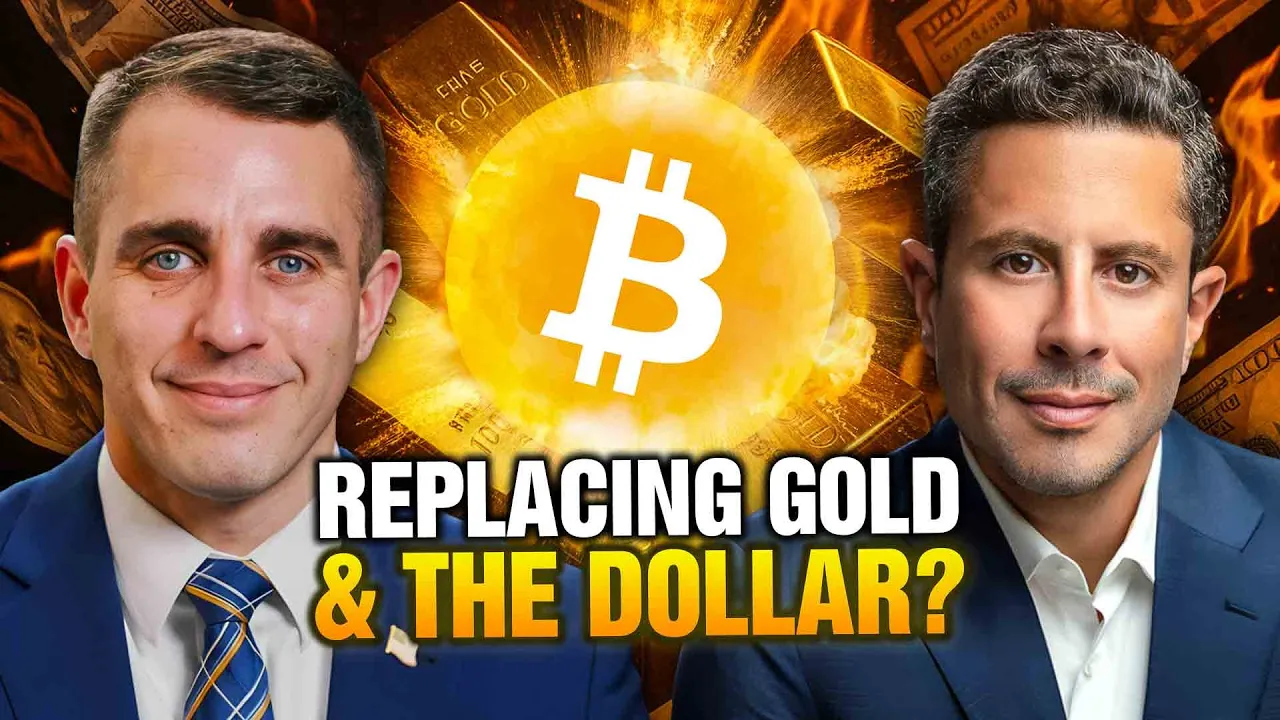
fix that goes back to Bitcoin. So, I was going to ask is the solution then uh go back on an old standard or create like a Bitcoin standard where you still have dollars backed by Bitcoin or is the only solution Bitcoin itself? What's going on guys? We've got an amazing episode for you today. It is with the economist and author Sephed Amoose. He is here to explain to us Exactly what is happening with Bitcoin. Are we on the precipice of the Bitcoin standard that he wrote about so many years ago? What's going on in global
trade tariffs? What the US government is doing? what mistakes he thinks that they're making and also how he would fix it from his perspective. Savian is one of the smartest people I know. He's been a hardcore Bitcoiner for many, many years. I've learned a ton from him and in this conversation, he shares not only A bunch of unique insights, but he also goes over his analysis of what's happening in the world today. So, you're going to want to make sure that you listen to the whole thing. Here's my conversation with Safedine Amuse. All right, Safe.
I thought a great place to start this conversation is uh everyone knows that there's economic uncertainty and chaos going on in the market right now. Um, but there's this really interesting idea of the US dollar being The leader, the king of the world. It's the global reserve currency. Uh, you wrote the Bitcoin standard, kind of this idea that we would move from a dollar-based standard to a Bitcoin based standard. Uh, are we on the precipice of this happening and Bitcoin is starting the ascension to become that new global reserve currency? Or is it still kind
of a ways away and we've got some time before you think that actually happens? It's a difficult question to answer Because timing these things is very difficult. Um, you could say it's all going to look like the precipice in a couple hundred years. Um, but looking at it from here, it could take a while. So, it could be a while before we see this happen. But it is happening in a sense. I mean, I wrote the book. Uh, actually today is the Yeah, today's the seventh anniversary of the publication of the book. Realize. Yeah. Thanks.
So, seven years ago I wrote the book and the price At that time was around $7,000 I think when I wrote it and now here we are. It's $93,000 today. So it's already up about 12 13fold in only 7 years. So this I would say probably exceeds the expectations pretty much most people back then. Most people weren't Bitcoiners and most people if you told them Bitcoin was going to perform this well over the next seven years. They wouldn't have believed you. They' have said they'd have thought this is insane. But here we are. It's going
up. And I think, you know, it's still early days in the sense of just numbers because I think it's uh you know, it's not it's it's not a matter of uh consumer adoption. It's not a matter of how many people download the uh iPhone, how many people download a Bitcoin app. For me, it's about the size of the cash balances more than the number of people. And so, you can look at the size of cash balances that are in dollars. There are Or dollars or dollar based currencies, which are all other fiat currencies in the
world. You've got around hundred trillion in fiat currencies. You have another hundred trillion in bonds. And you have something like another 30 20 $30 trillion in gold and some other uh assets, maybe real estate and stocks. Some of that you could think of as being a cash substitute um which Bitcoin is competing with. So I would say the total market for a monetary asset is about $300 trillion. Bitcoin is already at two trillion which is I mean impressive because in 15 years going from 0 to two trillion is the fastest that we've ever seen. We've
never had an asset anything go grow this fast. So it is quite impressive but still got a long way to go. And I would say you could you you could say that Bitcoin is the monetary standard of the world when it is the largest of these assets probably around something in the range of 100 trillion Or so. So, still a while away, but with Bitcoin, you never really know how long it could take. You know, that could be another few months because we've seen these crazy pumps in Bitcoin, but most likely it's not going to
be a few months. Most likely, it's going to be several years. And that's fine. I think uh it's it's it's a process that needs time. People need to accumulate cash balances. People need to uh become more familiar with how to use Bitcoin. And I Think over time it's just inevitable because the people who accumulate Bitcoin will witness the value of their cash balances increase whereas the people who don't accumulate Bitcoin will witness their cash balances decrease in value. How does the introduction of stable coins and their rise in popularity kind of change the evaluation in
that you know Bitcoin electronic peer-to-p peer cash uh I think that there's plenty of people who do use it As cash. Uh but there's more and more people I think that are using it as a store of value and now all of a sudden I get the kind of digital rails but I get to use the dollar. And so I think the United States government rightfully so is saying the stable coins are pushing US dollar global adoption. This is good for the dollar. Uh it'll extend kind of the hedgeimony like you know all the things
we hear people saying. Does that slow down bitcoin becoming the global Reserve currency or actually because of all the global uncertainty and kind of geopolitical posturing maybe actually people don't care whether it's an electronic or digital dollar. They're going to just abandon it and go for something like Bitcoin. Yeah, I I I can see the case uh for it strengthening dollar dominance for sure because it's allowing a lot of more people to access dollars and access dollars directly. Essentially, you buy Tether, you're Buying an asset backed close to 100% by US dollar treasuries. So, that's
good for the US dollar treasuries uh because it's more market for them. And let's face it, it's also good for people all over the world who are using that rather than their local currencies, which are a much crappier um version of money backed by treasuries because they're getting it from their central bank. Their central bank holds treasuries, but there's a lot less treasury covering their central Bank and the central bank is a lot more inflationary. I think a good way of thinking of it is just compare Tether, which is likely the most efficient company in
human history. They've got less than 100 people working for them and they're making what was it 13 13 billion I think. Yeah. Yeah. 13 billion last year just profit. Yeah. For 100 people which is just insane. There's never been anything like this ever. So um compare that where you you're running They've got 150 trill billion dollars of stable coins around the world. Now compare that to the average government that has $150 billion of treasuries and or $150 billion of currency out in circulation. And think about their overhead. If you want to compare to the 100
people that are in Tether, you've got a central bank, you've got a government, you've got a military, you've got a police force, you've got all kinds of corruption, you've got all Kinds of horrible things that governments are doing. So you're having to basically pay for that as a user of these third world currencies rather than um the just paying for 100 staff members of Tether. So it's clearly a much more efficient way for getting people onto the dollar than the rest of the world's currencies. And yes, it will lead to more demand for the dollar.
But I think there's a case to be made that that's likely a little bit overstated because First of all, it's not really competing with Bitcoin. It's competing with other currencies that are already backed by the dollar. And so people say in Turkey or in Brazil or in um Egypt might be using those stable coins rather than using their local currency, but their local currency is backed by dollars. Now they're moving to something that's more efficiently and um more backed by the dollar. So yes, it's more demand for the dollar, but it's not that much demand
For the dollar extra. And secondly, the dollar already has an enormous capitalization. The dollar is already the largest currency in the world. And so there's just not that much more for it to grow. So even if you think about the most bullish case for Tether over the next 10 years, you know, it grows uh 10x in size, it eats all of the world's other central banks. Even if you do something like that, you're still talking about maybe a 2x increase in Demand for the dollar, which over 10 years or so is not that much. I
mean you're that's about 7% increase per year over 10 years and that's probably close to the rate of monetary inflation anyway. So yeah, buys the dollar some time, but it doesn't really change much of the dynamic ultimately because the dollar is already very big and the dollar the market for the dollar dollar is already pretty saturated and ultimately it doesn't change the fact That the inflationary forces in the US are likely going to eat up whatever extra demand there is. So the more people are going to buy the dollars, the more demand there is for
treasuries, that's not going to reflect in more um appreciation in the dollar. that's going to reflect in more government spending, more US dollar spending. So therefore, I don't think it's that bullish for the dollar and I don't think it fundamentally alters the thesis for Bitcoin because uh ultimately bitcoin's value proposition is that it continues to appreciate as a form of money whereas the dollar does not and I don't see that changing because of tether. It's not going to people aren't going to be buying the dollar for the appreciation because they expect other people to be
buying it. So ultimately I think on the contrary when people start using tether and start you know when you upgrade from the Brazilian or Argentinian or Turkish Currency to the um USDT backed by dollars it's going to make you more familiar with digital money make you more familiar with using private keys and public keys and then that's going to make you more likely to uh appreciate and understand the upgrade from dollars to bitcoin. So, as with everything in this world, it's also good for Bitcoin, I would say. Um, what about the US government starting to
uh hold Bitcoin when they say they're going to buy more. Um, but it does feel like when, uh, El Salvador, Bhutan, you some of these other countries, uh, I think Bitcoiners like that's a big deal. It's the first country or it's, you know, another country, whatever. Um, even Russia, I would argue, you know, they're openly talking about this now. Uh, but the United States is the United States, right? It feels like that was like kind of a big shot heard around the world. Um, do you think that that actually Accelerates, you know, Bitcoin as a
global reserve currency and it hurts the dollar or do you think that they've done it in a way where uh it definitely helps Bitcoin but it isn't necessarily hurting the dollar and people aren't losing faith in the dollar even though the US is holding Bitcoin? Yeah, it's difficult to tell. I mean, initially if you told me this a year ago, a year ago, nobody had expected any of this stuff in April. Uh, Trump was not talking about it. I Would have thought that if at this point um they'd followed through with this strategy. I would
have thought it would have been a bigger deal. But similarly, you know, we we expected that the first corporation to buy Bitcoin was going to cause uh a run among corporations. We thought that the first government that buys Bitcoin was going to do that. And yet, you know, it's worked out well for El Salvador. It's worked out well for Micro Strategy. But there haven't been a Lot of copycats. And I think it's um it's it's just the way that Bitcoin is. People need to take their time to really get it. So I'm kind of underwhelmed
by the response in a sense. So you would have imagined that more countries would have started paying attention given that Trump has been uh doing this. But in a sense, yeah, there was a lot of talk about Bitcoin strategic reser reserve purchasing Bitcoin and so on. But ultimately all that has really happened Is that they've just kept the bitcoins that they've had, which isn't very different from the policy that was being adopted previously cuz previously it was ambiguous. It wasn't clear whether they were going to keep them or sell them. And they were selling them
unannounced. Now it's clear that they're going to keep them, which I think is just on a very simple market dynamic level is bullish for the price because you're not going to be getting a dump of 10,000 Coins on a random Tuesday morning without anybody finding out. Um, so I I I believe it's likely going to be bullish in the long term, but it's it's not clear that the administration is really um is really convinced of the idea of using Bitcoin as a strategic reserve or as a replacement for the dollar. This is the thing. So
they're continuously saying we're going to use Bitcoin to enforce dollar hedgeimonyy. So that message has not really the Message of dollar of bitcoin as an alternative is not really being pushed and it's um I don't particularly find that very convincing. I don't think you can use the dollar to you can use bitcoin to bolster the dollar. I think they are uh competing. It's a zero sum game and there is no prize for second place. What about gold? And gold uh did pretty well last year. Bitcoin did better. Uh but to start 2025 gold has done
very very well. It's up like 30% 31%. Uh Bitcoin is uh kind of sideways for the most part. Um how do you look at that playing into the equation? I'm skeptical that gold can continue its rally significantly for a long time. I think the fundamental u dynamics of the gold market have been broken by the fact that gold is just not used as money in a practical sense. So yeah, you can hold it, you can buy it, you can put it under your mattress, you can store it in a financial institution, but you can't Make
payments with gold. You can't there are no gold banks. And so therefore, it's always going to be separate from your cash balance. It's always going to be separate from the money that you can use for settling trade. And that for me prevents it from appreciating significantly, prevents it from accumulating enough monetary premium. And I think that's why it's been used a lot more during the last century in industry. And a lot of the gold bugs Will tell you that u you know gold it's good for gold that it's used in electronics that it's used in
jewelry. I think that's actually very bearish for gold from a monetary perspective. As I discussed in the Bitcoin standard what made gold money was the fact that it has a very large stockpile compared to its uh annual production. And so this idea that annual production is always a small fraction of existing liquid stockpiles that are used as money is what makes it A great money because then if the people start using it more as a store of value, the gold miners can't increase the supply significantly. But if you start taking the liquid stockpile out, the
gold out of the liquid stockpile and putting it into um industrial uses, you're effectively reducing the size of the stockpile. And therefore, the new production is a more significant part of these stockpiles. And so therefore, it becomes more inflationary as a monetary Asset. And that's what's been happening over the last century as gold been demonetized. the more you see it used in non-monetary uses, the less of a money it is in a sense and the more of an industrial metal it is. And that's how silver was demonetized. That's how copper and iron before that were
demonetized. So I think this is still the case with gold. Even with this appreciation, if you look in the long term, I think it's not really caught up To dollar inflation. I don't think gold has held its value well compared to the amount of devaluation of the dollar. So if you were to measure the price of real estate in terms of gold, it's still gone up. Real estate has gone up in terms of gold in most places. And that's because gold has not really managed to keep up because it's not been acrewing monetary premium over
time. So I'd be skeptical of its ability to continue to hold on to value for a long time as long as it's Not possible to use gold as money. And it doesn't look like that's going to change. We don't see it happening in the US. We don't see it happening in any of the other countries that could be um working on an alternative monetary system. You know, you don't hear about China or India or Russia setting up gold payment networks, gold settlement um infrastructure, places for settling gold amongst each other. the g global gold market
still relies on the London uh Bullion association which is very centralized and u very shady as well. So there are a lot of shenanigans going on in the gold market. You can't verify gold like you can with Bitcoin. You can't run your own gold full node and so you're always um you're always at the mercy of central for centralized forces. So, I don't necessarily think that that has changed much. And I think this recent bull run, you know, it's um it's good for the gold bugs who have suffered A lot over the past couple of
decades with uh watching pretty much everything go up except gold and silver. So, that's encouraging for them, but I don't see it uh I don't see it being sustained for a very long time. What has to change for the central banks that are buying gold right now to start buying Bitcoin? You think? I think um what they need to do is they if they start thinking about moving to a gold standard and then start operationally working on making gold Trade work on an international level, then they'll start thinking about the real cost of making these
things happen and then the value proposition of Bitcoin will become apparent for them. So you actually think that the central banks may become more interested in Bitcoin by going away from fiat thinking about gold realizing hey this would be really hard and therefore we need something that has gold like properties but can be used for transactions. Yeah I Think if you start thinking about it operationally you know if say Russia and China decide that they want to start trading gold directly now they need giant facilities for verifying it. Yeah. Trucks and airplanes. And most importantly,
I think the most the trickiest part of it is if you really want to trade gold trustlessly, there's no way to figure out whether this these giant gold bars, which are about 400 ounces, 12 1/2 kg, there's no way to of Knowing whether they're 100% pure gold or not, except melting the whole thing down and recasting it again. So, that's really expensive. Every time you want to trade that across borders, you're going to have to recast it. It's a lot cheaper to just verify with a Bitcoin node. So I think, you know, the number go
up technology in Bitcoin, the fact that Bitcoin appreciates a lot faster than gold and a lot more than gold, and the fact that it's a lot easier to verify. Those are the two things that people need to get. But I just uh unfortunately doesn't look like many people get them, which, you know, fortunately for you and me means we can stack more sets. Um the ETFs have come out, have been wildly popular, number one, you know, financial product ever launched on Wall Street. Um there seems to be more of a financialization of Bitcoin in the
industry in general. Uh I always joke that Larry Frink from Black Rockck is Now uh Bitcoin CMO like doing fantastic job. He goes out, you know, flight to safety, whatever, whatever, fight to flight to quality. Um is it a net positive? Like do do you think even though I think like the hardcore Bitcoiner mentality is self-custody, run your full node, you know, all the things that are kind of like anti-Wall Street, frankly, um but do we still think that they've been a net positive to Bitcoin and the industry? I think so. I'd say That they
are net positive. It's just more demand for Bitcoin, more liquidity. Ultimately, money is a game for cash balances, and the bigger the cash balance, the bigger the uh liquidity, and the more uh the more that something can function as money. So, you want more people to be holding uh Bitcoin. Yes, I would prefer if everybody held their own Bitcoin with their own private keys, but I think people uh you know, my fellow hardcore Bitcoiners, we need to Recognize that Bitcoin is permissionless. And that means that you can't stop people from selling their u from selling
IUS for their Bitcoin. There's no way on the protocol level that you could force people to hold their own private keys. They can hold their own private keys and then sell access to the Bitcoin without selling the private key. And that's just the way it is. So we can't stop Black Rockck from buying Bitcoin. We can't stop Anybody from buying Bitcoin from for other people. It's inevitable and in and and it's just the way that the network scales. Let's face it, there's not enough room for everybody to be transacting on chain on Bitcoin. So, this
is inevitable. And uh you know, it's it's it's important for Bitcoin security that it be decentralized, but we don't need it to be decentralized to the point where everybody's coffee transaction is Registered on chain. We needed to be decentralized to the point where nobody can change the supply, nobody can censor transactions. And that's a huge difference. So we don't need to have uh a couple of trillion transactions on chain every day. We can do with half a million transactions, the most important half million transactions or 1 million transactions on chain. And that would be likely
enough to maintain its security model. And ultimately, you know, all of The stuff about it threatening Bitcoin, I I don't really see it as being a very credible threat for the very uh simple reason, which is that these people become invested in Bitcoin. They have an interest in maintaining it. So, compromising the network is going to compromise their investment. So, it's you don't have to like Larry Frink. You don't have to think that he has the best intentions in the world, but he is out there looking for looking out for his Bags. And now his
bags are Bitcoin. So, he's going to be looking out for Bitcoin. Do you think that Black Rockck or Strategy or any of these companies can have too much Bitcoin? I don't think anybody can have too much Bitcoin. There's always uh everybody's always looking to have more. Um, you know, from their perspective. From their perspective. Yeah. Exactly. But like from a network standpoint, is there a threshold where forget who the player Is, right? But just like if somebody had 10 million of the 21 million Bitcoin, would we be like, "Hey, that's bad that there's a risk
there." or doesn't matter how many you own, you get no preferential treatment in the network. Yeah. I mean, uh, ultimately I don't see how it would threaten the protocol in a serious sense if you if Michael Sailor ends up with 10 million bitcoins. Um, what's he going to do? He's likely going to just leverage them to buy more Bitcoin. uh but you know that he's not going to wake up one day and decide all right let's make uh let's try and hard fork this so that we can add another 5 million bitcoin to the supply
so that I could have 15 I think if he does something like that would he'd be the biggest loser cuz his 10 million bitcoin would lose value so it's you know from a from from an egalitarian perspective it doesn't look nice if everybody else got to play um on in this game and rather Than Michael Sailor monopolizing them all. But again, it's permissionless and um I generally have learned to try and not get angry at things that I can't control and rather focus on growing my own stack rather than uh looking uh at other people's
stacks and I encourage everybody to have that attitude. Do you think that there's a net impact like a net negative impact by whether it's black I mean black rockck has more than strategy right and I think the ar the Maybe the counterargument is always uh strategy is a company the shareholders technically it's like the shareholders bitcoin um the ETFs are made up of shareholders it's like their bitcoin you know so it's not like black rockck has it on their balance sheet it's only black rocks bitcoin but um do you think that there are downsides to
this or do you just look at it as like hey there's some threshold that you Uh it'd be nice if there was more available, but at the End of the day, um it is just buying demand and that drives the price and that's positive. Yeah, I mean it would be nice. I know a lot of people uh from my personal life and a lot of people um that would just benefit from having bought more Bitcoin. I wrote a book about it. I wrote a podcast about it. I'm doing my best to tell all of these
people to buy. They choose to laugh at me. They choose to call Bitcoin a stupid Ponzi scheme. And then Michael Sailor Chooses to buy his coins. So, um, you know, what ends up happening is fair because that's what everybody decides. Everybody from day one, you know, from Satoshi's Genesis block, everybody has had the same opportunity to mine or buy Bitcoin at the same market price or mine it at the same difficulty. So, it's been an equal playing field for everybody everywhere from day one. And I don't think anybody has any grounds for complaint in that
sense. So yeah, it Would be nicer. Of course, it was a little bit more equal, but some people got this opportunity early on and figured out how to capitalize on it. But yeah, ultimately, as you said, um whether it's strategy or it's uh Black Rockck, it's not like Michael Slater himself or Larry Frink himself owns all of those bitcoins. They have shareholders who own those bitcoin or EDF holders who hold those bitcoins. And to the extent that Black Rockck and Strategy hold those, they hold them because they are doing their fiduciary duty to their shareholders
and to the ETF holders in a satisfactory way. The moment that they start running this in a way that's not good for the shareholders, the moment that they start abusing that position is the moment that all those people sell their ETFs and go buy ETFs from somebody other than Black Rockck or they sell their Micro Strategy stock and they buy similar stock or they Sell their Micro Strategy stock and buy Bitcoin stock. Ultimately, all of this stuff happens above the protocol level. We don't see it happening on the protocol level. And as you've seen Bitcoin
kind of continue to rise up here, uh, one of the aspects that maybe I'm most fascinated by is, uh, everyone wanting to take the innovations from the altcoin market and bring it to Bitcoin. So, uh, things like payments, obviously, lightning network, very popular, uh, but Then there's NFTTS and, you know, all this other stuff where it's like, hey, Bitcoin is going to be this layer one. How do you look at the Bitcoin market? Maybe the layer twos are side chains and then like the altcoin market. Are you still of the belief altcoins are all zeros?
Bitcoin stuff is not really going to be that valuable other than just a layer 1 or or what? Are you looking for a simple way to earn Bitcoin rewards every single day? At Simple Mining, we Help people mine Bitcoin, even if you're brand new. We're vertically integrated Bitcoin mining company based in Cedar Falls, Iowa, offering a premium white glove hosting service that helps you maximize your mining profitability. With over 500 clients worldwide, we manage over 15,000 machines across our sites. Our facilities are staffed 7 days a week, and we fix most on-site issues in under
48 hours. In fact, we can repair more than 2,000 hashports each month in Our dedicated repair center, ensuring your miners run smoothly. Want to see it firsthand? Tour our mining sites, either in person or online, anytime. Plus, for your first year of mining, we cover all repairs, no questions asked. We bill you for the exact time your miners are running, and you can pause whenever you want. Need to buy or sell? Our exclusive minor marketplace gives you the freedom to trade on your schedule. You'll even have a custom dashboard to track your Minor stats in
real time. And if you're thinking about running your operation like a business, our tax team can guide you through the depreciation advantages. Ready to grow your Bitcoin stack? Visit simplemining.io. Yeah, pretty much. I think all of the other things that people mention uh are not even a rounding error because ultimately money is a $300 trillion total addressable market. This is by far the largest market in the world. Nothing comes Close. Nothing. Nothing else is you know the total value of I think the NASDAQ is I think around $40 trillion. So the S&P 500 the 500
companies that make up the S&P combined are also I think around $40 trillion. So, the total addressable market for just money is five or six or seven times larger than all of the S&P 500 companies combined. So, that's just such an enormous magnitude that all of these other use cases, I mean, I'm skeptical that they going to have any Kind of demand. I think they've been mainly used just to pump tokens. But even if we go along with all of those narratives, you know, um real estate on the blockchain and blackjack on the blockchain and
um collectibles on the blockchain and Pokemon cards on the blockchain, even if you're going to give them all their most bullish scenario possible, it's still a rounding error next to the total addressable market for Bitcoin. It's for me it's as Inconsequential as somebody saying, "I'm going to start painting on dollar bills and I'm going to start selling my dollar bills for more than$1." And so, yeah, maybe you do that. You know, maybe some artist in New York City manages to pull this off and start selling dollar bills for $2 because he paints something nice on
them. It's completely unutterly inconsequential to the dollar and the market for the dollar. It's just a a very very tiny little thing. And yeah, With altcoins, I also think it's um it it's it's really been a couple of rough years for altcoins, and I think it's going to continue that way. I don't see a compelling value acrruel narrative for any of the altcoins. um their narratives are um novelty, flash in the pan, short-term, and you can get marketing behind it for a while, but after a while, you know, the supply keeps going up and eventually
the demand can't keep up and then the tokens crash. And you Know, we've got more than I think 30 million tokens at this point. And at least 99.9% of them have gone to zero already against Bitcoin. So, it won't be long before the rest go to zero as well. You don't think fartcoin is the future? I, you know, I don't make trading investment advice, but no. All right. You uh you live outside the United States. I think you are very well verssed uh in global economy, in monetary policy, kind of all the things That have
made you, I think, a very unique voice looking at Bitcoin. Um the United States, we elect Donald Trump, he shows up, he's like, I'm going to switch up this whole world order. Um, and I actually think it's important that people voted for that, right? People, hey, the America First Agenda, all all uh kind of what he said he was going to do, he is doing in theory or maybe in spirit. I think there's a lot of questions even from people who voted for Him as to whether the way he's doing it, the way he's messaging
it, is that the right path to pursue these things. Um, and some of it is like the actions, some of it's the messaging, and then some of it is actually like the speed, right? You know, I've seen people online who are like, "Hey, I'm cool with what you're doing, but just like give me six months to prepare my business rather than just do it, you know, tomorrow." Yeah. Um, just talk through like what is The perspective from outside the United States of what people, you know, kind of think is happening or or see is happening.
Well, outside the United States is a very big place. So, I I I don't claim to be speaking for uh all uh 7.7 billion non-Americans out there. Uh but I do speak for myself and you know I've got plenty of perspectives to share. So um I mean I think the uh the um I personally was pretty excited about the whole Doge agenda initially. I Thought that would be fun and I thought if Elon would bring his uh private sector uh razor to the government that would be pretty cool and I think you know the more
drastic and the more painful it is the better it would be but I've been massively disappointed by it. So at the on the campaign trail, I remember Musk saying something like $2 trillion reduction in government spending and then kept coming down and now we're at I think 70 billion which is Essentially a rounding error. So um initially do you think that it is because there's not things to cut or like they got neutered? Like I was having this conversation with a friend, right, of um every candidate through my entire life has always been like I'm
going to do and they say something and everyone's like yes and then like you got to imagine they like walk in the Oval Office, they get tap on the shoulder, they're like you're not going To do that, right? You know whether it's release some file or you know they get told some story or whatever. Do you think that's part of it of like uh okay sounded good on the campaign trail but like you can't touch that group or you can't touch this thing? Yeah, I think I mean it's it's it's difficult to tell what it
was in this case and I thought with somebody like Musk, you know, he's kind of doesn't care. Kind of doesn't care. And you know, what's the worst That can happen? He loses $50 billion. You know, he spent $40 billion on buying uh a meme website for shits and giggles. So, you could have imagined that he would have had the fortitude to go along with that. And the fact that he hasn't is quite depressing, but it just confirms what, you know, Lynn Alden always likes to say, nothing stops this train. And I think this is uh
this was an incredible turnaround because an enormous amount of expectation was Placed on this and then it didn't quite materialize. So I'm not uh I'm I'm not sure, you know, behind the scenes how this has played out. I'm not sure what kind of uh uh what what kind of pressures came uh to bear but I think initially there was a there was a um initially the rhetoric was government is wasteful it was very libertarian it was almost roughbian you know let's get rid of this and get rid of that but then it's you know it's
it it gets watered Down and now we're talking about individual cases of social security fraud and stuff like that which is again you know rounding errors So that unfortunately doesn't seem to have panned out. It would have been nice because I think you know the United States government is massively massively oversized. I think you could cut 90% of the United States government budget and you would improve pretty much everything particularly defense. I mean if if if You want to cut something you could bring back all US soldiers outside the US borders bring them into the
US and you would actually improve US security. Americans would be a lot safer if that were the case because I think the vast majority of military presence abroad is actually making the US less safe, gaining more enemies for the US. So that would be an easy thing to cut. But of course, that's the one thing that not even Musk had even mentioned suggesting. And of course, you know, uh we we probably should have seen the writing on the wall. I mean, Musk himself gets a lot of his business contracts from governance. I think Twitter might
be the least government dependent of his businesses, but you know, Tesla relies a lot on government subsidies and tax breaks. Starlink gets a lot of its uh contracts from governments. So, um if you really wanted to cut, you know, there's you you may think going to Mars Is a great thing, but um you should be able to finance that with your own money. There's no reason that taxpayers and dollar holders should be financing that. So, that doesn't seem to have worked out. Then the tariffs, I think that was that was I believe it was a
catastrophic mistake and I still think it is. I and I don't think that was an on the agenda. I I think if Trump had run with the agenda of we're going to put these enormous tariffs that they Announced a couple of weeks ago, I don't think people would have voted for that on a practical sense, people would have just looked at their own balance sheets and would have said, "Oh, wow. You know, my laptop would have become so much more expensive. my um the equipment that I need for my business would have become more expensive
and I think it just throws a lot of business models u down the toilet and that would didn't have appealed to people. I don't quite Understand how they came along with it but I'm still very skeptical of it. Um and I think it's you know it was very clear the market reaction was devastating on the stock market but also on the bond market. I didn't think that was the big one because it seems pretty clear that what they thought was we're going to do this, it's going to be bad for the stocks, but if it's
bad for stocks, that it's going to mean it's going to be good for bonds. And if it's Good for bonds, that means that we can refinance the debt at a lower interest rate. Well, that didn't work out because the bonds went up. And I think that's uh that there was no reason to presume that that would be the case. Um just because there's generally a correlation between uh stocks and bonds doesn't mean that everything that's good that's bad for stocks is going to necessarily be good for bonds. So because of that we saw the bond
yields rose beyond 4.5 which I Think was the red line and when it hit 4.5 they backed down. They gave a nday pause and then it became all about China and and about trying to fight with China some dominance play with China. I don't think this is in any way productive. I don't think this is good for the US, for the American people. I think it's u it's very wrongheaded in the way that they are that they're looking at the issue of trade as a zero sum game. And it's very wrong-headed because they're looking at
The trade deficit as being the fault of China when really China is powerless to affect the US trade deficit. It's exactly like you blaming the uh supermarket for uh taking your son's money when you gave your son a credit card and he goes to the supermarket. He goes to the mall, he goes to the nightclubs, he spends all of his money. Well, you know, these are just businesses. They've got price tags. Anybody's welcome to come and spend. And They can't look at your balance sheet to decide whether it is a responsible thing for you to
be spending this or that. There are millions of Chinese businesses selling to Americans and they're just looking at their own business. You know, you're selling tables to an American consumer. You're every single one of those people is just looking at their own business and I'm going to sell this table for $500. I'm going to get $500 in return. They're not thinking of it in an Aggregate sense of, oh, there's too many of us selling things that is causing the trade deficit. So trying to address the trade deficit with tariffs I believe is counterproductive because what's
making the trade deficit uh grow is the fact that the US government can print money. So yes and no I agree with you right on one hand yes I grew from that Chinese business they're just going to sell to whoever's going to buy. Right? That's how business works. The economic Incentive is there. Um if you don't agree with that then like you don't understand how you know uh kind of economics work. So I I agree with that point. But I do think that there are very well doumented examples where um a business in China can
sell unfettered to the US consumer, but when the US business wants to sell back to China, they are manipulating the currency. They are uh hitting with tariffs. You know, there's there's all kinds of things that Aren't true free trade. And so I guess the question becomes um if your goal is to get back towards free trade where you're taking down those blocks you know that uh a foreign country has put on your businesses um do you agree that the tariffs if that's the end state are worth doing that uh or do you see it as
uh it doesn't matter what they're doing taking the approach of the tariffs just doesn't make sense and you know find a different way to kind of address the Issue. Yeah, I definitely the second. So I think tariffs are essentially uh uh they're a punishment by the government to its own people primarily. So if the US imposes tariffs on Chinese goods, the main people that are hurt are the American consumers who rely on those Chinese goods and foreign goods. And the second uh order effect is to hurt the Chinese businesses. the Chinese businesses are hurt less
than American consumers because Chinese businesses Still have the entire rest of the world to sell to and the US is only 4% of the world's population and um you know they buy a lot of stuff though they do buy a lot of stuff but still uh it's no what is it 10% 15% of the world's it's 12% of China's exports which is you know it's the biggest importer from the from China but it's there's still 88% that's not how how much of the consumer behavior do you think shifts? Right? So, let's say uh there's a
widget that's made in China, sold to the United States, we put a let's not go to 150% but you know 20% tariff or whatever. Um do you think that consumer shift and they say well if there's an Americanmade uh product that maybe is the same price or slightly cheaper uh that that actually can help the consumer but not I'm sorry hurt the Chinese business and help the American consumer. I don't think that's really the case. In most cases, the u the the economics aren't going to be affected by A small little marginal tariff because the
you know the with a lot of those things they're not even being made in the US. And ultimately the uh I I think the thing that is missed and that the econ textbook the econ textbook on trade does a terrible job of teaching trade because it oversimplifies it in a way that doesn't really capture the complexity of the real world. I think the uh the key thing to keep in mind is that the the the tariffs also hurt the Domestic producers because they need to buy the imports that go into the produ production process. So
yes, we're they're source materials. Yeah. The source materials and these things it's it's a very um it's a very ancient mentality to imagine that you can just have self-sufficiency. Today's supply chains are just so complex. I mean, there there's there was that meme going around of these I can't remember what fruit it was that was um grown in Thailand, packaged in Argentina, and then consumed in the US. And it sounds like it's insane and it sounds like it's wasteful, but it just ends up working because that's how the supply chains work. They've got a massive
facility for processing these things that does them really well in that country and that facility can produce so much with their local product and then they realize hey we can start sourcing some material from abroad and then they sort us it and it Makes sense and then the consumer buys it and even though it it might seem inefficient the market shows us that it is the most efficient way and that's just a very simple example of a fruit but of course when you get into the complex products TVs and electronics and so on you're talking
about extremely sophisticated ated supply chains where it's very difficult for one person to be able to figure out how these things are made. So, you know, the the people at Samsung, they don't even know how the supply chain for their own TVs looks like. They know that they get the chips from this place and they get the silicon from that place and they get this from that, but they don't know how the supply chain for the chip that they bought was made in Taiwan or China or the US and they can't know that. And so
every single person involved is involved with a tiny little aspect of this. And so the more trade barriers there are, the more Complex this process becomes, the more uh expensive it becomes, and then the more difficult it is to compete. And so any country that has lower trade barriers ends up having an enormous advantage over countries that don't because they are at every step in this production process. they can take their pick from all of the world's suppliers. So, and you can get the cheapest copper, the cheapest silicon, the cheapest anything. And when you start
imposing Those tariffs, you're basically hand um you're placing a handicap on the local producers because you're making it so that all right, well, we can't get the Chinese steel and we can't get the uh Canadian um maple syrup or whatever it is. But um you know, you can't get all of these different supply supplies into the production process and so it makes it very difficult to make it competitively. So what you would want really for your own sake I think is to Just have as little tariffs as possible. And I think you know the historical
record shows this to be the case. I think you know people look at China and they say well China has some trade barriers. It does have some trade barriers now but they're a lot lower than what they were 40 years ago. And that's why China's advanced so much in those 40 years. And I think if they reduce their trade barriers further they would do even better. And I think this Is this this is this is the kind of very destructive mentality that governments get into once they start thinking of trade as being an adversarial game
that we're going to impoverish our people in order to show the Americans or we're going to impoverish our people in order to show the Chinese. It's the two governments essentially holding their own populations hostage, ruining the profitability of their businesses, increasing costs for their customers in Order to play a game of dominance against each other, which is very dangerous because it's, you know, it's hurting both populations, but it's even more dangerous because it escalates. It escalates from trade tensions into political tensions and it can escalate into military tensions. And this is how World War II
escalated. This was a big part of the u of the leadup to World War II that all these governments became a lot more status, a lot more centralized. Trade barriers went up enormously in the 1930s and that helped militate governments against each other that helped make people hate each other and prepared people for war. So, I think it's a very dangerous game to play. But um overall, I think there's nothing better for people in any country, wherever it is, to just have the option of being able to buy and sell from the rest of the
world at the lowest cost possible. When you see these tariffs Getting put in place, um it seems like that has kicked off some of the gold buying, that has kicked off some of the uh maybe conversations from foreign countries saying, "Okay, is the US trying to isolate China? Is China trying to isolate the US? Whose side am I on? is there bricks coming together and they want to create a currency. You know there there's it almost kind of feels like there was already a lot of conversations and and in my opinion a Lot of it
started with the US sanctioning Russia and you know kind of uh showing that maybe the way that we're going to handle some of these situations is not what the global world thought and now tariffs are accelerating some of that conversation. Now I would argue we're just accelerating the people to which side of the fight they would be on already. So people who are going to be allies of the US or come running and they say hey let's be partners we you Know we Taiwan's a perfect example they need the US they want the US they
you know want to keep doing business with the US their trade offer out of the gate very strong and it basically is what you're saying there's no trade barriers there's no any of this stuff like let's just be friends right but there's a lot of other countries that are saying well hold on a second uh I was already leaning towards you know China or kind of a a by um bilateral kind of component Here and so they're like running towards that and so are the tariffs actually just like accelerating us more towards this world of
like who's on whose side and and that world order, that capital stack getting more decentralized. Today's episode is brought to you by Bitcoin OS. They're the ultimate upgrade to Bitcoin. Bitcoiners can now experience the magic of the entire crypto world, including DeFi, scalability, privacy, and more without Giving up control of their hard-earned sats. Powered by revolutionary zero knowledge technology, Bitcoin OS lets other blockchains plug into Bitcoin, offering their services to the world's largest digital asset. This lets Bitcoin holders securely move their coins across the crypto landscape, turning Bitcoin into a productive, programmable asset. Putting your
Bitcoin to work once meant trusting centralized companies and bridges to protect your assets. A model That's lost crypto owners billions to hacks and fraud. Bitcoin OS lets you be your own boss using a system based on cryptography rather than trust, the way Satoshi intended. Using Bitcoin OS, all coins are returning home, eager to plug into Bitcoin security, network effects, and $2 trillion capital base. Bitcoin is the first and final boss of all digital assets and will soon be reborn as the foundation of a united crypto world. Follow Bitcoin OS on Twitter, BTC_OS, and be early
to Bitcoin again. Follow Bitcoin OS on Twitter today, BTC_OS. I think so. And I think it's uh I think people in this administration have likely vastly miscalculated the um amount of economic influence that China has. I think a lot of people in the Republican party are influenced by um anti-Chinese sentiment. You know, there's an author called Gordon Chang who's quite influential. He wrote a book in 2001 talking about the impending Collapse of the Chinese government and the Chinese Communist Party. And he said within 10 years by 2011 this is going to be gone. And I
you know as a Bitcoiner I think we should we we should we should notice the parallels here because people have been saying China is about to collapse for all of my life. You know all my life I'm hearing people saying China is an authoritarian repressive communist regime and it's all smoke and mirrors. All of their statistics are Cooked up and it's all going to collapse. And on the contrary just like with Bitcoin you know it's not just that it hasn't collapsed. It's also gone up enormously. So you look at pictures of Shanghai today versus Shanghai
30 years ago. It's the exact opposite of collapse. I you look at the pictures of small little towns that used to be very poor towns in China and now they've become industrial superpowers with incredible infrastructure. China is the World's leading producer of steel. It produces more than half of the world's steel. Its steel production is more than 10 times larger than the second largest steel producer which is India. uh China is already the prime trade partner for 120 countries in the world. So 20 years ago, the US was the prime trade partner for most of
the world. Today, it's already China. And that was all before Trump got into office. This has just been the case for a while. And That's been the case because of China's growing industrialization and the US's de-industrialization which is driven by the fact that the US has a money printer that makes it not so um useful to get real productive business in the US because you could just go to the money printer. So that's why all the smart kids in the US want to go into investment and investment banking and hedge funds and so on. And
um you know ultimately in a place where there's a Big money printer, if you're good at your job as an engineer or as a doctor or as a um as an industrialist, if you're good at that job, but you don't know how to manage your investments, then that's pointless. It doesn't matter. If you get a good salary, you make good money, but then you don't know how and then you put it in a bank account and you lose 7% per year, then it's pointless to have been a good engineer. So, you need to figure out
how To play the fiat casino in order to keep your wealth. But if you know how to play the fiat casino, then it's pointless being an engineer. Also, why would you want to go to engineering school, work a real job, go into a real factory, deal with actual workers when you could just sit in an air conditioned room and pick stocks and um figure out how to play the fiat uh market. So, naturally, everybody gravitates towards the fiat market. I think this is the fundamental driver of The de-industrialization in the US. It's the fiat money
printer. And so this trend is um is accelerating as with the acceleration of the use of the fiat money printer. And so when the Trump administration says we want to increase dollar hegemony, we want to spread the dollar further. We want to use stable coins to make the dollar stronger as a global reserve currency. that is in direct contradiction to the goal of bringing back industrializ industry to The US. So I think the um this notion that China is this paper tiger that's going to crumble if the US places tariffs is vastly misplaced. I think
China can handle uh US tariffs a lot better than the US can handle its own tariffs. And I don't even think that China needed to retaliate. I think if I was in China's place, I would have just completely ignored all of these tariffs and wouldn't have imposed anything myself. And I think the the u you know The the the people have been talking about this as being sort of this genius negotiating tactic, but you're really pushing people away from you as a negotiator if you're just willing to break away all those deals. I mean, this
is the sort of thing that makes countries inhospitable for business. This is why people don't invest in uh basketcase countries because you know you you you can expect that whatever agreement You've got going with the government will be thrown in the dust bin once the next regime comes in. And so when there's an election in these countries and the president is removed the new president comes in everything is thrown out. These countries don't attract capital. these countries don't attract a lot of interest in money because people want stability. And so I think the long run
impact of this tariff thing, whatever happens now, whether They keep them, remove them, um keep them on some countries or whatever it is, the uncertainty of it all is just going to push everybody to try and reduce their dependence on the US. I think I think I actually think the uncertainty and the lack of clear messaging is much more of a fair critique than the tariffs themselves. Um, and if you were to critique the tariffs, uh, I think that the severity of them is something to critique. So It's like I've been saying from day one
if we ended up with 5 to 10% blanket tariff and then we remove tariffs for things we want. So computers, you know, all all the like advanced things that we uh either would struggle to make in the United States or we already get elsewhere and we want to continue to keep those products imported into the US. You remove the tariffs, you turn tariffs into incentive system versus like a punitive type system. Um I think That one, you would accomplish the goal of you get more government revenue. Uh, two, because you're incentivizing certain products, you keep
the things you want and the things that you don't want. If people still want to sell, then there there's the barrier, but you it's kind of like you don't care about those things as much. Um, and then I also think that you can use that as an incentive to help some reshoring. Uh, I think most people agree like I saw a Stat 75% of Americans think America's better off if we reshort manufacturing, but only 25% of Americans say say they'd be better off if they worked in a factory. Like Americans don't want to go and
stitch sneaker, you know, play do all that stuff, right? They want to work in high-tech, advanced manufacturing. Like that that's good job, right? They want that stuff. It's high paying, it's high skilled, it's high status, whatever. Um, but I don't think we're Going to like move back the, you know, uh, we're going to sew together t-shirts from Vietnam type stuff, right? Yeah. So, when I look at this, I say to myself, um, okay, if you just came out and you said, here's the plan. 6 months from now, it goes into effect, uh, and we're going
to incentivize, we're going to do all, you know, blah, blah, whatever. I think there's still some people who would say, "Hey, I don't like this plan. I don't think we should use Tariffs, whatever." Like, "Okay, I got it. It's the it's on, it's off, it's on, it's off." That uncertainty has upset a lot of people. I think it's really uh showing up in the market, as you said, both stocks and bonds. Um, but then on top of that, it's the like 150% on China, right? I mean, just like it it's not even a 20 30
40% which still would be incredibly high. It's like to the point where if I said to you, "Hey, we have 150%, you know, tariff on China." And they also are like ratcheting it up over 100%. Like stop. Like they you can't almost couldn't fathom that two years ago. Yeah. And it's just I mean, you know, people keep saying the art of the deal. The art of the deal. This I'm no master negotiator myself, but this seems to me like the worst way to go about a negotiation where you staked out a completely unsustainable position, which
anybody can tell that there's no way that you could sustain that. and the Markets called the bluff and the markets um started to collapse and forced them to back up to back down from this. So that shows that you're not very serious about this. And then if you started off by showing that you know you are that this is my pain point and I can't really maintain this and this is not a credible threat then you've really undermined your ability to negotiate. But I think more generally I mean I'll agree with you on this. I'll
disagree with you that This would have been a preferable STR I I agree with you that it would have been preferable if this was done predictably, but it still wouldn't have been good. I think it would be better to just get rid of all tariffs, even the existing tariffs. That would have been much better for American industrialization. But um I I I would still say the um this whole idea of trying to use these tariffs as a way to negotiate for the well-being of the country. I just simply Reject this overall because I think Trump
is applying his playbook from negotiating for real estate deals in companies that he owns to negotiating for a government on behalf of millions of people's own businesses. And these people's positions are not uh all identical to each other. And so he's in no position to be determining what every single business needs to do. And so and and this Impossible for him to do that. Exactly. And this is this is basically from my perspective as an Austrian economist. This is what Mises calls the calculation problem. The reason that economic central planning doesn't work is that because
you don't have property rights, the central planner is unable to figure out the correct allocation of resources because he has no possibility of um allocating things rationally because there are no prices. is if the Government owns all of the factors of production then the government think about you know the example of steel going into trains and cars. So if the government owns the steel mills and the raw iron ore uh mines and it owns the car factory and it owns the train factory and it allocates the trains and it allocates the cars to people and
it decides how many people get trains and car. There's no way of figuring out the rational allocation of where should the Iron go to which steel mill and where should the steel go to the cars or the trains because as long as it's not the consumer who's making the choice and then the entrepreneurs getting responding to these signals based on private property there's no economic calculation without economic calculation economic production falls apart that's the most important insight of per of perhaps the Austrian school and it's something that most people don't really Uh know when when
people think about the problem of socialism they think of the problem of incentives you know people aren't going to rich in a so aren't going to get rich in a socialist system and so that's why the thing falls apart and that's uh completely separate from the mises and Austrian critique of socialism which is about property rights it's not about incentives the Soviet Union solved the problem of incentives if you didn't work you went to the Goolag not going to the goolag is a stronger incentive than getting rich for most people so people had an incentive
to work in the Soviet Union and absenteeism was not why uh the Soviet Union collapsed. People were showing up to the factories. It's just that the factories weren't running because they were missing value u essential inputs and those inputs were missing because they couldn't calculate the allocation of resources in in a rational way. So, In a sense, this is what trade policy is. uh it's it's less severe than full-on socialism because people still own their capital. But ultimately, you know, when you're placing 150% tariff or 20% tariff or 50% tariff on these businesses, you are
completely obliterating whatever business model they had, everything changes. You know, their inputs become more expensive, their exports become more expensive. And now instead of focusing on their Business, these people are having to speculate on um policy decisions and on market actions. So I would say this is really the ultimate uh thing and and I think I would say if as a businessman you wanted to really do what's better for the US, you'd let people have the freedom to make their own calculations. Mhm. When you look at um moving forward, if you were Trump, what would
you do to balance, you want to solve these problems that he's outlined, um you got The tariffs already in place. Uh I think there's something about like saving face uh if you are to back down in any shape or form. I think China and many other countries have the same thing who've kind of ratcheted it up in response. Uh so you've got like a geopolitical, you know, kind of uh negotiation, if you will. Um, and then you also have what I would consider uh like the financial inputs. You got to be careful of the market
and kind of what happens there. Do you just rip the band-aid off in your opinion and just remove everything and say just kidding and the market rips and you don't care what anyone thinks about you or or what? Yeah, I mean I think well you know saving face and doing what's best for the market are at this point contradictory goals. So, um, if you if the concern was what's better for the American people, I would just get rid of all of these tariffs that were imposed in the last couple of months and Just say, "Yeah,
we were just kidding." Or just call it a win or, you know, find a way. Trust me, they will call it a win for sure. Yeah, for sure. I mean, just frame it as a sort of, yeah, we were uh we were just trying to show the world how much they need us and now we've got delivered the message, but uh just kidding. Um, we're going back to tariffs as they were before. That would I think would be best. I think well that would be good. What would be even better is to Get rid of
the tariffs that already exist to reduce tariffs even further. Now, if you wanted to think about the problem of the trade deficit, and I agree the trade deficit is a problem, and it is a problem because it's sustainable for a very long time, but you can't sustain a trade deficit for a long time without going bankrupt unless you've got a money printer, which effectively, uh, which is basically why they have the money printer is because They know that they have this problem. And so, uh, people kind of forget they invented the money printer. Exactly. So,
you know, you can't it's it's it's having your cake and eating it, too. We want to print money so that we can have all of the money in the world to buy all the things we want. But somehow we want to run a trade surplus. Why would you need a money printer if you want a trade surplus? A trade surplus means you're earning more than you're spending. What's the point of having a money printer? Like if you had a money printer in your basement, it would be weird for you to run a trade surplus, right?
Because a trade surplus means that you are working in order to generate the money that you can print for free. It would be like writing books and selling them in exchange for pieces of paper that have my signature on them. But I can make pieces of paper with my signature on them for free. So it Doesn't make sense when you've got a money printer. The only reason you want to have it is this so that you can get free stuff. Now getting free stuff is not a good thing because it's destroying the industrial capacity of
the country. It's destroying the ability of people to work. It's destroying all the well not all but it is it's not conducive to the growth of industry in the US. So you do want to fix that. And so the way to fix that for me is to get rid of the money Printer. The way to fix that goes back to Bitcoin. So I was going to ask is the solution then uh go back on an old standard or create like a Bitcoin standard where you still have dollars backed by Bitcoin or is the only solution
Bitcoin itself? Yeah, dollars backed by Bitcoin or Bitcoin is the same thing. I think the um you know if the US government wants to run a uh on a Bitcoin standard, I mean likely they're going to do it with a currency that's Backed by Bitcoin. it's going to be like a second layer on Bitcoin. So, I think the way to do that would be to just keep buying Bitcoin until the value of the Bitcoin held by the US government is equal to the outstanding money supply and then you're able to redeem all the outstanding dollars
for Bitcoin. So, currently, what's M2 at these days? I think 30 trillion or something like that. Yeah, close. Yeah. And Bitcoin is about $2 trillion. So, you need a 15x in Uh Bitcoin. Oh, but no, actually, well, this $30 trillion, the US has about 200,000 bitcoins. So, 200,000 bitcoins to $30 trillion. You know, they keep buying. As they keep buying, the number of bitcoin the US government holds goes up, but also the price of bitcoin goes up in dollar terms. There comes a point, likely it won't take long. I I presume in 6 months or
so, if they keep buying eventually, there's going to be enough Bitcoin on the US government balance sheet to redeem every single dollar outstanding. So once that's the case, you back the dollar with Bitcoin and now the US government is on a Bitcoin standard. And now the US government can't print money. So now the US government has to run a balanced budget. And now the trade has to be balanced. Now there's no more trade deficits. You can't run trade deficits. And you could run uh trade deficits for a year or two Or so on, but it
can't be held something that drags on sustainably for decades. Mhm. In that Bitcoin standard that there are dollars outstanding. Um what's the reason for the dollar? Just a just another layer of Bitcoin. And it's like the dollar when it was backed by gold. Um yeah, better off just getting rid of it and just everyone use Bitcoin. Yeah, you could. But I mean that would just mean that all of the dollar assets That are out there would get wiped out. So they'd go to zero. But I don't I think it would be it would make more
sense to just just back it. Just back it because you know all of the financial institutions and all of the liabilities and assets that exist in dollar terms. Mhm. Um I mean you you can't just get rid of all of that and scratch it all to zero. You can just back some of the Bitcoiners. They think that's for sure possible. Um my last question for you is Uh around this whole theme of like where we are headed and um one of the areas I've become very interested in is humanoid robots and a lot of the
uh kind of rise of artificial intelligence but not the like hey I created this little dinky app that you know it kind of is cool and shiny for a few minutes. Um but like the big systemic changes that are happening in society. Uh I'm of the belief that there's going to be, you know, robots in everyone's home and kind Of all all the things that maybe are are hyper bullish in that space. I probably think it'll take longer than most people think, but but that's, you know, kind of my worldview. Bitcoin for a long time
was thought of as like money for machines as well. And it feels like a lot of the problems that we still are talking about in the Bitcoin world are like you and I and humans and like what we're doing. But it does feel like we know the Electronic dollars of two-day settlement times are not going to work for the machines that want you know instantaneous uh automated payments and stuff like that. So do you see Bitcoin being that solution or do you think that like stable coins or something else kind of fulfills you know what
is right now probably a very very small uh market but if that future of robotics becomes quite large you know that thing should really become a large portion of global Transactions. I'm I'm skeptical of this idea that machines are going to need their own money to transact with one another because I think uh ultimately machines are property and so you've got a robot and you know you've got a toaster and a vacuum cleaner and a laptop and all these different machines. Um whatever they need in order to continue to operate is essentially um not monetary.
you know, they need electricity, they need uh Information, they need an API, they need um um fuel or whatever it is they require is going to require some kind of physical infrastructure in order to facilitate it. Now, how you monetize that ultimately for me, it all comes down to the fact that these things are going to be repetitive transactions. So this robot, this toaster, this whatever it is, whatever it is going to need, you know, when as it's interacting with the World, it's something that's going to be recurring. And so therefore, you don't need that
thing to be constantly trading with the rest of the world. In the same way that you don't need your fridge currently to have its own account with the electric utility company, all of your electronics, they suck up all of the electricity. At the end of the month, you get a bill and you settle that bill with one transaction. So, I'm skeptical of this idea of money for Robots. I think um I think to just use basically what you're arguing is like they'll just use whatever money their owner uses. Exactly. No different than um Alexa from
Amazon. You tell it to buy something, it just uses whatever credit cards on file. So, you think it's very similar? Yeah. And I think all of that money just wants to be one. I think this is one of the big misconceptions in the altcoin space that every time you find a new use case, it's going to need its own Currency. The whole point of money is that it is one thing. And so money wants to be one and it's the same money for robots, for machines, for um for humans. Everybody wants to use the most
liquid money. Everybody wants to use the money that has the highest liquidity, the most salailability, the one that you can sell at the uh with the least amount of slippage. So everything's going to, I believe, tend toward the one monetary asset and then Whatever other uses that are introduced through technology are likely just going to be ways of uh managing this uh just just accounting essentially. I I I don't believe it's going to fundamentally alter the monetary infrastructure. It's just going to be a new way of accounting. Where can we send people to find uh
your books, your lectures, uh your podcasts? Um, you know, I've learned an immense amount from you over the years. And, um, I always tell people That, uh, if somebody writes one book, they're either smart or they're crazy. If they write a second book, I can guarantee it they're a massochist. You've written many books at this point. So, like, where can we say people to go get all this stuff? Yeah, my website safeen.com. And you can find my books, The Bitcoin Standard, the Fiat Standard, and Principles of Economics. My third book, and coming soon, my first
work of Fiction. Oh, really? economic fiction. Yes. The gold standard. Um it's an alternative history of the 20th century where the world goes on a gold standard in the 20th century. Wow. Okay. Yes. And why did you want to do fiction? Um well, it's just something that I've had in my mind. Tired of writing the truth? It's uh it's something that I've had in my mind for a very long time. I've always thought about what the world would have looked like and I thought it Would be a lot more interesting to write it as a
kind of alternative history book rather than um a thought experiment where I sit and try and analyze those things. So it's written from the perspective of an economist writing a book in the year 2000 similar to my the Bitcoin standard but in the year 2000 and explaining the monetary system of the 20th century having been run on gold and then how the world would have been uh different. So that's my next book Coming in the next few months. It's running a little bit behind schedule. I apologize for everybody who pre-ordered but uh I'm on it.
Amazing. All right. Safeine.com. Yep. All right. Thank you so much for doing We'll do it again in the future. Cheers, man. Thank you for having me.