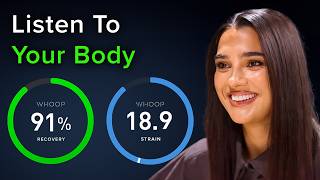
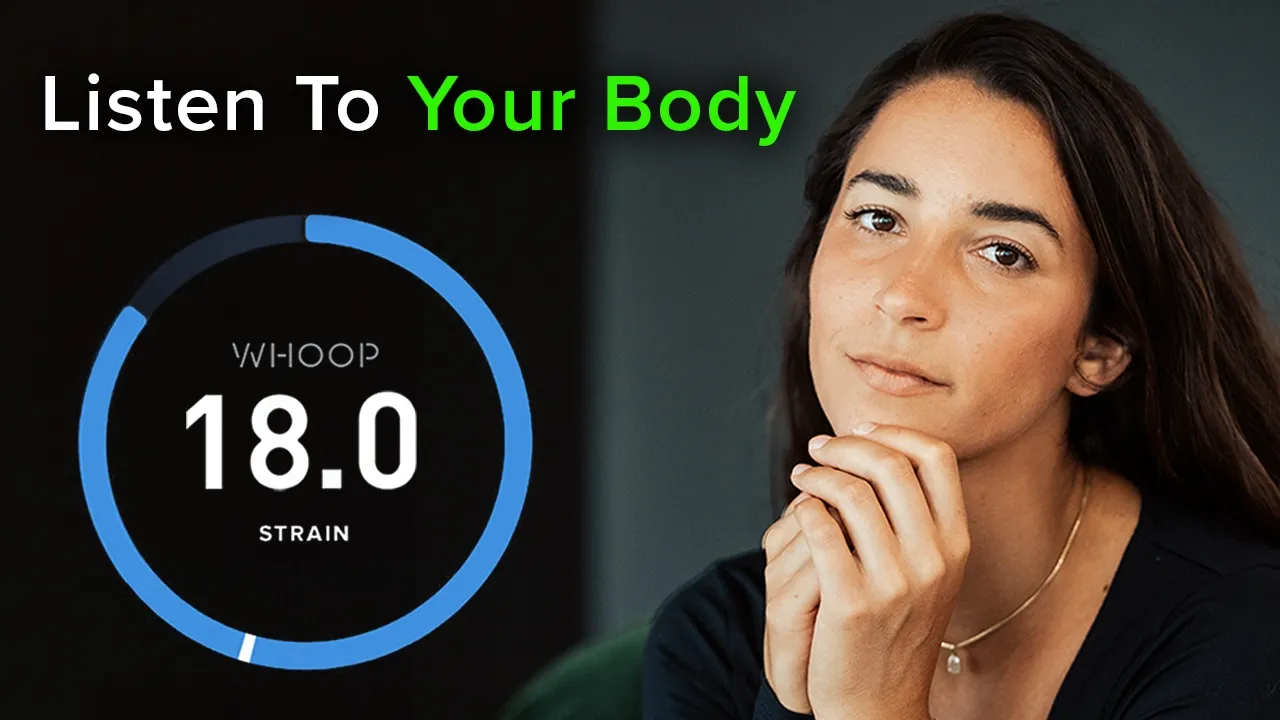
If you don't pick a day to rest, your body will pick it for you. Before the 2016 Olympics, I used to train six days a week, some days for about 7 hours. Pain can be exhausting. Having anxiety and depression is exhausting. And gymnastics is a subjective sport. So, there was just this immense pressure. There wasn't enough emphasis on recovery. I was very hard on myself, and it's honestly something I still struggle With today. I realized I actually didn't recover from my gymnastics career. Your story is much broader than an athletic one. You're speaking very openly
about mental health challenges and fatigue challenges and things that you're navigating in your life that are really hard. >> I want to feel good. I guess recovery looks like to me trying to also reflect on what I'm eating. Maybe who did I spend my time with? Did I go for a Longer walk? What type of workouts am I doing that are making me feel good? I've ignored my body for so long. Whoop has really helped me appreciate my body more and make sure that I'm paying attention to those little details because our body, we should
treat it well and take care of it and take care of each other, too. >> Ally, welcome to the Whoop podcast. >> Thank you. I'm so excited to be here. >> I've wanted to do this for a long time. I mean, I think you have an amazing story, an inspiring story. You're from Nita, Massachusetts. >> Yes. Well, thank you. That's so nice of you. And I think you have an incredible story, too. and just have so much respect and admiration for what you've built here and obviously love that you are a Boston based company. >>
Yeah, that's right. I mean, I've been here now for like 15 years, which is kind of crazy to say. And you started Training as a young girl pretty much right out of the gates. >> Yeah. So, my mom did high school gymnastics. She was always a fan. I'm the oldest of four kids. So, my parents, I was very lucky. They kind of put me in a bunch of different sports. And I started gymnastics when I was two with mommy and me classes, but I did tennis, uh, ice skating, soccer, te-ball, basketball. My dad coached me
in, uh, T-ball and basketball, and I loved it. He coached me in soccer, too. So, now that I'm older, I just appreciate so much that he did that for me because it was so nice to have that fun quality time. But gymnastics was my favorite, and I was just so in love with it and obsessed with it. My observation is that it seems like specialization for youth sports is happening earlier and earlier. However, gymnastics feels like it's always been if you're a gymnast, you started essentially right out of the Womb. >> It's interesting. I I
have some teammates I think that started when they were maybe six, which is so funny to think about because that feels >> late. >> Yes. But it's but it's not. But it's totally not. And I I think that you're really never too late to start, but I did start so young at 2 years old. But of course, when I was two, I mean, my mom was just picking me up and holding Me and and helping me, you know, walk around. But I just I loved it so much. And when I was 8 years old, I
did soccer and gymnastics. And I remember at the time my coach said, "If you want to go to the next level, you have to stop soccer and just do gymnastics." And that's very young for eight years old, but I just made the decision on my own. And to my parents credit, they just let me decide what I wanted to do. And then I kind of never looked back and it was Something that I just dedicated so much of my time physically, mentally, emotionally to. And I look back now when I see 8-year-olds and it's so
young to be making that big of a decision. But at the time, I just loved it so much that it was a no-brainer for me. But I did love soccer, too. It just I was obsessed with gymnastics. >> And again, I mean, eight years feels so young to have to say, "Okay, I'm picking this one sport over others." Is some of That have to do with like the body type you need to develop as a gymnast? Is soccer almost going to, you know, make you develop the wrong muscles or that sort of thing? Or is
it more that you just needed to spend that much time on one thing? >> Gymnastics is such a hard sport and and there are soccer is such a hard sport, too. it's just for gymnastics because I have more of the expertise and that I can explain it better is that there's Four events. So, it almost sometimes can feel like you're doing four different sports and and I actually think a fifth sport because you're also working on the dance element of it, but also the conditioning element of it, too. So, from a young age, I was
doing anywhere from 45 minutes to an hour and a half of just strength and conditioning. And that didn't even include the amount of time I would spend on bars, beam, floor, and vault. And then sometimes there would be A fifth rotation of doing dance um or kind of ballet stuff. So it it just requires so much of your time. And it's funny, when I was playing soccer, the way that I would kick the ball, my gymnastics coaches felt like I brought that habit into gymnastics and felt like I was doing stuff with flex feet. I
would kind of joke around that they didn't like that I was playing soccer because gymnastics is so specific. You're trying to be on rev with pointed Toes. And so when when you do soccer, it's a totally different way that you're kicking the ball versus, you know, on rev doing a a kick in the air with your legs straight and toes pointed. So my coaches didn't like the habits I was picking up from soccer as well. >> Now, as an eight-year-old, can you already tell that someone's really good? I think so. But I always like to
share this story when I'm with kids or parents or anyone who looks after kids because I Think it's important that people know that it's not always where you start. My coaches would always say they would rather have the hardest worker rather than the most talented kid in the room. And to them, they didn't always think I was the most talented because they felt that if you were if you had a group of eight-year-olds, I don't think someone would have picked me out and said, "That's going to be the one that's going to go to the
Olympics." But if you were Doing it based off of who loves it the most and who is the hardest worker, maybe somebody would have picked me because I just was so driven. And I I actually used to get bullied when I was younger because I would always ask the coaches for feedback and it would annoy the other people in my group because I would want the coaches to watch me and give me feedback. And uh sometimes it would annoy the girls that were older than me Cuz they thought it was annoying that I was talking
too much. But it just shows I think how much I was obsessed with getting better and growing. But when I was 6 years old, I was trying to get my round of back handspring. I was in uh pre-team, which is a level before level four. It was years ago. They've changed it now, but level four at the time was the first level that I could start competing at. And so I was trying to get my round of back handspring. I couldn't Get it. My whole entire group got to move up to the next level except
for me. And my mom told me that I was special, that I got to repeat it again. and she didn't tell me it was because I was literally the worst one in the class. But I always like to share that story with kids because my worst event was floor and then it ended up being my biggest strength when I got older. So >> won a gold medal. >> Yes. >> Yeah. >> So it became my favorite event, but I it I guess you wouldn't have picked me certainly wouldn't have picked me as the best. >>
Where did your parents fit in from a support system standpoint? My parents, I am so appreciative that they never pushed me. And I genuinely mean that. It's funny because there was a video of them in 2012 that went viral of them in the stands and they're so nervous and They do look like they are the crazy stage parents that put a lot of pressure on their kid, but they were so nervous because they love me and they care about me. They know how much I put into it. And I can't even imagine watching someone you
love compete on a 4-in wide beam. It's so stressful. I can't even imagine. I don't know what I would have done if they weren't there for me because I already put so much pressure on myself. I got enough pressure from my Coaches and being on the national team and also the pressure of competing at the Olympics or world championships. And I knew that if I didn't do as well, my parents would be the first ones to support me. And I remember at 2015 World Championships, I had the worst competition of my career. And I just
remember after the meet, my parents were there hugging me and I was crying to them and they were so supportive and it just would have gutted me even more if They were disappointed in me. I just already put enough pressure on myself. And that's why sometimes when I see parents or any coaches or anyone that is putting pressure on kids, there's already so much pressure on kids and youth sports is so competitive. I think people have to trust that the kid is already putting enough on themselves. And sometimes you just need a hug and someone
to support you and remind you that There's more important things in life than being the best athlete. And how you learn and how you grow is by sometimes making mistakes. That's part of it. And you know, there's no athlete in the world, no matter how good you are and how much you prepare, that doesn't have off days. We all have them. I wouldn't have survived if in the sport, if my parents weren't there for me. And if I went home from practice and they were grilling me About how many routines did I stick or how
many skills did I mess up, I would have never made it. I think my parents made it very clear from a young age. First of all, if I wasn't a good person, then that was unacceptable. They would always tell me, people will remember you for the kind of person you are rather than what place you are on the podium. And I remember when I was competing in the 2016 Olympics, that actually is what I thought about before I competed. And it really calmed me down. Before I went up on every event, I would say people
will remember me for the kind of person I am rather than what place I get on the podium or what score cuz people now will forget how many medals I have or what score I got. And I'm totally fine with that. But I want people to remember me for being a good teammate and a good friend. And I'm so glad my parents taught me that because it's hard not to Um wrap my whole entire worth into my results, which I did for a long time when I was competing. So even though your parents had this
it sounds like amazing support system for you and and very balanced support system for what it's worth which by the way is it's not necessarily common of athletes who reach your pinnacle so to speak. I mean, there's famous examples of Tiger Woods's father and Andre Yaggassy's father and Serena Williams and and Venus Williams Father and and there's just like a long list of of parents that were overbearing and intense, but the outcome was like, you know, a prodigy of their sport. And it sounds like your parents had had a very different balance. But it also
sounds like you drove yourself a little bit crazy, too. And you had that that bar for yourself, which is if I don't win, I'm not good enough. I was so hard on myself. And >> what age are we talking about now? >> Maybe around 8 years old, 7 years old, I was very hard on myself. And I remember if I didn't do well at a competition. I don't know if it was maybe OCD, but I had a hard time leaving the gym on a note that in my mind wasn't perfect, which there's no such thing
as perfect, but I can remember begging my dad and my coach to let me stay to keep practicing. And I remember my coach when I was younger said, "You have to stop trying to stay Later. You've already been here for two hours." is I think I was I was somewhere between 6 7 8 at the time and he said you're going to get burnt out. You can come back tomorrow or the day after whenever I practice next. I just had such a hard time leaving the gym if I didn't finish my last skill or my
last routine up to how I thought was sort of um what I wanted it to be. And you know some you have an off day. Some days you just feel your balance is more off than Other days or you don't sleep as well, you're tired. And I look back and I don't know how I balanced it with school. That was another thing was my parents were always prioritized making sure that when I came home from school, I did my schoolwork, did as much as I could before practice, and then finished it after. And my coaches
always emphasized that as well. But I don't know how I just kind of didn't stop. That was my priority. But as I got Older, I got harder on myself and I also got superstitious because I felt, okay, well, I had a good practice today or a good competition. What exactly did I do? I I had this many hair elastics in my hair. I wore this color leotard. I ate this food and I was very particular about what I did. I think it became unhealthy because when I'm in the comfort of my home, maybe I can
do that stuff, but it's still not it's not mentally relaxing to have to do all of Those things. If you forget something, it's stressful. But if you're in a foreign country, I I didn't have the control of having all of those variables. And especially at a time we weren't talking about mental health or maybe OCD among athletes or you know not defining your worth by your success or your losses. So it was something I kind of tried to figure out but I didn't have the tools to navigate that. >> Do you think there's an element
of being An Olympian that just by default is unhealthy? I mean, there's a certain insane rigor that has to go into being the best at anything, period. And then on top of that, you amplify it by saying it's one day of four years. In a lot of other sports, you're trying to be the best week over week, and you know, you've got all these check-in points, whether it's a football game or a golf tournament or whatever. The Olympics happens every four years. And so you Have that obsession, that drive just to get yourself, you know,
in the competition, but then the competition itself is such a singular moment to me. It it just makes for the environment of a lack of balance, stress, you know, fill-in-theblank level of anxiety. >> Yeah, I completely agree knowing what I know now. So the LA Olympics are a couple years away. Obviously, that would be the most magical experience to be able to compete at an Olympics at home. I I just I can't wait to watch and I can't imagine how special that must be as an athlete to represent your country in an Olympics at home
is is just hard to even imagine what that would be like. And so many people have asked me, are you going to come back? Even if I wanted to, I just my body could not could not do it. You asked about it being unhealthy. Yes. And I agree. I think it's at least the way that I did it. I think There's a better way to do it. But the way that I did it where I just pushed myself so much. I saw this quote years ago that said, "If you don't pick a day to rest,
your body will pick it for you." And I feel like I've ignored my body for so long that it has just completely picked all the days for me of needing to rest because it it just took so much out of me. It's also, I think, very unnatural to have that much pressure on You. And you know, when you think about the Olympic Games, it's it's a completely different environment. No matter how much I prepare myself, whether I try to somehow emulate the environment, I just couldn't. You know, if I'm in the comfort of my gym,
I I trained in um Burlington, Mass. And if I was in the gym by myself and I was on beam and we tried to make it quiet, what if there's a fan, you know, that's Screaming something and it startles me in the middle of my routine or or at home? I don't have the cameras in my face. And something I remember very distinctly is at the Olympics, you can hear the clicking of the camera. At least I could when I was competing. It is so quiet. Sometimes in the arena, I can hear the clicking of
the camera. And sometimes when you're competing, there's a camera running with you on vault by your feet. You're running towards the Vault table on the runway and there's a camera going with you. And you're not I'm not used to that at all at my gym at home. It's not something I experience in most competitions. It's very >> the Olympics. >> Yes. Or maybe a world championships. I don't think they have that at uh US gymnastics championships that I can recall, but there's so many other factors that you don't even know to prepare for until you're
there. I Remember in London Olympics, I tried so hard to tell myself it was just another ordinary day, but everywhere you look, there's the Olympic rings everywhere. And so it's just so emotional, too. You realize I've been training for this my entire life and then it's here. And so I think that amount of pressure and buildup into something is so overwhelming and hard to process. And then of course if I've had experiences where I did better than expected, but Also didn't do as well as expected. And the pressure of social media and the amount of
people's opinions, even if you know I tried to ignore it, you still feel it. you feel that the weight and of course people watch the gymnastics expecting us to win. So that adds so much pressure and then I used to train every other day for about 7 hours and it's funny sometimes when I say that to people they say oh that's not bad. I still don't feel my body is fully Recovered and most of the time throughout my career was six days a week but before the 2016 Olympics sometimes was seven days. So I don't
feel that in my experience it wasn't there wasn't enough emphasis on recovery >> recovery >> at all. So it was it was very unhealthy. Plus I was very strict with what I was eating, everything I was putting into my body. And I didn't >> know how to fuel my body the proper way. And I I have always felt like I've never figured out how to eat properly to make myself feel good. And I'm actually still trying to figure it out now. I started to see a new nutritionist, but that's something I've always struggled with is
how to eat the right way to fuel myself that feels good. I think people assume that because we're at that Olympic level, we have access to all of that stuff, but because we all train individually. I don't know how it is uh Right now, but when I was competing, we kind of all had to figure it out on our own. And you know, that's also very expensive for the athletes and their families and all that. So, it's really hard to find because you could see 10 nutritionists and they might all tell you different things or
different therapists might tell you different stuff. So, it was very hard to navigate. I'm still I guess working through all that now. >> Well, one thing I appreciate so much about your story is the vulnerability with which you talk about it. I mean, just to underscore it, you're describing in great detail how hard it was and yet at the same time, you know, you're one of the the highest ranking medalists of all time for US gymnasts in terms of your your success at the Olympics and and in your whole career. So, you've reached this pinnacle,
but in in listening to you talk about it, you Know, you make it sound like very little came easy. And I think there's something important for people to hear about that, you know, whether whether they have aspirations to be a serious athlete or whether they're trying to accomplish anything in their life is that what I've gotten to to enjoy about doing these podcasts and getting to meet, you know, worldclass performers like yourself is that you you see how much work it is and how hard it is. It's very rare that Someone who's super successful in
their field, it comes super easy to them. In fact, it's all the hard work that makes it look easy. I would never have known that you were at all bothered by some camera at the Olympics, right? Because when you're up there, you look like this superhuman woman who is oblivious to cameras and all these things, but what you're revealing as you talk about this is just like, >> holy [ __ ] this is so [ __ ] hard, you Know, like so much work. And I can even feel as you talk about it just the
the weight that you're carrying with it, >> you know, not just during that competition, but in all the hours surrounding it and leading up to it, just the time thinking about it and preparing for it. And and again, I don't think that people I don't think people see that cost, you know, and there's a certain uh I think desire to want to be that person who's On the podium, but without any recognition for all the pain and suffering that goes with it. >> It's interesting because I started commentating for college gymnastics a few years ago.
>> Oh, cool. And something that's really important to me is to try to articulate how small the margin of error is for gymnastics. It's so challenging because if someone's vaulting, that's a few seconds. When they land, you just have a Couple of seconds to do a really quick get in your quick word and then get out because then the next gymnast is going to go up on the next event and then you focus on that person. But it's so hard to figure out a way to explain to someone the margin of error. If your arms
are out to the side and one of your arms is even five degrees lower than the other side or even a degree off, you could end up going out of balance on floor or you could end up having a huge Wobble on beam or falling off beam or even just you might sometimes not even know where you are in the air. Sometimes when you're in the arena, the lights are so bright and it's different than what we're used to at home. So, you might put your head back a degree more than you're used to. It
might make you completely lost in the air and not know where you are. So, I think another piece of gymnastics is how dangerous it is. >> Totally. >> And for me, when I was competing, I had a lot of anxiety about what if I get hurt? That's a normal thought that I would have because of course, you know, as an athlete getting injured is so scary because you might be out for a long time and I remember before 2016 Olympics, my Achilles was bothering me so much. And uh an Achilles injury is is not is
not a good one. It's a nightmare for for athletes. And so I remember that fear Every day in the back of my mind worrying and having the balance of working out but then not doing too much but then also uh imagine doing a tumbling pass. And it's a natural I think thing to try to by by accident favor the other leg. But if I'm tumbling a little bit more on my other leg to try to save my Achilles and I could injure my other leg or hurt my back or my hip. There's just >> gymnastics.
There's so much force on our Bodies. And I saw something that said if you stick a landing, it's like 18 times on vault. It's 18 times someone's body weight. And they did it on a specific gymnast. So maybe each gymnas is a little bit different. But and that when you stick it, there's so much force on your body. And that's if you land stick it in a healthy way. You could land a little bit to the right or the left or a little bit forward. It's just the fear and anxiety of getting injured is also
Something that consumed a lot of my mind. And I think there's such a hard thing to navigate between overtraining and undertraining and just getting the right amount cuz I can remember competing and I was exhausted when I competed. My worry was what if my muscles cramp up because I had so much muscle cramping when I was competing. And I can remember being on the podium, not the podium you stand for medals, but we call getting up On the floor. It's literally on a stage or on a podium. So, we would call that getting up on
the stage or the podium to get ready to compete. And before the flag goes up for my name, I would stretch my calves and my legs and worrying my muscles would cramp up because I was so overtrained and so tired. And now that I look back, I was very malnourished and I wasn't eating enough and didn't have the right tools to navigate Um how to fuel my body the right way. And it was very very um difficult. I will say cuz we're in Boston and I I want to um they were so helpful. The second
time around when I came back after 2012. I started training again in 2014 and I was working a lot with the Patriot staff. I don't know what I would have done without them. Their sports dietician, the athletic trainer, chiropractor, they had a flotation tank. Um they had all These different things. Dry needling. >> Yes. All this different stuff. the sports dietician too was just so helpful for me to have access to that because we like I said as being a part of the national team we didn't have those people that we could go to for
help we sort of would figure it out on our own I wouldn't have >> another crazy thing too right is that like >> in some cases Olympians don't have Access to all the resources that you would expect for for what you what you all are putting yourselves through >> I imagine and I've heard you talk a little bit about this publicly but the nutrition piece was twofold. One, it was you weren't entirely sure what you should eat. >> And then the second piece is that you were sort of balancing being a high performance athlete with
also being >> essentially like a model, you know, when You go do gymnastics in front of all these people and in front of judges. Like there's also a pressure, I imagine, all around your body. And how'd you navigate that? >> Yeah, it was difficult. And I think at least at the Olympic level, world championship level, and you know, I've been out of the out of the sport competing since 2016. So, it's been a while. But I'll share from from when I was competing during that Time and prior there was a lot of emphasis at least
in my experience for me to be thinner and to the people around me not my parents but the people around me to be thinner and to look a certain way. And gymnastics is a subjective sport. So there was just this immense pressure and I would have judges give feedback whether it was to me directly or through my coaches or through the national staff that I needed To lose weight and that is >> so crazy. It's so so also devastating to hear. I think at any age or any point, but to be in high school, I
I remember feeling so insecure. And I just look back and it makes me so sad how self-conscious I was. And I thought that because judges or maybe coaches or people in the gymnastics community thought, I'm going to use quotations, thought I was overweight, cuz of course I was not overweight at All. I had such low body fat, which I'll get to in a second. But I thought that everyone else in the world saw me that way because I spent so much of my time in gymnastics. So, I hadn't really experienced a lot of life outside
of being in that bubble. So, I really thought this is how the rest of the world >> girls look like. >> Well, this is how the rest of the world perceives me. and everywhere I go, Whether I'm getting coffee or um at school that people think that I'm overweight. And I remember I my dad, this was even before I would had my license or sort of maybe around that time and sometimes I was just so tired that my parents would drive me to and from appointments because I was so tired after practice. I didn't have
anything in me to drive. So, I'm so grateful for their their help and their support. But I remember when I was around 16 years Old, I went to a strength and conditioning um person, not to get stronger, but just to help with some injuries. And I remember he had tested my body fat and he had said, you know, I've never in my life seen someone under 12%, um so we're going to test yours, but uh even 12% he had told me that he felt that that would be too low for me. And mine was around
8%. And he was really horrified at the time and and um was really upset and probably at the Time was judging my dad because probably thought my dad was a crazy parent for allowing me to keep pushing myself and continue down this path that wasn't healthy. But then actually right before I left for the 2016 Olympics, I got my body fat tested and I remember it was at 5%. Oh my god. >> Which is so I mean I'm not a doctor professional, but I think that's extremely unhealthy for a female. >> I But I remember
I was >> And women typically have higher percent body fats than men, too. >> Yeah, that's what I've heard. And I remember the person who was testing my body fat at the time. I think it was the last time I was seeing him before I was leaving for Brazil for the Olympics. And I remember I could tell that he was really upset and very concerned and was telling me he was also the sports dietician I was working with and saying, "You need to eat. I don't care if you Have ice cream. I don't care if
you have cake. You need to put on some weight and get some more fat on your body." And I remember at the time, I think I was also sort of almost brainwashed in a way because there was so much pressure to keep getting thinner. And in my mind at the time, I thought the way that it was sort of taught to me in the gymnastics world was a half a pound could be the difference between first place and second place, which obviously I don't Agree with that. And if there's any kids listening to this or
any athletes, I do not um agree with that. >> And it wasn't healthy what I was doing. And I remember telling my sports dietician at the time, I said, I just but I'm going to be fine, right? Everything's going to be fine. And I remember he said, "I I can't tell you that, you know, you're really at risk for injury and this is really serious." And I just remember at that time I would Wake up in the mornings and I would start dry heaving into the toilet because I was so nauseous and I felt so
sick. And it wasn't obviously it was not by choice, but I think my body fat was so low that I was so physically feeling sick. And I look back and I can't believe that I competed the way that I did with feeling that exhausted all the time. So, >> and you won you won three medals at that Olympics, right? >> Yes, I did. Yeah. And I was just exhausted. I don't know how I did it. I wonder if I had been fueled in the right way what I could have done. >> Yeah. I mean, in
some ways it's obvious to say that you were below your potential, although it's hard to do that much better than three medals at the Olympics. You know, it's like you're amongst the top three to five women in the world at something. >> Yeah. And I and I guess I say that Meaning I'm so more than satisfied with my gymnastics career. I think when I was younger, my worth was dependent on how I did. And now I look back and I'm I'm so proud of my gymnastics accomplishments and I don't think about the color of the
medal or any of that. If I could go back and I could change something, I wish that I felt better during that process. I wish that every day wasn't such a struggle of just feeling good. And it's honestly something I still struggle with Today. Before the interview, I was putting on peppermint oil and you asked why. And it's because sometimes when I talk publicly, I feel anxious or if I'm talking about uh things that are personal. It it's amazing how much my body reacts to it where sometimes I feel nauseous, but I still struggle with
nausea and fatigue and I'm still sort of navigating that. It's wild to me that it's been almost 10 years Since I finished competing and training intensely and I still do not feel well. I can't reiterate how much I do not recommend the process that I went through to get there because it's not healthy and we shouldn't put health and people's well-being over over medals and and winning. It's not it shouldn't be that way. >> Well, thank you for speaking about it. It takes a lot of courage to say that you were at the top of
something while Also feeling terrible and and and and something that you're you're still recovering from. Why don't we talk about that a little bit? Like >> what does recovery mean to you today? And obviously you've been on Whoop for a while, too, which is an amazing connection point. >> Yeah. Yeah. I I mean I've been a fan of Whoop for such a long time. And I remember we met a couple years ago. I was telling you about how I probably use The product differently than other professional athletes you guys work with because I'm not working
out every single day. I would love to, but I just my body can't do it right now. And I don't say can't in the sense I don't mean that in a um like I can't do something. I just am working on listening to my body. And I am really prioritizing making sure that when I wake up in the morning, I don't feel nauseous. I don't have a headache or a migraine. I guess It would be extremely unusual if there was a week that I woke up without any of that in an entire week. So I
I think I really hit a point where after the Olympics, I'm was so fortunate that there was so many opportunities and I tried to do as many things as I could. I was on a plane probably six days a week. I was saying yes to as many things as I could and trying to be very outgoing and do as much as I could. And I think I just hit a point where I realize I Actually didn't recover from my gymnastics career. if there's ever an athlete that asks me advice, I wish I could go back
in time because when I was competing, I would get massages and I would do the flotation tank and I do the dry needling and so many different things for recovery. And then when I finished competing, I had this kind of new sort of freedom that I hadn't had and I was excited to just live life and do normal stuff. And I stopped doing all Of that stuff. And I wish that I had better healed injuries that I had over use issues that I had in certain parts of my body and just really prioritized healing myself
and still kept the recovery going even if I wasn't training. So, it's taken me almost 10 years, but now I'm back to doing that. And I've started to see some of the people that I used to see when I was training again because my body is hurting and I want to feel good. I mean, our bodies are are so important and I want to do a better job of listening to my body. So, I guess recovery looks like to me trying to also reflect on what I'm eating. If I have a day where I have
a lot of energy, I'm going to look back and see what did I eat, what did I drink, um maybe who did I spend my time with, did I go for a longer walk, what type of workouts am I doing that are making me feel good. But it's difficult for me cuz if I were to Run for maybe a minute and a half, just a normal jog, I if I would start to feel nauseous. It's a very difficult thing to navigate, but I've been validated by different neurologists that I've seen and they've given me more
of a diagnosis as to what it is. So, that's also given me permission to not be so hard on myself cuz the athlete in me wants to push myself and it's given me permission to listen to my body and take better Care of myself. So, I walk a lot. I have a dog that I am so in love with. His name is Milo. We try to walk anywhere from, you know, maybe at least a couple hours a day. >> Okay. >> Getting trying to get there on the Whoop app. I love how you can track
your steps. So, I use that a lot. And then I I try to do I had one time a doctor say to me, "Think about working out as almost you have snacks during the day." So, she called it a workout snack. So my body at this point is not able to do a 45 minute or an hour workout, but I can sort of create little workout snacks throughout the day. So even if I'm brushing my teeth, I'll do some calf exercises or do some type of squatting thing. I'll do some type of thing. If I'm
feeling good or if I'm somewhere and I'm trying to get to the fifth floor, I'll take the stairs. I didn't actually take the stairs up here, but maybe I'll Take the stairs down today. I try to keep myself active throughout the day because if I do too much at one point, it just wrecks me and I I have a really hard time recovering from it. So, I'm still navigating and learning it. And I don't wish that other athletes had this experience, but I'm sure I'm not the only one that pushed myself too much in my
career that struggles so much with energy. I have another teammate that really struggles as well and we'll we'll Talk about it. But I imagine there's other athletes that struggle with it. So I think it would also be helpful to be able to talk to other people that have had that experience to see what they've done that's helped too. >> I imagine that's true. And I also think at this stage in your your life, like your story is much broader than an athletic one because you're you're speaking very openly about, you know, mental health challenges and
fatigue Challenges and things that you're navigating in your life that are really hard. And I think a lot of people of all ages, there's a lot of people who are going through, you know, forms of depression or chronic fatigue or some kind of debilitating injury that they need to overcome and they're trying to figure out what they can do to feel better. >> Yeah. >> You know, whatever whatever that may Mean for themselves. >> Yeah. I I also have learned from my own experience the power of feeling validated. And I don't think there's enough conversation
around being in pain can be exhausting. Having anxiety and depression is exhausting. Having stress and something that is on our mind can take so much out of us. I guess I don't think enough people get validated for not needing to have an excuse to be tired. I hear so many people say, "Well, I'm feeling tired, but I don't know why." And I used to say that all the time, too. And the truth is that you don't need an excuse to be tired. It's okay to be tired. We're all so busy. And I really try to
balance my time with my phone. But I mean, it's so unhealthy. I think how much I'm on my phone. Even when I try not to be, even if it's in the other room, I'll get up or think, "Oh, I should check it." And then I realize, "Wait, I don't need to Check it." also probably disrupts you would know this more than me our our sleep and everything but I wish there was more conversation around whether it's an injury or anxiety it is so draining and so exhausting or I get migraines a lot so that can
be really exhausting as well or even the anxiety also around okay well if I get a headache what's going to happen how is this going to affect my day it's interesting it's also really sad but the More I talk about this stuff the more people I find can relate to it. I think most people are either struggling with something or they know someone who is or has. Most people I'm sure are dealing with something that's on their mind or something that maybe it's a body part that hurts or a health issue there. Everyone I've learned
is battling something or has battled something or knows someone who is. And I think it can be very scary and hard to talk about, But I think people would be surprised how many people could relate to them if they shared what they were going through. And I think people would be surprised how understanding hopefully people will be about it as well. >> And you've been very brave to talk about the sexual assault as well. And I imagine that there's been an avalanche of people who have come out of the woods to you probably privately to
say like I had a similar experience. >> It's devastating how many people come up to me and tell me that they have had a similar experience or they know someone who has. And I've had a lot of men who have come up to me and said that they have had a similar experience. And it's something our society does not talk about that boys and men are also victims of sexual abuse or any type of abuse as well. And so I think our society puts so much pressure on men and boys and Doesn't allow them to
be vulnerable. And I think that's really important to make sure that boys and men feel comfortable and supported and safe to talk about what they're going through. I think that's really really important. I mean, imagine if we lived in a world where every person felt comfortable talking about what they were going through. I feel like we would live in such a better place. Um, but I've been just devastated to see how many people can can relate to Me. At least according to the experts I've spoken to, it's it's um more common for girls or women
to be abused. you know, even though it's been more of a conversation in the last, you know, I don't even know how many years, maybe nineish years, it's still something that so many people suffer in silence and so many people feel alone. And the there's a crazy statistic that around 30% of the time actually sexual abuse happens Within the home, which is so >> wow. >> So just horrific. Yeah. So horrific. And so I just don't think people realize how many people feel alone. You never know what someone else is going through. And I think
there's so much power in being there for someone else. You may never realize how much even your someone confiding in you, they're feeling tired and you just saying, "Well, I hear you. It's okay. You're allowed to feel tired." You have no idea what they're going through. And that could also give them so much courage to talk about other things or seek help. And I think something else that's really important, I know I've mentioned validation a few times, but I really believe Rachel Den Hollander, who's um also a survivor and and was just so critical and
just so um such a powerful voice um for me and other survivors and I'm so thankful to her. But something that she has always said is that the way a survivor heals is linked to how their abuse is handled. And I really think that's so important because when people go through a hard time and you don't have a support system to help you, it is just so awful. And to go through something hard and to have to suffer alone um and then to not have the support you deserve is just it's not right. But I
think there's so Many people out there that don't have a support system. And I know I've talked about my parents a lot on this podcast, but through meeting fans, I I've learned there's so many people out there that don't have a relationship with their family. And there's a lot of people who don't even feel they have a friend or a teacher or colleague or someone that they can go to for help. Finding a support system, it doesn't have to be blood related, someone that you know That you can go to to talk to is so
important because no matter what you're going through in life, I think not having to do it alone is is really helpful. And it's nice to have someone there that can validate you and help guide you because life is a roller coaster and you know sometimes things happen that are out of our control that it's nice to know that you're not alone for it. >> Well, let's talk a little bit more about The the toolkit, so to speak, of coping with um all of this. I imagine there's lifestyle decisions you make. I imagine there's, you know,
little hacks and and uh products that you like to use. You've got an interesting list of of things in your u your Whoop journal that you shared with us around tracking things like caffeine or family and friends or purpose, social fulfillment. For someone listening to this who's like, gosh, like I haven't been through what Alli's been Through, but I've got my own bag of issues and I want to feel better. Like what's worked for you? >> So, I am obsessed with gardening. It is something that I do almost every single day in Boston. Obviously, we
can only garden for some of the season because it gets so cold here, but it brings me so much joy. I feel so relaxed. That is also very fulfilling to me because now if I have a friend over or I'm going to A friend's house, I will uh pick some herbs or different veggies from my garden and I'll either do a little flower arrangement with the herbs or I'll bring them some vegetables and that feels very personal for me and I really enjoy doing that because I've worked really hard at it. some of the stuff
I planted from seed. And so every day I'm really taking care of it and I feel so myself because I Don't have to be on. I can just fully be myself and I can get my hands dirty and messy and it doesn't matter. I don't have to be perfect. I can make mistakes. I can learn from it. And I feel like every season I learn more because, you know, maybe there's a certain soil that works better than another one or maybe there's two types of vegetables that go well together or that don't go well together.
And I love learning that. That's Something that brings me so much joy and every single day is different. So, it's always something for me to look forward to is it's amazing how much something can change from the day prior. It's interesting because when I was really feeling so burnt out and fatigued and I am at a place where I'm still navigating it, but I'm in a much better place than I was a few years ago, is I had this fear of, well, if I took if I said no to more things and I was home
a Little bit more, I'm worried I'm going to feel less fulfilled. or I think it's a fear a lot of people have is if I do less I don't want to uh I guess the word in my mind comes up of I don't I'm afraid I'm going to feel lazy or someone else is going to think I'm lazy or I'm afraid I'm not going to feel um I'm going to be depressed doing less things and it's so interesting because I've prioritized my personal life more than I ever have And that's been a priority for me
because most of my life I prioritize it's my gymnastics career and then after my professional career and lately it's been my personal life and I feel so much more fulfilled and I think it's because what the things that I'm doing I'm able to really take it in and be more present for example after this I'm able to go home and my friend is actually visiting from Australia so I have the Time now that I can see her and see her in the short window she's home where before I might have been right after this interview
running to jump on a plane to go somewhere else where I feel like I can actually take in my life and I feel more appreciative and grateful because I have time to really reflect on it and I also have time to learn about things. You mentioned the I think it was purpose or the social fulfillment >> purpose here social fulfillment >> and learning something new is really yes the learning is very important to me. I love listening to podcasts and reading and I like to be able to be at a dinner table and if someone's
talking about a topic, I want to be curious or if it's something I've listened to a podcast about or read an article about, I want to share, oh well, this is what I think about it or I haven't heard that perspective, I want to feel more curious about life and I feel like I Have more time to do that. And so I feel that I'm really living my life in alignment with where I'd like to go because I have the time and the capacity to do it and that feels really good. So I have surprised
myself with I guess not running myself into the ground of being busy has actually made me feel more fulfilled. One just observation on on gardening is that that's a that's a hobby that is creating life. It's also a Hobby that has a lot of depth to it and breadth and so you can kind of keep going deeper and deeper into it. It's also something that you probably continue to get better at. A mistake that a lot of adults make is they don't start new things that they keep improving at, but rather do things that they
used to be better at. And so there's a lot of fulfillment that comes from going deep on some new hobby that you're continuing to get better at, Right? >> Yeah. And it is funny. I mean, even with gardening, I mean, the bags of soil are very heavy sometimes if you're ripping up >> there's a physical. >> Yeah, it is. It is. It's it can be tiring. There's certain times where if I'm carrying a lot of things or even you're pulling out a big plant that it's past the season, so you're getting rid of it. It
is physical and it's a workout And it feels good and it's so fulfilling and it also to your point about you know learning something new and improving and can get better at. There's so much depth to it. It also makes me more inspired to cook and to learn different recipes and things. So I'm also trying to become a good cook. And it makes me, it challenges me because if I have a vegetable that I normally wouldn't get at the grocery store, it makes me think about how do I want to cook this or it Makes
me, I guess, more excited and inspired to try new things. So, I really love that aspect of it. And people really appreciate it, too. I think sometimes we forget life is so beautiful and the world around us. You know, when you look around, even now when I'm driving on the highway, I realize even just all the trees that are all around the highway and especially being in New England in the summer, it's so beautiful. There's So many gorgeous places that are a drive away. I feel like almost in a sense I'm experiencing life for the
first time again because I instead of my mind thinking of I'm really not feeling good. I need to get home. I can really take in my surroundings and feel I guess more present and more appreciative for what's around me. And I'm not trying to sound unrelatable because I have anxiety. I have moments where I don't Feel like that, of course. But I really also, my friends make fun of me. I literally will stop and smell the roses. If we're on a walk, my friends joke, I'm the slowest walker ever. So, whenever we go for a
walk somewhere, we're in a group and everyone's going into town, I'm always the last one because I will literally stop and smell the flowers. But also, sometimes I'm tired, so I don't have the energy to walk as fast as them. But everyone jokes about it and It's kind of a joke among my friends that if you didn't know me for being athletic, you would never know that I was super athletic cuz I'm the slowest walker. But I really do try to smell the roses and be more present. And I have my green tea here. I
have the peppermint oil. I I told you this before we started, but something about the bitterness of the green tea and the peppermint oil, it the sensations are so strong that it makes me feel more alert. And then of course there's caffeine in that as well. But even with my garden, the smells of the herbs are so strong. It's incredible. And when I have people over, they're shocked that it's not perfume. It's amazing how, you know, if I'm feeling anxious, I'll just grab some rosemary and rub it on my fingers. And it just that moment
of I'm focusing on that rather than what was in my head. And it really it really helps me. It's amazing how um there's so many different Smells and it helps me kind of relax a little bit. I guess >> sense is kind of a forgotten sense in a way, you know? Yeah. Like it's a powerful sense that I feel like at least this conversation is reminding me to flex more. you shared some of the elements that have the most positive recovery impact. So, not surprisingly, sleep performance, hot shower before bed. That's that's interesting. And then
consistent wake Time and bedtime. But those are the four things that when you do a great job at most positively improve your recovery. What's sleep look like for you today? >> Because my priority has been waking up early. My goal is to watch the sunrise every morning. I'm not there yet, but my goal is to do that. And having Milo, my dog, really helps me because one of the first things I do in the morning is take him for around an hour walk. And I love that. It's so peaceful and usually Pretty quiet, and I
I just I love it. Uh, but waking up early really helps me get a better consistency with my sleep schedule. So, I feel like lately I've been in bed around 9 to 10 and I'm trying to eat earlier so that I have more time to which >> improves your sleep. >> Yes, I'm trying to do that and then also trying to go for a longer walk before bed as well. I also take baths as well which is very relaxing for me. But it's Interesting because I think that this is a symptom of some of my
neurological stuff. At least that's what my one of my neurologists said is that I don't tolerate heat and cold very well. So I think when it says hot shower, it's probably not as hot as maybe someone else or even taking a bath. It's not super hot. So it's just very relaxing for me. I'm curious from your perspective, the cryotherapy, do you find most people that helps with their Recovery? >> It depends a little bit. And I I'm not sure if I have the data right now off the top of my head on cryotherapy versus cold
plunge, but you know, cold like cold therapy in general has gotten super popular and it's it's one of our fastest growing recovery modalities on Whoop in terms of people doing it. What we typically see is that people who do cold exposure, let's call it two to three times a week, actually have more Positive recovery benefits than people who don't do it at all or people who do it five or six days a week. I'm actually now someone who's in that five to six days a week camp just because I've gotten a little bit addicted to
the way it mentally makes me feel. It's also a question of what you're trying to optimize for. I really like doing cold punches in the morning because for the rest of the day, I feel mentally so much calmer when I've done them and like calm But alert. It's like a really good combination. I find there's enough studies though to show that if you're doing weight training, you want to avoid doing cold exposure right after the weight training because it can actually, you know, blunt some of the muscle muscle growth, particularly if you're doing hypertrophy training
where you're doing like very high rep training. So, typically it's better to do um weightlifting and cold exposure Separately. Now, if you were doing a sport like gymnastics or football or something that maybe has more impact as well and maybe more repetitive muscle soreness, then it could be good to do cold exposure right after for your body because that'll also uh reduce inflammation. >> Yeah, it's interesting. Yeah, I'm curious because I hear a lot of people say the alertness is really impactful for them. When I was training, I was one Of the only athletes that
didn't do the cold plunge because I would get so much muscle cramping after and throughout the day. >> And for some reason, my body just couldn't recover after it. I felt so stiff. And we were working out so much at the time that I, you know, if I worked out in the morning and then my body didn't recover in time for the afternoon training session if I did the cold spun. But then even after I still Felt stiff throughout the night, but I asked about the cryotherapy because I tried it for the first time recently.
And it's really interesting because the last year or so I've noticed I don't tolerate heat, hot heat or cold very well. And I tried the cryotherapy and I felt relaxed but I went I was so tired from it that I it the rest of the day is my recovery felt so much worse. >> Oh interesting. like it almost made me need to take I didn't end up sleeping But I was so tired that I could have just fallen asleep anywhere. It just took so much out of me. >> One last question I want to ask
you about is obviously you're very intentional about managing your psychological well-being and and your health. you've been on Whoop for a while and something that sometimes I hear from people who are thinking about getting on Whoop but like hesitant to is they're almost nervous that the data will affect Them in one way or another. What's your answer to that? >> Well, I love wearing Whoop because it's really helped me have a better understanding of what's working for me, but also what's not working for me. And for example, I think the daily insights that Woot provides
is so helpful and it's one of my favorite parts because it's so cool. I mean, even after several days of wearing it, it will say, "Okay, we have a new insight. You ate this Amount of fat today or this amount of fat in the last three days, and it either helped your recovery or it didn't help your recovery. So, we recommend X, Y, and Z." And it's really helpful for me to have a better understanding of my body and what's going on because I think I've struggled so much with how to recover and I have
seen so many different doctors over the years and to be able to have something that I can use every single day, many times a day and Understand and look at the data and say, "Okay, Well, last month I did this many steps and my recovery was here versus this month I'm doing less. Why am I doing less? Why am I more tired? What's happening? It's just really helped me. It sort of in the diary is really helpful, too. I think my favorite part is the daily insight because it it really gives me so much insight
and just such a Quick concise way of >> the little daily outlook. Yes. >> The coaching feature. >> Yes. >> Do you ever ask it questions? >> I have. Yes, for sure. And the questions, it's really impressive. It's amazing. >> Yeah. >> It's really mind-boggling what technology can do. And it's incredible what the app can do and how Much data is on there about myself. It's really cool to learn about it. And I'm just I'm excited to keep using it and to keep learning more and and now I am really gonna focus also on on
the days that I garden a lot. I really am now excited to hone in on that and see how that affects my recovery, too. >> Well, the feature you're speaking about is the the AI coaching that's in the app, which is something we've been Building out now for a couple years, and I'm excited for you to use it in the next few months because it's about to get a lot better. >> Okay. So, if you if you already really like it, you're really going to like it. And for folks listen to us who don't use
it yet, I think they're going to start using it a lot more. >> Yeah. It's also I I thought you'd find this cool. But I think what's very awesome about it is if I'm at a doctor's Office and they're like, "Okay, well, how much are you sleeping right now?" I'm like, "Okay, let me ask my Whoop coach." And it's really cool because the doctors, >> the ones that I'm seeing, like, they really trust it and they're like, "Okay, great." You know, and they're really excited when I say, "Um, >> okay." Okay, off the top of
my head, I don't know. Which is also Whoop has inspired me to be more aware of I mean My we only get one body, so why am I not paying more attention to this stuff? It's really been eye opening for how much I've ignored my body for so long. Whoop has really helped me appreciate my body more and make sure that I'm paying attention to those little details because it's I mean our body we should treat it well and take care of it and take care of each other too. It's really inspiring uh to hear
your whole story, Ally. And and I think for a lot of People who are going through something, to hear a woman who has been a superhero at various points in her life and put up on the this, you know, the podium and held the gold medals and been on all the talk shows and sort of seen as this vision of success to also share that vulnerability around just how hard it's been and some of the things you're you're going through. I think you're you're a real inspiration for a lot of people. >> Thank you. Thank
you so much for having me and you are an inspiration for a lot of people as well. So excited to be here.
![[EXCLUSIVE] 2-Time US Open Champion Aryna Sabalenka: Habits & Mindset That Helped Her Win](https://img.youtube.com/vi/oXpsJF2E77Y/mqdefault.jpg)