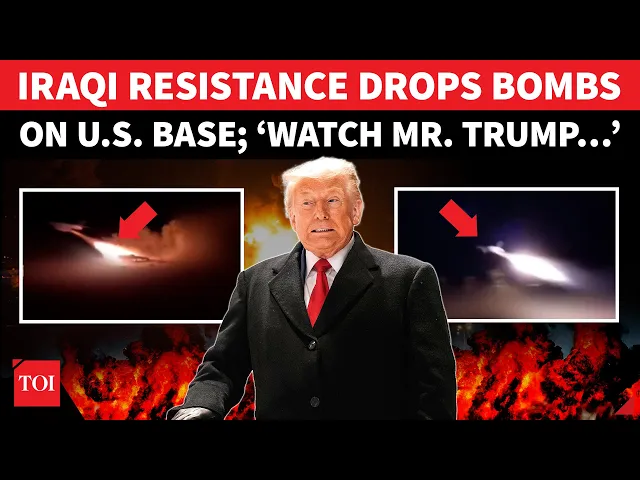
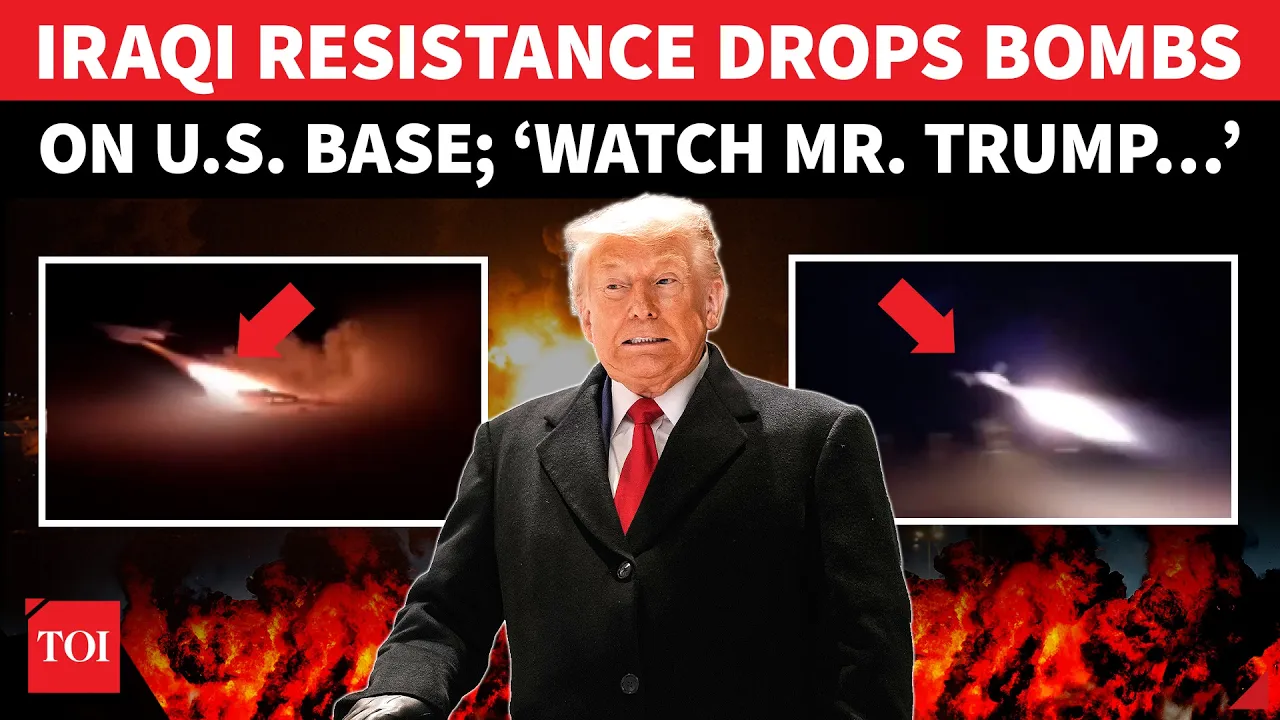
An Iraqi resistance group, Sariah Aliyah Alam, has released footage claiming responsibility for a series of bold attacks on US military [music] installations. According to the group, five separate strikes were carried out in retaliation for the US and Israeli operations [music] that reportedly targeted Iranian leadership and resulted in the deaths of their fighters. Among the targets was a US site in Airiel, a key northern hub for American military operations.
The group also claims responsibility for an attack on the Victoria base near Baghdad, a highly strategic location hosting US forces. The released footage shows what the group describes as precision strikes on these bases, [music] though independent verification remains limited. For the Iraqi paramilitary, this operation is more than a tactical [music] move.
It is a statement. A statement of resistance, anger, and a message that the chain of retaliation in the escalating Iran US conflict will not stop at borders. Analysts warned that these attacks mark a new chapter in the regional conflict [music] where proxy and local forces are increasingly stepping into the spotlight.
The Sarah Aliyia Alam group has framed their strikes as a direct response to what they call aggression against Iran and its allies. By targeting US military infrastructure, they are signaling that American presence in Iraq remains a flash point in the broader confrontation with Thran. This escalation follows weeks of tension with drone strikes, missile launches, and cyber operations across the region.
Every attack now carries not just military weight [music] but political significance as groups aligned with Iran test the limits of US [music] reach and resolve in Iraq. The implications are clear. The conflict is no longer limited to the battlefield between Iran and the [music] United States.
Local actors empowered and emboldened are taking matters into their own hands, creating a volatile environment where every base, every installation, and every US footprint is vulnerable. As the Middle East teeters on the edge of a larger confrontation, [music] the world watches, aware that each strike, each retaliation could escalate into something far beyond Iraq's borders. In this new era of hybrid warfare, no territory is safe and every action sends ripples across a region already on high alert.
The message from the Sariah Aliyia Alam group is unmistakable in the shadow war of Iran, Iraq, and the United States. The fight is far from over [music] and the stakes could not be higher. The devastating attacks on US bases in Iraq have heightened fears of a wider regional confilration.
[music] Amid the escalating violence, Turkey's [music] Foreign Minister Hakan Fedan told the Associated Press that there is currently no serious initiative to resume direct negotiations [music] between the United States and Iran. Yet he suggested that Thran may still be open to back channel talks, signaling that diplomacy, [music] however fragile, could offer a way to prevent further escalation. Ankura, meanwhile, is walking a delicate line, determined to stay out of the widening conflict while monitoring the rapid unfolding of events across the Middle East.
Ever since the war began, we've honestly been engaged in extensive discussions with everyone. But this time the circumstances are significantly different primarily because the nations with whom we typically cooperate in this region are now directly under fire facing active attacks. So uh it's truly placing them uh in a very distinct and challenging position right now.
Particularly the Qataris, the Saudis and the Emiratis. You see, they are in fact under significant attack and consequently the manner in which this conflict began and the way it has progressively escalated is fundamentally incorrect representing a truly colossal error on the part of absolutely everyone involved. So uh we are talking to Europeans, we are talking to Americans and uh some regional countries.
I would say that uh every couple of days perhaps every two or three uh I'm in communication with my Iranian counterparts. uh and my distinct impression, my feeling is that they genuinely feel a sense of betrayal. Now, this is because uh for the second time now, they've been subjected to an attack uh specifically during the ongoing discussions.
And so, I believe there's currently no compelling reason for them to publicly disclose or openly discuss the nature of these uh ongoing conversations. However, uh my personal estimation, you know, is that I think they are indeed receptive to any form of practical and sensible back channel diplomatic engagement. At the very least, they absolutely should be.
Yes, they really should be. I think some of the key players involved messages can uh uh can certainly be exchanged back and forth, but our primary concern must be to establish a truly clear and unambiguous definition of the United States military objectives. I believe President Trump sometimes offers his own definitions of these military objectives, but ultimately we absolutely need to uh formulate a comprehensive endgame plan.
Well, as as you are certainly aware and as our esteemed president has made abundantly clear, uh Turkey is undeniably a very capable and strong country. However, in this specific instance, we absolutely do not wish to find ourselves being unwillingly drawn into this conflict. It is imperative that we are not provoked into such a situation and therefore we must not be dragged into this war.
Our current position is now uh unequivocally a defensive one. Uh the NATO defense units are proving to be exceptionally effective uh at this very moment uh particularly in their capability to intercept incoming missiles. Our primary objective the most important thing for us is to avoid getting involved in this war.
I stated that the Americans and the Iranians are certainly able to discuss the nuclear issue and then we as regional countries can actually come together to discuss the other two important matters with Iran. and and uh in our belief um it's important to consider that while Iran certainly faces uh challenges with the United States concerning its nuclear program u there are also significant and persistent trust issues that continue to affect the entire region. Well, if you uh if you consider the Israelis, they often pursue the worst case scenario because they themselves don't bear the consequences.
The region pays the price. The Americans pay the price. Europeans pay the price.
They consistently remain in a very favorable position. You see, this is precisely how they've constructed the system across the entire world. So the Israelis truly don't care about anything else.
They simply want to see the Iranian nation, Iran as a country completely gone and uh they're making their position extremely clear. They're very much driven by a desire for revenge. And so it's quite clear there's absolutely no way to bring them to their senses.
No, it's just not possible at all. However, the broader international community, I believe, can and must work together effectively to genuinely address the existing pressing problems uh including the vital security of Israel within the entire region because Netanyahu is simply incapable of providing true security for the Israeli people. He can only bring further conflict and war to the Israelis.
Well, that is precisely the question for which we currently lack a definitive answer. Pause. What we do know, however, is that he is indeed alive and crucially still functioning.
Pause. My assessment is that he has sustained some degree of injury likely as a direct consequence of uh of the recent attack pause. Nevertheless, the key point remains he is still operational.
I believe that the uh process of electing a new leader uh combined with the uh current medical situation and health conditions of that new leader has in my opinion created a significant void. I think that particular gap uh has since been effectively filled uh by the high command uh of the revolutionary guards. uh they are now in fact directing the war effort and um actively leading all military actions and uh u um from a structural standpoint uh as has been previously brought to our attention uh it's quite clear that they operate with fully autonomous and self-governing command and control centers uh which are specifically designed and dedicated for the effective management and coordination of their various and distinct military units.