welcome to UNI five notes compasses and tilting this is video for rock layers and we're talking about how are rock layers uh initially formed and the answer is original horizontality term I don't actually use in the slide original horizontality uh so the idea between original horizontality is rocks are normally created in flat layers this is especially true for sedimentary rocks not so much for ous rocks we'll be talking about ous rocks how they're formed later side note on that though in the spectrum of Life they're way less common than sedimentary rocks sedimentary rocks are way
way way more common and so um yeah so in general most Rock layers are created flat um this means in two things both that the overall horizontal layer is the overall layer is like makes a linear plan and that's like flat like North like not like this or like this or like this but it's like literally the entire layer is almost perfectly horizontal but also the top surface of it is smooth so if I have to see a layer that's like flat but then has like these like bumps on it like this boop boop boop
I know something weird probably caused those bumps the the answer that was probably erosion caused those bumps so um layer layer's flat and the top of it smooth and once again uh that mean once again if I see bumps like this in the layer that was probably caused by erosion processes okay new rocks tend to be made on top of old rocks this is true for especially for sedimentary rocks not so much for intrusive rocks but once again we'll come back and talk about intrusive rocks when we talk about volcanic formations um so if I
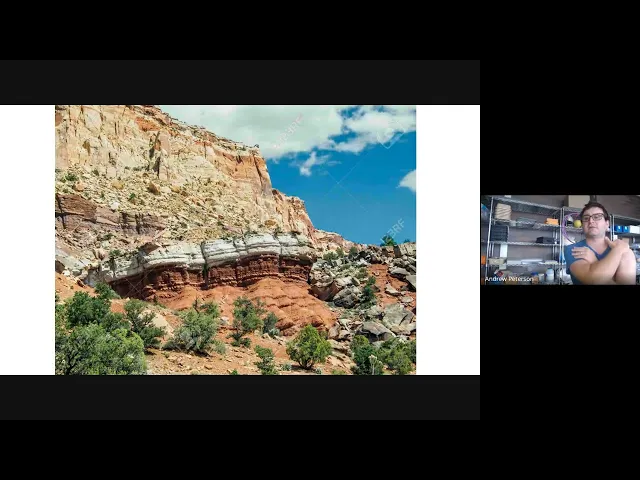
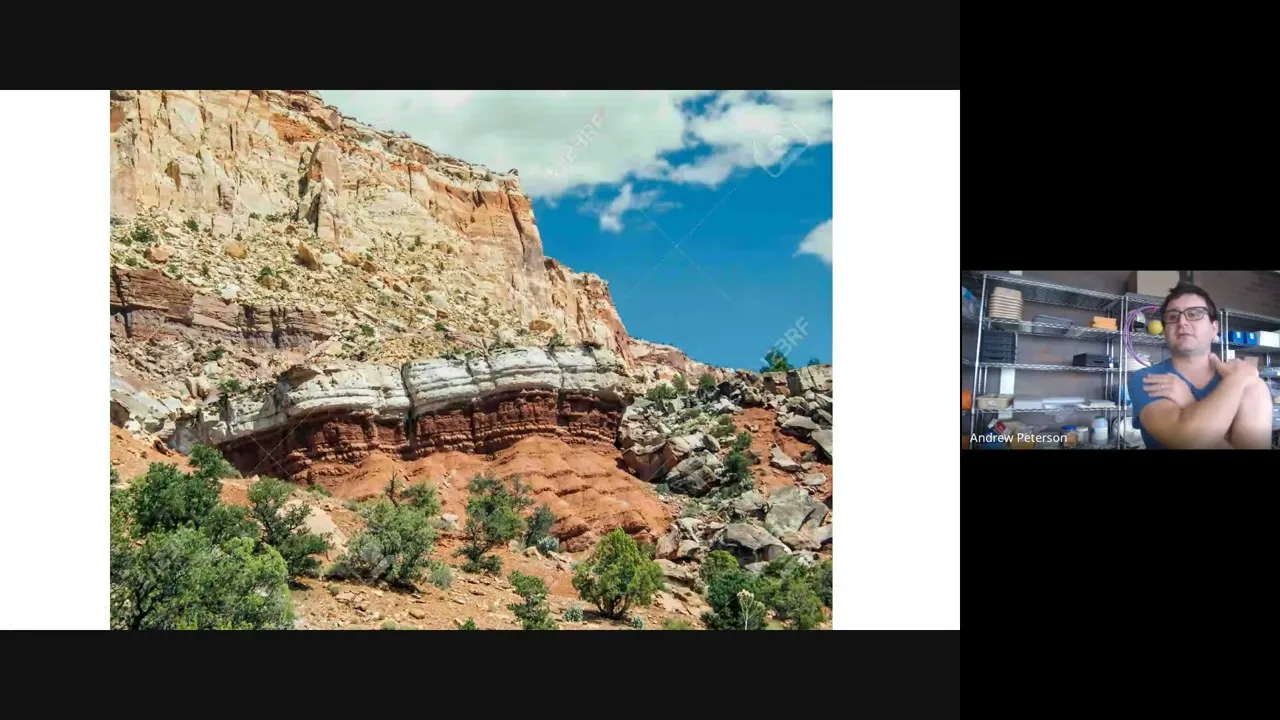
have a layer of rocks if I have a pile of rocks you know all these layers of rocks then the layer on the bottom is most likely going to be the oldest and the layer on the top is most likely the youngest and then literally they'll get progressively younger as like go up or in vice versa progressively older as I go down which allows us eventually to do something called relative dating um which we'll talk about I think in the next slide um so here's a cool image of some tilted rocks of some rock layers
um so the first thing that stri stands out to me is once again I see these two pieces in the middle uh that are tilted and once again I could as a geologist I can reasonably conclude that that's not how they were originally they were probably originally flat and then something caused them to tilt they were flat and then something caused them to tilt and that tilting occurred after they were formed other thing I want to point out here I'm seeing a cliff I'm seeing a cliff so if I imagine coming towards you there the
hill goes and then down so these are the surface of these are all bumpy and rough now especially like up here if you look up here like up here this probably this this formation the like the cliff and the bumpy top layers probably occur definitely occurred after the rocks are formed they weren't formed with this cliff in place originally The Rock layers extended out and there was no Cliff here and then overtime erosion uh caused those Cliffs to form so like rain water you know wind broke the rock down and made the cliff formation okay
so once again Rock layers tend to be made Flat and they tend to be made smooth