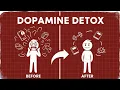
There's a strange phenomenon happening right now. While you're watching this, part of your brain is calculating whether to keep paying attention or switch to something easier. That calculation happens thousands of times a day, and it's quietly destroying your ability to do anything meaningful.
But what if I told you that the same neural mechanism making you avoid hard work can be flipped to make you crave it? What if discipline could feel as good as scrolling? That's not motivation talk.
That's neuroscience. And by understanding how your brain actually works, you'll discover why willpower has been failing you and what you need to do instead. Your brain operates on a simple economic principle.
It's constantly asking one question. What's the best return on energy investment? Every action you consider gets instantly evaluated.
High effort, uncertain reward, your brain hits the brakes. Low effort, guaranteed pleasure, green light. This isn't a character flaw.
This is survival programming from a time when conserving energy meant staying alive. The problem is your ancient brain is now living in a modern world designed to exploit it. Every app, every snack, every piece of content has been engineered by teams of scientists to trigger the exact neural pathways that make you feel good with zero effort.
Your brain isn't broken, it's being hacked. Let's talk about what's really happening in your head when you can't start that project or drag yourself to the gym. There's a tiny cluster of neurons called the nucleus encumbent.
Think of it as your brain's motivation engine. It runs on a neurotransmitter called dopamine. But dopamine doesn't work the way most people think.
It's not the pleasure chemical. It's the wanting chemical. Dopamine spikes when you anticipate a reward, not when you receive it.
That's why scrolling feels so compelling. Every swipe might reveal something interesting, so your brain floods you with dopamine to keep you searching. But here's where it gets dark.
When you get too many easy dopamine hits, your brain adapts. It's called down reggulation. Your dopamine receptors literally decrease in number, like your brain is turning down the volume on satisfaction.
Now you need more stimulation to feel the same level of interest. A book that once captivated you feels boring. A workout that once energized you feels impossible.
You're not losing discipline, you're experiencing a tolerance effect, just like with any other drug. This is why people who spend hours on social media often feel the most unmotivated. Their brains have been trained to expect constant effortless rewards.
Anything requiring sustained attention feels like punishment by comparison. The effort toreward ratio is all wrong. Your brain has been recalibrated to crave instant gratification.
And real achievement can't compete with that. But the beautiful thing about neuroplasticity is that what can be broken can also be fixed. Your brain is constantly rewiring itself based on what you do.
Every choice you make is either strengthening neural pathways for discipline or reinforcing pathways for distraction. The question isn't whether your brain will change. It's which direction you're pushing it.
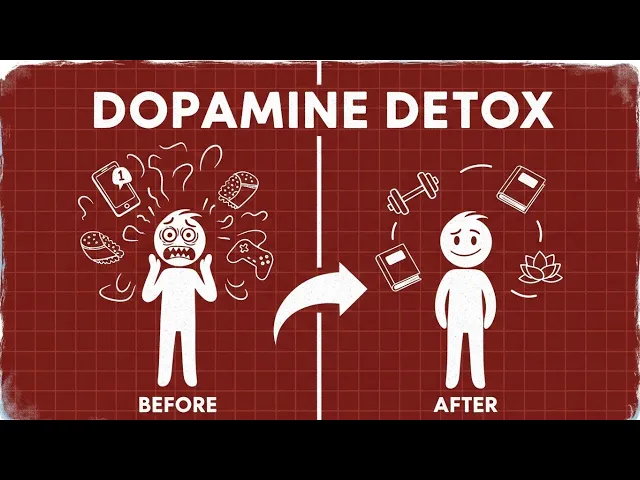
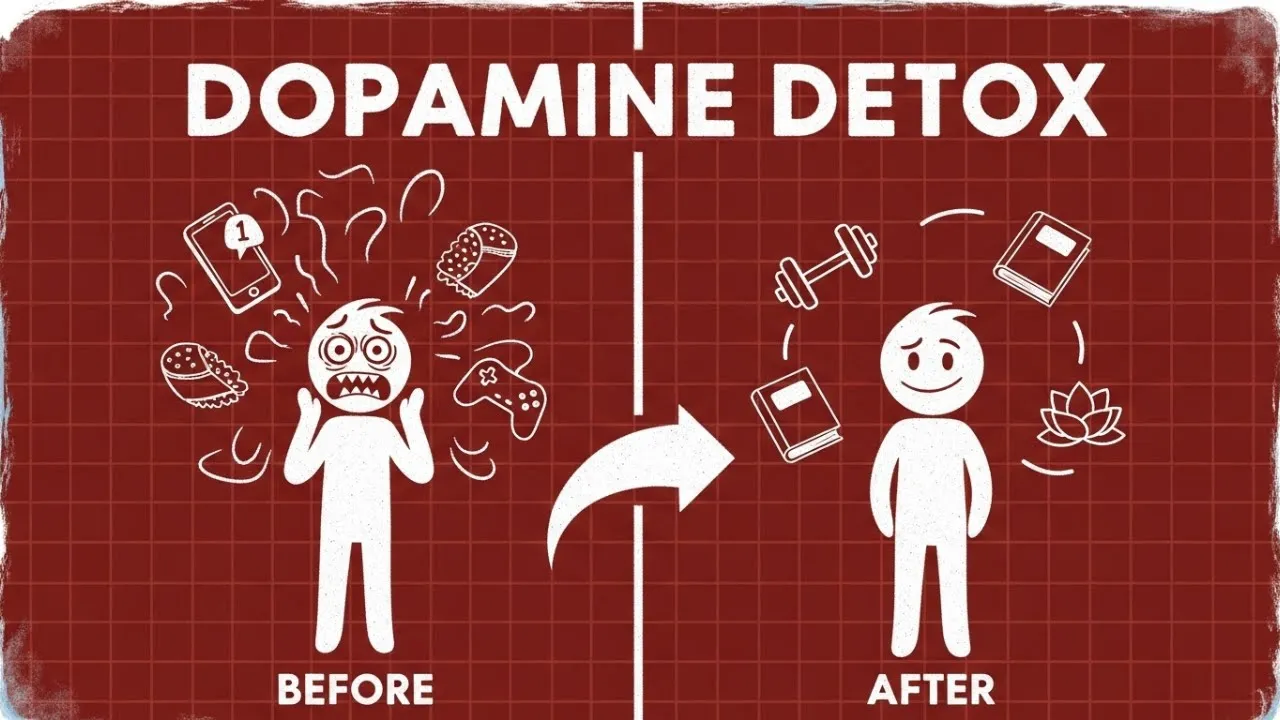
So, what exactly is a dopamine detox and why does it work? Despite what the name suggests, you're not actually detoxing from dopamine itself. You're removing the artificial hyperstimulating sources of it.
Think of your dopamine system like a dimmer switch that's been cranked to maximum brightness for so long that normal light looks like darkness. A dopamine detox is about turning down that dial so your brain can recalibrate what normal feels like. When you remove the overwhelming sources of easy pleasure, something remarkable happens.
Your dopamine receptors begin to upregulate. They become more sensitive. Suddenly, activities that seemed boring before start feeling engaging.
the satisfaction of completing a task, the energy after a workout, the calm after focused work. These natural rewards start registering again. You're not becoming someone new.
You're returning to baseline. You're remembering what it feels like to be driven by internal satisfaction rather than external stimulation. Most people fail at this because they approach it wrong.
They try to white knuckle through it, relying on willpower alone. But willpower is a finite resource and it's no match for a dopamine starved brain screaming for stimulation. Instead, you need to understand the transition period.
For the first few days, you're going to feel restless, irritable, maybe even anxious. This is not weakness. This is withdrawal.
Your brain has adapted to a certain level of stimulation and now you're pulling it away. The discomfort you feel is actually a sign that the process is working. Your brain is being forced to adjust.
The key is knowing that this phase is temporary. Most people give up right before the breakthrough because they interpret the discomfort as a sign they're doing something wrong. But that restlessness is your brain reorganizing itself.
Push through it. Here's what you need to do practically. Start by identifying your highest dopamine activities.
Not the things you enjoy most, but the things that require the least effort for the most stimulation. For most people, this is their phone. Specifically, social media, short form video content, or games.
But it could also be junk food, online shopping, or pornography. Whatever gives you intense pleasure with minimal effort, that's your target. Now, here's the critical part.
You don't have to eliminate these forever. You just need to eliminate them temporarily while your brain resets. Pick a frame time.
3 days is a minimum. 7 is better. 14 is transformative.
During this period, you're creating artificial scarcity for easy dopamine, which forces your brain to find satisfaction in harder activities. But you can't just remove things, you have to replace them. Nature appores a vacuum and so does your brain.
When you take away easy dopamine sources, you need to deliberately engage in activities that provide slower, more sustainable rewards. Read a physical book instead of scrolling. Cook a meal instead of ordering.
Go for a walk without headphones instead of watching another video. Exercise without music or podcasts. Journal by hand.
Have a real conversation. These activities feel boring at first because your dopamine system is still tuned to high intensity. But here's the magic.
As you persist, your brain starts releasing dopamine in anticipation of these activities, too. After a few days of reading, your brain learns that opening a book leads to the satisfaction of learning something new. After a week of workouts, your brain starts craving the endorphin rush and sense of accomplishment.
You're literally retraining your reward system. There's a crucial distinction here between pleasure and satisfaction. Pleasure is immediate and fleeting.
It comes from external stimulation and requires no effort. Satisfaction is delayed and lasting. It comes from internal accomplishment and requires effort.
Modern life bombards us with pleasure but leaves us empty of satisfaction. That's why you can spend an entire day feeling entertained and still go to bed feeling unfulfilled. Your brain got pleasure but no satisfaction.
A dopamine detox shifts your focus from seeking pleasure to building satisfaction. And here's what nobody tells you. Satisfaction actually produces more dopamine over time than pleasure does.
When you accomplish something difficult, when you push through resistance and come out the other side, your brain releases a cocktail of neurochemicals, including dopamine, serotonin, and endorphins. This is the feeling athletes call a runner's high. It's what creators feel after hours of focused work.
It's the deep contentment that comes from discipline, and it's far more powerful and lasting than any notification could ever be. The neuroscience backs this up. Studies show that delayed gratification activates the preffrontal cortex, the part of your brain responsible for planning, decision-making, and self-control.
The more you practice delaying gratification, the stronger these neural pathways become. Meanwhile, instant gratification activates more primitive parts of your brain, the lyic system, which operates on impulse and emotion. Every time you choose discipline over distraction, you're quite literally strengthening the advanced parts of your brain and weakening the primitive parts.
You're upgrading your operating system. Over time, this changes your default setting. Discipline stops feeling like a battle against yourself and starts feeling like your natural state.
This is what people mean when they say discipline becomes a habit. It's not that it becomes easy, it's that your brain rewires to prefer it. Let me tell you what happens after a proper detox.
You'll notice your attention span expanding. Things that used to bore you within minutes will hold your focus for an hour. You'll feel a clarity of thought that's been missing.
Ideas will come more easily. You'll make decisions faster because you're not constantly seeking validation through your phone. You'll have more energy because you're not riding a roller coaster of dopamine spikes and crashes.
Most surprisingly, you'll start feeling genuine excitement about things that used to feel like chores. That project you've been avoiding, you'll actually want to work on it. That gym session, you'll look forward to it.
This isn't toxic positivity or fake motivation. This is your brain functioning the way it was designed to before it got hijacked by algorithms. But here's the thing that people don't want to hear.
This isn't a one-time fix. Your brain will always try to drift back toward easy rewards. That's not a bug, that's a feature.
The key is building systems that make discipline the path of least resistance. This is where environment design becomes crucial. If your phone is next to your bed, you'll check it first thing in the morning.
If healthy food is prepared and visible, you'll eat it. If your workout clothes are laid out, you'll work out. You can't rely on willpower when your environment is sabotaging you.
Design your life so that the dopamine-rich activities require effort to access and the satisfaction rich activities are effortless to start. Delete social media apps from your phone. Use website blockers.
Put your phone in another room when you work. Make junk food inconvenient and healthy food convenient. Every barrier you put between yourself and distraction is a vote for the person you're trying to become.
There's also a social component to this that's often overlooked. The people around you are constantly influencing your dopamine baseline. If everyone in your life is scrolling, binging, and seeking instant gratification, you'll be pulled in that direction.
But if you surround yourself with people who value focus, discipline, and deep work, their habits become contagious. This doesn't mean abandoning your friends. It means being intentional about who you spend your time with and what activities you do together.
Seek out communities that reinforce the behaviors you want to develop. Find accountability partners who are on the same journey. Your brain is shaped not just by what you do, but by who you're with.
Now, let's address the elephant in the room. Some of you are thinking, "This sounds miserable. Why would I want to make life harder?
" And that's the trap. You're thinking about it from the perspective of someone whose brain is already hijacked. From your current state, discipline does seem harder than distraction.
But from the other side, from the perspective of someone with a re-calibrated brain, discipline feels easier than distraction. Because distraction leaves you feeling empty, anxious, and behind. Discipline leaves you feeling accomplished, confident, and in control.
Which is actually harder? Spending your days chasing dopamine hits that never satisfy you, or building a life where effort itself becomes rewarding? The path of least resistance in the short term is actually the path of most resistance in the long term.
This is about reclaiming agency over your own mind. Right now, if you're honest, you're not really in control. Your phone controls when you feel bored.
Algorithms control what you think about. Apps control how you spend your time. That's not freedom.
That's hijacking. True freedom is having a brain that works for you, not against you. It's being able to choose difficult things and actually enjoy doing them.
It's waking up excited about your work instead of dreading it. It's going to bed satisfied instead of guilty. That's what's on the other side of this process.
Not perfection, not ease, but alignment. Your actions finally matching your intentions. Your daily choices finally moving you toward your goals instead of away from them.
The rewiring process never truly ends because you're always either reinforcing discipline or reinforcing distraction. Every moment is a choice. But after you've reset your dopamine system, the choices become easier.
The pull toward distraction weakens. The pull toward meaningful work strengthens. You develop what psychologists call intrinsic motivation.
You do things because they're satisfying in themselves, not because you're chasing an external reward. This is the highest form of discipline. It's not forced.
It's not white knuckled. It's natural. It's who you are.
So, here's what I want you to do. Don't just watch this video and move on. That's what the old version of you would do.
Instead, make one concrete decision right now. What's the single highest source of empty dopamine in your life? Identify it.
Then commit to removing it for the next 7 days. Not forever, just 7 days. Notice what happens.
Notice the restlessness. Notice when it peaks. Notice when it starts to fade.
Notice what fills the space. Notice how your relationship with effort begins to shift. Document the process because once you see it happening in real time, once you feel your brain rewiring itself, you'll never want to go back.
You'll realize that you weren't meant to live as a slave to algorithms and impulses. You were meant to be someone who does hard things and loves doing them. That version of you is waiting.
And the path to becoming them starts with a single choice to let your brain breathe, to step away from the noise, and to trust that on the other side of temporary discomfort is permanent transformation. Your brain is ready to be rewired. The only question is, are you ready to do it?