Moving along through our investigation of clade Ecdysozoa, we reach the superphylum Panarthropoda, and we will begin examining this clade by looking at the phylum Tardigrada. The tardigrades, also known as “water bears” or “moss piglets,” were discovered in 1773 by Johann August Ephraim Goeze who called them "little water bears”, though they were officially named in 1777 by Lazzaro Spallanzani as Tardigrada meaning “slow steppers. ” They, along with Onychophora and Arthropoda, make up Panarthropoda.
It’s worth noting that the exact relationship between these three phyla is still a bit contentious. We have placed Tardigrada as the sister taxon to Onychophora and Arthropoda because that’s how Dr. Giribet and Edgecombe laid them out in the Invertebrate Tree of Life, but their position varies.
Remember that cladograms are guidelines based on current science and new discoveries may shift their positions. Water bears have been found from mountaintops to the deep sea, from tropical rainforests to even the Antarctic. Though phylum Tardigrada itself consists of only about 1,300 described species, they have become well known due to their unique morphology, extreme durability, miniscule size, and wide distribution.
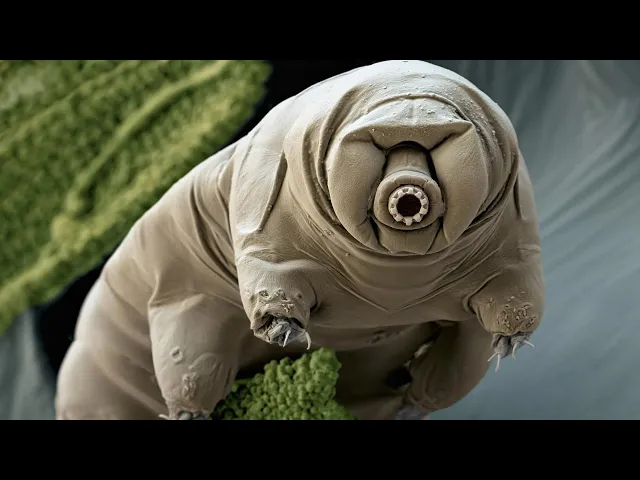
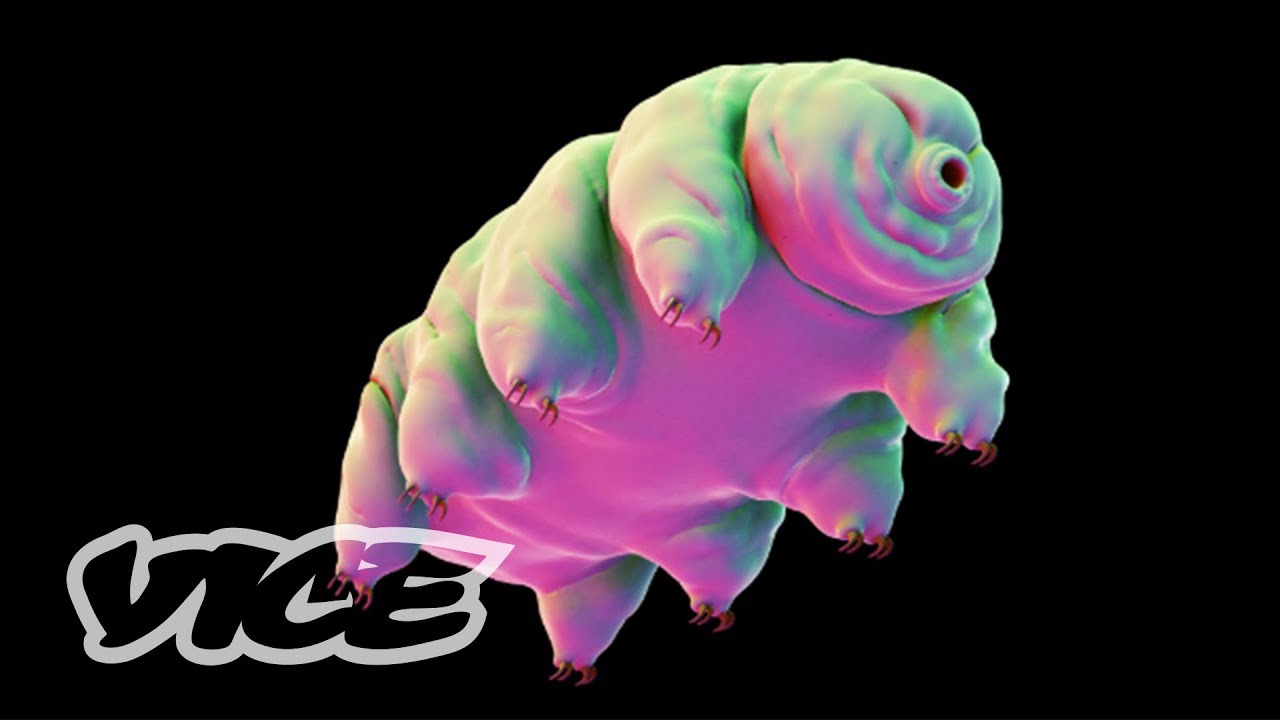
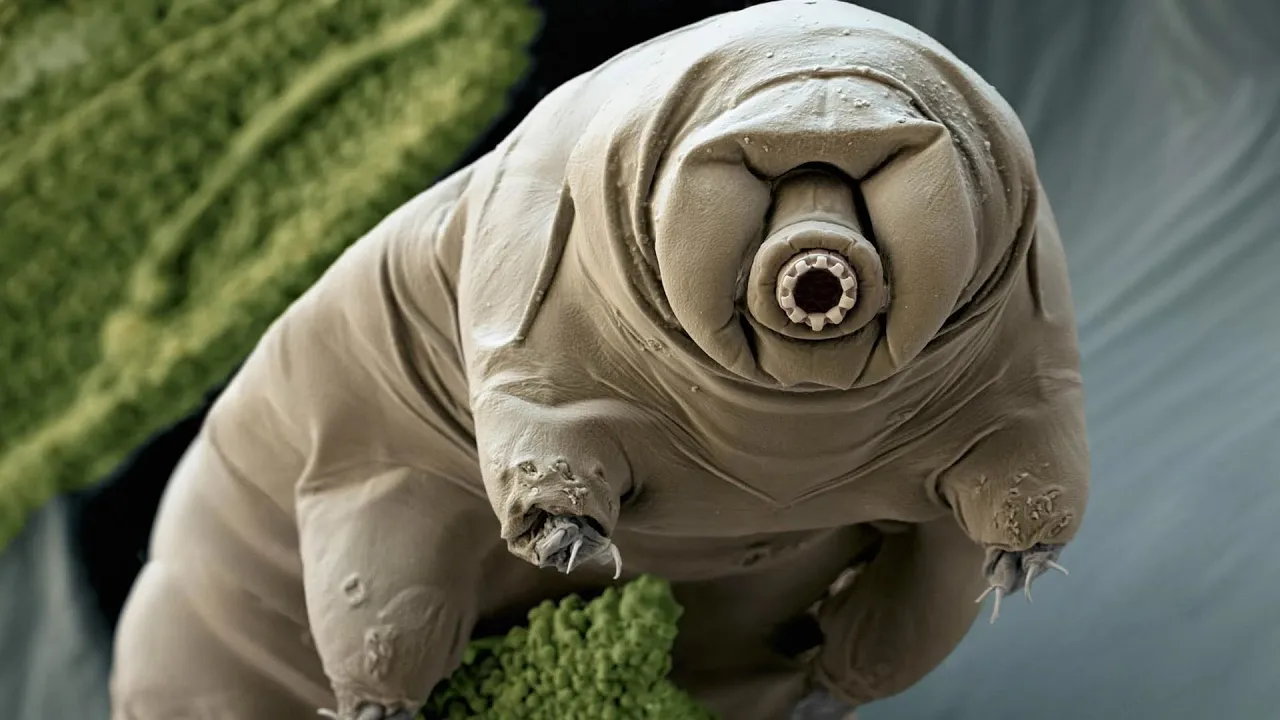
They are microscopic invertebrates, about 0. 5 millimeters in length. They are short and plump with four pairs of legs that end in claws or suction disks.
They are also famously capable of surviving extreme conditions that would quickly kill most lifeforms, and have been featured in the Ant-Man movies, episodes of South Park, Family Guy, Star Trek, and numerous science fiction shorts. In this tutorial, we will explore the water bears more generally as a phylum of Panarthropoda by focusing on their general characteristics, form and function, reproduction, unique physiology, and survivability as extremophiles. In terms of general characteristics, water bears are bilaterally symmetrical, segmented ecdysozoans.
Their ectoderm is comprised of a single layer of cells and they are covered by a cuticle. They are pseudocoelomates and lack both a respiratory and circulatory system. Their bodies are divided into a one-segment head and a four-segment trunk.
They have eight unjointed legs. Each of their trunk segments contains a pair of stubby claw-bearing legs, the last pair of which is terminal and reversed. They have a unique pumping pharynx and stylet, a brain comprised of a single ganglion, and they are capable of suspending their metabolism through cryptobiosis.
Without a circulatory or respiratory system, water bears instead exchange gases directly through their body walls and circulate nutrients within their hemocoel, which makes up most of the body cavity and houses the organs. Tardigrades do, however, have complete digestive, muscular, nervous, and reproductive systems, and at least a partial excretory system. In order to feed, tardigrades have a tubular mouth armed with sharp, needle-like stylets that are used to pierce plant cells, algae, nematodes, or other small animals, including in some cases, smaller species of water bears.
Some marine forms are parasitic on larger animals like sea cucumbers or barnacles. Then, once the cells of their prey have been punctured, the tardigrade extends their pharynx out from the buccal bulb and drains the cellular fluid. The digestive system therefore begins with the mouth, the pharyngeal or buccal bulb that contains the muscular pharynx and salivary glands.
Fluids consumed pass from the pharynx into the esophagus and then the intestine that occupies much of the length of the body, and is the main site for digestion. The intestine then opens into a rectum and anus, allowing waste to pass out from the body. In close association to the digestive system is the partial excretory system that is mostly comprised of Malpighian tubules that serve an osmoregulatory and excretory function to rid the hemocoel of waste and excess fluids.
The water bear muscular system is comprised of a series of long muscular bands, and a series of smaller muscles around the buccal bulb. They lack circular muscles and likely rely on hydrostatic pressure formed by their hemocoel to maintain their forms. Without a great deal of musculature, they seem to walk or crawl in an awkward lumbering motion, and most species are incapable of swimming, mainly relying on their eight stubby legs for grip and locomotion.
Their nervous system consists of a dorsal brain with three bilaterally paired clusters of neurons that attach to a ganglion below the esophagus, which connects to paired ventral nerve cords that run the length of the body. Each segment in the body contains one ganglion. In order to sense their world, water bears are covered in sensory bristles on the head and body, and most possess a pair of pigment-cup eyes located at the front of the head and chemosensory sites near the mouth.
Their reproductive systems are comprised of a single gonad located above the intestine. Water bears are dioecious, and females are often larger and more common than males. However, there are a few species that reproduce through parthenogenesis, where a single embryo develops from a single unfertilized egg.
In parthenogenic water bear species, no males have ever been found. However, in species where males are present, two ducts run from the testes in males, opening through a single pore in front of the anus. Females, in contrast, have a single duct that opens just above the anus or directly into the anus, forming a cloaca.
Tardigrades are oviparous, meaning they lay eggs. These eggs are fertilized externally after the female molts. Following a molt, she lays her eggs within her shed cuticle and the male covers the eggs with sperm.
Then, the eggs are often left within the cuticle to mature, but some species connect them to a nearby substrate to keep them safe. Eggs hatch about 14 days after fertilization and the hatchlings already contain a complete set of adult cells. Their cell count does not change as they grow, instead, they grow in size by enlarging individual cells, a process known as hypertrophy.
Individuals may molt up to 12 times. Without counting time spent in suspended animation, most species only live for a few months, but some live for up to two years. The vast majority of water bear species are found in the terrestrial environment, often in the film of water surrounding moss, lichens, or damp soils.
However, some species have also been found in extreme environments including hot springs, the top of the Himalayas, polar regions, and the deep sea. A few species can withstand extreme cold temperatures down to −460°F or −273°C, which is just barely above absolute zero, and other species can withstand hot temperatures over 300°F or 150°C. Still others can survive 1,000 times more ionizing radiation than most animals, impacts greater than 900 meters per second, extreme dehydration for more than 10 years, pressure six times greater than the ocean floor, extreme environmental toxins, and even the vacuum of space.
However, it’s important to note that most tardigrades can’t survive all these conditions. Though durable as a group, many tardigrades are delicate and die quickly outside of their comfort zone. And even in those that can survive extreme environments, most die when put through strenuous environments.
There is no one species that can survive everything we just listed, and tardigrades are not indestructible, but they’re still remarkable because they are one of the very few species that can suspend their metabolism through cryptobiosis and enter into the tun state where they dry up, and curl inward. While in the tun state, their metabolism lowers to less than 0. 01% of normal activity, and their water content can drop to 1% of what is normal.
They can also go without food for more than 30 years, only to later rehydrate, forage, and reproduce. It is possible that some species can live quite a bit longer, and it is also likely that at least some would survive a cataclysmic extinction event, since as a phylum, they have already lived through five mass extinctions. And with that, we’ve covered the tardigrades.
But we’re not done with Panarthropoda yet. Let’s continue and discuss the velvet worms of Phylum Onychophora.