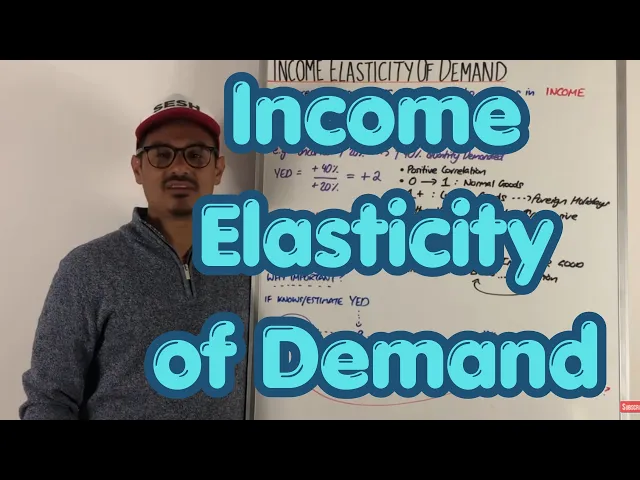
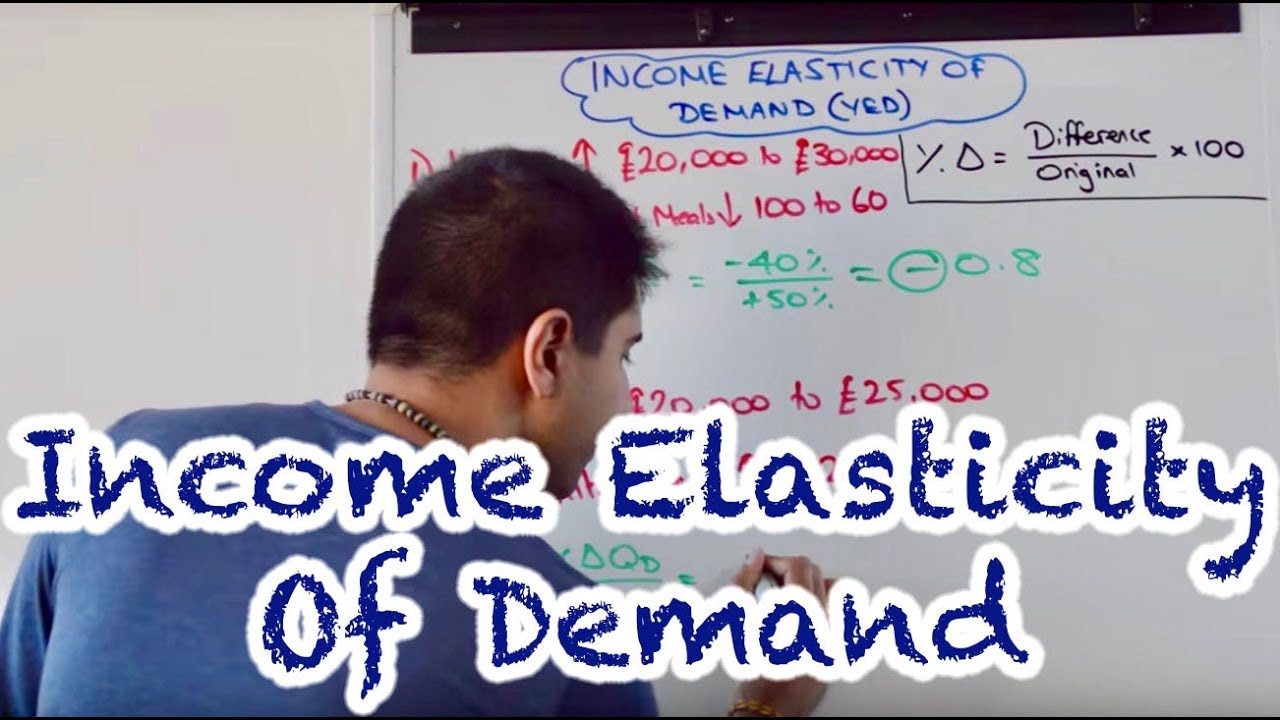
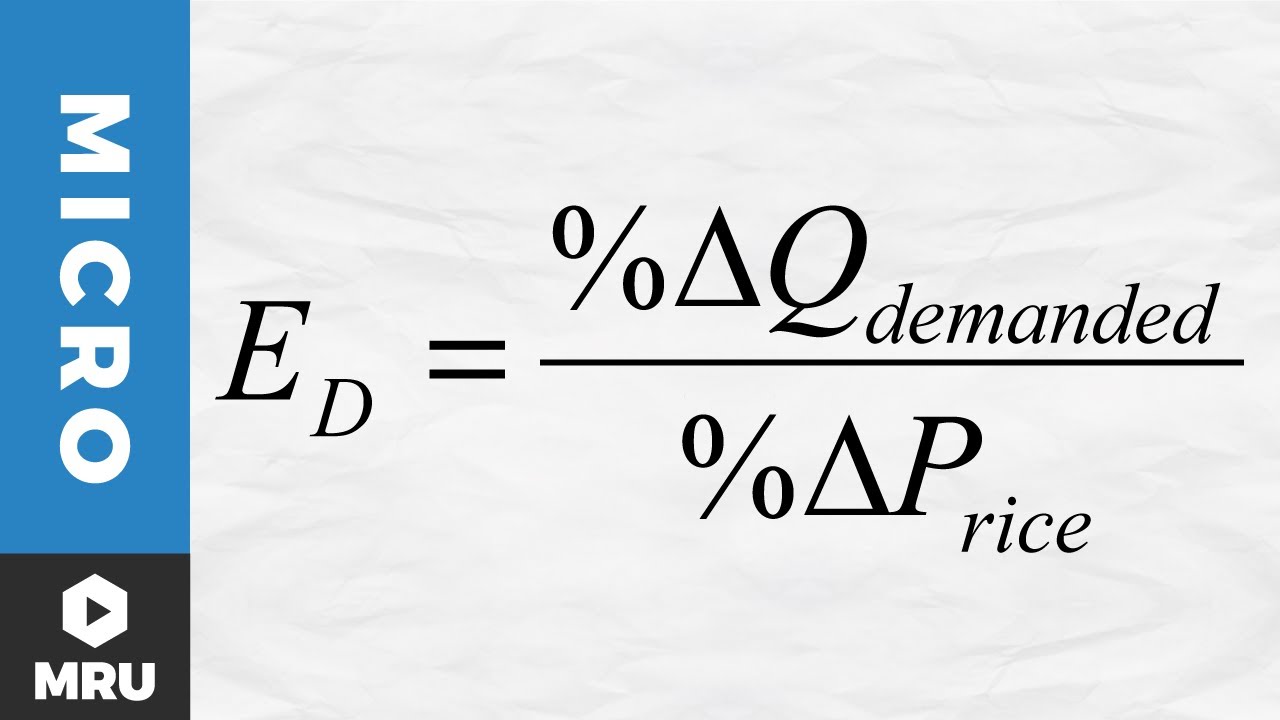
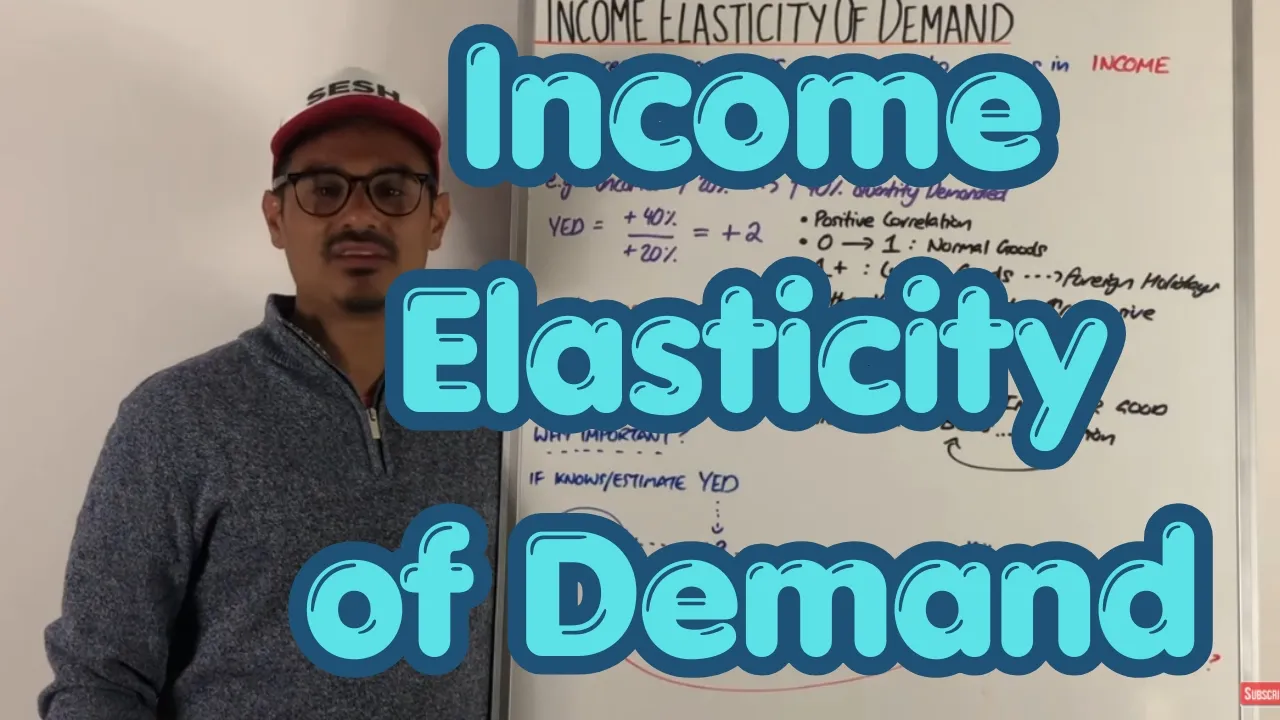
less obsession income elasticity of demand sometimes referred to as ye D so this essentially measures the responsiveness of demand to changes in income income this time not price as it would be in price elasticity of demand the formula for it for yd income elasticity mud is percentage change in quantity demanded divided by percentage change in income in income now if we just go through an example so if incomes in an economy increased by 20 percent and that led to a particular product or a particular good increasing in its quantity demanded by 40 percent so twice
as much as the increase in incomes then plus 40 divided by a plus 20 comes to a coefficient of plus 2 positive 2 so this is an example of a positive income elasticity demand a positive correlation between incomes and the quantity demanded or the sales for your product so if it's between 0 & 1 this coefficient sometimes referred to as a normal good and if it's higher than 1 it may be referred to as our luxury goods such as a foreign holiday so essentially the higher the income elasticity coefficient the more responsive demand is to
incomes now want the other side that's a positive example let's look at a negative example where there's a negative correlation because ye d can be a positive or a negative number so in this case incomes fall by 20% in economy perhaps there's a recession and it leads to a 40% increase in quantity demanded if we shut those numbers into the formula this formula up here plus 40 on the top / - 20 because incomes fell by 20% plus 40 divided by minus 20 comes to a coefficient legal why D of minus 2 minus 2 so
that's a negative correlation if the number is less than 0 it's a negative correlation and it's referred to as an inferior good an example of an inferior good is value baked beans because they may be more in demand when incomes fall in a recession so why is this all important to notice well if you know your yd or you can estimate the yd then you can follow a chain of analysis as so so let's just say you know your yd you know your Y UD is +3 your estimated at least that is plus 3 plus
3 indicates there's a positive correlation likely a luxury good as foreign holidays we saw in there so now you perceived on the road a recession is going to happen and a recession is going to happen which may well lead to incomes falling and let's say you guessed no the incomes are going to fall by 10 percent so incomes are going to fall by 10 percent you know your why you doing your estimator yd is plus 3 well that means if you just reverse up that formula it's going to mean the quantity demanded based on your
estimates for your products is likely to fall because the recession is down the line you are a luxury good it's a positive correlation quantity mine it will fall by 30 percent so what does that mean for a business but it might mean that you need to start reducing your inventory reducing your stock because you don't needs much time if you forecast the future is not looking so rosy for you I was stuck it might be that you reduce your workforce you reduce your headcount of staff camp maybe you need to do some form of retrenchment
because you can see forecasting down the road it's not looking good for you because you know you're why you did and the last thing is if you perceive this is going to happen in this scenario it might mean that in the future it looks like your cash flow is going to be in a worse situation than it is now so you might want to consider getting those sources of finance in place such as a bank loan or if it's available to you to issue some equity so I hope that helps on income elasticity demand I'll
see you at the next session you