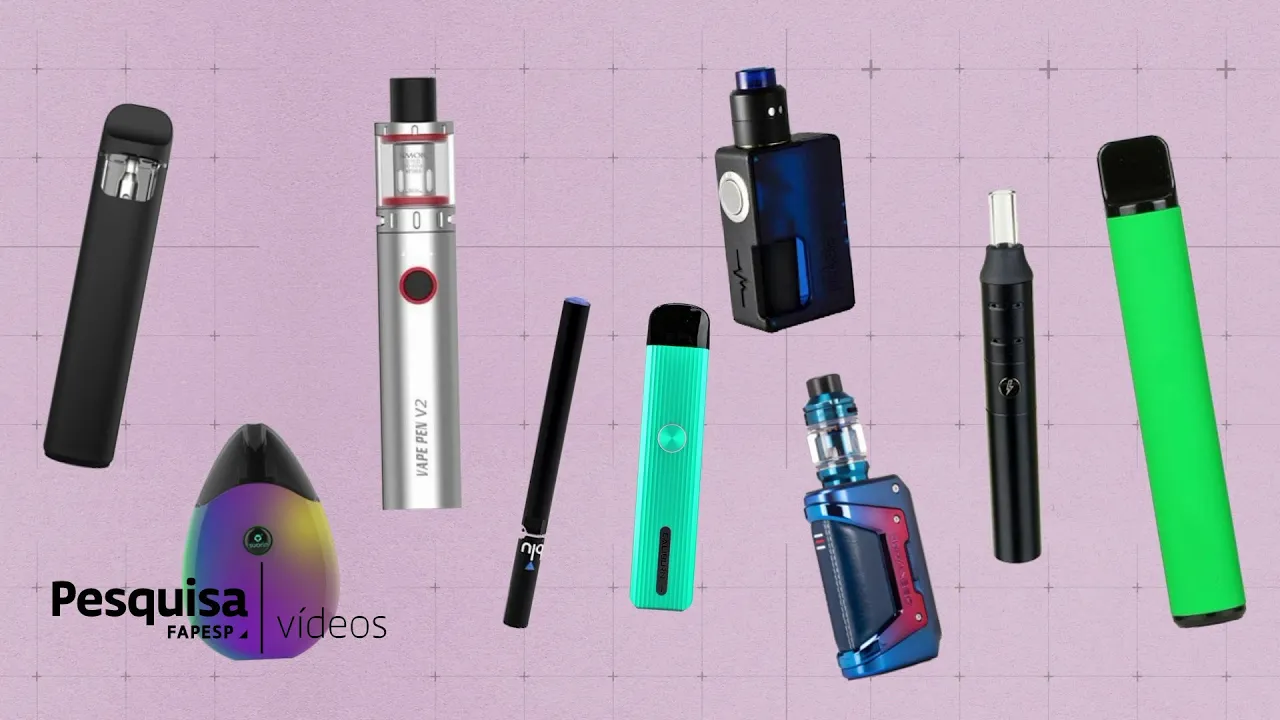
Banned in Brazil, yet readily accessible, electronic cigarettes, or vapes, don't produce only water vapor as its name suggests. Vape smokers inhale nearly 2 thousand substances, most of which are unknown. Marketed and sold as the safest substitute for traditional cigarettes, new studies are showing worrying results.
The electronic cigarette was invented by Hon Lik, a chinese pharmacist. Lik smoked three packs of conventional cigarettes a day, and he had lost his father – also a smoker – to lung cancer. Lik says that he created the first devices in 2003, in an attempt to put an end to his addiction.
Ever since, electronic cigarettes have been marketed for adults as a "transitioning tool" to help smokers quit smoking, much like nicotine patches or gum. But a study by epidemiologists Neilane Bertoni and André Szklo, of the National Cancer Institute, in Rio de Janeiro, has shown shown an altogether different scenario: Over half of the people who try electronic cigarettes had never smoked conventional cigarettes before. Rather than helping adults to quit smoking, the study shows that vapes do precisely the opposite: roughly 80% of the people who smoke electronic cigarettes are aged 18 to 34.
The use of these devices has led to a more than fourfold increase in the probability of conventional cigarette smoking. Electronic cigarettes come in different shapes. They all have one thing in common: a battery that heats up the liquid mixture stored inside the device, thus creating a cloud of particles similar to gas or vapor.
The aerosol's composition is derived from the ingredients used in the liquids: water, nicotine, vegetable glycerin, propylene glycol and substances that add flavor to the electronic cigarettes, which can contain sweet or fruit flavorings. Combustion of the liquid produces nearly 2 thousand different substances, most of which are unknown, and which, when inhaled, can lead to serious health risks. In the latest-gen vapes, pure nicotine has been replaced by acid nicotine salts, decreasing throat irritation and overall bitterness.
In doing so, manufacturers are making the product increasingly palatable, thus masking the actual amount ingested. Therefore, the results of the study contradict the claim that electronic cigarettes are a healthier and safer alternative for those who wish to quit smoking. Most likely, these devices will become a new way of getting people to take up conventional cigarette smoking, going against Brazil's successful, decades-long effort to combat smoking: In 1989, roughly 35% of Brazilians were smokers.
In 2019, that number had sunk below 13%.