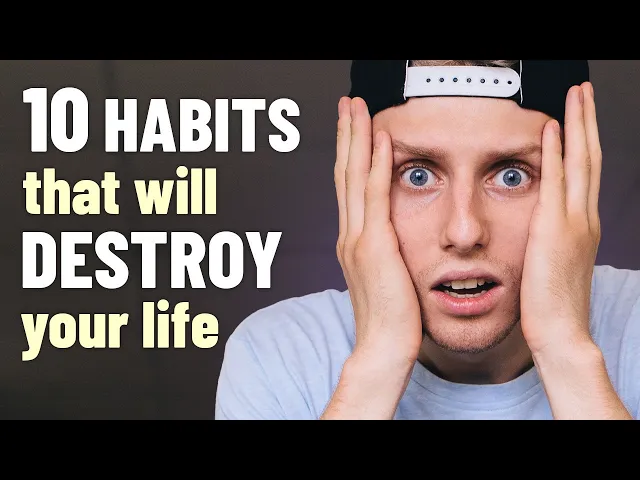
Brainy Dose Presents: 10 Bad HABITS That DESTROY Your Life A habit is something you do regularly, often without even thinking about it. Some habits are beneficial, helping you grow and thrive, while others can be downright destructive. Bad habits tend to creep into your life and slowly but surely wreak havoc on your potential.
They can hold you back from achieving your goals, damage your relationships, and create unnecessary stress and anxiety. What’s worse, these habits often perpetuate themselves, creating a cycle that can be hard to break. You might find yourself procrastinating, avoiding difficult conversations, or constantly second-guessing your decisions, and then you wonder why you’re not making the progress you desire.
Of course, the first step to overcoming bad habits is awareness. By understanding their negative impact, you can start to make conscious efforts to change. Let’s get to it!
Number 1 - Making Assumptions Assumptions are silent stress inducers and relationship destroyers. When you make assumptions, you create a false reality in your mind that can result in misunderstandings and conflicts. For instance, you might assume your partner is upset with you when they are simply having a bad day.
This incorrect belief can make you act defensively or confrontationally, and spark an argument that could have been avoided. Don’t let assumptions dictate your actions! Get the facts straight.
If you’re unsure of something or want to know what someone is thinking or feeling, ask them directly. Clarify their intentions and feelings before responding. Number 2 - Chronic Indecisiveness Indecisiveness can truly paralyze your life and affect every aspect of it, including your career, relationships, and even day-to-day activities.
When you're unable to make decisions, you waste valuable time and energy and miss out on opportunities. This habit can stem from a fear of making the wrong choice or a desire for perfection. But, it's important to remember that no decision is perfect.
Every choice carries some risk, and that's just part of the process. You need to start trusting yourself and embracing the possibility of failure as a learning experience. Number 3 - Not Setting Goals or A Lack Of Focus Goals provide direction and purpose, motivating you to take action and giving you a clear sense of where you want to go.
Without them, it’s easy to feel lost and unfulfilled. Similarly, a lack of focus scatters your efforts and makes it difficult to achieve anything substantial. When you’re constantly distracted or trying to juggle too many things at once, your productivity suffers, and you struggle to make meaningful progress.
To overcome this, identify what you truly want to achieve in various areas of your life. Then organize your ‘tasks and responsibilities’ based on their importance and urgency. Focus on one or two key areas at a time and give them your full attention.
Number 4 - Leaving Things to The Last Minute Procrastination is a pervasive habit that creates stress and results in subpar outcomes. Leaving tasks to the last minute can become a chronic issue, driven by various underlying factors such as fear of failure, lack of motivation, or simply poor time management. Another reason for last-minute rushes is the misconception that we work better under pressure.
While some people believe that the adrenaline rush of a looming deadline boosts their productivity, the reality is that this often leads to mistakes and lower-quality work. It’s better to start tasks early and allocate regular, dedicated time slots to work on them. It will greatly reduce the need for last-minute sprints and will yield much better results overall.
Number 5 - Running from Your Problems Avoidance is a temporary fix for problems that only grow over time. It could be financial issues, relationship conflicts, or personal insecurities, running from your problems never solves them. In fact, it often makes them worse.
The more you avoid a problem, the more it weighs on your mind, causing stress and preventing you from moving forward. This can cause a sense of helplessness and a decline in self-esteem. Confronting your issues head-on is a much better way to go.
It may be uncomfortable, but it’s the first step necessary toward resolution. Number 6 - Blaming Others Blaming others for your problems is an easy trap to fall into, but it’s one that keeps you stuck. When you constantly point the finger at other people, you avoid taking responsibility for your own actions.
And yes, it might offer a quick escape from guilt, but it prevents you from addressing the root cause of the issue. To break away from this destructive habit, start by embracing accountability. When something goes wrong, instead of automatically shifting the blame, take a moment to reflect on your own role in the situation.
Ask yourself what you could have done differently and use those insights to make better choices in the future. Number 7 - Being Inconsistent Inconsistency is another silent saboteur in life. It undermines your efforts and prevents you from achieving lasting success.
From your fitness routine to work projects and personal relationships, inconsistency creates instability and unpredictability that hinders meaningful progress and weakens trust. To become more consistent, establish routines and set reminders. Hold yourself accountable by tracking your progress and celebrating small wins.
Consistency builds momentum, which leads to greater achievements over time. Number 8 - Trying to Control Everything You want things to go your way, obviously. But trying to micromanage every detail can be overwhelming and exhausting.
The reality is that not everything is within your control, and learning to let go can free you from unnecessary stress and frustration. One key aspect of overcoming this habit is understanding the difference between control and influence. Control implies having complete command over outcomes, which is often unrealistic.
Influence, on the other hand, acknowledges that while you can impact certain situations, the final outcome might still be beyond your reach. Focus on areas where you have influence and accept that some elements will always be unpredictable. Number 9 - Living in The Past or in The Future Dwelling too much on the past or constantly worrying about the future can prevent you from fully enjoying and engaging with the present.
While there’s nothing wrong with reflecting on past experiences or planning for the future, getting stuck in either can create a sense of disconnect from your current life. This can stir up feelings of regret and anxiety and even lead to overlooked possibilities. To combat this habit, practice mindfulness to ground yourself in the present.
Embrace the now; and you’ll find greater joy, fulfillment, and peace in your daily life. Number 10 - Trying to Be Someone You Are Not One major consequence of trying to be someone you’re not is the strain it places on your mental and emotional well-being. When you consistently deny your true self to meet external expectations, you create internal conflict.
This dissonance causes anxiety, depression, and a perpetual sense of inadequacy because you’re living a life that doesn’t align with your core values and desires. Just be true to yourself and pursue your passions and goals, even if they are different from what others expect or want from you. It will help you build confidence in your abilities and create a sense of fulfillment and purpose.
Bad habits can be like termites, silently eroding the foundation of your life. But the good news is that habits, both good and bad, are within your control. By recognizing these destructive behaviors and actively working to replace them with healthier ones, you can transform your life.
If you enjoyed this video, give it a thumbs-up, and share it with your friends, so we can keep making them. For more videos like this, hit the subscribe button, and don’t forget to click on the notification bell. That way you’ll get notified of our next post.
Also, to learn more about many other interesting topics, be sure to check out our other videos as well. Thanks for watching!