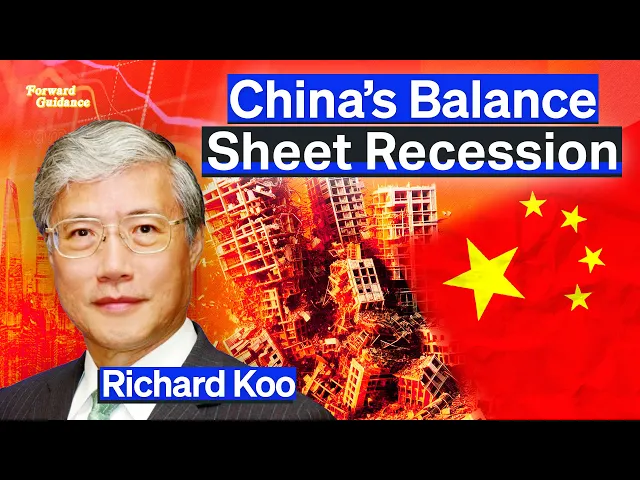
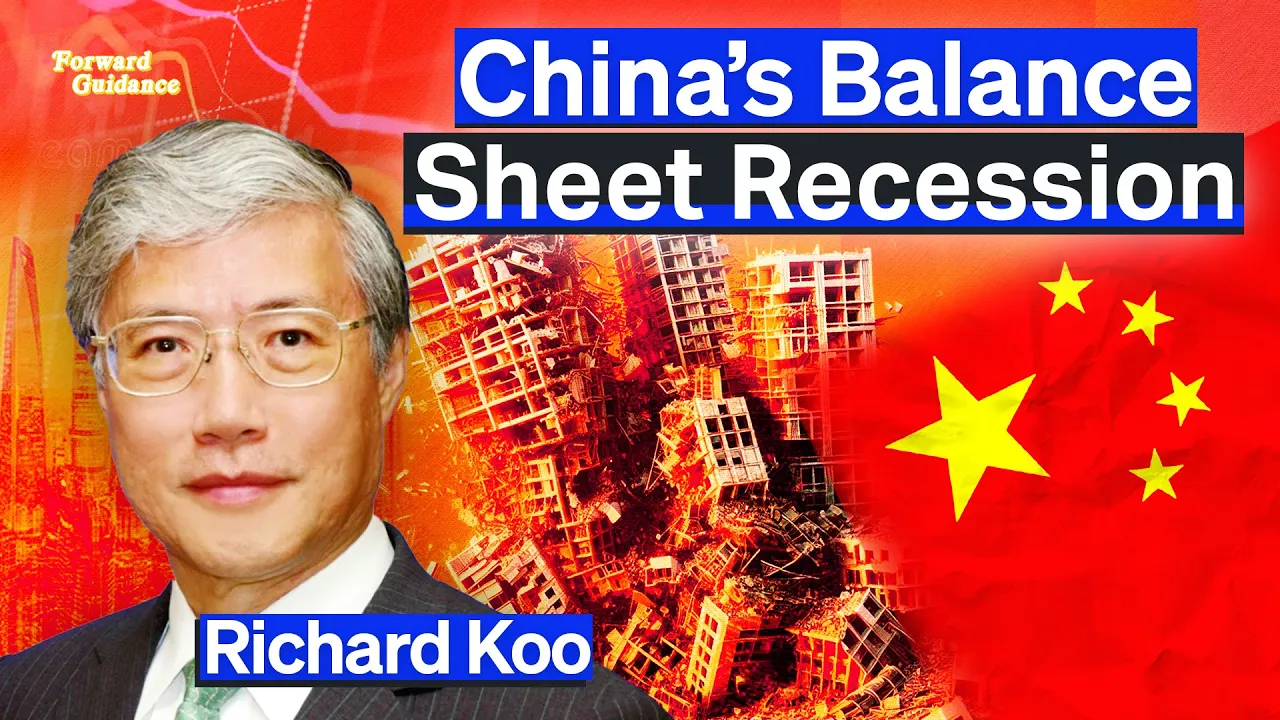
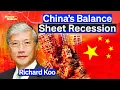
I've been warning about this issue for a while but I'm afraid the uh real estate bubble burst in China and so the situation is very similar to what happened to Japan uh 30 years ago when real estate prices started falling Chinese people who bought these apartments and houses suddenly realized that their wealth is falling balance sheet is underwater so they start paying down debt I really want to write to the Chinese Central Bank by saying that the market is trying to tell you that this is a balance sheet recession and that government spending is needed
and the central bank will not have much uh impact one way or the other so the econom is still are weakening quite rapidly hey everyone before we get into it I do have some big news this will be my final episode of forward Guidance the very talented Felix Javen in whom I have complete and utter confidence will be Taking over as host of forward guidance going forward I'll be leaving to start my own Financial podcast and YouTube channel called monetary matters which will include links to in the description oh and by the way if you
already know what a balance sheet recession is and you want to get immediately to the China part in this interview skip to the 15minute Mark I wouldn't do that but just so you know all right let's get into It I so pleased to welcome to forward guidance for the first time Richard coup Chief Economist at the namura research institute and Senior adviser at csis a former Economist with the Federal Reserve Richard has advised former Fed chair Paul vulker as well as five Japanese prime ministers he notably is the founder of the concept of a balance
sheet recession a significant advancement in the field of macroeconomics and recession Theory Richard thank you so much for for joining us here today welcome to forward guidance well thank you for having me it's a great pleasure the pleasure is is all mine Richard let's start off the concept of a balance sheet recession you first uh discovered this very relevant to what happened in post bubble economies such as the Japan in the 1990s as well as Western economies after the great financial crisis as well as perhaps China right now so what is the Balance sheet recession
and how does it apply to to all those regions I came up with this concept of balance sheet recession around 1997 or so 1996 1997 trying to understand what was going on in Japan and as a chief Economist of numra the largest Investment Bank in Japan I had to be able to explain what was happening all around us after the bubble burst the bubble burst 1990 and the economy kept on slowing down uh B of Japan brought race down to zero fairly Quickly nothing happened we had a a fiscal stimulus but every time you put
in the fiscal stimulus the economy responded but when you removed it it tanked again no so-called pump priming the Kian pump priming that we we come to expect and of course structural policies were discussed in actually implement it but nothing helped and so we were completely lost at that time what was happening to us and then one day I looked at how much money Japanese Companies actually raising from the capital market and the banking system and I was shocked to find that the number was actually negative at zero interest rates meaning that Japanese companies are
actually paying down debt at zero interest rates and nothing in economics that I study in graduate schools prepared me for something like this so that got me start thinking and well the only possibility that can explain this kind of phenomenon Is that they have balance she problems financial problems that they are possibly technically bankrupt then in that case you have to pay down thatb to come out of this negative equity territory and so then that was the starting point and then I start looking into and asking questions to a lot of uh corporate Executives and
we found I found out that none of them are particularly willing to talk about that subject because they of course don't Want to tell the whole world that they are technically bankrupt and they're actually paying down debt not maximizing profits they're minimizing debt but then you gather data from flow funds banking numbers what happened was during the bubble people leverage themselves up thinking that they're going to make thousand of money but once the bubble burst uh liabilities remain asset prices collapse and they realize their balance Sheets under water well balance sheets under water means these
guys are bankrupt technically bankrupt there actually two kinds of bankruptcies when you think about it the one with cash flow and the one without cash flow now without cash flow of course you're out of business right away and then you have to step off the stage but if your Mainline of business still doing okay that your cars and cameras are still selling very well which was the case for The Japanese companies back in 1990s but the balance sheet is horribly underwater because of uh this wrong decision that management made in investing in C certain properties
and so forth in that case what is the right thing to do the right thing to do is for these companies to use the cash flow to pay down debt and as long as you can pay down debt slowly and slowly at some point your balance sheets will be balanced again and then then you go back To the original profit maximization instead of thatb minimization but when you're in process you're actually minimizing debt but that is the right thing to do at the individual level in that by doing so you don't have to tell your
shareholders it's all piece of paper now you don't have to tell Bankers that sorry I can't service your debt it's all nonperforming loans and most importantly you don't have to tell your workers that you have no more jobs Tomorrow so for all the individual all the stakeholders involved that is the right thing to do whether you're Japanese American or German or Taiwanese that is the right thing to do and it's a responsible thing to do as well but the problem is what happens everybody when everybody does this all at the same time because in the
National economy if someone is saving money someone has to be borrowing and spending that money to keep the economy going right and usually Those of us in the financial sector will take the money from the Savers give to someone who can use it that's how economy moves forward and if there too many borrowers Central and the econom is doing well well Central Bank will raise interest rates too few borrowers Central Bank will bring rates down and that's basically how economy usually functions but in the balance sheet recession Central Bank bring Rate rates down to zero
nothing happens because all these People still paying down their repairing balance sheets and when you're in that situation economy could tank very very quickly uh then if I may give you a numerical example suppose I have $1,000 of income myself and I spend $900 save $100 the 00 is already someone else's income so that's not a problem but $100 that I decide to say will go through financial sector give it to someone who can use it that person borrows and spends it then the total expenditure in The economy will be 900 that I spent $100
that this borrower spent $ thousand against the original income of the th000 and the economy moves forward but in the balance recession when I have th of income and I have n and spend $900 and $1,000 I saved this $100 get stuck in a financial sector it cannot come out because people not borrowing money even at zero interest rates then economy shrinks from 1,000 to 900 the 900 is someone's uh income if that person says Okay let's say 10% spends 810 and saves $90 the $90 get stuck in a financial system and it gets it
happens like this because repairing balance sheets typically takes a long time Japan took some companies nearly 20 years and US Europe after 2008 also took five five to six years in the case of United States much longer in Europe and so if nothing is done to this situation the economy could go from 1,900 810 730 very very quickly and that's basically what Happened to United States during the Great Depression when everybody was paying down that no one was pay uh borrowing money and the economy lost 46% of its GDP in just 4 years from 1929
to 1933 that's why it was called the Great Depression but no one understood this process at the time and not until 1997 or so uh because we always assumed the private sector is maximizing profits if re rates are low enough someone would borrow money and the economy will move Forward well once you're in balancing recession with people having huge problems with their balance sheets that fundamental premise of fundamental assumption is violated and we have to operate on the assumption that private sector is not maximizing profits actually minimizing debt and that's basically the key point of
the balance sheet recession so in a balance sheet recession the private sector which includes households as well as Businesses is deleveraging and and paying down debt uh economics 101 mainstream economic theory uh traditionally had the the theory that businesses are always maximizing profits but you're saying in instances after recession after the burst of a bubble they they really want to pay down debt even if they would make more money and make more profits by uh borrowing more money when interest rates are really low they they delever how did you see that Concept play out after
the great financial crisis in Europe as well as the United States well so the bubble burst 2008 uh especially after the Leman crisis that was September of 2008 and all these households suddenly decide not to borrow money start paying down debt and both in United States and Europe if you look at the flow of funds data there was a d dramatic change from being a borrower being a net borrower to a huge net Saver in the case of Spain which had Uh suffered very badly from this recession the shift from being a net borrower to
net saor for the Spanish household sector was as large as 20% of GDP and if the economy loses 20% of GDP almost overnight of course the economy will be in very sad shape and Spanish unemployment rate reached almost 25% uh shortly thereafter and of course us we all know how much us suffered many other countries in Europe suffered as well because the housing bubble burst on Both sides of the Atlantic almost at the same time is this is a solution to a balance sheet recession one where the government borrows a lot of money because there
are no private sector Borrowers who who want to to lever up the problem with balance sheet recession is that everybody's doing the right thing right and responsible and honorable thing that is to to repair their balance sheets with their cash flow so that at some point your balance Sheets balanced again so it's very difficult to tell to the private sector please stop borrowing money and don't repair your balance sheets even if the government or even the dictator tell them to do that that's not going to happen and if you remember the banks are also not
allowed to lend money to a bankrupt borrower if Bank examiner finds out that you're lending money to to the bankrupt borrower you know you go to jail and so lenders Cannot move the borrowers cannot move and they're all doing the right things then the only thing only way to stop this 1,900 80010 730 that process is for the government to borrow the $100 if the government borrow the $100 then it' be 900 plus $100,000 against the original income of ,000 the economy will remain stable and this has to be continued until private sector balance sheets
are repaired and they're back borrowing money again but That's going to be a fairly long process if you do it correctly from the very beginning when the GDP is largely maintained then you it might take less time but if you allow the economy to really collapse first and then you try to rebuild it with the government spending then it would take much longer and it be much costlier as well do do you think the US has emerged from the balance sheet recession it was in from the great financial crisis uh onwards Compared to us and
Europe United States actually did the right thing uh chairman Ben of the Federal Reserve for example came out and said please don't fall off the fiscal cliff you know that very famous quote f Cliff well he understood that we were in Balance recession he actually read my book and uh we actually testified together US Congress uh one time so with that remark with at that time if you remember uh Republicans were trying to balance the budget as they Have done during the Great Depression try to do during the Great Depression but Jim banki with who
was put in place with Republican support were actually telling the Republicans don't do that don't try to cut the deficit drastically or don't this is no time to cut the deficit and that kept the US Congress from really going down the route of uh austerity and I think that's how us came out of this that recession much faster Than the Europeans it still took uh five six seven years if you look at the data on when people start borrowing money again but uh five six years is far better than almost 10 or 12 years the
Europeans took and in the case of Europe if you remember there's this uh growth and stability pact which caps how much individual uh Euro Zone member countries can borrow and that's set at 3% of GDP but at the time as I indicated to You earlier Spanish private sector was saving 7% % of GDP at zero interest rates but the government was only allowed to borrow 3% out of the seven so what happens to the remaining 4% well that became the deflationary gap of the Spanish economy and that's how Spanish economy literally collapsed in spite of
my repeated warnings to the European governments and to the ECB I was invited to speak at the ECB on numerous occasions because they also realized That they might be facing balance sheet recession even even though people at the researcher level economists many of them understood that this is a this new disease Co balancy recession the top guys the German government refused to listen to that and kept on talking about austerity and structural reform now structural reform sounds great and I have nothing against structural reform per se but if the issue is who's going to borrow
the $100 In a hurry and if you put in a structural reform if that structural reform just happened to prompt people to borrow the $100 and spend it then it would have worked but it's very difficult to predict something like that happening and even though Europeans did do a lot of structural reforms labor market reforms so so forth the economy continued to uh weaken stayed very uh weak for almost 10 years Perhaps 10 11 years before things began to look better the difference in fiscal policy compared uh between United States on one hand and Europeans
on the other I think makes it very very clear that in a situation like our balance recession fiscal policy is the only way to go and as we record this uh during the summer of 2024 you know we're looking back at the balance sheet recessions in the West after the great financial crisis of 2008 we're looking back at the balance sheet Recession of Japan after the the burst of the bubble in the early 1990s but uh what about China right now is China on the precipice of a balance sheet recession and why well I've been
warning about this issue for a while but I'm afraid the uh real estate bubble burst in China and so the situation is very similar to what happened to Japan uh 30 years ago when real estate prices started falling Chinese people who bought these Uh apartments and houses suddenly realized that the wealth is falling balance sheet is underwater so they start paying down debt there's a slight difference between Japan and China in that in the Japanese case it was the commercial real estate that really led the bubble but in the Chinese case it was the housing
and so it was the individuals that were beginning to pay down debt but Chinese statistics especially flow funds data are not not Coming out uh quickly enough so it's very difficult to determine what is actually happening but we are now hearing that not only many people are not borrowing money or paying down Deb even with this very low interest rates in China which is exactly the same as what happened in in Japan 30 years earlier the bond rates are coming down to the 10year Chinese government bond rate is down to like 2 .1% now for
a developing country like China which still has lots of investment opportunities and they have lots of companies that are highly competitive on the export Market they should be borrowing and spending and expanding their capacities P the bond yield coming down to 2.1% means these private sector sorts are not borrowing money actually paying down debt and as a result this money comes back into the financial sector but Those fund managers in financial institutions cannot find the place to to place these funds because private sector as a group is no longer borrowing money it's actually paying down
debt then the only borrower left is the government and so in the balance sheet recession one of the key characteristics of balance sheet recession is that government bond yields come down to these ridiculously low levels we saw that in uh us you know um from 2008 All the way to uh 2022 or so that's basically what's happening in China today but for some reason the Chinese Central Bank does not want to think that it's a balance sheet recession and not telling people that this bond market is a bubble don't buy into it I really want
to write to the Chinese Central Bank by saying that the market is trying to tell you that this is a balance sheet recession and that government spending is needed and the central bank will not Have much impact one way or the other because if people are not borrowing money monetary policy is largely ineffective we were not taught that during our University these days but looking at what happened to Japan or what happened to United States in Europe after 2008 even though central bank brought rates down to zero there were very little pickup in borrowing in
all of these Regions and for monetary policy to work someone has to be out there there has to be borrowers out there who would respond to you know higher interest rates or lower lower interest rates and it's their response that effect that produces the effect of monetary policy interest rates increases and decreases alone are actually neutral because it's just a you know transfer of income from debtors to creditors or creditor to the debtors and since the amount of the gain on one side The amount of loss on the other is exactly the same amount it
should be neutral so interest rates increases or decreases alone uh should be neutral to the economy but if there are borrowers out there who respond to this uh changing signals from the central bank and if they change their behavior then we can see monetary policy acting on the economy but if these borrowers all absent absent themselves because they all repairing balance sheets then you Bring ra down to zero nothing happens and you do need the fiscal policy to to offset this $100 that I mentioned to you earlier and huge number of Chinese have read my
book all five of my English books were translate into Chinese they're doing very well actually even though many academics many people in the private sector are fully cognizant of the fact that they are facing balance sheet recession and many government economists Also are aware of this fact somehow they haven't been able to put together uh sufficiently large fiscal stimulus to to stabilize the economy so the economy is still are weakening quite rapidly that's the point about a balance sheet recession as well as just a macroeconomic uh economy in general is that as you read in
your book pursued economy 1 plus one does not equal two if I am saving money and you are saving money and everyone else in the economy Is saving money that does not increase the savings of the entire economy actually the economy shrinks because people are not spending enough money and that's why in a balance sheet recession there needs to be someone to be borrowing money someone to be spending money because if everyone is saving at the same time households businesses uh uh corporations then then the economy uh uh shrinks so China is in a balance
sheet recession right now H how do you See this playing out because uh you've got these fantastic charts showing the surpluses and deficits of the of households of Corporations of the government as well as the rest of the world and uh we can put that on the CH on on the screen right now uh for our viewers and it shows how starting in 1990 the uh the Japanese corporate sector which was running a huge deficit I.E borrowing money and stimulating growth began to save and they actually Households and the corporations were running a surplus at
the same time which was very contractionary do you think that uh in a few years the Chinese economy will have the same thing where households are saving money and corporations are saving money too and uh we can also put up chart this the same chart but for China yes you already mentioned what happened to Japan and that is that when Japan was doing very well household sector was saving money Corporate sector was borrowing money and economy was moving uh very nicely forward China had that pattern until around 2016 and after 2016 for some reason Chinese
companies stopped borrowing money or stop deleveraging in a sense that they start reducing their borrowings and by 2020 uh 21 or so 2021 they were actually net Savers and this is long before the balance sheet recession actually uh came into Play Because at that time the B the housing bubble was still growing in some sense Chinese economy was kind of experiencing balancy recession type problem even before the balance she recession started in 2022 2023 because at that time you know house prices are still Rising as a result from 2016 to uh 2021 that period government
had to borrow and spend the money to keep the economy going so even though Chinese economy looked pretty strong Pretty stable from 2016 to 20 21 or so it was actually supported by government spending and as a result uh government General government budget defic General government uh Financial deficit was almost like 7% of GDP before the balance sheet recession happened and that may be one of the reason why Chinese government is reluctant to put in more fiscal stimulus because if you start with you know the deficit 7% of GDP to begin with and then you
have to add let's say 5% of Uh GDP stimulus that will give you the budget deficit 12% of GDP you know even if you fully understand that during a balance she recession government has to borrow and spend money if you shown this number that if you do this the budget deficit could be 12% of GDP then people get scared and I think that's one of the reason why Chinese haven't really put in the necessary fiscal stimulus because even before the uh before the balance sheet recession began budget deficit was Already very large and this budget
deficit was also concentrated in the local regional and local governments not at the central central government level these local governments provincial governments are all almost all bankrupt at this very moment even even if the Central Bank central government tells the regional government hey do do more infrastructure building do this and do that local governments are saying sorry we don't have the money and so central Government has to really take on this additional responsibility but apparently they are not yet willing to do so and as a result the Chinese economy is continuing to lose its its
uh for momentum Richard China from what I've read and heard the household savings rate is extraordinarily high and uh they have an investment driven model those savings are loaned out to to businesses which invest have invested heavily in Infrastructure and real estate and lending to local governments Regional governments as you just said looking at at this chart now I was surprised that the uh Chinese household savings rate was only uh 15% of of GDP I thought i' I've heard it that the savings rate was you know 30% uh or maybe even even higher and also
can you speak to just how levered the Chinese economy has been and how dependent on Bank credit growth and making real estate loans the Chinese Economy has been you know many people say the US I is economically unsustainable because we have so much debt and that is true on a federal government level but private sector debt and bank credit debt uh has not been growing that much up until recently and actually as you say that's part of the problem that's why we had a balance sheet recession because Bank credit growth uh has not been growing
however in China it has been growing like a weed Uh since two the 2000s is that's my understanding well you know there are a lot of people out there who make this big issue out of the size of the debt that you know 100% 200% 3% of GDP and so forth I am not particularly fond of that kind of argument because if there's someone saving money someone has to be borrowing money and it's very very difficult to convince household sector in any country whether it's in United States or Japan Or China not to save because
if they are not comfortable or if they think that they have to have enough Insurance to make sure that they can you know live through rainy days and old age they will save it no matter what the government says when I was at the Federal Reserve Bank of New York you know the US thought that us households are not saving enough and they came out with all sorts of instruments All Savers account and so forth the tax relas and this and that That allows the money to move around among the household wealth but the net
number hardly ever changed so we know from the fact that household savings behavior is very very difficult to change has lots of cultural his historical other other factors behind it so the only thing that can change is the the corporate sector side and the government side when the econom is developing with lots of investment opportunities corporate sector would be Very busy borrowing money so that they can invest and expand their business and that was the case in Japan all the way until 1990s uh in the case of china until 2016 that I mentioned to you
earlier so in that case household sector is saving something like 10% of GDP according to the flow funds I'm not talking about savings rate because savings rate is a very difficult number to play with in my View I like to look at whether the sector is in financial Surplus or financial deficit because that that's the exact amount that was actually uh saved or or borrowed and household sector in China was was running Financial Surplus around 10 12% of GDP fairly consistently but as long as corporate sector is borrowing and spending it and expanding the business
uh with that and if they you know careful with their borrowing so that They actually make money so that they can pay uh pay back debt that there's absolutely no problem with the size of the debt in fact it's good that corporate sector was borrowing money because you cannot tell the household sector not to not to save money but what what's the problem now is that that corporate sector is no longer borrowing money in China but the household sector continues to save and so if the government did not come in to borrow Chinese economy will
be in in in a deflationary cycle as I mentioned to you earlier that 1,900 810 730 that process and so the size of the debt is not my primary concern my primary concern is whether whatever that is saved is borrow and spent and if that if the money is B and spent whether the money is spent wisely I think those are the factors one want not the size of the debt thank you and Richard in the US which we think of As a free market economy if CEOs and corporate Executives don't want to borrow money
they don't want to invest and spend money they want to hoard uh uh savings and they want to save money to pay down debt governments can you whine about that but it's really is the corporate Executives even if they're wrong to do so and it will cause a recession exacerbate a recession they're going to do what they're going to do in China there's a perception is a a Command and control economy that the government tells Banks how much to lend and to whom to lend so is is it possible that uh China Beijing could reverse
this balance sheet recession by telling Banks to lend again okay lend more to real estate lend even more to you know investing in electric vehicles and uh a additive manufacturing and new technologies in other words is the balance sheet recession that China is undergoing right now is it is it a Man-made phenomenon of the private sector b um is is not borrowing because the government's telling them not to borrow they're telling Banks not to extend credit rather than it being a psychological phenomenon of of deflation and and saving well actually Chinese government is trying to
tell the banks to lend more because they are afraid that if the banks don't lend more will fall into a balance she recession and the banks many of them are Of course government owned uh have to you know come up with the numbers indicating that they are lending money so what happened apparently was that these banks will lend money to uh state owned Enterprises s soes but s soes cannot find attractive investment opportunity for those funds though they put the money back into the bank to collect interest and as a result if you look at
the uh money supply and Bank Lending numbers in China both of them are growing you know very close to each other and that was because of this particular Behavior the banks not lending money to meet the government's Target but the corporations were borrowing it were just putting the money back into the banks so the banks have another more money to lend and very little money was actually spent on real projects because they all so worried that if they did that they might end up You know becoming a nonperforming loans and only re recently apparently Chinese
government realized that you know these numbers are basically cooked uh by the bankers and then s soes so they said don't do that anymore and suddenly The Lending numbers are beginning to uh turn negative because uh the the grow amount outstanding is turning negative because there's no more reason to you know increase both size of the balance sheets with no real economic significance And so we are beginning to see what is really happening in China because this this funny game that they played with those uh Bank lending numbers are now being corrected hello everyone permission
list 3 is coming to Salt Lake City on October 9th the event for crypto natives is heading west and we are bringing the biggest names in crypto together for an insane can't miss event here from more than 200 Industry Titans including bology Mike novat and Dan Tapiero the conversations at permissions will be covering the high hottest themes in crypto including modularity reaking the Bitcoin and salana ecosystems Ai and crypto rollups and l2s institutional adoption and of course the November election that will be right around the corner we could be more excited about this event get
your ticket today and make sure I get some bragging rights by using my code fg10 to get 10% off that's fg10 stands for Ford guidance I want to See you there do it it's going to be at one of the most beautiful places in the United States and everyone's going to be there van Spencer's going to be there Jim Bianca's going to be there yanan's going to be there so what are you waiting for get your tickets now by clicking the link in the description and use code fg10 back to the episode and then now
let's introduce uh a fourth element to thei financial Surplus or deficit by by sector which is the Current account uh you sometimes referred to as trade deficit plus services with the rest of the world so as many people know the US runs a very large trade deficit with the rest of the world China runs and has run a very large Trade Surplus with the rest of the world can you explain uh how this factors into your analysis as well as the significance of companies not being able to find attractive domestic Investments And then uh instead
directing Capital uh abroad and then we'll have a very interesting conversation about trade and and trade Wars and whether the era of free trade is is is coming to an end if your economy is in recession and you have a very competitive export Industries which China does have natural tendency for the government is to export your way out right and that's uh exactly the same situation in Japan in 1990s Japan had highly competitive export Industries people wanted to buy Japanese cars Japanese cameras so Japanese government obviously wanted to export its way out instead of runting
a larger budget deficit well we learned that that did not work very well and the reason is that Japan at that time 30 years ago and China today are both the largest country the country with largest current account Surplus and when you're the the country running the largest TR largest current account Surplus Trade Surplus and if This country tries to increase its export to but basically export unemployment all the other countries will start complain that you already are destabilizing the global uh trading system now you want to destabilize it even more and that's basically was
behind so-called us Japan trade friction back in 19 early 1990s and I was very much part of it representing the US position in Japan so I know how ugly that trade friction got at that time and That also taught the Japanese that even though exporting its way out is is the easy way that option was not available to them because it was already the largest Trade Surplus country in the world now this contrasts with South Korea in 1997 South Korea in 1997 was facing this Asian currency crisis and asset prices in Korea collapsed people had
to repair their balance sheets so Korean economy was falling Into a balance sheet recession but at that time in 1997 Korea was running a huge trade deficit and so when Korean one collapsed and it lost like 60% of its value during the Asian currency crisis Korea could use that fall in the currency to export its way out and if you if you live that period you can go back and look at some of the magazine ads during that period and the Korean car companies like Hyundai was putting two hes on side of The page and
on one Japanese car on the other side of the page and saying hey you can buy two Hundai for the price of one Toyota you know they were running that kind of ads because of what happened to the exchange rate and the Us and other countries really couldn't complain to the Koreans because Korea was running a large trade uh deficit so if you had a deficit country you have the option of using exports to you know export your way out of balance sheet Recession as as the Koreans and other Asian countries have done after 1997
but if you're a surplus country and not just the Surplus country the biggest Surplus country in the world I'm afraid that option is not available politically and I think Chinese government is also aware of that in spite of all the problems that China has domestically the central bank is trying to keep the R&B the Chinese currency from falling because if it does Fall and if Chinese Companies then try to export their way out that will cause even bigger problems down the road and Chinese government apparently is aware of this risk and so they're trying to
keep the R&B which if there was no Central Bank I'm sure R&B will be lot lower in value but there Central Bank is trying to keep it at this our stable level just about uh 7 7.2 or so uh with the US dollar because they know that the political situation is not allowing China to Export its way out so China can't export its way out of a balance sheet recession because it already is the world leader in exports in running a trade surplus so they can't run even bigger because that would have political consequences unlike
Korea which was a trade deficit country and then when their currency weakened that uh uh weak currency supports exports so then they could export their way out but but China cannot when you say that China doesn't want to export More because it will have political consequences are you talking about domestically political problems or problems between China and Europe and China and the United States it's the latter okay I mean I'm sure individual Japanese companies or individual Chinese companies will be desperate to export their way out because the domestic demand is so weak as a result
of domestic violence recession but external environment was not at all friendly at That time I mean I was representing the US positions at that time to a Japanese television audience at the request of the US ambassador to Japan at the time Mr walto Mand he asked me that someone carrying American passport but was appearing frequently in the Japanese television so he asked me can you represent our position in the Japanese TV so that's what I did for a number of years every time the Japanese television program wanted to do something about us Japan trade friction
I was asked to go to Embassy first get the food briefing on all sorts of issues and then uh went to the the TV studios and when you enter TV studios and all these Japanese are waiting with their guns to shoot me down it was a horrendous experience but I learned a lot about trade uh with in in those years it was not a very pleasant uh time to be doing that I got lots of death threats Telephones and it was very intense but of course the Japanese bureaucrats Japanese government officials realized that Japan with
the largest Trade Surplus in the world cannot export its way out why is uh an export leader such as Japan used to be or or now is why can't they export even more what is so bad economically for the rest of the world about running very large trade deficits with with the rest of the world if you care about your GDP and your country is running a large deficit a trade deficit that deficit number is subtracted when you're compiling GDP but if you are having Trade Surplus it's added to your GDP so trade deficit or
trade surplus has a direct impact on the amount of GDP economic growth and so forth so if you are country running large deficit year after year that means your GDP is not growing as fast or actually shrinking in some cases and Naturally that will not be good for your country especially if the deficit is due to import of consumer goods right if you're importing capital goods you'll be adding to your productive capacity later and so you might be able you might tolerate this uh trade deficit and that was basically the case of uh South Korea
until 1997 South Korea was importing huge amounts of capital goods from Japan United States and Europe to rebuild its or not rebuild to enlarge their uh Manufacturing capacity but as a result the country itself was running a trade deficit but if you're running a deficit with mostly due to consumer Goods you're not really preparing for your future but you're just losing the income and employment and and so most governments under most circumstances will try to limit the trade deficit from growing too large for too long but the U us as my understanding has not and
the the US trade deficit and and current account Deficit has widen remarkably over the past 45 years and it's been part of the US policy that that's not only fine but in some instances it's a good thing because if if China can produce sneakers cheaper than they can produce them in Pennsylvania then Americans save money and that's a that's a that's a good thing right well United States is the only exception to the rule that I mentioned to you earlier that is if the trade is driven by uh if the Trade deficit is largely consumer
goods then you want to make sure that you don't run deficit for too long while United States is the only country in the world which allowed trade deficit to continue for over 40 years the last time us had a trade surplus uh trade balance was in the late 70s and since then for the the previous for the the last 40 years or so it was running in huge deficit year after year after year what that means is That if us had a balanc trade US GDP should have been much larger than where where we are
seeing now and because it kept on running deficit for that long those people who were directly competing with foreign uh producers like manufacturers in Midwest Farmers they were hit very badly during this period uh whereas if you're City dwellers in IT industry or service industry banking Financial stuff you're not directly exposed to This uh trade deficit issues and so for these for those people uh trade deficit was not a big issue but for the people who had to compete with Imports it's a it was a huge issue you write that how uh you know after
the the Breton Woods agreement there there was supposed to be a mechanism of currencies uh uh being corrected so in other words if one country was was running a giant Trade Surplus and it was hurting the rest of the world that country would be Instructed or encouraged to strengthen their currencies to make the rest of the world more competitive and that country slightly less competitive and then uh in 1971 when the world officially went on the floating exchange rates and the US went went off gold That was supposed to be the mechanism but you you
write about how now when the US is running a deficit with China CH China has all of these excessive dollars which if if cross Capital flows were only based on the Trade Channel a trade of of goods and services then the uh Chinese Yuan The Remnant B would strengthen enormously against the dollar making US exports once again competitive and restoring that that balance but you right for how about how for 40 years because of capital flows Financial flows not tra related to to trade that adjustment mechanism has been severely impaired tell us about that well
uh when the So-Cal free trade system was put Together under this notion Gat that was 1948 exchange when some countries start running large Surplus and other countries suffering from deficit originally the adjustment was supposed to take place through transfer of gold and and if the gold is leaving the country the country gets scared so it would tighten its uh monetary policy tighten its belt and that's how the original adjustment was supposed to take place but the competitiveness of Europeans and Japanese who were devastated after World War II of course became um much more competitive once
the industries were rebuilt often with the uh us help then us began to run large deficits and that resulted in us coming out of gold and allowing foreign exchange to uh move more freely to make sure that uh the trade balance doesn't go out of whack the way it worked was that if Foreign Exchange Market is Largely dominated by exporters and importers and if for example us is running large deficit against Japan the Toyota who earn all these dollars selling cars in United States will have to sell those dollars to get Yen and American company
earning yen in know in Japan have to convert them into dollars but if the US is running a trade surplus I mean us is running deficit and Japan is running Surplus the demand for dollar will be very much less than the demand For Yen from people like Toyota and Nissan selling dollars to buy yen to pay their workers back in home in Yen and that will push dollar lower Yen higher and that will keep the trade balance from going out of whack that was basically the res scheme all the way until 19 1980 and in
1980 Advanced countries decided that crossb Capital flows should also be freed so that Japanese can easily buy us equities Americans can easily buy Japanese bonds And things all things of that kind until 1980 it was actually quite difficult for Americans to buy Japanese equities or Japanese to buy us our bonds but that was all changed around 1980 and then all these investors are getting into the Foreign Exchange Market because they they realize that they want Financial assets from other countries and they basically dominated the Foreign Exchange Market today exporters and importers are set to be
about about 5% of the trade Transactions 95% is from all these portfolio investors and as a as United States is having higher interest rates than Japan and Europe the dollar remained very strong because everybody wanted to have this higher interest rates uh in United States so dollar remained very strong Europeans and uh Japanese currencies are stayed relatively weak and as a result us competitiveness was hurt very badly and That's how you end up with all these Rust Belt phenomena in uh Midwest and so forth but both Republicans and Democrats did not take much actions against
this dollar that is too strong relative to the industrial competitiveness of the US Industries and as a result uh deficit continued because investors are buying dollars dollar remained strong relative to its uh competitiveness and as a Result uh us trade deficit kept on or remain at very high levels which was hurting a lot of people people in the Midwest and those those Industries where they have to compete with with Imports back in the day I think it was the the left wi of the democratic party that was in the United States that was opposing free
trade to to protect workers and it was the Republican uh party as well as the more Centrist Bill Clinton Wing that That passed all these free trade agreements uh now you know in 2016 it was a republican Donald Trump who led the charge in saying that uh this system where the US runs a very large trade deficit or as he said were losing at trade it was it was a Republican and uh now it appears somewhat bipartisan that the the US should do something about just how the Chinese exports and and you know as as
you've written President Biden has left a lot of Trump's tariffs In place so do you think that it is a good thing that the United States is now somewhat fighting against the very large trade surpluses of the rest of the world particularly China it was Donald Trump who apparently realized that there are a lot of Americans who are unhappy in the Rust Belt areas and other areas where they had to compete with foreign uh exporters and these people really did not have much place to express their political voices because until Donald Trump came along Democratic
party even the Democratic party was supposedly close to the trade unions were not making a big issue out of trade deficit and allowed the dollar to remain relatively strong Republicans of course before Donald Trump was very much for free trade and so all these people who were losing to inputs were kind of left without a party to express their unhappiness or dissatisfaction and apparently Trump Realized that there's a huge number of people out there who are not very happy with the situation and basically he capitalized on it by saying hey I'm here to to help
the industries help the jobs and suddenly all these people who had no place to express their uh dissa dissatisfaction ended up uh joining the Trump camp and that I think forced a lot of uh changes all over the United States in the sense that Hillary Clinton you know back in 2016 she was also part of The uh negotiation team negotiation negotiating team for transpacific partnership the TPP which is a very Advanced Free Trade Agreement well she had to distance herself from the TPP even though she herself negotiated it because she realized that the amount of
dissatisfaction within United States for free trade was so much larger than we were taught in universities and if I may elaborate on that if what we are taught in universities is that free trade Creates both winners and losers in the same country but the gain of the winners are much larger than the losses of the losers and so if you put them together free trade benefits the whole country and that's how it was taught in universities and so we always assume that free trade creates more winners than losers but these professors never taught us that
that conclusion that free trade always creates more winners and losers is Predicated on one assumption and that assumption is that trade is either imbalance or in Surplus if that's not the case if that's the case then the theory holds but if the country continues to run deficit year after after year after year as happened in the United States for the last 40 years the number of people who consider themselves Losers of free trade continue to increase and by 2016 that group was large enough to put Uh Donald Trump into the White House so that was
a shock to the whole system so Democratic party and Republican party too had to completely re readjust their positions on free trade and of course Donald TR Trump basically you know hijacked the Republican party and their first priority now is to defend American Industries and the Democrats too uh as you mentioned earlier you know Joe Biden kept most of the uh tariffs that Trump Put in added some of his own so we are now paying the kind of price for allowing this trade deficit for this this 40 years but I am not happy with the
way we are going because the way it is argued in in the in the political arena in the sense that this is viewed as push back on free trade but I don't think this is a push Back on free trade it's a push back on overvalued dollar because if the dollar was so strong the number of people who consider themselves losers Losers of free trade will be much smaller in number and it should have been more manageable but because the uh dollar overvaluation of the dollar was kept in place for so long this group kept
on growing and now they are changing the whole uh atmosphere on free trade but if we lose free trade and we go back to the World with all these tariffs and retaliations and so forth we go back to 1930s all over and we know how disastrous that was so I will much I would much prefer to see uh overvaluation of the dollar corrected instead of you know just arbitrarily putting on tariffs on this goods and that Goods which is not good for the economic growth of this country or for the global economy see so you
want uh The Chronic trade deficit of the United States to be fixed by a weaker dollar rather than tariffs how successful do you think a trump Administration or a president Harris Administration would be in reversing that and do you think they would they would rely upon a weaker dollar or do you think they would go through the the Tariff route this is a rather complicated issue if Miss Harris thinks that she can win the next election with just the traditional supporters without Trying to Wing back some of the people who left the Democratic party and
joined the Trump Trump Camp then she probably will do nothing or maybe just play with tffs a little bit here and there but if she felt that those people who used to be with Democrats now are with uh Trump they have to be won back that she has to win back these people then she will have to do something then one is tariff the other was the exchange rate since tariff has Kind of become acceptable maybe she would just go the easy route and play with some tariffs but that would be hurting economic growth in
this country as well the rest of the world then we might actually end up in a situation like what happened in 1930s which should be a disaster for everybody but against this some people are saying I don't trash the dollar if you trash the dollar inflation rate will go up and uh the fight against inflation will be even Harder well there's some truth to that but keeping the dollar strong to fight inflation in my view is a very unfair way to fight inflation because you already the people already hurting which is why they supporting these
guys are supporting Trump you're asking them to suffer even more just so that inflation rates will be little bit less than otherwise and you know the Trump Camp Trump Camp can use that against uh the Harris if Harris went that way by saying that uh this is very unfair way of fighting inflation because you're only squeezing already badly squeezed people even further just so that some City developers City dwellers uh academics Financial types service country Service uh Industries can enjoy slightly lower prices but everybody else suffering so this is one of those issues that Political
parties have to decide what is the right uh path forward but I from a perspective of Economist I much prefer to see overvaluation of dollar adjusted or reduced to eliminate this completely or to balance the you know bilateral trade with all the countries around the world I think that's that's not possible I mean the genie is already out of the bottle and the genie here I mean is this Capital flows but I think government can still do a lot to bring uh adjust exchange rates and on that point I like to refer to the the
plaza Accord September 1985 at that time the the dollar strength was so overwhelming it was about 240 to the dollar and US was completely engulfed in protectionism everybody wanted protect protectionism because the yellow the dollar was so outrageously strong well Luckily we had a free Trader called Ronald Reagan and he implemented what is known as the plaza for to bring the dollar down and even though most people were very skeptical at the beginning that government can actually move the exchange rate when they did it it worked beautifully two uh exchange was 240 to the dollar
at the time the plaza two years later it was 120 into the dollar and the pickup in inflation was there Was a little bit but it was minimal and after that for a while uh because dollar was adjusted protect protectionist presses that that was so strong by September 1985 came down to a much more manageable level uh but that turned out to be the very last time the US had actually implement a foreign exchange policy because after that the dollar was kind of left on its own and because it was then be start becoming overvalued
again and that Basically uh is where we find ourselves today now President Joe Biden once referred to this strong Dollar by saying that well it's our currency but it's their problem they problem meaning foreigners problem but that kind of attitude I'm afraid is not very very good for all these people who are suffering from strong Dollar in United States and if these people then take over the country and we ended up with a protectionism inflation rate would be Even even worse and so I hope more people understand that those people who are supporting Trump unhappy
with US Government not taking action to correct the overvaluation of the dollar is really the victim of the overvaluation of the dollar not the victim of free trade and in order to save free trade we should bring the adjust exchange of the dollar so that the number of people who are unhappy will be much reduced thank You so China is in balance sheet recession and chronic trade deficits are not good for that home country but you think the US should resolve that issue by a weaker dollar and not tariffs uh Richard thank you so much
you've been very generous with your time my question my final question for you is about the United States now uh the us as you know has run a very large fiscal deficit since 2020 uh with the the the covid stimulus and uh you have sh a chart Showing how US Bank lending has been very high and particularly much higher than many countries in in Europe and and I believe Japan too so do you think is the US in a a balance sheet expansion mode where the government and the private sector are leveraging and uh borrowing
at the same time well the fiscal stimulus was needed during balancing recession because private sector was not borrowing money so if the private sector is really coming back to Borrow then those fiscal stimulus are no longer needed and they so they should be cut down either by higher taxes or reduced spending the flaw funds data and the bank lending data I'm afraid are not assisted yet flow of funds data still looks like us private sector is not borrowing all that much uh but the banking data that you refer to and the one I referred to
my recent uh report from numerous Securities uh does indicate that uh Lending have picked up if the fla funds data then agrees with the banking data because fla funds data is revised uh a few times before it becomes final then I think this is a time for United States to start reducing its deficit because the private sector is ready to uh take on take on the challenge but if you look at Japan or Europe uh for that matter that is not happening private sector is still uh borrowing very little Relative to the level of interest
rates they're still in financial Surplus which means the government has to run the financial deficit to offset that until private sector Source are ready to borrow again and we haven't got there yet well Mr C thank you so much for joining us people can uh find your your many uh books and they should check them out such as the Holy Grail of macroeconomics and most recently uh pursued economy this is a fantastic book And you we cover uh many of the things we we talked about trade uh balance sheet recession but also the the concept
of a Pursuit economy and the three stages of a country's economic development it is a very very comping idea very relevant to everything that's going on uh we didn't get a chance to talk about it today but uh people should check out the book if they want to find that out uh Richard thank you so much for joining us and thank you everyone For watching thank you for having me hi everyone as always thanks for listening as I said in the beginning this was my last episode of forward guidance and Felix Javen will be taking
over as the host of forward guidance from here I can honestly say that hosting forward guidance has been an honor and a true highlight of my life thank you to everyone who's been on this wild ride with me blockworks my brilliant guests Vanek and all the other show sponsors And in particular you the audience there have been quite a lot of you just on podcast apps and YouTube alone you have watched forward guidance over 22 million times and if you include Twitter over 30 million times and over 250 million times if you include Youtube impressions
which we don't because they're the Ia of podcasting but the stat that I love the most is that since the show began nearly three years ago you have watched and listened to forward guidance for a Combined 7 million hours all I can say is wow thank you so much for your time I hope the knowledge and entertainment you've gained has been worthy of it I started forward guidance right before the Federal Reserve raised interest rates from zero and I'm leaving right before they're about to cut them many of you know my successor Felix Javen some
of you might not but let me tell you just how sharp insightful and most of all curious he is he is a macro Autodidact who is well prepared to take over as the host of forward guidance he couldn't make a Bad episode if you tried and I'm excited to see where he takes the show and you should be too thanks again for the Journey of a lifetime