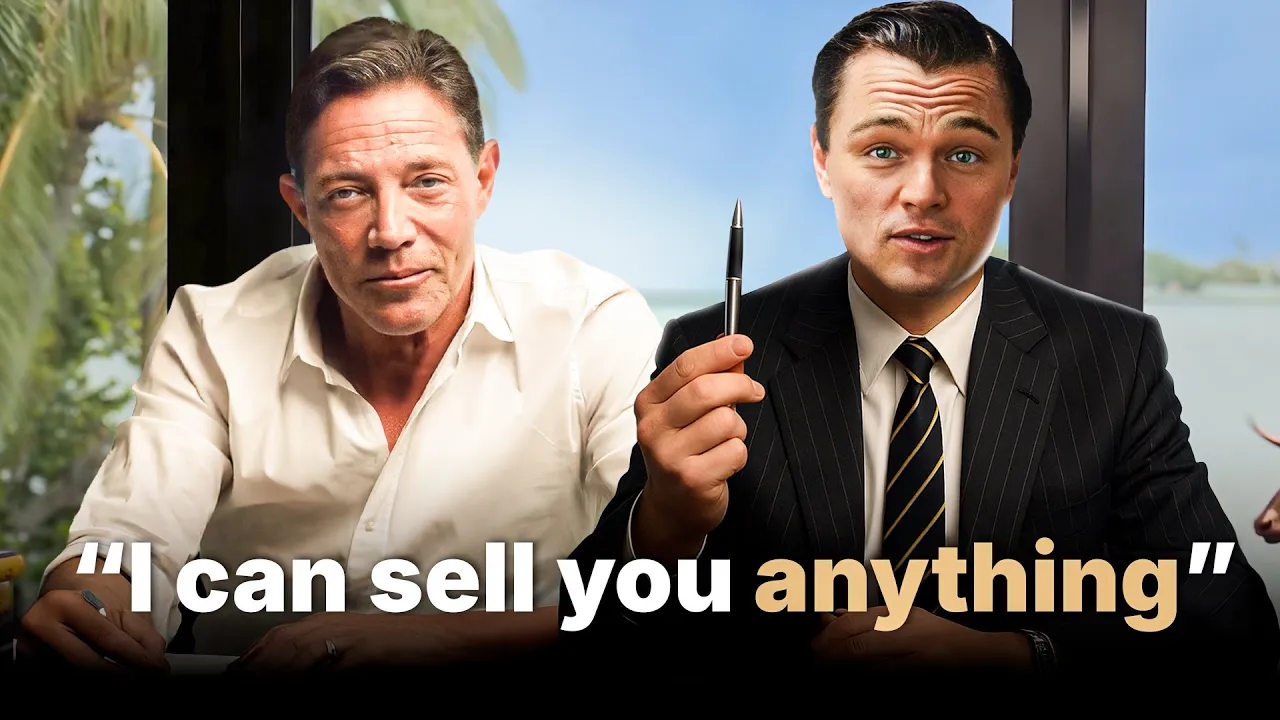
All right. So, how the do you actually sell this pen? I've been asked this question like literally a thousand times, probably 10,000 times.
And in this video, I'm going to show you the exact method, a literal blueprint for not just selling a pen. Forget a pen, but how to sell anything to anyone using the exact method that I have trained literally millions of people on around the world. I've been paid hundreds of millions of dollars for this type of stuff, right?
In this video, I'm going to show you exactly how to do this. It's a sales system that's so powerful, so effective. It will take any person listening to this video and give you the basics, put you on the road to turning you into a worldclass closer who can sell anything to anyone.
Bottom line. And again, it doesn't matter what line of work you're in. Doesn't matter if you're young, old, doesn't matter if you're struggling right now, don't have money, don't have anything to sell.
You could be a business owner with something to sell. I'm going to show you how to sell 10 times more of it, and actually feel a lot less pressure while you're doing it. Cuz the bottom line is I am going to show you how to explode your sales numbers, feel good about it, teach you how to help other people explode their numbers, and live a better, wealthier, more empowered life because of it.
I am Jordan Belut, the Wolf of Wall Street. And in this video, I'm going to show you how to crush it. Let's get to it.
All right, let's start with this singular thought. Forget about pitching product features. That's a losers game.
Now, I don't mean you're never going to mention the features of a product you're selling, but people don't buy the features. They buy the benefits. And by the way, if you just start off banging someone over the head with all the features that you have, and you haven't built any rapport, you haven't positioned yourself the right way and there's a certain way you want to be perceived by the person that you're trying to close.
If you haven't done those steps beforehand, then people are going to tune out, cut you off, hit you with objections, ask you questions way before they have any right to. In other words, they won't even know about your product. They won't know what the price points are yet.
Yet, they'll be asking you questions and hitting you with objections. Why does that happen? Well, when I'm selling, I don't get hit with objections until I ask them to actually buy.
In fact, I'm in complete control of the sale. million-dollar question is how do I do that? And even more important, how can you do that?
So, let's take a step back, right? There's an old mantra that I came up with back in the 80s, believe it or not, I'm older than I look, right? And that mantra was every sale is the same.
I'll repeat that. Every sale is the same. What does that mean?
Well, it doesn't mean that people come in with the same needs, the same backstories, the same values, the same pain points, the same experiences that brought them into this moment, any preconceived notions or prejudices. No, no, people are different. But that doesn't change the fact that every sale's the same.
What I mean by that when I say every sale the same is that there are certain core elements that must line up in a prospect's mind before you have any chance of closing them. And I don't care what it is you're selling. It could be an offline product, an online product.
It could be a high ticket item, a low ticket item. It could be a tangible product like a car. It could be an intangible product like a service.
These same three elements must line up in the prospect's mind before you have any shot of closing them. And if even one of them is missing, then you basically have no shot at all. Now, before I reveal what they are, and I will reveal it in this video, so make sure you keep watching cuz they're very important.
It's it's at the heart of what makes people buy. We have to go back a step because every veil every sale starts at a certain point. There's a starting point, right?
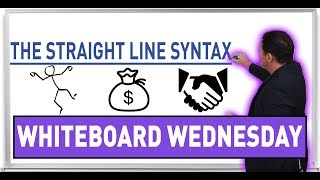
So when I talk about the straight line system, right, I want you to visualize a straight line, a long thin straight line and imagine a big thick X on either end. On one X is your open where the sale begins and on the other side is the X is the close where the sale ends. And either they buy or they don't.
Because no matter how great you are, even myself by the way, I don't close every person I speak to. So, when I say I can close anyone who's closable, and I can, that doesn't mean I close everybody because not everybody is closable. Some people shouldn't be closed for ethical reasons, and other people simply aren't right for your product or simply have what's called a very high action threshold.
They're simply not going to take action in one call or maybe not at all. So, there are those people that are simply never going to buy. What I mean when I say that you can get to the point and you can get to this point quickly with the straight line is that when you can close anyone who's closable, if you don't close someone, you'll know in your heart of hearts, you'll know in your mind that they didn't buy not because I didn't do my job well.
I did the job perfectly. They didn't buy because no one could have sold. They weren't sellable.
And when you feel that, when you truly know that in your heart of hearts, it gives you the power up here between your ears to know that sales now just becomes a numbers game. It's simply a matter of getting X number of people into my pipeline, making these killer presentations, and you know what your closing rate is. So, it doesn't matter whether they buy or don't buy.
If your closing rate is one out of five, then even the people who don't buy, you're like, "Oh, thank you. They paid me, too. " Because whether they buy or don't buy, you just divide whatever your commission is by five and the nos are as good as the yeses.
It's a numbers game. But that's only if you master the craft of selling. So that's the first thing I want you to remember.
It's very important emotionally that you get yourself to this point where you know you can close the deal. Once you're there, it gets easy. So with that in mind, what's the first step?
Well, the first step is that you must take immediate control of the sale. See what happens is this. If you are not in control of the conversation, which by default means the prospect is controlling the conversation, then guess what happens?
Every sale becomes different. You don't know where the sale is going to go next because you're not guiding it down this path. You're playing reactive sales versus proactive sales.
If you're in control of a conversation, then think about what that means. It allows you to essentially imagine how you want the sale to flow beforehand. How do you want to introduce yourself?
What tonalities do you want to use? What type of intelligence gathering questions do you need to ask to find out if the person is even right for your product? If they're financially qualified?
What are their pain points? What are their values that matter to them? What features matter?
What are they really looking for? If you don't know those things or if you're not in control of the conversation, you never will find them out because you'll be get cut off. You'll be interrupted and the sale will go nowhere.
Every sale becomes different. In fact, the reason I said every sale is the same is because when I was having this issue where I was closing at a 50% rate and my young brokers were closing at zero, they were getting cut off. They were getting interrupted.
They were getting hit with objections right in the beginning of a sale before they had any right to be hit with an objection. They hadn't asked for the order yet. That's when you get objections, right?
But I wasn't getting that because I was in control. When I realized that the difference between what I was doing and what they were doing was happening in the first 4 seconds of the sale, there was something in the way I was speaking, the way I carried myself, the tone of my voice, the pace of my words, what I was saying too, but really not that so much. how I was saying what I was saying, the tonalities I was using that people would hear it and they'd be like, "Whoa, this guy is is not the average person.
There's something different. " And I looked at my brokers this magical day when I invented the straight line. And what I said to them was this.
I said, "You have literally 4 seconds to establish three crucial things. " And I'll tell you exactly what they are. In the first four seconds, you must be perceived as being number one, sharp as attack.
You're sharp. You're on the ball. You're a born problem solver.
You're not going to waste their time or yours. Number two, you're enthusiastic as hell. Enthusiastic.
What you have must be good. Now, to be clear, I'm not talking about like over-the-top enthusiasm and yelling, "Oh my god, I'm going to have this. " That's repulsive.
I'm talking about something called bottled enthusiasm, which sits below the surface. There's an urgency, a power in your voice that like it could be a whisper, but that what you have is so damn good, so good that it is just compelling people to want to learn more. So, it's sharp as attack, enthusiastic as hell, and number three, most important of all, you are an expert in your field.
Sharp as attack, enthusiastic as hell, an expert in your field. In other words, here's the deal. We have been conditioned since we're yay bing to defer to experts to people who we perceive to be experts.
When we are in the position in in the presence of an expert, what do we do? We defer. And experts earn the right to control the encounter.
They've had whatever education they expertise they need. So we defer. Think about it.
When you were very young and you were sick, what did your parents do? They took you to a doctor. And when you walked in, even your own parents, you noticed, deferred to the doctor.
The doctor dressed a certain way. He acted a certain way. He had diplomas on the walls.
And you were told by your parents in no uncertain terms that this is a man who's been to school that knows everything about making sick people feel better. It's almost like you felt better the second you walked into the office and he touched you. This was an expert.
And when the doctor started asking you questions, what did you do? You answer them honestly and forthrightedly, fully, right? You don't interrupt the doctor.
Well, tell me how long you've had this problem. Well, how long you've had your problem? No.
The doctor has earned the right to ask you as many questions as you want as he wants, right? So, this is your first experience. And imagine that when the doctor is done asking you all the questions, what does he do?
What does she do? She says, "Oh, thanks for answering. Have a nice day.
" You're like, "What the What about the uh solution? " No. He will then say, "Well, based on everything you've told me and what I see in my examination," he'll do an examination.
He then will either offer you a prescription, a solution, maybe even a surgery to heal you. And when he offers you the prescription, you don't say, "I'm not taking that prescription. " No, you take it.
Very different than if you go on some funky website and they offer you some magic pills. I'm not freaking taking those pills, right? No, because they don't have the credibility.
that are experts. This started when you were very small, but it escalated over time. When you were in school, if you were struggling in a subject, you hired a tutor.
Struggling in a sport, your parents got you a coach. When you got older and you had to do your taxes, you sought out an accountant. When you had problems or wanted to start a business, you went to a lawyer.
We seek out experts to help us solve our problems and eliminate our pain. This is a fundamental concept of life. And it's no different in a sales setting.
So you must be perceived as number one being sharp as attack, enthusiastic as hell, and an expert in your field. And it happens in 4 seconds. Why?
Because we as human beings are fear-based creatures. And we judge books by their covers. Our parents told us not to.
Our teachers told us not to. They did. So do we.
We see people, we size them up instantly. We rip them apart. and put them back together based on how we perceive them.
And if you're perceived the right way, sharp, enthusiastic, and an expert in your field, people get this gut feeling they want to defer to you. And that opens up the possibility to make every sale the same because now you're in the driver's seat. And if you've prepared correctly, you now know the order in which you're going to ask people questions to gather intelligence.
And as you ask those questions, you're going to ask them in a certain way, in a certain order, in a certain tonality for each one that helps you build rapport. And as they're answering your questions, you're engaging in a straight line process called active listening. Meaning, you're listening to their responses.
Cuz you're not like, "Uh-huh. Mhm. " Then you ask another question.
Like, they answer. Uh-huh. You ask another question.
Uh-huh. You're done. You've broken rapport.
As they answer, you're like, "Uh-huh. Mhm. Uh, yeah.
I totally Oh my god. I'm sorry to hear that. Oh, wow.
That's really great. " You're giving them feedback. often you're expanding on their answers, clarifying their answers, showing how much you know about their problem and your solution.
And when you do this intelligence gathering correctly, by the time you're done, they're like, "Wow, this guy, this girl's good, man. She understands me. She feels my pain.
She gets it. What an expert. Wow.
This would be someone that would be really helpful to have in my life. " sharp as attack, enthusiastic sell, and expert in your field. What that really chunks up to in the mind of a prospect is you are a person worth listening to.
And even one level above that, you're worth listening to because you can help them achieve their goals. You can help them get what they want, what they need, solve their pain point, whatever that might be. Here's the deal.
People don't listen to you. They don't buy from you to get you what you want. They listen and they ultimately buy to get what they need to solve their pain.
And unless you're perceived the right way, they will take control and you'll never have the opportunity to ask them the right questions to get real answers and to build that all important rapport both on a conscious and an unconscious level. So that's it. That's the first step.
taking control and doing it by being perceived the right way. The million-dollar question is how, right? Okay, so fair enough.
Makes sense, right? But how do you do that? How do you in a period of 4 seconds be perceived sharp on the ball, enthusiastic, and an expert all at once in 4 seconds?
What you say, "Hey, Bill, I'm sharp as attack. I'm an expert. " They'll say, "What the is wrong with it?
" People will laugh at you. The truth is, the right words don't exist. They just don't.
Now, the wrong words exist. You could say, "Hi, I'm a Nice to meet you. " That's not going to go very well.
So, there are certain words you're going to say, right? And I'll hand you those words in a silver platter. They're very simple.
They're basic, right? The magic's not in the words. The magic is in how you say the words, meaning the tonalities that you use when you start speaking.
And when you're in person, the body language and the tonality combined. So watch what we have. We have words, which make up about 9% of human communication, 10% more or less, right?
You have tonality, which is 45% and body language, which is 45%. And when you're on the telephone, that body language vanishes, right? Because they can't see you.
but it collapses in tonality and they'll actually make a mental image of the way they think you look based on how you sound. So that magic way of getting someone to perceive you the right way so you can take control is not really about the words you say. Words create what's called conscious communication.
It's you're focusing on someone's words. You hear them. You're trying to work out the logical meaning of them.
And that's important. So you can't say stupid things, right? There's one of the rules, by the way, of building rapport and and having charisma is not saying stupid right?
Separate issue, right? But far more important from this perspective of being perceived as an expert, sharp on the ball, enthusiastic is your tonality. Now, there are actually 10 core tonalities that we use with the straight line system.
And I'll go through them very quickly here towards the end of this session here so you own them. But there's a lot more to learn because these are just so powerful. They they're literally a tonality is like the secret language of influence.
In other words, when you use tonality correctly and you say certain words, the person will actually hear additional words that you haven't said. For example, if I say to you, "Hi, this is Jordan Belelfort calling from XYZ company in New York. How are you today?
" They're like, "Oh, Jesus. " Another salesperson. They know you're a salesperson.
They hate your guts, right? They're yelling at their assistant, their secretary. How'd you let this person through the call if they got through the screen, right?
They hate you, right? I would never do that, but that's what most cold callers or people that are on the phone do. Hi, watch.
It's called declaratives, declarations, sentences. Hi, I'm Jordan Belelffort calling from XYZ company in New York. Three declarations.
How are you today? So, how are you today? means you know that I know that I know that you know that I don't give a how you're doing today.
It's just a prefuncter greeting that human beings give. How are you today? Like I know let's get that out of the way.
I would never do that. So here's what I do is I say hey it's uh Jordan Belelffort calling from XYZ company in New York. How you doing today?
And they're like I say what now? Those are called phrasing declarations. Flazing declar declaratives ask questions.
Hey it's Jordan Belelffort. They're like, "Who? What do I know Jordan?
" And suddenly they're saying, "Do I know Jordan Belelffort? " And they start searching their memory because you asked it as a question from XYZ company Upton. They're like, "What?
Do I know XYZ company in New York? " New York. And while their brain starts to spin and try to figure, do I know this person?
Then you're like, "How you doing today? " And you have this really nice upbeat greeting like, "Wow, he really wants to know. " Actually, it's not like this stupid how you doing today.
It's how how you doing today? And they're like, so what happens is by layering on these tonalities, it almost puts their brain into search mode and they get that, you know, in the computer when you've maxed out the random access memory, right? The RAM, you get that spinning wheel of death that spins around until the computer sorts it out.
It's exactly what happens in a person's mind. Their conscious mind, every person's mind included, the conscious mind has very little processing power. It can only understand so much.
The unconscious mind has got unlimited processing power. So what you're doing is by putting on these tonalities very early. They're saying when you're saying, "Hey, it's a Jordan Belelffort.
You know me, right? " Unspoken words calling from XYZ company. You've heard of us right in New York.
Yeah, you know how you doing today? I really want to know. I don't say the words I really want to know.
But they're trying to process all that information. So instead of them narrating against you in their own internal monologue saying, "Oh my god, why the is this guy calling me? " They're like, "Uh, um, yeah, I'm doing good.
" You're like, "Great. Now, if you recall, and I lower my voice, put a little mystery intrigue in there, you reached out to our company about 3 weeks ago, sent in a card requesting information on whatever thing it was. Does that ring a bell?
" And they're like, "Oh, yeah. I own them. " They're like, "Damn, this person is sharp.
" And I use that and I go right into my intelligence gathering and I start asking a series of very smart questions to identify their needs, their values, their pain points, their hierarchy of values, all the things I need to know, the financial qualification if it's about that, right? And I am in complete control. So now I've taken you down the straight line a bit.
Step one, I took immediate control of the conversation. Step two, I've used that control to simultaneously gather the intelligence I need to see if the person's even right for what I'm selling. Cuz if they're not right, I don't want to waste 20 minutes on the phone with them or in person.
I want to get get out of that sales quickly as possible. Time is money, right? I've also been able to essentially establish all the things I would need to know to tailor my presentation to what they actually need.
It's not one sizefits-all. And by using my active listening, by asking smart questions and using my active listening, uh-huh, I'm getting into very tight rapport with them. So, by the time I'm done and I've asked them all the questions I need to ask, which means I now know all the things I need to know to make that decision, can I help them?
Is my product right? Can they afford it? If the answer is yes, I'll say, "Well, Jim, Jill, John, based on everything you just said to me, this product is a perfect fit for you.
Let me tell you why. " And they're like hanging on my every word. That's called my straight line transition.
That's step four. Based on everything you said to me, this program, this service, this XY, whatever it might be, is a perfect not based on everything you said to me, it's a no. Based on everything you said to me, it's a perfect fit for you.
Let me tell you why I lower my voice. Scarcity using tonality on every word. There's always a tonality, right?
And from there, now I've executed my straight line transition. Now, if the person is not qualified, if based on the intelligence I gathered, I can't help and they're not right for the product, I'm going to say, listen, honestly, Jim, you know, based on what you said, this is not really a great fit for you. Um, you know, I think maybe you should go elsewhere.
You can send them elsewhere where they can get help. You should do it if you can, but you don't want to waste your time making a presentation. You get it?
So now what happens next is we're going to use this to now transition to the next step which is actually creating certainty. We're actually going to sell them now create certainty that our product, our solution, our service is the best in class and perfect for them. And to do that we make what's called the straight line sales presentation.
What is a straight line presentation? Well, here we go. This now gets back to the three things that must line up in every sale.
Let's go through them. Now, when you think about sales, what is sales? At the highest level, sales is the transference of emotion.
And the primary emotion that you're transferring is certainty that someone's absolutely certain. And we think about that it must be well the product or the service. They're certain that the product and we'll use product because it's easier, right?
We could be either one. The product is a perfect if it's going to resolve their problem, eliminate their pain, fill their needs. It's priced correctly, great value proposition, great cost benefit ratio, all those things we think about.
And they must be absolutely certain that your product is that or else why would they buy? If they think there's a better solution out there, it's the wrong solution, they're not going to buy. That makes sense, right?
So when we think about certainty in sales, we think about, well, the product, they must be certain that the product is awesome. It's the best product in class. It's going to solve their problem, eliminate their pain.
So I want you to imagine for a moment a continuum of certainty, a line, a one and a 10. A 10 means that they're in a state of absolute certainty. They think your product is the best thing in the world, best thing since sliced bread.
A one means they think it's the biggest piece of ever. They hate it. Never would buy it.
Right? question. Where do you want someone on this scale of certainty?
When you ask them for the order, which is going to happen after you make your presentation, you're going to ask them for the order for the first time. So, you make this presentation, then you're going to transition into your close, and you're going to tell them exactly in no uncertain terms, here's what I suggest you do. Here's what you need to do.
Get started with X. And you're going to lay it out for them very clearly. Tell them the price.
Say, "Believe me, you're going to be very, very impressed. Sound good? And you're going to ask for the order directly.
The same way a doctor says, "Here's what you need to do. " Doesn't leave you without a prescription. You give them the prescription, you explain it, then you ask them to buy.
That ends what's called the front half of the sale. So again, we think about the certainty that you're transferring, right? So again, you're going to make them certain, right?
Where do you want them? Close to a 10 or one? Obviously, you want them at a 10.
And of course, there's a five, which is the middle. they're not that uncertain or certain. A seven, they're more certain but not as certain as a 10.
A three less certain than a five but not as bad as a one. Right? So the point is essentially what you're trying to do is get this person incredibly certain about the product.
And the way you do that is through your presentation. You're making this essentially airtight logical case. We're starting with logic about why this is awesome.
Logically speaking with no crazy just trust me buy. No, logically you're going to lay out the logical case, the value proposition, the costbenefit ratio. You're going to explain in no uncertain terms how it resolves their problems, eliminates their pain.
Right? So let's say you do that effectively. Let's say that you spend, you know, whatever time it takes you to lay out this value.
And it's not going to be that long the first time you ask for the order. And when you're done, you've taken them. They're in a state of absolute.
They're let's nine or a 10, right? The question, will they buy from you? Yes or no?
Well, the answer is not yes and it's not no. The answer is maybe, as in maybe they will, maybe they won't. In other words, why would that be if they're absolutely certain?
Well, guess what? What if in the process of making them certain, of saying things, of showing them demonstrations, sales aids, whatever the whatever you did, how you explained yourself, how you asked your intelligence gathering questions, everything you did. Let's say the way in which you did it somehow made them not trust you, not like you.
Will they buy from you? The answer is no. They don't trust you, but they love the product.
They're not going to buy from you. They'll in fact find someone else who they trust, find the same product or similar product and buy from them. So it's not enough that they love the product.
They also must trust and connect with you, the salesperson. So the first 10, and we call these things the three tens, three elements. The first one is the product.
They must love the product. Two, they must trust and connect with you. And then if those two line up, will they buy now?
Well, again, the answer is not yes, not no, it's maybe because there's a third 10. They must trust the company that stands behind the product. In other words, they might love the product.
They might think you're a great person, that you're trustworthy, but they've heard things about your company. They give terrible customer service. They might be doing something fraudulent.
They're not a trustworthy company. Good luck trying to close that person. So essentially what you're doing as you move someone down the straight line from the open to the close, right, is you're taking those steps.
Step one, taking control of the sale by establishing those three crucial things, right? sharp, enthusiastic expertise, using that to gather intelligence, build rapport, executing your transition if they're right for the product, making your initial straight line presentation to build massive certainty for the three 10 for the first 10 especially a little bit for yourself as well. If you can lace that in there about yourself in there, it's just the way you carry yourself that when you then transition into asking for the order for the first time, if they are close enough on all three, and sometimes people enter, by the way, and they're pretty certain when they they know about your product before.
If you do that, you have an excellent shot of closing them. But if one of those three 10 is deficient below a five below, you got no shot at all. That's what's called the front half of the straight line.
So, what happens when someone is uncertain about one of the three tents? What do they say? You ask them for the order.
You say, "Believe me, it's you're going to be very impressed. " Sound good? Sound fair enough?
Do they say to you, "Nah, I don't like your product. I'm not certain enough. I need to be made more certain.
I don't trust you. " Whoa, I don't trust. That's fighting words.
People don't say that. People don't really get honest. They really don't.
What they do is they sort of dissemble. They'll say, "Oh, yeah, it sounds good. Let me think about it.
Let me call you back. Let me check with my wife. Send me some information.
Bad time of year. I'm not liquid right now. In other words, they hit you with objections.
See, objections are actually smoke screens for uncertainty. When people are uncertain, rather than telling you flat out, which is very like in your face, I don't trust you. I don't like your product, right?
They'll hit you with objections. I mean, it would be great if someone just came out and said, "I don't trust you. " I say, "Well, great.
Let me tell you why you're wrong, why you should, right? And I'll make them trust me. I I'll say things that would increase their level of trust with me, right?
" But they don't say that. They hit you with objections. So knowing that what we are going to do is we are going to take common objections and use them as opportunities to increase the level of certainty for each of the three tens and then seamlessly, smoothly, elegantly transition into another close.
In other words, you get hit with an objection. Well, there's going to be a rebuttal to that objection. There always is.
There's rebutt standard rebuttals. But if you just rebut an objection, what happens? Not not they'll just switch to a new objection because you haven't solved the real problem.
The objection was really a smoke screen. Someone says, "I want to think about it, right? " And you just give them all the reasons why they shouldn't think about it.
I'm doing this a long time. People say they want to think about, they never get started. I know you want to do this and blah blah.
Whatever you say, and then you just ask for the order again. They'll say, "Yeah, I understand that. Let me speak to my wife.
" They'll just hop to a new objection. Why? Because the underlying problem has not been addressed.
The underlying problem is one of certainty. You have to increase certainty. The way we do that is through a powerful technique called straight line looping which is a bit it's very easy to learn.
Bit too long for this master class here. Okay. But I will tell you looping is the art of taking a common objection.
Okay. and addressing it. But then rather than trying to close is essentially looping back into presentation mode.
And having a secondary presentation that builds on top of the first. So your first initial presentation focuses mostly on product or the service, right? But it's framing.
It's like framing a house. You're not building the whole house. You lay the foundation.
You put up the drywalls, right? Maybe put a roof on, right? There's no electric plumbing.
This is not finished house yet, right? So, when you get hit with this objection, you still have a lot of awesome things to say. You're going to have a secondary pattern that's designed to increase certainty both for the product and for you and also the company.
You want to have multiple things to say, multiple language patterns for each of the three tens. So, when you get hit with objections, you can answer the objection, but not just go and ask for the order. you're going to want to loop back into presentation mode, build certainty for each of the three 10s, and then ask for the order again.
And by doing that, you very quickly get to the point where you can close anyone who's closable. Now, those are four elements there, right? You have the three 10s and then you have this other element here which is called looping.
And part of looping is also lowering the action threshold. saying things to them like, you know, let me ask you an honest question. What's the worst that can possibly happen?
I mean, let's say I'm wrong. Let's say it's not the greatest thing in the world. Let's say it doesn't work for you.
Most products have some sort of guarantee, some sort of recision period or the commitment is so small and the risk is so small that it wouldn't really make it's not going to destroy their life. on the upside and you tell them the upside. You future pace them and imagine yourself in 6 months from now everything is working perfectly.
You're feeling great. You're feeling empowered. You're making more money.
Just imagine that. In other words, what you're doing is you're making them run a positive movie and telling them that the negative ad's not really that negative. That's called lowering someone's action threshold.
That's your fourth element. And you do that with looping. And then lastly, the fifth element.
There's five elements in all, right? It's called the pain threshold. As part of your intelligence gathering, remember I said you're going to identify pain.
What's keeping them up at night? What's that pain that like that worry that rests at the base of their skull and just keeps them thinking about? Right?
Once you know that, you don't want to resolve that pain yet because at the end when they're on the fence, you want to reintroduce that pain and remind them, amplify that pain. And what that does, it lowers their action threshold. Essentially, makes them more likely, makes them easier buyers.
They're more prone to buy when they're feeling pain. Okay, let me give you a quick example of this, right? My father had what's called a very high action threshold, right?
Very tough to sell to, right? Didn't like salespeople. His beliefs were such that, you know, my best decisions are made slowly, painfully, right?
So, my father was a very difficult person to close, right? He loved of all his possessions. He was really into his possessions.
But of all things, he loved his car most. He would never let anybody touch his car except the local guy Jimmy at the Senokco station. That was it.
If Enzo Ferrari wanted to fix my dad's car, he'd be like, "Enzo, oh Enzo, no, Jimmy's my guy. " And no one. That was my dad, right?
No one's touching his car. And that's what high action threshold people meaning is very difficult to sell. That's what they're like.
They actually have one person that sells them every type of product or service. They don't have lots of people. They have one, right?
great customers once you have them, right? One day we're on a family vacation about 11 years old. We're driving our car from New York down to Florida.
We're about 8 hours out of New York in a very bad part of I think it was Maryland, right? And suddenly the radiator starts steaming up the car stalls on the side of the road about a mile from a gas station, right? The sun is setting.
My father is beside himself. His family's there. What do you think he did?
As much as he loved Jimmy at the Sonokco station, he would never let anyone touch his car, he walked to the gas station, said, "Fix my car. I don't care what it cost. " Why?
Because in that moment, he was feeling massive pain. It was in his face. So his action threshold dropped.
That's how you use pain to close sales. You remind someone, you reintroduce, you ask to say, "So what do you think is going to happen in another 6 months? In another, if you don't fix this problem now, how much worse will it get?
How much is it going to cost you? How much will it disempower your company, your business, you personally? Make them admit it.
And it lowers their actions. It makes them easier to sell to. Those are your five core elements.
And on some level, the way to explain the straight down is almost like you're a a safe cracker, but you're cracking the safe of the human mind. There are five numbers in the combination. The first number is the product.
They must love the product. Second number, they must trust you. Third number is they have to trust the company behind the product.
Fourth is lowering the action threshold. Fifth is the pain threshold. And essentially when you're moving someone down the straight line, imagine like a professional safe cracker.
What are they doing? They're putting their ear to the safe rate. One of those three number master combination locks.
You pull it down, right? They hear the first click. They spin it the other way.
Left 23. They hear a click. They go to the other way.
Right 37. And they pull it down. That's the equivalent.
pull down. That's they call them asking for the order. If it opens, you closed.
Happy days. But very often it doesn't. So what do they do?
They don't say, "Oh, the safe is uncrackable. " No, they go back to the first number and try again. They always go back to the first number and they rebuild again and they hear the second.
If they get it on the second try, they close on the second attempt. That's what you're doing. You're essentially running these patterns.
If it doesn't open, you ask for the order, they don't buy. It just means you have the combination is not fully figured out. You might have the first three numbers correct.
You have to work on the last two. That's how it works. And I will tell you one thing about the straight line.
It has what's called a good enough factor. Meaning, not only is it incredibly easy to learn, it is very easy to learn, but even if you're just okay at it, you get incredible results. And then when you get great at it, you very quickly get to the point where you can close anyone who's closable.
That's where I want you to be. And this master class is the first step in that process. Bottom line.
Now, real quick, I want to tell you about these 10 tonalities, right? The first one is scarcity. The second one is called certainty.
The third is called the reasonable man. Certainty. This is absolutely the best thing in the world.
You're certain tone and through. Right. Scarcity.
Lowering your voice to a whisper but with power behind it. That something is in short supply. It's a secret almost.
Right. The reasonable man sound fair enough. I'm reasonable.
You're reasonable. Right after that, we have what's called phrasing the declarative as a question, which I mentioned already. Right?
That's when you say, "Hey, Jordan Belelffort calling from XYZ company in New York. " Right? You have the I care, which means like, you know, how you doing today?
Like, I care. You have the I really want to know. So, what's that thing that's just really keeping you up at night?
I really want to know. You have what's called implied obviousness, meaning it's beyond obvious. Like, yeah, yeah, you'll make money with this, but more importantly, what I could do for you besides this one transaction over the long term, I want to be an asset to both you and your family.
10 tonalities at all. Next tonality, sincerity. speaking with utter sincerity, not certainty where I'm saying this is the best thing.
Sincerity, believe me, you're going to be glad you did this. That's sincerity. Then you have what's called the money aside tonality where you say to someone, now let me ask you a question.
Does the idea make sense to you? Do you like the idea? Now, implicit in the way I said that the tonality was that, you know, money aside, hypothetically speaking, versus, well, let me ask you a question.
Does the idea make sense to you? Do you like you're like, "What the fuck? " No, it doesn't.
Right. So that's your disarming hypothetical money aside tonality. And then lastly, you have what's called mystery and intrigue where you're like kind of drawing.
Now, now John, the reason for the call today, it's similar to scarcity, but there's more mystery. Now, reason for the call today. All right, listen up.
This is the moment of truth. If you're serious about making a fortune in sales, whether you're just a newbie with no experience at all, whether you're a pro salesperson and want to be one of the best in the world, whether you own a business and are looking to expand your sales force, doesn't matter where you are in this equation, okay? This is your chance now to take your business and your life to an entirely new level.
So, click the link directly below or hit that first comment. This is the chance to have me personally mentor you to turn you into a world-class closer that can close anyone who's closable and literally change your life. Bottom line, remember the only thing standing between you and your goals is the story you're telling yourself as to why you can't achieve it.
You want to be using these 10 tonalities again and again in a very specific way. And by the way, here's the good thing. You already have used all of them already.
You know them all. What I show you with the straight line is when and how and exactly where to apply them. And when you do that, it's magic.




![Rich Dad Poor Dad - Robert Kiyosaki [Complete Summary ]](https://img.youtube.com/vi/jFNdARDCrKA/mqdefault.jpg)