well greetings from Australia from the other side of the Pacific hope things are going well I have very good memories of the original conference 20 years ago back in 1998 and I got a great deal out of that conference and as other people did and I hope this one goes as well so I'm sorry I can't be with you in the flesh with miracle of electronic communication we'll do our best two days from now on I became involved in in research on men masculine days boys basically this result of the impact of the women's liberation
movement and the gay liberation movements that challenged existing understandings of power and oppression by pointing to the need to understand those those issues in in new ways now of course this wasn't the first time they've been talk about gender issues indeed about me and about masculinity but there was a fairly widespread conventional view at the time that what it was to be a man was some lay down was fixed either by God or by nature and similarly what it was to be a woman was the Germans put it to be conservative KinderCare here when Kia
children the church the kitchen and those were just fixed in in human nature one way or the other but by then there was a a more radical view which was expressed in in those social movements the masculinity and femininity was socially defined were learned in fact and could be understood in terms of wrong theory so there was a language of male and female sex rules which we defined him in the given society by norms by doctrines of what masculinity and femininity ought to be how people ought to behave then sanctions applied to people who failed
to conform to the the female role now there was a view popularized in the social movements of the 1970s but also challenged because those movements also showed the inadequacy of role thinking because it became very clear for instance out of gay liberation movement that there was not just one version of the man oh but there were multiple ways of being a man and relationships between them they were livable as the game and similarly feminism as diversify or recognized the diversity that was always there also began to recognize different ways of different forms of the matter
or different basically different classes for instance but both of those amendments all the social movements of that time in fact also highlighted the issue of power that was a fundamental issue that role theory could not fear on this world so the question of how Paulo relations and the capacity for oppression were actually sustained over time remained as an unsolved problem at that time and that was where the grumpies notion of hegemony was recognized as as useful and it became possible to think of masculinity or at least particular forms of masculine is having a the money
role in the reproduction of a patriarchal gender order and that was basically where the concept of economic masculinity coming from so they will see in the framework if you like in which the early research of many masculinities was launched in the context of a shift towards social definitions but a bit of a struggle over what climate social theory would be adequate in the 1990s the research which had been launched on men and masculinity actually emerged as a conch recently coherent field of research and that conceptual debate and was obviously under construction globally not just in
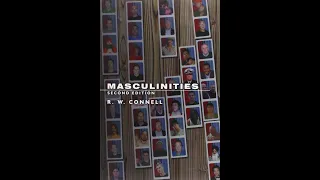
specific in particular new Europe I want to show you this with some of the the significant publications of the time in Germany for instance which would have been one of the pioneers in the deeds of feminist research on masculinity we have books like this collection of critical studies armed masculinities in Peru of course as you know the work of normal aphelion understand it's going to be with you in South Africa at much the same time 1997 there was an important pioneering conference the first conference on studies of masculinity in Africa which produced a few years
later this book and you can see now the cover captures the idea of diversity in masculinity in Brazil work by margarita yeah it wasn't that 1998 conference and her colleagues began putting together a range of studies of the situation's of men boys and math communities in Japan and pioneering social search by colleagues like target photography who produced this monograph on the construction of this community among middle class men at much the same time and of course at the same time there was work going on in Australia in Chile and we saw basically a global discourse
about men and most communities being emerging and within some of the academic practicalities of new fields of study so we had journals being founded we had university courses taught we had research projects being funded and we had conferences convene an international exchange of ideas and research results became possible we could say there that this is the moment when a global field of research and discussion consolidates now we should also remember the practicality that the not just the academic practicalities but the wider circumstances in which that was happening so at the beginning of the 1990s we
saw the end of the Cold War and the end of the Cold War dictatorships in Russia in a number of countries in Latin America in South Africa the apartheid regime came was coming to an end in eastern South East Asia Indonesia difference.the the cohort edition of the new order there was and in those circumstances it was easy to think and I think we didn't think that at that time that there were real possibilities for a new gender order a more democratic gender order on a global scale there are new products of gender relations was emerging
was not just possible bird sanctuary withers and as part of that part of the discourses coming out of the research and conceptual debate was the idea of new forms of masculine of new ways of being a man that were now in view that were practically possible but at the same time we also have to recognize them that that was the moment of the the Washington Consensus of the rapid global spread of the neoliberal model of economics and politics which would be pioneered in Chile in other parts of Latin America and in Britain and the United
States so a civil neoliberalism was replacing authoritarian the other Burlison and that too without that had with an agenda project of shifting resources from public sectors interests of women to private sectors where the economic interests of men were more represented okay I never want to say something about what's happened in the field in the 20 years since our previous conference basically the field that had been formed the global field of research and discussion that had been formed in 1980 from the 1980s and especially in the 1990s matured as as a research field the volume of
research has increased quite significantly research and the uptake the recognition of a service or as a a small example of that if you if you look at Michaelmas communities in Google Scholar or some Citation Index like that you'll find that book has rather more than twenty thousand citations which is a an indication that the work because that book is bringing together a range of studies in the field the work is now getting around quite widely and I think we can we can reasonably say that it's not just that book but there is a global circulation
of the concepts that have been developing in the field of research on on many best communities and the models of understanding the modes of understanding men's and boys lives that that this research now under pins so let me indicate a few more of the text this is from India the work of radical Chopra field researcher who in this text brings together a range of Indian studies in Southeast Asia there's also a increasing volume of research it's incredible cultural diversity different politics of development China too becomes a site of not just the importation of Western consensus
the Chinese would usually put it but of their own debates and discuss this is a work of fun gum one of the leaders of Chinese work so we're getting a genuinely global circulation is no region of the world in which this kind of research and debate is lacking but as the field matures and the the scope of reception debate increases there is of course more intellectual diversity in it that's not just as a result of cultural differences in in different regions through genuine intellectual divergencies going on a lot of the work influenced by European post-structuralist
ideas focuses on the constructions of identities masculinity basically is a form of identity and thinks of gender as a domain of discourse on the other hand there's a social realist approach more connected with sociology more prevalent I thinking in Latin America in Australia in Africa perhaps than that in North America which is concerned with the material circumstances with the institutionalization of of masculinities and with the connections of masculinity and changes in intentions in vascular with economic change but regardless of these divergent ideas in in the field one of the really striking features of the the
mature field of debate here is the significance of applied knowledge so information ideas about masculinity don't just remain among the researchers they circulated and they have been circulating in fact throughout the history of the field in fields of applied work for instance in education in work on the education of boys in health sciences in work on men's health which we produced a report on in Australia of just twenty years ago and which is one of the more now more significant applied fields in counseling psychotherapy in criminology given the predominance of of men in law breaking
especially violent forms of crude and of course in the prevention of gender-based violence domestic violence rape and the like in all of these areas the field of research has been feeding ideas conceptions and information into an applied work and making that unfocused realistic now this wouldn't have been possible I guess without a recognition that a different kind of gender politics was possible as I was saying a few minutes ago so we also see at this time the emergence on a world scale of a progressive masculinity politics striking Milan in that comes in 2004 at the
United Nations when the Commission on the status of women diverts a significant part of its its meeting to discussion discussing the role of men and boys in achieving gender equality which then becomes the subject of publications out of United Nations agencies which you can find online and part of that was the writing of what remains I think the the first and still probably the only general policy statement on men masculine ease and gender equality are worlds but there is further a world scale of activism beyond the United Nations so we never have a very wide
range of non-government organizations which we involved in progressive work with men and boys in America as you know in India around Southeast Asia and even in East Asia and these again as I'm sure most people at the conference know elite globally through the main engage network which now has something six member organizations in different parts of the world so that's the venue right my summary view the the state of the field as as we see now but there's also the moment when we need to be thinking of a fairly basic intellectual change which has become
possible as a result of developments outside this particular field in which we now have to think through within it this is the emergence of certain perspectives in the social sciences and I have to go back a couple of steps in discussing this to point out that in just about all areas of research whether they're social science humanities physical sciences mathematical sciences we work in a global economy acknowledged with contributions from all over the world this is a system for the production of knowledge and the exchange of knowledge which has existed for hundreds in the years
but not in a homogenous way the global economy of knowledge has always been strongly structured in a form which dates back to the era of the old overseas European empires in which the colonized world we now call the global South has functioned is a huge data mine so the colonies didn't just produce silver cotton sugar and slaves they also produced data for the growth of knowledge and the global north the metropolitan center becomes the Centre for the collation of knowledge the theorizing the knowledge to move data into organized and the turning of theoretical science into
Applied Sciences which are then returned to the global peripherally in the form of profession and knowledge that's a path which was created in the era of human in plasma which has persistent very strongly in the organization of our knowledge since formal decolonization processes and to begin a couple of hundred years of Ghana so it's to the Princeton and this applies you have to you feel lots of birth gender studies this applies even to new fields of knowledge like Gender Studies so around the the periphery of the world we naturally it's almost taken for granted common
sense way of proceeding we read Simone de Beauvoir Judith Butler John Scott and the other theorists of the global north we don't expect them to read us and mostly they don't that's not requiring the practice of knowledge workers so the globally could be acknowledged us as a a global division of labor theory basically the enterprise of the global North data production basically the enterprise of the global self and yet we know the global South does make theory and must be making theory ever since colonisation began so there has been conceptualization debate theoretical argument going on
about the process of colonization itself coming from colonized societies - and there's the basis from which is grow that's colonial theory decolonizing agendas decolonial thought what I call son fury the critique of the global economy of knowledge it is mainstream fool so in the light of a southern theory and and post-colonial decolonial thought must of this work so far has been programmatic I guess pointed you to intellectual work that has been done at the global South and suggesting new frameworks new epistemology epistemological frameworks but there hasn't been all that much substantive novelty I think in
the perspectives and this is where work on men and masculinity is I think might be very significant in this whole debate because in this field in our field there by only in fact a couple of really key points that have already emerged which point to new ways of thinking about basic concepts in the field first is illustrated by the work of Robert morale in South Africa I think I've already mentioned is edited but this is his own monograph on the history of settler colonial masculinity in the table in southeastern Africa in this work this beautiful
pieces of historical research he trusted the creation of the big monic form of masculinity among the colonizers and shown that this was basically producing a pattern of masculinity that worked for the process of conquest and the consolidation of conquest that is things thoughts for the rule over the colonists through the application of military force and then of police powers in other words what that's is uniquely is the masculine II that was hegemony among the colonizers did not at the same time represent a hegemonic masculinity situation in regard to the colonized to the indigenous population who
were in that context and still are and so that the majority so hibbity thus was called into question by this commanded research and I I've recently begun to connect them with debates around support in studies particularly the work of ravaging kuhar the founding editor of the journal Sultan studies who published an important essay called dominance without any mone domination without Higa money in which he argued that the British rule in India although it claimed hegemony in fact did not happen that the colonial rule of the British in India was essentially a product of colonizing violence
and sustained application of physical force of military force rather than the achievement of hegemony and that has made me think that what we have tended to call to assume about economic masculinity that it was a reproduction that it was a means of reproduction of patriarchal gender relations overtime hegemony masculinity in that sense might be a special case rather than the typical case in gender relations worldwide now I want to connect that with a second point which also virgins when we begin to to connect southern theory with gender studies and this is a point that comes
out of a range of of work in global self feminism going back to the work of hill and satyaki in in brazil and the point is of a simple one but a profound one that the historical construction of the modern gender order in colonial and post-colonial societies is a different historical process from the construction of the modern gender order in Europe and North America precisely because it has the discontinuity of colonization and the social discontinuities that follow from colonization and climbing or power as a central feature of the construction of gender orders and this is
represented in research on masculinity Spence's by the research of my own pajamas and says also with you at the conference showing the profound rationalization of gender relations in post-colonial contexts in Latin America the same is true of course in other parts of the world and comes out in that international research from South Asia Southeast Asia and very conspicuously in Africa so here I'm going to connect what's happening as as emerging in our field with the arguments of anybody panel about the coloniality of power the persistence in the post period or structures of power and authority
institutional structures which have continuity with the power structures of the colonial era itself I would connect that or apply that concept within the field of gender dynamics itself so what this does basically is made to revise view of antibiotic masculinity not as a means of social reproduction of the simple reproduction of a consolidated patriarchal gender order but rather seen Higginbottom masculinity always as a project of attempting to achieve a given e in a social context where hegemony may in fact be lacking more than that I'd argue that hang on ebay versatility and the scheme this
way is always a collective project of the powerful into one of them with class rest relationships and always imperfect we must recognize that the achievement of hegemony is always under stress or as partial always open to contestation and indeed always containing internal tensions which may bring certain patterns of masculinity to them to the crisis or to an end and that's the approach we want to bring into contemporary analysis looking at forms of masculinity and the politics of masculinity in the world today so when we look at the very conspicuous examples of political politicized masculinity around
will trump both so now Putin Modi I would've came to think about it masculinity we're certainly looking at patriarchal masculinity 'he's here but hey good morning I doubt it I think what we're looking at in these cases rather is a kind of restoration project a masculinity into one of them with a project of establishing new authoritarian forms of rule but when the lacks established cultural hegemony and therefore must mobilize racism religion fear of alternative forms of gender all of these features that really characterize the new authoritarian populism and create puzzles for understanding them if we
don't recognize the the fragility in fact that they analyze them this indeed is fragility I think underlies the intensity of lying and distortion those companies the new authoritarianism the fake news that that is constantly pouring out of of these mobilizations to me is a measure of their cultural weakness not their strength and is is very much an arena in which contestation is possible now there are of course specific gender Ken the anti gender campaign with Catholic activism involved in countries like France and Colombia confirming mobilizations very conspicuous in East Africa femicide the killing of the
visible women in Iraq anti-feminist actions such as the arrests of a feminist activist recently in China these two I think all signify attempts at repressive progressive mobilizations and and signify the the fragile legitimacy of the the restoration projects so despite the apparent at surge of of authoritarianism the struggle continues as the Italian say doctor continuum and new forms of struggle are needed in this world where in some ways the the neoliberal consensus has been lost these authoritarianism czar not classic in the ER liberalism though their main cell must be more dangerous to nuclear politics and
as long as the struggle continues we need the climate research that has been being done around men and masteries and will continue we need to document the contemporary realities of men's lines and patents of masculinity we do need to understand them in new ways as I've been arguing Latin America has been seeing some of the most creative research in this field anywhere in the world you can take that I think is established a fact gendering about gender relations generally about men and masculinity specifically and I'm sure that will continue into the future so I wish
you all the best for the conference and for the research that will be continuing for best wishes for your work now