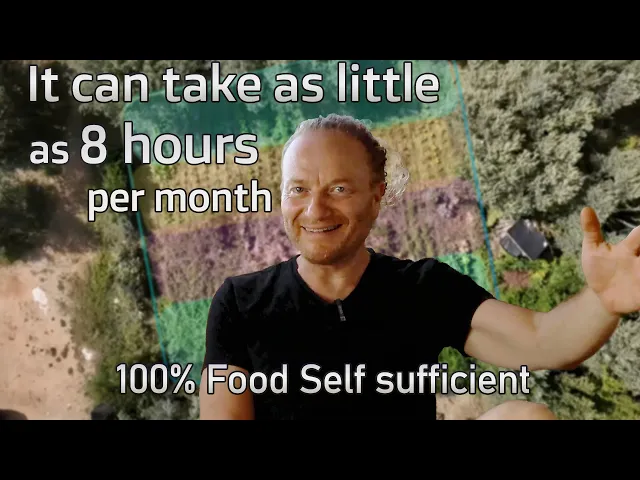
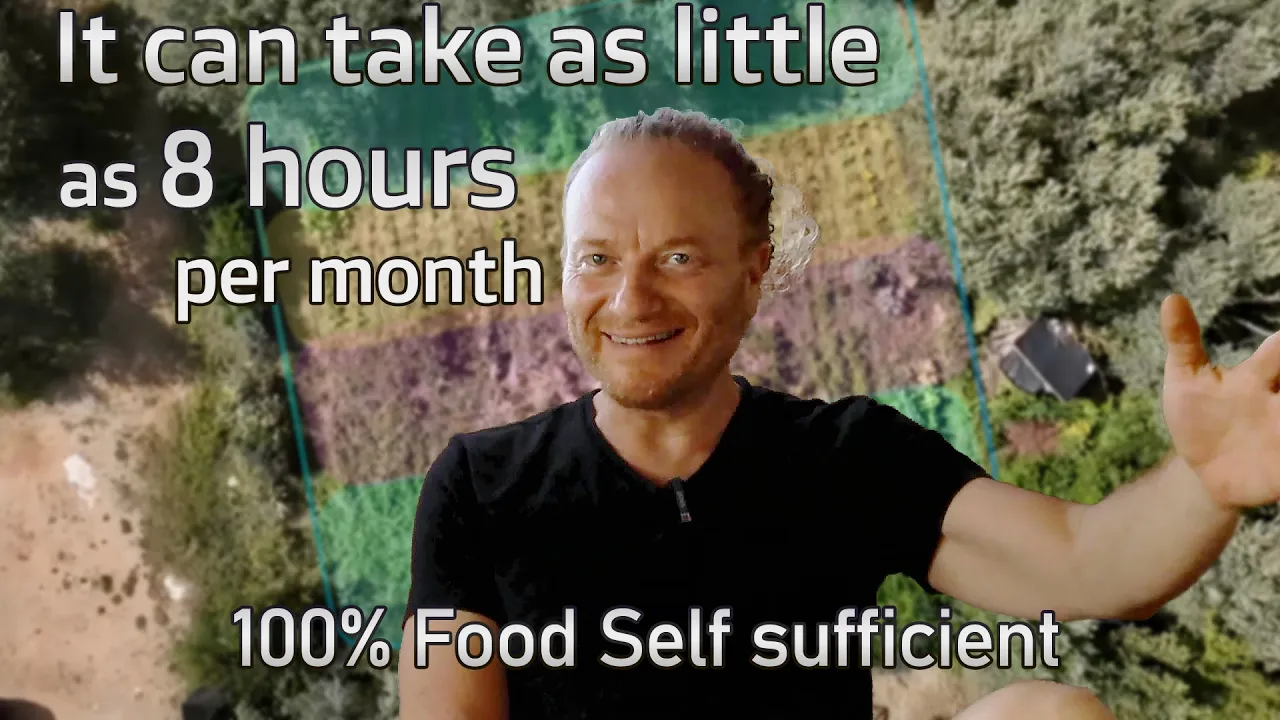
so the last video went kind of viral with people from all over the world saying they want to learn more about how Alik achieves nutritional self-sufficiency on only 750 square m doing only 8 hours of work per month so in this video we're going to do exactly that we're going to go through the yearly routine together with photos and videos from the farm listing exactly how much time each task takes making this basically a 40-minute tutorial on how to achieve food self-sufficiency yourself of course if you don't live in the Mediterranean climate you would have
to tweak it to suit your area if you haven't already I highly recommend that you watch the first video before this one with that said let's go [Music] okay hello hey welcome back welcome back yourself thank you so we have interesting uh things going on in the comments and we thought we're going to do like a brief Q&A to bring some more clarity and to answer some of the questions we have yeah I thought so too so some people uh find it hard to believe this uh 8 Hour uh month schedule which I I can
understand I think some people spend a lot more time if they have the veg Garden so could you uh maybe go through the the year the yearly season uh the veg garden and then the rest of the things and say how much time it takes and also the procedure so like how do you actually put into practice well maybe to begin with it's worthwhile mentioning that I it was n so little time right from the start it took me longer and it so I've been doing this uh growing my own food for say 13 years
now and uh it got better and better all the time so right now I'm at the stage that it takes me only one day at first you know only the veg Garden could take you so much because you don't know how to do stuff now I you know I just cut every bit of unnecessary work that I learned that is can be uh omitted and uh um that I can do without so this is a you know I I I I find it hard to believe that it will get even shorter later so right now
this is it so it takes some time to get to this stage um okay so the year i' say I don't know let's start in say September which is the first that's the next uh coming in in a week I will be planting uh the first winter crops so winter vegetables so every time I do the same thing I I take one quarter of the garden the one that is the most mature the one that has the oldest vegetables in in it because every time I go I do one quarter then another quarter another quarter
every month and then I go back to the start so I start with the first uh quarter of the garden so it's time to replant it I start by W whacking so just uh string trimming the whole uh plot it takes about I don't know 15 minutes with a mechanic string trimmer and then I have a nice kind of mushy green stuff um on the floor on the on the bed um then I apply compost a very thin layer about 1 cm thick so it's like a fifth of an inch thick layer that will be
about 10 L square meter um on the whole 35 square meters I take the irrigation system out so I pull out all the hoses then I bring my um Power tiller and I shallow till uh very shallow tilling of the whole thing so so the the string term is about 15 minutes then the compost application say half an hour with the wheel barrel and the tilling takes H say one hour to do it I do it like very thoroughly uh so I have a weed free uh uh area and then you you look at the
bed and it looks very kind of oh before starting to do this I water the the the bed the plot so that it's easier it it teals much easier and it leaves the the soil like like a cake like a chocolate cake that's what you want it to be like then I rake it for about 15 minutes just to flatten the whole area and then plant replant and sew which takes about two hours so I use about uh one and a half cubic met of compost each season so in the winter for the veg and
then again in the summer so three cubic meters Al together and another cubic meter for the trees so about 100 lit each tree uh before the rainy season and and the rains get it into the soil and the tree can use it and enjoy the so once a year so and how much of it do you make yourself so one quarter one cubic meter it's from the composting toilet and three cubic met are bought from mushroom farm that they sell after the mushroom grow they get rid of the the sub substrate and uh sell it
as a compost and it's okay it's not brilliant I think uh compost from dairy farms or from cattle is a much much better but still it's a personal preference I'd rather use this uh then be reliant on the on the animal yeah uh industry so alog together about four hours and that's done once a month every month almost every month so eight months a year um I don't plant and I do nothing in December and January and in July and August so the coldest months and the hottest months there's no point here in this climate
to do it because things just freeze they just don't move there's still vegetable coming from so if I for example I plant uh the first summer crops in March and then in April and then in May and then in June so over June and June and July and August I have plenty all those planted in March so basically you do like a massive each month instead of like going a little bit through the weeds piing some weeds out checking things out we just do like a massive transformation yeah for yeah a quarter for one cters
you just do massive transformation just cut everything compost Teel plant and you you just don't bother with individual as far as weeds go the way I work I want to see vegetables I don't want to don't want to see weeds if I see a bed of weeds with vegetables in I did something wrong so I need to weed it if I see a bed of vegetables under which there is a growth of weeds I don't care I don't mind let them be there because I know in a week or two or a month I will
be anyway right re you know restarting the whole plot so what's the point in working hard and also you know many say that weeds are very good for a garden because they have a much deeper roots and they suck up nutrients that wouldn't otherwise that would stay otherwise stay down there and then once they're up inside the body of the weed and you wi it then goes back into the soil and it's shallow teing it stays in the top soil and then it feeds the next generation of vegetables so it's actually it's a good thing
to have some weeds there's a reason reason they're there yeah I think the reason is not for for our sake we enjoy it yeah but we enjoy it's good for us yeah it's good for us eventually they don't like the word we they want it out of the dictionary it's true well it's a good word it's like Foreigner you know it's very relative who's for it depends on who's looking and who's talking yeah so uh yeah weeds are I mean they call us weeds you know yeah yeah when weeds look at us they say oh
we can call them foreigners yeah maybe and they will call us foreigners back yeah yeah we are there yeah okay we're the Bad Guys [Music] yeah so I as I said I plant every month cuz I want eat every month I started September that's the first stripe over there all all this stripe the first one then October second stripe up until here another another another stripe all the way so September October November then December January I don't do anything it's too cold and then February the last winter planting that's the last right which you can
see now then March comes the first win uh summer crops so I take out all the leftovers of the uh winter and plant the first uh summer crop March April May we just did it now this is May planting and then June then July August nothing and then September again so at each moment I have plants in three four stages of growing that I only eat from the most mature ones and then when the winter comes back again I'll have a different crop there's a crop rotation so at each and every moment I use about
one quarter so it's never like the whole plot is working and is producing food and it's enough 300 35 square meters of food full of food readily available that's a lot actually you know I did this calculation that you showed in a video and I was planning to have about 300 to 400 kg eventually it turns out the garden produces more than 500 kilg or half a ton so I'm not as bad a farmer as I thought I would be is it still less though than the industrial calculation yes much less but I tell you
to be honest I know people they're really investing in it so they have bigger plots and they it's partly commercial they sell stuff and then they invest much more time and they have much much better yields than I in the summer for example I lose many plants for uh irrigation problems so 150 M just for the vegetables if you really work even more you could feed more than than one person probably yeah maybe one and a half yeah one and a half people yeah okay yeah but that's for people who eat a lot of vegetable
I eat nearly one and a half kilograms a day most people don't so it depends you know so if you if you have if someone eats half a kilogram a day day then you can feed three [Music] people now we can look at the year starting in September uh the olive oil fa beans and wheat right so yeah September is the first winter crop then October then November is a bit of a more uh demanding time because it's also replanting the veg Garden another plot of 35 square meters and harvesting the the olives so harvesting
I have nine trees uh olive trees and harvesting they're not very big uh they're like mid middle size not like really mature big ones and the harvesting is done with an electric Harvester um it's a small tool it's it's electric it's connected to the to the solar power of the house and um then it takes about I'd say uh between half an hour and one hour for a tree for a person so what you do know maybe people know it you just spread the sheets on the floor and then this Harvester just drops the olives
on the floor and you pick them with the sheets in the middle and put it in a bag you just bag it and by the end of the day I have about um um 200 kg of uh olives from all of the trees from all trees together yeah yeah each year it's it's you know it fluctuates so on average I have 200 kilogram it can be a little bit bit more a little bit less but it's always like about four or five out of the trees that are really abundant and it's not always the same
trees each year it changes and then in the afternoon I just take it to the nearby Village to an oil press and then wait because every all the all the neighbors everyone all the villages around they're all it's the same season come yeah beginning of November everybody's busy busy place the very busy oil pressing yeah the oil press is very busy so you have to queue for a long time standing line it's a good place to meet people yeah you meet you gossip you know everything about everything what you want to know what you don't
want to know and then yeah in the at night eventually it's your turn and everything is cold pressed very traditional with stones um the Press itself is electric but still in the oldfashioned way so you see the olives at each and every station and it takes about I guess about one hour the whole s round and at the end of the round you get your uh uh Bounty you get your Bounty yeah your oil so I end up with about 40 kilogram 40 to 50 kilogram 45 kilg say almost twice as much as you would
use in a year no the oil yeah that's twice you get twice as much oil that's a lot of calories on the 750 mters which you which is much more than you which I give I give as like when I'm invited to anywhere like dinner whatever so I or even sometimes birthday present and very big you know a nice uh container oh you had one sorry I didn't know that so I don't have wine so I bring olive oil when I bought this uh piece of land the nine trees were there already I wouldn't plant
nine trees there's no need two big trees will give you more than enough for one person give gifts but it's nice to give gifts yeah yeah it's also something maybe we have to think about to have Surplus yeah okay so the olives is just this time in November very one day one day one day the next day I prune the trees MH so that takes another day full day to prune but I do it only every other year not every year and then the pruned bits are being used to for the fireplace for the the
rocket stove Mass hitter which I use for hitting at home uh it's not enough I need to buy more wood to hit myself to hit the the house but it's it's a substantial uh part of it and it's very good wood however you need to wait for a year before it's ready because you need it to be very dry 16 hours yeah 16 all together with the pruning and everything for the oil right then we have fa beans yeah and then yeah next thing is uh so okay November we finished with the veg garden and
the olives then de December is the time for I don't do anything in the veg Garden in December and January but I do sew the uh the the the seeds the the wheat and the Fab so mid November first real rain all weeds Sprout and then by the early December you have everything is green the whole ground is covered in a very nice Green Layer which will become less nice in terms of farming because it's very thick and the dense layer of Wheats so you want it out and if I just scatter the seeds on
this grass not grow they will not Sprout because you need you need them in uh so the way I operate I bring a little tractor at this time once a year for about one hour and it goes and it just uh shallow till the whole area of about 600 square meters 5 550 600 and then taking all those newly sprouted WS out out or into the soil no yeah out in sense that they are rooted out yeah all the this Greenery St in December I did it early December yeah because I know everything sprouted now
I know it's Weed Free and then I scatter the seeds of the wheat and the fava separately of course and there's another round of the tractor I go behind the tractor once it it uproots the weeds I go behind it and spread the seeds and Scatter the seeds and then the tractor goes another round on the whole plot just to make sure that the seeds go into the soil otherwise they stay on top ants will eat them I know it because it happened to me on the first time yeah you know I scattered the seeds
the next day I came to see and I saw little very nice hips of SE around each one near an an ant nest so you have to cover it somehow and the easiest way is the tractor is already here just let it do another round and you don't compost this never composted so far so 12 years so far never composted right so the all the inputs of in terms of compost it's only for the veg garden and the olive trees the seeds are just the wheat yeah the wheat the wheat we eat is seed so
it's just last year's we you saved from last year yeah sometimes I I don't have enough and then I buy and I'm told it's good to buy not to stay with your own all change the genetics yeah to change a little bit the genetics and so yeah it happens yeah almost every year I buy a little I buy some of it some it also happened that I had to buy everything because I didn't have enough weight or I really nearly ate it all or the ball came yeah that's and this case yeah you have to
buy a lot for the past three or four years I used an electric fence Against the Wild Boar and uh now this doesn't help as well this year was the most disastrous year in terms of like the big like really big hers 16 uh wild War members they're big family I don't know if a family or several families just stand outside your window because they just tore the the whole fence every every place has its uh you know uh issue and that's the issue we are yeah dealing with most okay so we're in December and
you just plant scattered the seeds yeah I just scattered the seeds and covered it in soil yeah and the next time I see this plot well I see it every day from the window it's just outside but the next time I actually pay any special attention to it or it needs my attention is in May there's nothing to be done May is the hardest time of the year because this is when the wheat and the fava is already Harvest ready so it needs to be Harvest I harvested with a sickle it's not a lot of
it's a small area relativ it's about 500 square meters uh and I do it like uh one hour every morning or two hours every morning yeah so it took us about half a day to se the seat so the tractor came you went behind it and then it covered everything so about half a day say four hours the whole thing I use a little uh like manual machine that will spread it evenly the SE so I don't throw it with my hand I did it once it's not you want it dense and homogeneous okay not
the carpet of seeds exactly so it's better to use this little machine uh I think it's it was aimed at spreading uh uh synthetic fertilizer in that's what that was what it was made for but it works great for spreading seed yeah because that that's the the advertisement on it that's what it says uh okay so that was half a day now comes May um and then as I said about uh an hour a day an hour or two a day because I have to go to work and uh so I do it for about
one and a half weeks or two weeks so I'd say two days all together if I were where to work yeah 16 hours uh harvesting the just the wheat no everything the wheat and the so five 550 square meters regardless of what it is it takes you about the same you know we fa it's the same at the same time kind of yeah yeah do it the same time the we the the fa is ready much earlier but there's no point doing it because I will thres everything together okay so I do I stand in
front of the thrashing machine and I want I do everything and that takes so by the time once that's finished about two days say then I have a little threshing machine that works operates on a diesel uh engine was imported from China meant for Rice originally we twied it a little bit to be uh suitable for the for wheat and uh and that's it and then you just fit it with the whe stocks yeah and uh and uh it it it does everything it does the threshing and the wiing cuz it has a little blower
the thing you get the pure not pure it's it has many bits and pieces inside but still it's it's yeah it's clean enough I would say yeah you can clean it a little more what you don't want in is these little Stones that's the worry so the worry is to cut the WID very well and not uh uproot it because then they will have little uh soil so and stones and the the window where it wouldn't blow it away the the the blower um because it's too heavy and then you'll have it in mixed in
with your seeds and you don't want it and that will take about another one and a half days just stranding in front of the machine and feding it and then storing the whole thing so once you have the buckets you have to remove it and put it in a barrel and yeah so that's like quite a busy time of the year and it's hot I guess yeah it's not great it's not very pleasant because it's very noisy and you have to put the earplugs and sweating and yeah so most of other all other things I
just described are fun to do it's fun you know you plant and you put the you touch the soil and it's quiet but this is noisy and not very much fun you could do it in a in a more fun way because there were like the a Amish do you know they use like manual the same thing but instead of an engine they use their leg power and just turning something like a sewing machine right just leg power yeah so leg power it's very quiet but then you have to work a lot yeah so that's
and that's it so that's another four days yeah yeah which is uh Harvest harvesting threshing storing storing and sewing everything together all from the begin from beginning to end the whole thing is about is four days yeah yeah half a day sewing and then one two days harvesting and one and a half days whenever I say a day I mean eight hours 32 hours just for the beans and the wheat throughout the whole year yeah and then you have like no think about it it's a very significant portion of your annual calorie intake and it
takes four days it's crazy so not too bad um as opposed to vegetables that are merely 15% I said on the video I said on the previous video I said 20% but then I checked it out and it's actually it's 15% of my diet in terms of calories so I work half of the time for the vegetable that take 15% of the give me 15% of the cies and take all the water it's the only place that's irrigated 50 cubic meters a year of watering or Blue Water uh used and that's all it gives you
but a lot of vamin a lot of fun a lot of volume you want you want volume as well you want a big plate you don't want like and colors you you don't want color is fun yeah yeah yeah well I mean fact is I'm still doing it after 12 years so apparently it's it's rewarding yeah and then July August do nothing oh yeah which is very sensible because you can't do anything even if you want no it's just terrible it's like it's uh it's hell outside uh and you don't you want to keep yourself
cool and have a skinny deep in the pool and that's it and I work indoors the only work I do is in August and that's challenging but it's only one day and that's the carob syrup so I need sugars my trees are very young so hardly any fruit yet but there is a mature uh big carob tree it's a local trip it's been here for uh Millennia and um it has very very sweet fruit but it has also seeds and if lots of fiber yeah it's not like an apple it's very dry yes and if
you want to have only the sugars for the whole year if you want it to be a supplier of sugar and it grows wild it grows everywhere while you can roam on the hill and just choose a nice tree with good fruit and pick it and harvest it and take it home and you want it to use this sugar for the whole year so you need to somehow take the sugar once it's ripe and good actually what I use is is a blender I do it with a blender I break it into pieces with water
together so I put water and the carob fruit inside and uh blend it together so I have like a mixture very wet mixture a lot of water and pieces I put it in a big tub and let it sit overnight at this time all the sugars move from the fruit to the water then I get rid of all the solid stuff I leave yeah I leave only the the liquid and just put it on the stove and let and start reducing it and you reduce it until it becomes not as thick as honey yeah like
maple syrup maybe uh even less thick yeah once you cool it it will become thicker than it oh yeah definitely yes yes that's like jam like this is the the tricky bit once I made it and I I did it and I went to the you know consistency that it should be in the end when it's cold oh but then when it went cold you just have it's great also you have candy yeah exactly it's a candy so I prepare about 10 kilograms I use about nearly one kilogram a month but I do everything sweet
I use this as a sweetener for everything so uh tea or bread like for dessert and if you want to like really something really sweet like a cake or cookies then that's a great sweetener and it keeps like like honey it keeps very well all year round and that's it so that's another day that's in August it's amazing and then you have cakes and cookies that you grew yourself with the beat and the oil and you have everything you need to make sweets Yes actually it's a Pity I didn't think about it in advance I
would prepare one for this interview and but I have none at this moment we can we can see the the the carob jars the the carab syrup jars I just prepared it a couple of weeks [Music] ago many people have problems with insects yeah people asked uh in the in the comments about insects many questions about it um I don't have very serious problem with insects I I can tell you my thoughts about it why I don't have and flatter myself that that's because I'm working right but it may well be just a matter of
luck of you know the type of place uh but I heard some story about the states in the comments and I said oh wow that sounds like really serious and I don't think it has much to do with the way people are working their land so I can tell what I'm doing so firstly I do the crop rotation in the garden so mainly I think pests attack the vegetables this is like the main worry because you know fava and wheat and olives are very very resilient because they're they are local and they haven't been changed
too much over the centuries maybe we did but uh they're very very resilient anyway so it's mainly the vegetables because they are you know many of them are not local uh I grow 40 types of vegetables over the year about 25 in the winter 15 in the summer uh types so that's a lot of variety and uh many are not local and they need protection um so I think the best attitude is simply grow 20 30% more than you would expect to e because this is like okay that's your price this is the cost of
uh you know growing without chemicals and synthetic f chemicals uh herbicides and pesticides and all that um yeah I lose some to AIDS especially broccoli and some cabbages I lose some to the mole it's very territorial so you once you have one you you know you don't have others so there's no point in chaning out because another one will come so just leave it be and it will uh eat some of your crops but not much how much it can store and eat you know it's stores its food underground it's an underground animal it's it
digs tunnels and it eats mainly Roots so it will eat some of the carrots and it will eat some of the fennels all right so once in a while you see a fennel being sucked into the ground and you know okay that's my tax so it's crop rotation that helps very much to protect the the plants and another thing is not watering too much just giving exact as much water is needed but not more much water will attract all sorts of past and I keep one bed of perennial herbs like sage and rosemary and lavender
and a few more that I don't know the names in English of but uh the local ones and they're very strong and I'm told they attract a lot of insects that would eat the little AIDS and the little beetles and whatever is uh feeding on your plants that they feed on them so I think I have all sorts of pests in the garden but they balance each other out and it's never at the expense of much of my uh Harvest of my crops so I guess I'm losing every year to all those pests and Etc
I don't know maybe 5% of the crops fine it's part I I I I consider it natural it's not a disaster it's completely not a disaster and to be honest I'm not I'm also not very picky about you know having a little few dots on my on my leaves and I guess I eat it in a way but I'm not too worried about it I'm healthy and never saw it as a problem of course if I see a big worm I will pluck it out but otherwise okay so there are some dots I don't know
what's in there if it's cooked fine so yeah I I keep the you know the the stocks uh in different places so I brought it all here so you can see so that's the oil it's 30 lit in this big container and 15 liters this sits uh as you saw inside the house this sits behind and uh that's uh stainless steel it keeps the oil very well inside indoors and these barrels are full of the the beans and the wheat all full of beans uh have all also mat at home and also ate a lot
ever since May now it's August but uh yeah that's the the fa beans um uh so it's keeps uh very well in those perrows and every time I need uh to refill the containers at home and the the jars I just take from here and use it and uh as the year goes It goes down until it ends then the another the next Harvest comes and that's it [Music] [Music] yeah I used to have a small chicken coup mhm but first they you know they were running free and which was very nice to watch for
a few hours until the first one was eaten by a dog oh so and then you realize okay they have to be cake and then they're caged in and then you have to buy food for them and you know it's and then but I kept going like this for a few years until one day a fox went in and just slaughtered them all and then I had the choice I had to make the decision whether to renew to bring a new flock or to try and uh survive without and I decided against I decided to
leave it out once I found I discovered the replacement of eggs which is funnily enough the um the cooking water of the fava which is called aqua fava it's just the water left after you cook any puls like chickpeas or beans or lentils or whatever and if you reduce it to the right concentration you have something that does the same whatever an egg does it sticks the stuff so you can bake eggs with you can make mayonnaise you can do whatever eggs do so once I discover that I could do without the I shut the
the chicken coop and I just uh grow more wheat there uh so I'm very happy about it you know it's a lot of uh worry to keep animals and they caged and you want them to be happy and then you have males coming you know it's not only hands you have roosters as well they start fighting and in nature if one is stronger than the other the other one flees and you know goes away and but here they're locked inside think about it your worst enemy your adversary is here all day long with you in
the cage yeah exactly that's a terrible fate and so yeah it's it's a lot mess wow n