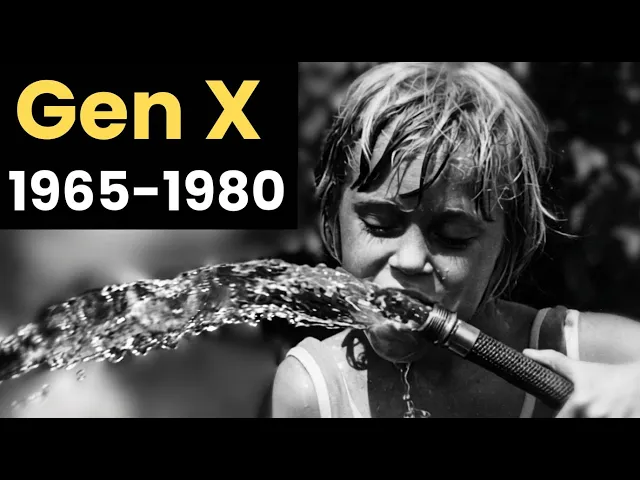
There's a reason Generation X sees the world differently, and it isn't just nostalgia. We've previously explored the mindset of those who grew up between 1960 and 1980. But today, we're going deeper.
Let's start with something that would be illegal today. Imagine you're 6 years old, sitting in the front bench seat of your dad's car. No seat belt, no booster, just you.
The vinyl seat against your bare legs and the open road ahead. Your seat grants you full control over the radio. You're spinning the dial, hunting through static until you land on that perfect song.
But the real prize comes when your dad glances over and pats his lap. You slide across the bench seat, climb up, and wrap both hands around the steering wheel. It's huge in your grip.
Your dad's got the pedals. You've got the road. The broken white lines disappear under the hood one by one, and you're steering every single one of them.
By today's standards, this would be considered irresponsible parenting. But you didn't see this as reckless because in that moment you weren't just a child. You were someone who could be trusted.
Safety regulations back then were more like mild suggestions. Nobody wore seat belts. Most people wondered why they were even there.
And here's another thing that wouldn't be allowed in today's world. Your mom pulls up outside the shops and tells you to wait in the car. She'll only be 5 minutes.
You watch her disappear through the doors. 5 minutes becomes 10. 10 becomes 20.
You're watching strangers walk past, fogging up the window with your breath, drawing shapes in the condensation. Today's safety is a notification on a screen, a green dot on a tracking app, or a text me when you get there. But you, you built an internal compass in a supermarket car park while your mom was inside.
You learned that safe wasn't a status update. It was a feeling you carried in your gut. Once you had that internal compass, the neighborhood became your kingdom.
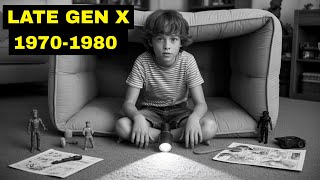
It wasn't just a collection of houses. It was a vast territory that belonged entirely to you and your friends. Think about the woods at the end of the street or that vacant lot behind the shops.
By today's standards, these were dangerous, neglected spaces. But to you, they were the birthplace of your independence. You'd spend entire afternoons building forts out of whatever you could find.
You'd drag home discarded plywood, heavy carpet remnants left out on the curb, and milk crates you borrowed from behind the grocery store. There were no instructions and no adults to help you. You were learning the raw physics of the world by trial and error.
You learned that if you didn't overlap the boards on the roof, the rain was coming in. You learned the sting of a splinter and how to pull a rusty nail out of a 2x4 with the back of a hammer. You walked home with dirt under your fingernails and scrapes on your shins.
But you also walked home with the pride of a builder. You'd created a world for yourself, a secret place where the no trespassing signs didn't apply to you. This was your first lesson in how to deal with people without a parent there to settle an argument.
You and your friends had to figure it out for yourselves. You had to decide who got the best seat in the fort or who was in charge of the lookout. If you couldn't get along, the game ended and you were stuck at home by yourself.
You learned how to negotiate, how to compromise, and how to stand your ground. You were building your character in the woods while your parents thought you were just playing. And then there was the bike.
Your bike wasn't just a toy. It was your horse, your escape pod, and your first taste of real power. You'd spend hours customizing it.
You'd clip playing cards to the spokes with clothes spins to make it roar like a motorcycle. You'd wrap the handlebars in colorful electrical tape or add a banana seat with a tall bar. You knew every shortcut through the alleyways and every jump made from a propped up piece of plywood and a brick.
You didn't need a map or a phone to find your friends. You just looked for the pile of bikes dumped on a front lawn. That was the universal signal that something was happening.
You weren't following a blue dot on a GPS. You were following the sound of shouting, the smell of fresh cut grass, and the long shadows of the late afternoon. You weren't just moving through the neighborhood.
You were mastering it. You're flying down a hill on your bike, feet off the pedals, wind in your face. The front wheel catches a rock.
You go over the handlebars. You hit the pavement hard. Gravel biting into your palms.
Blood already running down your shin. You limp home, knee throbbing. You walk through the door.
Your mom takes one look at you, size, and says, "You're fine. Go wash it off and get back outside. " So, you do, and you wear that scab like a medal for the next 2 weeks.
There were no elbow pads, no knee pads, no helmets. Most kids couldn't even find a helmet in a shop if they wanted one. But we didn't just invite the neighborhood kids over to play.
We invited their viruses, too. You'd walk into a living room full of kids you barely knew. All of them circling one miserable seven-year-old covered in red, itchy spots.
This was a chickenpox party. The goal wasn't to avoid the virus. The goal was to catch it.
You were there to get it over with, build the immunity, and move on. Mothers stood in the kitchen drinking coffee while their children shared cups and toys with a kid who was actively contagious on purpose. This created an anti-fragility that's disappearing today.
You learned early that hurt and damaged are two different things. A distinction a generation raised in bubble wrap and safe spaces often struggles to make. Your mastery of the neighborhood didn't stop with the shortcuts and the forts.
It extended to the machines in your life, too. You grew up in an era where the things you owned weren't black boxes. You could see the gears.
You could smell the grease. And most importantly, you were expected to understand how it all worked. Think about the first time your bike chain slipped or your tire went flat.
You didn't wait for a professional or a software update. You flipped the bike upside down, balancing it on the seat and the handlebars. You got the grease on your palms and the black streaks on your t-shirt while you worked the chain back onto the sprocket.
You learned the feel of a wrench and the exact amount of pressure it took to tighten a bolt without snapping it. By the time you were 10, you weren't just a rider. You were a mechanic.
That can do mindset was everywhere. It was a fundamental part of the air you breathed. You watched your dad under the hood of the car on a Saturday morning, leaning over the fender with a trouble light.
You were the one tasked with holding the flashlight, learning the names of parts like the alternator, the spark plugs, and the carburetor. And when the television started to flicker, or the tracking on the VCR went fuzzy, you didn't call a help desk. You gave it a firm technical tap on the side.
You'd climb behind the massive, heavy cabinet to check the RCA cables, those red, white, and yellow plugs that were always tangled in a nest of dust. You learned that if you wiggled the wires just right, the picture would snap back into focus. You were building a mechanical intuition, a belief that if something was broken, it was your job to figure out why.
This created a specific type of confidence that is becoming increasingly rare. You didn't feel helpless when the world didn't work perfectly. You assumed that with a screwdriver, a bit of WD40, and some patience, you could master the physical world.
Today, we live in a world where if your phone breaks, you replace it. But you, your brain was wired to look under the hood. You developed a deep, quiet certainty that you could handle whatever the physical world threw at you.
But while you were tough enough to handle the world outside, you were smart enough to respect the rules inside. Because when you weren't okay, consequences were swift. You mouth off at the dinner table.
Before you even finish the sentence, you hear it. The scrape of a wooden spoon being pulled from the drawer. You don't need to be told twice.
Parents used wooden spoons. Some used belts. We're not here to debate whether that was right or wrong.
But psychologically, it created something specific. A direct understanding that actions have immediate tangible consequences. Not a conversation, not a warning, not a timeout, a clear cause and effect, and that wiring doesn't disappear.
But if the weekdays were about rules, the weekends were about freedom. Saturday mornings were different. Saturday mornings were sacred.
It's 6:30 a. m. You're awake before anyone else.
You plant yourself in front of the TV in your pajamas. The Flintstones, Scooby-Doo, He-Man, Transformers, or Thundercats. For the next 4 hours, that television is a portal.
And here's the thing. If you missed it, you missed it. There was no streaming, no catchup.
You had one chance and you either made it or you didn't. This taught you something about time that's almost impossible to learn now. That some moments only come once.
That being present matters. You grew up understanding that the world wasn't going to wait for you. Perhaps the most quiet, powerful lesson you learned was in the classroom.
Education back then was analog, slow, and final. Without the internet in your pocket, your brain had to be the hard drive. Today, knowledge is a commodity.
It's something you Google and then immediately forget. But for you, if you wanted to know a date in history or the capital of a country, you couldn't just look it up mid-sentence. You had to know it.
You had to own that information. Think about the sound of the mimograph machine. That rhythmic thump swish, as it turned out, purple inked worksheets that were still damp and smelled like chemicals.
Today, a student gets a PDF on a tablet with a dozen clickable links and distractions. But you, you had a number two pencil and a single piece of wide ruled paper. If you made a mistake, you couldn't just hit undo.
You had to erase it, deal with a smudge, and keep going. This taught you that actions have weight. That you couldn't just reset your way out of a mess.
This built a focus muscle that is almost impossible for kids to develop today. When you were writing an essay, you didn't have 20 tabs open for research. You didn't have notifications popping up every 30 seconds to pull your attention away.
You had your notes, your textbook, and your own thoughts. You learned how to follow a single thread of logic for an hour at a time. While today's world is addicted to the skim, you were trained for the deep dive.
And then there was the library. Today, research is a 3-second search that requires no physical effort. But back then, it was a hunt.
You'd stand in front of the wooden card catalog, pulling out long, narrow drawers and flipping through thousands of typed cards. You were learning that information has a cost. It takes time.
It takes effort and it takes movement because you had to work for your knowledge. You valued it more. You earned it.
While you were mastering the classroom, you were mastering the social world at the mall. Before the internet turned identity into a digital profile, the mall was your physical social media. It was the highstakes laboratory where you learned how to exist in a crowd.
Think about the ritual of being dropped off at the entrance with a $10 note in your pocket. You weren't there to shop. Not really.
You were there to see and be seen. You walked the circuit from the food court to the record store and finally to the arcade. Every step was a lesson in social navigation.
You were learning how to read a room, how to tell who was friendly, who was trouble, and where you fit into the mix. This was the era of physical identity. If you wanted to be a part of a subculture, you had to wear it.
You chose your tribe through your clothes, the band t-shirts, the flannels, the scuffed Doc Martens, or the neon windbreakers. But here was the catch. You had to stand behind those choices in person.
There was no hiding behind a screen or a curated feed. If you dressed like a skater, you had to be able to talk the talk and walk the walk with other skaters in the real world. You couldn't just post an aesthetic.
You had to live it. As you got older, that sense of independence took on a new form. It wasn't just about where you could go on your bike anymore.
It was about what you could earn. For Generation X, your first job wasn't a resume builder or a supervised internship. It was a raw, unfiltered introduction to the adult world.
Think about the paper route. If you were 12 or 13, this was your first contract. People relied on you to bring the world to their doorstep.
You'd wake up at 5:00 a. m. while the house was still silent and the air was freezing.
You'd sit on the garage floor, folding heavy Sunday editions and snapping thick rubber bands around them. You'd load up a canvas bag that weighed half as much as you did, slinging it over your shoulder before pedalling out into the dark. You learned the weather in a way most people never do.
You learned how to navigate a neighborhood by memory, hitting the same porch at the same time every single day. And once a month, you had to go collecting. You'd knock on doors, stand on the porch, and look an adult in the eye to ask for the money they owed.
You were learning how to handle rejection, how to keep a ledger, and how to be responsible for a service. If the paper was wet, you heard about it. You weren't a child in those moments.
You were a local businessman. And for those who didn't have a route, there was the fast food counter or the local grocery store. This was before the age of touch screens and automated kiosks.
If you worked the register, you had to be fast with mental math. When the machine jammed, you didn't panic. You grabbed a pen and a pad of paper, and you calculated the tax by hand.
You were part of a team where the manager was often only 19 themselves. And you learned how to survive a Friday night rush without a computer to tell you how many burgers were left in the bin. You were working in environments that were loud, greasy, and often high pressure.
You learned the value of a dollar because you knew exactly how many floors you had to mop or how many bags of groceries you had to carry to earn it. There was no direct deposit that just appeared in an app. You were handed a physical paycheck.
You walked it into a bank, stood in line, and felt the weight of that paper in your hand. This built a grit that stays with you today. You spend your life figuring out how to get the job done when no one is watching.
As you moved into those teenage years, you entered a space that simply doesn't exist anymore. You were a latch key kid, letting yourself into an empty house with a key around your neck. There was a note on the table and for the next 4 hours you were the master of your own time.
Nobody was structuring your afternoon. Today a kid's schedule is managed like a corporate merger. Tutoring, soccer, organized playdates.
But you, you had the gift of boredom. And boredom is the birthplace of creativity. Every phone call was an exercise in social courage.
You'd stand in the kitchen stretching the tangled yellowed phone cord as far as it would go for a hint of privacy. You dialed a home phone, not a smartphone, because they didn't exist yet. You had to bypass the gatekeeper of the house, also known as your friend's parents, before you could even speak to your friend.
You had to use your polite voice, state your business, and navigate an adult conversation just to get a hang on, I'll get them. You were learning how to handle authority figures before you were even out of middle school. And when you finally got out of the house on a Friday night, you disappeared into the dark.
There was no GPS tracking your every move. No social media stories documenting your mistakes for eternity. If you did something stupid in a parking lot at midnight, only the people who were there knew about it.
You had the freedom to be messy. You had the freedom to try on different versions of yourself without the pressure of a digital audience judging your every move. You were forming your soul in private, away from the constant noise of instant feedback.
That patience applied to everything. It applied even to love. Think about the ritual of the mixtape.
It was the ultimate Gen X love letter. You couldn't just share a link or a playlist. You had to sit there in real time watching the tape spin, hitting play and record with surgical precision.
You'd spend hours curating the perfect tracklist, writing out the insert by hand and perhaps even decorating the case. It was a massive investment of time and vulnerability. You were giving someone a physical piece of your effort and because it was hard to make, it meant everything.
All of these moments, the long waits, the physical efforts, and the lack of a safety net were training you for the long game of life. Every time you look at the world today and feel like you've landed on a different planet, remember this. You're not outdated.
You're carrying capabilities that are becoming extinct. While today's world is obsessed with performing for an audience, you are busy actually living. You developed a sense of self in a neighborhood without a digital footprint.
And you learned to trust your own gut because back then you had to. You carry a rare kind of quiet strength that comes from figuring out who you were without constant input. You've had that internal compass since the day you first grabbed that steering wheel, and you've been navigating your own path ever since.