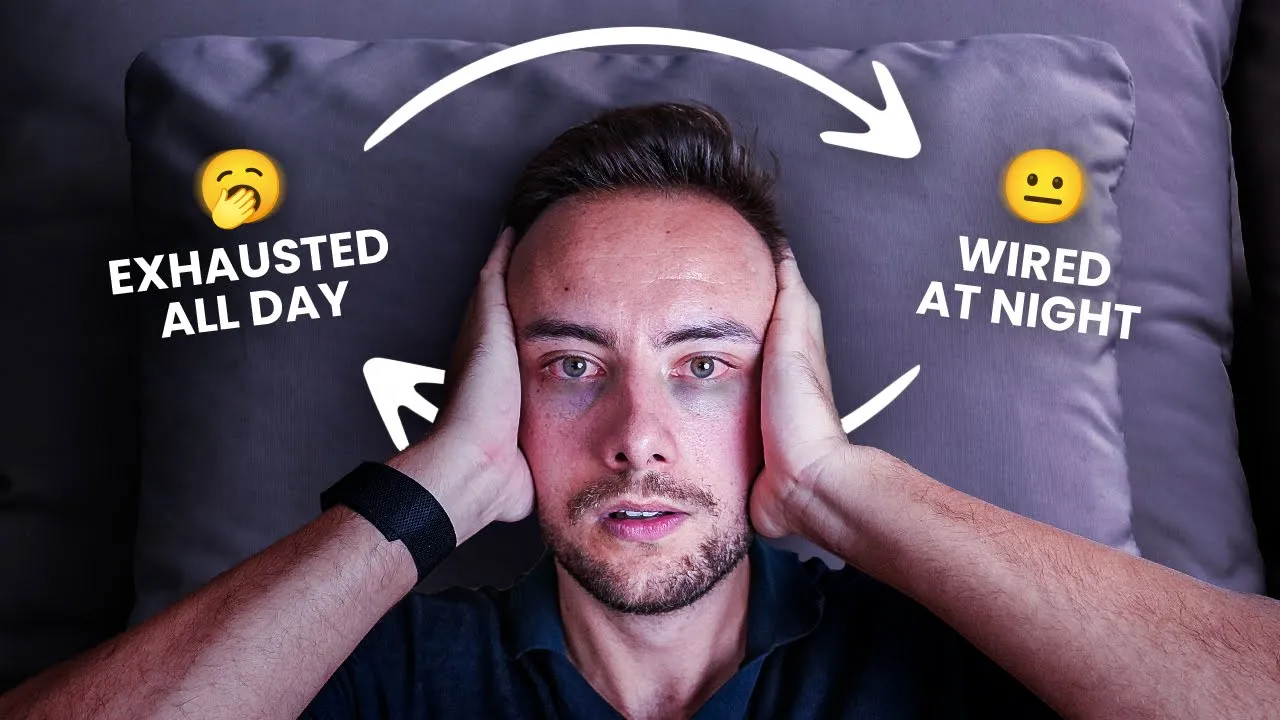
If you have ADHD, falling and staying asleep feels impossible. Your brain won't shut up. You lie in bed exhausted, but the moment you close your eyes, boom, you're wide awake.
Suddenly, it's 3:00 a. m. and you haven't had 1 second of rest.
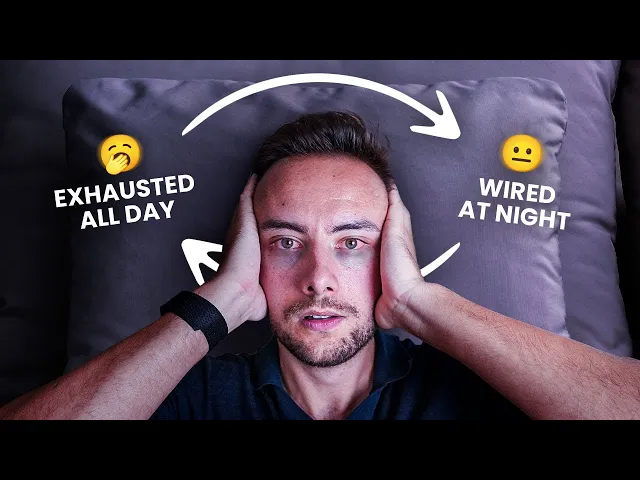
The next day, you're more tired, more inattentive, and stuck in the same brutal cycle. You're exhausted all day, but wired at night. That's the ADHD sleep paradox.
Sleep is at the foundation of everything. Focus, self-regulation, good decisions. But if you have ADHD, you're 43 to 80% more likely to experience sleepless nights, making all of that even harder than it already is.
And by the way, I was part of that statistic. Bad sleep wrecked my life. It wasn't just about focus or motivation.
I stopped enjoying the little things. I felt like I was living on autopilot. Everything was meh.
And even the smallest tasks felt like a massive effort, which for a brain that hates effort was great. It became a neverending cycle because I started dreading bedtime. The fear of not sleeping gave me anxiety, which made sleep even worse.
I got to a point where I didn't even know what feeling well-rested was like anymore. My relationship suffered, my work suffered, life just became unpredictable. I couldn't follow through on plans because I had no idea if I'd even have the energy.
Any consistency I had left gone until I learned ADHD was actually the root cause. And once I understood why, I was able to make practical changes. Now, I never thought I would say this, but I actually look forward to sleep.
I'm more focused and regulated than ever before. And I promise you that you'll be shocked at how powerful you can be with a good night's sleep. And spoiler alert, the solution is ridiculously simple.
No complicated bedtime routines, no forced meditation or journaling, just small, easy changes that make all the difference. Here's what most people don't know. ADHD brains don't work like neurotypical ones.
We have a delayed melatonin onset and a naturally shifted circadian rhythm. If that sounds confusing, don't worry, I'll explain. Stick around because at the end of this video, I'll also share a secret technique to prevent that awful morning brain fog.
Welcome back to ADHD Vision, where we help you thrive, not just survive. Consider subscribing so you don't miss any future content. We all know ADHD messes with dopamine.
And did you know sleep plays a huge role in dopamine regulation? And so, here's the problem. Bad sleep, lower dopamine, even worse focus, motivation, and impulse control.
And guess what happens next? Cravings. Your tired ADHD brain demands fast dopamine.
Sugar, caffeine, social media, impulse purchases explains a lot. But then I learned something that explains even more. Your body's sleep wake cycle runs on two key hormones.
Cortisol, the stress hormone that helps you feel awake, and melatonin, the hormone that signals it's time to sleep. In a neurotypical brain, non-ADHD, these hormones follow a predictable pattern. You wake up feeling alert and you get sleepy at night, the way it should be.
But for ADHD brains, it's often completely disregulated. Why? Well, first of all, because our sleepy hormone melatonin is released too late.
We ADHDers produce melatonin up to 90 minutes later than neurotypical people. Your body isn't getting the time for bed signal when it should. And second, some studies suggest that ADHDers even produce a less melatonin overall, making it even harder to feel sleepy at the right time.
So, when we should be getting sleepy, we're not. Lying in bed, our brains are still on. We ruminate.
We overthink. We get random bursts of creativity. Some of my best video ideas hit me at 2 a.
m. on a Wednesday. You know what I'm talking about.
And so, naturally, we stay up longer. We scroll, binge watch, play games, or get wrapped up in revenge bedtime procrastination, which makes it even harder to fall asleep because once you chase dopamine, it's so difficult to stop, isn't it? This is problem number one.
We don't know how to regulate our ADHD brains to fall asleep. But sometimes we are able to fall asleep, aren't we? Well, kind of, right?
But even when we do, there's another issue. Studies show that people with ADHD tend to have reduced slowwave sleep, which is the deepest and most restorative sleep stage. And so, even if we get our 8 hours, sometimes we still won't feel restored.
We have a way lighter sleep. And then comes problem three, morning brain fog. Going back to our circadian rhythm, cortisol, the hormone that initiates stress and wakes us up, is often completely out of sync.
Our stress levels tend to be higher at night, keeping us wired, and lower in the morning, making it harder to wake up. Combine that with higher than usual melatonin levels in the morning, it's no wonder that mornings feel brutal for us. So, when we should feel awake, we don't.
It all ties together beautifully. But now that you know about the three problems, it's about time we get into the three solutions. I know, just like you, I wanted to dive right in and find the magic cure.
And while I did discover an almost perfect solution, which I'll share at the end, I realized that I first needed to fix my relationship with sleep because without quality rest, even the best solution doesn't work as effectively. And so, how do you talk to yourself about sleep? What expectations do you have?
Comment below what comes up for you. Here's why this matters. Studies show that negative thoughts about sleep actually make sleep worse.
ADHDers already struggle with negative selft talk because it's highly stimulating. And so when we lie in bed thinking h why can't I just fall asleep? This is going to ruin my whole day.
I have to sleep now. Shocker. We actually make it harder to sleep.
And it's a vicious cycle because the less sleep you have, the more difficult it is to not get trapped in negative thinking. I know because I've been there. But the key really is self-compassion.
It's to stop treating your sleep like a performance. It's about trusting yourself. It's about getting rest because you deserve it.
This takes time to cultivate, but it's most definitely worth it. I then discovered that a few key quick fixes can make a huge difference in ADHD sleep quality as well. Things like body temperature, magnesium levels, and daily movement, which I never thought play a role, all play a crucial role in how well you sleep.
Here's what's on my ADHD sleep checklist. First, I check if I've regulated my body temperature because I learned that ADHDers often struggle with temperature dysregulation. Basically, we feel too hot or too cold easily and we can overheat at night, which messes with sleep.
A cool body sleeps a lot better. And a warm shower or bath 1 to two hours before bed tricks your body into cooling down faster, which signals sleepiness. Simple and effective.
Second, blue light is your enemy. If you're scrolling at night, at least wear blue light blocking glasses. Otherwise, your ADHD brain gets the message to stay up forever.
Third, burn off extra energy. I learned that I don't always feel physically tired at night because I haven't moved enough during the day. Even a short walk can help reset your body for better sleep.
Fourth, caffeine cut off. We ADHDers metabolize caffeine weirdly, don't we? Some crash, others stay wired for hours, and others fall asleep.
If the latter isn't you, try cutting caffeine after 2:00 p. m. and see if it helps.
Fifth, minimize distractions. A cool, dark, and quiet room is essential. Sixth, digestion.
Alcohol. Big meals before bed or even too much water can mess with your sleep. Try to avoid it.
And lastly, it's about getting the right minerals. Most of us are low on magnesium, which helps with relaxation and deep sleep. I sometimes take it before bed, and it's basically a natural ADHD chill pill.
Also, because it helps produce our favorite hormone, melatonin, which we'll talk about more in just a second. Magnesium also reduces cortisol, the stress hormone. And then there's potassium which further supports deep sleep.
Sodium which prevents nighttime waking. And of course calcium which is essential in melatonin production as well. They're all studied and can truly help us sleep even better.
And a cool hack if you don't want to take all of these as supplements right before bed is to just take electrolytes. They contain all of these minerals and are usually quite cheap. Take them 30 to 60 minutes before.
And you might be surprised at the effects. But even if you're doing all of this, even if you're producing more melatonin thanks to the right minerals, doesn't solve the problem of our brain not releasing melatonin on time. So, these are just band-aids.
How can we fix our melatonin for good? Let's move on to solution three, hacking your melatonin. After researching supplements that help produce melatonin, I almost couldn't believe my eyes when I found that there are literal melatonin supplements that release melatonin into your body.
This can then alter your internal body clock or circadian rhythm to help you fall asleep when you want to fall asleep. And for me, they've been the biggest game changer. You can literally buy them on Amazon and a growing body of evidence suggests that melatonin is a safe and effective supplement for helping people with ADHD fall asleep.
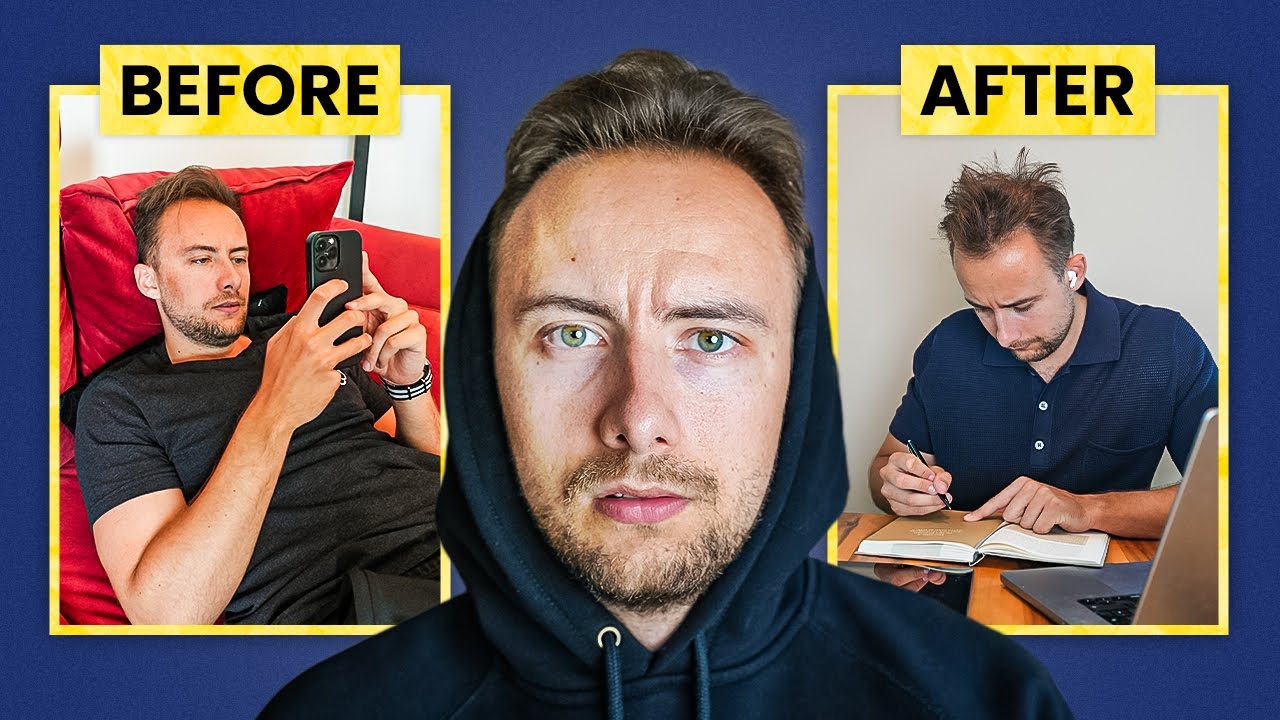
Your sleep schedule goes from this to this. I take it 1 to two hours before bed and it works all night. The best part is even if I wake up, it makes me tired enough that I can actually fall back to sleep.
Now, I don't take it every day, but whenever I feel like I need to because even though research has shown that it's safe, I don't want to get my body dependent on it. Caffeine addiction is enough for me already. By the way, this is the one I take.
This is not sponsored. But if you're already thinking about grabbing a year's supply of melatonin, hold up. First of all, you should always consult a health care professional before trying any new supplement regime.
Second, let's not forget about that morning brain fog. I didn't forget about coming back to that because melatonin supplements don't actually solve that. In fact, they make it worse.
Yeah, I know. But don't worry, there's an easy fix. First, we need to regulate your body's melatonin naturally as much as we can.
To do that, it's essential you have a consistent bed to wake up time. I know this was difficult for me to get into as well, but I noticed the effects immediately. Second, if you're relying on an alarm clock in the morning, which I know a lot of us are, try to switch to a sunrise alarm clock.
Regular alarms yank you out of deep sleep too fast, making brain fog worse. A sunrise alarm wakes you up gradually so you feel more alert. Lastly, and this is crucial, you got to get outside light into your eyes ASAP after waking up.
This not only regulates melatonin to decrease naturally, making you feel less sleepy and brain fogged, but it also boosts cortisol, the hormone that naturally wakes you up, making you more alert and focused. But here's another thing about sleep you may not know. It doesn't actually start at night.
Your days are just as important. And if you have ADHD, there's a good chance that there's an invisible trap burning you out without you even realizing it. It's the reason why you feel restless throughout your days and can't find rest during your nights.
It keeps your cortisol high throughout the day, which keeps you awake at night. And melatonin supplements may not be enough. Click this video to find out what it is and how to stop it.