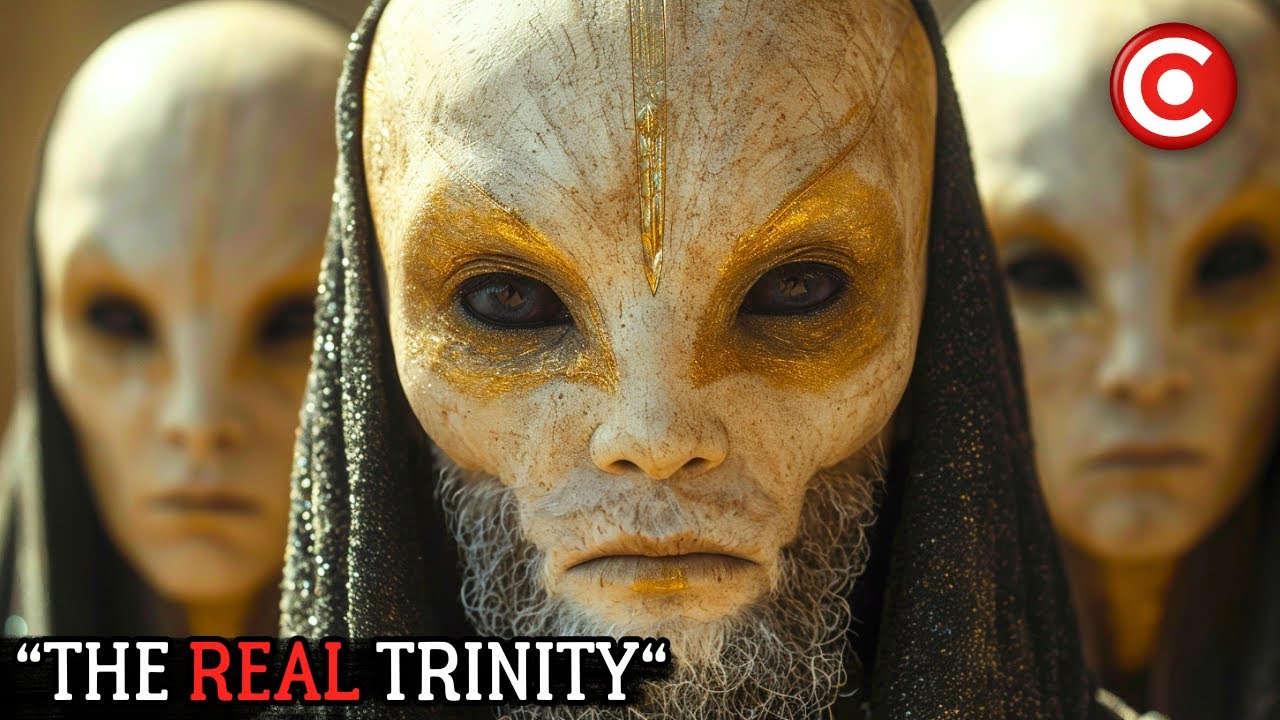
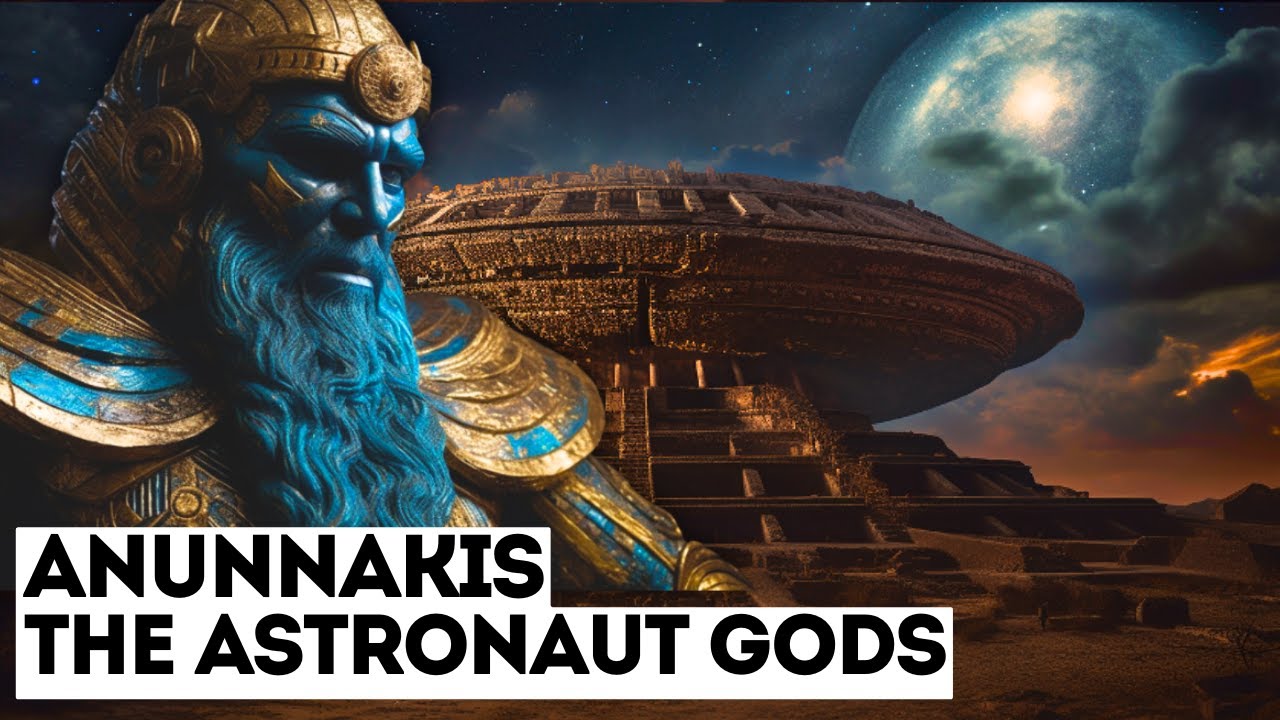
Long before Zeus and Osiris took the stage, ancient Sumerians hailed the Anunnaki. These deities held sway over humanity. But were they more than just heavenly figures?
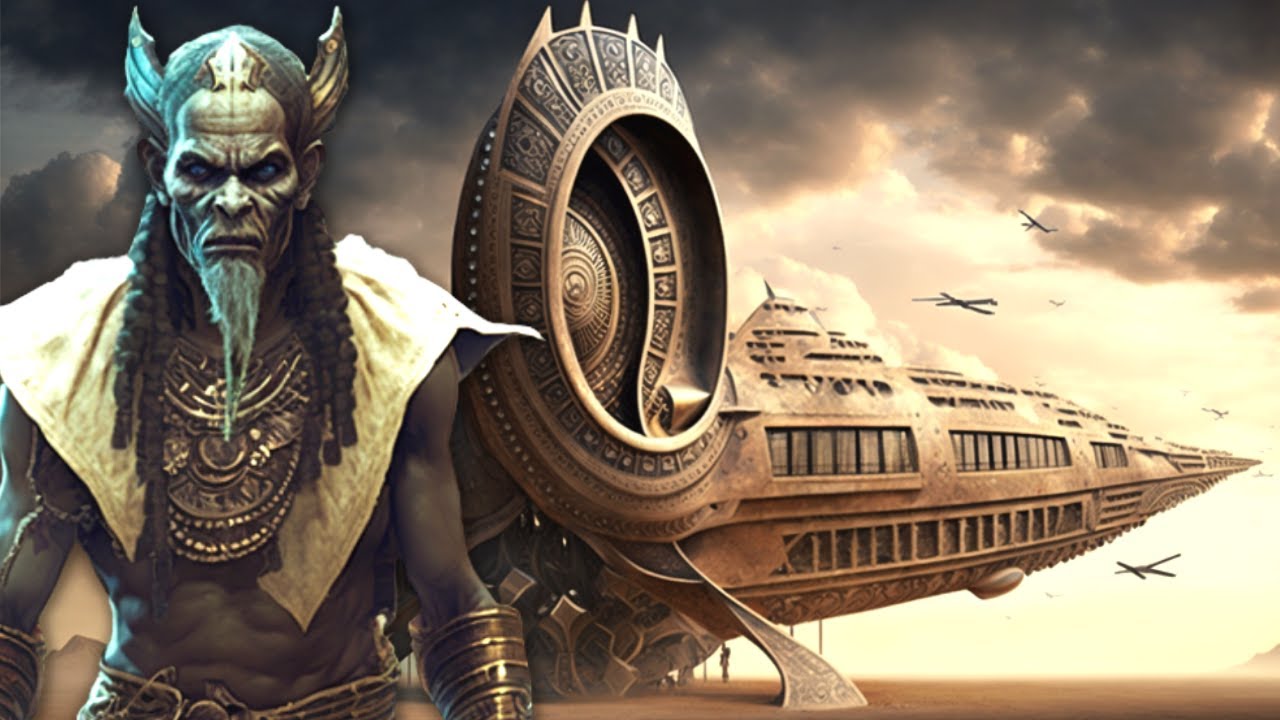
Some propose they were aliens from distant Nibiru, treading the fine line between myth and reality. The Sumerians, dwelling between the Tigris and Euphrates, attributed their technological progress to the Anunnaki. They forged the plow, etched cuneiform, and unraveled the mysteries of time, laying a foundation for future civilizations.
They believed the Anunnaki descended from An, a supreme deity governing destinies, intertwining their fate with ours. In 1976, the writer Zecharia Sitchin proposed a mind-boggling notion: the Anunnaki hailed from Nibiru, a planet with a 3,600-year orbit. They sought Earth's gold to mend their own planet's atmosphere.
Unable to mine it themselves, they engineered humans, endowing them with intellect and skills and changing the course of human evolution. But did they walk among us? The ancient texts and the symbols on Sumerian tablets all hint at a remarkable possibility.
Join us as we delve deeper, shattering the barriers between legend and extraterrestrial truth—the secrets of the Anunnaki beckon, waiting to be unearthed. In the depths of ancient history are lying events that pique our curiosity, prompting us to question the rapid evolution of humankind. What propelled humans to ascend swiftly, leaving other species in their wake?
The answer may lie in the ancient clay tablets of the Sumerians, the architects of the first organized civilization in history. Unearthed during archaeological expeditions in 1849 in what is now modern-day Iraq, these clay tablets hold within them a tale that has intrigued scholars and enthusiasts alike for generations—the story of the Anunnaki. The inscriptions on these ancient relics provide a glimpse into a civilization's beliefs, intertwining myth and reality.
Zecharia Sitchin, versed in ancient tongues, unveiled this enigma. These tablets, bearing 6,000-year-old scripts, chronicle the deeds of beings revered as gods by the Sumerians, who hailed from a distant celestial realm. The Lost Book of Enki, a translation devoid of Sitchin's hand, unravels the ancient saga.
It precedes familiar biblical tales, hinting at an extraterrestrial influence. Were these gods mere astronauts? Questions arise, challenging entrenched beliefs.
According to these Sumerian manuscripts, there is a planet in the far reaches of our solar system called Nibiru. where the Anunnaki lived. Every 3,600 years, this enigmatic planet ventures into an orbit that brings it close to Earth.
But why did the Anunnaki choose to traverse the vastness of space and venture to Earth? Nibiru, their home planet, faced a dire predicament. Drstic climatic changes were sweeping across its surface, making producing food increasingly challenging and ensuring survival.
The solution to their plight lay in advanced methods of technology, alchemy, and magic, requiring copious amounts of gold. Gold, with its unique purifying properties, could withstand even cosmic radiation. However, gold was a scarce resource on Nibiru, leaving the Anunnaki with no choice but to seek it elsewhere.
Thus, they embarked on a journey through the cosmos in search of this precious metal. Their arrival on Earth over 445,000 years ago marked a pivotal moment in our history and theirs. Upon reaching Earth, a barren realm inhabited by wild animals such as mammoths, zebras, tigers, and apes, the Anunnaki established their first city, a marvel named Eridu, in Mesopotamia.
This city was graced with a magnificent garden, a testament to their advanced skills and love for beauty. Within this lush garden, fruit trees thrived, and various creatures coexisted harmoniously—a glimpse into the Anunnaki's creative prowess. The Anunnaki, facing a labor crisis, sought a solution—a subservient yet capable workforce.
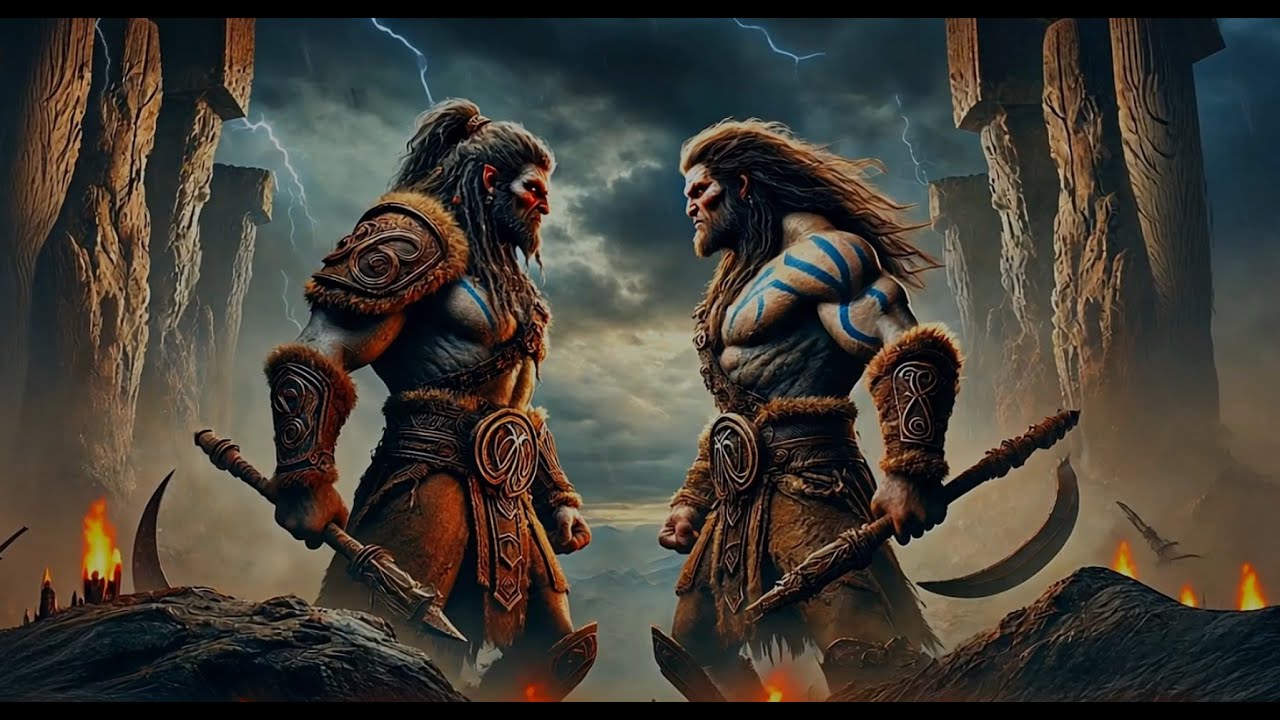
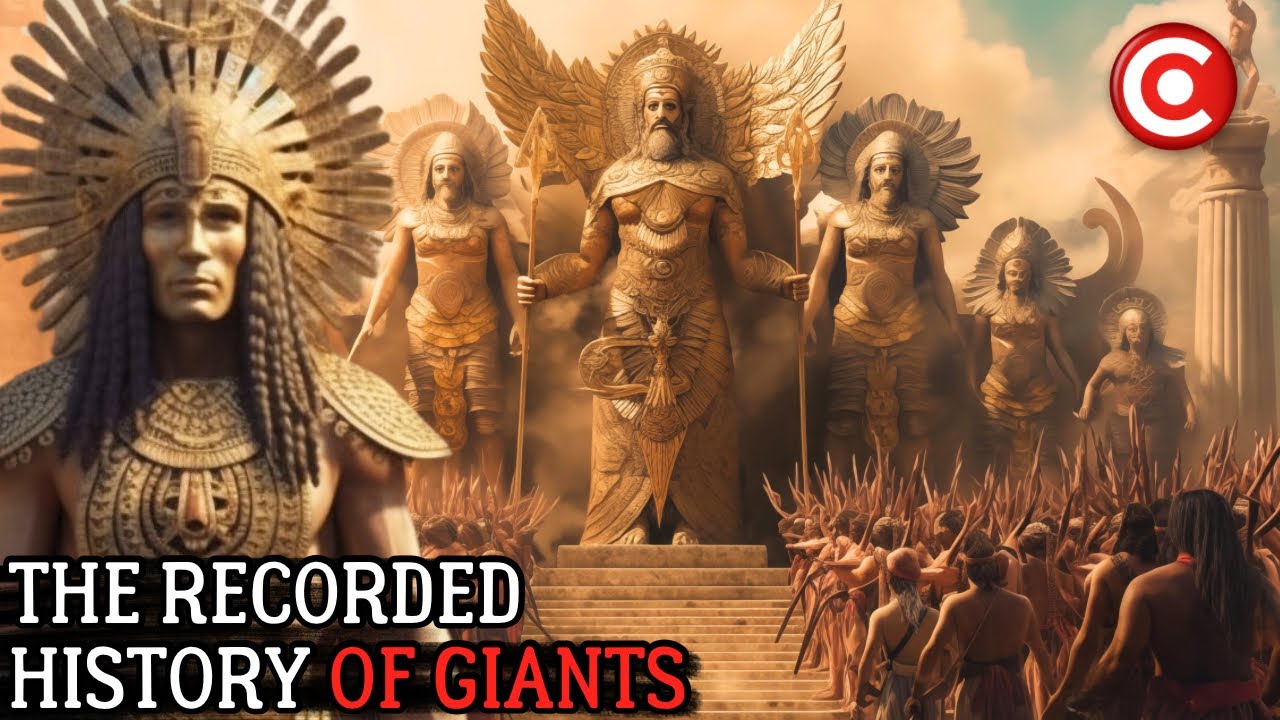
This marked the genesis of a new race skillfully designed to balance intelligence with docility. The Anunnaki, masters of both science and art, melded their genes with those of the ancient forebears of humankind, resulting in a hybrid species—the first of which was named Adamu. Standing as towering figures compared to the nascent humans, the Anunnaki possessed immense strength and wielded formidable weaponry, a deterrent against potential uprisings.
However, the initial stages of this genetic amalgamation were fraught with experimentation. Like the Nephilim giants, Peculiar beings emerged—monolithic in strength but devoid of intelligence and restraint. Yet, amidst these trials, the first humans arose from this successful genetic fusion.
Adamu, the inaugural human, heralded a new era. Over time, humans developed speech and acquired knowledge from the Anunnaki, cultivating the ability to tend to crops and construct dwellings of clay and stone. The Anunnaki, intrigued by their creation, permitted humans to reside in their city and partake in the sacred garden.
Yet, with this favor came a directive—to not multiply excessively. As the wheels of destiny turned, humans, driven by their innate will, defied divine counsel and multiplied rapidly. This population surge led to overpopulation in the city, necessitating the expulsion of many to the wildlands—a fate of exile.
The gravitational forces of Nibiru exerted a profound influence on Earth's natural state. The temperature surged, glaciers melted, oceans rose, and ceaseless rain battered the land. A cataclysmic deluge engulfed the Earth, and the once-glorious city of Eridu faced submergence—a testament to the relentless ebb and flow of cosmic forces.
In the wake of the cataclysmic flood, the Anunnaki employed ingenious means to navigate the transformed world. They crafted massive boats that, for days, floated atop the surging waters until normal water levels were restored. Yet, the texts don't explicitly reveal if these vessels were ships sailing the water or advanced crafts hovering in the skies.
Upon the decimation of their city, the Anunnaki made a fateful choice to depart for Nibiru. However, before their departure, they bestowed upon humankind invaluable knowledge—architecture, mathematics, music, and writing. Furthermore, they imparted the wisdom to establish a system of monarchy, wherein confident leaders preserved their pure bloodlines, a legacy from the Anunnaki, enabling them to command others.
To guide their return in the future, the Anunnaki supervised the construction of ziggurats—majestic temples aligned with constellations. Take advantage of more captivating explorations into lost ancient super-civilizations. Head over to our channel and watch "Lost Ancient Super Civilizations and Their Physical Remains.
" The saga of humanity's evolution and the cosmos continues, and we're here to unravel its secrets with you. In the annals of Sumerian records, the exact count of the Anunnaki remains elusive. However, they highlight specific ones as paramount.
At the zenith of the Sumerian pantheon, Anu, the epitome of heaven, possessed boundless wisdom. Anu, the oldest and most revered god, had sanctuaries across Sumerian cities. In the cosmic pantheon, the goddess Ki embodied the essence of Earth, serving as Anu's consort.
The divine union of Anu and Ki begot the Anunnaki—a term signifying 'children of heaven and earth. ' Enki reigned supreme in the ancient celestial hierarchy, a potent god presiding over the vast oceans and flowing rivers. He stood as the patron deity of Iridu, later extending his influence to diverse peoples like the Canaanites, Hittites, and Horrites.
The moon, too, had its divine sovereign—Nana, revered for wisdom and curiosity. Nana assumed the role of a deity responsible for enlightening humanity on scientific and astronomical tenets. The Anunnaki cult resonated deeply among various Mesopotamian peoples, increasing with time, weaving new narratives, and introducing additional divinities while remaining steeped in intricate details.
The annals of Anunnaki history, chronicled by the Sumerians, teem with scientific and astronomical allusions, astoundingly progressive for the era in which they were transcribed. This ancient wisdom remains an enigmatic treasure, still veiled in the annals of human understanding. Sitchin's interpretation offers a unique shard of the Anunnaki puzzle, suggesting that the advancement of humanity, our ability to write, solve mathematical problems, and plan cities, was a direct consequence of the Anunnaki's intervention.
Yet, amidst this fascinating theory, skepticism looms large. Mainstream academics often dismiss these translations, arguing they may be mistranslations or misunderstandings of ancient Sumerian beliefs. The chasm between mainstream understanding and Sitchin's interpretations deepens the enigma.
This leads us to the core of the mystery—the blurred line between mythology and history. Once revered as gods, the Anunnaki are now perceived as potential ancient astronauts. The tablets hold the key, but the interpretations remain elusive, leaving us to ponder the enigmatic influence of the Anunnaki on human history.
The question persists: were the Anunnaki creators of our destiny, or were they? Indeed, are ancient astronauts guiding us through the corridors of time? The answers lie within the enigmatic tablets and the realms of possibility.
As we journey through the annals of ancient history and sift through the enigmatic translations of Sitchin, we arrive at a critical juncture. The enigma of the Anunnaki's influence is vast and complex. On the one hand, we have the mainstream understanding of these ancient Mesopotamian deities, revered as gods by the Sumerians.
On the other hand, Sitchin's interpretation proposes a paradigm shift — these revered beings were, in fact, extraterrestrial visitors from the planet Nibiru. Yet, the allure of the ancient astronaut theory persists. The notion that an advanced alien civilization visited Earth, altered our genetic makeup, and influenced our evolution is captivating.
It invokes questions about the origins of human intelligence, the sudden leaps in our civilization's progress, and the intricacies of our ancient myths and legends. Whether perceived as gods or potential extraterrestrial beings, the Anunnaki have left an indelible mark on human history and mythology. The very fabric of our belief systems, our understanding of creation, and our quest for knowledge are intertwined with the enigmatic legacy of the Anunnaki.
In the present day, the enigmatic tale of these ancient beings persists, leaving us with more questions than answers. Were they mythical gods or cosmic travelers? The enigma endures, challenging us to peer into the cosmos, quest for knowledge, and dream of what lies beyond.
As we navigate this enigmatic journey, we invite you to like, subscribe, and share your thoughts in the comments below. Do you believe in the legacy of the Anunnaki, or do you see them as the product of ancient imagination? Let us know!