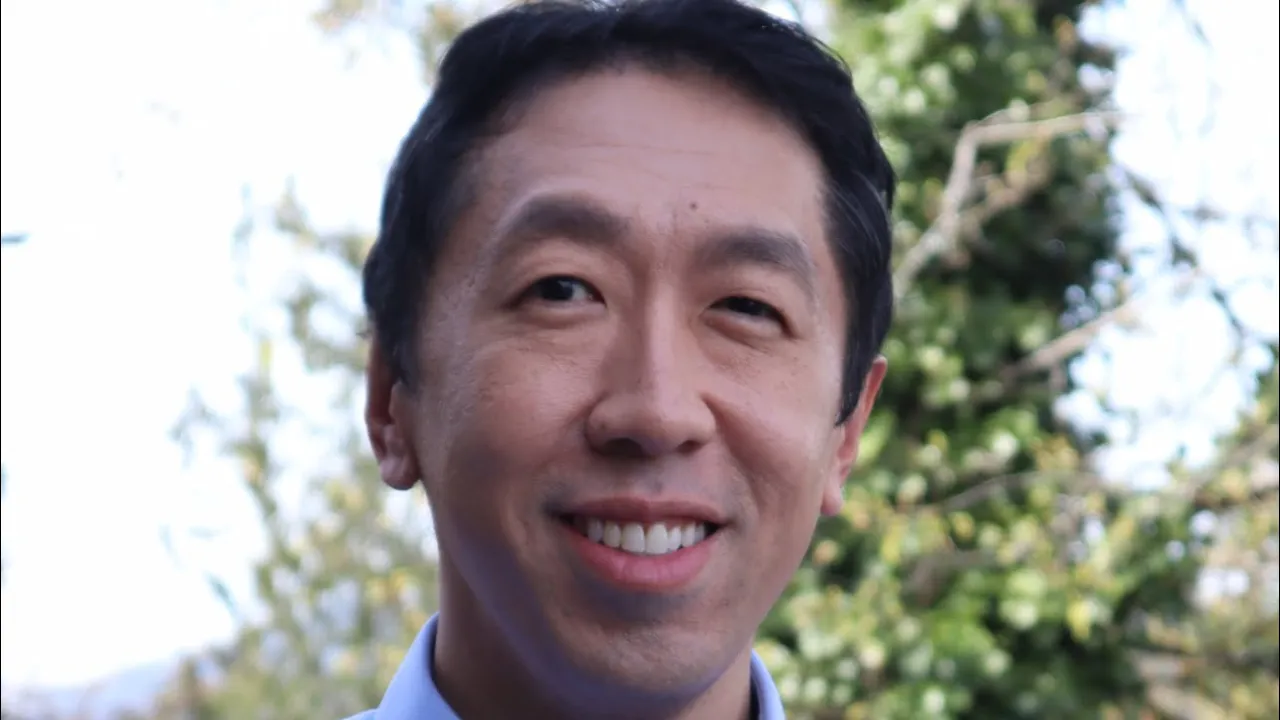
[Music] welcome everybody U to the entrepreneurial thought leaders seminar a Stanford seminar for aspiring entrepreneurs ETL is presented by stvp the engineering center the engineering entrepreneurship Center here at Stanford and basis The Business Association of Stanford entrepreneurial students I'm rvy balani a lecturer in the management science and engineering department at Stanford and the director of Alchemist and accelerator for Enterprise startups today we are thrilled to welcome Andrew ing to ETL how many people know Andrew okay so Andrew really doesn't need an introduction but we will give one anyways for those who don't Andrew is truly
a child of the world he was born in the UK to parents who emigrated to the UK from Hong Kong but was raised in Hong Kong and Singapore went to Carnegie melon and very early on signaled that he was no ordinary student he got three bachelor's degrees at Carnegie melon in computer science statistics and economics and graduated at the top of his class then went on to MIT where he got a masters in electrical engineering and computer science then came over to the Left Coast and got a PhD in Berkeley in computer science with a
focus on artificial intelligence and reinforcement learning Andrew is generally viewed as one of the preeminent thought leaders on AI today um he was the founding uh he was he was he's the co-founder and head of Google brain and the former Chief scientist at Buu where he built the company's AI group into several thousands into thousands of of people several thousand people um but he's as passionate about AI as he is also about the development of you of students around the world um he's and I know there's a lot of love for Andrew um he's a
former Associates professor and director of the Stanford AI lab and currently an adjunct professor in computer science at Stanford how many people have taken one of Andrew's classes or want to take one of Andrew's classes um and he's a beloved Professor here at Stanford but he's also viewed as a beloved teacher to Millions outside of Stanford um he's the co-founder and chairman of corsera the world's largest moo platform and through his online education work and his online AI education work he's reached over 7 million people um he was listed as one of the world's 100
most influential people by Time magazine in 2013 and today Andrew is the managing director and partner at the AI fund which is a startup Studio building new AI companies from the ground up and is also the founder of deeplearning.ai um he focuses his time primarily on his entrepreneurial Ventures looking for the best ways to accelerate responsible AI practices in the larger larger global economy there is fantastic content already online that Andrew has given including a longer version of today's talk that you can find on YouTube and so instead of reduplicating that Andrew is going to
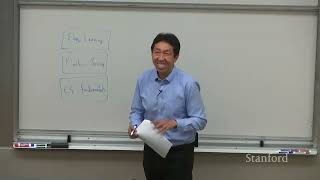
give a teaser talk a 10 minute discussion followed by we'll do a quick fireside chat and then we're going to open it up um for really interactive Q&A with you so start thinking about your questions now because the time is going to fly by but without further Ado please welcome Andrew thanks a lot ravie um thanks good to see everyone here can everyone in the back hear me okay cool awesome you know I've taught um cs229 my machine learning class in this room many years but all these years I Tau in this room I've never
seen my face that big before um what like to do today is chat with you about opportunities in AI so one of the difficult things to understand about AI is um is a general purpose technology similar to electricity meaning it's not useful just for one thing it's useful for a lot of different applications if I were to ask you what is electricity good for it's almost hard to answer that because it's useful for so many different things and and AI is like that too so um one of the major trends that we've seen in the
last year few years is that prompting is revolutionizing AI application development and I want to just dive a little bit deeper into this because I know this is an injuring Clause I know many of you may be from an injuring background I'm going to just go a little bit deeper than this into this then than than I might otherwise but if you were to say um want to build a AI system for many years the typical approach is use supervised earning so let's say I want to build a system to rate restaurant reviews as positive
or negative sentiment you know then you would collect data maybe that takes me a month I would Trend AI model maybe that takes me a few months find a cloud service to deploy my AI model maybe that takes you know a few months and so for the past most of the past decade a realistic timeline to build and deploy a Val AI system was you know maybe six to 12 months but with um prompting the timeline is now very different you can specify a prompt in minutes or hours and then um deploy a system to
production in just hours or days and I know that probably many of maybe most maybe all of you will have played with um large language models as a consumer to like CHP and B and bhat um I think that in terms of startup opportunities I'm excited about the use of large language models not as a consumer too which is fantastic and exciting I think use CH should be in bought regularly but instead the application of L langage models as a developer tool because this is allowing a lot more air applications to be built um and
dramatically lowering the barrier to building many applications so I know that in this talk you don't normally have speakers right code but this is an injuring class um so let me actually show you you know exactly what I mean by that right it turns out that if I want to build an AI system today this is all the code I need um and this means that you know if you take CS 106 or something learn a code right in a in a CS class with just a little bit of code import a open i2s lo
my key I don't know D what St P lures all great you know also made many friends never written that before and so hopefully this okay thank goodness got that right um and so this is positive sentiment and and just in seconds you know that's all the code it takes now to build an AI system in code to look at piece of text and process it to look at piece of email and Route it or or or to build a start to build the beginnings of a chat bot so um over the last I don't
know half year one of my teams d. has been working with many of the ai2 builders to create short huses on how to use tools like I just showed you because there are manyi applications that used to take me six months to build that I think any of you will now be able to build in one or two days and this opens up the set of things that um you could do and the set of prototypes you can build and in fact from start of perspective when it took us six months to build something you
know what what we do is have a product manager study it do the user studies make sure the right thing to build then go build it and after all that investment it's like boy let's hope it works but what I'm seeing with these very fast development times is if it takes you a couple days to build something I'm seeing a lot more startups as well as big companies say you know what I have 10 ideas for features I'm going to build all 10 things and then just ship them all and then we'll see how users
use them or don't use them and just keep what sticks um and this is very different prototyping much leading methodology than I've seen startups use you know before proing with one one important caveat which is that responsible AI is important so don't do this don't ship you know things that could cause harm but we have a lot of applications like inspecting bits of metal in Factory you know where there is really no harm no risk of bias where I think there's very fast shipping methodology letes this innovate very quickly in AI um so where are
the opportunities so the size of these circles shows what I think is the value of different AI Technologies today um supervised learning started to work really well about a decade ago at labeling things such as label as that as is it something you're likely to click on or not or label this x-ray um with you know what's the medical diagnosis and supervised learning for a single company like Google is worth more than hundred billion dollars a year and there are millions of developers working on it and it might even grow in the next three years
to double say so massive momentum lot of applications to be figured out and then generative AI is a new entrance where frankly the revenue the value of the revenue from gen of AI today is much smaller but given the amounts of Interest excitement and commercial interest I think it will much more than double in the next three years and three years is an artificially short time Horizon I think you were to look out six years if it continues to compound at this rate maybe the value from G of AI will will you know even start
to approach that will supervis learning but um all that room for growth the light shaded region for supervised learning or Gena of AI which are probably the two most important tools today are where there are lot of opportunities um for any of us to identify and build to concrete use cases and what I hope you take away from this talk is um AI Technologies are general purpose Technologies meaning that they're useful for many different TS when supervised learning started to work well about a decade ago it actually took us a long time it took us
annoyingly long over the last decade and it will be take us annoyingly long over the next decade to figure out use cases for generative AI but do you want to use this to make ships more efficient or for medical diagnosis or for educ education product recommendations or something else it took we're still figuring out concrete use cases for supervised learning and even though we're not yet done doing that we have another fantastic neww gen of AI that even further expands the set of things we now do of AI um and you know one important caveat
which is there will be FS along the way how many of you remember lensa raise your hand if you do wow almost no one that's fascinating so lens's revenues took off like that through last December um it was this app that could let you upload a few pictures of yourself and draw a cool picture of you as an astronaut or a scientist or something um and it was a really good really hot product until last December after which his revenues did that and I think that's because lensa was one of what will probably turn out
to be multiple thin software layers built on top of someone else's very powerful API that was a good idea people liked it but it wasn't the long-term defensible business and when I think about generative AI as a developer platform um I'm reminded of when you know Steve Jobs gave us this phone right um and shortly after someone wrote an app that I paid $19 for to do this to turn the phone into a flashlight and this was also a good idea it was a great product but it just was not a defensible business either because
it was very thin software layer built on top of someone else's very powerful development platform um but in same way after we got the iPhone after we got the smartphone someone else figured out how to build Uber Airbnb and Tinder much longer term defense for very valuable businesses that are still standing the test of time and I think we those opportunities as well to build long-term valuable franchises businesses on top of gen of AI so where are the opportunities so I felt uh yeah I I feel I felt years ago but even more strongly now
that because of emerging AI technology there are a lot of the projects are now possible they were not possible you know one or a handful of years ago and um I wound up starting AI fund which is a venture Studio that sequentially works of entrepreneurs to start companies we actually average about one startup a month now um because I felt I previously as Ravi mentioned previously I had led AI teams in Google and BYU and even and having LED AI teams in big Tech I couldn't see how I could possibly operate a team in a
big tech company to pursue the very diverse very different sets of opportunities that I saw and and wanted to pursue and starting different startups to pursue those valuable projects seem more efficient than having one company even the big tech company go after such a large set of resources um but having said that I think Ai and generative AI also offers a lot of opportunities for incumbent companies which often have a distribution Advantage right where exactly are the opportunities so this is what I think of as the AI stack at the lowest level is the hardware
layer uh very valuable but also very Capital intensive needs a lot of resources to built and very concentrated so I'm sure there'll be valuable starters built there but I personally don't play there because of how Capital intensive and how concentrated it is um there's a cloud infrastructure layer also very Capital intensive very concentrated very valuable but at least when I buil startups I tend not to play there the other layer that's interesting is a developer tooling layer so what you just saw me was use open AI as a developer tool um and I see this
space as hyper hyperco competitive look at all the startups chasing open AI but there will be some Mega winners so um whereas incumbents have a startup kind of a distribution Advantage I think for many startups having a technology Advantage may give you a best shot at doing something meaningful there so I personally tend to play it here only when we think we have a technology Advantage because that buys us a better chance to be to become one of the huge winners and then with most ways of Technology Innovation lot of the media attention social media
what people tend to talk about is the tooling the technology layer that's one of the layer that I think has got to be even more valuable um and that's the application layer because in many ways of technology for the infra and tooling layer to be successful applications need to be built on top of them that generate even more Revenue so that they can afford to play the infrastructure layer and what I'm seeing is that there are a lot of opportunities is at the application layer where um the intensity of competition is is not frankly not
nearly as high maybe just one example I've been chatting a lot with the co of Mino um which is a startup that applies AI to um romantic relationship coaching right and you know I'm an AI guy I feel like I don't know anything about romance and if you don't believe me you can ask my wife she will confirm that I don't know anything about Romance but when we decided when we had conviction that AI could we apply to relationships we wound up partnering with rata nbor who's the former Co of Tinder and because she ran
Tinder she understands relationships in a very systematic way more so than anyone else I know and so with my team providing AI expertise and her providing relationship expertise we're able to build you know pretty unique um relationship mentoring application that that we just announced a few weeks ago um and and this Nota know rat actually occasionally stops by Stanford campus and talks to Stanford students as part of her user product research so it's possible move seen around um just one last thing I love to go to Q&A over the last few years AI fund we've
been tuning Our process for building sty I'm going to share that with you um so we often start off with lot of ideas right and one example of another startup we built was bearing AI which uses AI for smart routing a very large ocean gr vessel so if you're a ship captain should just sale at 20 knots or 22 knots is like who knows most ship captains just make some decision uh but because we're able to get global weather um and and ocean curring data uh we can make recommendations to ship captains for how to
get there on time and use about 10% less fuel um but this idea was suggested to me by mitsui which is a major shareholder in a major shipping line that operates very large Oceano vessels and this one of those things I would never have thought of this idea myself because you know like I've been on a boat but what do I know about global Maritime shipping but MIT suggested this idea to to to me and we then validate the idea make sure there's a technical feasibility and a market need recruit a CO we are fortunate
to find Dylan Kyle who's a fantastic Co with one successful exit before and then we spend three months in our current process building a technical prototype with the co and doing deep customer validation if it survives uh two3 chance of surviving one3 chance of not surviving we then write a check-in that allows the company to build higher Executives build an MVP and off it goes to raise additional rounds of capital um and I think uh this is what we and so bearing AI well now is actually they're now hundreds of ships on the high seas
Guided by bearing AI ships Guided by bearing AI have sailed 75 million miles which is the equivalent of going 3,000 times around the planet and we save about half a million dollars in in fuel cost per ship per year in addition to significant carbon emissions I think we save about I want to say about a million tons of CO2 emissions um so far um but but this kind of idea that like what I would never come with this idea myself but I've learned that my swim Lane is AI but when I work with experts in
other sectors there are often these exciting opportunities that are very valuable but frankly how many groups in the world are experts in Ai and shipping or expert in Ai and relationships I find that the competition intensity at the application layer is often much lower and then just one last thing kind of you know just full full full disclosure something I hope all of you will do too um my team is only work on projects that we think move Humanity forward uh responsible AI is important and on multiple occasions we've killed and I will continue to
kill projects that we may assess to be financially sound but based on ethical grounds so lots of exciting opportunities um I think at Stanford the lots of great costes you can take uh in engineering and elsewhere to learn about that AI Tech and then when you find you know applications or or go play at the infrar and tooling there too I think there are lots of opportunities but I think there are what I'm seeing is um frankly my team AI fund we have so many startup ideas we use a task management software we use Asana
to track this huge list of ideas and it's actually quite clear to me there are a lot more good ideas for AI businesses than you know people with the skill to work on them at this moment in time so hopefully there'll be more than enough projects for for everyone all of all all of you all of us to work on right thank you I wanted to just start off with that closing statement that you made about how there's more opportunity than there are students with skills or people with skills to pursue them and given that
we have this an audience full of students I wanted to start off by mapping out advice for students that are entering into the university regarding AI so if you want to pursue a career in AI right now and let's say your child was entering Stanford um what advice would you give them in terms of how to spend their time yeah so you know there's one thing that's actually really worth doing when you're s to students um which is take basses because it turns out that I feel like there's actually one pattern I see for both
undergraduates and graduate students including PhD students which is there's so much exciting stuff to do you just want to jump in and do it right in fact I've seen um underr in the freshman year you know try to join a research lab and start doing work in AI That's okay nothing wrong with that but it turns out that while Project work is one way to learn course work is I think an even more efficient way to learn especially when it comes to mastering the fundamentals because professors will put a lot of work to organize the
material in a way that's efficient to to to learn and digest so I would say you know take classes in in AI technology or entrepreneurship and gain those skills um I've seen students jump in and then if you are trying to work on Research that without strong skills you end up you know like labeling day or something which is fine you learn some things but you actually learn a lot from from taking causes um and then in addition to that after you start to master the foundational skills after you know how to use AI technology
or you know then as you start to practice find exciting use cases across campus um I do a lot of work you know over with people over in climate science or in healthcare to take my AI expertise and then marry it with a different discipline that I'm not expert in to find exciting applications and hopefully that type of a practice will help many of you find find exciting projects to work on as well do you need to take technical classes would do you think you need to take computer science classes if you want to pursue
a career in AI um need is too strong but I definitely encourage you to take technical classes um I think we're moving to the world where frankly I as some future point I think everyone should learn to code or rather I think it'll be useful for everyone to learn how to code for a couple reasons um everyone has access the data right this is different than the world used to be even a few years ago and especially gen AI your ability to get something to work is um much higher than ever before the barer entry
is much lower than ever before and so if you learn just a little bit of coding the amount that you to accomplish is significantly greater than if you don't know how to code at all and and are there any skills that separate out the great AI Founders I know AI right now is is is like it's it's a CA that's Rising all boats but if you separate out the great ones from the good ones are there any Salient skills that you notice that the great AI CEOs or Founders have that the good ones don't maybe
since you said AI I would say is often technical dep it helps a lot but I want to give a different answer if you say great Founders on great AI Founders but I feel like AI is evolving rapidly and we definitely have lost of entrepreneurs that you know pitch the VCS Without Really knowing what they're doing and the smart VCS can sniffen up quite quickly and it makes a huge difference I think the technology unfortunately you know is like somewhat complicated uh for a lot of appliations so team that actually knows what they're doing will
execute an AI project 10 times faster you know than a team that doesn't and 10 times is not a madeup number I literally see people take a year to do something like go boy I know that other team would have done performed this level in in two weeks or maybe a month um so for many AI startups application startups infr startups you you kind of have to know what you're doing so doesn't have to be you if you're a technical co-founder maybe that's okay and then second thing I see among many of the Great Founders
um uh is speed I find that as a startup you'd be surprised when we hang with the great Founders the sheer speed of decision making um uh and you know I sometimes talk to people from big companies and they'll say oh we move so fast but when I kind of Sit Them side by side how long does it take you to make this decision I talk to Dr founder how long take M Maybe here's one story I was chatting with the Mino Co of Ral ibol former coo Tinder I was on the phone with her
one day and she was making a major architectural decisions this architect thing you know there basically two archit two major software architectures under consideration and the team had laid it out list out some pros and cons s on the team with me and some of my friends and said these are pros and cons and and then one of my my my my C2 AI fund and I said you know we're not sure but here are some reason we prefer architecture a and then rata said okay guys done decision made go and Implement your architecture a
and and after I thought well did renate just make a massive enging decision in basically 30 seconds and and and and she did and I realized after it I don't think there was a better way to make it because it's not as if you know if if if the company waited another week would have been a high quality decision and if it wrong I'm sure they would fix it you know the next week but until you've lived through the speed of a of a of a great business most people I know so many people that
think their organizations are fast when you stack up to the real speed of a fast moving Co they have never actually seen speed in their life one important caveat do be responsible I know that move fast and break things sometimes you know is is the wrong approach so tremendous speed when you are not being callous with with people's lives and livelihood and and things that could cause real harm but so long as that's that important caveat of responsible AI um many of the Great SE move faster than most people realize people can move and so
let's just double click on that on this theme of responsible AI just because I know this is a Hot Topic that may maybe people are thinking about which is um you are clearly on the side of AI for good for responsible AI uh many of your brethren um like Jeffrey Hinton and other famous leaders in the AI space um have come out and and are concerned that the pace of AI development will become an existential threat to humanity so much so that famously there was a petition signed by Elon Musk and Steve wnc and many
thought leaders asking for the halting of the foundational the the deepest foundational models of AI for us to sort for society to sort of catch up you did not sign that pledge um can you share a little bit more detail about that was that a difficult decision for you to make and can you share more details about why you didn't join them and what your philosophical is view is regarding if AI poses an existential threat so I honestly don't see how AI poses any existential threat to to the human race um we know can run
them up you know self driving cost of trash leading their tragic loss of life ultimated tradings trash the stock market so we know poly designed software systems can of a dramatic impact and responsible AI is important but recently I sort out um you know people like Jeff and and others that were concerned about the question of AI Extinction and I tried to understand why they thought this way some were worried about bad actor using AI to create a battle weapon others were worried about AI evolving in a way that inadvertently leads to human extinction similar
to how um we as humans have led to the extinction of many species through simple lack of awareness sometimes that our actions could lead to that outcome but when I tried to assess how realistic these arguments were I found them to be vague and non-specific about how AI could kill us all and I think that I found frustratingly frankly that um trying to prove AI couldn't is akin to proving a negative and I can't prove that superintelligent AI won't be dangerous but I can't seem to find anyone that really knows exactly how it could be
um and uh but but but I do know that Humanity has ample experience controlling many things far more powerful than any one of us like corporations and nation states and there are many things that we can't fully control uh that are nonetheless safe and valuable like airplanes you know no one can control an airplane it's buffed around by winds and the pilot may make a mistake but in the early days of Aviation airplanes killed many people so we learn from those experiences build safer aircraft devis Rules by which to operate them and today most of
us can St into airplane without fearing for our lives and I think it will be like that too for AI so I think the AI Extinction I find to be very unfortunate what I'm seeing because you doing some work in K12 education as well what I'm seeing is that kind of really unfortunately I see high school students now considering work in Ai and some will say AI seems exciting but I heard it could lead to human extinction and I just don't want to be a part of that and so I find that the over height
AI Extinction narrative is doing real harm so I'm very concerned about that thank you Andrew one more question then I'm gonna open it up which is I loved the detail on the low hanging fruit opportunities I know that's on everybody's all the entrepreneurs minds of what to pursue and so I appreciated the attention and the presentation on that I wanted to ask about what's going to be the next big technology shift in AI because things are changing so rapidly especially as the models now are getting smaller and open- sourced um it feels like we've already
conquered language visual AI is getting very very good what's next what are you seeing that's around the corner that others might not be aware of yeah you know what D it about several months ago I was predicting visual AI is coming next but now everyone's all right visual I guess it's got to come with something new but but in all seriousness I think visual AI would be much more about the analysis of images rather than just generation of images but I think we're at like the gpt2 moment for visual AI is not yet working but
I think it will work much better and this will impact self-driving cars for example when we can finally you know solve problems in long tail so um and then I think actually one one other thing that um I wrote about just today in a newsletter called the batch is I think one one one thing that many people find controversial but I think is coming is the rise of edge Ai and I know this is controversial many of us were train to write S software you know lend s nice subscription business model um how do you
even find people like how do hire Engineers to write desktop applications like who even does that anymore but I think that um uh because of um for for for various forces including privacy I think that in the next few years we'll see more AI applications uh running at the edge meaning on your laptop or or on your cell phone so I think that'll be coming um and then I think there just be a lot of work coming in the application L as well okay I want to open it up to the students you're the reason
why Andrew's here um you mentioned that the on your slides you put the potential from reinforcement learning or the general value as a DOT relative to um the potential for unsupervised learning do you think there is still potential for generalist agents like GTO and other reinforcement learning models in society and in your AI stack for startups so so again so technically um last an mods I trained using reinforcement learning and UNS supervised learning and supervised learning but leaving that aside I feel like I'm not convinced that reinforcement learning is near a breakthrough moment at least
in the next small number of years um a lot of excitement about what we could do in reinforcement learning applied to robotics a lot of our you know CS faculty right Chelsea Finn Emma Runo many others are doing exciting research there but we do have a data problem um so it turns out that text on the internet sounds a lot like text on your documents so we can learn from lots of text on the internet to do really well on your text documents and images on the internet look a little bit like images that you
care about so we have a lot data but because every robot is different um I'm struggling many many people are struggling to see how to get enough data to have the usual recipe of scaling up data and compute where for reinforcement learning and people are working on it um over the weekend at the Cs factly Retreat um uh you know there was a talk I think who who gave the talk shoot I'm blanking was on on on how to do this on on early ideas of how to do this but I think we're still a
few years away from from breakthroughs and that those breakthroughs inforcement learning but it's it's a great research topic by the way just because you know just because it's not working right now doesn't mean you shouldn't do research on it so I think it's a great research topic so uh I just want to know your thoughts about what are the security concerns which is coming up um by you abusing that like llm models like all these new attacks like prompt injections data leakage jailbreaking so what's your thought around that like how can we like say guard
against those kind of attack because it's just starting up this new technology so I'm assuming there's more things which will come up yes so I think that for the near future there'll be little bit of a cat and mouse thing going on um uh so I think I'm I'm seeing different companies um uh approach this with different tools to watch out for prom directions for data leakage actually D bl. AI is actually working with a partner on on some things that that hopefully will announce very you know soon on on a portfolio of tools um
by the way those of you that have not yet you know done it go go and fle around with prompt injections see if you can get an L you know to do something well don't don't don't do something actually harmful but it's actually find it kind of intellectually interesting whenever I use an L to prompt it to see how robust the safeguards actually are and but and and if actually look at the older language models a year ago it was super easy to get the older models um you know frankly to give you detailed directions
to do things that they should not give anyone detailed directions to do but the more modern language models are much harder but it's still sometimes possible um sorry oh but what what I'm seeing as well for a lot of Corporations a lot of Corporations because of these wores will ship internal facing product first uh because presumably you know if if it says the wrong thing to your own employee more understanding less likely with Scandal and test products internally for quite a long time or even build capab ities for safe internal use before turning out to
to to external use but I do see different companies um yeah different tools for for for trying to access these terrific next question thank you so much um hi there my name is chinat um and I'm an international student from Hong Kong I'm curious to ask because you know I'm hoping that after I graduate I can hopefully go back home to work closer with family but at the same time I feel like by going back I'm closing a lot of doors behind me um because for example in Hong Kong for example you can't access Chachi
BT without a US number which makes access to some of these resources really difficult so I'm curious to see what are your thoughts about navigating this complex modern landscape yeah I don't want to comment on um I don't know complicated there actually one thing I'm seeing um I've been to quite a few places you know in Asia uh recently um and what I'm seeing is that uh many countries are developing surprising ly good capabilities for building large language model applications um the concentration of talent for Gen of AI deep Tech is very concentrated in in
the San Francisco Bay Area I think because they're basically two teams that did a lot of the early ground breaking work you know Google brain my former team and open Ai and subsequently people left and started a lot of companies here in California Bay area so I think that concentrated Talent is very high and it's interesting even when I'm in you know Seattle great City of the city on weekends um you know I hang out with friends but the conversation is not about genes AI whereas here you kind of if you go to coffee shop
actually one of my friends was visiting from um Taiwan so he was hang out with us for a week they went back and he said yeah I went to coffee shop and you know there was no one talking about AI that's so weird um so at least at this moment in time there's really heavy concentration but I see less the Deep Tech layer but the a tion layer I see that skill set developing quite quickly globally as well oh and I think the option in a lot of places be local opportunities so the shipping company
that we built we built with a Japanese company uh that happens to operate Global lines of shipping so I think a lot of the businesses will be you know playing locally where that country or that geography is strong uh those businesses will be more efficient to build in places other than Silicon Valley because where do I go to find a large Seaport you know here to to to to do that type of work hi Andrew thank you so much for your time my name is KL I wanted to ask you if you think we'll ever
reach a threshold on human dependence for AI or if you think it'll just continue to grow exponentially um so I think we already really really depend on Tech right imagine if you know if the internet were to shut down I think people would die I don't think that's exaggerated I mean but but but seriously you think about you know how we get food supply chain Healthcare if the internet worth to shut down I think that will lead directly to you know um uh what happens to our water system right Healthcare System uh so and I
think that technology is very useful and so long as um uh the supplies remain reliable um uh uh I feel like it it's it's it's okay to depend on technology I mean heck I wish I don't know without dependence on agriculture system would how many of us would really farm and huntting enough food to keep ourselves alive maybe maybe we could do it but it's pretty challenging so I think dependence on Tech seems it's going to keep on growing for a while but do you think there'll be a moment where there's a difference in that
relationship not just in degree but in kind you know the famous Singularity point where we don't even know what we don't even know about how technolog is developing do you think that will occur yeah you know the technological Sim Singularity is one of those hypy things that I don't even know what it means so I I I I it's one of those it's exciting science fiction but as an engineer in science I don't know how to talk about it um it turns out there are a few terms in AI that are vague and undefined but
there a lot of emotions a lot of excitement about it um and I I don't really know how to think about those things in a systematic rational way but I I think I I think I actually there's actually one thing I think that our techn our relationship technology is changing rapidly um today you know I probably use uh chat gbd4 or Bing or B pretty much every day now and so the workflow of many people have changed I think it keep on changing and do you have a view I know this is also might be
more of one of these sort of Hot Topics that's not substant substantive but on the consciousness of AI that AI will it become conscious yeah so the the thing about Consciousness is is an important philosophical question but I don't know of any tests for whether something is conscious or not so I think it's important philosophy and philosophy is important but as an engineer scientist I don't know there is no definition for what is what is conscious or not which and thus we can kind of debate it you know at length and and there's actually one
one other re formula for hype which is if someone comes up with a very simple definition for Consciousness so someone says oh if you can recognize yourself in the mirror you're conscious I made that up it's not a good definition of Consciousness but you're aware of yourself see yourself in a mirror then it's actually pretty easy to get a robot to recognize itself on the mirror and then you can generate newspaper headlines saying AI has achieved Consciousness what did for your kind of you know silly little for your very small definition of Consciousness but that
gets misinterpreted by the broader public for grander statement than it is so I see some of that hype in in AI as well thank you next question hi um earlier you outlined the AI stack and recently we've seen a lot of cool things coming out of like envidia Intel and other like chip companies I'm curious on what your thoughts are on what companies like AWS in Google like in the infrastructure lay need to do in order to make like Ai and Enterprises and business really effective and possible sure boy so there's a lot going on
in that space um by the way you mentioned U uh Intel and Nvidia I wouldn't I think I'm actually seeing really exciting work from AMD as well I've been pretty impressed by the mi200 Mi 250 and excited about the Mi 300 gpus coming up as well and I think the Rockham stack is becoming you know not paruda but better than most people given credit for um uh but in terms of AD and Google so turns out that if you were to use a lot of the LM startup tools um the switching call is actually pretty
low so if you were to you start with one LM API call if you want to switch to a different LM provider the number of lines of code is actually pretty low so they're low switching cost but it turns out that a zero and Google Cloud um and AD are fantastic businesses because once you build on any of these clouds you know the switching costs tend to be very high because you have the API hooks Integrations so that's why I think that a lot of the um startup selling API calls still have you know some
work to do to to to find a business model uh uh that may be somewhat more defensible uh I think uh um I think that um opening eyes chat gbd Enterprise that feels like a you know more defensible business than just selling API calls by the way Sam was actually sanord undergrad he actually interned he's a cous in my lab so a lot of Stanford Roots but he's smart guy I'm sure he'll figure out confident he figure out some good directions um yeah and I think AWS and gcp and a zero are all um uh
racing to continue to develop uh LM capabilities and make it easier to use and bring more customers and yeah it's very very Dynamic space but and and and as AI gets democratized um it feels like things are shifting more towards compute um and data as as as predictors of success if that's the case do you think the locus of innovation shifts from Academia to industry where the companies are going to really be dominating at the Forefront of AI yeah so what I'm seeing now is that there's a subset but there's a small subset of things
that are easier to do in a big tech company which are the ones that require massive compute resources and I do think people's perceptions are distorted because frankly I've been on the big tech companies before right so I understand you know marketing and big tech companies but standard big tech company marketing is look you need the data you need the compute only we have it why just give up and don't compete with us right and or even or come apply for a job and come work with us that is this has been the explicit PR
strategy of at least one big tech company because I know you know what was discussed internally exactly at that big tech company so I would say don't buy into that marketing message it is true that there is a subset of work that requires massive Capital uh uh training training in very large Foundation models that is much easier to do in a big tech company than in Academia L Sanford but that's a small subset of all the all the happenings in Ai and there's plenty of work um at Stanford at the application layer it turns out
because of scaling laws uh we're actually pretty good at predicting what will happen for very large models by trading on more model sized models so very good scientific work can be done at much smaller models and then also you know I I I routinely run kind of you know models on my laptop for inference like uh I don't know when I'm on an airplane you can run like the 7even billion llama model on your laptop right and so there's actually a lot of stuff that you you you could run on on your own personal computer
thank you next question thank you Andrew so from AI expert and also the invest uh investors perspective so what Aid driven Healthcare applications do you see have the great potentials to have the Breakthrough in the future and what challenges and obstacles should we we be aware of thank you yeah so boys there's a lot of complex to that question so I feel like um I feel like a lot of healthcare people tend to focus on the uh Diagnostics and the treatment so I think lots of opportunities there I think that the um Revenue model is
to be sorted out so we've seen you know pear and aili struggle in the public markets uh kind of bankruptcy kind of levels almost uh uh so I think prescriptive digital Therapeutics is definitely going through challenges but what's the recipe for shipping AI products and you know in the payer provide the ecosystem what will payers be willing to pay for I think that many any businesses are sorting that up I that will work and there's actually one other huge set of options in healthare I think tend to be underappreciated which is um operations instead of
the medical stuff things like scheduling you know who should scheduling the MRI machine or doing kind of a uh patient management systems I think those type of healthcare operations have fewer regulatory hurdles I think is also a rich set of opportunities and then lastly does the go to market question of do you want to go the market in the US or in other countries um uh where the regy hurdle could be very different depending on the US fortunately doesn't have as great a shortage of doctors as some other places and those there therefore other places
that are more meable to to to you responsible but still easier adoption of AI than the United States okay I have a super quick question uh you mentioned that your uh team at the AI fund has so many ideas for AI applications that you have a whole ass of them what exactly is your process for generating these ideas oh uh than that and have seconds sure we like working with subject matter experts that deeply understand the domain it turns out that there are a lot of people in the world you know including like seos of
Fortune Financial companies but really A lot of people that really understand the domain have thought deeply about something for months or even a couple years and when we get together with them they're sometimes very happy to share their idea with us because they've been looking for someone to validate or falsify it and also to help them build it so we actually get a lot of ideas some in turn up with a lot from subject matter experts that just not yet had an AI Bill partner terrific that was fantastic thank you Andrew so much for sharing
your insights lots of love uh thank you for sharing your insights with Stanford's ETL course m472 and the students all around the world um Everybody next week we're going to be joined by Stanford Professor Kathleen eisenhart here at um here at ETL physically in person um Professor eisenhart is also the author of simple rules you can find that event and other future events in this ETL series on the Stanford ecorner YouTube channel and you'll find even more of our videos podcasts and articles about entrepreneurship and Innovation at Stanford ecorner that's EC corner. stanford.edu thank you
everybody thank you Andrew thanks [Applause] [Music] thanks


![The Possibilities of AI [Entire Talk] - Sam Altman (OpenAI)](https://img.youtube.com/vi/GLKoDkbS1Cg/mqdefault.jpg)
![Strategy for New Companies [Entire Talk]](https://img.youtube.com/vi/qxtU2z3ihZE/mqdefault.jpg)