What if I told you that everything you know, everything you believe you understand about reality, might be nothing more than an illusion? What if your mind had the power to create, shape, and modify the world around you? Imagine someone uncovering a truth so profound that it challenges everything we know about reality: a man who dedicated his life to unraveling the mysteries of consciousness and who, just as he was about to reveal his greatest discovery, vanished without a trace.
This is the story of Jacobo Grinberg, the Mexican scientist who, according to many, dared to see beyond the veil of reality and paid the price. What Grinberg discovered should never have come to light. Get ready for a fascinating journey that will take you deep into the human mind and beyond, where science and the esoteric meet and where the line between the possible and the impossible fades away.
So grab a cup of tea. This is his inner philosophy: Yakobo Grinberg Zilberbal was no ordinary scientist. From a young age, his curiosity about understanding the human mind led him to explore not only conventional sciences but also the deepest and most unknown realms of Mexican shamanism.
Grinberg was born in Mexico City in 1946. At the age of 12, he was already experimenting with telepathy. While other kids played or went to the movies, Grinberg was immersed in reading books on parapsychology, searching for answers to questions no one else seemed to ask.
This interest stayed with him throughout his life. Over time, that curiosity led him to study psychology at UNAM, where he quickly stood out not only for his intelligence but also for his unconventional approach. While his peers immersed themselves in traditional psychological theories, Grinberg ventured into less-traveled paths.
He read about telepathy, experimented with meditation, and delved into texts that blended science with mysticism. For him, there were no boundaries between the physical and the spiritual; everything was interconnected. This journey, however, didn't begin in a laboratory; it began with a deeply disturbing personal experience: the death of his mother.
This event not only marked him emotionally but also planted a question that would follow him for the rest of his life: What is reality? Is what we perceive all that exists, or is there something more, something our mind cannot fully comprehend? "My mother's death revealed to me that what we perceive as real may be only a small fraction of what truly exists.
That experience led me to question everything I thought I knew about the mind and reality. " After graduating in psychology, Yakobo Grinberg wasn't content to stay in Mexico. His quest to understand the mind took him to New York University, where he studied neurophysiology.
It was here that he began to develop his interest in how the mind and brain interact to create the reality we perceive. In New York, Grinberg immersed himself in neuroscience, studying how electrical impulses in the brain might relate to thoughts, emotions, and perception. But for him, this was only one piece of the puzzle.
He knew there was more; he felt that behind the biological processes lay a deeper connection—an invisible network linking all consciousness. One of his professors said, "Jacobo was one of those students who made you think. He didn't just absorb information; he questioned it, challenged it, and tried to connect it to something bigger.
" His ideas about consciousness as an interconnected force were revolutionary but also difficult to fit into traditional science. It was during this time that Grinberg began outlining what would later become known as the theory of the Lattice, which I'll explain in detail. But first, let's return to Mexico, where Hakoba Grinberg wasted no time.
He knew that the key to understanding consciousness wasn't solely in the laboratories but also in the ancestral practices of his own country. This was when he heard about Pachita, a healer who performed what many called miracles—psychic surgeries that defied all scientific explanation. But for Grinberg, there were no miracles, only laws of nature we didn't yet understand.
Imagine this: you're in a dark room filled with people waiting their turn; in the center, an elderly woman, her eyes closed, moving her hands with surgical precision with a rusty knife. Without anesthesia, she's operating. And not only that, the patients seem to heal.
If you're thinking this sounds like the plot of a science fiction movie, you're not alone. But for Grinberg, it was something more: a mystery that had to be solved. Pachita was no ordinary healer; she was a shaman with a legendary reputation, famous for her surgeries in which she supposedly removed tumors, healed organs, and cured her patients without conventional tools.
Grinberg, with his scientific mind, couldn't resist the temptation to investigate what seemed to be an inexplicable phenomenon. He was eager to either debunk it or uncover its truth. What he witnessed defied everything he knew about medicine and biology.
Pach would enter a deep trance state during which she claimed to be possessed by the spirit of Quetzalcoatl, the last Aztec emperor. In this state, Pach performed surgeries with a rusty knife but with astonishing results. For Grinberg, however, this was more than an anomaly; it was the key to understanding how the mind could alter reality.
Grinberg documented how Pachita, with her bare hands and old knife, made incisions in her patients' bodies, extracting tissues and organs that appeared diseased only to reinsert them and close the wound without leaving a single scar. Patients described feeling a powerful energy enveloping them, and many claimed to have been completely healed after these sessions. It was during this period that Grinberg began developing his famous theory of the Lattice, which I'll explain shortly.
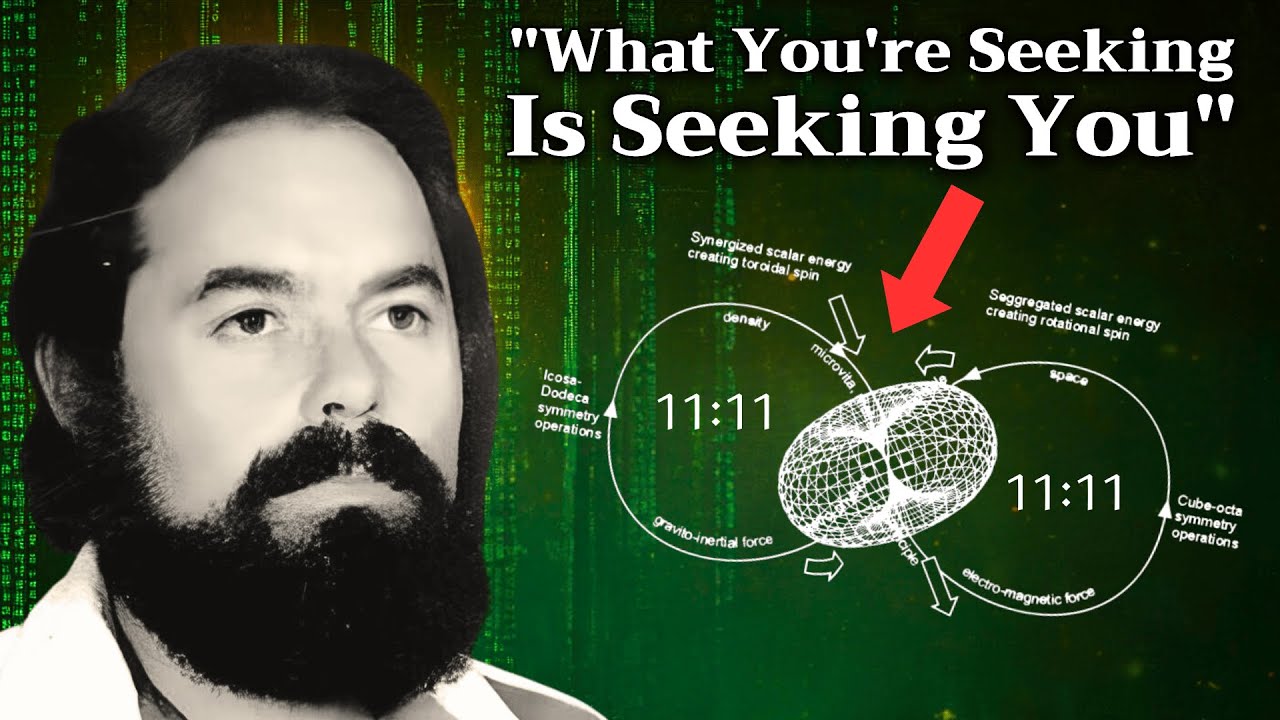
But first, ask yourself: What if Grinberg's Lattice is the key to understanding the true nature of reality? Perhaps it was what he discovered—and why he disappeared. Grinberg proposed that human consciousness.
. . Could interact with an underlying structure of reality, which he called the lattice.
What does that mean? I'm sure you're wondering. Imagine this: there is an invisible network connecting all minds and objects in the universe.
According to Grinberg, if one could tune their consciousness to this network, they could directly influence reality, as if they had the power to shape matter with their thoughts. Does this sound familiar? This idea strongly resonates with the plot of *The Matrix*, where characters discover that the reality they perceive is nothing more than a simulation, a projection controlled by a hidden digital network.
Similarly, Grinberg suggested that by connecting our mind to the lattice, we could transcend the limits of reality as we know it, breaking down the barriers between the physical and the mental. In *The Matrix*, characters develop superhuman abilities by realizing the illusory nature of the world around them. Similarly, Grinberg's theory proposes that by mastering this connection to the lattice, we could access a level of consciousness where the mind not only perceives reality but also creates and transforms it.
One of the most memorable scenes in *The Matrix* is when Neo, the protagonist, encounters a child with an extraordinary ability. He can bend a spoon with just his mind. Intrigued, Neo watches as the spoon bends as if it were made of rubber, and the child says something that changes Neo's understanding of the world: "Do not try to bend the spoon; that's impossible.
Instead, realize the truth: there is no spoon. " What the child is trying to explain is that the spoon and everything we perceive as reality is not as solid and fixed as we believe. Instead of trying to change the external world through brute force, we must understand that it is our mind that creates that reality.
If we can change our perception, we can change what we consider real. Just like Neo, who learns that the spoon isn't fixed and can be altered, Grinberg proposed that if we could tune our minds to this network, we could shape reality in ways that seem impossible from our current perspective. However, in P's case, what intrigued Grinberg the most was how these psychic surgeries seemed connected to his theory of centropy.
Could it be that Pachita, in her trans state, was accessing the cosmic field of her patients, manipulating the lattice to alter their physical reality? What I witnessed with Pachita cannot be explained using the tools of traditional science. However, if we consider that reality is a projection of the mind, then these healings could be the result of P's conscious manipulation of the cosmic field, said Jacobo Grinberg.
Could it be that P was playing with the invisible rules of reality? Exactly. The idea is that Pachita was operating on a level beyond what traditional science can comprehend.
Instead of using conventional medical methods, it seemed she was manipulating something deeper, as if she had access to a field that connects the mind to reality. If reality is, in part, created by our mind, Pachita may have been able to change it at will, making her healings appear miraculous. It was as if she were rewriting the rules of what is possible using a mental power that science has yet to measure.
Grinberg was convinced that Pachita was not merely a healer but a master in the art of manipulating reality through consciousness. As he delved deeper into his research, Grinberg began conducting a series of experiments aimed at proving the existence of the lattice and the mind's ability to influence reality. One of his most fascinating experiments involved two subjects placed in separate rooms.
Both underwent deep meditation, guided by Grinberg's voice. What happened next left everyone perplexed: the brain waves of the two subjects began to synchronize despite being physically separated. This experiment suggested something revolutionary; that our minds might be connected through an invisible energy field, a network transcending physical space.
Grinberg interpreted these results as evidence that the human brain can connect with other brains through the cosmic field, enabling a form of communication beyond conventional scientific explanation. "I felt like our minds were united, as if we could perceive each other's thoughts," one participant stated. This type of phenomenon opened the door to a new understanding of the human mind, one that could forever change our perception of reality and consciousness.
Despite the evidence he presented, Grinberg was quickly labeled a heretic of science. His colleagues ridiculed him, and his theories were dismissed as overly esoteric. "Grinberg's theories are a desperate attempt to combine science and mysticism but lack solid evidence to support them," claimed one of his most notorious critics.
Despite the criticism, Grinberg never stopped defending his ideas. For him, science needed to evolve, to dare to explore the unknown even if that meant facing the disbelief of his peers. But what if Grinberg was simply ahead of his time?
"Science should be a tool to explore the unknown, not a dogma that limits our understanding of the universe," Grinberg said in his final lectures. Despite the backlash, he continued his work, convinced he was on the right path to unraveling the mysteries of the mind and reality. Could it be that Grinberg's theories are deeply intertwined with ancient mystical traditions?
Grinberg's ideas about consciousness and the lattice didn't emerge from a vacuum. Throughout his life, he was deeply drawn to the mystical traditions of various cultures, from Tibetan Buddhism to the Akasha theory of India. He saw parallels between his scientific research and ancient teachings.
In Tibetan Buddhism, for example, there is talk of rigpa, a state of pure awareness that some monks can reach, allowing them to influence the material world. This concept resonates with Grinberg's lattice theory, where consciousness is seen as an active force interacting with reality. Grinberg also found similarities in the shamanic traditions of Mexico.
During his research, he lived among various indigenous communities, observing practices that seemed. . .
To defy the laws of physics, but which, according to him, could be explained through the structure of the lattice. For shamans, reality is not fixed; it is something that can be shaped and changed through rituals and altered states of consciousness. Grinberg saw this as confirmation that consciousness and reality are intrinsically connected, and that these ancestral practices could provide a path toward understanding the lattice.
Thus, Grinberg's theories were not only groundbreaking but also built a bridge between modern science and ancient spiritual traditions. It was as if he were attempting to unite two worlds that had been considered incompatible for centuries. This approach has surprising similarities to the work of Carl Gustav Jung, a psychologist who, like Grinberg, explored the depths of the human mind and its connections to the spiritual.
Jung too was ridiculed and labeled as esoteric by the scientific community in his time. But what if Grinberg and Jung were uncovering the same universal secrets through different paths? Both, from their respective disciplines, recognized that the mind and spirit cannot be fully understood when separated from their broader context, which includes both the tangible and the intangible, the visible and the invisible.
For Jung, the integration of these opposing aspects was crucial to achieving individuation, a process of self-realization and inner balance. Similarly, Grinberg sought an integration that could provide a more holistic understanding of the human being and their place in the universe. If you want to learn more about Carl Jung, I'll leave a video linked here.
Watch it once you finish this one. If this resonates with you, imagine what you could learn from books exploring the power of your mind and the universe. Audible gives you access to thousands of titles that can take you even further.
Try it free for 30 days using the link in the description, and in doing so, you'll also support this channel in continuing to share valuable content. With the advancement of quantum physics, concepts like quantum entanglement and non-locality are beginning to sound surprisingly similar to what Grinberg proposed decades ago. Today, figures like Joe Dispenza continue this exploration, linking these quantum principles to the power of the human mind.
Dispenza suggests that by changing our mental state, we can influence our physical reality—a concept that aligns with Grinberg's theories about the connection between the mind and the structure of the universe. Modern science is beginning to uncover the mysteries Grinberg envisioned, uniting past and present into a deeper understanding of our capacity to shape reality. But what do quantum entanglement and non-locality really mean, and why are they revolutionizing our understanding of the universe right now?
To understand it simply, imagine you have two identical clocks, one in your house and another in your friend's house on the other side of the world. If you adjust the time on your clock, at that very moment, your friend's clock also changes, as if they were connected by an invisible thread that synchronizes them regardless of distance. This is what we call quantum entanglement.
Two particles can be so connected that whatever happens to one instantly affects the other, no matter how far apart they are. What's even more surprising is how this quantum phenomenon seems to have an uncanny parallel in real life, particularly in the connection between separated twins. Imagine two siblings who, since birth, have followed completely different paths, perhaps unaware of each other's existence.
Yet, when one experiences an accident or a traumatic event, the other feels it in their own body, like a shock to the soul. Such experiences, which have baffled scientists and skeptics alike, defy logic. How is it possible that two people separated by vast distances can be so deeply connected that one's pain or distress manifests instantly in the other?
These stories, though difficult to explain, make us question whether, like quantum particles, our lives are intertwined by invisible threads that transcend time and space, challenging our understanding of reality. Non-locality, on the other hand, refers to the idea that this connection can happen instantly, no matter how far apart the particles are. It's as if the information connecting them travels faster than the speed of light, something that contradicts traditional physics.
Grinberg spoke of the possibility that everything in the universe could be interconnected in ways we are only beginning to understand. Now, quantum science is showing us that these invisible connections may be real and fundamental to the very structure of the universe. Science is beginning to question whether reality is as solid as we once thought, or if, as Grinberg suggested, it is malleable and deeply influenced by our consciousness.
On December 8th, 1994, Jacobo Grinberg failed to show up for a conference where he was scheduled to present the latest findings of his research. That morning, there were no signs of struggle or goodbyes; he simply vanished without a trace. Some of his colleagues and acquaintances shared their thoughts: "Jacobo was excited about what he was discovering, but we also noticed he had become more reserved, as if he knew something he couldn't share.
When he disappeared, it was a shock to all of us; we just couldn't understand it. " The strangest part was that his wife, Teresa, was the last person to see him, and after his disappearance, she vanished too. It's as if they both disappeared into thin air; there were no clues, no traces, nothing.
The disappearance of Jacobo Grinberg has sparked a series of theories, each more intriguing than the last. Some believe he was abducted by government agencies interested in his discoveries about the mind and reality. Others suggest he may have reached such an advanced state of consciousness that he managed to cross over into another dimension and became trapped there.
But perhaps the most unsettling theory is that Grinberg discovered something so dangerous, so powerful, that he was forced to disappear. Could it be that his work on the lattice revealed secrets some. .
. Didn't want to come to light? If you've made it this far, let me congratulate you.
You're part of the small percentage truly committed to change. Comment the word "Matrix" to leave your mark in the comments. Thank you, and let's continue.
The case of Jacobo Grinberg is one of the most enigmatic ever studied. The circumstances of his disappearance are so strange that it's hard not to consider the possibility that his research led him to a place from which he couldn't return. What really happened on that December morning remains a mystery, but what is undeniable is that Grinberg was on the verge of discovering something monumental—something that could have forever changed our understanding of the mind and reality.
What did he find? Perhaps we'll never know. Although Grinberg disappeared, his legacy continues to inspire those seeking to understand the deepest mysteries of the mind and reality.
Despite initial criticism, his work has found a place in the hearts of those who dare to question the boundaries of knowledge. From neuroscience labs to esoteric circles, Jacobo Grinberg's ideas are being revisited and reconsidered. His LTS theory, once ridiculed, is now seen as a possible explanation for phenomena modern science is beginning to explore.
As research continues, his name echoes as that of a pioneer who dared to go beyond what was safe or conventional. Grinberg's legacy is an invitation to look beyond the obvious, to question our perceptions, and to consider that reality might be far more complex and interconnected than we ever imagined. He challenges us to open our minds to the possibility that human consciousness is more powerful than we believe, and that perhaps, just perhaps, we are on the brink of discovering how the universe truly works.
As Grinberg once said, "Reality is not what it seems. It is a mirror of consciousness," and as such, it can be shaped by those who understand its secrets. Our challenge is to learn to see beyond the mirror, to peer into the lattice, and discover who we truly are.
Now I want to ask you: have you ever felt deeply connected to someone else? Have you felt as though you’ve known them before? Have you sensed something happening to someone in your life from a distance, only for it to be confirmed later?
Have you, in some strange way, received a message from someone without them actually contacting you—even from someone who has passed away? Perhaps it's not something mystical, but rather that we lack the technology or knowledge to provide a logical explanation, just as many ancient civilizations revered eclipses through spiritual or religious beliefs without possessing the information we now have about the movement of planets and satellites. Jacobo Grinberg left us with more questions than answers, but perhaps that was exactly his intention, because in the search for those answers, we might discover something even more valuable: the true power of our own minds.
Are you ready to take on the challenge? If you enjoyed this content, you can't miss this video. It will change the way you perceive everything you know.