What if I told you that the fastest way to stay broke is to drive around in a shiny new car that makes you feel important while everyone else is signing their financial future away for heated seats and that new car smell. There's a group of people quietly building serious wealth by driving vehicles that look like they've survived multiple apocalypses. And before you roll your eyes and click away, let me tell you something that might shock you.
Some of the wealthiest people I know drive cars that wouldn't look out of place in a junkyard. My name is Nick and I spend an embarrassing amount of time thinking about financial decisions that seem small but create massive differences in long-term wealth accumulation. If you've ever wondered why some people seem to effortlessly build substantial savings while others with similar incomes struggle to get ahead financially, make sure to subscribe and hit that like button.
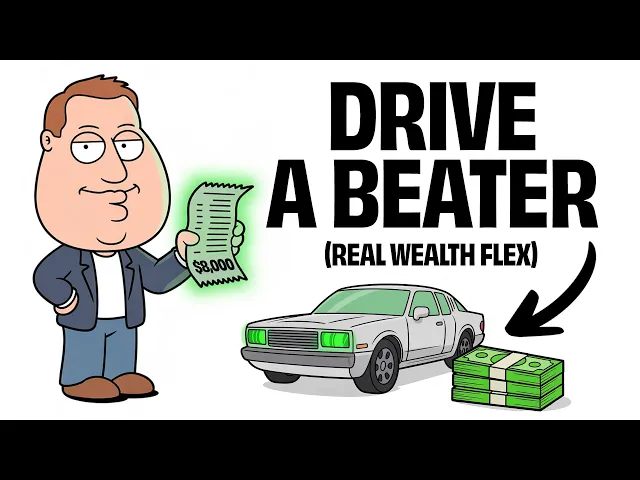
If this video helps you see car ownership from a completely different perspective. Now, before we dive into why driving a beater might be your secret weapon for building wealth, let me address the elephant in the room. When I say beater, I'm not talking about a death trap on wheels that breaks down every other Tuesday.
I'm not suggesting you buy a car that requires a prayer every time you turn the key or one that leaves you stranded on the highway during rush hour. What I'm talking about is a vehicle that runs reliably but happens to look like it's been through a few wars. We're talking about cars with faded paint, maybe some minor dents, interiors that have seen better days, and exteriors that won't be winning any beauty contests anytime soon.
The difference between a smart beater purchase and a terrible financial decision comes down to understanding what actually matters when you're buying a vehicle. Most people approach car shopping completely backwards. They walk onto a lot or browse online listings based on how vehicles look rather than how they function.
They get excited about leather seats and shiny paint jobs while completely ignoring the mechanical condition of the engine, transmission, and other components that actually determine whether the car will serve them well for years to come. Here's what separates people who build wealth from people who stay broke. Wealthy people buy cars based on transportation value rather than status value.
They ask themselves whether a vehicle will reliably get them from point A to point B for the lowest total cost of ownership. Poor people buy cars based on how the vehicle makes them feel or what they think it says about them to other people. They prioritize monthly payment amounts over total cost and focus on features that have nothing to do with the actual purpose of transportation.
The mathematics behind this choice are absolutely staggering when you run the numbers over time. Let's say you're deciding between two options. Option one is a three-year-old sedan with low mileage, great financing terms, and all the latest technology that will cost you $450 per month for the next 6 years.
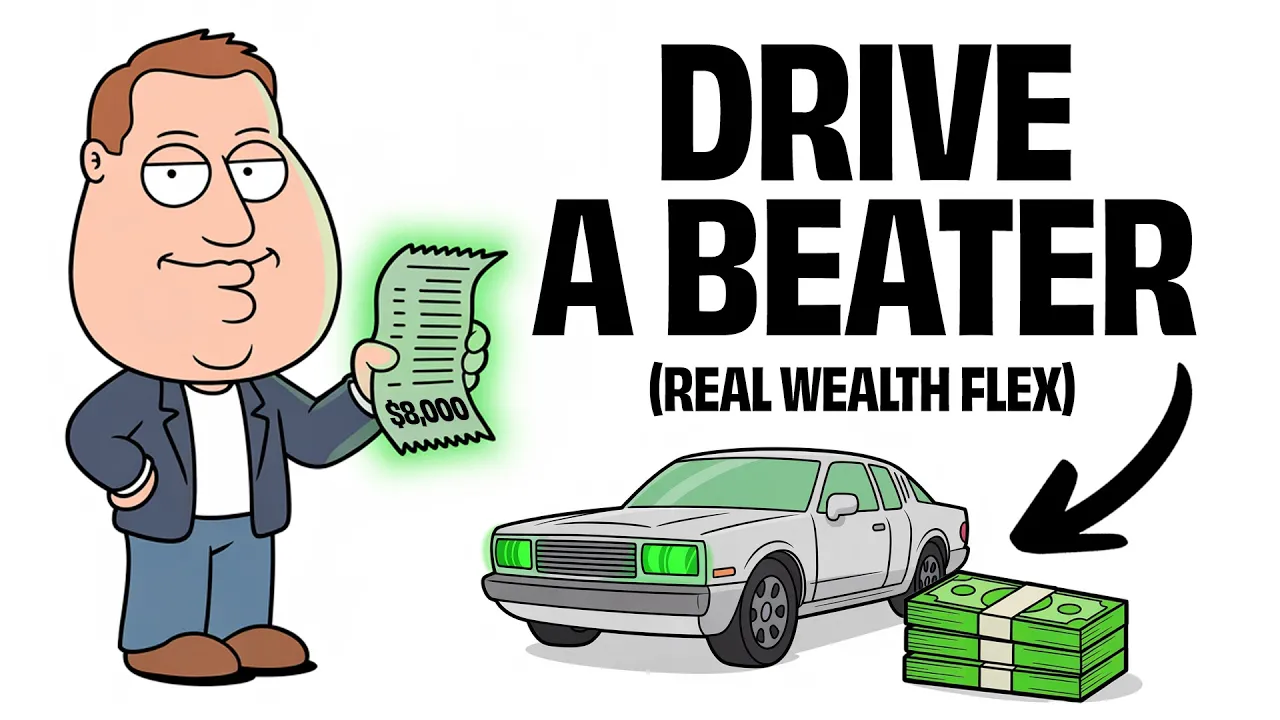
Option two is a 10-year-old version of the same model that costs $8,000 cash, but has higher mileage and shows some cosmetic wear. Most people automatically assume the newer car is the better choice because it comes with warranties, modern features, and the peace of mind that comes with buying something relatively new. But here's where the math gets interesting.
That $450 monthly payment adds up to $32,400 over 6 years, plus interest if you're financing, plus higher insurance costs because you need comprehensive coverage on a vehicle with a loan. Meanwhile, the $8,000 cash purchase eliminates monthly payments entirely, requires only liability insurance in most states, and frees up that $450 every month for other priorities like investing or building an emergency fund. Over those same six years, if you invested that $450 monthly payment in a diversified portfolio earning 7% annually, you'd have accumulated roughly $42,000.
Think about what this means in practical terms. Uh the person who bought the newer car has a vehicle worth maybe $15,000 after 6 years of depreciation and no additional savings to show for their monthly payments. The person who bought the beater has the same transportation functionality, plus $42,000 in investment accounts, plus they still own their vehicle outright.
Now, some of you are probably thinking that older cars require more maintenance and repairs, which could offset the savings, and you're absolutely right that older vehicles typically need more attention than newer ones. Uh, but here's what most people don't realize about car maintenance. The annual maintenance costs on even a high mileage older vehicle rarely exceed what you'd spend on monthly payments for something newer.
A major repair that costs $1,500 feels expensive when it hits all at once, but it's still less than 4 months of car payments on that newer vehicle. The key to making this strategy work is understanding how to evaluate the mechanical condition of an older vehicle before you buy it. This isn't rocket science, but it does require learning a few basic things about how cars function.
You need to know what to look for when you open the hood, how to identify potential problems, and what questions to ask about maintenance history. Most people skip this step entirely and base their purchase decisions on superficial factors like paint condition and interior wear. When you're evaluating a potential beater purchase, you want to focus on the major systems that affect reliability and safety.
Check the condition of the engine oil and other fluids. Listen to how the engine runs when it's idling and when it's being revved. Look for signs of leaks underneath the vehicle.
Test all the major components like brakes, transmission, air conditioning, and electrical systems. Ask about maintenance records and whether major services like timing, belt replacement have been completed on schedule. Here's something that will probably surprise you about older cars.
Many of them are actually more reliable than newer vehicles because they use simpler technology that's easier to diagnose and repair. A 15-year-old car doesn't have the complex computer systems and electronic components that can fail in modern vehicles. When something goes wrong, it's usually straightforward to identify and fix the problem without specialized diagnostic equipment or expensive proprietary parts.
The insurance savings alone can be substantial when you're driving an older vehicle. When you own a car outright instead of financing it, you can choose to carry only liability insurance rather than comprehensive coverage. Depending on your location and driving record, this could save you hundreds of dollars annually.
Plus, if you do have a minor accident or cosmetic damage, you can choose whether repairs are worth the cost rather than being required to fix everything to satisfy loan requirements. But perhaps the most significant advantage of driving a beater goes beyond just the direct financial savings. When you're not worried about keeping your car looking perfect, you gain a psychological freedom that affects other areas of your financial life.
You're not stressed about door dings and parking lots or minor scratches from normal wear and tear. You don't feel pressure to wash and detail your vehicle constantly or park in the far corner of every lot to avoid potential damage. This mindset shift extends to how you think about money and possessions in general.
When you prove to yourself that you can be perfectly happy with a vehicle that serves its functional purpose without looking impressive, you start questioning other areas where you might be overspending for status rather than value. You begin to separate your self-worth from the things you own and focus instead on building actual wealth rather than the appearance of wealth. This transformation in thinking becomes incredibly powerful when you realize how much mental energy most people waste worrying about their vehicle's appearance.
They're constantly stressed about maintaining that perfect image, scheduling regular detailing appointments, and feeling anxious every time they have to park in a crowded area. Meanwhile, the person driving the reliable beater is focused on things that actually matter, like maximizing their savings rate and building long-term wealth. Here's another angle that most people never consider.
When you drive an older vehicle, you become practically invisible to thieves and people looking to take advantage of others. Nobody's breaking into a 15-year-old sedan with paint that's seen better days. Assuming you've got valuable items inside, you're not a target for carjacking or theft.
Because criminals generally assume that someone driving an older car probably doesn't have much worth stealing. It's like financial camouflage that protects you from unwanted attention. The social pressure aspect of car ownership is where things get really interesting from a psychological perspective.
We live in a culture that constantly tells us our vehicle is an extension of our personality and a reflection of our success in life. Car commercials don't sell transportation. They sell identity and status.
They want you to believe that driving the right car will make you more attractive, more successful, and more worthy of respect from others. But here's what I've discovered after years of driving vehicles that most people would consider beneath their standards. The people whose opinions actually matter don't care what you drive.
Your real friends aren't going to think less of you because your car has some dents or faded paint. Your family members who love you aren't keeping track of the age of your vehicle. The colleagues who respect your work aren't judging your professional capabilities based on what's parked in the company lot.
The only people who care about your car are strangers whose opinions shouldn't matter to you anyway. And people who are so insecure about their own financial situation that they need to judge others based on material possessions. These are exactly the people you don't want to impress because they're probably making terrible financial decisions themselves.
Let me tell you about a conversation I had with a millionaire real estate investor who showed up to a property meeting driving a truck that looked like it had been through a demolition derby. When someone jokingly asked him why he didn't upgrade to something nicer, his response was brilliant. He said that his truck cost him $3,000 5 years ago and had never left him stranded.
During those same 5 years, he'd used the money that most people spend on car payments to purchase four rental properties. his beatup truck had basically funded his retirement portfolio. This brings up an important point about opportunity costs that most people completely ignore when making vehicle decisions.
Every dollar you spend on an expensive car payment is a dollar that can't be invested in appreciating assets. Every month you're sending $400 or $500 to a finance company is a month where that money isn't working for you in the stock market or real estate or your own business. The compound interest you lose by having car payments instead of investments becomes absolutely staggering over time.
If you invest that $400 monthly car payment for 30 years at an average return of 7%, you end up with over $400,000. That's nearly half a million you're giving up just to drive something that looks newer and shinier. Now, I'm not suggesting that everyone should drive the cheapest possible vehicle they can find, regardless of their circumstances.
If you're a real estate agent who frequently drives clients around, or if you're in sales, where your professional image directly impacts your income, then spending more on a presentable vehicle might make financial sense. The key is being honest about whether your car choice is actually helping your career or if you're just telling yourself that to justify an emotional purchase. But for the vast majority of people whose jobs don't require them to use their personal vehicle for business purposes, driving an impressive car is pure consumption rather than investment.
You're paying extra money for the privilege of impressing people you don't know while delaying your own financial independence by years or even decades. The maintenance argument that people use against older cars is usually based more on fear than reality. Yes, older vehicles require more upkeep than newer ones, but this maintenance is typically predictable and manageable if you're proactive about it.
A well-maintained older car can run reliably for years with nothing more than routine service and occasional repairs that cost far less than monthly payments on something newer. The trick is learning to distinguish between normal maintenance that any vehicle requires and serious problems that indicate you should walk away from a potential purchase. Oil changes, brake pads, tires, and other wear items are just part of car ownership, regardless of the vehicle's age.
Major engine or transmission problems, on the other hand, can be expensive enough to offset the savings from buying used. This is where doing your homework before purchasing becomes crucial. You need to research the specific model you're considering to understand what problems are common and what maintenance items are typically required at different mileage intervals.
Some vehicles are known for being reliable workh horses that can run for hundreds of thousands of miles with proper care. Others have design flaws or common failure points that make them poor choices even at low prices. The internet has made this research incredibly easy compared to even just a few years ago.
You can find detailed reliability information, common problem areas, and estimated repair costs for virtually any vehicle you're considering. Online forums and owner groups provide realworld experiences from people who've actually lived with these cars for years. This information is invaluable for making smart purchasing decisions.
Here's something else that drives me crazy about how people approach car buying. They'll spend weeks researching a $500 television purchase, reading reviews, and comparing features, but they'll buy a $20,000 car based on how it looks and feels during a 15-minute test drive. The financial impact of getting a car purchase wrong is enormous compared to most other buying decisions we make.
Yet, people put less research into it than they do when choosing a restaurant for dinner. The financing industry has made this problem even worse by focusing people's attention on monthly payment amounts rather than total cost of ownership. They've trained consumers to think in terms of what they can afford per month instead of what makes sense financially over the long term.
This monthly payment mentality keeps people trapped in cycles of debt because they never build equity in anything and they're always making payments on depreciating assets. When you buy an older car with cash, you break free from this payment treadmill entirely. You own something outright.
You control your insurance costs, and you can make decisions about repairs and maintenance based on what makes economic sense rather than what loan agreements require. And this financial independence extends beyond just car ownership and starts affecting how you think about debt and major purchases in general. But the psychological transformation goes even deeper than just breaking free from payment cycles.
When you drive a vehicle that clearly shows its age, you're forced to confront your own relationship with status and materialism in ways that most people never experience. You like you discover whether your self-confidence is actually based on your character and accomplishments or whether it's propped up by external symbols that you think make you look successful. I remember the first time I drove my beat up Honda to a business meeting where everyone else had arrived in luxury vehicles.
For about 30 seconds, I felt embarrassed and wondered if I should have parked around the corner. Then I realized how ridiculous that thinking was. These people were judging my professional capabilities based on what was sitting in the parking lot instead of the actual work I was there to discuss.
That moment taught me more about confidence and priorities than any self-help book ever could. The funny thing about driving an older car is how it affects other people's behavior toward you. Some people treat you differently when they assume you don't have money.
And honestly, that's valuable information about their character. The people who are worth knowing will judge you based on how you treat others and what you contribute to conversations, not what you drive to get there. The people who look down on you because of your vehicle are probably not people you want to build relationships with anyway.
Here's where the wealth-b buildinging aspect becomes really interesting. When you eliminate car payments from your budget, that money doesn't just disappear into thin air. Most people who successfully transition to driving paid off older vehicles find that the extra cash flow creates opportunities they never had before.
Maybe you can finally build that emergency fund you've been putting off. Perhaps you can increase your retirement contributions enough to get your full employer match. Or maybe you can start investing in index funds for the first time.
The compounding effect of these choices becomes absolutely ridiculous over time. Let's say you're 25 years old and you commit to never having another car payment for the rest of your working life. Instead, you buy reliable older vehicles with cash and invest that $400 monthly payment that most people your age are sending to finance companies.
Uh, if you do this consistently until age 65, earning an average 7% return, you'll have accumulated over $800,000 just from avoiding car payments. $800,000. That's approaching millionaire status just from making smarter decisions about transportation.
And this calculation doesn't even include the money you'll save on insurance, the lower maintenance costs on simpler vehicles, or the compound growth on money you save by not constantly upgrading to newer models. Look, I get it. Uh driving a beater isn't going to make you feel like you're starring in a luxury car commercial.
But while everyone else is busy impressing strangers at red lights, you'll be quietly building the kind of wealth that actually matters. Your beatup ride might not turn heads, but your investment portfolio definitely will. Choose transportation over status, and your future yourself will thank you for it.