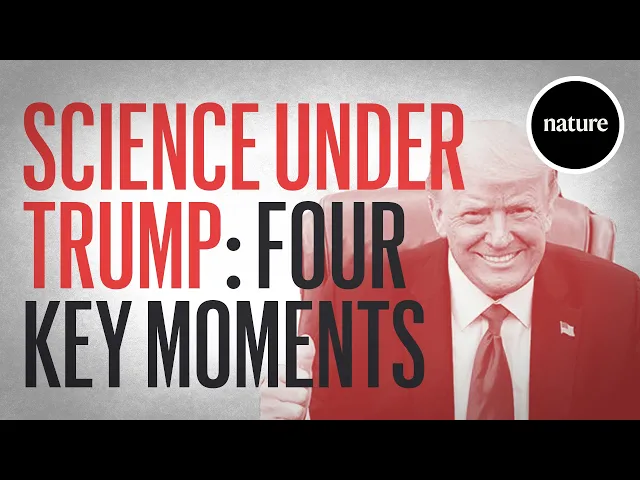
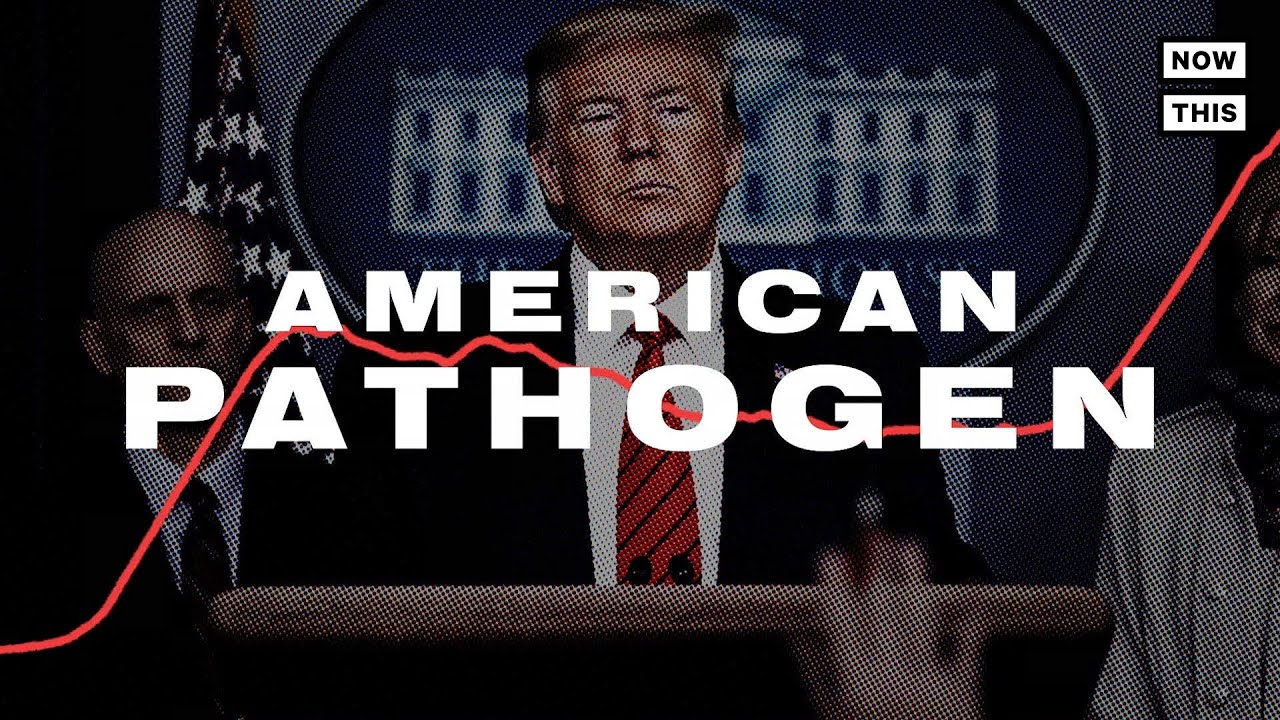
DONALD TRUMP: "We will make America great again. " Donald Trump’s first term has had a profound impact on science and scientists. We’re going to look back at four key moments over the last four years where Trump’s presidency has affected science in the US and across the world.
First up. In June 2017, less than five months after his inauguration, Trump announced that the US would withdraw from the 2015 Paris Climate Agreement. This was the first in a long line of decisions which put the climate at risk - something which would become a feature of his administration.
Under Trump, a slew of climate protection policies have been dismantled including halting an Obama-era clean energy project, weakening numerous regulations on emissions, and cutting a NASA climate monitoring programme. One group estimated that Trump's rollbacks could boost emissions by 1. 8 billion tonnes of carbon dioxide by 2035.
TRUMP: “I have already eliminated a devastating anti-coal regulation, and that is just the beginning. ” Now, these changes could be reversed by future administrations, and the Paris agreement could be re-entered, but researchers have argued that Trump’s choices have cost the planet valuable time, not to mention damaging the United States’ credibility and influence on the world stage. The next moment comes on Halloween 2017.
Trump’s appointed head of the environmental protection agency, Scott Pruitt, banned scientists with an active grant from the EPA from serving on the agency’s main science advisory panels. This essentially blacklisted many of the US’s top environmental scientists. That ruling has since been rescinded but it signalled the start of an uptick in political interference in scientific agencies.
A few months later Pruitt changed the rules on what kind of data the EPA could base new policy suggestions on, limiting their ability to recommend evidence-based regulations. And it is not just the EPA that's been impacted by increased meddling. In July several former directors of the Centers for Disease Control and Prevention, the CDC, warned of unprecedented levels of political interference in their work, made particularly relevant by the COVID-19 crisis - a crisis which has tested Trump’s relationship with science and evidence more than ever before.
Which takes us to our third moment: the 29th of May 2020. Trump announced he would be withdrawing the United States from the World Health Organisation. This move came after months of his administration contradicting the WHO’s public health advice and knowingly playing down the severity of the crisis.
Trump criticised the WHO for being too lenient with China and ignoring the start of the COVID-19 outbreak. But some researchers thought that Trump just needed a scapegoat for his administration’s poor response to the crisis. Trump says that he will redirect funds to other global health projects, but this move will have big repercussions for international collaborations to fight disease, including coronavirus.
As we publish this video it's estimated that two hundred and five thousand people have died with the coronavirus in the United States, roughly a fifth of the world’s death toll. As the pandemic continues, this number continues to rise. The final moment on our list is the 7th of July 2020.
This is the date on which, according to the Washington Post, Trump’s tally of false and misleading claims made while in office reached 20,000. Now whatever the specific number, this disregard for the truth represents one of the broadest impacts Trump has had on science. Trump has lied about COVID death rates, the effectiveness of drugs, how clean American air is, the safety and efficacy of wind turbines, the prevalence of voter fraud, even the size of the crowd at his own inauguration.
Many of these false or misleading statements have been made over and over again. They’re not all about science but they do all contribute to a culture in which evidence and accuracy is becoming increasingly irrelevant. It's safe to say that researchers around the world will be watching the upcoming US election with baited breath.
Their hope is that the harm done to science over the last four years can yet be undone.