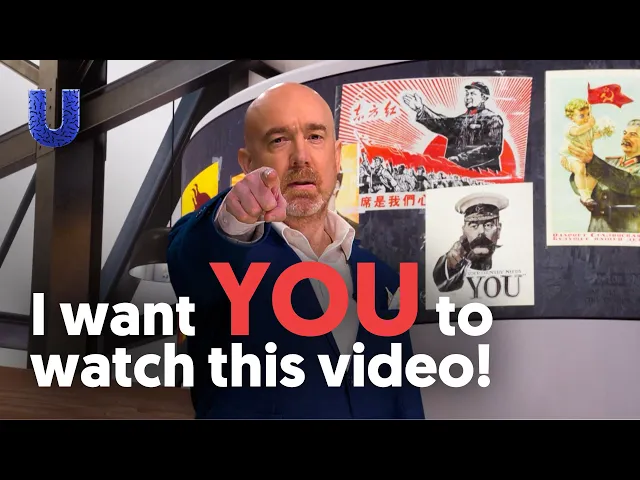
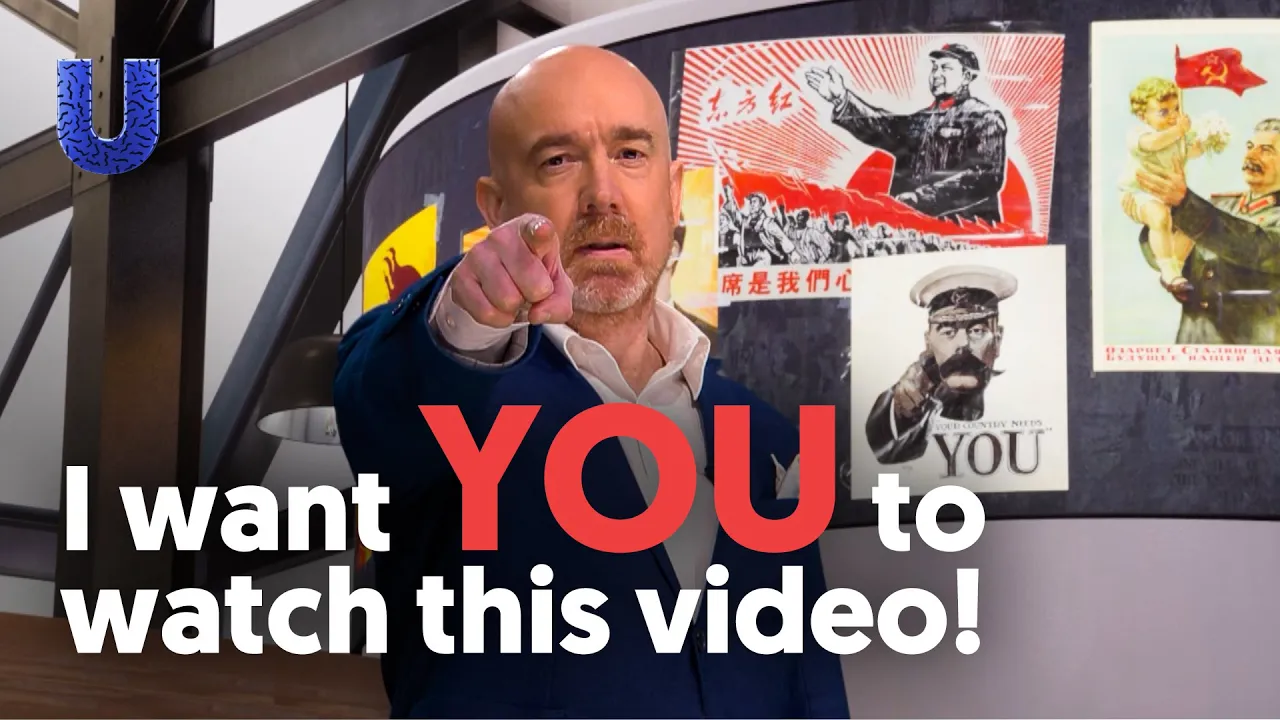
are you scared to be brainwashed well the good news is you cannot as brainwashed is a legend on the other hand propaganda can have a tremendous impact on you how does propaganda change your beliefs this is the university of the netherlands first we must understand there's a difference between propaganda and disinformation this information is when you lie on purpose the architect of a campaign of disinformation will use lies and they will be spread intentionally to deceive or create confusion propaganda is different as it is going to deal with a gray area in truth it's a
strategy of communication to control people's beliefs beliefs and lies are two completely different concepts when you lie on purpose you know that you lie to people you're not telling the truth when it comes to beliefs you don't lie even if you can invent we all have beliefs whether they are religious political ideological and propaganda is there to organize these beliefs as such propaganda is going to make use of information that are true or cannot be proven wrong and that's precisely what a belief is all about you cannot disprove a belief as it is something that
we choose to believe in even if the evidence to support it is slim propaganda exists as soon as we need to organize societies every society has certain stories or beliefs that we rely upon in order to bind together the rest of society the term propaganda was actually coined by the catholic church in 1622 the catholic church created the holy congregation for the spreading of the faith sacra congregacion de propaganda fide the idea of this organization was to develop its propaganda to get back people from protestantism into the catholic church the catholic church did not invent
propaganda but coined the term and modernized its use there are six principles that make effective propaganda the first principle is essential propaganda has to be undetected if you identify it as propaganda then it's not going to work if you believe in a myth or religion or concept you will probably be offended if it's qualified as propaganda the second principle of propaganda is that it's emotional it's not supposed to address the intellect propaganda has to speak to hearts and guts the more emotional it is the more effective propaganda will be be emotional create an emotional reaction
the third principle is that propaganda is binary it means that propaganda is going to make the world black or white almost nothing in between it's either this or that the right decision against the wrong decision good versus evil the fourth principle and one of the most difficult to explain but very easy to spot is that propaganda is supposed to be cool it's supposed to be something that we want not something that is forced upon us effective propaganda will be cool difficulty here we can all understand cool but it's hard to define as it depends on
trends and societies cool changes propaganda remains propaganda is also supposed to be simple and propagandist year after year say that propaganda has to be as simple so that the stupidest person can understand it because of its binary nature propaganda must be as simple as can be and one messages of propaganda are simple they have to be repeated propaganda is repetitive propaganda is repetitive propaganda is repetitive propaganda is repetitive to the point that at a certain time we repeat things sometimes without understanding them they almost become a natural reflex did i mention propaganda is repetitive propaganda
has been developed by many organizations throughout centuries and is using today very powerful toolbox there are several techniques in propaganda in total more than 40. i'm just going to mention a few to explain how propaganda is working those techniques are not to be easily identified once again effective propaganda is undetected the other difficulty to spot them is that those techniques never operate on their own all those techniques will be mixed together to create an effective propaganda campaign a skill propagandist should be in charge and organize the propaganda through various media leaders of opinion or today's
so-called social media the first technique is pinpointing the enemy it means that the propagandist is going to explain who the true enemy is to its audience it's quite obvious in time of war but also in time of peace it's playing on the fact that psychologically we actually enjoy not being responsible for actions so if a propagandist somebody was using populism is explained to its people that if they don't feel good if they feel miserable it's not because of their own action but because of an enemy its audience might feel ready to believe sometimes horrible crimes
finding the right scapegoat is also part of the work of a scale propagandist the second technique is assertion assertion is when you present your own opinion as a fact examples will be we all know or in academia when you start a sentence with studies have shown it's an assertion meaning that you're going to build what seems like a logical reasoning around something that hasn't been proven you're going to present opinions as facts if you hear a speech starting with history has taught us you can be sure the rest will be a fine work of propaganda
number three is a shift of scene a skill propagandist is going to use the shift of scene to divert the attention of its audience from something that is unfavorable for him to a situation that is more favorable for instance an experienced propagandist will not answer an embarrassing question instead he will argue that's not the real issue this is what we should consider a shift of sin is a trick that we've seen done by many politicians a huge mass celebration like the world cup or the olympic games can also be used as a shift of scene
when crowds are busy supporting their favorite team politicians can pass measures that will be very unpopular in normal times sport in general and soccer in particular are great tools in propaganda fourth is bandwagon instead of explaining why the audience should follow a certain course course of action the propagandist is arguing that everyone else is taking it the bandwagon is basically the audience being at the station and the train leaving the only chance for the audience to join the train is to jump in the bandwagon why because everybody else is doing it so why don't you
the bandwagon is playing on the idea that as social animal we need to be with other people and that in general we prefer to be wrong with a hundred other people than to be right by ourselves virtual world is also a technique we can often identify again it's always used in conjunction with other techniques virtual worlds will be worse used by a politician or propagandist or somebody who wants to move people like religious leader or leader of a trade union this person will use virtue words such as peace happiness security freedom they virtue words in
a sense that defining them is extremely difficult and depends on the concept but everyone perceived them positively all the leaders in the world are in favor of peace for instance no one is going to convince their people by saying if you elect me i will bring you war misery the propagandist will bring positive emotion to its audience now sometimes war will be required but it's always against the desire of the propagandist who favors peace security freedom independence and happiness against war chaos slavery and sadness now who is targeted by propaganda sometimes the target of the
propaganda is something that is not very well understood we tend to believe that if we are well-educated and we read prestigious newspapers on a daily basis then propaganda is not going to be able to reach us actually propaganda is going to reach people who are connected to the world so if we are very well connected to the media in general then we can be the target of propaganda if we decide to completely close ourselves from the outside world then it will be very difficult for propaganda to find us we not the others are the target
of propaganda pretty much anybody can be the target of propaganda as long as that person is living in a society and willing to embrace the idea of the society propaganda is tricky to spot also because he has different approaches and names propaganda is the word that sounds negative and sometimes we believe that propaganda is a dirty word from the past it's a term that many people use but most of us don't know that public relations is the same as propaganda public relations was theorized by an american called ivy lee usually considered to be the inventor
of modern public relations but the person who came up with the term public relations is eduard bernays he cut the term because as the nephew of sigmund freud he also knew that we the people are irrational and that you need to convince us not so much with strong arguments and logic but more by using emotions bernese worked on propaganda himself for the us army during the first world war he published in 1928 propaganda the public mind in the making which is still work that is used by propagandist that book had a tremendous influence on propagandists
around the world including joseph goebbels the architect of the third reich propaganda and its last filler verness understood that the term propaganda had to be rebranded as it triggered negative emotions propaganda and public relations are one and the same it's exactly the same except for one difference which can be massive the perception bernese is known for many campaign but his most famous might be the torches of freedom where he created a mythology associating the act of smoking for women to expressing freedom just like lady liberty holding a torch he also created trends the most famous
one being to make the color green fashionable for american women in 1934 the ultimate goal was to make american women work green so that they would buy lucky strike a cigarette brand initially rejected because of its green package propaganda still has a negative image where a public relation sounds way more positive we ought to burn us this idea that pr public relations will be positive though it's only the rebranding of propaganda what about the future the future of propaganda is hard to tell of course but since propaganda has always been there to accompany humans to
develop societies like a loyal companion we can also assume that in the future there will be some and maybe more propaganda first of all because today we are facing a phenomenon called hyperinformation meaning we suffer from an overload of information we have so much data to process we don't know where to get the right information therefore an increasing problem today is misinformation when we are wrongly informed with no intention to mislead unlike this information where lies are being spread on purpose misinformation is over the place because of hyper information an example is when we google
an information google as a commercial search engine does not provide the right information but the most popular one are the one paid for by commercial companies and often wikipedia is among the first results on google wikipedia is a wonderful tool indeed it celebrated its 20th anniversary in 2021 and aimed at organizing knowledge a very ambitious task but wikipedia is using a process called consensual knowledge meaning that if we all agree on something then it must be true that's the bandwagon effect wikipedia is therefore a very fast way to obtain information but its accuracy is highly
debatable its users don't mind as it is fast free and true enough meaning probably not completely true but enough for a fast free piece of information because of misinformation and the lack of trust in what used to be called gatekeepers such as journalists scholars experts and other specialists propaganda can become more powerful especially on so-called social media social media are not remedia they're barely social but sometimes can be more trusted than reliable sources of information as a result a new form of propaganda is emerging a smaller one computational propaganda algorithms and bots will be specifically
programmed to develop the work of propaganda by targeting each and every person directly on so-called social media instead of speaking to a large target audience computational propaganda is now able to tell its message to each user sometimes giving the impression of an echo chamber when an individual can be led to believe its opinions are supported by many propaganda is very much alive developing its tools and enjoying the information chaos we are facing as the transition from data into information and knowledge is questioned and even attacked i remember a student at my university asking why my
definition of propaganda was different from the one provided by google even academia is not protected from propaganda but is it even possible to get some protection from propaganda how can one find protection from such a powerful and constantly changing weapon first of all the good news is propaganda is just a tool of communication as such it's neither negative nor positive it's a set of techniques with a dash of art that'll be used to control people's beliefs and it seems that sometimes it is necessary propaganda is necessary in the sense that we have to organize societies
and therefore organize stories and beliefs propaganda provides orders which of course can be dangerous some leaders might not use it for the greater good but propaganda can also be useful for humanity to move to the next step as such propaganda needs to be known and understood to avoid temporal or spiritual dictatorships so propaganda is not dead very much alive always changing and potentially dangerous if we really want to protect ourselves from propaganda there are a few useful tips to remember knowing how propaganda works is very important i'm always happy when some of my students or
readers analyze media articles or political speeches using the propaganda techniques i explained it's not always possible to spot all the techniques and become propaganda proof but it's manageable to analyze media politics religions or alternative theories with a set of tools that was initially used by propagandist i would also argue that curiosity is a great weapon against propaganda trying to be as curious as possible and trying to understand why certain people think differently other people have different beliefs and trying to understand what they're all about can also help understand one's own beliefs for this honesty is
indispensable honesty doesn't seem to be very trendy nowadays but honesty means that sometimes we have to think against ourselves thinking against ourselves is asking ourselves a simple question what if i was wrong it doesn't mean we're going to stop believing in what we believe maybe our faith will be even stronger but thinking against ourselves is an effective way to fight propaganda to avoid falling into the traps of propaganda it's always a good thing to once in a while ask what if that's why the last tool i suggest is science fiction science fiction is a very
powerful way to fight undesirable propaganda and one of my favorites since propaganda is binary and explained that the world is either black or white science fiction is the exact opposite by always asking what if i often use science fiction to counter the effects of propaganda or to reclaim the use of creativity and sometimes regain hope in troubled times but that is another story maybe one for an episode of the university of the netherlands in the future thank you for listening studies have shown watching educational videos make you smarter you