On a quiet summer’s evening in 2012, a typical suburban house in Hull, UK, was filled with the unmistakable sounds of two brothers arguing loudly over a board game. But this was no typical family with normal squabbling kids. Brothers Matthew and Michael Clark were living through a second childhood, even though they were 42 and 39 years old at the time of this particular argument.
The crazy true story of brothers aging backwards is almost too strange to believe. The Clark brothers enjoyed a thoroughly normal first childhood growing up in a suburban neighborhood in Hull, UK. Both of the boys did well in school and they spent many happy days with their parents playing board games, watching cartoons and enjoying a carefree childhood.
As the boys entered adulthood, they seemed to be on the path to having perfectly normal, happy adult lives, too. Michael joined the Royal Air Force at age 20, and Matthew was offered spots in both an agricultural college and the Royal Navy. The young men grew up, moved away from home, fell in love and eventually got married.
Michael became a step father to his new wife’s children, and Matthew went on to have a daughter of his own. Things weren’t always perfect - both brothers ended up getting divorced just a few years into their marriages - but the Clark brothers seemed to be leading perfectly ordinary lives well into their 30s. Things appeared to be so normal, in fact, that Michael and Matthew’s parents’ decided it was time to pursue one of their life-long dreams.
Understandably believing that their child rearing years were far behind them, in 2005 Tony Clark took an early retirement from his job as a prison guard, he and his wife Christine sold their home and everything that they owned, and they prepared to move to Spain where they planned to enjoy a relaxing, sun-soaked retirement complete with plenty of visits from their grown sons. Looking back at these years, Tony and Christine can now see some of the red flags that warned them that all was not as normal as it seemed, but at the time, they never in their wildest dreams could they have imagined what terrible truth these warning signs were pointing to. Tony recalls the first time that he had an inkling that something might not be quite right with his sons.
When the boys were in their 30s, they joined their parents on a holiday in Spain. As the plane barrelled down the runway, picking up speed before taking off into the sky, the two grown men squealed with joy and yelled “Yippee! ” like a pair of kids.
The two also squabbled like children throughout the entire trip, which Tony found rather odd considering that Matthew was a father himself at that point. Nevertheless, he brushed it off as the boys letting off some steam, and focused on preparing for their upcoming move. Unfortunately, Tony and Christine’s move to Spain had coincided with their sons’ dramatic downward spirals, and though they couldn’t see all of the warning signs from abroad, they soon began to notice that something was wrong.
At first, it was little things, like the boys’ bizarre behavior on their trip, or the fact that it was getting harder and harder to get a hold of them on the phone. The boys used to call and talk to their parents at least once a week, and they usually texted with their father every day, but eventually Tony and Christine would go weeks without hearing from their sons. But it wasn’t until they got a startling call from their granddaughter Lydia that the Clarks would learn the true extent of their sons’ downfalls.
A few years into their Spanish retirement, Tony and Christine received a frantic call from Lydia, who told a stunned Tony and Christine that her uncle, Michael, had been living in a hostel. Lydia went on to explain how she had recently received a concerning call from one of the hostel workers who was worried about both her uncle and her father’s bizarre symptoms, and who was asking for her father’s information. By this time, things had truly fallen apart for both of the Clark boys.
They were both divorced and Matthew was estranged from his daughter, Lydia. Matthew had been fired from his factory job due to his strange, immature behavior, and Michael had been unemployed ever since an knee injury had prompted his discharge from the RAF. Michael had been evicted from his apartment because he had stopped taking care of himself and his apartment had become a disgusting mess.
He moved in with Matthew for a time, but the arrangement didn’t last long - the brothers began bickering so badly that Michael eventually moved out, and he ended up spending 3 weeks sleeping out in the elements at a nearby park before he found his way to the hostel. Workers at the hostel took notice of Michael’s strange behavior and his odd, childlike demeanor. They arranged for him to receive medical wellness checks and, once they learned that he had a brother who was experiencing the same strange symptoms, they contacted Michael’s daughter Lydia.
Doctors did an MRI and genetic testing on both brothers, and discovered the shocking and heartbreaking reason for their rapid decline - both brothers were diagnosed with terminal leukodystrophy. Their brains were slowly being destroyed, and intellectually and emotionally, the two grown men were returning to toddlerhood. Leukodystrophy is an incredibly rare and extremely devastating neurological disease that attacks the white, or “leuko” matter of the brain and spinal cord.
There is no cure for leukodystrophy, and no treatment that can stop the slow and inevitable loss of brain function that results from the disease. There are over 40 known types of leukodystrophy, and most forms of the disease are inherited from parent carriers, although for the terminal variant of the disease, there is only a 1 in 3 billion chance of two carriers meeting and having children together, making Michael and Matthew’s diagnosis one of the most rare diseases in the world. While the diagnosis provided answers to the Clarks’ questions and explained much of their sons’ strange behavior in recent years, it was devastating for the parents to learn that their boys had a degenerative, terminal disease, and that there was nothing they could do to stop their heartbreaking, gradual decline.
For her part, Lydia found some small comfort in her father’s diagnosis. For most of her life, she had believed that her father’s absence in her life was because he was uninterested in knowing her, and some small part of her had always wondered if that was somehow her fault. Though her father’s disease was a devastating blow, and even though she knew that they would never have a typical father-daughter relationship, she was relieved to have an explanation for their estrangement, and grateful to have the chance to have him in her life in some way.
Upon learning of their sons’ diagnoses, Tony and Christine immediately dropped everything and returned to the UK, determined to do whatever they could for their sons. When they arrived at Matthew’s apartment, they were appalled. They knew how bad the situation was, but it didn’t truly hit them until they saw the deplorable state that their sons had been living in.
As the boys’ conditions worsened, they had gradually become completely unable to care for themselves. Their personal hygiene was abhorrent, and Matthew’s apartment reflected this decline in a dramatic way. If he dropped something, he would simply leave it where it fell; dirty laundry was piled up in the corners, and it took Christine hours to clean the disgusting kitchen.
At one point, Matthew had been sitting alone in an empty apartment for 2 weeks without food or electricity, with only a single candle for light, because he simply didn’t know how to apply for social assistance. The city council in Hull provided the Clarks with an accessible home for themselves and their grown sons to live in together, and life gradually returned to normal for the Clark family - or, what would have been normal for them 2 to 3 decades ago, anyways. During what should have been their golden years of retirement, the Clarks instead found themselves caring for their sons through a second childhood - the only difference now was that the two “toddlers” they were caring for were actually 6-foot-tall, nearly 200 pound grown men.
When strangers heard the story of the Clark brothers, they often joked that the boys were real-life Benjamin Buttons - a nod to the F. Scott Fitzgerald character who was born as an old man and grew up into a little boy. But Tony and Christine always found this analogy unrealistic and rather upsetting.
While the boys definitely grew intellectually and emotionally more immature by the day, their bodies were not aging in reverse. “There’s no return to them being cute little boys,” says Christine. “They’re big strong men.
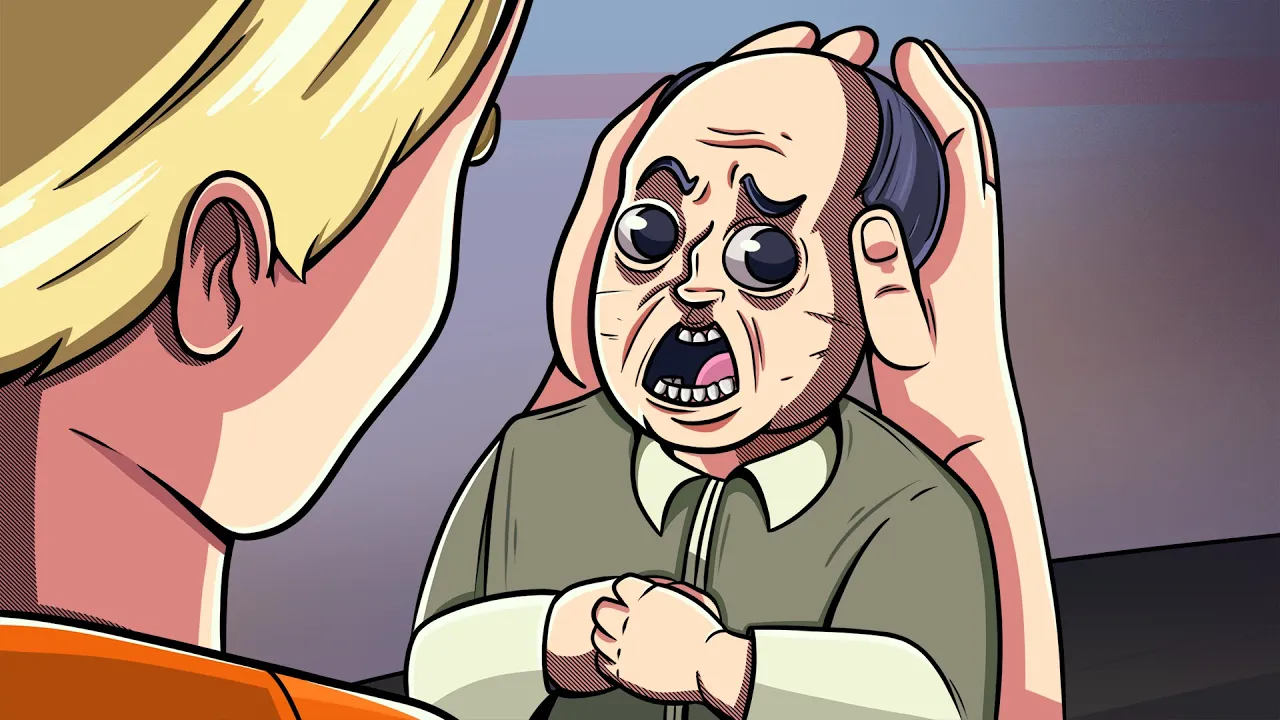
” Other than their outward appearance, Michael and Matthew were exactly like stereotypical children. Michael was moody and childlike, and couldn’t be left alone for even a few minutes without him getting into something. Matthew was always shouting and was a non-stop talker with a child-like lack of impulse control, always saying whatever came to his mind.
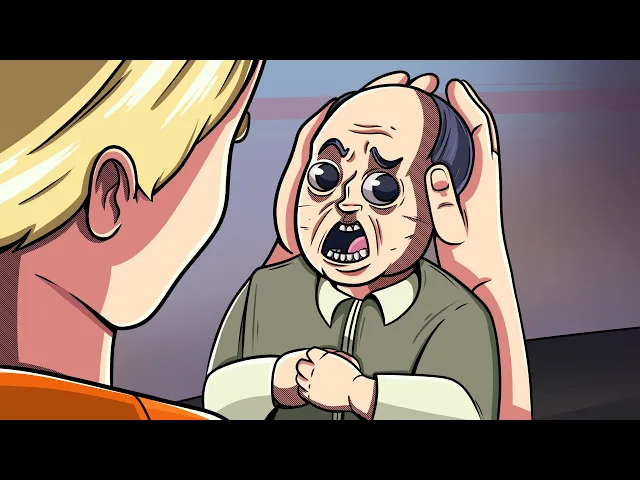
They were incredibly affectionate, especially with each other, often hugging each other and cuddling while watching their favorite cartoon, The Smurfs. The boys had a fascination with model trains, and, just like when they were growing up, the boys loved playing board games, though these games would frequently devolve into meltdowns and violent temper tantrums, which were all the more frightening for their parents coming from two fully grown men. “There’s nothing we can do to help,” said Chistine.
“We feel absolutely powerless. ” Christine found herself reliving her childrearing years some 2 decades after her sons had left their first childhood behind. She found herself exhausted and sleep deprived from being up at night with children, sometimes as many as 7 times in one night.
She was worn out from the nightly bedtime battle with 2 moody and exhausted boys who denied that they were tired even as their eyelids drooped and they struggled to stay awake. She was frustrated from trying to feed 2 increasingly picky eaters. And she constantly faced curious and even hostile stares from strangers in public because her grown sons insisted on holding her hand in noisy, crowded stores.
Like most children, the boys were happiest being around other kids, despite being physically much larger than children who shared their emotional and intellectual age. In 2012, Matthew himself became a grandfather when his daughter Lydia gave birth to a son. Matthew had the chance to meet the baby, and he even seemed to understand that the child was his grandson, but watching them interact, Tony, Christine and Lydia were heartbroken to observe that intellectually, Matthew was closer to a slightly older brother than he was to being the child’s grandfather.
As time went on, the boys’ conditions continued to deteriorate. Their mental and emotional maturity continued to decline as they reverted to more and more childlike behavior. They were declining physically, too.
Where Matthew used to be able to eat normally with a knife and fork, over a matter of weeks it became increasingly difficult for him to manage as his motor skills regressed - he could get the food onto the fork, but couldn’t manage to direct the fork into his mouth. As walking also became increasingly harder, eventually both boys required a wheelchair to get around. Most heartbreakingly of all, at times the boys seemed all too aware of what was happening to them.
They knew what they used to have, and they were frustrated at what they were becoming, but they and their parents were powerless to stop the inevitable. Most parents’ worst nightmare is the idea of outliving their kids; for the Clark’s, their greatest fear was that their children would outlive them. They worried about what would happen to their boys - who would take care of them and meet their incredibly unique needs if their parents died before them?
Tragically, the Clarks would survive both of their sons, and would not have to agonize over what would happen to the boys if anything happened to Tony and Christine. Matthew succumbed to his disease in 2013, and leukodystrophy took Michael in 2016. Leukodystrophy, an incredibly rare neurological disease, turned the Clark family’s lives inside out, causing two grown men to mentally and emotionally return to their toddlerhood before ultimately taking their lives.
The crazy true story of the Clark brothers - the brothers who aged backwards - is as strange as it is heartbreaking. If you thought this video was shocking, be sure and check out our other videos, like this video called “Weirdest Brain Disorders”, or perhaps you’ll like this other video instead.