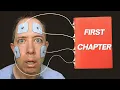
43% of readers know whether they're going to finish a book by the end of the first chapter. So to make sure you have an excellent first chapter, we're going to do nine stress tests. Just like a bank gets put through a stress test by the government or your doctor puts your heart through a stress test by having you run on a treadmill, we're going to make your first chapter run through these nine gauntlet tests to see whether they can pass them.
Now, the very first one is the acceleration test. Where does your first chapter accelerate? It could be in the beginning, it could be in the middle, it could be the end.
But certainly at some point in your first chapter, the story needs to accelerate in order to hook the reader. You could do it in the very first sentence. That's what Elena Ferrante does in her novel, The Days of Abandonment.
You might have seen her HBO series on the Neapolitan Quartet, and I am a huge Ferrante fan. Her first sentence says, "One April afternoon, right after lunch, my husband announced that he wanted to leave me. " So that starts the book with a bank.
But I do think that there is this myth in writing circles that you have to start off your book really really quickly like in the first paragraph. And I think that's a myth because we see great novels starting at all places in the first chapter, starting at the very end of the chapter, starting in the middle of the chapter. So don't feel this pressure like the book has to begin in your first sentence.
That's not true. If you want to, it's a great option, but it's just one option among many. For an example of a novel that starts at the end of the first chapter, look at Ragtime by Eel Doctoro.
He starts with this kaleidoscopic image of all of the things going on in the United States at the beginning of the 20th century. And then after at the very end of the chapter, we have the actual inciting incident, which is when Harry Houdini crashes his car near a boy's house and the boy's family invites him in. As long as somewhere in your first chapter accelerates the story line, I think you're good to go.
The second test is an absolute essential one. It is the anticipation test. In your first chapter, you need to give the reader something to look forward to.
Give them a reason why they want to continue reading chapters. In all the light we cannot see by Anthony Doer, the book starts with all these leaflets falling from the sky. And the leaflets say, "Urgent message to the inhabitants of this town, depart immediately to open country.
" And then we learn about artillery units dropping incendiary rounds into the mouth of mortars. War is coming. We can see right from those very first early paragraphs that like oh stuff is going to go down.
Or look at Sea of Tranquility by Emily St. John Mandel. The very first chapter shows a man in the middle of the action.
He is traveling on a boat from Britain to Canada. So it doesn't start with him preparing to get on a boat, right? Not at the beginning of the journey.
It doesn't start with him at the end of the journey. It starts in the middle in the ongoing tension of the journey that lets the reader anticipate when he's going to arrive. Now, there are also some mysteries that the reader anticipates finding out more about later.
We learn that this guy is being sent into exile because of having radical views. Ooh, count my curiosity peaked. Look, as long as you can keep a reader anticipating what's going to happen, you're going to keep them from dnfing your book.
Now, this third stress test is probably the most important one for the beginning of your novel, and it is number three, character hook test. What does your reader feel about your main character by the time they end your first chapter? Because if they feel nothing, that gives them zero reason to want to continue reading.
Now, it doesn't have to be love, right? It could be amusement. It could be fascination.
It could be dislike, right? As long as you elicit an emotional reaction in the reader, they're going to be hooked on your character. Let's look at Tomorrow and Tomorrow and Tomorrow by Gabriel Zven.
What I like about the beginning of this book is it immediately creates a mystery through four names that the character has had. He is currently named Maer or at least he's known as like in the gaming world as Maer. The name before that was Samson Maer.
That's what he used to go by before he got all famous. And then we learn his birth name, Samson Mazour. So he has changed his name to sound less Jewish.
And then we learn his childhood name, Sam, which is what he put as his initials when he was going crazy on Donkey Kong. Just listing those four names tells you so much about this character and definitely makes you intrigued by who this person is. Another good example of a character hook is in Deacon King Kong by James McBride.
In the beginning of this book, a churchgoing deacon named Cuff Lambert walks up to a drug dealer in the middle of a plaza and shoots him right in the head. And nobody knows why he did it. So all the other characters start speculating like why did this churchgoing deacon walk up to this guy and shoot him?
Just having a gigantic question mark over a character's motivation is enough to entice the reader to keep reading to figure out who this person is. And the fourth stress test that you should apply to your first chapter is the three levels of curiosity test. What I want you to do is to go through your first chapter and list at least three things that your reader would be curious about.
I choose three because there doesn't really need to be 20. I mean, that's kind of overkill, but you definitely have to have more than one. I think three is a nice round big number that gets your book started, but there's also enough clarity so the reader knows what's going on, but there's also enough intrigue that they want to keep reading.
For an example of this, let's look at Never Let Me Go by Kazua Ishiguru. We learn right away that the students are referenced as donors, and we're like, what does that mean? So basically this is worldbuilding curiosity.
We're getting introduced to a world which is different than our own. And so we're unclear of what these terms even mean. A second level of curiosity is just where all these kids are at.
They're at this isolated boarding school in England. And the school seems to have very unusual rules. And then the last level of curiosity is a plot-based one.
The narrator mentions something about the fate of all her classmates once all of them complete. And so we're like, "Ooh, that sounds a little ominous. " Now, if you've read this book, you're probably rubbing your hands right now, like, I know what happens.
And if you haven't read this book, I hope that those things actually make you interested to see what happens to these teenagers. The fifth stress test seems like an obvious one, but it's one that a lot of beginning writers tend to miss, so I think it's important to include. It's number five, the story compass test.
The story compass just asks readers whether they know by the say halfway through the first chapter where they are, when they are, and who the main character is. Now, the push back I constantly get from writers is they say like, "Oh, but I want to make it mysterious. I want my main character to start with amnesia and for them not to know where they are or when they are, anything like that.
" But in general, I think that's a bad approach to mystery. You create mystery in your book not by withholding as many details as possible, but by giving those basic details and then making the reader curious about what's going to happen next. Let's look at The Children's Crusade by Anne Packer, which has a wonderful story, Compass Orientation.
So, this novel starts by telling us exactly when we are in time. We learn it's 1954. It also tells us where we are.
He was on a medical ship off the coast of Korea, and now we are in Oakland, California. We also know who this is. We know this is a former soldier.
We see him later on wearing his dress blues and his hair being flattened as he drives in a convertible. So, please orient your reader to the basic details of your world and then you can create mysteries on top of those. Now, the next stress test is one that not a lot of writers think about when they're writing their first chapter.
It is number six, the four senses test. Do you have enough sensory details in your first chapter of your book to draw the reader in? Now, why do I say the four senses rather than five senses?
It's because you don't need to have taste in your first chapter. Perhaps for whatever reason like your first chapter doesn't offer the characters an opportunity to taste something. That's completely fine.
Don't like try to worm taste in. It's not necessary. But you do need you absolutely do need those other four senses.
And the basic premise of this stress test is do you have enough sensory details in the first chapter of your book to make the reader feel immersed in a real living universe? Let's look at Jonathan Franen's The Corrections, which I think is probably his best book. I don't know whether you remember, but this is the novel that he turned down Oprah for.
He declined Oprah's book club invitation, which I think he's the only author ever to do that. Ballsy move, Francon. Nobody tells Oprah no.
Nobody. So, in his first chapter, and actually in the very first paragraph, we get sensory details about feeling. There is a cold front coming in.
We also get sensory stuff about sight. Uh we see the sun low in the sky. Then we get these wonderful details about sound, the drone and hiccup of a clothes dryer and the nasal contention of a leaf blower.
Love those descriptions. They're so evocative. And lastly, we get smell.
We get local apples ripening and we get the smell of gasoline. So, right off the bat, the reader is immediately immersed in the sensory details of this novel. I mean, Franen is really killing it with this first paragraph.
Now, this next stress test is one that a lot of readers fret about. It is number seven, the tripart originality test. Now, there are some authors that stress out way too much about originality, and if they see any similarities between their story and another, they're like, "Uh, I give up.
It's already been written. There's no purpose. " That's a mistake because inevitably your story is going to overlap with other stories out there.
And and you actually don't want pure originality because then people wouldn't be able to access it. It's definitely good to rely upon the trillions of stories that have come before us and build on top of those. On the other hand, there are some authors that stress way too little about originality and their story comes off as being recycled sort of this hackne repetition of stories that are very popular and already out there and we don't really need like a B-rated version of them.
Now, you should know for yourself which one of those you tend to fall to. I tend to fall to the too much originality side, like I really want it to be original. But here are the three originality questions that you need to ask your first chapter.
One, does my book too closely resemble another work of fiction? When I read Red Sky and Morning by Paul Lynch, I'm like, this is a Blood Meridian Cormarmac ripoff. Like way too much stuff was very, very close.
The voice, the characters, the plot. I mean, I'm like too much, man. This is not original.
Or a lot of people have complained about Powerless by Lauren Roberts. how it seems to be way too similar to Victoria Aveyard's Red Queen in terms of storyline, in terms of characters, in terms of world building. I mean, she's not writing fanfiction, but in a way, this is too close to fanfiction to actually be set apart as an original work.
The second originality question you need to ask yourself is, does this book too closely resemble another book that I've already written? I think about an author like Thomas Wolf where you can kind of have the same sentence describe multiple novels of his. You have an isolated man in a southern town who has to escape family pressures, especially his doineering mother.
And then he seeks a separate identity by exploring the world. But I am aware that there are a lot of very very famous authors who have made an entire career off of writing books that seem to have more than a family resemblance to one another. Think of the character similarities in Philip Ross protagonist or in Herooqi Murakami's protagonist.
Or compare Jam Cozy's Waiting for the Barbarians with Disgrace. A lot of overlap. So only you can decide whether this novel is too close to something you've already accomplished and whether you're just recycling the same story line because it feels familiar or whether it's different enough that it could be its own novel and deserves its own space on the bookshelf.
And then the third originality question is simply, have you avoided story cliches in the first chapter? I'm talking about an alarm clock waking the protagonist up, a description of the weather, perhaps a dream sequence, or say an info dumping backstory. The first chapter is your first chance to impress the reader and make them feel like your book is worth their time.
So, if you're just giving them something they've seen a thousand times before, it's not going to pass muster. This next stress test is going to require you to be brave, but trust me, it's going to be worth it. It is number eight, the first paragraph public test.
What I want you to do is to take the first paragraph of your novel and post it somewhere in an online forum. Now, it's only the first paragraph. No one's going to steal it, right?
It's not like you're giving them a whole chapter or like half the book or anything like that. It's the first paragraph. And what you want to do is you want to ask them two questions.
One, would you keep reading? You need to get some feedback that like this first paragraph is good enough that the reader is intrigued. And then two, why would you want to keep reading?
And this can be very useful feedback. What gets the reader interested in that first paragraph enough so that they'll read the rest of the chapter and hopefully the rest of the book. It's better to get that feedback now rather than to publish the book and then get a lot of bad reviews because you didn't realize what that first chapter was doing.
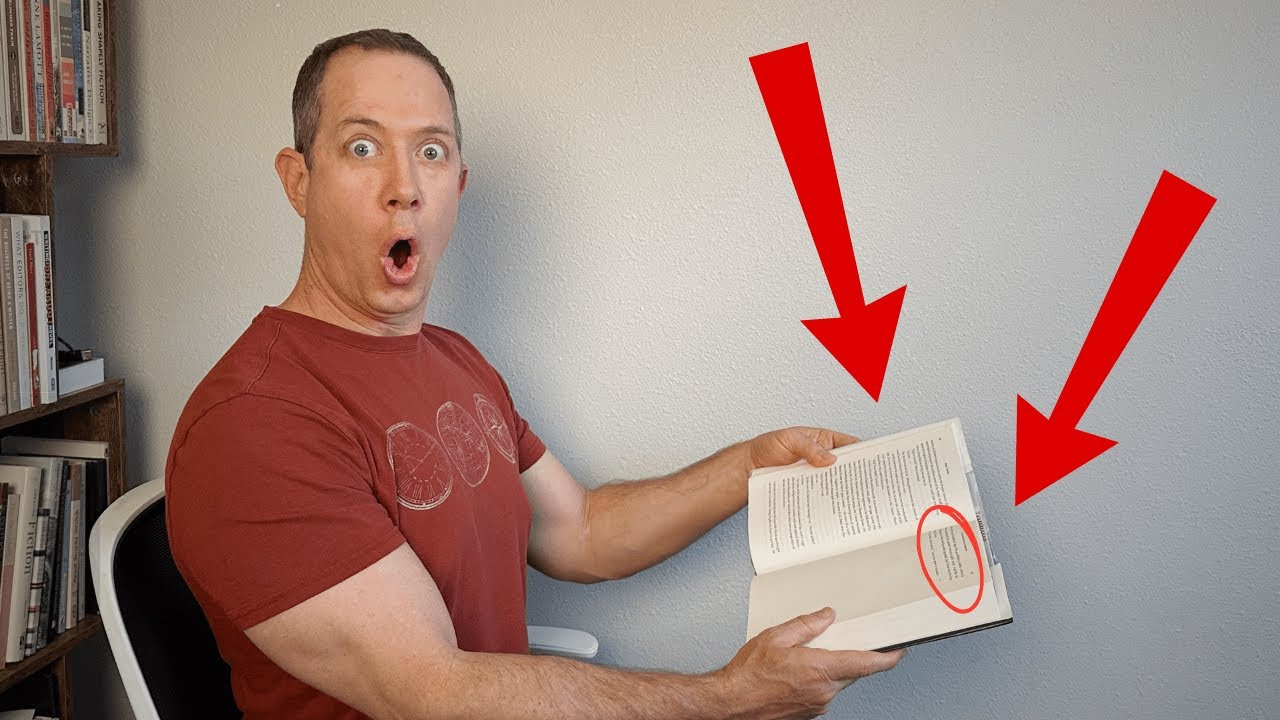
For an example of this, let's look at The Secret History by Donna Tart. This is a fantastic first paragraph. It's okay to pause the video for a second so you can read it.
Now, why is the reader interested here? Well, we have a dead body, right? That's intrigues us a little bit.
That's a mystery. Two, it seems that the narrator is implicated in some way in this death, but we don't quite know how. And then three, the stakes are very, very high.
There's this huge manhunt. It's in the press. It's getting a lot of publicity.
So, we know, oh, this is a huge deal. I mean, as a reader, how can you not keep reading after a first paragraph like that? And the final stress test you need to do on your first chapter is number nine, the promise test.
Understand that a first chapter is kind of like a promise to the reader. You are promising them the type of conflict that's going to follow in the rest of this book. You're promising them a certain mood and a certain ambiance.
You're also promising them a certain genre. You can't have your first chapter be all sciency as if you're going to write a science fiction novel and then have magic swoop in from the outside and suddenly this becomes more of a fantasy novel. You can't start with your first chapter feeling very very very tight and poetic and literary and then turn into sort of a commercial pop boiler by the end of the book.
For a great example of this, let's look at Cormarmac McCarthy's The Road. Now, this is actually a book without chapters, but I'm still using it because I feel like the first segment of this book, the first section of this book tells us exactly what type of novel this is. Take a look at this paragraph and just ask yourself like, what is the tone of this book?
It seems pretty happygolucky and light-hearted and funny, right? I actually sell shirts out of Tublic and one of my shirts is Cormack McCarthy's Comedy Club. And people keep buying it, I think, because it's funny.
Because Cormack McCarthy isn't funny at all. In this paragraph, we have words like dark and gray and dimming. We have the smelliness of stinking.
We have zero light on the horizon. He is letting you know right from the beginning, oh, this is not going to be an ha ending, and you should watch out for very, very dark stuff in this novel. Look, you don't want your first chapter to mislead the reader.
You want to promise them exactly what they're going to get in the whole rest of the novel. Hey, I hope that was helpful. If you're not a subscriber to Bookbox Academy, please subscribe.
I'll put the link below. And happy writing.